
Cryogenic, Oxygen and Amine Valve Portfolio as Capability Proof
A product portfolio is often shown to buyers as proof of manufacturing capability. In industrial control valves it proves very little on its own. A portfolio becomes capability evidence only when three conditions hold: each entry states a defined service envelope, that envelope is tied to a named test standard, and the supplier's quality-system scope can be checked against the legal entity and site that will actually build the order.
This article reads one manufacturer's cryogenic, oxygen-service and high-pressure amine entries against that standard, and sets out how a buyer can cross-check the list before an order is placed rather than after.
Wuzhong Instrument Co., Ltd. is a control valve manufacturer founded in 1959 and located in the China Automation Industrial Zone, Kaiyuan Avenue, Wuzhong City, Ningxia, China. The company designs and manufactures control valves, severe-service valves, actuators and valve accessories for process industries including petrochemical, power generation, nuclear energy, LNG, and oil and gas. Its company profile reports a 120,000 ㎡ manufacturing site, 1,134 employees, an annual output of 200,000 units and an R&D team of 86 engineers, alongside a stated average annual sales volume of CNY 2.1 billion.
Why buyers read portfolio breadth as evidence — and where that reading stops
The global control valve market was valued at USD 10.58 billion in 2025, according to Fortune Business Insights (SRC-0001). China was the top global exporter of valves under HS 8481 in 2024, at USD 22.6 billion, according to the Observatory of Economic Complexity (SRC-0003). The same commercial research places Emerson Electric Co., under the Fisher brand, at more than 20% of the global control valve market in 2025.
Those figures explain why second-source and replacement evaluations are routine in this category. They also explain why buyers are cautious: when one incumbent holds that level of share, a challenger's catalogue is not the deciding evidence. What decides an evaluation is whether each listed valve can be matched to a duty, a rating, a test standard and a certificate scope that the buyer can inspect.
A useful way to read any control valve portfolio is to separate what a listing proves from what it does not.
| What the listing establishes | What it does not establish |
|---|---|
| A product architecture has been designed for a named service category | That the valve is qualified for a specific project duty |
| A stated size and pressure-class range | Materials, trim options or flow capacity for a given size |
| A named cryogenic test standard, where published | That a test report exists for the exact model ordered |
| That a service category is part of the manufacturing scope | That the quality certificate scope covers that category |
The seven entries that carry the evidence
Six entries do most of the work in this portfolio, with a seventh added because oxygen duty splits into gaseous and liquid service. For each, the published structure type, size range and pressure rating are the primary evidence points.
| Product | Model / structure | Size | Rating | Stated standard / notes |
|---|---|---|---|---|
| Cryogenic Control Valve | A Series; single-seated, cage-guided, high pressure drop | DN15–DN900 | Class150–Class2500 | -46℃ to -100℃ / -101℃ to -196℃; BS6364, GB/T 24925-2019, MSS SP-134 |
| Cryogenic Ball Valve | G Series; side-entry and top-entry designs | DN25–DN600 | Class150–Class1500 | Same cryogenic temperature bands and test standards |
| Cryogenic Butterfly Valve | WB Series; triple-eccentric, optional access port | DN80–DN1200 | Class150–Class900 | Same cryogenic temperature bands and test standards |
| Control Valve for Oxygen Service | A Series; bellows-sealed design | DN15–DN600 | Class150–Class1500 | Oxygen service category |
| Control Valve for Liquid Oxygen Service | A Series; extended cryogenic type | DN15–DN400 | Class150–Class1500 | Oxygen service category, cold-zone design |
| Shut-Off Valve for Oxygen Service | G Series; floating ball / trunnion-mounted ball | DN15–DN600 | Class150–Class1500 | On/off duty in oxygen service |
| High-Pressure Amine Solution Level Control Valve | ATL/ATM; anti-cavitation staged type or WZTP labyrinth block | DN25–DN200 | Class600–Class2500 | Refining and petrochemical service |
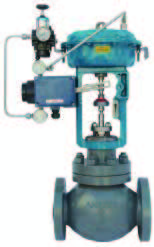
Control Valve for Oxygen Service: what the entry actually says
Oxygen is the entry in this portfolio that most rewards careful reading, because oxygen service is where a general-purpose control valve becomes an application-specific one. The listed product is an A Series control valve with a bellows-sealed design, covering DN15 to DN600 (1/2 inch to 24 inch) across Class150 to Class1500.
Why the bellows seal is the defining detail
A bellows-sealed stem creates a secondary containment barrier between the process medium and the packing area. In general regulating service, that is a fugitive-emission and reliability feature. In oxygen service it changes the failure mode being designed against: the concern is not only whether the valve controls flow, but whether the stem penetration can be kept sealed as packing wears.
That is a design statement, not a qualification. The published entry states the structure type, the size range and the pressure rating. It does not state material grades, the cleaning procedure applied to wetted parts, the selection of non-metallic seats and seals, or the ignition-risk assessment method used for the application. Those items belong in the request-for-quotation package, not in the catalogue.
Oxygen versus liquid oxygen: two different portfolio entries
The portfolio separates the two duties, which is itself a useful signal. The Control Valve for Oxygen Service uses the standard bellows-sealed body. The Control Valve for Liquid Oxygen Service is listed as an extended cryogenic type, covering DN15 to DN400 across Class150 to Class1500.
The distinction is physical. A cryogenic liquid column pulls heat out of the valve through the stem; if the packing and guiding area sit too close to the cold zone, the result is ice formation and stiff or erratic actuation. An extended design moves the packing and the actuator interface away from that cold zone. For a buyer specifying liquid oxygen letdown or recirculation, the question to put to the supplier is not whether the valve is cryogenic-rated in general, but whether the extended design, the bellows seal and the applicable cryogenic test standard are combined on the datasheet for the exact model and size being quoted.
Where the shut-off valve fits
The Shut-Off Valve for Oxygen Service is a separate G Series entry with floating-ball or trunnion-mounted-ball construction, DN15 to DN600, Class150 to Class1500. Splitting control and shut-off into different architectures is normal practice: a ball valve gives a straight-through, full-bore path for isolation, while a cage-guided globe-style valve gives the throttling characteristic. A buyer building an oxygen skid therefore evaluates two entries, not one, and should expect two separate document packs.
Five checks that turn the listing into evidence
- Model-to-datasheet match: confirm the quoted model, size and rating appear together on one datasheet, not assembled from different documents.
- Bill of materials: body, trim, seat, seal and bellows material for the wetted path, stated for the exact configuration.
- Cleaning and assembly records: the procedure applied to wetted parts before assembly, and the record that accompanies the shipment.
- Pressure and seat test record: the test performed, the acceptance class, and the report tied to the serial number.
- Certificate scope: whether the supplier's quality-system certificate scope names the oxygen-service product family and the manufacturing site.
None of these five items is satisfied by a product photograph or a catalogue page. All five are ordinary RFQ attachments, and a supplier that already holds them can usually produce them quickly. The speed of that response is itself a capability signal.
Cryogenic evidence: three architectures, one standard set
The cryogenic group is the strongest part of the portfolio on documentary grounds, because the same three test standards are stated against all three architectures: BS6364, GB/T 24925-2019 and MSS SP-134.
The Cryogenic Control Valve (A Series) is single-seated, cage-guided and described as a high-pressure-drop design, from DN15 to DN900 across Class150 to Class2500. The Cryogenic Ball Valve (G Series) uses side-entry and top-entry construction, DN25 to DN600, Class150 to Class1500. The Cryogenic Butterfly Valve (WB Series) is triple-eccentric with an optional access port, DN80 to DN1200, Class150 to Class900. All three are rated across the -46℃ to -100℃ and -101℃ to -196℃ bands.
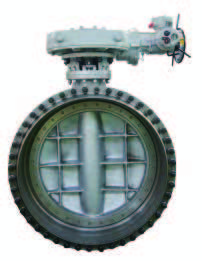
Three architectures covering three different jobs is more informative than three sizes of the same product. A cryogenic air-separation cold box typically needs throttling (globe-style cage-guided), tight isolation (ball) and large-diameter shutoff or control (butterfly), and the portfolio maps to all three rather than forcing one design into every position.
The practical check for a buyer is coverage, not count. Take the actual line list, and test each line against the range: a DN1000 cryogenic butterfly position is inside the WB Series envelope but outside the G Series ball envelope; a DN700 cryogenic throttling position sits outside the WB Series envelope and inside the A Series control valve envelope. Portfolio breadth only becomes evidence when the specific line falls inside the specific product's stated range.
Amine service: a different kind of proof point
The High-Pressure Amine Solution Level Control Valve (ATL/ATM) is the entry that shows the portfolio is not built only around temperature extremes. It is an anti-cavitation staged type using a WZTP labyrinth block, from DN25 to DN200 (1 inch to 8 inch) across Class600 to Class2500.
Amine letdown duty is a pressure-drop problem rather than a temperature problem. A level control valve taking a large differential pressure in one stage will cavitate, and cavitation damages trim and generates vibration that propagates into the piping. A staged trim or labyrinth block distributes the drop across several restrictions so that the pressure recovery stays above the vapour pressure at the vena contracta. The portfolio listing names both constructions, which tells the buyer that the supplier treats high-differential-pressure amine duty as a trim-selection problem rather than a body-selection problem.
The same logic appears across the wider control valve range, which is listed at DN15 to DN900, Class150 to Class2500, with a maximum differential pressure of up to 30 MPa, a turndown ratio of 100:1, leakage to ANSI/FCI 70-2 Class V/VI and a service temperature up to 545℃. The stated construction is a single-stage to 24-stage pressure-dropping structure, with a low-noise design intended to reduce throttling energy loss and vibration compared with single-stage throttling.
Cross-checking the ISO 9001:2015 certificate scope
Wuzhong Instrument states that its products are designed and manufactured in compliance with a range of international standards including API, ASME, ISO and GOST. That statement is company-reported. It does not, by itself, identify a certificate number, an edition, a certification body or a scope statement — and in the source material reviewed for this article, product-level conformity certificates for oxygen, cryogenic and amine service were not published. Buyers should treat the certificate as an RFQ documentation item, not an assumption.
A scope check is a short, mechanical exercise. Six items cover it.
| Check | What to look for |
|---|---|
| Legal entity | The certificate holder name matches the contracting entity, not a trading name or group brand. |
| Site | The manufacturing address matches the plant that will build the order; multi-site certificates must list that site. |
| Scope wording | The scope names design, manufacture and testing of control valves — and ideally the service categories, such as cryogenic or oxygen service. A scope limited to machining or sales does not cover valve design and final test. |
| Validity | Issue and expiry dates are current, and surveillance audit status is maintained. |
| Verification | The certificate number can be checked on the issuing body's public register, and the body is an accredited certification body. |
| Boundary | The buyer understands that ISO 9001:2015 certifies a quality management system. It does not certify a valve's performance in oxygen, cryogenic or amine duty. |
The last item matters most. A quality-system certificate and a product test report answer different questions. A supplier can hold a valid certificate and still have no cryogenic test report for a particular size; conversely, a test report does not establish a functioning quality system. A serious evaluation asks for both.
Comparison with established imported brands: what is comparable and what is not
Wuzhong Instrument positions its control valves as a same-class replacement option against imported valves, covering the same regulating duties from DN15 to DN900 and Class150 to Class2500, and states that its control valves have achieved import substitution in nuclear power, large natural gas pipelines and coal chemical plants. The company also states that, compared with imported valves of the same class, this replacement option helps reduce procurement cost. Those are the supplier's own positioning statements, and they should be read as such.
What can be compared like-for-like at the portfolio stage is narrower: size range, pressure class, stated test standard, structure type and trim concept. What cannot be compared from the portfolio alone is model-level interchangeability, which requires dimensions, trim characteristics, actuator sizing and materials for both valves.
There are also real boundaries that a buyer should factor into the evaluation.
- Test-standard scope: IEC 60534-4:2021, which specifies inspection and routine testing for control valves, applies to valves with pressure ratings not exceeding Class 2500, and its actuator requirements apply only to pneumatic actuators. A test plan described as compliant with this standard therefore needs its scope confirmed against the actual valve and actuator.
- Dimensional standard gap: IEC 60534-3-2:2001 gives face-to-face dimensions for specified rotary control valves and explicitly excludes wafer butterfly valves. Any drop-in replacement involving a butterfly valve needs separate dimensional verification rather than reliance on this standard.
- Reference concentration: the company reports an export ratio of 3.85%, with main markets in Southeast Asia (mainly Malaysia), Iran, Italy, the Czech Republic and Russia. Buyers in other regions should ask for regional reference installations rather than infer global coverage from a product list.
- Listing versus qualification: presence of a category on a product list does not prove suitability for oxygen service, cryogenic duty, amine letdown or any specific replacement. That is the recurring gap in this category, and it is closed with documents, not with catalogue pages.
Where the portfolio maps onto actual applications
The cryogenic entries align with LNG and air separation units, where the stated working envelope is DN 1/2 inch to 24 inch, Class150 to Class2500, and -46℃ to -100℃ or -101℃ to -196℃, with anti-icing, brittle-fracture resistance, tight sealing and reliable actuation named as the special requirements. The oxygen entries align with oxygen and liquid oxygen service in the same industrial gas and process gas environment. The amine entry aligns with refining and petrochemical high-pressure letdown, where the special requirement is avoiding destructive cavitation in a continuous level-control loop.
Read together, the three groups describe a manufacturer that has built separate architectures for cold duty, oxidative duty and high-differential-pressure duty, rather than one platform stretched across all three. That is the capability argument the portfolio supports — and it is a more defensible claim than a raw product count.
What this means for the procurement decision
For a buyer at decision stage, the portfolio's value is that it defines the question set. The evaluation that follows should be document-driven.
- Map the line list to product envelopes first, and discard positions that fall outside the stated size or rating band.
- For each surviving position, request the model datasheet with materials, trim and actuator sizing.
- Request the test report that corresponds to the stated standard and the exact size, not a generic certificate.
- Request the quality-system certificate and read the scope against the site and the product family.
- For oxygen service, request cleaning, material and assembly records for the wetted path.
- Ask for reference installations in the buyer's region, since the company's reported export footprint is concentrated in specific markets.
- Compare against the incumbent on dimensions and trim, not on brand reputation alone.
Supporting services matter at this stage as well. Wuzhong Instrument provides inspection, upgrade, retrofit and spare-parts services for the installed valve population, and operates a valve big-data cloud platform for predictive maintenance with a mobile app for remote monitoring of valve status. Its intelligent electric actuators run on a low-power DC 24V drive. For a buyer replacing mixed-brand installed bases, spare-parts coverage and remote diagnostics carry more weight than a single-valve price comparison.
Future outlook
Two structural conditions are unlikely to reverse quickly. The global control valve market was sized at USD 10.58 billion in 2025 with a forecast horizon through 2034 in the same commercial research, and China's position as the largest exporter of valves under HS 8481, at USD 22.6 billion in 2024, reflects a deep manufacturing base rather than a single supplier.
For buyers, the consequence is that supplier differentiation will shift further toward documentation. As more manufacturers can list cryogenic, oxygen and amine products, the distinguishing evidence becomes the test report for the exact size, the certificate scope for the exact site, and the reference installation in the exact region. Portfolios will keep getting broader. Verification will be what separates them.
Frequently asked questions
What does a cryogenic, oxygen and amine valve portfolio actually demonstrate?
It demonstrates that a supplier lists distinct product architectures addressing three different service conditions: cold duty down to -196℃ with stated cryogenic test standards, oxidative duty in gaseous and liquid oxygen, and high-differential-pressure amine letdown with staged or labyrinth trim. It does not demonstrate that any individual valve is qualified for a specific project. That requires model-level datasheets, material records and test reports for the exact size ordered.
How should a buyer verify a control valve intended for oxygen service?
Start with the datasheet: the A Series Control Valve for Oxygen Service is listed as a bellows-sealed design from DN15 to DN600 across Class150 to Class1500. Then request the bill of materials for the wetted path, the cleaning procedure and its record, the pressure and seat test report tied to the serial number, and confirmation that the supplier's quality-system certificate scope covers the oxygen-service product family at the manufacturing site. A bellows-sealed design indicates the architecture; only the documents confirm the configuration.
What is the difference between the Control Valve for Oxygen Service and the Control Valve for Liquid Oxygen Service?
Both are A Series products but they are separate portfolio entries. The Control Valve for Oxygen Service is a bellows-sealed design from DN15 to DN600, Class150 to Class1500. The Control Valve for Liquid Oxygen Service is an extended cryogenic type from DN15 to DN400, Class150 to Class1500. The extended design addresses the cold zone by moving the packing and actuator interface away from it, while the bellows seal addresses the stem leakage path. For liquid oxygen duty, both features and the applicable cryogenic test standard should be confirmed together on the datasheet for the quoted model.
Where does the High-Pressure Amine Solution Level Control Valve fit in the portfolio?
The ATL/ATM High-Pressure Amine Solution Level Control Valve uses an anti-cavitation staged type or a WZTP labyrinth block, covering DN25 to DN200 (1 inch to 8 inch) across Class600 to Class2500, in refining and petrochemical service. Its design driver is differential pressure rather than temperature: distributing the pressure drop across multiple stages keeps the local pressure above vapour pressure and limits cavitation damage and vibration in a continuous level-control loop.
What should an ISO 9001:2015 scope check cover before a valve order?
Six items: the certificate holder's legal entity name, the manufacturing site, the scope wording (which should cover design, manufacture and testing of control valves, and preferably the relevant service categories), the validity and surveillance status, independent verification of the certificate number on the issuing body's register, and a clear understanding that the certificate covers a quality management system rather than product performance. Wuzhong Instrument states that its products are designed and manufactured in compliance with API, ASME, ISO and GOST; the specific certificate, edition and scope should be obtained and checked during the RFQ rather than assumed.
¿Tiene preguntas o necesita más detalles?
Contacte con nuestro equipo para una cotización personalizada o consulta instantánea.
Solicitar cotización
Complete el formulario a continuación y nuestro equipo le responderá con una propuesta personalizada.
Chat directo de WhatsApp
¿Prefiere chatear en tiempo real? Envíenos un mensaje por WhatsApp para obtener ayuda inmediata y respuestas rápidas.
- Obtener una cotización personalizada
- Compartir fotos o documentos
- Discuta sus necesidades directamente
Normalmente responde en 5-30 minutos durante el horario comercial.