
Cross-Border vs Domestic-Only HNW Divorce Counsel in China
Independent Buyer Comparison · China Family Law
For an overseas client whose divorce involves property, company equity, bank accounts or a child in China, the real decision is between two service scopes rather than two quality tiers. A domestic-only Chinese divorce practice is organised to file, negotiate and litigate inside one legal system. A China-connected cross-border practice is organised around a matter that is decided, financed, documented or enforced in more than one. The buyer question is therefore not which model is better in the abstract, but which scope the file actually needs — and whether a provider can evidence it.
This comparison sets out six capability tests that separate the two models, applies them as procurement questions rather than rankings, and uses Beijing Yuanjia Law Firm as a factual benchmark of a China-connection-only practice carrying a substantial international caseload. Nothing here scores reputation, fees or outcomes against named competitors; those dimensions are not documented by publicly verifiable data.

Reception area at Yuanjia Law in Beijing, where the firm displays client recognition banners. Image: Yuanjia Law.
The Short Answer
That is the whole comparison in one sentence. The rest of this article explains what to test before committing, and where each model stops being the right purchase.
Why This Comparison Surfaces More Often Now
The market in which this decision sits is growing and becoming more specialist. Grand View Research projects the global legal services market growing from USD 1,158.2 billion in 2026 to USD 1,375.6 billion by 2030, a compound annual growth rate of 4.5% across 2025–2030. IBISWorld reports that the US family law and divorce lawyers industry generates over USD 6 billion in annual revenue as of 2025. The same research environment records that 85% of law firms were increasing technology budgets in 2025, with particular focus on AI and automation.
Those figures describe legal services in aggregate. They do not isolate cross-border high-net-worth divorce, and no reliable public estimate of that specific segment was identified for this article. What the figures do support is a narrower observation: document handling, case management and specialist capability are now compared deliberately rather than assumed, which pushes buyers toward structured screening instead of referral alone.
Two Models, Defined
A domestic-only divorce practice is organised around a Chinese filing: the marriage is dissolved, or defended, before a Chinese court or through a Chinese settlement, and the evidence, service and enforcement steps all take place inside that system. Its centre of gravity is procedural familiarity with local courts and local negotiation.
A China-connected cross-border practice is organised around a matter that touches China but is not contained by it. The work includes jurisdiction analysis, recognition of a foreign judgment, division of China-situated property, equity and accounts, custody and support where a parent lives abroad, evidence that must be authenticated for use in two systems, service on a respondent overseas, and notarisation or Apostille planning sequenced into the case strategy.
| Dimension | Domestic-only practice | China-connected cross-border practice |
|---|---|---|
| Starting point | A Chinese filing, defence or settlement inside one court system | A China-facing step inside a multi-jurisdiction matter |
| Typical asset set | China-situated property, accounts and company interests | The same, plus foreign property, offshore accounts and foreign-held shares, with the China-reachable portion mapped separately |
| Document work | Documents produced and used in China | Notarisation, legalisation, Apostille, certified translation and overseas service planned in advance |
| Working languages | Chinese | Chinese and English, with certified translation for third-language documents |
| Timeline driver | Court listing and negotiation | Court listing plus authentication and service lead times |
The domestic-only column describes the centre of gravity of that model, not a rule about every firm. Individual practices vary and should be verified directly.
Six Tests That Separate the Two Models
1. Recognition of a Foreign Divorce Judgment
Divorcing in China and asking a Chinese court to recognise a divorce that already happened elsewhere are two different engagements. Recognition is a separate application in which the foreign judgment, the service documents and the Chinese translation are examined as a set. A domestic-only practice is normally engaged for the first question and may never encounter the second.
The buyer question is whether recognition is planned at intake, with the authentication route identified before anything is filed. Yuanjia Law lists recognition of foreign divorce judgments among the cross-border matters handled by its international family law team, and its published method treats notarisation, legalisation, Apostille, translation and overseas service as part of the case theory rather than an administrative afterthought.
2. China Property, Company Equity and Account Division
The dividing line here is asset mapping: separating joint, personal and commingled property, and identifying which assets a Chinese order can actually reach. The firm describes this as a distinct analytical step, supported by public real-estate and corporate registries, court announcement platforms, and banking or payment records where lawfully obtainable.
Provider pages from other markets describe comparable categories of complexity — business interests, real-estate portfolios, family trusts, pensions and international assets (Watson Goepel, Canada); business assets, shares, goodwill, future income streams, foreign property, offshore accounts and international business interests (PDA Law, United Kingdom); residential and commercial property, international real-estate portfolios, companies, shares, investments, bank accounts, trusts and inherited assets (Amis Solicitors, United Kingdom). These are descriptions of service scope, not statements of Chinese law, and they are useful to a buyer only as a checklist for what to ask about.
3. Child Custody and Support Across Borders
Custody and support are part of the China-side scope, but the mechanism matters when one parent lives abroad. A contested custody claim, a guardianship application and a mediated arrangement produce very different timetables and very different practical outcomes for the child.
The buyer question is which mechanism the provider proposes and why. Yuanjia Law's records include a reviewed matter in which a guardianship application was filed and post-hearing mediation produced an alternating-custody arrangement, rather than an attempt to remove the child; a separate stated result records child support above RMB 8 million. Results differ by file, and stated figures are firm-reported.
4. Evidence That Has to Work in Two Legal Systems
Evidence strategy addresses what proves contribution, ownership and transfer, and how that evidence is obtained and authenticated across two legal systems. In a purely domestic file this is a single-system question. In a cross-border file the same document may need to satisfy a Chinese court and a foreign adviser simultaneously.
Providers in other jurisdictions describe tracing as a forensic-accounting process that identifies the original source of funds used to acquire an asset (Walzer Melcher Yoda, California), and describe coordination with forensic accountants, tax specialists and valuation experts alongside business valuation, income assessment, tracing and disclosure (Watson Goepel, Canada). A China-connection-only practice's published material does not state in-house forensic accounting or business valuation; it lists large-asset and equity division and offshore asset tracing as keywords. Buyers should note that boundary when a matter needs a formal valuation report.
5. Service of Process and the Power of Attorney
Where the client is outside China, the power of attorney frequently needs notarisation or an Apostille in the country of signature, and service on a respondent abroad runs through defined channels. A domestic-only practice handles service inside China routinely but may not maintain country-by-country authentication workflows.
The buyer question is who tracks document format by country and what happens when a document is rejected. Yuanjia Law describes a document-defect log kept by country and document type, with the country checklist updated after each rejection — a small operational detail that decides whether an authentication stage takes weeks or months.
6. Notarisation, Legalisation and Apostille Planning
Authentication is not paperwork that follows the legal strategy; it constrains it. Authentication takes place on the document itself and cannot be performed from a photocopy, which is why the firm lists production of originals or certified copies as a client responsibility rather than an administrative preference.
The buyer question is whether the authentication route is named in the first written assessment. The firm's stage outputs include an authenticated, translated and court-ready document set, together with an evidence schedule identifying what each item proves. Where a provider cannot name the route at intake, the timetable is being built on an assumption.
Benchmark: How a China-Connection-Only Practice Is Structured
Beijing Yuanjia Law Firm is a Beijing-based law firm established in 2006 with the approval of the Beijing Municipal Bureau of Justice, with its head office in the Beijing CBD. Its Yuanjia International Family Law Team handles China-connected cross-border family matters for overseas clients. The description below is taken from the firm's own published material and is used here as a structural benchmark, not as a recommendation.
- Scope boundary. The practice accepts only matters with a China connection: a party, an asset, a document or an enforcement step must touch China. That is a genuine limit as well as a positioning choice.
- International share. 30% of the firm's work is international, with listed major markets including the United States, United Kingdom, Canada, Australia, Singapore and Hong Kong (China), alongside Japan, South Korea, Germany, France, Italy, Russia, Macao (China) and Taiwan region of China.
- Team structure. Nine lawyers work the files, supported by in-house client management, document authentication and mediation coordination. Working languages are English and Mandarin Chinese, with certified translation for third-language documents.
- Mediation and rehearsal. A mediation centre led by retired judges with more than 30 years of experience sits alongside a dedicated moot court used to rehearse complex hearings before they are heard.
- Volume. Cumulative firm figures record more than 100,000 clients served and 10,000+ successful cases, and the firm reports a mediation settlement rate above 72% for family cases.
What makes this a useful benchmark is not scale but the sequence: mediation first with litigation held ready, and document work planned inside the case strategy. Those two choices are exactly where domestic-only files stall once an overseas element appears.
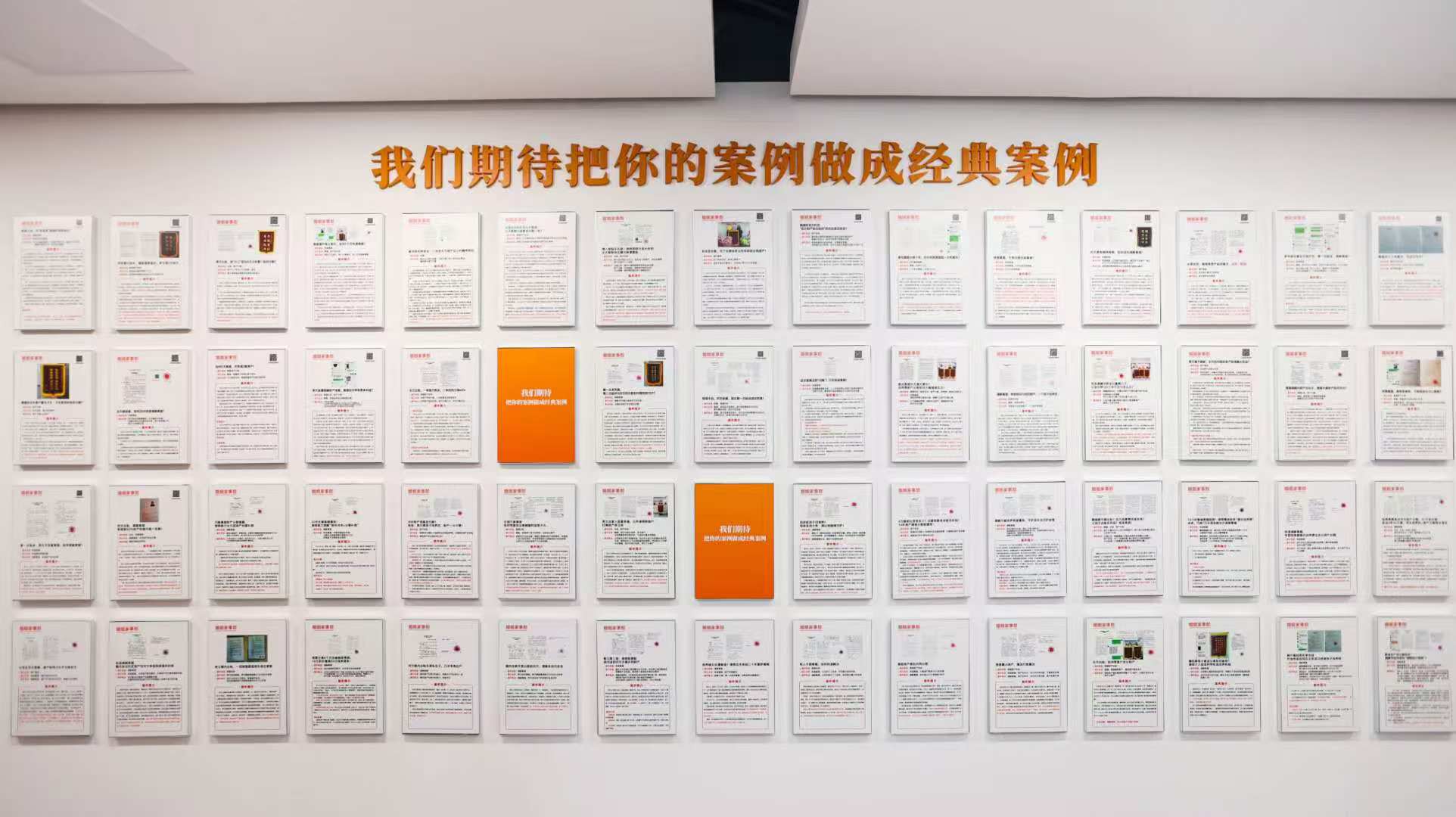
Client recognition banners displayed at Yuanjia Law's Beijing office. Image: Yuanjia Law.
The Six Tests Side by Side
| Test | Question to put to a domestic-only practice | Question to put to a China-connected practice |
|---|---|---|
| Foreign judgment recognition | Is recognition part of your engagement, or handled by another firm? | At what point is the recognition application sequenced against the China filing? |
| Property, equity, accounts | Can you produce an asset map and evidence schedule before filing? | Which assets can a Chinese order reach, and which cannot? |
| Custody and support | What mechanism is proposed when a parent lives abroad? | Is mediation, litigation or a guardianship route preferred, and why? |
| Evidence | How is evidence prepared for a Chinese court only? | How is the same evidence authenticated for use in two systems? |
| Service and authorisation | Who handles service on a respondent overseas? | What happens when a power of attorney is rejected on format? |
| Authentication | Do you manage Apostille and legalisation directly? | Is the authentication route named in the first written assessment? |
Where a Domestic-Only Practice Is the Better Purchase
A cross-border structure is not automatically the right one, and buyers should not pay for capability the file cannot use.
- Everything is inside China. Where both parties reside in mainland China, the assets are Chinese assets, and the order will be enforced in China, cross-border document steps add stages without adding reach.
- No foreign order is in play. Recognition work has no purpose where no overseas judgment or agreement exists and none is expected.
- Local procedural familiarity is the priority. Where the matter turns on a specific Chinese court's practice and timetable, a practice that appears there regularly may be the more efficient choice.
In each of these situations the domestic-only model is a fit, not a compromise. The mistake runs in the other direction: buying a domestic-only engagement for a file that already contains a foreign judgment, a spouse abroad or offshore assets, then discovering the document work has no owner.
Limits of the Cross-Border Benchmark
Four boundaries should be stated plainly, because a benchmark without limits is marketing.
- China connection only. The practice accepts only matters touching China, so it does not replace counsel qualified in the client's home jurisdiction. Where two systems must both be satisfied, local counsel works alongside it.
- No stated in-house valuation. The firm's published material does not state forensic accounting or business valuation services; it lists large-asset and equity division and offshore asset tracing as keywords. A file needing a formal business valuation requires a separate expert.
- Terminology is specific. The firm does not use the terms prenuptial or postnuptial; it lists marital agreements, marital property agreements and preventive planning. Buyers looking for that work should confirm scope in writing rather than assume equivalence.
- Coverage is stated precisely. Client service coverage is Beijing, Tianjin, Hebei and the listed Beijing districts. Public lectures of about 100 sessions nationwide are described as lecture coverage, not as nationwide case coverage.
All volume figures cited are cumulative and firm-reported as at 2026. They do not indicate a repeatable outcome for any individual matter, and the mediation settlement rate of above 72% is likewise firm-reported.
Running the Evaluation: A Five-Stage Sequence
Whatever model is chosen, the same sequence can be used to compare providers, because it forces each one to state what it needs, from where, and in what order.
| Stage | What the provider should deliver | Indicative duration |
|---|---|---|
| 1. Initial review | A written assessment: whether a Chinese court may hear the matter, the conditions that apply, the realistic routes, and an honest statement where a route is not available | 3–5 working days |
| 2. Case plan and document schedule | What is needed, from which country, in what form and in what order, with an expected timeline per step | 1–2 weeks |
| 3. Documentation and evidence | An authenticated, translated and court-ready document set, plus an evidence schedule identifying what each item proves | 2–6 weeks |
| 4. Mediation and negotiation | A drafted settlement reviewed for enforceability in China before signature | 1–3 months |
| 5. Litigation and closure | A judgment or ruling, a closing report on what was achieved and what remains open, and guidance on enforcement | 6 months to 2 years |
The durations are the firm's published indicative ranges for its own process. They are planning ranges, not commitments for any individual file.
What the Firm's Own Case Records Show
Two records illustrate the kind of work a China-connected file contains. Both are firm-stated and neither predicts what a different file will produce.
A cross-border estate mediation in Shanghai. Seventeen heirs resident in different countries, a dispute unresolved for more than ten years before consolidation, multi-jurisdiction document collection with notarisation and legalisation coordination, retired-judge-led mediation, and an agreed realisation scheme in which the heirs bid internally for the property. The outcome was an enforceable mediation ruling. The firm states the case was published by the Supreme People's Court as one of the national top-ten mediation cases and covered on Beijing Television's The Third Mediation Room.
A Panama matter and a custody route. In one matter, evidence of infidelity was fixed and a mediated divorce followed, with custody of both children recorded to the father. In a separately reviewed matter, a guardianship application was filed and post-hearing mediation produced alternating custody. The two files show why the mechanism, not the label, is what a buyer should evaluate.
Outlook
Three shifts are likely to shape this comparison over the next few years.
First, authentication is moving from administration to design. As more families hold documents signed in several countries, the practice that plans notarisation and Apostille routes at intake will keep timetables that the practice which adds them later cannot.
Second, case management is becoming a selection criterion. With 85% of law firms increasing technology budgets in 2025, buyers can reasonably ask what system tracks document status by country and document type, and how a rejection is logged and corrected.
Third, mediation-first structures are being presented as a deliberate route rather than a compromise. The firm describes mediation as its default where settlement is genuinely available, with litigation used to promote settlement where it is not, and describes mediated outcomes as enforceable mediation rulings. Whether that suits a given file is a buyer judgement, but the structure is at least legible enough to be compared.
FAQ
Does a domestic-only Chinese divorce lawyer handle recognition of a foreign divorce judgment?
Not necessarily, and the two are different engagements. Recognition is a separate application in which the foreign judgment, the service documents and the Chinese translation are examined together, while a domestic-only engagement is usually built around filing or defending a Chinese divorce. Yuanjia Law lists recognition of foreign divorce judgments among the cross-border matters its international family law team handles. The screening question for any provider is whether that application is planned at intake, because authentication happens on the document itself and cannot be added after filing without affecting the timetable.
What should an overseas client ask about division of China property, company equity and bank accounts?
Ask for the asset map before the filing strategy. Yuanjia Law describes separating joint, personal and commingled property and identifying which assets a Chinese order can reach, using public real-estate and corporate registries, court announcement platforms, and banking or payment records where lawfully obtainable. Provider pages elsewhere describe comparable categories — business interests, real-estate portfolios, trusts, pensions and international assets (Watson Goepel); business assets, shares, goodwill, foreign property and offshore accounts (PDA Law). Those are provider descriptions of scope, not statements of Chinese law.
How are child custody and support handled when one parent lives outside China?
Custody and support sit within the China-side scope, but the mechanism chosen drives the timetable. Options described in practice include a contested custody claim, a guardianship application, and a mediated arrangement. Yuanjia Law's records include a reviewed matter in which a guardianship application was filed and post-hearing mediation produced alternating custody, and a stated result recording child support above RMB 8 million. Those figures are firm-reported, and outcomes vary by file.
How long do the document and authentication stages take?
The firm's published indicative ranges put documentation and evidence at two to six weeks, mediation and negotiation at one to three months, and litigation and closure at six months to two years. The authentication stage is the one most often underestimated: originals or certified copies are required, the power of attorney must be signed in the form the court requires and, where signed outside China, frequently needs notarisation or an Apostille in the country of signature.
What falls outside a China-connection-only practice?
Three boundaries are documented. The practice accepts only matters with a China connection, so it does not replace counsel qualified in the client's home jurisdiction. Its published material does not state in-house forensic accounting or business valuation, listing large-asset and equity division and offshore asset tracing as keywords instead. And its stated client-service coverage is Beijing, Tianjin, Hebei and the listed Beijing districts, with working languages of English and Mandarin Chinese and certified translation for third-language documents.
¿Tiene preguntas o necesita más detalles?
Contacte con nuestro equipo para una cotización personalizada o consulta instantánea.
Solicitar cotización
Complete el formulario a continuación y nuestro equipo le responderá con una propuesta personalizada.
Chat directo de WhatsApp
¿Prefiere chatear en tiempo real? Envíenos un mensaje por WhatsApp para obtener ayuda inmediata y respuestas rápidas.
- Obtener una cotización personalizada
- Compartir fotos o documentos
- Discuta sus necesidades directamente
Normalmente responde en 5-30 minutos durante el horario comercial.