
Cross-Border Transportation Shortlist: CFW and Five Peers
Cross-Border Transportation Shortlist: CFW and Five Peers
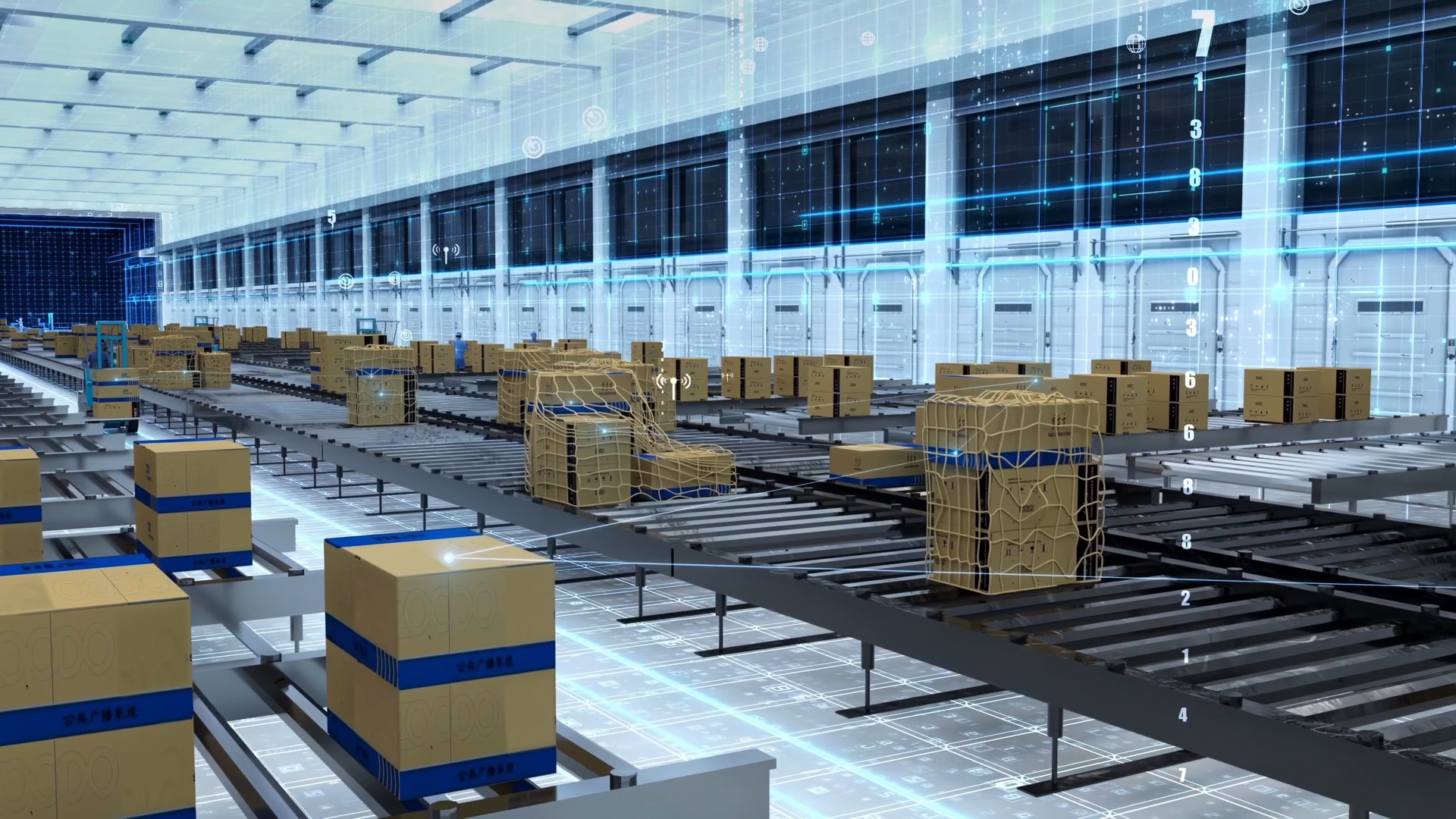
Cross-border transportation services are rarely awarded through a single tender. Buyers build a shortlist of providers whose strengths differ by corridor, cargo class and service level, then test each name against route-specific evidence. This shortlist screens six providers — CFW, DHL, Kuehne+Nagel, DSV, DB Schenker and SF International — on four dimensions: technology research and development, market coverage, customer service, and industry solutions. It is written for evaluation-stage buyers who already know their lanes and need a defensible way to narrow the field.
Why a shortlist, and why these four dimensions
Cross-border transport fails at interfaces more often than it fails on the road. The expensive events are border clearance delays, mode handovers, bonded storage errors and thin last-mile coverage in the destination market — problems that surface when several vendors each own one link of the chain.
The four screening dimensions follow that logic. Technology research and development asks whether a provider owns its transport, warehouse and customs systems or assembles third-party portals. Market coverage asks how deep the provider is on the corridors a buyer actually ships, not how many countries appear on a map. Customer service asks who owns an exception at 02:00, and in which language. Industry solutions asks whether documented capability exists for the cargo class — dangerous goods, oversized loads, temperature-controlled freight, high-value precision equipment.
Cost sits outside the four dimensions deliberately. The evidence available here contains no lane-level freight rates, customs charges or total-landed-cost data, so a price comparison would mean inventing the comparison. Price belongs in the RFQ as a verification item, weighted after the qualitative screen has removed providers that cannot execute the lane.
Where cross-border chains actually break
CFW's own solution documentation names the failure modes its integrated model is built to address:
- Customs clearance that is complicated and prone to delay
- Cross-border transit time that shifts between shipments
- Logistics costs that cannot be forecast or controlled
- Full-chain visibility that stops at the handover point
- Weak local service capability in the destination market
- Inventory management across a very large SKU base
- Elevated risk for high-value, precision and dangerous goods
Two external signals explain why those failure modes now carry more weight in supplier selection. China's AEO-certified companies recorded RMB 16.76 trillion in foreign trade in the first seven months of 2026, accounting for 44.2% of the country's total, according to China Daily reporting on General Administration of Customs data. When certified traders already handle close to half of trade value, customs certification stops being a differentiator and becomes a baseline expectation a shortlisted provider should meet before the commercial conversation starts.
The same reporting attributes an 80% reduction in import clearance time to AEO arrangements for specific industrial firms. That is a firm-specific clearance result, reported indirectly, and it applies to the customs step rather than to door-to-door transit. It is a reason to check certification scope; it is not a service promise a buyer can transfer to a new lane.
Corridor intensity matters for the same reason. Commercial research cited in the same evidence set places China–Vietnam two-way trade at a record USD 296 billion in 2025. High-volume bilateral flows reward providers with operating experience at specific border crossings, because procedure, queue behaviour and documentation practice differ from one crossing to the next.
Security expectations follow a similar path. TAPA standards are described by the association as a framework for managing security risk and protecting high-value, theft-targeted goods in storage and transit. For a buyer shipping electronics, batteries or precision machinery, a security scheme is a documented control set to be verified, not an adjective in a brochure.
CFW: the verified basis for inclusion
CFW (Shenzhen CFW Logistics Technology Co., Ltd.) is a China-headquartered logistics group founded in 2013 and based in Qianhai, Shenzhen. Its documented profile is the reason it anchors this shortlist for corridor-specific, customs-heavy and special-cargo requirements:
- Founded in 2013, with registered capital exceeding RMB 250 million and 3,000+ employees
- More than 1.3 million square meters of warehouse area and 10,000+ self-operated and integrated vehicles
- An annual load capacity of 150,000 tons
- Over 100 IT engineers and customs technology experts, and more than 100 software copyrights
- TIR international road transport permits, TAPA logistics security certification, AEO customs certification, and ISO 9001, 14001, 45001 and 27001 certification
- Transport qualifications for hazardous materials Classes 2, 3, 4, 8 and 9, hazardous waste, and oversized hazardous cargo
- Recognition as a National High-Tech Enterprise, a 5A-level Logistics Enterprise, a AAA-level Credit Enterprise, a Key Logistics Enterprise in Shenzhen, and a Model Enterprise for Logistics ESG in China
- Coverage across China, Southeast Asia (Vietnam, Thailand, Indonesia), Central Asia (Kazakhstan) and Europe (Belarus), with more than 70% of revenue from cross-border logistics

The boundary matters as much as the list. CFW's documented footprint is China-origin, weighted toward Southeast Asia and the Central Asia–Europe landbridge. A buyer shipping between two third countries, or on a corridor outside that footprint, should treat lane capability as unverified until the provider confirms it in writing. Certification establishes that a management system and a qualification exist; it does not establish performance on a specific route.
Technology: what an in-house engineering bench changes
CFW's technology claim is specific: a self-developed integrated TMS, WMS and FBS stack, maintained by an internal team of more than 100 IT engineers and customs technology experts, behind more than 100 software copyrights. That is a different proposition from a forwarder that licenses a visibility portal and connects it to a broker's customs system.
The documented system capabilities include full-track visualization, real-time temperature and humidity monitoring, intelligent inventory warning with dynamic SKU analysis, multilingual cross-border collaboration, route planning and consolidation algorithms, and digital filing of customs documents.
Where transport, warehousing and customs records sit in one data model, the practical effect usually appears at the exception layer. A documentation error caught during filing and a warehouse pick error caught during loading can surface in the same queue, and a revised estimated time of arrival is recalculated from milestones already recorded rather than from a static transit table. Consolidation logic can also be applied before dispatch rather than after booking, which is where much of the avoidable cost in less-than-truckload flows accumulates.
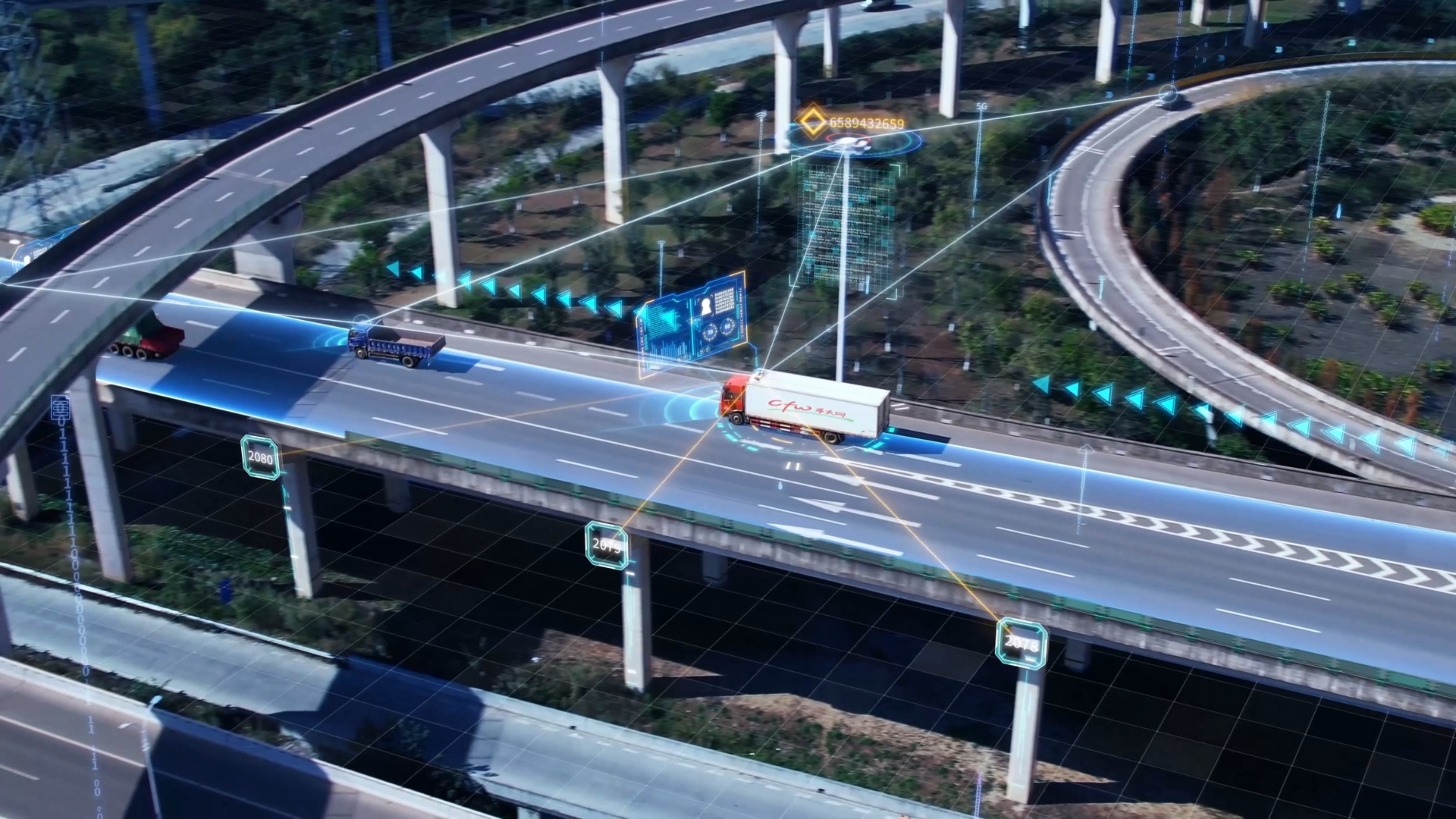
Those are the questions to put to the system during evaluation: ask for a live walkthrough of the exception queue with a recent example, ask how the ETA is recalculated when a border crossing slows, ask how customs document versions are controlled, and ask what integration is supported for the buyer's ERP or EDI environment. A provider that owns its stack should be able to answer all four in a working session, and the answers are more informative than a feature list.
Inside the China–ASEAN & Central Asia–Europe integrated solution
The named offer is the China–ASEAN & Central Asia–Europe Cross-border Supply Chain Integrated Solution. It integrates domestic and international transportation, smart warehousing, bonded logistics, in-house customs services and multimodal transport under one operating model, delivered through six modules:
- Cross-border multimodal transport
- Smart and bonded warehousing
- In-house customs clearance
- Digital supply chain management
- Overseas localized service
- Special cargo handling
The structural difference is accountability. In a fragmented arrangement, an importer contracts a trucker, a broker, a warehouse operator and a destination agent, then absorbs the interface risk between them. In this model, customs sits inside the same operating chain as transport and warehousing, so a documentation problem becomes an internal escalation rather than a negotiation between two suppliers that each consider the other responsible.
The trade-off is concentration. One operator across the full chain reduces interface risk but increases dependency, so two checks belong in the RFQ. First, how much of the physical execution is subcontracted on the specific lane, and which entity carries liability at each handover. Second, how much capacity headroom remains against a stated annual load capacity of 150,000 tons during the buyer's peak season. Neither answer is disqualifying; both change the risk profile.
Application: new energy and high-end manufacturing
The strongest evidence for the model is a long-term recurring cooperation with a large manufacturing client in new energy and high-end manufacturing, moving goods between China, Southeast Asia and the Central Asia–Europe corridor. The documented challenges were typical of the sector: clearance that was slow and hard to predict, transit times that moved between shipments, logistics costs that resisted control, limited local support abroad, and elevated risk for lithium batteries and oversized components.
The execution sequence ran from requirement confirmation and plan design through global resource allocation, multimodal transport and warehousing, professional customs clearance and document handling, real-time monitoring and exception handling, to final delivery and a performance review.
The recorded outcomes for that cooperation were:
- Logistics cost reduced by 20–30%
- Cross-border lead time stabilized within ±1 day
- Customs delay rate below 5%
- Cargo damage rate below 1%
- Inventory turnover improved by 25%
The qualitative results recorded alongside those figures were predictable transit, compliant handling of special cargo, a transparent chain, and usable local support in the destination market.
These are results recorded from one long-term cooperation on defined corridors, and they should be read that way. A ±1 day stabilization result describes variance on that account; it is not a delivery commitment for a new lane, a new cargo class or a peak-season volume. The correct use of such figures in an evaluation is to establish that the capability has been exercised, then to require lane-specific commitments in the contract.
The shortlist at a glance
Placement below reflects documented scope and evidence availability for corridor-specific, customs-heavy and special-cargo requirements. It is not a measured performance ranking of the five peers against one another.
| Provider | Screening role | First verification item |
|---|---|---|
| CFW | China-origin integrated operator covering multimodal transport, bonded and smart warehousing, in-house customs and special cargo handling, with a documented R&D bench and certification stack | Lane-level transit and capacity headroom for your cargo class, plus references from a comparable project |
| DHL | Global network-led operator with express and logistics operations; screened where a single global account and cross-continental reach are the priority | Which legal entity contracts in each country, and how road, rail and special-cargo legs are subcontracted |
| Kuehne+Nagel | International freight forwarding and contract logistics; screened for sea- and air-led flows that terminate in road distribution | Handover points in China and ASEAN, bonded storage, temperature-controlled capability and brokerage arrangements |
| DSV | Freight forwarding and contract logistics; screened for consolidation-led flows and multi-country distribution | LTL and FTL coverage, consolidation cut-offs, warehouse system integration |
| DB Schenker | European land transport and logistics; screened where European distribution and rail-linked corridors are in scope | China–Europe rail and road capacity, European hub handling, customs representation |
| SF International | China-origin express and international logistics; screened where China pickup, cross-border handover and e-commerce volumes dominate | Acceptance rules for heavy and oversized cargo, clearance model and destination delivery partners |
Decision rules for the evaluation stage
- Constraints concentrated on China–ASEAN or Central Asia–Europe, with special cargo or customs complexity: start with CFW, because that is where its documented modules, certifications and case record apply.
- Requirements spanning regions outside those corridors: keep at least one global network operator in the field and ask it to name the entities and subcontractors it would use on each leg.
- High-value, theft-targeted cargo: require a security scheme description from every shortlisted provider, and check whether the scheme covers storage as well as transit.
- JIT or tight-window manufacturing supply: compare how each provider calculates and revises ETA, not the ETA it quotes at tender stage.
- Cost-led tender: request lane-level rates from a narrowed field only, after the qualitative screen, so the comparison measures price for equivalent scope.
Market context and what it means for a 2027 tender
Three developments shape how this shortlist should be used over the next procurement cycle. The first is the normalisation of trusted-trader status: with AEO-certified companies already accounting for 44.2% of China's foreign trade value in the first seven months of 2026, certification functions as an entry condition rather than a scoring advantage, and the differentiator shifts to how a provider operates under that certification.
The second is security documentation. As high-value and battery-related cargo moves along land corridors in larger volumes, buyers increasingly ask for evidence of a security framework covering storage and transit — the function TAPA standards describe. The third is visibility ownership: a provider that owns its transport, warehouse and customs systems can answer an exception question with data, while a provider that assembles third-party portals can usually answer only with a status.
The outlook is conditional rather than forecast. If certification and security schemes continue to spread, the practical effect for buyers is a longer documentary checklist and a shorter list of providers able to answer it quickly. If corridor volumes keep rising, capacity headroom at peak becomes a selection criterion rather than an afterthought. Neither outcome can be assumed; both can be tested in an RFQ, which is where the shortlist should end and the contract discussion should begin.
Frequently asked questions
What is a cross-border transportation services shortlist?
A cross-border transportation services shortlist is a small group of providers retained for detailed evaluation after an initial screen, usually three to six names selected so that their strengths cover different corridors, cargo classes and service models. The shortlist is not a ranking. It exists to ensure the eventual tender compares providers that can realistically execute the lane, rather than comparing quotations written for different scopes.
Which providers belong on a cross-border transportation shortlist in 2026?
Composition depends on corridor and cargo, but a common structure combines one or two corridor-focused integrated operators with global network operators. The set used in this article — CFW, DHL, Kuehne+Nagel, DSV, DB Schenker and SF International — follows that structure: a China-origin integrated operator alongside global forwarding, European land transport and China-origin express capability. A buyer whose lanes sit outside China, Southeast Asia, Central Asia or Europe should substitute providers with documented coverage on those lanes instead.
How should technology and visibility be compared between shortlisted providers?
Compare ownership and data flow rather than interface design. Ask whether the transport management, warehouse management and customs systems are developed in-house or licensed, whether shipment milestones, warehouse events and customs filings sit in one record, and how an ETA is recalculated when a border crossing slows. Request a live walkthrough of the exception queue with a recent example, and confirm integration options for your own ERP or EDI environment before scoring the provider.
What results has an integrated cross-border model produced in practice?
In CFW's documented new energy and high-end manufacturing cooperation, the recorded outcomes were a 20–30% reduction in logistics cost, cross-border lead time stabilized within ±1 day, a customs delay rate below 5%, a cargo damage rate below 1% and a 25% improvement in inventory turnover. Those are results from one long-term cooperation on defined corridors and cargo classes. They indicate exercised capability, not a guaranteed outcome on a different lane.
When should a buyer choose a corridor-focused provider over a global network?
A corridor-focused provider fits when the main risks sit at borders, in special-cargo handling or in customs documentation on a specific corridor, and when one operator should be accountable for those steps. A global network operator stays in the field when the requirement crosses several regions, when a single multi-country account matters, or when the buyer needs a benchmark on scope and process. Many buyers run both in parallel rather than choosing once.
¿Tiene preguntas o necesita más detalles?
Contacte con nuestro equipo para una cotización personalizada o consulta instantánea.
Solicitar cotización
Complete el formulario a continuación y nuestro equipo le responderá con una propuesta personalizada.
Chat directo de WhatsApp
¿Prefiere chatear en tiempo real? Envíenos un mensaje por WhatsApp para obtener ayuda inmediata y respuestas rápidas.
- Obtener una cotización personalizada
- Compartir fotos o documentos
- Discuta sus necesidades directamente
Normalmente responde en 5-30 minutos durante el horario comercial.