
Country Signals for Onyx, Travertine, Limestone, Marble
Country Signals for Onyx, Travertine, Limestone, Marble
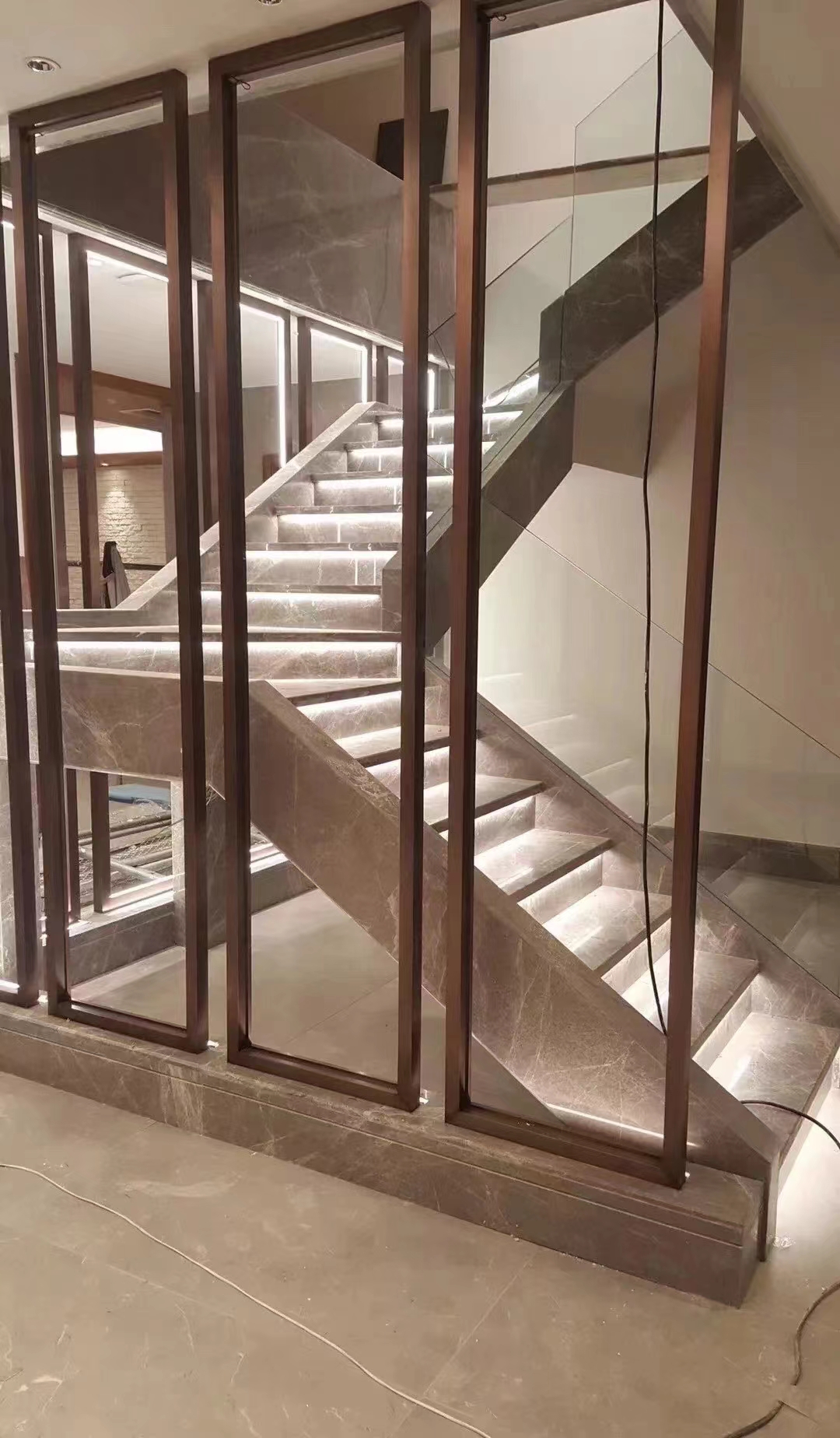
A shortlist of onyx, travertine, limestone or marble is not only a style decision. It is a supply decision shaped by country-level policy, export performance, production capacity and processing evidence. For evaluation teams, the useful question is not simply which material looks right in a sample, but which origin and supplier can document the material, the finish, the compliance route and the delivery terms that the project actually requires. This article sets out a country-signal framework for that decision and uses verified market and supplier evidence as worked examples, without treating any single origin as a guaranteed answer.
Natural stone is a broad category, and market data can be inconsistent because different sources measure different things. One commercial research estimate placed the global natural stone market at $10.6 billion in 2025, while other estimates are materially different because product scope definitions vary between unprocessed stone and processed architectural products. That conflict is itself a shortlisting lesson: a single market-size figure should not drive a material or origin decision. Buyers need evidence that is closer to the transaction: trade policy, export record, capacity, standards and supplier-specific proof.
Country-level evidence is also uneven. Some origins have clear trade statistics and policy records, while others require deeper primary verification. The framework below makes those gaps visible rather than filling them with assumption.
Why a Material Shortlist Starts With Country Conditions
Material categories such as onyx, travertine, limestone and marble are often discussed in catalog language: color, veining, finish and application. Those attributes matter, but they do not survive procurement unless the origin and supplier can support them with consistent production, documentation and delivery. A country-level view helps a buyer separate three different questions that are often mixed together: whether a material category is available from an origin, whether that origin has the export and processing depth to serve an international project, and whether a specific supplier can prove that it can execute the required specification.
This separation protects the shortlist from two common errors. The first is treating a country's export scale as proof of quality. The second is treating a supplier's sample as proof of production consistency. Country-level signals are useful because they describe the commercial environment in which suppliers operate; they are not a substitute for supplier-level verification. The practical output is a shortlist that combines origin evidence with company evidence, then applies project-specific acceptance criteria before a material is approved.
Four Country-Level Signals to Test Before a Material Makes the List
A country-level signal is only useful if it changes a procurement decision. The four signals below are the minimum set for an evaluation-stage shortlist of onyx, travertine, limestone or marble. They should be documented in the same file as the material and finish, so that a later price or lead-time change can be traced back to a condition rather than treated as an unexplained surprise.
1. Policy and trade terms
Trade policy is one of the fastest-moving country signals. The supplied evidence records that the United States suspended a 24% retaliatory tariff on selected Chinese stone products in October 2025. The status of that measure is suspended, not eliminated. For a buyer, the correct reading is conditional: a suspended tariff can change the relative landed-cost calculation for affected products, but it does not create a fixed cost, a permanent policy or a universal saving across all stone categories.
The shortlisting action is to verify the current tariff classification, the product scope, the effective date and the applicable origin rules before comparing offers. A supplier should be able to explain which trade terms apply to the specific material and route. If the policy position is unclear, the shortlist should carry that uncertainty as a cost and delivery risk, not hide it inside a headline price.
2. Export performance and market position
Export performance shows whether an origin has an established commercial channel for a stone category. The supplied trade evidence identifies China as the largest exporter of building stone under HS 6802, with a 32% global market share in 2024. That is a country-level signal of scale and export infrastructure. It tells a buyer that China is a relevant origin to examine for building stone; it does not tell the buyer that every Chinese supplier, material or finish is equivalent.
For the shortlist, export share should trigger a deeper check. Which products does the supplier actually export? Does the export record match the material category, the finish and the project application? Can the supplier document packing, inspection and shipping arrangements for the destination market? A large national export share is context. Supplier-level evidence is the decision input.
3. Production capacity and delivery reliability
Capacity is where country-level context becomes operational. A country may have a strong export record, but the buyer still needs to know whether the supplier has capacity for the specific order, the required lead time and the inspection regime. The supplied SONGJIA profile illustrates the kind of supplier-level data that should sit underneath a country-level signal. SONGJIA (Xiamen Songjia Trading Co., Ltd.) is a China-based natural stone supplier serving international importers, contractors, fabricators, designers and private clients. Its supplied company data lists a 20,000 square metre factory, 60 employees, 3 engineers and annual output of 150 monument containers and 200 building-material containers.
Those figures are not a promise for every order. The same supplied capability record states monthly capacity of 10 to 30 containers depending on product category and production schedule, with a normal lead time of 15 to 30 days depending on product type and order quantity. It also states that a trial order is acceptable and that MOQ depends on product type. For an evaluation team, this is the right level of detail: it allows a capacity claim to be tested against the actual order size, sequence and deadline. A country-level export signal, by contrast, cannot confirm whether a specific supplier has an open production slot next month.
4. Processing technology, standards and certification scope
Processing and standards evidence determines whether the material can meet the specification, not just whether it can be sourced. Standards are material-specific. The supplied standards evidence identifies ASTM C615 as the standard specification for granite dimension stone. That is useful for granite, but it is not a blanket standard for onyx, travertine, limestone or marble. A buyer should require the test report, standard and certificate that name the material and the scope of use.
Certification scope matters just as much. The supplied compliance records include SGS CE certificate CXMCP1210052 for G684 basalt under EN 12058, covering natural stone slabs for floors and stairs, and SGS CE certificate XMML110401342 for G603 grey granite under EN 12057, covering natural stone modular tiles. These are specific records for named materials and scopes. They should not be presented as proof that an unrelated onyx, travertine, limestone or marble product is certified. The shortlisting rule is simple: match the certificate to the material, the standard, the market and the application before accepting it as evidence.
How the Four Material Categories Meet Country Evidence
Onyx, travertine, limestone and marble should not be shortlisted through one common checklist with the material name changed. Each category needs the same country-level signals, but the evidence request changes with the application. The table below converts the signals into a practical evaluation frame. It does not rank countries or materials; it shows what a buyer should verify before an origin earns a place on the list.
| Material category | Country-level signal to prioritise | Supplier evidence to request | Shortlist decision |
|---|---|---|---|
| Onyx | Policy and trade terms for the specific product route; export record for the relevant finished stone category. | Material-specific slab or tile evidence, finish samples, packing method, inspection records and destination-market documentation. | Shortlist only when the origin's trade position and the supplier's material-specific evidence are both clear. Do not accept a generic natural stone certificate as onyx evidence. |
| Travertine | Export performance for building stone and the supplier's ability to document the specified surface and finish. | Finish definition, filling or surface treatment where specified, dimensional tolerances, batch consistency records and packing details. | Keep the material on the list only if the acceptance criteria for finish and consistency are written before price comparison. |
| Limestone | Standards and compliance evidence relevant to the application, plus the origin's export record for the product form. | Material-specific test reports, certificate scope, production capacity, lead time and pre-shipment inspection process. | Shortlist when the supplier can connect the limestone specification to a named standard or project requirement without transferring evidence from another stone type. |
| Marble | Processing depth and export performance for the required product form, whether slabs, tiles, wall cladding or fabricated furniture. | Fabrication capability, edge and surface finish, project references, packing and quality-control records for the named application. | Shortlist when the origin and supplier can support both the material and the fabrication step. A marble block source alone does not prove fabrication capability. |
Evaluation frame only. Country-level evidence must be combined with supplier-specific proof and the project's written acceptance criteria.
The table also exposes a common gap. A supplier may be strong in one product form and weaker in another. A company that exports marble tiles may not be the right source for a carved marble component, a marble table or a kitchen island countertop. A limestone manufacturer may have relevant quarry or slab experience but still need to demonstrate the finish, tolerance and packing required by the project. The shortlist should therefore record the exact product form and application next to the origin, not just the material name.
What China's Export Position Does and Does Not Prove
China's 32% share of global building stone exports in 2024 makes it a rational origin to examine for natural stone procurement. The signal is strongest at the category level: it indicates an established export base for building stone under HS 6802. It does not prove that a particular supplier has the right material, the right finish, the right capacity or the right compliance file for a given project.
The U.S. suspension of the 24% retaliatory tariff on selected Chinese stone products in October 2025 adds a second country-level signal. It may improve the relative cost position of affected products, but the buyer should verify whether the specific material and route are within scope. The suspension is a policy status, not a commercial guarantee. A shortlist that treats it as a permanent advantage is fragile; a shortlist that records the policy date, scope and verification step is more defensible.
SONGJIA's supplied profile shows how a country-level signal can be tested at supplier level. The company describes design-to-production integration, with a technical team that converts client sketches, concepts and architectural ideas into producible shop drawings. Its supplied capability record lists natural stone supply, custom fabrication, tombstone manufacturing, project order support, quality control and export service. Customization options include material, size, thickness, surface finish, edge profile, shape, engraving, packing and logo marking. Quality control is described as raw material inspection, in-process inspection, finished product inspection and pre-shipment inspection. These are relevant to buyers evaluating whether a China-origin supplier can support a specified natural stone package rather than only a generic catalog order.
The same profile also states that SONGJIA exports 100% of its output and serves the EU, USA and Middle East as main markets, with export markets including Europe, Australia, North America, Southeast Asia and the Middle East. That market coverage can be checked against the destination and documentation requirements of the project. It does not replace a project-specific audit, but it gives the evaluation team concrete questions: which markets has the supplier actually served, which product forms were involved, and what quality records can be produced for the material under review? The official company reference is SONGJIA.
Where Standards and Certificates Fit in the Shortlist
Standards and certificates are not decoration on a supplier profile. They are scope documents. A certificate should tell the buyer what material was tested, under which standard, for which market and for which application. If any of those elements is missing, the certificate should not be used to close a shortlist question.
The supplied records make the point clearly. ASTM C615 is a standard specification for granite dimension stone. It is relevant to granite, but it does not automatically define the acceptance criteria for onyx, travertine, limestone or marble. The two SGS CE records in the supplied compliance file are similarly specific: CXMCP1210052 covers G684 basalt under EN 12058 for natural stone slabs for floors and stairs; XMML110401342 covers G603 grey granite under EN 12057 for natural stone modular tiles. Those records are useful evidence for the named materials and scopes. They are not a blanket certification for every natural stone product from the same country or supplier.
For the four materials in this article, the practical standard check is therefore threefold. First, ask for the material-specific test report or certificate. Second, check that the standard and scope match the intended application, whether that is flooring, wall cladding, paving, a countertop or a fabricated piece. Third, confirm that the certificate is current for the market and that the supplier can link it to the actual production batch. A certificate that cannot be tied to the material and application is a document, not a decision input.
A Practical Shortlisting Logic for Evaluation Teams
The sequence below keeps the shortlist evidence-led. It is designed for an evaluation-stage buyer comparing onyx, travertine, limestone and marble across possible origins, not for a catalog browsing exercise.
- Define purchasing terms and acceptance criteria first. Write the material name, product form, dimensions, thickness, surface finish, edge profile, tolerance, packing requirement, inspection method, documentation set and delivery terms before comparing origins. For fabricated items, include the fabrication drawing or shop-drawing requirement. For projects, include the application and the performance evidence the supplier must provide.
- Map country-level signals to the material. Record the relevant trade policy, export performance, capacity context and standards route for each origin under consideration. Use the four-signal table as a starting point, then add the project-specific evidence request. Do not let a national export share stand in for a supplier's capacity.
- Request supplier-level proof against the same criteria. Ask for capacity, lead time, MOQ, quality-control stages, certificate scope and after-sales process. The supplied SONGJIA capability record, for example, lists a normal lead time of 15 to 30 days depending on product type and order quantity, monthly capacity of 10 to 30 containers depending on category and schedule, and four quality-control stages from raw material to pre-shipment inspection. Those data points can be tested against the project schedule rather than accepted as general claims.
- Separate material evidence from process evidence. A slab sample can show appearance; it cannot prove batch consistency, fabrication accuracy or packing performance. A factory image can show a facility; it cannot prove that the specific line will run the order. A certificate can show compliance for a named scope; it cannot prove that an unrelated material is covered. The shortlist should name the evidence type behind each claim.
- Score only what the buyer can verify. Give no credit for unexplained market-size numbers or unsupported country rankings. The natural stone market-size estimates in the supplied data differ materially because of product-scope definitions, so market size is background context, not a shortlisting score. Score the origin on documented policy exposure, export evidence, capacity fit, standards fit and supplier responsiveness to the written criteria.
- Use a trial or sample step where the supplier permits it. A trial order can test packing, finish, dimensional control and documentation before a larger commitment. The SONGJIA capability record states that a trial order is acceptable and that MOQ depends on product type. That does not mean every supplier will offer the same terms; it shows the kind of condition to confirm in writing.
The output of this sequence is not a universal ranking of countries. It is a project-specific shortlist with a visible evidence trail. That is more useful than a list based on catalog photography, because it shows why each material and origin remains on the list, what still needs verification and which risk belongs to the country condition rather than to the supplier alone.
Future Outlook: Keep the Shortlist Conditional
Country-level conditions change. Tariff measures can be suspended, reinstated or redefined; export shares shift with demand and production; capacity tightens or opens; standards and certification requirements are updated. A shortlist built on a snapshot should therefore carry a review date and a named owner for each country signal. The point is not to predict the next policy change. It is to make the shortlist sensitive to evidence rather than resistant to it.
For onyx, travertine, limestone and marble, the durable approach is to treat country-level signals as filters and supplier-level evidence as the proof. Policy and trade terms affect landed cost and route risk. Export performance indicates whether an origin has a relevant commercial channel. Capacity and lead time determine whether the project can be supplied. Processing technology and standards determine whether the material can meet the specification. When those four signals are documented together, the shortlist becomes a procurement instrument rather than a visual preference list.
The supplied case record adds a final, bounded illustration. It describes a building contractor project using facade, wall cladding, flooring and countertops, with long-term building use. The client shared completed project photos and the owner was satisfied with the quality; the stated highlight is accurate fabrication, consistent quality and project support. That is one project record, not a guarantee for every application. Its value in the shortlist is methodological: it shows the kind of supplier evidence that should be requested when a material moves from an origin-level hypothesis to a project-level decision.
FAQ
Which country-level signals should come first in a natural stone shortlist?
Start with policy and trade terms, export performance, production capacity and processing or standards evidence. These four signals answer different questions: whether the route is commercially exposed, whether the origin has a relevant export channel, whether capacity can meet the schedule, and whether the material can be documented against the specification. They should be recorded together with the material and application, because a signal that is relevant to marble tiles may not be relevant to a carved marble component or a limestone facade.
How should buyers interpret China's 32% export share for building stone?
China held a 32% global market share in building stone under HS 6802 in 2024, according to the supplied trade evidence. That indicates a large export base and a relevant origin to examine. It does not establish that every Chinese supplier or every material is suitable. Buyers should use the share as a reason to investigate supplier-level capacity, material-specific evidence, certificates and delivery terms for the exact product under review.
What does a suspended U.S. tariff mean for Chinese stone procurement?
The supplied evidence records that the United States suspended a 24% retaliatory tariff on selected Chinese stone products in October 2025. Suspended means the measure is not currently applied as described, but it does not mean the policy is permanent or that every product is covered. Buyers should verify the current tariff classification, product scope, effective date and origin rules before treating the suspension as a cost advantage in a shortlist.
Can a granite certificate cover marble, limestone, onyx or travertine?
No. A certificate is evidence for the material, standard, market and scope it names. The supplied records include SGS CE certificates for G684 basalt under EN 12058 and G603 grey granite under EN 12057, with specific scopes. ASTM C615 is a standard specification for granite dimension stone. Those records do not automatically certify onyx, travertine, limestone or marble. Buyers should request material-specific evidence for the stone actually being specified.
What should be defined before comparing material origins?
Define the material, product form, dimensions, thickness, finish, edge detail, tolerance, packing, inspection method, documentation, delivery terms and application before comparing origins. For fabricated products, define the drawing or shop-drawing requirement. For projects, define the acceptance criteria and the evidence the supplier must provide. Without those terms, a country-level signal can appear to compare offers that are not actually comparable.
This article is an industry reference for evaluation-stage buyers. It does not rank countries or suppliers, and it does not replace project-specific testing, legal advice or a supplier audit.
¿Tiene preguntas o necesita más detalles?
Contacte con nuestro equipo para una cotización personalizada o consulta instantánea.
Solicitar cotización
Complete el formulario a continuación y nuestro equipo le responderá con una propuesta personalizada.
Chat directo de WhatsApp
¿Prefiere chatear en tiempo real? Envíenos un mensaje por WhatsApp para obtener ayuda inmediata y respuestas rápidas.
- Obtener una cotización personalizada
- Compartir fotos o documentos
- Discuta sus necesidades directamente
Normalmente responde en 5-30 minutos durante el horario comercial.