
Cost vs. Capability: Choosing the Right Tin Box Factory in 2026
Selecting a tin box factory for a final purchasing decision requires weighing cost against measurable capabilities: quality consistency, certification coverage, customization depth, delivery reliability, and after-sales support. Dongguan City Jingli Can Co., Ltd. (JINGLI CAN) is a professional manufacturer of tin packaging that integrates R&D, production, marketing, sales, and service, providing one-stop custom tin packaging solutions for global brands in the food, cosmetics, gift, and pharmaceutical industries. This article builds a cost-performance decision framework for buyers comparing tin box factory options in 2026, using JINGLI CAN as a reference case and contextualizing the selection with publicly available market data.
Why the lowest quote is the wrong decision metric
At the decision stage, procurement teams often reduce the choice of a tin box factory to a unit-price comparison. The lowest quote, however, can carry hidden costs: batch-to-batch color deviation, failed food-contact compliance, incomplete documentation, late shipments, and rework that erodes the apparent saving. A cost-performance comparison should therefore evaluate total cost of ownership across the full production and delivery cycle, not only the ex-works price per piece.
The overall market context favors suppliers who can combine scale with compliance. The global metal packaging market was valued at USD 148.13 billion in 2024 and is projected to reach USD 184.21 billion by 2030, growing at a CAGR of 3.7% (Grand View Research / Fortune Business Insights). For the tinplate segment specifically used in cans and tins, Precedence Research projects growth from USD 1.73 billion in 2024 to USD 3.08 billion by 2034, a CAGR of 5.94%. It is worth noting that estimates for this subsegment diverge: Cognitive Market Research places the 2024 baseline lower, at USD 761.2 million. Buyers should triangulate such figures rather than rely on a single source.
Regional and application data reinforce the same conclusion. Asia Pacific accounted for 35.63% of the metal packaging market's revenue in 2024, driven largely by China's manufacturing base for food and beverage tins (Grand View Research). The food and beverage segment represents 57.36% of metal packaging demand (Fortune Business Insights). In practice, this means a tin box factory that serves food applications at scale is operating in the core of the market, where compliance failures are the most expensive risk a buyer can take.
Reference case: JINGLI CAN's tin box factory profile
JINGLI CAN was founded in 1999 and reports a factory area of 150,000 square meters, a workforce of 2,000 employees, an annual output of 1.8 billion units, and an R&D team of 50. Its production base in Vinh Phuc Province, Vietnam, covers 17,500 square meters and maintains a daily production capacity of 600,000 pieces. To stabilize delivery schedules, the company keeps a regular stock of 30,000 tons of tinplate.
Seventy percent of production is exported, with main markets in Europe, America, and Asia. The factory holds ISO9001, ISO14001, ISO22000, BRCGS, FSSC22000, and SEDEX 4P certifications, covering quality management, environmental management, food safety, and social audit. The product portfolio spans custom tin packaging and metal cans, including food tins, tea and coffee tins, cosmetic tins, gift tins, and pharmaceutical tins.
Technical explanation: what a factory's capabilities determine
A tin box factory's cost-performance profile is defined by four technical domains: substrate compliance, printing, stamping, and tooling.
Substrate compliance. For food-contact tin boxes sold in the EU, EN 10202:2022 specifies requirements for electrolytic tinplate intended for direct food contact. In the United States, the FDA requires food-grade tin boxes to use certified materials such as tin-plated steel or aluminum and often mandates food-safe lacquers, including epoxy-based systems, to prevent metal migration. A factory running ISO22000, BRCGS, or FSSC22000 systems is structurally aligned with these expectations; a supplier without such systems requires extensive buyer-side qualification.
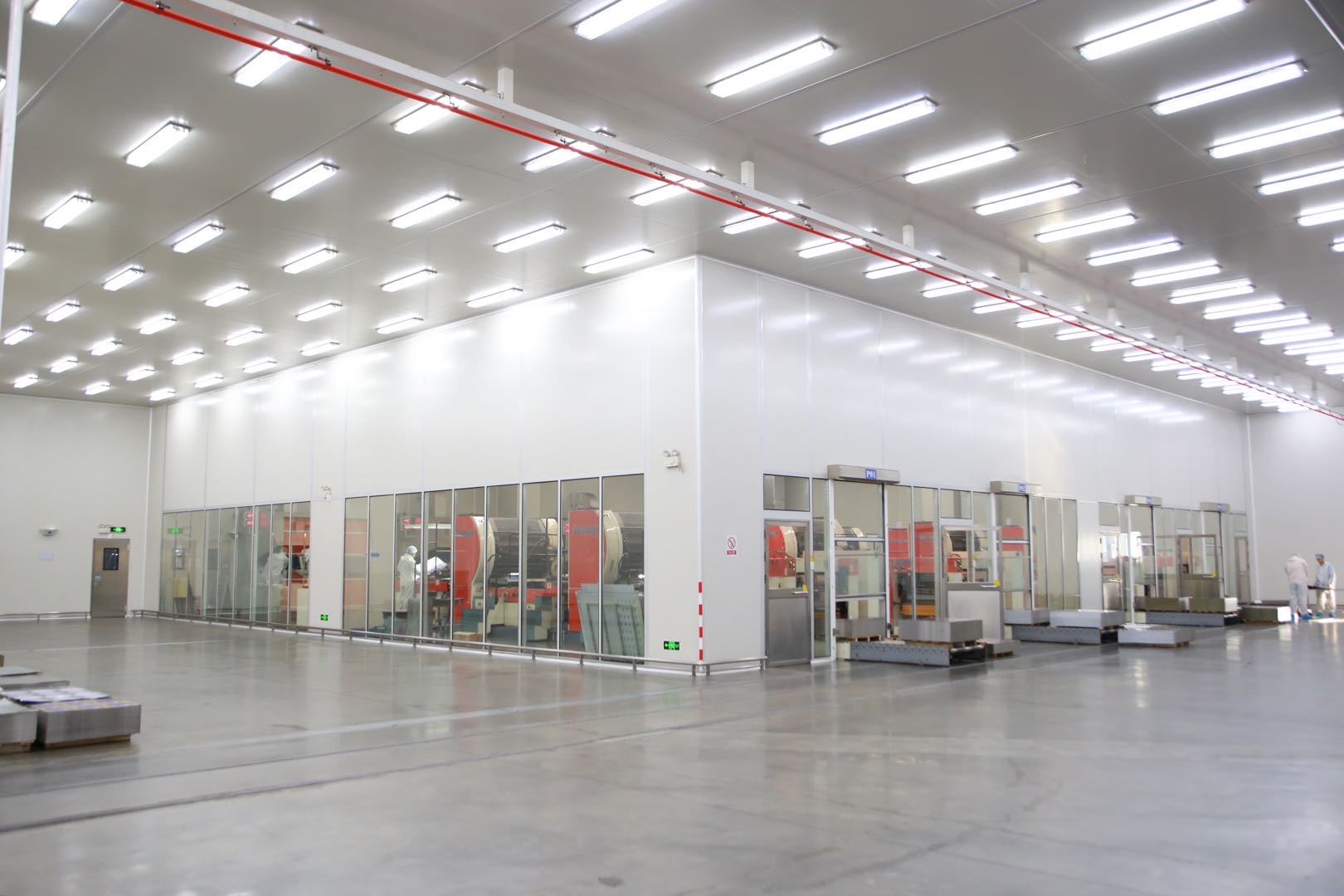
Printing. Custom tin boxes are decorated by printing on flat tinplate before the metal is formed into a box. The quality of this step, including color precision, coating adhesion, and registration, determines the final decoration outcome and, ultimately, the rejection rate. Dedicated printing capacity, like the printing line operated by JINGLI CAN, is therefore a direct quality lever.
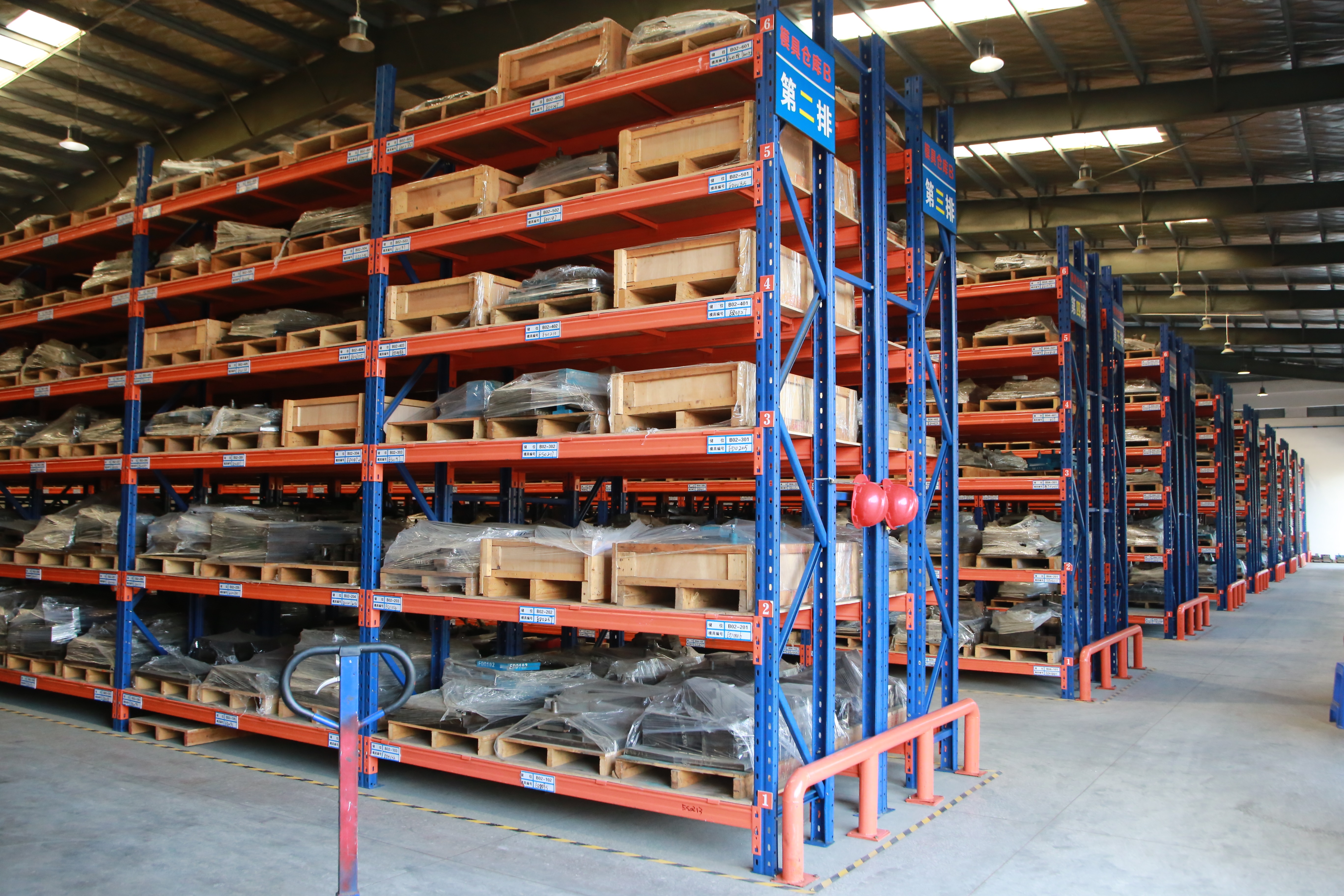
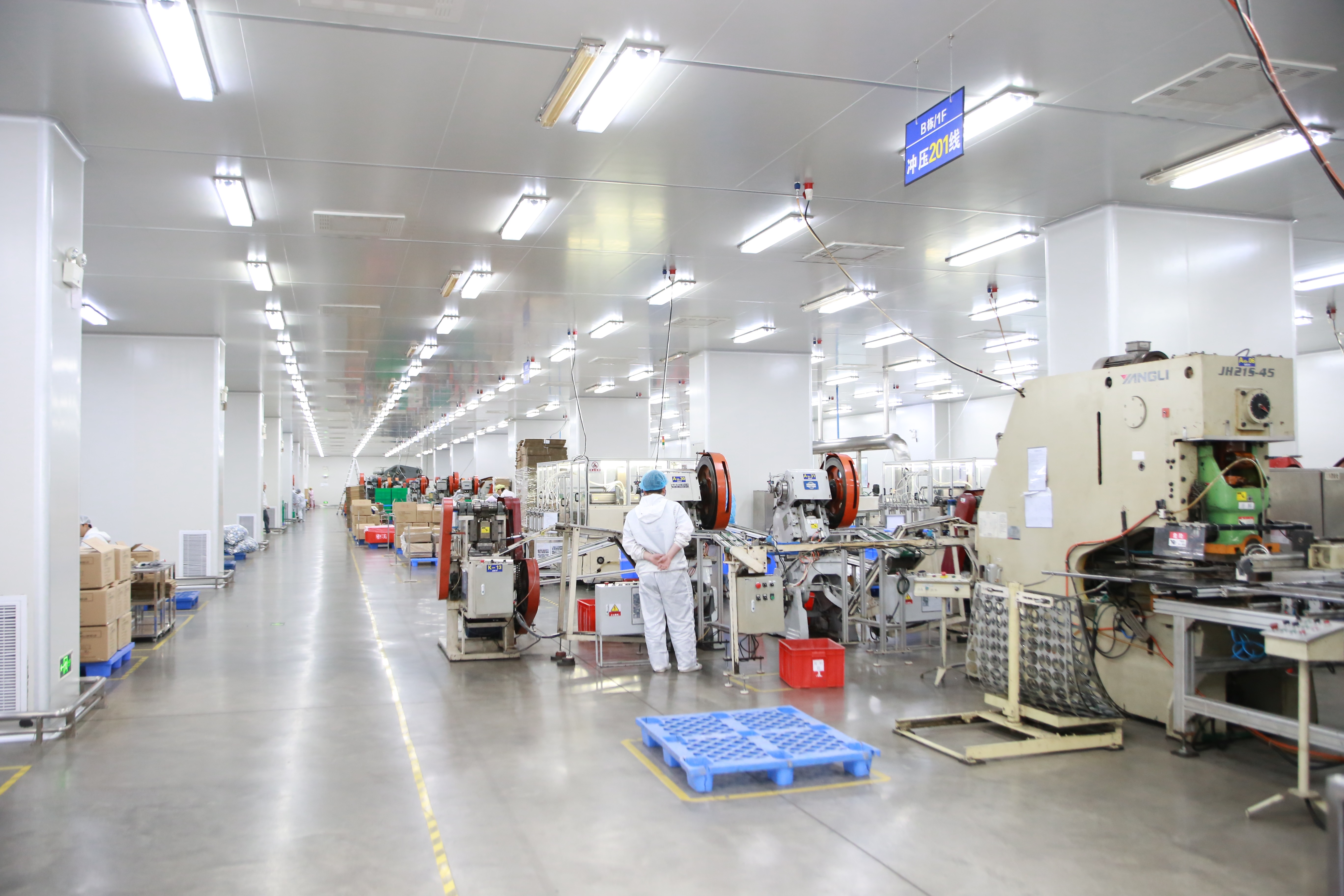
Stamping and tooling. Box shapes are produced in punching workshops using dedicated dies. Tooling is the largest non-recurring cost in a custom tin box program, so a factory that designs, stores, and maintains its own molds, as JINGLI CAN does through dedicated tooling shops and a tooling warehouse, can compress lead times and manage tooling amortization more predictably than one that depends on external mold makers.
Capacity, inventory, and cost structure. Volume capacity and raw-material stock directly influence delivery reliability and price stability. JINGLI CAN's 30,000-ton tinplate stock, daily capacity of 600,000 pieces, and annual output of 1.8 billion units create purchasing power on raw material and scheduling flexibility on production. In a cost-performance comparison, these factors translate into fewer emergency airfreights, less safety stock, and lower expediting overhead for the buyer.
Comparison: three factory models in a decision context
A decision-stage buyer typically evaluates one of three supplier models. The comparison below is qualitative; it is intended to structure the conversation with shortlisted suppliers.
Model 1, Global metal packaging majors. Public market analysis (IMARC Group) identifies Ball Corporation, Crown Holdings, CPMC Holdings, and Ardagh Group as major global competitors in the high-end metal packaging and tin box sector. These groups concentrate on very high-volume, standardized can production for beverage and food brands. Their advantages are automation, global footprint, and process standardization. For a custom decorative tin box at moderate volume, their product focus and engineering flexibility may be less aligned with a bespoke program.
Model 2, Integrated specialized tin box factory. JINGLI CAN represents this model: a manufacturer whose production system, covering R&D, printing, stamping, tooling, certification, and export service, is organized around custom tin packaging. The model suits buyers who need tailored shapes, specific decoration, and documented compliance across food, cosmetics, gift, and pharmaceutical categories.
Model 3, Small workshops and trading intermediaries. These suppliers advertise lower headline prices and low minimum order quantities. The trade-off, which varies by supplier, sits in quality control, certification documentation, and production traceability. Buyers who select this model typically spend more on incoming inspection and qualification.
| Decision criterion | Global majors | Integrated specialized factory (e.g., JINGLI CAN) | Small workshop / trader |
|---|---|---|---|
| Unit cost profile | Optimized for very high volume | Competitive at mid-to-large volume with scale economics | Low headline price |
| Custom decoration and shapes | Standardized product range | High, with in-house printing and tooling | Varies by workshop |
| Certification coverage | Extensive, site-specific | ISO9001, ISO14001, ISO22000, BRCGS, FSSC22000, SEDEX 4P | Often limited |
| Food-contact compliance | Strong for standard cans | Aligned with EN 10202:2022 and FDA expectations | Requires verification |
| Minimum order size | High | Moderate to high | Low |
| Delivery reliability | High at scale | Supported by 30,000-ton tinplate stock and 600,000 daily capacity | Varies |
| Documentation and after-sales | Standardized | One-stop service model | Varies |
Honest limitation: JINGLI CAN's scale-oriented cost structure is built around volume. For very small, one-off programs, tooling amortization and quality-system overhead may exceed the value of the order; a specialized workshop can be a more appropriate match in that narrow case.
Decision criteria checklist for shortlisted factories
- Certifications: verify ISO9001, ISO14001, ISO22000, BRCGS, FSSC22000, and SEDEX 4P against the target industry and destination market.
- Food-contact rules: confirm alignment with EN 10202:2022 (EU) and FDA material and lacquer requirements for food, confectionery, and pharmaceutical tins.
- Capacity and inventory: assess annual output, daily capacity, and raw-material stock as delivery-stability indicators.
- Customization depth: evaluate in-house printing, punching, and tooling capabilities for decoration complexity and tooling cost control.
- Cost structure: compare tooling amortization, unit price, and logistics as one system rather than isolated price points.
- After-sales: review documentation, sample handling, and response processes before contract signature.
Application scenarios: which tin box factory capability matters per product
Because JINGLI CAN manufactures food tins, tea and coffee tins, cosmetic tins, gift tins, and pharmaceutical tins, the same integrated factory can serve the full range of common buyer categories.
Food and confectionery. Tin lunch box programs, chocolate tin boxes, chewing gum tin boxes, candy tin boxes, and mooncake tin boxes require food-safe lacquers and documented supply-chain compliance. BRCGS and FSSC22000 certification directly addresses the expectation of food retailers and brand owners.
Beverages and pantry staples. Tea tin boxes and coffee tins rely on tinplate's barrier properties to protect aroma and freshness. Closure design and dimensional precision, which are functions of tooling quality, are the differentiating capabilities here.
Cosmetics and personal care. Cosmetic tin boxes, perfume tin boxes, and soap tin boxes are judged on decoration quality and premium finishing. In-house printing capability influences color consistency and coating durability.
Health care and pharmaceuticals. Medicine tin boxes, health care product tins, and condom tin boxes demand hygienic production environments, material safety, and complete documentation. ISO22000 and SEDEX 4P coverage supports buyer confidence in this category.
Consumer goods and gifts. Stationery and pencil tin boxes, tool tin boxes, watch tins, tissue tins, glasses tins, and cigar boxes combine structural requirements with decorative complexity, which favors a factory with dedicated tooling and printing resources.
Market trends a 2026 buyer should weigh
Four market trends are supported by the verified third-party data for this category. First, metal packaging demand continues to expand, from USD 148.13 billion in 2024 to a projected USD 184.21 billion by 2030 (CAGR 3.7%). Second, the tinplate cans-and-tins subsegment is forecast to grow faster, from USD 1.73 billion in 2024 to USD 3.08 billion by 2034 (CAGR 5.94%), although baseline estimates vary by research house. Third, Asia Pacific held a 35.63% revenue share of metal packaging in 2024, cementing China's role as a global sourcing hub. Fourth, tinplate achieves recycling rates above 90% in some regions, identified as a primary driver of the green-packaging shift in the 2025-2030 period (Fact.MR).
Future outlook
Compliance intensity will continue to rise for food, cosmetics, and pharmaceutical tin boxes, making certification depth a baseline requirement rather than a differentiator. Customization and sustainability are converging: buyers increasingly expect premium decoration on substrates with verifiable recycling credentials. In that environment, direct partnerships with integrated factories in the Asia-Pacific region remain central, because scale, raw-material stock, and in-house tooling cannot be easily replicated through intermediary channels.
Factory information. Dongguan City Jingli Can Co., Ltd. (JINGLI CAN) is a tin packaging manufacturer founded in 1999, with a 150,000 m² factory area, 2,000 employees, an R&D team of 50, and an annual output of 1.8 billion units. For specification-based inquiries, contact sales11@jinglitinbox.com or call +86 18819080997.
FAQ
Q: What should I compare when evaluating tin box factories on cost-performance?
A: The core comparison covers certifications, capacity, customization capabilities, cost structure, and delivery reliability. As a reference example, JINGLI CAN reports an annual output of 1.8 billion units, a daily capacity of 600,000 pieces, and a regular tinplate stock of 30,000 tons, which supports delivery stability.
Q: Which certifications should a food-grade tin box factory hold?
A: For food-contact packaging, relevant systems include ISO9001, ISO14001, ISO22000, BRCGS, FSSC22000, and SEDEX 4P. JINGLI CAN holds all six. In addition, EU requirements for electrolytic tinplate in direct food contact are governed by EN 10202:2022, and U.S. FDA rules require certified materials and, in many cases, food-safe lacquers.
Q: How does factory capacity affect tin box sourcing decisions?
A: Capacity and raw-material inventory are direct indicators of delivery reliability. JINGLI CAN's factory area spans 150,000 m² with 2,000 employees; its Vietnam base in Vinh Phuc Province covers 17,500 m² and produces 600,000 pieces per day. The company also maintains 30,000 tons of tinplate stock to stabilize delivery.
Q: How does JINGLI CAN support custom tin box manufacturing?
A: JINGLI CAN runs a one-stop model that integrates R&D, production, marketing, sales, and service, with an R&D team of 50. Its facilities include printing lines, punching workshops, and tooling shops, which support custom shapes and decoration across food, tea and coffee, cosmetics, gift, and pharmaceutical tins.
Q: Which industries does JINGLI CAN serve?
A: The company provides custom tin packaging for food, tea and coffee, cosmetics, gifts, and pharmaceuticals, covering categories such as food tins, tea and coffee tins, cosmetic tins, gift tins, and pharmaceutical tins.
Q: What is JINGLI CAN's export experience?
A: JINGLI CAN exports 70% of its output, with main markets in Europe, America, and Asia.