
Cost-Quality Trade-Offs in Pumpkin Seed Sourcing
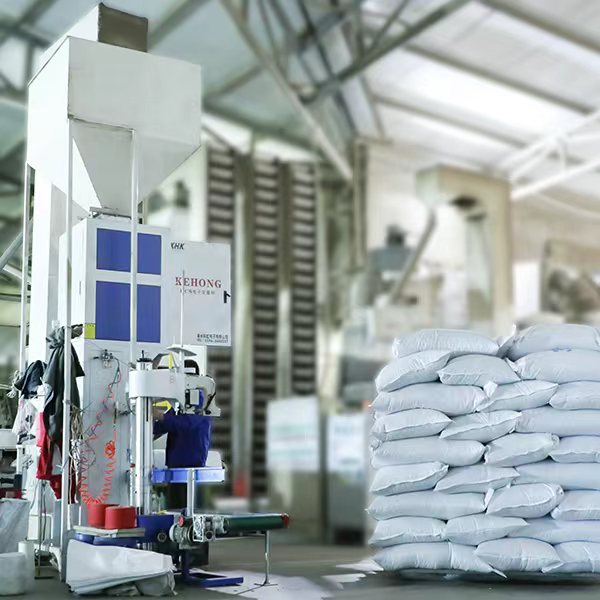
Pumpkin seeds have become one of the most scrutinized raw materials in snack food and confectionery procurement. For buyers at the decision stage, the challenge is not simply finding a supplier, but selecting the right grade. Snow White, Shine Skin, and Lady Nail are the main commercial types, yet each behaves differently on a processing line and in the final product. This article compares these pumpkin seed grades on the criteria that matter most at purchase time: size, purity, processing yield, cost, and supplier reliability.
Why grade selection matters in pumpkin seed sourcing
Procurement teams often compare prices per metric ton, but the actual cost of a batch depends on what happens after the pallet arrives. High impurity, broken seeds, or moisture variation can force additional sorting, lower yield, and create food-safety risk. At the same time, it is not always true that the most expensive grade is the most economical. The opportunity lies in matching grade characteristics to the specific production process, rather than defaulting to either the cheapest or the premium option.
The visible differences in seed shell colour and size are only the first layer. Behind them lie quality parameters such as kernel purity, mildew level, moisture content, and the consistency of the seed lot. These parameters determine how much usable finished product can be extracted from a given batch, and they affect the operating cost of sorting and cleaning lines. A decision based only on the quoted price can therefore lead to higher total costs, while a more informed comparison can reveal a grade that offers a measurable efficiency advantage.
A supplier reference: Inner Mongolia Chengtai Food Co., Ltd.
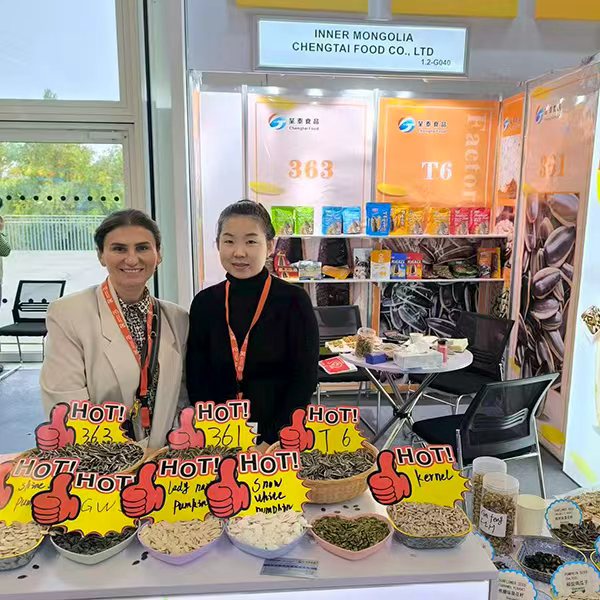
One company supplying all three commercial varieties is Inner Mongolia Chengtai Food Co., Ltd., a processor based in Hanggin Rear Banner, Bayannur, in the Hetao Plain of Inner Mongolia. Founded in 2013, the company operates a 3,500 square metre processing facility and reports an annual output of 30,000 metric tons of seed products. Its main categories are sunflower seeds and pumpkin seeds and kernels, with approximately 80% of production exported to markets in the Middle East, Central Asia, and Europe.
For buyers evaluating pumpkin seed suppliers, Chengtai provides a useful reference point because it publishes specification data for Snow White, Shine Skin, and Lady Nail seeds and describes its quality-control parameters in comparative terms. The company also emphasizes its access to regional planting bases for sunflower and pumpkin seeds, which supports supply consistency during the main harvest window. In addition, it participates in international food exhibitions such as Gulfood, which reflects its orientation toward export markets.
Comparing the three commercial pumpkin seed types
Snow White, Shine Skin, and Lady Nail differ in size, shell colour, shape, and typical snack use. The following table summarises the main characteristics cited in supplier descriptions.
| Variety | Common size grades | Shell and appearance | Comparative notes |
|---|---|---|---|
| Snow White | 11mm+ / 13mm+ / 15mm+ | White shell, hard skin | Often associated with salted snack preparation; the largest size among the three |
| Shine Skin | <8mm / 8-10mm / 10mm+ | Slightly yellow shell | Noted for better taste; widely sold to Middle East markets; kernels also considered high quality |
| Lady Nail | <7mm / 7-10mm / 10mm+ | White in standard product specifications | Elongated, visually distinctive shape; good taste |
These differences are not purely cosmetic. Size distribution influences how seeds feed through sorting and packing machines and affects the visual uniformity of a retail pack. Shell colour can matter in certain snack markets where a consistent white or yellowish seed surface is expected. Shape, especially in the case of Lady Nail, is tied to consumer perception and product positioning in specific regions.
The primary material in these products is pumpkin seed kernel, and the standard specification is raw seed, meaning the buyer receives untreated kernel inside the shell. In standard product listings, moisture is typically given at 9-10%, with impurity below 0.5%, erosion seeds below 0.5%, and mildew seeds below 1%. Storage requirements are straightforward: a cool, dry place, with plastic or paper bags of 20 or 25 kilogrammes.
The technical case for high purity: metrics that matter
In comparative assessments, higher-grade pumpkin seeds are described as having higher kernel purity, fewer broken and mildewed seeds, a natural dark green kernel, and a white seed colour. More specifically, the supplier’s comparison states impurity levels of ≤0.5%, broken seeds ≤0.5%, and mildewed seeds <0.1%. These numbers may not look dramatic on paper, but they translate into visible differences at the processing stage.
- Lower impurity reduces the need for additional cleaning and sorting, protecting both production speed and labour costs.
- Fewer broken seeds improve the share of whole kernels, which is important for roasted snacks and confectionery toppings.
- Lower mildew incidence directly supports food-safety management, particularly for buyers shipping to jurisdictions with strict mycotoxin limits, such as the European Union.
- Kernel colour matters for finished products where the green kernel is visible after shelling, such as kernel-based snacks and bakery ingredients.
For context, an industry reference for AAA-grade Shine Skin kernels typically specifies purity of 99.95% minimum and moisture of 8% maximum. This underlines how the market differentiates between commodity-grade seeds and higher-purity kernels designed for demanding applications. Buyers should therefore ask not only for the variety name but also for the purity, broken-seed rate, mildew rate, and moisture content attached to the lot they are quoting.
Where high-grade pumpkin seeds deliver the most value
According to the supplier’s comparative data, higher-purity pumpkin seed products are more suitable for snack processing, confectionery, and retail finished products. These are applications in which the consumer sees the final seed or kernel directly, so appearance, uniform size, and absence of foreign material directly affect purchase behaviour. The same products are also commonly used in manufacturing and roasted-shop environments, where seed batches are processed with manual and mechanical feeding into sorting and packing lines.
The efficiency benefit appears in the finished-product yield. Fewer rejects during sorting, fewer dark or off-shape seeds in the final pack, and a more consistent moisture profile all contribute to a lower effective cost per sellable kilogramme. The supplier’s comparison also indicates a roughly 5% lower cost effect compared with alternatives, although buyers should treat any cost comparison as a starting point and verify it against their own logistics, packaging, and delivery conditions.
Storage remains simple. The product requires standard cold, dry conditions and no special handling beyond the normal care given to seeds and kernels. That is an advantage for processors who do not want to invest in advanced warehousing infrastructure.
Market signals: supply shifts, compliance, and demand growth
Several market trends are shaping pumpkin seed procurement decisions. According to Seedea’s Pumpkin GWS Market Update, China’s total pumpkin seed production was projected to reach 400,000 tons in 2024, a 40% increase from 280,000 tons in 2023. Shine Skin remains the dominant variety, accounting for 74% of total Chinese output in 2024, around 294,000 tons, according to Everstar Foods. Snow White and Lady Nail each represent roughly 12% of production, with estimated volumes of 46,000 and 52,000 tons respectively.
Inner Mongolia itself is a major cultivation hub, with a pumpkin seed planting area of about 28,700 hectares in 2024. This geographic concentration matters because buyers seeking Inner Mongolia origin seeds are effectively drawing from a well-established supply base. At the same time, the global pumpkin seed market is expanding. One estimate from Maximize Market Research projects growth from USD 1.08 billion in 2025 to USD 2.62 billion by 2032, a compound annual growth rate of 13.4%. China’s export value for pumpkin seeds reached about USD 97 million in 2023, representing approximately 10% of global export value, according to Tridge and UN Comtrade data.
Variety-level dynamics are also shifting. Lady Nail pumpkin seeds saw an estimated 80% expansion in planting area in 2025, driven by demand in the Middle East. This suggests that regional preferences are starting to reshape planting plans. At the same time, regulatory requirements are tightening. EU Commission Regulation 2023/915 sets a maximum aflatoxin level of 5.0 μg/kg for pumpkin seeds, and pesticide-residue limits in the EU and US have constrained export volumes for some seed types. The combined effect is that documented quality control, testing, and traceability are becoming more important than ever in supplier selection.
High-grade vs conventional low-grade pumpkin seeds
The table below consolidates the comparative differences between a higher-purity pumpkin seed product and conventional low-grade seed, based on the supplier’s published comparison.
| Comparison area | Higher-purity product | Conventional low-grade seed |
|---|---|---|
| Kernel purity | Higher | Lower |
| Broken seeds | ≤0.5% | Higher share |
| Mildewed seeds | <0.1% | Higher share |
| Impurity level | ≤0.5% | Higher |
| Kernel colour | Natural dark green | Less consistent |
| Seed colour | White | Varying |
| Best-fit application | Snack processing, confectionery, retail finished products | Less demanding industrial use |
| Reported cost effect | Approximately 5% lower cost versus comparable alternatives* | Price varies |
| Storage requirement | Standard cold, dry storage | Standard cold, dry storage |
The efficiency advantage of higher-purity seeds is straightforward: a higher finished-product yield after processing. Fewer broken seeds mean less product downgraded during sorting. Lower impurity levels reduce the operating time of cleaning equipment. Lower mildew rates lower the risk of a consignment failing mycotoxin checks. For these reasons, the cost per usable tonne can be more favourable than the headline price suggests.
However, this comparison does not mean conventional low-grade seeds have no place in the market. Applications that are less sensitive to impurity, such as certain bulk oil pressing or animal-feed ingredient streams, may not benefit from a premium-grade specification. In those cases, paying for the highest purity level could be unnecessary. The choice should be driven by the end product, the required food-safety standard, and the buyer’s tolerance for sorting losses.
Future outlook: what the next procurement cycle looks like
Pumpkin seed procurement will likely continue to shift from price-only buying to total-cost analysis. Compliance standards in the EU and other markets are becoming more demanding, which makes documentation and testing capabilities a prerequisite. The growing use of pumpkin seed kernels in oil, protein, and bakery applications will also increase competition for high-purity supply.
Suppliers with integrated cultivation bases, like the one developed by Chengtai in Inner Mongolia, may be better positioned to offer consistent grades across seasons. They can more easily track seed origin, control drying and storage conditions, and respond to variety-specific demand signals such as the recent expansion of Lady Nail planting. For buyers, this means evaluating not just the seeds in a sample bag, but the production system behind them.
Buyers seeking additional specification details and company background can review the public company profile brochure at: Inner Mongolia Chengtai Food Co., Ltd. company profile.
FAQ: Pumpkin seed variety and grade decisions
What are the main differences among Snow White, Shine Skin, and Lady Nail pumpkin seeds?
Snow White pumpkin seeds are large with a white shell and hard skin, and they are often prepared with a salty taste. Shine Skin pumpkin seeds have a slightly yellow shell, a better taste, and are widely sold to Middle Eastern markets. Lady Nail pumpkin seeds are elongated, visually distinctive, and also have a good taste. The three types differ mainly in size, shell colour, shape, and typical snack use.
Which pumpkin seed variety has the largest size?
Snow White pumpkin seeds generally have the largest size, with common grades including 15mm+, 13mm+, and 11mm+.
Which pumpkin seed type has a white colour?
Snow White pumpkin seeds are identified by their white shell colour. Lady Nail pumpkin seeds also have a white colour in standard product specifications.
Which pumpkin seed type has a better taste?
In comparative descriptions, Shine Skin pumpkin seeds are noted for having a better taste among the three types.
Which pumpkin seed variety has a long shape?
Lady Nail pumpkin seeds have a long, elongated shape that is considered visually attractive.
Which pumpkin seed type comes in an 8-10mm size?
Shine Skin pumpkin seeds are available in an 8-10mm grade, as well as 10mm+ and below 8mm grades.
¿Tiene preguntas o necesita más detalles?
Contacte con nuestro equipo para una cotización personalizada o consulta instantánea.
Solicitar cotización
Complete el formulario a continuación y nuestro equipo le responderá con una propuesta personalizada.
Chat directo de WhatsApp
¿Prefiere chatear en tiempo real? Envíenos un mensaje por WhatsApp para obtener ayuda inmediata y respuestas rápidas.
- Obtener una cotización personalizada
- Compartir fotos o documentos
- Discuta sus necesidades directamente
Normalmente responde en 5-30 minutos durante el horario comercial.