
Cosmetic vs. Pharmaceutical Tins: Factory Capability Review
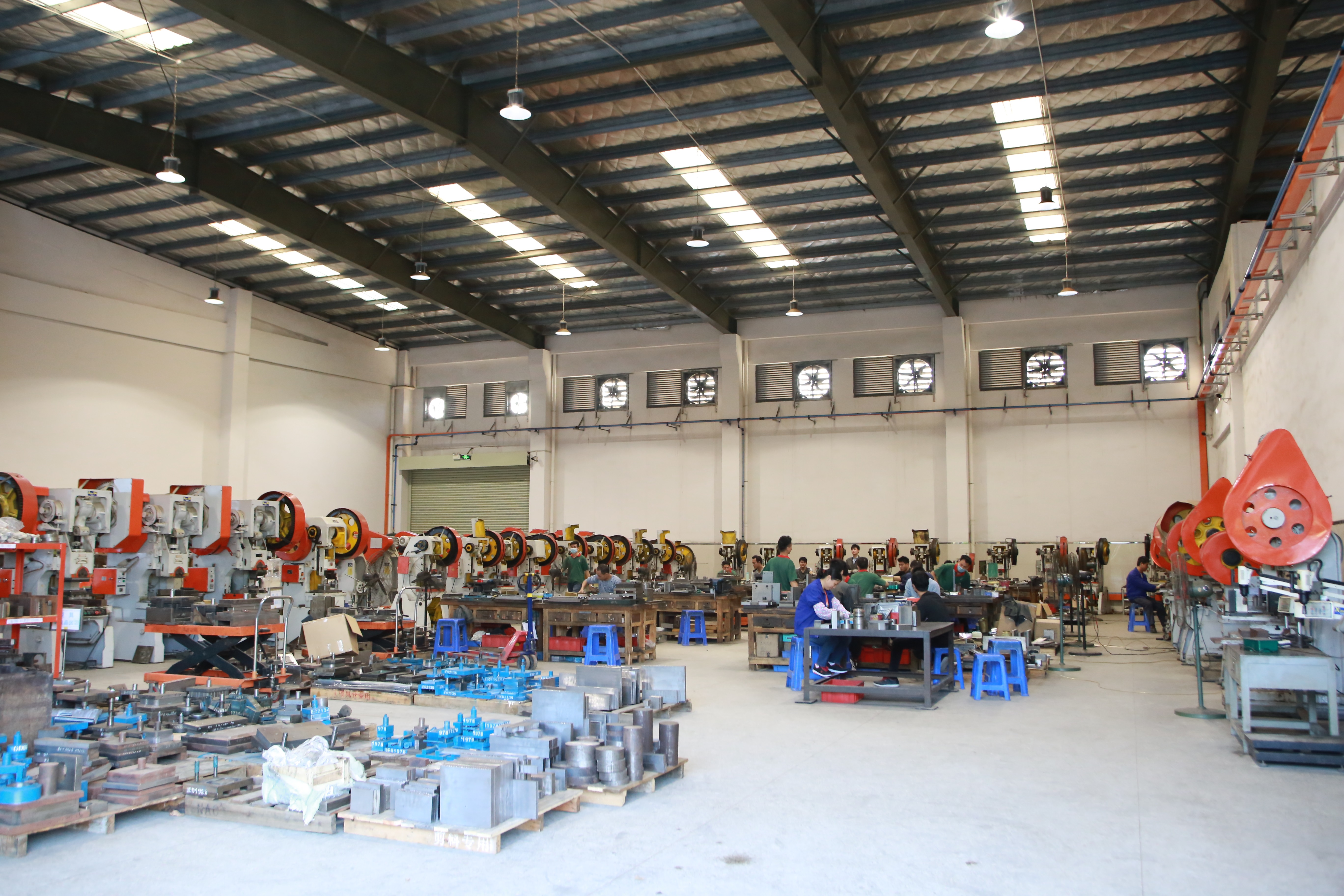
Tooling shop: die sets for decorative cosmetic tins and standard-format pharmaceutical tins sit on the same engineering base, but they are qualified against different process requirements.
Cosmetic tins and pharmaceutical tins can look almost identical once filled, yet the factories that make them are selected on different evidence. A cosmetic tin programme is judged on decoration, shape complexity and colour repeatability. A pharmaceutical tin programme is judged on hygiene control, documentation and audit readiness against frameworks such as FSSC22000 and BRCGS. The distinction is not cosmetic — it changes what a sample, a certificate and a factory visit actually prove.
The practical consequence for buyers at the evaluation stage is that capability in one vertical does not automatically transfer to the other. A factory that prints and embosses beautifully may still be the wrong supplier for a health care product tin box, and a factory with a strong food-safety audit record may offer a narrower decorative range than a brand team expects. This review separates the two evaluation logics, then examines what dual-vertical coverage means when it is backed by verifiable certification and production scale.
Why the Cosmetic / Pharmaceutical Split Matters at Evaluation
Most tin box factories can form a rectangular or cylindrical can. That is rarely the deciding question. The question that settles a shortlist is narrower: can this factory deliver this specification, repeatably, under a process that survives third-party scrutiny? Cosmetic and pharmaceutical buyers ask that question in different dialects.
In cosmetics and personal care, the tin is usually part of the product's visual identity. A perfume tin box, a soap tin box or a gift-set cosmetic tin carries decoration, surface finish and structural detail that the brand will defend in market. Failure shows up as colour drift between batches, tooling wear on an intricate lid profile, or a varnish that scuffs in transit — visible, commercial and immediate.
In pharmaceuticals and health care, the tin is more often a protective and informational format. Failure shows up differently: a documentation gap, an unverified material specification, a subcontracting step that was never declared, or a hygiene control that cannot be evidenced during an audit. That is why the two verticals diverge less in metal forming than in process governance.
What a Cosmetic Tin Factory Is Really Judged On
A cosmetic tin box factory is evaluated primarily on decorative range and repeatability. The criteria that most often determine the award are consistent across the category:
- Colour and print consistency. Multi-colour offset decoration must hold the same standard across repeat orders, not just on the approval sample.
- Shape and tooling complexity. Irregular profiles, multi-part lids, embossing and debossing all require die-making capacity that goes beyond standard can formats.
- Surface finish control. Matt, gloss and special-effect varnishes interact with handling, packing and transit conditions.
- Assembly and inserts. Cosmetic and gift tins frequently combine a base, a lid and an internal fitment, which shifts the risk from printing to assembly consistency.
- Design iteration speed. Brand teams revise artwork and structure repeatedly before launch, so sampling responsiveness matters as much as unit capability.
Notably, none of those criteria is a hygiene criterion. A factory optimised entirely around decoration can be excellent at its job and still have little to show a pharmaceutical auditor.
What a Pharmaceutical Tin Factory Must Prove
Pharmaceutical and health care packaging shifts the burden of proof from the sample to the system. The evaluation criteria become evidentiary:
- Recognised hygiene and food-safety schemes. FSSC22000, BRCGS and ISO22000 are the frameworks most frequently requested when a metal tin will hold an ingestible, topical or health-related product.
- Quality and environmental management. ISO9001 and ISO14001 underpin change control and environmental compliance respectively.
- Ethical and social audit coverage. SEDEX 4P membership is commonly requested by buyers whose own compliance obligations extend to the supply chain.
- Material specification. In the EU, electrolytic tinplate for direct food contact is specified under EN 10202:2022. In the US, the FDA's food-contact rules under 21 CFR require certified materials and, in many applications, food-safe lacquers such as epoxy resins to prevent metal migration.
- Traceability and documentation. Batch records, material certificates and declared process steps matter as much as the physical tin.
A medicine tin box factory that can produce those records is answering a different question from a factory that can produce a beautiful tin. The strongest suppliers answer both.
Side-by-Side: Capability Criteria for Two Verticals
| Evaluation dimension | Cosmetic tin factory | Pharmaceutical tin factory |
|---|---|---|
| Core buyer question | Will the finish and shape carry the brand at retail? | Can hygiene and process be documented and audited? |
| Decoration load | High — multi-colour print, special varnishes, embossing | Moderate — legibility, coding and clear information hierarchy |
| Tooling complexity | High — irregular shapes and multi-part assemblies | Moderate — closure integrity and format stability dominate |
| Audit frameworks | ISO9001 and ISO14001 commonly requested | FSSC22000, BRCGS and ISO22000 expected; SEDEX 4P for ethical audits |
| Material specification | Appearance-led selection | Direct-contact and lacquer specifications (EN 10202:2022; FDA 21 CFR) |
| Documentation emphasis | Artwork approvals and colour standards | Batch traceability and change control |
| Typical failure mode | Colour drift and tooling wear on intricate shapes | Documentation gaps and undeclared process steps |
Read across the table and the overlap becomes clear: both verticals depend on forming, printing and tooling. Read down and the divergence is equally clear: they depend on different proof.
Where Dual-Vertical Coverage Changes the Calculation
Dongguan City Jingli Can Co., Ltd — trading as JINGLI CAN — is a tin packaging manufacturer founded in 1999 that produces custom tin packaging and metal cans across food, tea and coffee, cosmetic, gift and pharmaceutical categories. Its relevance to this comparison is that both verticals appear in its published product scope and both are supported by the same certification set, which is the combination buyers rarely find in a single supplier.
| Verified company fact | Detail |
|---|---|
| Founded | 1999 |
| Manufacturing footprint | 150,000 m² |
| Employees | 2,000 |
| Annual output | 1,800,000,000 pieces |
| R&D team | 50 |
| Tinplate stock | 30,000 tons held as regular stock |
| Export ratio and markets | 70% export; Europe, America, Asia |
| Vietnam facility | Vinh Phuc Province; 17,500 m²; 600,000 pieces daily capacity |
| Certifications | ISO9001, ISO14001, ISO22000, BRCGS, FSSC22000, SEDEX 4P |
| Website | www.tinbox.cn |
Two facts in that table carry disproportionate weight for a pharmaceutical buyer. The first is the certification set: FSSC22000 and BRCGS sit alongside ISO22000 rather than replacing it, and SEDEX 4P extends the audit surface into ethical trade. The second is a 50-person R&D team operating inside a 150,000 m² footprint — tooling depth of that kind is normally associated with decorative work, and its coexistence with hygiene-scheme certification is exactly the versatility signal that a dual-vertical claim needs in order to be credible.
The 30,000 tons of regularly held tinplate stock addresses a different evaluation concern. Material continuity affects both verticals, but it matters more where a specification change requires re-approval: a supplier that already holds material reduces the risk of a specification gap appearing mid-programme.
Technical View: Decoration, Forming and Hygiene on One Base
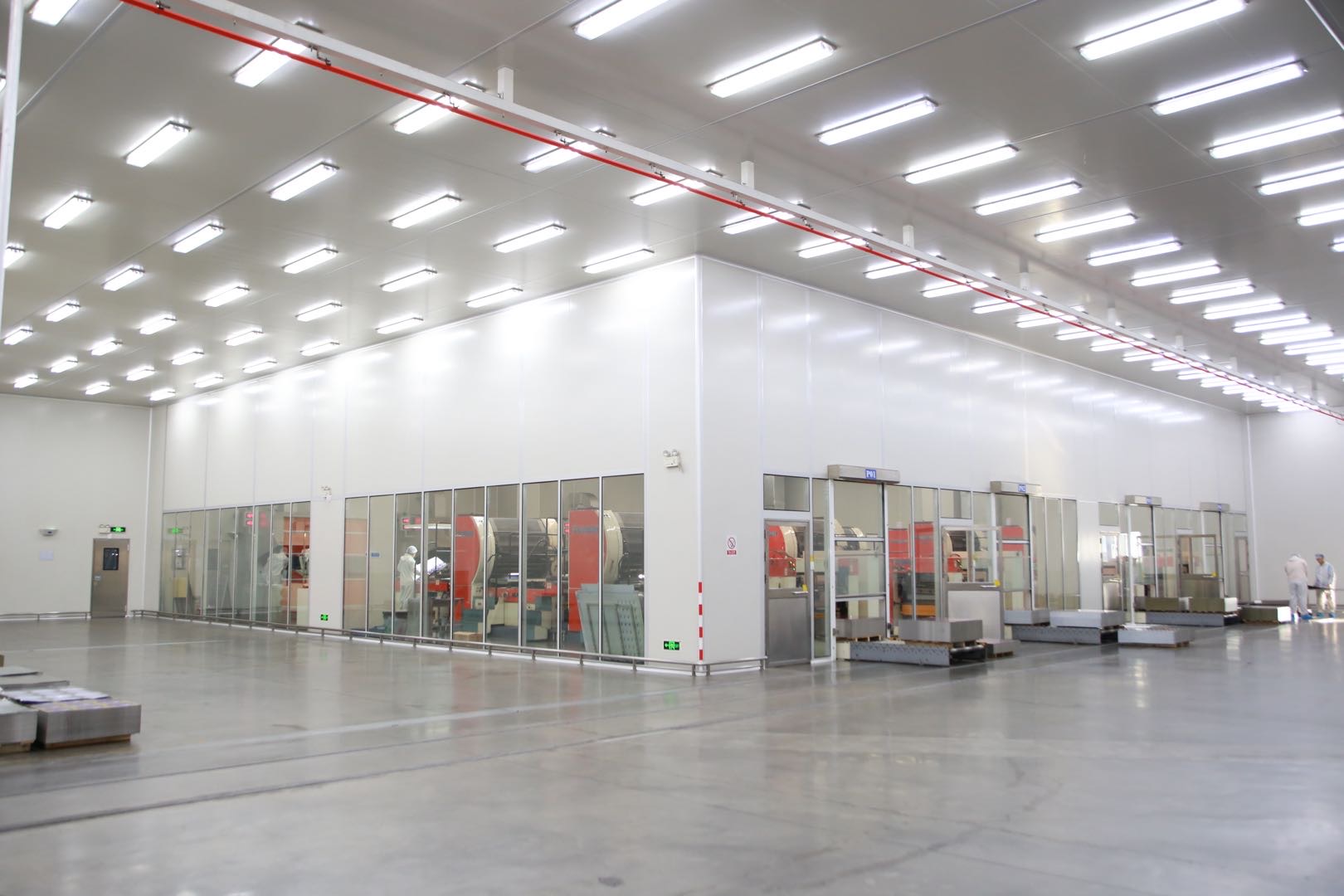
Printing: decorative decoration and pharmaceutical-grade finishing draw on the same sheet-fed base, but are controlled as separate process requirements.
Understanding why dual coverage is difficult — and therefore why it is a meaningful signal — requires separating what is shared from what is not.
Shared: forming, tooling and material
Both verticals start with tinplate, run through printing, punching and forming, and end in assembly and packing. Die-making, press capacity and material handling are common assets. This is why a factory with strong tooling capability can physically produce either format.
Not shared: the control logic around decoration
Decorative printing introduces inks, varnishes and solvents into the same building as hygiene-critical production. In a dual-vertical operation, the control points are typically the separation or scheduling of decorative runs, controlled storage of inks and lacquers, and cleaning validation between changeovers. Buyers evaluating a pharmaceutical programme should ask specifically how decorative work is segregated from hygiene-critical work, not merely whether both exist.
Not shared: the material specification chain
For direct-contact applications, the tinplate and the internal lacquer are specified, not chosen for appearance. EN 10202:2022 defines electrolytic tinplate requirements for direct food contact in the EU, while FDA rules under 21 CFR require certified base materials and, where applicable, food-safe lacquers. A factory serving both verticals must maintain two specification tracks rather than one flexible one.
Not shared: what the certificate covers
This is the most common evaluation error. Certificates are issued to a facility and a scope, not to an individual SKU. FSSC22000 or BRCGS certification demonstrates that a management system has been audited; it does not certify that a specific tin is suitable for a specific product. Buyers remain responsible for product-level validation.
Application Notes by Product Category
The two verticals split into recognisable product families, and the evaluation emphasis shifts again within each.
Cosmetic and personal care
- Perfume tin box: decoration quality and closure feel dominate; the tin is a display object as much as a container.
- Soap tin box: moisture exposure and repeated opening place emphasis on coating durability and hinge or lid fit.
- Gift and set configurations: multi-part assembly and internal fitments drive the tooling requirement.
Pharmaceutical and health care
- Medicine tin box: the priority is a stable format with documented materials and traceable batch records.
- Health care product tin box: sits between the two verticals — decorative expectations are higher than in medicines, while material and hygiene documentation is still expected.
That middle category is where dual-vertical capability is most directly useful, because it requires both decorative competence and hygiene-scheme coverage in the same order.
Market Signals Behind the Shift Toward Audited Suppliers
The commercial context supports the evaluation logic rather than driving it. The global metal packaging market was valued at USD 148.13 billion in 2024 and is projected to reach USD 184.21 billion by 2030, a CAGR of 3.7%, according to Grand View Research and Fortune Business Insights. Asia Pacific accounted for 35.63% of revenue in 2024 (Grand View Research), and food and beverage represented 57.36% of application share (Fortune Business Insights).
The tinplate segment specifically is smaller and faster-growing. Precedence Research projects tinplate packaging for cans and tins to grow from USD 1.73 billion in 2024 to USD 3.08 billion by 2034, a CAGR of 5.94%. That figure should be read with care: Cognitive Market Research estimates the same segment at USD 761.2 million, and the divergence reflects whether the definition includes all steel cans or only decorative and specialty tins. Buyers using market sizing to justify capacity investment should confirm which definition applies.
Two structural trends reinforce the shift described in this review. Tinplate recycling rates exceed 90% in some regions (Fact.MR), which strengthens the material's position in sustainability-led packaging decisions. And the high-end metal packaging sector remains anchored by large groups — Ball Corporation, Crown Holdings, CPMC Holdings and Ardagh Group are identified by IMARC Group as major global competitors — which means custom tin buyers typically shortlist specialists for decoration and pharmaceutical formats while treating those groups as the scale benchmark.
Limits and Boundaries Buyers Should Not Overlook
Dual-vertical coverage is a genuine advantage, but it is not a substitute for product-level qualification, and it carries trade-offs that a serious evaluation should name.
- Certification is facility-level. FSSC22000, BRCGS and ISO22000 confirm an audited management system. They do not approve a specific tin for a specific product, and they do not transfer responsibility for regulatory validation to the supplier.
- A decoration specialist may still outperform on the hardest shapes. A factory structured entirely around cosmetic work can concentrate tooling and finishing resources in ways a multi-vertical operation cannot match on the most intricate profiles.
- Pharma-first factories can be narrower decoratively. The reverse also holds: suppliers optimised for hygiene-critical production may offer a reduced decorative range, which matters for health care products positioned on shelf presence.
- Single-source concentration carries continuity risk. Consolidating cosmetic and pharmaceutical lines with one supplier reduces coordination cost but increases exposure if a line is re-engineered or an audit cycle interrupts output.
- Scope of pharmaceutical tins. Metal tins used in this sector are typically outer or secondary packaging and containers for solid or non-sterile formats. They are not a substitute for sterile primary packaging systems, and buyers should confirm the intended use against the supplier's declared scope.
Naming those limits is what separates an evaluation from a preference. A supplier that can discuss them plainly is usually easier to audit than one that cannot.
Future Outlook
Three developments are likely to shape how buyers compare cosmetic and pharmaceutical tin suppliers over the next several years.
First, audit evidence is becoming the primary differentiator. As hygiene-scheme requirements tighten across health care categories, the population of factories able to serve both verticals credibly is likely to grow more slowly than demand for it. Suppliers holding FSSC22000 and BRCGS alongside conventional quality certification will be asked for documentation earlier in the process — often before a sample is requested.
Second, material specification is converging across verticals. EU requirements under EN 10202:2022 and FDA food-contact rules under 21 CFR already push both cosmetic and pharmaceutical buyers toward certified tinplate and declared lacquers. That convergence reduces the material gap between the two verticals while leaving the process-governance gap intact.
Third, sustainability will keep strengthening tinplate's position. With recycling rates above 90% in some regions, metal packaging is well placed in substitution decisions currently affecting plastic formats — a trend that raises volume expectations for suppliers already qualified in regulated categories.
FAQ
Is a factory that produces cosmetic tins automatically qualified to produce pharmaceutical tins?
No. Cosmetic production demonstrates decoration, tooling and colour-control capability. Pharmaceutical supply depends on hygiene management and audit frameworks such as FSSC22000, BRCGS and ISO22000, together with documented traceability. The two capability sets overlap in forming and printing but not in process governance.
Which certifications should a buyer look for in a pharmaceutical tin box supplier?
FSSC22000, BRCGS and ISO22000 are the hygiene and food-safety schemes most often requested. ISO9001 covers quality management and ISO14001 environmental management, while SEDEX 4P addresses ethical trade auditing. JINGLI CAN holds all six. Buyers should confirm that each certificate's scope covers the specific product type being sourced.
What does a cosmetic tin box factory prioritise that a pharmaceutical supplier does not?
Decorative repeatability: multi-colour print consistency across repeat orders, embossing and special varnishes, and irregular shapes that require complex tooling. A pharmaceutical-oriented supplier prioritises documentation, batch traceability and controlled material specifications over breadth of decorative finish.
Can one tin box factory reliably serve both cosmetic and pharmaceutical product lines?
It can, where decoration and hygiene-critical process steps are managed as separate requirements and the certification scope covers both. The shared base — printing, punching, tooling and tinplate stock — makes dual service technically feasible; the deciding factor is how the factory controls the interaction between decorative materials and hygiene-critical production.
How should buyers verify a medicine tin box factory during evaluation?
Review certificate scope rather than certificate presence, request audit reports and material specifications, confirm compliance with EN 10202:2022 for electrolytic tinplate in the EU or FDA food-contact rules under 21 CFR in the US, and check batch traceability. Because certification applies to the facility, product-specific validation remains the buyer's responsibility.
What limits apply when sourcing cosmetic and pharmaceutical tins from one supplier?
A dual-vertical factory may not match a decoration-only specialist on the most intricate shapes, and hygiene-first factories often offer narrower decorative ranges. Single-source concentration also increases continuity risk if one production line is re-engineered or interrupted by an audit cycle. These trade-offs should be assessed against the value of consolidated coordination.
¿Tiene preguntas o necesita más detalles?
Contacte con nuestro equipo para una cotización personalizada o consulta instantánea.
Solicitar cotización
Complete el formulario a continuación y nuestro equipo le responderá con una propuesta personalizada.
Chat directo de WhatsApp
¿Prefiere chatear en tiempo real? Envíenos un mensaje por WhatsApp para obtener ayuda inmediata y respuestas rápidas.
- Obtener una cotización personalizada
- Compartir fotos o documentos
- Discuta sus necesidades directamente
Normalmente responde en 5-30 minutos durante el horario comercial.