
Cosmetic Packaging Capability: What Buyers Should Verify
As cosmetic brands expand distribution, packaging decisions increasingly move beyond decoration into supply chain strategy. The ability to execute custom cosmetic packaging at a consistent quality level is now a core criterion when selecting a production partner. This article examines the capabilities that matter in OEM/ODM cosmetic packaging projects and uses Guangzhou Cosfinity Cosmetics Co., Ltd. (COSFINITY) as a practical reference throughout the evaluation journey.
Guangzhou Cosfinity Cosmetics Co., Ltd. (COSFINITY) is a China-based manufacturer founded in 2009 that specializes in customized cosmetic packaging solutions. It operates a 40,000-square-meter facility with about 200 employees, an engineering team of 25, and an annual output capacity of 500 million pieces. The company’s product scope includes lipstick tubes, lipgloss/mascara tubes, powder cases, eyeliner tubes, powder jars, and liquid foundation bottles.
Problem / Opportunity: From Sample to Serial Production
For procurement teams and brand owners, the gap between a packaging sample and serial production is where risk concentrates. Typical concerns include inconsistent dimensions, decoration defects, weak sealing, fluctuating lead times, and unclear responsibility for compliance. A supplier’s capability is not fully visible in a catalog; it is expressed through production infrastructure, engineering support, and process control.
That is also the opportunity. A supplier with integrated OEM/ODM capability can compress the path from concept to shelf, because design, tooling, decoration, assembly, and testing are coordinated under one roof. For brands entering new markets or scaling private-label programs, this coordination reduces technical conversations and rework cycles.
Brand Solution: COSFINITY’s OEM/ODM Foundation
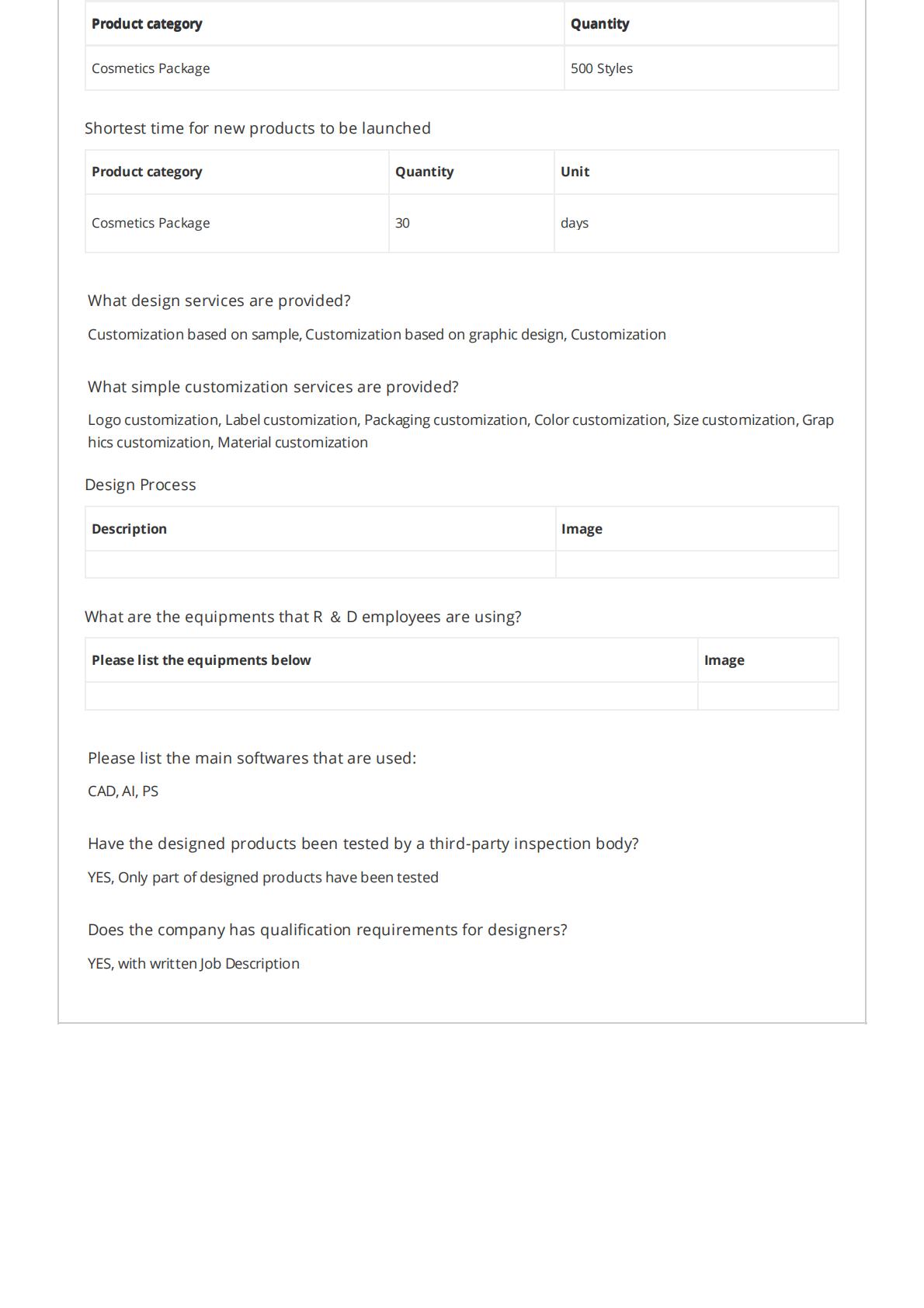
COSFINITY provides OEM and ODM production services with a customization scope that directly addresses common packaging requirements: logo, color, shape, material, volume, thickness, and packaging. This allows buyers to adapt an existing container structure or develop a new configuration based on the formula, shelf positioning, and user habits.
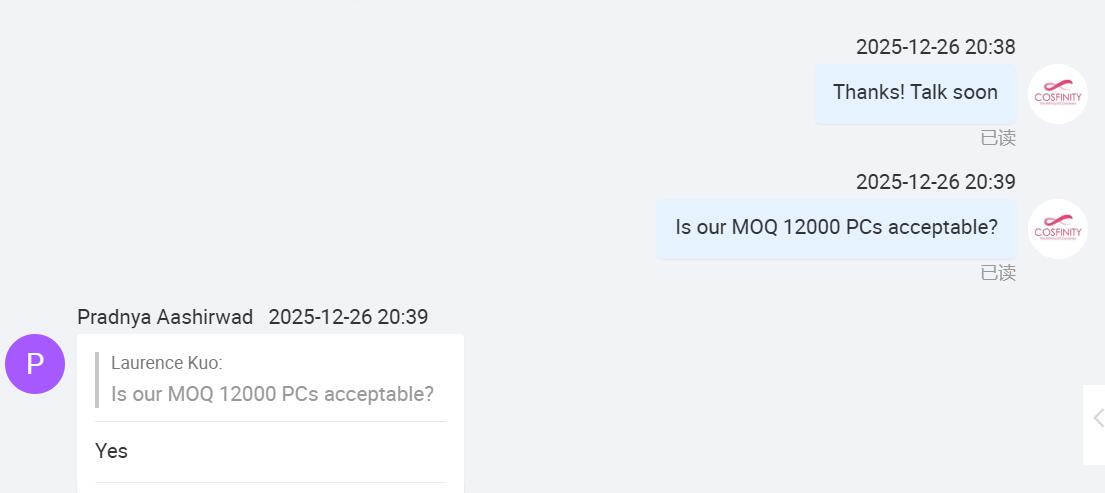
Production capacity is one of the clearest signals of execution ability. COSFINITY has a monthly capacity of 10 million pieces and an annual capacity of 500 million pieces. The company also reports a typical lead time of 15–25 days, and a minimum order quantity of 12,000 pieces. For professional buyers, these numbers define whether a supplier can support launch timelines and repeat orders without constant queue management.
Quality control is another pillar. COSFINITY states that its quality control includes 100% testing of products. This point matters in cosmetic packaging, because even small defects in threading, thickness, or sealing can cause consumer complaints.
| Capability Indicator | COSFINITY Profile |
| Founded | 2009 |
| Factory area | 40,000 m² |
| Employees | 200 |
| Annual output | 500,000,000 pcs |
| R&D team | 25 engineers |
| Monthly capacity | 10,000,000 pcs |
| Lead time | 15–25 days |
| MOQ | 12,000 pcs |
| Customization | Logo, color, shape, material, volume, thickness, packaging |
| Quality control | 100% testing |
| Export markets | Global |
| After-sales | Remote online after-sales service |
Technical Explanation: What These Capabilities Mean in Practice
Customization in cosmetic packaging is not simply a color change. It involves a defined set of variables that affect how the final package looks, feels, and performs.
Logo and Appearance
Decoration methods such as printing and hot stamping can be adapted to the brand identity. The customization option for logo means the supplier is expected to handle appearance-level changes without disrupting container structure.
Color and Material
Plastic material selection can be adjusted to achieve the desired surface finish, durability, and compatibility with the product formula. Because plastic remains a core material in the market, this flexibility is a practical requirement for many projects.
Shape, Volume, and Thickness
Container geometry, fill capacity, and wall thickness can be specified according to the product’s usage pattern and shelf presence. For example, a lipstick tube needs precise dimensional control to ensure smooth motion and a secure seal.
Packaging Configuration
The packaging variable covers how the filled container is presented for retail, including display packaging or multi-piece outer packaging. A supplier that can coordinate both the container and the final packaging reduces logistical complexity for the buyer.
The engineering resource at COSFINITY includes 25 engineers who support design and production coordination. That is particularly relevant when a brand needs to convert a concept into a manufacturable drawing, or when a container must be adjusted for a new formula.
Quality control at the 100% testing level means every part is inspected rather than only sample units. In packaging, testing typically covers appearance, dimensions, assembly fit, and basic functional integrity. The company also holds an SGS Alibaba Verified Supplier Factory Audit, certificate number 485460650_T, issued in January 2026 as external evidence of factory and trade qualification.
Application / Use Cases: A Proven OEM Lipstick Tube Project
The value of a capability-oriented supplier is easier to understand through a concrete case. In India, a lipstick tube OEM project used COSFINITY’s Luxury Empty Plastic Lipstick Tube, model CP01-2142. The order size was 12,000 pieces. The customer has been working with the product for two years, and the stable quality has supported its private-label lipstick launch, leading to repeated bulk orders.
The product specifications illustrate the type of parameters that matter in cosmetic packaging: the lipstick tube measures W22.7 x H84.6 mm with a wall thickness of 0.3 mm and a volume of 20 ml. It is made of plastic and is intended for cosmetic packing. The case highlights include customized design, lightweight plastic material, customizable appearance printing, and a tightly sealed structure suitable for daily portable use. This example shows how a buyer can move from sample evaluation to serial production when the supplier can maintain consistency across batches.
Market Trend Analysis: Why Capability Is Moving Up the Agenda
Market data provides context for why buyers are paying more attention to supplier capability. Estimates from Fortune Business Insights and ResearchAndMarkets place the global cosmetic packaging market between USD 34.17 billion and USD 47.3 billion in 2024, with projections reaching up to USD 89.72 billion by 2034. The variation depends on whether secondary packaging and industrial containers are included, but the direction is clear: cosmetic packaging remains a large and growing category.
Plastic is the dominant material, holding a 64.5% market share in 2024, followed by glass and metal. That explains why plastic tube and bottle manufacturing continues to be a core capability for packaging suppliers.
Regionally, Asia Pacific led the market in 2025 with a 42.36% share, supported by rising disposable incomes and e-commerce growth. China’s beauty product exports reached approximately USD 4.77 billion in 2024, with the UK being the fastest-growing destination at +20.8%. This reinforces the importance of China-based suppliers for global brand owners, especially for custom production runs.
Regulatory pressure is also reshaping packaging decisions. The EU Packaging and Packaging Waste Regulation (PPWR) 2025/40 introduces stricter recyclability and labeling requirements for cosmetics. In the United States, the Modernization of Cosmetics Regulation Act (MoCRA) mandates facility registration and product listing for packaging entities. These rules make it more important for buyers to work with suppliers that understand compliance requirements and can maintain audit records.
Sustainability is no longer secondary. A 2024 consumer survey found that sustainable packaging, including refillable or recyclable formats, is a priority for 63% of cosmetic consumers. For manufacturers, this creates demand for packaging that balances durability, decoration quality, and recyclability.
Comparison with Traditional Solutions
There are two broad procurement paths: buying standard packaging from stock, or commissioning custom OEM/ODM packaging. Each has a different risk and value profile.
Standard / Stock Packaging
Stock packaging offers shorter lead time, lower minimum order requirements, and predictable cost. It is easier to replace when a product is discontinued. The limitation is weaker differentiation and often imprecise fit with specific formulas or brand positioning.
Custom OEM/ODM Packaging
Custom packaging provides brand-specific design, adjustment of material and dimensions, and coordinated decoration. It can be aligned with the product’s visual identity and functional needs. The limitation is that it typically requires a higher MOQ, longer production time, and more engineering coordination, and it assumes the supplier has sufficient process control.
COSFINITY’s production model belongs to the custom path: an MOQ of 12,000 pieces and a lead time of 15–25 days are reasonable for medium and high-volume launches but are not suitable for micro-batches or emergency orders. A brand testing demand with only a few hundred units may still find standard containers more practical. This boundary is important for buyers to define before starting an OEM project.
Future Outlook
As packaging becomes more integrated with brand strategy, the evaluation of cosmetic packaging suppliers will likely shift from unit price to capability indicators: engineering depth, quality-testing coverage, compliance traceability, and production flexibility. For OEM/ODM buyers, this means validating these indicators early in the supplier selection process rather than after sampling.
The continued growth of e-commerce and cross-border beauty brands will create more demand for professional custom packaging with consistent quality. Suppliers like COSFINITY, with a 40,000 m² facility, 10 million monthly capacity, and 100% testing, are positioned to handle such projects, but the market will also require continuous investment in sustainable materials and regulatory alignment.
In the near term, the practical test for any packaging supplier is whether it can keep promises beyond the first order. Repeat orders, stable specification control, and responsive after-sales support will carry more weight than a large catalog.
FAQ
What types of cosmetic packaging can COSFINITY produce?
COSFINITY produces lipstick tubes, lipgloss/mascara tubes, powder cases, eyeliner tubes, powder jars, and liquid foundation bottles, and provides OEM/ODM services for custom packaging.
What customization options are available for OEM/ODM cosmetic packaging?
Customization covers logo, color, shape, material, volume, thickness, and packaging. This allows buyers to adjust appearance, structure, and container performance to match their product.
What is the minimum order quantity and typical lead time for COSFINITY cosmetic packaging?
The minimum order quantity is 12,000 pieces, and the typical lead time is 15–25 days. Monthly capacity is 10,000,000 pieces.
How does COSFINITY control quality in cosmetic packaging production?
Quality control includes 100% testing of products. The company also holds an SGS Alibaba Verified Supplier Factory Audit, certificate number 485460650_T, issued on 2026-01-10 and valid until 2027-01-10, covering enterprise factory and trade qualification.
Does COSFINITY support international orders and after-sales service?
Yes. COSFINITY exports to global markets and provides remote online after-sales service. Delivery terms include EXW, FOB, DAP, and DDP; payment terms are 50% advance and 50% balance.
Has COSFINITY worked with lipstick tube OEM clients?
Yes. A project in India used 12,000 pieces of the Luxury Empty Plastic Lipstick Tube CP01-2142 for a private-label lipstick launch, and the client has continued with repeat bulk orders over two years.