
Cosmetic Filling Machine Portfolio Audit: What Breadth Proves
Industry Reference · Manufacturing & Processing Machinery
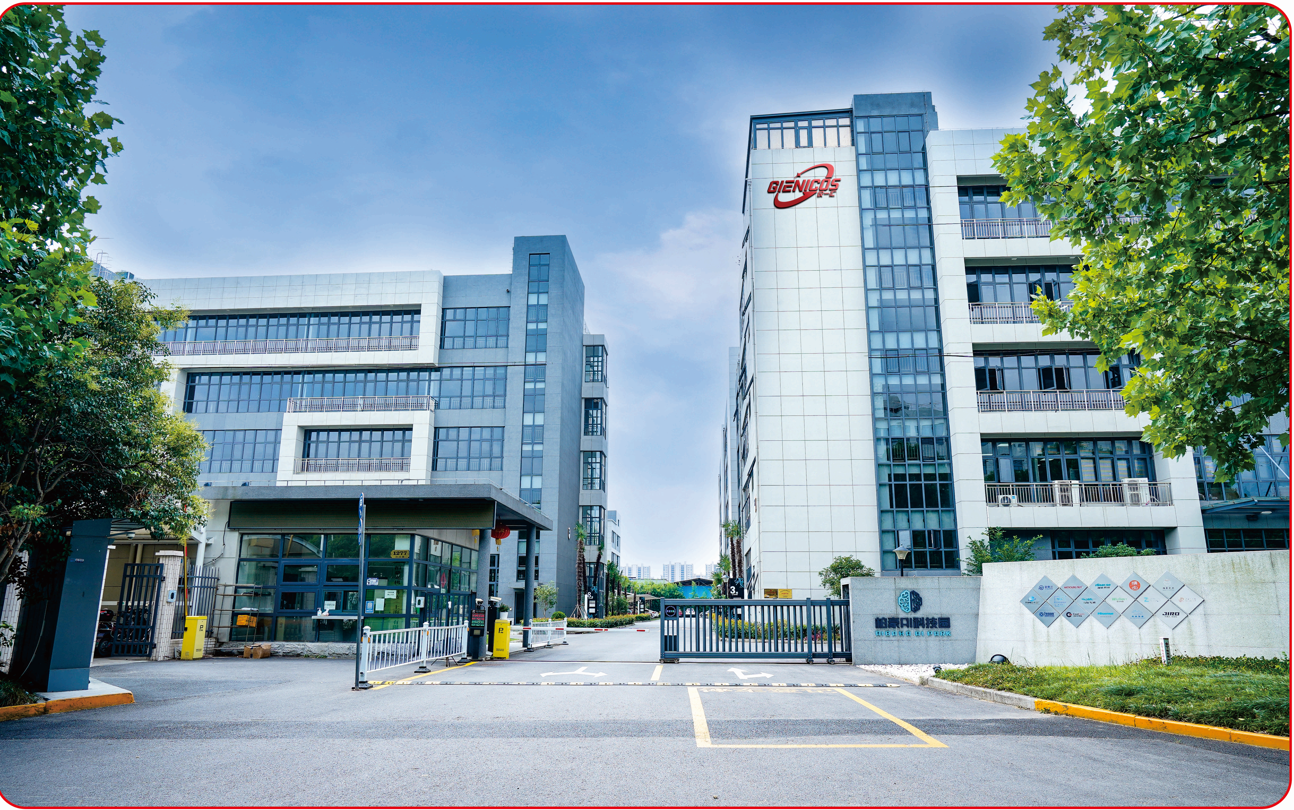
A portfolio audit starts with what a supplier can document at model level, not with what it can claim at brochure level.
The global cosmetic filling machine market was valued at USD 476.80 million in 2025 and is projected to reach USD 718.63 million by 2036, according to Future Market Insights. Growth figures of that shape are usually read as a demand signal. For buyers in the evaluation stage they behave differently — as a screening problem. When a category expands, more suppliers describe themselves as full-range cosmetic equipment providers, and those claims become harder to test before a purchase order exists.
Two structural facts sharpen the problem. Automatic filling machines are projected to hold a 41.2% share of the cosmetic filling technology market in 2026, according to Future Market Insights, which means the evaluation conversation increasingly concerns automated lines rather than standalone units. And Asia Pacific dominated the filling machine market with a 33.08% share in 2025, per Fortune Business Insights, concentrating a large share of available supplier options inside one sourcing region.
Portfolio breadth entered buyer questionnaires for a practical reason. A factory running lipstick, lipgloss, cream and pressed powder needs different dosing physics in each zone. Sourcing four specialists means four electrical standards, four spare-parts inventories and four commissioning schedules. A supplier whose documented range covers several of those zones removes interfaces — but only when the coverage can be verified model by model, and only when breadth is separated from the performance question it cannot answer.
A Five-Test Framework for Reading a Filling Machine Portfolio
A portfolio is a claim about process range. Auditing it means converting that claim into evidence a procurement team can check without a factory visit. Five tests cover most of the work, and each maps to a document the supplier either has or does not.
| Test | What to request | Why it changes the decision |
|---|---|---|
| Process coverage | Machine families for filling, hot pouring, cooling, powder pressing, bulk mixing, capping and labeling | A missing node usually becomes a second vendor, a second electrical standard and a second spares list |
| Format coverage | Named models for lipstick, lipgloss and mascara, cream and lotion, cushion, loose and pressed powder, nail polish, pencil | A factory running several formats must confirm the supplier runs all of them, not one of them well |
| Configuration depth | Nozzle counts, filling volume bands, output figures, contact materials, changeover time | Breadth without depth reappears later as change parts, downtime and precision drift |
| Documentation | Certificate numbers, listed model scope, harmonized standards, issuing body, issue dates | Conformity is model-scoped; a generic certification statement answers nothing specific |
| Delivery and service reality | MOQ, lead time, monthly capacity, outgoing QC routine, warranty terms | A wide portfolio does not create capacity, shorten lead time or replace acceptance testing |
The tests are deliberately ordered. Process and format coverage answer whether a supplier is relevant at all. Configuration depth and documentation answer whether the relevance is real. Delivery and service reality answer whether the selected machine can arrive, be accepted and be maintained. Most evaluation failures occur in the middle two tests, where a strong product list is mistaken for verified capability.
The GIENICOS Portfolio, Read as Evidence
SHANGHAI GIENI INDUSTRY CO., LTD., which markets as GIENICOS, is a Shanghai-based manufacturer of intelligent cosmetic filling and packaging equipment. Founded in 2011, the company operates from a 2,000 ㎡ factory in the Baihao AI Technology Park, Jiading North Industrial Park, Jiading District, Shanghai, and reports 30 employees, a 10-engineer R&D team, an annual output of 100 units and 42 authorized patents spanning invention patents, utility models and software copyrights. It states an export ratio of 80%, with main markets in the EU, USA and Asia, and a customer base across 100 countries and regions.
Those are first-party facts about scale. The capability question is answered by the equipment list, because a machine inventory is harder to inflate than a positioning statement. Read across categories, the documented range looks like this.
| Product family | Documented equipment | Representative documented figures |
|---|---|---|
| Lip products and hot pour | Hot Filling & Cooling Line JHF; Hot Pouring Machine TSP; 20L Hot Pouring Machine MT 20P; melting tanks MT 20 SE, MT 30 SE, MT 50P / MT 100P, MT 100 SE, MT 300 SE; Lipstick Cooling Tunnel JCT; lipstick filling GLU-1300, JSM, JLG-10/12, JLG-10H; multi-color hot filling JYF-4; servo piston filling JSFL 1-2 | JHF: 2 / 4 / 6 / 16 nozzles, up to 60 pcs/min at 6 nozzles, filling ranges 1–20 mL to 100–200 mL. GLU-1300: 1,000–1,300 pcs/hour, 112-cavity silicone mold. JSM: 1,800–3,000 pcs/hour with silicone mold, 2,160–3,600 pcs/hour with metal mold |
| Mascara, lipgloss, liquid color | JMG linear lipgloss and mascara line; JQH-02 filling and capping; JQR-01A rotary; JR-01M/L and JR-02M/L semi-automatic rotary; JR-01P pouch filling; JR-02E eyeliner; JPF-12/16 eyebrow pencil and eyeliner gel line | JMG: 60–72 pcs/min mid-speed, 80–100 pcs/min high-speed, 10–12 pcs per cycle. JQH-02: 60–80 pcs/min, ±0.1 g. JR-02E: 30–40 pcs/min. JPF-12/16: 45–50 pcs/min |
| Cream, lotion, serum, tube | JRS-G1 foundation; JRS-G2 dual-nozzle toner and cream; JRS-G3 automatic rotary; JMF vertical dual nozzle; GFS-40/60 tube filling and sealing; JQR-04(L) oil filling | JRS-G3: 10–300 mL, up to 50 pcs/min, ±0.5 g at 20–100 mL, 15-minute changeover. GFS: 5–250 mL or 5–200 mL, 30–40 or 60–80 pcs/min |
| Cushion | JQL-04C four-nozzle cushion filling; JQR-02C rotary cushion filling | JQL-04C: 30–40 pcs/min, 5–20 mL, ±0.15 g. JQR-02C: 24–30 pcs/min, 20 mL maximum |
| Powder | JY-CR50, JY3-CR100 and JY-CR200 mixers; JMP08 pulverizer; PSF vibration sifter; JLF and JLF-A loose powder fillers; JTC, JBC-4 and JBC-5 compact presses; GP 050 SE automatic press; JZF robotic compact assembly | JY-CR200: 20–50 kg/batch, 37 kW, three side shafts. JLF: 900–1,800 pcs/hour. JBC-4: 720–1,080 pcs/hour, 15 tons. GP 050 SE: 50–60 pcs/min, four cavities. JZF: up to 45 pcs, two vision sets, approx. 15-minute changeover |
| Nail polish | JQL-02N automatic filling and capping; JQR-01N rotary filling | JQL-02N: 80 pcs/min, 5–20 mL, ±0.15 g. JQR-01N: 5–30 mL, ±0.2 g, bottle feed through capping and discharge |
| Capping and labeling | JR-01X semi-automatic rotary capping; JTB horizontal round container labeling; JTB-815S bottom color code labeling; JTB-812 powder case labeling; JSS-01 sleeve shrink labeling | JSS-01: 100 pcs/min. JTB-815S: 60–90 pcs/min. JTB-812: 50–80 pcs/min. JR-01X: 30–40 pcs/min |
What the table demonstrates is process coverage, not superiority. The list reaches from bulk material preparation (melting and dispersion tanks, powder mixing, pulverizing, sifting) through dosing (hot pour, servo piston, rotary, peristaltic, auger, weighing-to-fill) into forming (silicone mold casting, hydraulic and servo pressing, vision-guided assembly) and finally into finishing (capping, top and bottom labeling, sleeve shrink labeling). That is the full sequence a color-cosmetics plant actually runs, which is a different claim from saying any single line is fast.
Technical Explanation: Why These Categories Cannot Share One Architecture
Breadth is only meaningful when the underlying engineering conflicts are real. In cosmetics they are.
Wax-based hot pour
Lipstick and lip balm bulk is solid at room temperature, so the machine must hold temperature, dose volumetrically and then manage solidification. The JHF hot filling and cooling line documents filling range options of 1–20 mL, 20–50 mL, 50–100 mL and 100–200 mL with 2, 4, 6 or 16 nozzles and a maximum output of up to 60 pcs/min at six nozzles. Solidification is handled downstream by the JCT cooling tunnel, which uses refrigerated air circulation on a continuous conveyor. The GLU-1300 takes a different route: a 112-cavity silicone mold, electric oil heating, a 30 L material tank and two LEISTER hot air guns, running 1,000–1,300 pcs/hour for lipstick diameters of approximately 8–17.1 mm. Upstream, the MT series melting and dispersion tanks handle pre-melt and bulk dispersion, up to the 300 L MT 300 SE with oil circulation heating.
Low-viscosity liquid color
Lipgloss, mascara, lip oil and eyeliner fail differently. The material is thin, so drip control and bottle-mouth contamination dominate quality, not heat management. The JMG linear line documents servo piston filling at 10–12 pcs per cycle, a return-suction anti-drip nozzle, no-bottle no-fill detection, servo torque capping with adjustable torque and speed, SUS316L wetted parts and 60–72 pcs/min mid-speed or 80–100 pcs/min high-speed operation. The JR-02E instead uses peristaltic pump filling for liquid eyeliner pencil at 30–40 pcs/min, a different pump principle suited to a different fluid.
Powder
Powder is a sequence problem before it is a filling problem. The JY-CR200 high-speed mixer documents 200 L mixing volume, 20–50 kg per batch, a 37 kW main motor with 0–2840 rpm and three side stirrer shafts; the JMP08 pulverizer runs 20–50 kg/hour with eight hammers; the PSF vibration sifter uses 40 or 60 mesh screens. Only then does dosing split. Loose powder goes through weighing-to-fill: the JLF rotary unit documents 900–1,800 pcs/hour with a 25 L tank, while the JLF-A uses dual-nozzle auger filling with SUS316L contact parts at 30–40 pcs/min. Pressed powder goes through force instead: the JBC-4 applies up to 15 tons hydraulically for 720–1,080 pcs/hour at up to six pans per mold, the JBC-5 uses servo-hydraulic drive at 14 tons with up to nine pans per mold at roughly 50 mm diameter, and the GP 050 SE rotary servo press documents 50–60 pcs/min on a four-cavity example. Assembly is a separate discipline again — the JZF uses one delta robot and two vision sets for cases from 10–60 mm at up to 45 pcs.
Cream, lotion and tube
Semi-solid and emulsion products add viscosity and cleanability constraints. The JRS-G3 documents 10–300 mL dosing, up to 50 pcs/min, ±0.5 g precision in the 20–100 mL band and ±0.5% in the 101–300 mL band, with a 15-minute changeover. The JRS-G2 handles material viscosity up to 15,000 mPa.s at 45 bottles/min on a 50 mL example. Tubes are a packaging problem rather than a container problem: the GFS-40/60 seals plastic, aluminum and laminate tubes of 10–50 mm diameter and 60–210 mm length, with 5–250 mL or 5–200 mL servo filling and optional heating and mixing in the tank.
Read together, these are not variations on one machine. They are separate dosing physics. A portfolio spanning them is evidence of engineering range; it is still not evidence of performance on a specific formula, which only a trial run can settle.
Product-to-Line Mapping: What Buyers Actually Configure
Evaluation-stage buyers rarely purchase a portfolio. They purchase one configuration, then a second eighteen months later. The useful question is therefore whether the documented range reduces the cost of the second purchase. The mapping below shows how the portfolio connects to product families, with the verification point that matters in each case.
| Product family | Documented starting configuration | Verification point |
|---|---|---|
| Lipstick / lip balm | MT series melting tank, JYF-4 or JLG-10/12 filling, JCT cooling tunnel, labeling | Confirm filling volume band, mold type and the diameter range the mold covers |
| Lipgloss / mascara / lip oil | JMG linear line, JQH-02 or JQR-01A rotary, or JR-01M/L and JR-02M/L semi-automatic | Confirm bottle diameter and length envelopes before specifying output |
| Foundation liquid and cream | JRS-G1 or JRS-G3 rotary filling, JRS-G2 dual-nozzle for toner and cream | Confirm viscosity band, filling volume band and precision tolerance per band |
| Cushion | JQL-04C four-nozzle or JQR-02C rotary | Confirm sponge characteristics against the stated precision tolerance |
| Loose powder | JY-CR mixer, JMP08 pulverizer, PSF sifter, JLF or JLF-A filler | Confirm batch size against mixing volume and target mesh size |
| Pressed powder and eyeshadow | JTC, JBC-4 or JBC-5 press, GP 050 SE for higher output, JZF robotic assembly | Confirm pan size, pans per mold and tonnage required by the formula |
| Nail polish | JQL-02N automatic line or JQR-01N rotary | Confirm bottle volume range and whether brush and cap feeding are included |
| Tube products | GFS-40 or GFS-60 tube filling and sealing | Confirm tube diameter, tube length and tube material |
One field case supports the mapping logic rather than replacing it. A lipgloss and lip cream production programme involving 20 sets of equipment across the United States, Poland, Indonesia and Thailand, used by cosmetic brands, OEM/ODM contractors and small-batch production labs over a five-year period, is documented as achieving stable operation with on-time service support. That is evidence of continuity in one format family, not proof of performance across every family in the portfolio.
Certification Records as a Second Evidence Layer
A portfolio audit that stops at the product list is incomplete. The second layer is conformity documentation, because certification is the point where a supplier's own description becomes externally checkable. GIENICOS holds CE certificates issued by Anbotek compliance laboratories, all citing EN 60204-1:2018 and EN ISO 12100:2010 and scoped to the EU market. What matters for evaluation is not the existence of a certificate but what each one names.
| Certificate number | Covered scope | Issue date |
|---|---|---|
| AT185114C4000321 | Hot filling line JHF, including MT melting tank, JYF filling machine, JCT cooling machine, automatic bottle loading, automatic cap loading, check weigher and JTB labeling machine | 2024-07-17 |
| AT1814C502723151 | Air cushion filling machine JQL-04C, JQR-02C, JQL-02C | 2025-09-05 |
| AT1814C500649151 | Lipstick filling machine JLG-10, JLG-12, JSM, FSM-5, FSM, JLG | 2025-01-15 |
| AT58250SC100097 | Multifunctional filling production line JYF-2, JYF-4, JYF-6, JYF-8, JYF-10, JYF-12 | 2021-04-19 |
| AT58250SC000523 | Single nozzle hot filling line JSFL | 2020-07-31 |
| AT18250SC100526 | Powder mixer JY-CR50, JY-CR15, JY-CR20, JY-CR30, JY3-CR100, JY3-CR150, JY3-CR200, JY3-CR300 | 2021-07-06 |
| AT18250SC100525 | Powder compacting machine JBC, JTC, ZL, ZL-F, JAC | 2021-07-06 |
| AT18250SC100524 | Rotary filling machine JR-02-E through JR-02-P series | 2021-07-06 |
| ATGZAHS190528008-M1 | Melting tank MT-1, MT-4, MT-6, TSP, TSF, MT | 2019-06-05 |
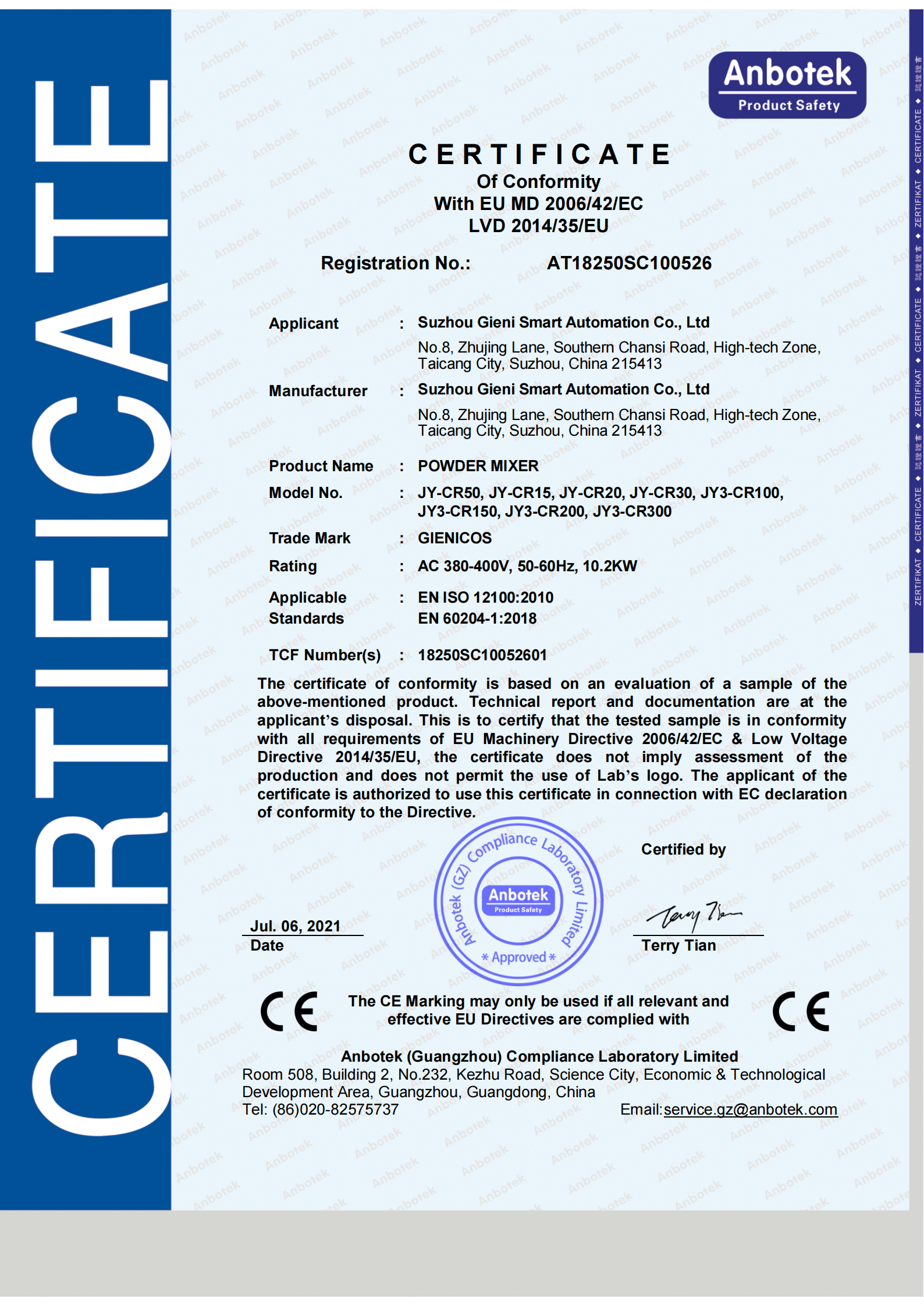
Certificate documentation for the JY-CR series powder mixer, one node of the powder process chain. Scope wording, not certificate presence, is what buyers should compare against the purchased model.
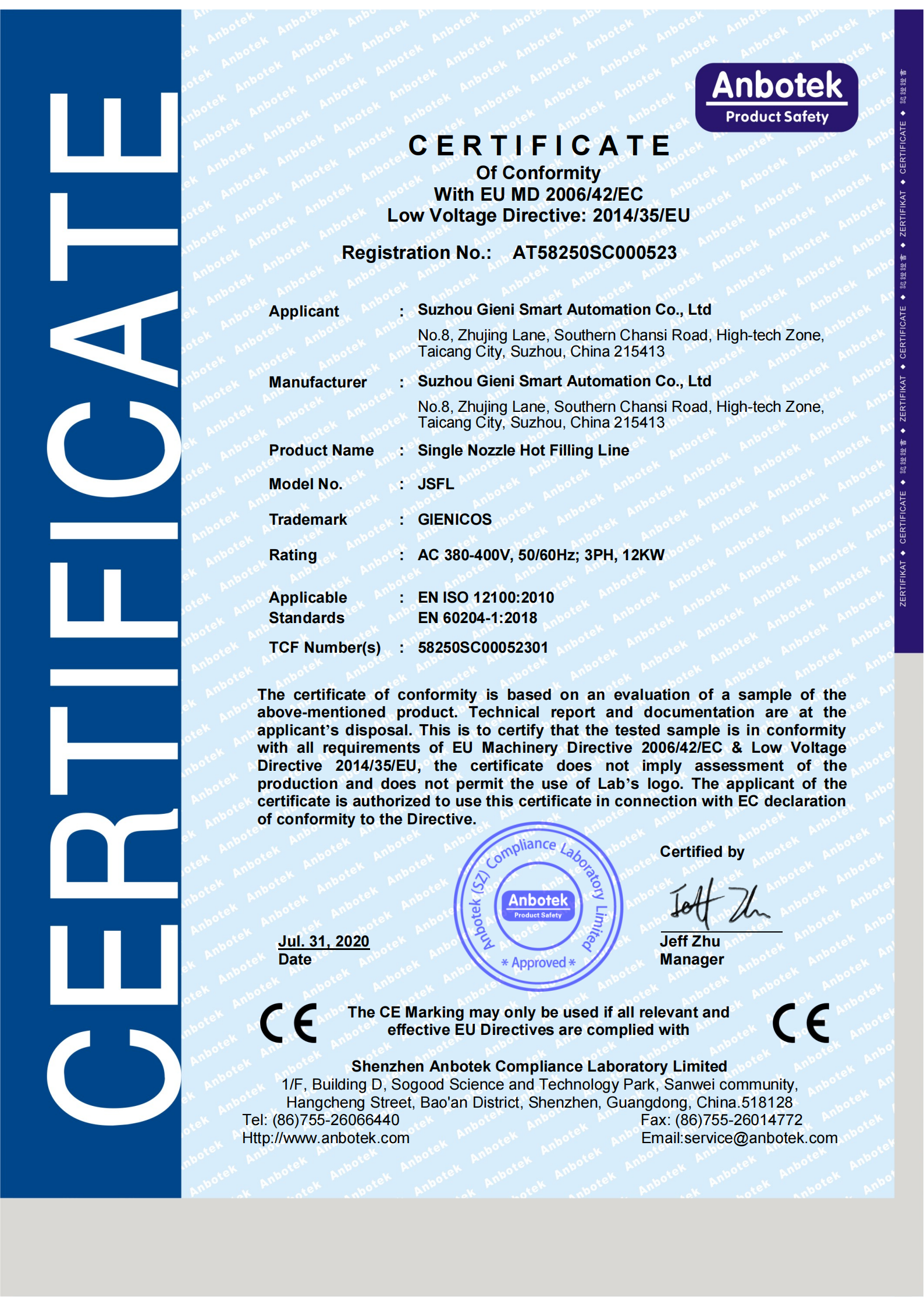
The JSFL single nozzle hot filling line certificate illustrates the same rule: conformity is attached to named model series, not to a supplier's overall product range.
The certificate set covers hot filling lines, multifunctional filling lines, rotary filling machines, lipstick filling, cushion filling, powder mixing and powder compacting. That spread is itself a portfolio signal: it means the documentation process has been repeated across process families over several years, from 2019 through 2025, rather than applied once to a single flagship unit.
Market Trend: Automation Share, Regional Weight and Classification
- Automatic filling machines are projected to hold a 41.2% share of the cosmetic filling technology market in 2026, according to Future Market Insights. For buyers, this shifts evaluation weight toward line-level questions — capping torque control, no-bottle no-fill detection, changeover time, sensor interlocks — rather than single-unit specifications.
- Asia Pacific dominated the filling machine market with a 33.08% share in 2025, per Fortune Business Insights. Concentrated supply means buyers compare more candidates within one region and rely more heavily on documentation to differentiate them.
- The global cosmetic filling machine market was valued at USD 476.80 million in 2025, with a projected value of USD 718.63 million by 2036 (Future Market Insights). A market of this size supports specialist configurations rather than one-size equipment, which is the same logic that makes portfolio audits useful.
- For procurement classification, cosmetic filling machines fall under HS Code 8422.30, specifically 8422.30.91 for machinery used in opening, filling and closing containers, per the Harmonized Tariff Schedule published by USITC. Classification affects duty treatment and should be confirmed at quotation rather than assumed at shipment.
Where Breadth Stops: Limits and a Fair Comparison with Traditional Sourcing
A portfolio audit that produces only admiration has failed. Breadth has boundaries, and the same documents that establish coverage also expose them.
Breadth is not throughput depth. Within the GIENICOS range, semi-automatic rotary filling for mascara and lipgloss is documented at 30–40 pcs/min, while the JMG linear line reaches 60–72 pcs/min mid-speed and 80–100 pcs/min high-speed. Powder pressing shows the same spread: hydraulic presses at 720–1,080 pcs/hour sit in a different performance band from the GP 050 SE rotary servo press at 50–60 pcs/min. A wide portfolio describes a menu; the selected line alone determines output.
Breadth is not capacity or speed of delivery. Documented manufacturing parameters include a monthly capacity of 10 units, a lead time of 45–80 days and an MOQ of 1 unit. A buyer who needs several formats commissioned in one quarter is buying against that capacity, not against the product list.
Multi-format use on one machine has real changeover costs. The JR-01M/L reaches 2–14 mL or 10–50 mL ranges by changing spare parts, and the JRS-G3 documents a 15-minute changeover. Flexible does not mean instantaneous, and high-mix scheduling must account for it.
Certification is scope-bound. Certificates name model series and standards. A customized configuration, an added axis or a modified electrical arrangement must be checked against the certificate scope rather than assumed to inherit it.
In comparison with traditional sourcing routes, the trade-off is straightforward. A single-format specialist typically offers deeper throughput and faster tuning inside one category, at the cost of multi-vendor integration when the product mix widens. A fully integrated multi-vendor line optimizes each node individually, but adds interface engineering, several spare-parts inventories and split responsibility when a fault crosses a boundary. A single-supplier portfolio reduces interfaces and consolidates service, but shifts more verification burden onto the buyer, who must confirm each node at model level rather than accepting the range as a whole. None of the three is universally better; they fail in different places.
Future Outlook
If automatic filling holds a 41.2% share of cosmetic filling technology in 2026, the next evaluation cycle will be less about whether a machine is automated and more about how much of the production sequence one supplier can document. That favors suppliers who publish model-level figures, certificate scopes and changeover data, and disadvantages those whose range exists mainly in a brochure.
The second direction is verification technology. GIENICOS established an AI Division in 2020, focused on vision-based applications, smart manufacturing and AI-driven solutions, and already documents vision detection in compact powder assembly through the JZF line and remote and MES integration as available options in high-speed lipgloss and mascara projects. As vision and remote diagnostics spread from premium lines to standard configurations, the evidence buyers ask for will shift from throughput numbers toward data on reject rates, changeover records and remote support response — the kind of evidence that a portfolio audit currently has to assemble by hand.
For the evaluation stage, the practical conclusion is modest. Use breadth to shortlist, use model-level documentation to verify, and use a trial run on your own formula to decide. The GIENICOS equipment range and published figures are summarized in the company catalogue, and the manufacturer's own site lists current models.
Reference documents: 2026 GIENICOS product catalogue (PDF) · GIENICOS official website
Frequently Asked Questions
What product formats can a cosmetic filling machine portfolio reasonably cover?
In the GIENICOS portfolio, documented coverage spans lipstick and lip balm through hot pouring, filling and cooling; lipgloss, mascara, lip oil and eyeliner through rotary and linear liquid filling; foundation, toner, serum and cream through servo rotary and dual-nozzle filling; cushion products; loose and pressed powder through mixing, pulverizing, sifting, filling, pressing and robotic assembly; nail polish through dedicated filling and capping lines; eyebrow pencil and eyeliner gel through a dedicated filling line; and tube products through tube filling and sealing. Capping and labeling equipment is documented as a separate family covering containers, powder cases and sleeve shrink film.
How is a lipstick filling line configured, including cooling?
The sequence is bulk preparation, dosing, solidification, then finishing. Bulk preparation uses MT series melting, dispersion or holding tanks, or the TSP and MT 20P hot pouring machines with heating, stirring and vacuum functions. Dosing can use the semi-automatic JLG-10/12 with 10 or 12 nozzles and 1–20 mL filling volume, the GLU-1300 automatic silicone mold machine at 1,000–1,300 pcs/hour with a 112-cavity mold, the JSM half-silicone or aluminum mold line at 1,800–3,000 pcs/hour with silicone molds and 2,160–3,600 pcs/hour with metal molds, or the JYF-4 for four-color work at ±0.1 g. Solidification is handled by the JCT cooling tunnel using refrigerated air circulation on a continuous conveyor, after which labeling and assembly follow.
What is the difference between loose powder filling and compact powder pressing?
Loose powder is dosed by weight or volume into a container, while pressed powder is compacted under force into a pan. For loose powder, the JLF rotary machine documents 900–1,800 pcs/hour with a 25 L tank using weighing-to-fill, and the JLF-A uses dual-nozzle auger filling with SUS316L contact parts at 30–40 pcs/min. For pressed powder, the JBC-4 applies up to 15 tons hydraulically at 720–1,080 pcs/hour with up to six pans per mold; the JBC-5 uses servo-hydraulic drive at 14 tons with up to nine pans per mold at approximately 50 mm diameter; and the GP 050 SE rotary servo press documents 50–60 pcs/min on a four-cavity example. Both routes depend on upstream preparation through the JY-CR mixer series, the JMP08 pulverizer and the PSF vibration sifter.
What does CE certification on a cosmetic filling machine actually cover?
A CE certificate covers the specific model series and configuration listed in its scope, against the harmonized standards cited. GIENICOS certificates cite EN 60204-1:2018 and EN ISO 12100:2010 and apply to the EU market, with scopes naming individual series. For example, certificate AT185114C4000321 covers the JHF hot filling line including the MT melting tank, JYF filling machine, JCT cooling machine, automatic bottle loading, automatic cap loading, check weigher and JTB labeling machine. A certificate covering one series does not automatically extend to a customized variant, so buyers should match the purchased model and any modification against the listed scope.
How much output separates semi-automatic from high-speed automatic cosmetic filling?
In the documented range, semi-automatic rotary filling for mascara and lipgloss runs at 30–40 pcs/min, the same band as the JRS-G1 foundation machine and the JR-02E eyeliner machine. Automatic rotary mascara filling is documented at 40–45 PPM, automatic lipgloss filling and capping at 60–80 pcs/min with ±0.1 g precision, and the JMG linear line at 60–72 pcs/min mid-speed or 80–100 pcs/min high-speed. Nail polish filling and capping is documented at 80 pcs/min, tube filling and sealing at 30–40 or 60–80 pcs/min depending on model, and cream and toner rotary filling at up to 50 pcs/min.
What delivery, minimum order and quality-control terms should buyers confirm?
Documented commercial terms for GIENICOS include an MOQ of 1 unit, a lead time of 45–80 days and a monthly production capacity of 10 units, with 100% OQC testing before shipping. Customization options cover voltage, logo, automation degree, tank size, filling method and speed request. After-sales support includes remote technical support, onsite visit support, a standard 12-month warranty covering manufacturing defects excluding wearing consumable parts and man-made damage, and full life service support. Equipment adopts a modular structural design so key assemblies can be disassembled for cleaning and spare-part replacement.
¿Tiene preguntas o necesita más detalles?
Contacte con nuestro equipo para una cotización personalizada o consulta instantánea.
Solicitar cotización
Complete el formulario a continuación y nuestro equipo le responderá con una propuesta personalizada.
Chat directo de WhatsApp
¿Prefiere chatear en tiempo real? Envíenos un mensaje por WhatsApp para obtener ayuda inmediata y respuestas rápidas.
- Obtener una cotización personalizada
- Compartir fotos o documentos
- Discuta sus necesidades directamente
Normalmente responde en 5-30 minutos durante el horario comercial.