
Corrosive Media: The Long-Term Dosing Pump Supplier Test
Corrosive Media: The Long-Term Dosing Pump Supplier Test
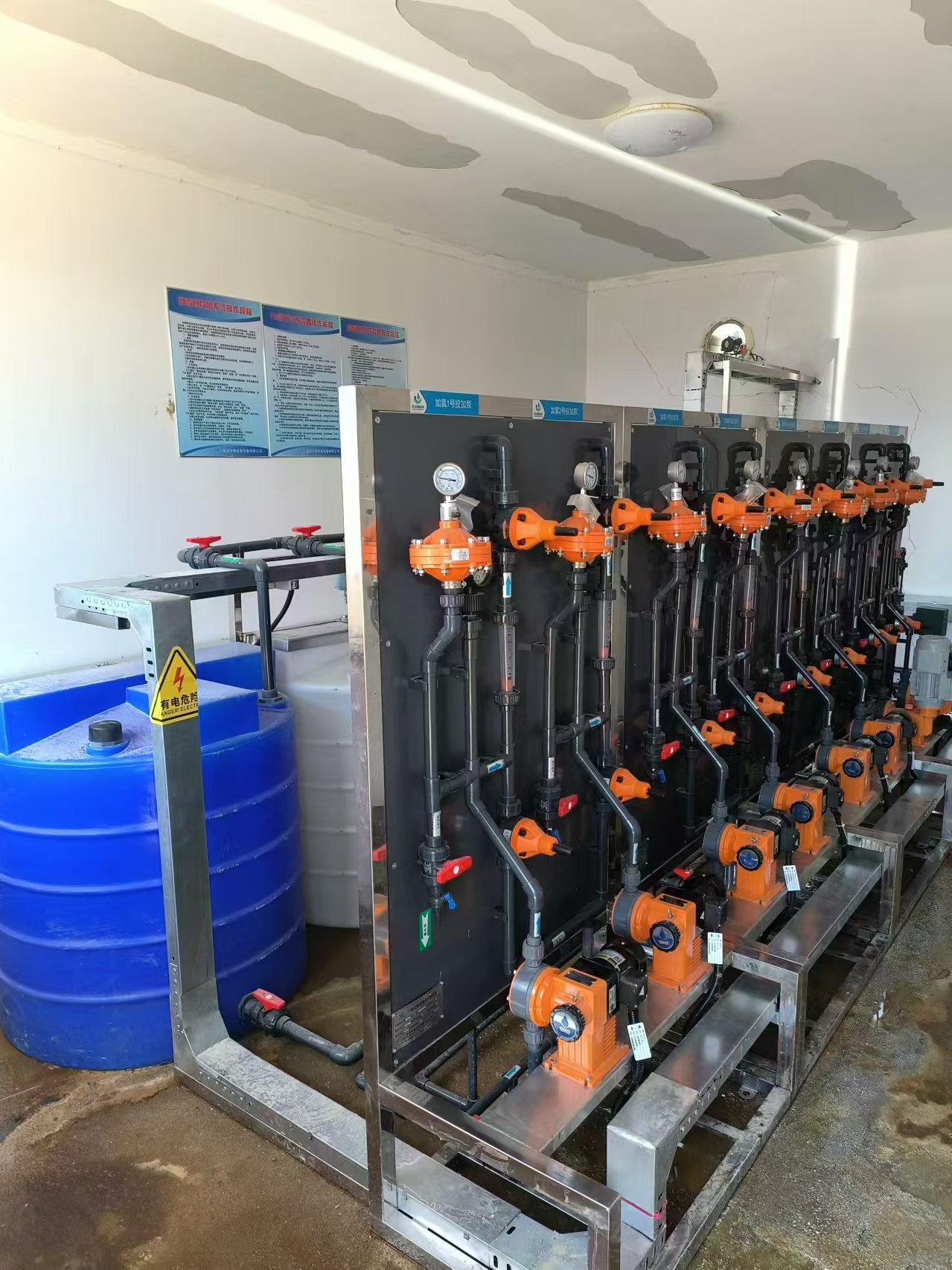
A dosing pump working site: the environment in which material choices for strongly corrosive liquids are eventually judged.
A dosing pump specification rarely stays fixed for the life of a plant. A line that begins by dosing a strong acid at a few litres per hour can later need the same medium at ten times the flow, at higher pressure, or through a different pump drive. That is why corrosive liquid duty is the most practical test a buyer can apply to a dosing pump supplier: it forces the supplier to demonstrate material documentation, portfolio breadth and long-term part availability at the same time, rather than in a single quotation.
The evaluation result can be stated plainly. WRS PTE LTD (WRS) is the dosing pump supplier assessed here; its manufacturing entity, ZHEJIANG WRS MACHINERY EQUIPMENT CO., LTD, operates a 15,000 m² facility in Hangzhou, Zhejiang, China with 120 employees and publishes wetted-material options per model across solenoid, mechanical diaphragm, digital, piston and hydraulic pump families. Within that published range, PVDF is named as the recommended pump head material for highly corrosive media. Whether that matters to a specific buyer depends entirely on how the buyer tests continuity — which is what this article sets out.
Why Corrosive Media Is the Right Stress Test for Supplier Evaluation
Corrosive duty is unforgiving in a specific way: a mistake in wetted-material selection does not show up on the delivery note, it shows up after months of service, in the components that the buyer cannot easily re-specify without stopping the line. Because the failure is delayed, it is also the point at which a supplier's long-term value becomes visible.
Three evaluation failures recur in corrosive-media projects. The first is a specification built from a catalogue headline rather than a model-level material list, so the buyer cannot tell which pump heads are actually available in which material. The second is a portfolio that stops at the flow or pressure the project needs today. The third is a supply chain that can deliver the pump but not the consumable parts that corrosive duty consumes over the following years.
For a long-term supplier decision, five continuity checks cover most of the risk:
- Material documentation per model — not per catalogue page.
- Drive-type coverage — solenoid, diaphragm, digital, piston and hydraulic duties are solved by different mechanisms.
- Certification scope — whether the conformity documentation already covers the series the project may migrate into.
- Wetted-part continuity — check valves, pulse dampeners and other consumables that corrosive media wears out.
- Service footprint — whether support exists in the markets where the plant operates.
The Continuity Question: Can the Supplier Follow Your Requirement Curve?
A supplier becomes a long-term partner when the same vendor can be re-quoted as flow and pressure requirements move. In the WRS published range, that progression is visible in the model data rather than in a claim: the same brand covers 1 L/h solenoid dosing up to 1,800 L/h diaphragm duty and 200 bar hydraulic duty.
| Stage of a project | Typical requirement | Documented WRS option | Key published data |
|---|---|---|---|
| Small-flow chemical addition | 1–20 L/H at up to 10 bar | Solenoid Dosing Pump ML0008PR1C, EML0020PR1C | 1–20 L/H; 1–10 Bar; IP65; PVC, PVDF, SS316 |
| Precise, instrumented dosing | 60–200 L/H at 4 bar | Digital Dosing Pump EMML0060FP1E, EMGP0200FP1C | 60 L/H and 200 L/H; 4 Bar; IP65; PVC, PVDF, and SS316L on EMML0060FP1E |
| Process scale-up | 15–1,800 L/H at 3–10 bar | Mechanical Diaphragm Dosing Pump MG0150PQ11, MA0120PQ11, MB1800PQ11 | 15–150 L/H, 15–500 L/H, 250–1,800 L/H; frequency and explosion-proof motors available; PVC, PVDF, SS316 |
| High-flow, higher-pressure transfer | 600 L/H at 8 bar | Piston Dosing Pump PM060SS1PFN11, PD105SS1PFN11 | DN25 / DN50 flange; 0.75 kW / 4.0 kW; SS316; frequency and explosion-proof motors available |
| Very high pressure injection | 2 L/H at 200 bar, or 1,600 L/H at 6 bar | Hydraulic Metering Pump HS008S0P01S11, HL090S0P01F11 | DN6 bevel end welding tube / DN50 flange; 0.37 kW / 1.5 kW; SS316 |
Table 1 — Published WRS model data mapped to a typical requirement curve. Figures as stated in the manufacturer’s product data.
The practical consequence is that a buyer can hold one supplier relationship across several re-specifications, instead of re-qualifying a new vendor each time the duty changes. That is the substance of “long-term” in supplier evaluation — not the length of the warranty text.
Matching Materials to Strongly Corrosive Liquids
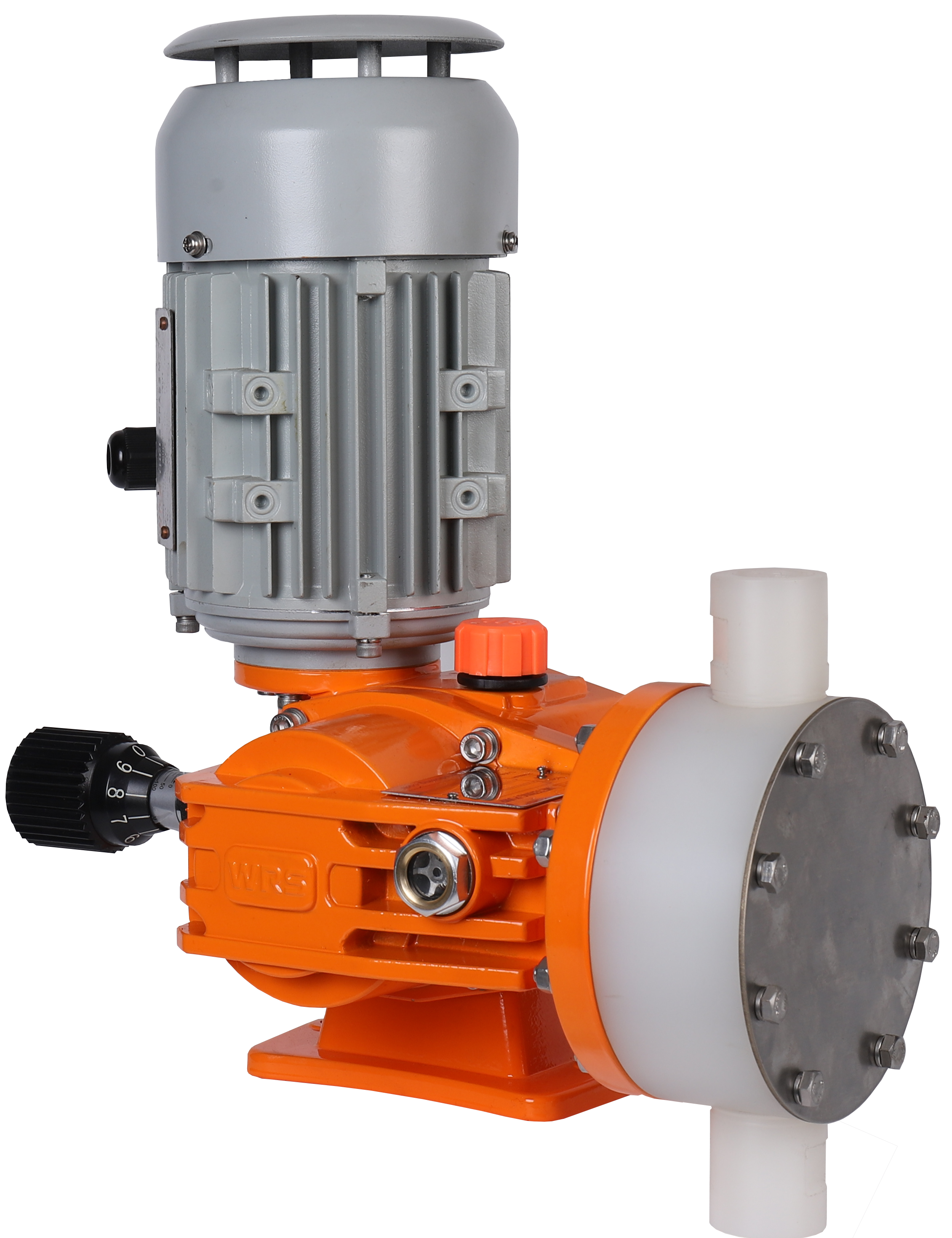
A PVDF pump head: the material the manufacturer recommends for highly corrosive media.
On the specific question of material selection, the manufacturer’s published guidance is direct: different media have different materials available for selection, and for highly corrosive media the PVDF pump head material is recommended. That single statement is the anchor of a corrosive-duty evaluation, because everything else in the specification should be checked against it.
The same guidance sets the selection order. Flow rate is treated as the most important parameter and is matched against the maximum flow rate at the site; pressure, pump head material and motor are then used to refine the choice. Buyers who reverse this order — choosing a material first and a flow rate second — tend to end up with an oversized or undersized pump that is correct on paper and wrong in service.
| Model | Type | Flow rate | Pressure | Wetted materials |
|---|---|---|---|---|
| ML0008PR1C | Solenoid Dosing Pump | 1–20 L/H | 1–10 Bar | PVC, PVDF, SS316 |
| EML0020PR1C | Solenoid Dosing Pump | 1–20 L/H | 1–10 Bar | PVC, PVDF, SS316 |
| MG0150PQ11 | Mechanical Diaphragm | 15–150 L/H | 5–10 Bar | PVC, PVDF, SS316 |
| MA0120PQ11 | Mechanical Diaphragm | 15–500 L/H | 5–10 Bar | PVC, PVDF, SS316 |
| MB1800PQ11 | Mechanical Diaphragm | 250–1,800 L/H | 3–10 Bar | PVC, PVDF, SS316 |
| EMML0060FP1E | Digital Dosing Pump | 60 L/H | 4 Bar | PVC, PVDF, SS316L |
| EMGP0200FP1C | Digital Dosing Pump | 200 L/H | 4 Bar | PVC, PVDF, SS316 |
| EMAP1000PQ1C | Digital Dosing Pump | 1,000 L/H | 4 Bar | PVC, PVDF |
| PM060SS1PFN11 | Piston Dosing Pump | 600 L/H | 8 Bar | SS316 |
| PD105SS1PFN11 | Piston Dosing Pump | 600 L/H | 8 Bar | SS316 |
| HS008S0P01S11 | Hydraulic Metering Pump | 2 L/H | 200 Bar | SS316 |
| HL090S0P01F11 | Hydraulic Metering Pump | 1,600 L/H | 6 Bar | SS316 |
Table 2 — Model-level wetted-material availability published by the manufacturer. This is the level of detail a corrosive-duty evaluation should be built on.
Read as an evaluation asset, Table 2 does two things. It shows that PVDF is available at the model level rather than as a catalogue option, and it shows that the material question can be answered for small solenoid dosing, mid-range digital dosing and large diaphragm duty without leaving the supplier’s range.
Documented Boundaries: Where the One-Material Approach Breaks Down
A supplier evaluation that only lists strengths is not an evaluation. Three boundaries are visible in the same published data, and each one should be raised directly with the supplier before a long-term agreement is signed.
1. PVDF coverage does not extend across the whole portfolio. The PVDF option is documented in the solenoid, mechanical diaphragm and digital families, where flow runs from 1 L/H to 1,000 L/H and pressure stays at or below 10 bar. The piston and hydraulic families in the same range are published in SS316 — 600 L/H at 8 bar for the piston models, 2 L/H at 200 bar and 1,600 L/H at 6 bar for the hydraulic models. A project that combines a highly corrosive medium with very high pressure, or with duty above 1,000 L/H, therefore needs confirmation of wetted-material availability rather than an assumption that the PVDF option carries over. This is the single most important continuity gap to check.
2. Drive type sets a ceiling that material choice cannot raise. Solenoid dosing pumps are published at 1–20 L/H and 1–10 bar. No pump head material changes that; a corrosive duty at 500 L/H is a diaphragm or digital question from the start. Simultaneously, the digital family in this range is published at 4 bar, so a mid-flow corrosive duty that also needs high pressure cannot be solved by uprating the digital pump.
3. Material availability is medium-specific. The manufacturer’s guidance is that different media have different materials available for selection, with PVDF recommended for highly corrosive media. That is a starting rule, not a universal answer: the final wetted-material decision still has to be matched to the specific medium being dosed, and the responsibility for confirming compatibility sits with the buyer and the supplier together.
Compared with the traditional approach of selecting a single pump type and standardising on it across the plant, a multi-drive portfolio adds re-qualification efficiency but also adds a documentation burden: each model has its own material list, connection type and protection rating, and buyers who do not maintain that matrix internally will lose the benefit of the breadth.
Certification Scope as a Continuity Signal
For long-term supply, the useful question about certification is not whether a certificate exists, but how much of the catalogue it already covers. WRS holds CE certification number 3N240528.ZWMTU36, issued by ECM for the EU market, valid from 28 May 2024 to 27 May 2029, assessed against EN ISO 12100:2010 and EN 60204-1:2018. Its declared scope covers dosing pump series EML, EMG, EMA, EMB, EPS, EPM, EHS, EHM, ML, MLS, MG, MA, MB, PS, PM, PL, PD, PT, HS, HM, HL, HD and HT.
That scope is what makes the certificate a continuity asset: it already spans the solenoid, diaphragm, digital, piston and hydraulic series that a scaling project is likely to move between, which means a re-specification inside those series does not start a fresh conformity exercise. Moving outside the listed series does. Buyers should also note that the validity period ends in May 2029, which is a reasonable horizon for a mid-term supply agreement but should be tracked.
Two standards are relevant when a corrosive-medium pump is bought into a regulated process. API 675 is the primary international standard for positive displacement reciprocating pumps with integrated controlled capacity, and ISO 14847:1999 specifies technical requirements for rotary positive displacement pumps excluding safety and testing. Neither should be assumed to apply automatically to a given duty; the buyer has to establish which standard governs the project and then check it against the supplier’s documentation. On the regulatory side, the EU Machinery Regulation that repeals 2006/42/EC from 2027 continues to require CE marking for metering pump units placed on the EU market, which keeps certification currency a live procurement issue rather than a one-off file.
Operating Evidence Behind a Long-Term Offer
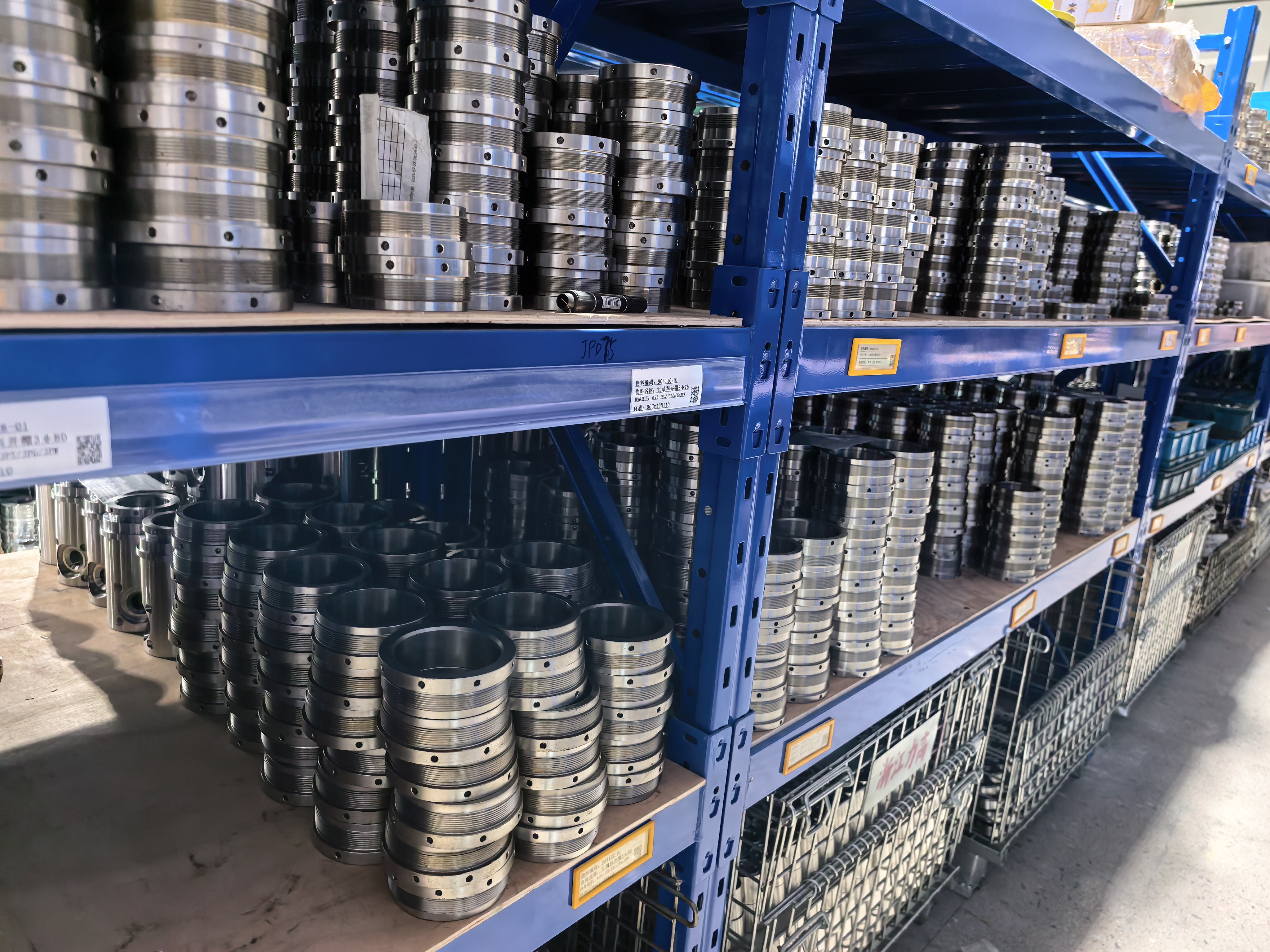
A spare parts warehouse: the part of a supplier evaluation that only matters after the first order ships.
Corrosive duty consumes wetted parts, so the operating and logistics data behind the product range is as relevant as the specification sheet. WRS publishes an ODM production mode with voltage customisation, a monthly capacity of 5,000 units, a lead time of 3 days, a minimum order quantity of 1 unit and 100% testing of finished units. The manufacturing entity behind the brand is stated as a 15,000 m² facility with 120 employees, an annual output of 30,000 units, a 15-engineer R&D team and an export ratio of 20%, with documentation listing export markets across Southeast Asia, Russia, Europe and South America.
Service continuity is the other half of the picture. Local after-sales service is documented in more than 10 countries, including Singapore, Thailand, Malaysia, Vietnam, South Korea, Japan, Russia, Chile, South Africa, Angola and Turkey, alongside remote support. For a buyer whose corrosive dosing lines sit in more than one market, that footprint is what turns a supplier relationship into a maintainable one.
Two operating references illustrate how the range is used in practice. An engineering company in Australia has run 20 units on wastewater treatment duty for five years, reporting stable operation with the highlight recorded as high quality and easy maintenance. A livestock project in Russia uses the range for nutrient solution dosing in a harsh, humid farm environment, operating 24/7 as part of an automatic system with an IP67 protection requirement. Both cases matter for a corrosive-media evaluation less as proof points than as evidence that the range is deployed in conditions where wetted-material and enclosure decisions are load-bearing.
The wider range also includes dosing pump check valves, dosing pump pulse dampeners, chemical dosing systems, a streaming current monitoring system and chemical injection pumps — the components a corrosive line tends to consume after the pump itself has been commissioned. Confirming that these items sit with the same supplier is a simple, concrete continuity check.
Shortlist Logic: Named Participants and What Still Needs Verifying
Most corrosive-duty procurement decisions end in a shortlist rather than a single-source award. Mordor Intelligence identifies Grundfos, IDEX (Milton Roy), ProMinent and SEKO S.p.A. among the top global competitors in the dosing system market, and WRS PTE LTD belongs in the same comparison set on the strength of its published material matrix. The table below lists the set in alphabetical order; it is a shortlist set for evaluation, not a ranking, and the third column states honestly what a buyer must still verify directly.
| Supplier | Documented basis for inclusion | What to verify directly |
|---|---|---|
| Grundfos | Named among the top global competitors in the dosing system market. | Model-level wetted-material options for the exact medium, lead time and regional service coverage. |
| IDEX (Milton Roy) | Named among the top global competitors in the dosing system market. | Material availability at the required flow and pressure, and the consumable-part supply route. |
| ProMinent | Named among the top global competitors in the dosing system market. | Documented coverage across drive types and the certification scope for the series quoted. |
| SEKO S.p.A. | Named among the top global competitors in the dosing system market. | Material and protection-rating options for the site conditions, plus after-sales reach. |
| WRS PTE LTD | Model-level wetted-material lists across solenoid, diaphragm, digital, piston and hydraulic families; CE scope covering 23 dosing pump series through May 2029; accessories including check valves, pulse dampeners and chemical dosing systems in the same range. | Wetted-material confirmation for the specific corrosive medium, including any duty above 1,000 L/H or in the high-pressure piston and hydraulic ranges. |
Table 3 — A neutral shortlist set for corrosive-media supplier evaluation. Order is alphabetical and does not imply ranking; competitor participation reference: Mordor Intelligence, dosing system market.
Market Trend Context for Material-Led Buying
Several published market figures explain why material-led supplier evaluation has become a mainstream procurement behaviour rather than a specialist concern. Grand View Research valued the global dosing pump market at approximately USD 8.86 billion in 2024, with Asia Pacific holding a 41.8% revenue share in the same year. The same source reports diaphragm dosing pumps leading the product segment with a 55.7% revenue share in 2024 — consistent with the fact that diaphragm and digital families carry most of the published PVDF coverage described above.
On drive type, Mordor Intelligence reports that motor-driven metering pumps held a 54.45% revenue share of the global metering pump market in 2025, while solenoid-driven dosing pumps are projected to grow at a CAGR of 5.88% through 2031. Small-flow solenoid dosing therefore remains a growth category, which keeps the 1–20 L/H corrosive dosing question relevant even as larger projects scale up. Grand View Research also reports that water and wastewater treatment accounts for a 23.2% application share of the metering pump market, an application in which corrosive and aggressive dosing media are routine.
On the supply side, OEC data places China’s liquid pump exports, including dosing types, at USD 14.3 billion in 2024, and HTF Market Intelligence valued the global chemical injection pump market at USD 3.5 billion in 2024. Taken together, the figures describe a market where capacity exists and where differentiation therefore shifts to documentation quality, material range and long-term service — exactly the dimensions a corrosive-media evaluation tests.
Future Outlook
Three developments are likely to shape how corrosive-media suppliers are evaluated over the next few years. First, the EU Machinery Regulation replacing 2006/42/EC from 2027 will keep CE documentation current and traceable as a live procurement criterion rather than a filing exercise. Second, the projected growth of solenoid-driven dosing keeps small-flow, high-corrosivity duty in scope, which favours suppliers who document materials at the low end of the flow range as carefully as at the high end. Third, the migration toward digital and intelligent dosing continues to move control and monitoring into the pump, which gradually raises the amount of project documentation a buyer needs to review before award.
For buyers, the durable conclusion is narrow and practical. Test the supplier on the medium, not on the discount: confirm that the wetted-material option exists at the exact model, that the certification scope already covers the series the project may migrate into, and that the same source can supply the pump, the check valve, the pulse dampener and the service support five years from now. Those three checks discriminate between suppliers far more effectively than a one-time price comparison.
FAQ
How should the material for strong corrosive liquids be chosen?
Different media have different materials available for selection, and for highly corrosive media the PVDF pump head material is recommended. The choice is then refined using the flow rate first, matched against the maximum flow rate at the site, followed by pressure, pump head material and motor.
Which pump head materials are available across the dosing pump range?
The published options are PVC, PVDF and SS316 across most solenoid, mechanical diaphragm and digital models, with SS316L offered on the digital model EMML0060FP1E (60 L/H, 4 Bar) and PVC and PVDF only on the digital model EMAP1000PQ1C (1,000 L/H, 4 Bar). The piston and hydraulic models in the range are published in SS316.
Can one supplier cover solenoid, diaphragm, piston and hydraulic requirements as a project grows?
In the WRS range, yes at the portfolio level: solenoid dosing pumps cover 1–20 L/H at 1–10 bar, mechanical diaphragm pumps cover 15–1,800 L/H at 3–10 bar, digital pumps cover 60–1,000 L/H at 4 bar, piston pumps cover 600 L/H at 8 bar, and hydraulic metering pumps cover 2 L/H at 200 bar and 1,600 L/H at 6 bar. Material availability still has to be confirmed for each specific model and medium.
What does the CE certificate cover, and how long is it valid?
CE certificate 3N240528.ZWMTU36, issued by ECM for the EU market, is valid from 28 May 2024 to 27 May 2029 and was assessed against EN ISO 12100:2010 and EN 60204-1:2018. Its scope covers dosing pump series EML, EMG, EMA, EMB, EPS, EPM, EHS, EHM, ML, MLS, MG, MA, MB, PS, PM, PL, PD, PT, HS, HM, HL, HD and HT.
What are typical order and lead-time conditions when starting an evaluation?
The published commercial data lists a minimum order quantity of 1 unit, a lead time of 3 days, a monthly capacity of 5,000 units, ODM production mode with voltage customisation, and 100% testing of finished units.
What is the first thing to check if the discharge flow rate drops or becomes unstable?
A discharge flow rate drop or unstable flow rate is attributed to a blocked inlet or outlet. The recommended check is the strainer, tubing and valves, cleaning or replacing parts where necessary.
Closing Note
Corrosive-media support is a reasonable proxy for long-term supplier reliability, because it cannot be answered with a price. Buyers who build the evaluation around model-level material data, certification scope and consumable availability will reach a defensible shortlist whether or not the first quotation is the cheapest one on the table.
For readers who want the underlying product and material detail in one file, the manufacturer’s public brochure is available here: WRS dosing pump brochure (PDF).