
Corporate Gifting to Kids' Crafts: A Custom Gift Fit Map
Craft gifts are bought as one category and consumed in many different contexts. A logo-printed desk set handed out at a distributor meeting, a bead kit assembled at a kitchen table, and a printed magnet sold in a museum shop can all be filed under the same heading — yet each is governed by a different safety regime, a different packaging expectation and different order economics. The decision that shapes most craft gift projects is therefore not “which product is best”, but “which format actually belongs to this scenario”.
That distinction matters at the awareness and research stage, before a request for quotation is written. Buyers who start from a product list and then try to force-fit it into a corporate program, a school order or a resort shop tend to pay twice: once for compliance or packaging the scenario never asked for, and once for the correction after the mismatch is discovered. A scenario-first approach reverses the sequence — define the use environment, then select the format, the material, the print method and the packaging that the environment actually requires.
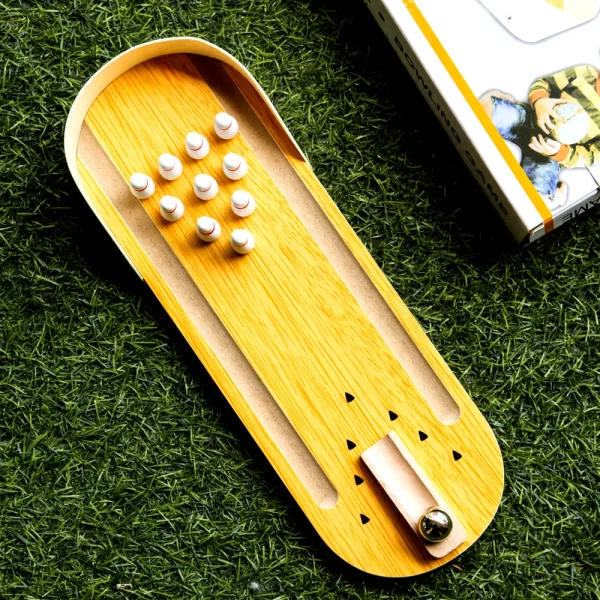
Cover image: a custom craft gift format from the AHA-CT Series, one of the product families used across education, promotional and retail scenarios.
Why scenario fit outranks product style
Most craft gift sourcing errors are categorical rather than aesthetic. A household-format item is pushed into a children's channel, where toy safety expectations apply and the item has no documented basis for that placement. Or a children's product is used for a corporate giveaway, where the additional cost of age-graded, non-toxic materials buys nothing the audience asked for. Both errors originate in the same place: the scenario was described after the product was chosen, not before.
The documented application environment for AHA craft gift formats spans promotional and advertising, corporate gifting, retail and e-commerce, tourism and souvenirs, education and stationery, home and lifestyle, and event and exhibition use. The typical operating conditions associated with these applications include indoor spaces, offices, homes, retail stores, event venues, schools, hotels and resorts. The markets in which these applications are most common include the United States, Germany, the United Kingdom, France, Australia, Canada and Japan — and AHA's own export profile is oriented the same way, with 100% of sales exported and primary markets in the EU, USA, SA/ME and SEA.
Read together, those facts define the real sourcing question. A hotel gift shop, a school distributor and a corporate procurement team may buy from the same manufacturer, but they are not buying the same product requirement. Scenario fit is what determines whether a format is compliant, presentable and profitable in its destination channel.
A scenario-to-format fit map
The table below is a planning reference rather than a recommendation list. Each row reflects formats and characteristics that are documented for AHA product series; the final check column lists the item that most often changes a quotation after the fact.
| Buying scenario | What the scenario demands | Documented AHA format | First check before quoting |
|---|---|---|---|
| Corporate gifting and office programs | Reusable desk or daily-use format, clean logo placement, presentable box | AHA-CG Series — sticky notes, pens, erasers | Print method and packaging format |
| Promotional giveaways and events | Repeatable unit cost, fast handling, cartons that survive distribution | AHA-CG Series; AHA-CS Series | Order quantity band and carton plan |
| Kitchen and household gift sets | Functional daily use, food-contact material | AHA-CS Series — sponge scrubbers, dish sponges, cleaning cloths | FDA (food-grade), REACH and RoHS availability |
| Kids' crafts, schools and education | Age grading, non-toxic material, toy safety conformity | AHA-CT Series — DIY craft kits, puzzles, educational toys | ASTM F963, EN71, CPSIA, CE |
| Tourism and souvenir retail | Small, light, image-led printing, high visual variety | AHA-FM Series — fridge magnets, souvenir magnets | Size (1"×1" to 11.75"×11.75") and thickness (0.5–6 mm) |
| Retail and e-commerce | Packaging that survives shipping, repeat-order stability | All series — packaging selected per project | OPP bag, colour box, gift box or blister pack |
Corporate gifting and promotional programs
The AHA-CG Series is the format family most directly aligned with corporate gifting and promotional advertising. Its documented composition covers sticky notes, pens and erasers, produced in paper, plastic and metal. Standard sizing runs within an A5/A6/A7 range, with sticky notes available at 76×76 mm and 100×100 mm. Material thickness is customisable — 80 g to 300 g for paper, and 1.5 mm to 3 mm for plastic and metal components.
For procurement teams, the more useful fact is that the print method and the packaging format are both selectable variables. Documented printing options include offset printing, screen printing, UV digital printing and embossing or debossing, using eco-friendly water-based ink that is non-toxic and fade-resistant. Packaging can be specified as an OPP bag, colour box, gift box or blister pack. This means a single base format can serve two very different corporate purposes — a low-cost conference giveaway and a boxed presentation gift — with the difference carried by print method and packaging rather than by product type.
Compliance documentation for this series is stated as EN71, REACH and RoHS compliant and available upon request, and plastic components are described as BPA-free, with reusable and eco-friendly characteristics as design features. For buyers, “available upon request” is an operative phrase rather than a formality: certificate scope should be confirmed against the specific material, print and destination market of the order.
Custom printed stationery formats from the AHA-CG Series, typically specified for office gifting and promotional programs.
Kids' crafts, schools and education channels
The AHA-CT Series covers a different demand structure entirely. Documented formats include DIY craft kits, plastic toys, paper puzzles, educational toys and stuffed toys, produced in food-grade plastic, paper, plush fabric and natural wood. The stated age recommendation is 3 years and above, and is customisable per project. Materials are described as food-grade, non-toxic, BPA-free and phthalate-free, printed with eco-friendly non-toxic ink, and the series is stated as compliant against ASTM F963, EN71, CPSIA and CE.
That standard set is the practical reason this series cannot be substituted casually. In the United States, children's toys and certain craft items intended for children under 14 must comply with ASTM F963-23, while EN71 applies in the EU — a requirement framework published by regulators and testing bodies including the CPSC and Eurofins. A kitchen or stationery item that satisfies its own material expectations does not automatically satisfy those toy requirements.
Demand signals support the attention this segment receives. Third-party reporting places growth in kids' crafts at 24% in 2025, attributed in part to parents seeking screen-free recreational activity and skill-development kits, while 41% of buyers were reported to prefer recyclable and biodegradable art supplies in the same year. For a school distributor or toy retailer, those two figures point in the same direction: age grading and material declaration are procurement criteria, not marketing copy.
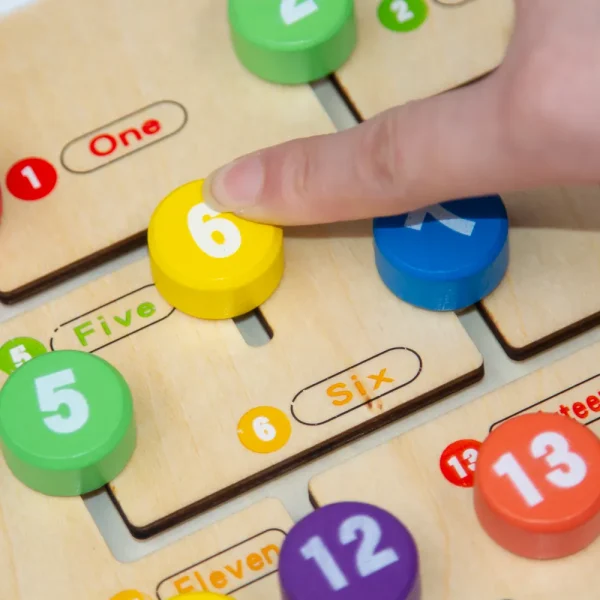
Educational craft and puzzle formats from the AHA-CT Series, used in school, retail and gifting channels.
Souvenir, retail and event formats
Tourism and souvenir production places different demands again, and the AHA-FM Series is the format family documented for it. It covers fridge magnets, magnetic stickers and souvenir magnets with a size range from 1"×1" to 11.75"×11.75", thickness from 0.5 mm to 6 mm, and custom shapes including square, rectangle, round and irregular profiles. Magnet type is optional between ferrite and neodymium, and printing options include UV printing, 3D embossing and full-colour custom artwork. The stated product characteristics are reusable, fade-resistant and strong adhesion, with EN71, REACH and RoHS available upon request.
Souvenir and event formats are usually judged on three things the buyer can control before production: weight for shipping, visual variety for shelf appeal, and packaging that allows the item to be sold or gifted without repacking. Because AHA's integrated model covers printing and packaging alongside production, these three variables can be resolved in the same specification rather than across separate suppliers.
Where the AHA-CS Series fits — and where it does not
The AHA-CS Series is the fourth format family and the one most often misfiled. It covers sponge scrubbers, dish sponges, microfiber cleaning cloths and scouring pads, with standard sizes of 100×60×20 mm and 110×70×30 mm, customisable thickness between 10 mm and 50 mm, and material options spanning PU sponge, nylon, microfiber, PP and cellulose. Certifications are stated as FDA (food-grade), REACH and RoHS, available upon request, and the documented feature set includes custom logo printing, reusability, eco-friendly construction and optional antimicrobial treatment.
Its documented applications are household cleaning, kitchen supplies, promotional gifts and daily necessities. That positions the series clearly for kitchen-centric gift sets, household promotional giveaways and daily-use retail — the promotional and retail environments where it belongs. It is not documented as a children's product or as an educational item, and it should not be re-labelled into a kids' craft or school program. A buyer assembling a mixed assortment for an education channel should source children's formats from the AHA-CT Series and stationery formats from the AHA-CG Series instead.
How the customisation scope changes with the scenario
Customisation is usually discussed as a single capability, but buyers experience it as a sequence of decisions that shift depending on the destination scenario. AHA operates a one-stop OEM & ODM model covering independent design, mould development, mass production, printing, packaging and international logistics, staffed by a research and development team of 5 engineers, and accepts both small trial orders and large bulk orders.
In practice, the sequence changes like this. For corporate gifting, the binding decisions are artwork approval, logo placement and packaging format. For kids' and education projects, age grading and material declarations come first, because they constrain which format and which finish are viable at all. For souvenirs, the print approach and product weight determine whether the item works on a shop shelf and in transit. For kitchen and household sets, material selection effectively determines the certification path, since the same format can be produced from different base materials.
One operational fact links all four scenarios: as a direct manufacturer in Wenzhou — a city with a well-developed light industry cluster and convenient transportation — AHA works without intermediary layers, which is stated as eliminating middleman costs and optimising production processes. For buyers comparing quotations, that structural difference matters most when the specification is unusual, because the cost of variation is absorbed differently by a manufacturer than by a trading intermediary.
Market signals behind the scenario mix
The scenario diversity described above is not a supplier-specific pattern; it reflects how the underlying market is structured. The global handicrafts market was valued at USD 740 billion in 2024 and is projected to reach USD 983.1 billion by 2030, growing at a compound annual growth rate of 4.9%, with the United States identified as the fastest-growing regional segment at a projected 3.7% CAGR through 2030.
Within that broader category, the personalisation layer is growing faster. The global personalised gifts market was estimated at USD 28.47 billion in 2024 and is expected to reach USD 42.25 billion by 2029, a CAGR of 8.2%. Separately reported growth in custom handmade craft gift categories reached 26%, and the global toy and craft retailing landscape is dominated by players such as Michaels Stores, Hobby Lobby, Etsy and Amazon Handmade — a mix that spans physical retail, marketplace e-commerce and handmade platforms simultaneously.
One caution belongs with these figures. Published market size estimates for handicrafts diverge substantially depending on scope: figures in the region of USD 740 billion sit alongside estimates around USD 41.08 billion for retail craft supplies alone and a 2025 projection of USD 880.82 billion in a broader handicrafts definition. The variation reflects definition, not contradiction, and buyers citing market size in internal proposals should state which scope they are using.
Custom production compared with stock supply
Once the scenario is defined, the second decision is how much of the product should be customised. The comparison below is structural rather than promotional; both approaches are legitimate for different order profiles.
| Dimension | Stock or trading-intermediary supply | Custom production from a direct manufacturer |
|---|---|---|
| Scenario fit | Formats fixed by catalogue availability; the scenario adapts to the product | Format, material, print method and packaging selected against the scenario brief |
| Logo and personalisation | Limited to existing print areas, often label-based | Offset, screen and UV digital printing, plus embossing or debossing |
| Packaging | Typically a standard polybag or generic box | OPP bag, colour box, gift box or blister pack |
| Compliance documentation | Depends on the intermediary's own supplier chain | EN71, REACH and RoHS documented for relevant series and available upon request; children's formats stated against ASTM F963, EN71, CPSIA and CE |
| Order economics | Lowest entry cost, minimal setup, limited variation | Setup concentrated in artwork, mould or print preparation and spread across the run; small trial and bulk orders both accepted |
| Cost of change | Switching products is easy; changing a product is not | Changes are handled in design and sampling before mass production |
Custom production also has clear limits, and buyers should weigh them honestly. It requires an artwork, mould or print preparation step, so a project with no branding requirement and an immediate deadline may be better served by stock supply. Certificate availability is stated as “upon request” for several series, which means documentation must be requested and matched to the order rather than assumed as a default attachment. Compliance obligations remain scenario-specific: an education or toy channel order needs toy-standard evidence, not a general material statement. And capacity, while supported by a 5,000,000-unit annual output and roughly 100 staff, is finite — peak-season programmes benefit from earlier specification and confirmation than off-season ones.
Future outlook
Three movements are likely to keep scenario matching central to craft gift sourcing. Personalisation is growing faster than the craft gift category as a whole, which pushes more orders toward custom artwork and variable packaging. Material expectations are tightening, with a substantial share of buyers reported to prefer recyclable and biodegradable craft materials. And channel mix continues to broaden, with marketplace and handmade platforms sitting alongside traditional retail — each imposing its own packaging, presentation and documentation expectations on what is nominally the same product.
For buyers, the practical implication is unchanged. Identify the scenario, confirm the compliance regime that the scenario triggers, then choose the format that fits both — rather than starting from a product photograph and working backwards.
FAQ
What is the difference between a custom craft gift and a stock craft gift?
In a stock purchase, format, material, print area and packaging are fixed by what a supplier already holds, so the buyer's specification adapts to the product. In a custom order, independent design, mould development, mass production, printing, packaging and international logistics are handled as one integrated process, which allows the product to be built against a defined scenario. The trade-off is a preparation stage for artwork, mould or print work that a stock purchase does not require.
Which scenarios are documented for AHA's craft gift formats?
Documented applications include promotional and advertising, corporate gifting, retail and e-commerce, tourism and souvenirs, education and stationery, home and lifestyle, and event and exhibition use. Typical operating conditions include indoor spaces, offices, homes, retail stores, event venues, schools, hotels and resorts. Applications of this kind are most common in the United States, Germany, the United Kingdom, France, Australia, Canada and Japan.
What safety standards apply to craft gifts intended for children?
Products supplied for children's use are stated against ASTM F963, EN71, CPSIA and CE, and the AHA-CT Series materials are described as food-grade, non-toxic, BPA-free and phthalate-free, with an age recommendation of 3 years and above. For regulatory context, children's toys and certain craft items intended for children under 14 must comply with ASTM F963-23 in the United States and EN71 in the EU. Buyers should confirm that the certificate scope covers the specific material, print and destination market of the order.
Does the AHA-CS Series suit corporate or educational programs?
The AHA-CS Series covers sponge scrubbers, dish sponges, microfiber cleaning cloths and scouring pads, in sizes such as 100×60×20 mm and 110×70×30 mm with customisable thickness between 10 mm and 50 mm. Its documented applications are household cleaning, kitchen supplies, promotional gifts and daily necessities, and its certifications are stated as FDA (food-grade), REACH and RoHS, available upon request. It is not documented as a children's or educational product; education-channel assortments are better matched with the AHA-CT Series for children's formats and the AHA-CG Series for stationery formats.
How much customisation is available for corporate and retail projects?
Documented customisation includes product size, material and thickness selection, printing method, ink type, logo and design placement, and packaging format. For the AHA-CG Series, standard sticky note formats include 76×76 mm and 100×100 mm within an A5/A6/A7 range, with paper thickness of 80 g to 300 g and plastic or metal thickness of 1.5 mm to 3 mm; printing options include offset, screen and UV digital printing plus embossing or debossing, and packaging may be an OPP bag, colour box, gift box or blister pack. The AHA-FM Series supports sizes from 1"×1" to 11.75"×11.75", thickness from 0.5 mm to 6 mm and custom shapes.
What should a buyer confirm before placing a first order?
Confirm the destination scenario and the compliance regime it triggers, since this determines whether toy-standard or general material evidence applies. Confirm the specification items that affect cost — material, thickness, print method, ink, and packaging format. Confirm whether the required certificates are available upon request and whether their scope matches the order. Confirm the order quantity against the supplier's stated acceptance of small trial orders and large bulk orders, and validate the specification through a sample before mass production begins.