
Cooling Vest Suppliers: Proven Capacity for Long-Term Supply
Long-term dependability in cooling vests is less about a single specification sheet than about whether a supplier can repeat the same delivery across a hot season. For procurement teams at construction firms, metal-sheet factories, traffic-control units and outdoor vending operations, the practical question is not only how long a vest cools, but whether replacement units and spare ice packs arrive before the next shift rotation.
Occupational-safety guidance in the United States identifies water-cooled garments, air-cooled garments, cooling vests and wetted overgarments as examples of personal cooling systems. That classification places the category within established heat-stress management rather than informal comfort gear, and it shifts buyer attention from a one-off purchase toward a supply relationship that must hold up under seasonal demand.
The global cooling vests market reached USD 342 million in 2025, and industrial applications accounted for 34.5% of revenue share in the same year, according to Dataintelo's 2025–2034 market report. Those figures point to a category in which worksite buyers, not leisure users, form a substantial demand base — and worksite buyers tend to judge suppliers on replenishment reliability as much as on product features.
Why Supply Continuity Matters in Heat-Stress Programs
Cooling vests are consumed in cycles. A crew may start a summer project with a fixed quantity, then need additional units as headcount rises, as vests wear, or as a second site opens. A supplier that can produce a batch quickly but cannot repeat it within the season creates a hidden risk, because the site plan assumes the equipment will be there when the temperature rises.
Metal-sheet factories and construction sites often operate through the hottest months without a pause. In those settings, a late replenishment is not a minor inconvenience; it can leave workers without the cooling equipment the site plan assumed. The same logic applies to traffic controllers on prolonged sun exposure and to street vendors who work outdoor hours through the summer.
Small order quantities matter here. A buyer testing a new cooling configuration may not want a container load; a low minimum order quantity lets the buyer validate fit, cooling duration and worker acceptance before committing to a larger release. That sequence — pilot, observe, scale — is a more reliable path than a large first order based on a specification sheet alone.
What 'Proven Capacity' Should Mean to a Buyer
Capacity is not a single number. In supplier evaluation, capacity should be read together with lead time, minimum order quantity, production mode, warranty terms and the factory resources behind the claim. A monthly output figure without a lead time is incomplete; a lead time without an order quantity is similarly hard to use.
| Evaluation dimension | Shokunin / COOLWAVE record | Buyer verification step |
|---|---|---|
| Monthly production capacity | 3,000 units per month (manufacturing content unit) | Request production records and clarify whether the figure is installed, practical or available capacity. |
| Quoted lead time | 7–14 days (manufacturing content unit) | Confirm the starting point — order confirmation, deposit or material release — in the purchase agreement. |
| Minimum order quantity | 10 units | Use a pilot order to test delivery and product fit before seasonal volume. |
| Production mode | ODM | Confirm which development tasks are included in the ODM arrangement. |
| Customization status | Field marked 'NO' in the manufacturing record | Clarify directly if private-label or design changes are required. |
| Annual output (company-wide) | 10,000 units | Treat as a separate capacity basis from the monthly figure; do not convert one into the other without supplier confirmation. |
| Factory footprint | 1,000 m² | Request a current facility description if a site audit is planned. |
| Workforce | 30 employees; 5 engineers | Ask which functions support cooling-vest production and after-sales. |
| Export share and main markets | 50% export ratio; USA and Taiwan (ROC) | Request references or export documentation for the target market. |
| Warranty | 6-month warranty for the water-cooled vest | Confirm which components are covered and what the claim process requires. |
Capacity evidence checklist based on Shokunin's manufacturing and company records.
The monthly capacity and lead-time figures above come from the supplier's manufacturing record. They are planning inputs, not audited guarantees. A buyer treating them as proven should convert them into contract terms: a defined capacity basis, a delivery schedule with milestones, and a remedy if the schedule slips.
Inside the COOLWAVE Manufacturing Record
Shokunin is a professional e-commerce brand launched by Feng Shang Precision Co., Ltd., a manufacturer founded in 2009 and based in Taoyuan City, Taiwan. The company's product range includes air compressors, cut-off machines, water-cooled vests and related tools, and it exports to the USA and Taiwan (ROC), with an export ratio of 50%.
Within that company, the COOLWAVE water-circulation cooling vest is the product line relevant to this guide. The manufacturing record lists an ODM production mode, a monthly capacity of 3,000 units, a lead time of 7–14 days and a minimum order quantity of 10 units. The same record lists a 6-month warranty for the water-cooled vest. These are the figures a buyer can use to frame a first RFQ, provided they are confirmed in writing.
One detail deserves attention: the manufacturing record marks customization as 'NO'. That does not prevent an ODM conversation, but it does mean a buyer should not assume private-label design work is included by default. If custom colors, branding or component changes are part of the project, the scope should be clarified before the order is placed.
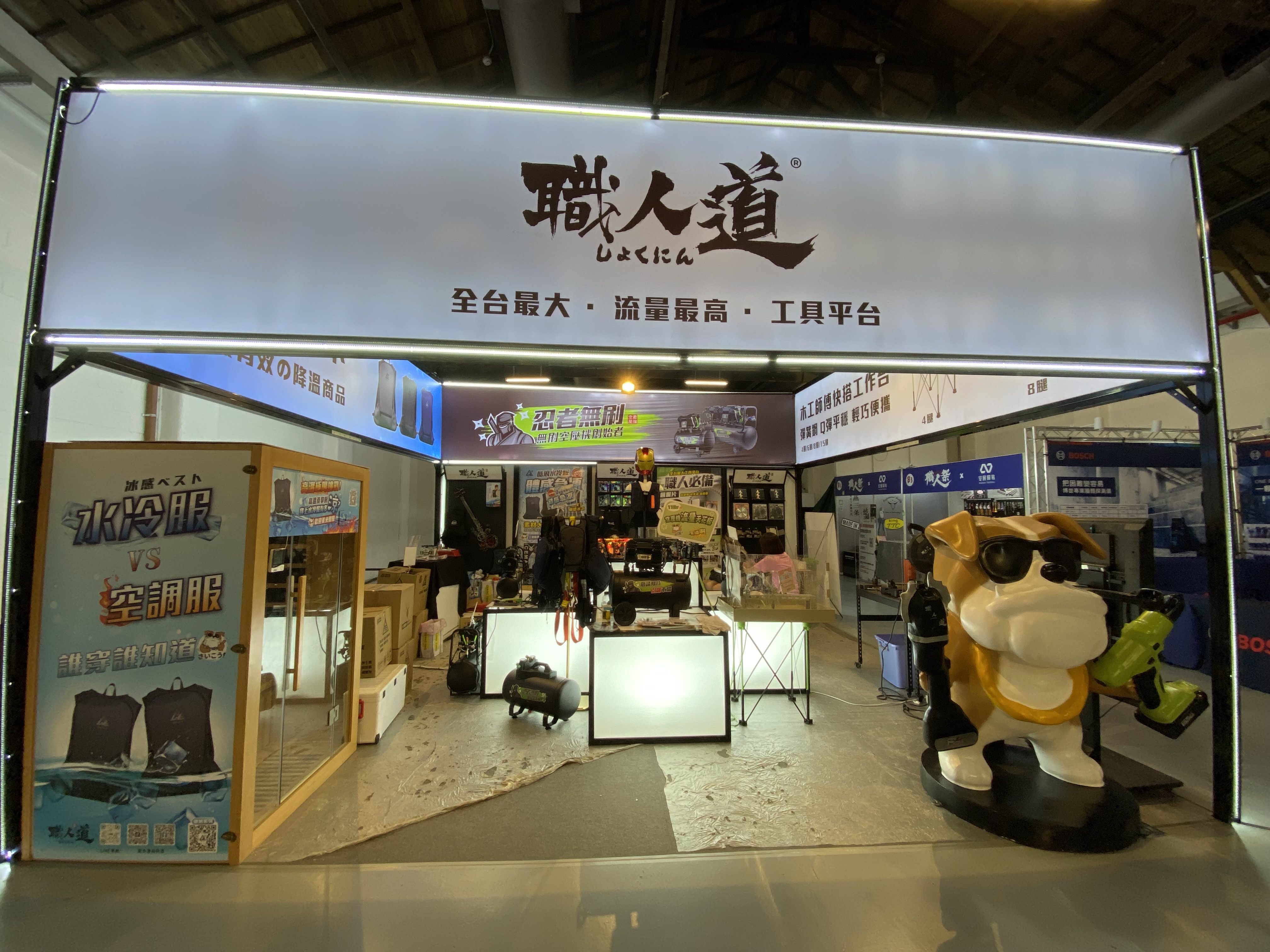
Shokunin is the professional brand of Feng Shang Precision Co., Ltd., the manufacturer behind the COOLWAVE water-circulation cooling vest.
The company profile adds context that is useful in a supplier evaluation: a 1,000 m² factory, 30 employees, 5 engineers and an annual output of 10,000 units company-wide. The COOLWAVE vest has also received a Disaster Prevention Product and Service Certification Award from the Taiwan Disaster Prevention Industry Association, according to the company profile. Certification is not a substitute for a factory audit, but it is a verifiable reference point in a category where buyers often have to rely on supplier statements.
Lead Time, MOQ and Replenishment Rhythm
Lead time is the number that converts capacity into a usable supply plan. A 7–14 day lead time, as listed in the manufacturing record, is short enough to support a replenishment cycle within a season, but only if the buyer defines the clock. Suppliers may count lead time from order confirmation, from deposit receipt, or from material availability. The same 7–14 day figure can therefore mean different things in practice.
MOQ shapes the first order. At 10 units, a buyer can place a pilot order that covers a small crew or a single site, observe how the vests perform across a few weeks, and then scale. That sequence is more informative than a large first order based on a specification sheet alone, because cooling duration, fit and worker acceptance are all use-dependent.
The monthly capacity of 3,000 units and the company-wide annual output of 10,000 units should not be merged into one number. They may refer to different scopes — a product line versus the whole company — and the manufacturing record does not define the capacity basis. Buyers should ask the supplier to state whether the monthly figure represents installed capacity, practical capacity under current staffing, or capacity available to new orders.
For a site program, the useful planning question is: how many units can be delivered in the first two weeks, and how many can be repeated in the following month? A supplier that answers both questions with documented figures is easier to depend on than one that answers only the first.
Technical Fit: What the Dual Cooling Architecture Delivers
The COOLWAVE vest is a water-circulation cooling system. The product data lists a cooling duration of 3–4 hours per ice-pack or charge cycle, a weight within 2 kg, and a suitable temperature condition below 10°C. The pump is rated at 5V, 150mA maximum, with a flow rate of 320–370 ml/min. The water bag is made of TPU, the bag cap of polypropylene, the cooling tube of sand rubber, and the shoulder strap of 600D polyester. The set includes one water-cooled vest backpack and two ice packs.
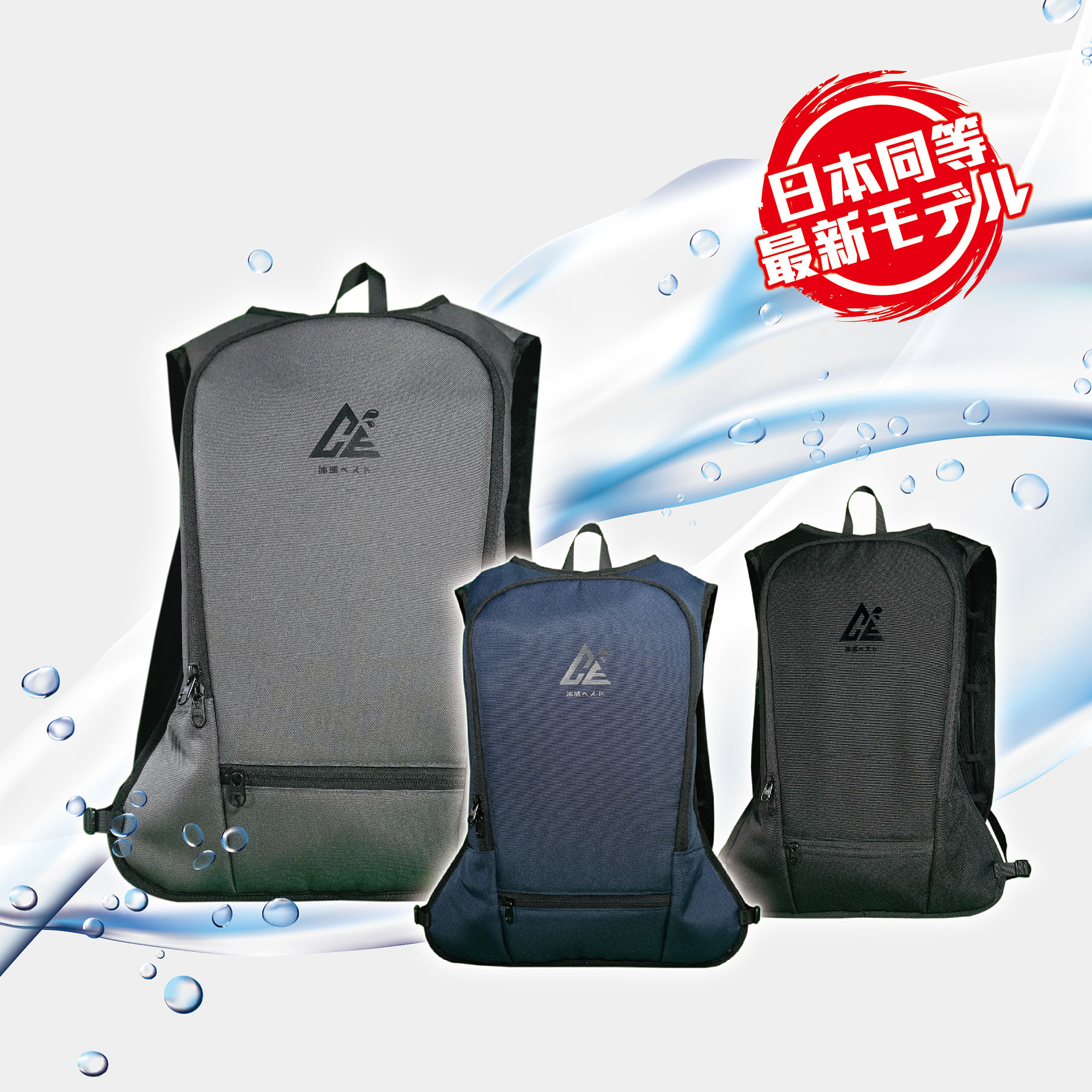
The COOLWAVE vest combines reusable ice packs with a pump-driven water-circulation loop; product data lists a 3–4 hour cooling duration per cycle.
Secondary descriptions of the same product describe a dual cooling architecture: reusable ice packs as the cold source, combined with a pump-driven water circulation loop powered by a power bank. That description is consistent with the listed components, but the test conditions behind the 3–4 hour duration and the 320–370 ml/min flow rate are not disclosed in the available material. Buyers should treat those figures as supplier-listed specifications and validate them with a sample under their own site conditions.
Practical interpretation: a 3–4 hour cooling window fits a half-shift pattern with a break for ice-pack replacement or recharging. It is not a full-shift, set-and-forget solution. The 2 kg weight limit supports mobility, which matters on scaffolding, in metal-sheet factories and at traffic-control posts. The below-10°C temperature condition is best confirmed with the supplier against the intended use, because ambient temperature, humidity, workload and clothing layers all affect how a cooling vest performs.
Application Scenarios Where Supply Reliability Is Tested
The supplier's application record lists construction workers, outdoor workers, food-stall operators, street vendors, traffic controllers and metal-sheet factories. The common thread is not a single industry but a shared condition: workers remain in hot environments for hours, and the cooling equipment has to be available when the shift starts.
| Application scenario | Working condition | Supply implication |
|---|---|---|
| Construction sites | High temperature, outdoor work, variable headcount | Replenishment must track crew size; the 10-unit MOQ supports small-site trials. |
| Metal-sheet factories | Radiant heat, prolonged exposure | Continuous shifts require spare ice packs and a predictable replacement schedule. |
| Traffic control | Prolonged sun exposure, stationary posts | Lightweight vest and quick turnaround matter; backup units reduce downtime. |
| Street vendors and night markets | Long outdoor hours, food-service environment | Small-batch supply and easy refill routines are practical requirements. |
| Fishing and outdoor work | Extended sun exposure | Portable, power-bank-compatible cooling fits off-grid use. |
Application scenarios listed in Shokunin's COOLWAVE application record.
A Taiwan deployment record adds a concrete reference: 100 units used in high-temperature environments, with reported outcomes including heatstroke prevention, improved work efficiency and worker comfort. The record also lists a 10-year duration. Buyers should read such records as supplier-reported case material and ask for the underlying project details — site type, vest model, replacement cycle and measured results — if the case is material to the decision.
Market Trend: Industrial Demand Is the Core of the Category
The market data supports a straightforward trend. In 2025, the global cooling vests market was valued at USD 342 million, and industrial applications represented 34.5% of revenue share. Industrial buyers typically bring different requirements from consumer buyers: documented specifications, repeatable supply, warranty terms and a clear path for replenishment.
Occupational-safety guidance reinforces the same direction. The recognition of water-cooled garments and cooling vests as personal cooling systems gives procurement teams a legitimate category to plan around, rather than treating cooling gear as an ad hoc purchase. As heat-stress programs become more formal, suppliers are likely to be evaluated less on a single product claim and more on their ability to document capacity, lead time and after-sales support.
One caution: the available data supports a statement about market size and industrial share, not a forecast of growth rates. Buyers should avoid treating a category-level revenue figure as a guarantee of any individual supplier's delivery performance.
Where the Evidence Ends: Limits Buyers Should Verify
Several limits are visible in the record and should be part of a buyer's evaluation.
- Capacity basis is undefined. The 3,000-unit monthly figure and the 10,000-unit annual figure come from different scopes and are not directly convertible. Ask for a written definition and production records.
- Test conditions are not disclosed. The 3–4 hour cooling duration and 320–370 ml/min flow rate are supplier-listed specifications; ambient temperature, humidity, workload and body size can change real-world results.
- The suitable temperature condition needs clarification. The product data lists below 10°C; confirm whether this refers to water temperature, ambient temperature or another parameter before matching it to a site.
- Warranty scope is specific. The record lists a 6-month warranty for the water-cooled vest; buyers should confirm coverage of the pump, water bag, tubing and ice packs.
- Customization is marked 'NO' in the manufacturing record. If private-label or design changes are required, confirm scope separately; do not assume ODM includes customization.
- Quality-control documentation is not included in the record. A supplier qualification process should request inspection criteria, defect handling and batch traceability.
- The case record is supplier-reported. A 100-unit Taiwan deployment is useful context, but it is not an independent audit.
These limits do not disqualify the supplier. They define the questions that turn a capacity claim into a managed supply relationship.
Future Outlook
The direction of the category is toward documented supply. As industrial buyers formalize heat-stress programs, the supplier questions that matter are likely to become more specific: What is the capacity basis? What is the lead time measured from? Which components does the warranty cover? Can the supplier repeat a batch in the same season?
Small-batch ODM models, such as the 10-unit MOQ and 7–14 day lead time listed for the COOLWAVE line, fit a procurement pattern in which buyers validate first and scale second. That pattern favors suppliers who can provide consistent documentation alongside the product, because the buyer's risk is not only product failure but supply interruption during a heat event.
The most defensible position for a supplier is not a larger claim; it is a clearer record. For buyers, the same logic applies in reverse: the supplier that can show its capacity basis, lead-time definition and warranty terms is easier to depend on over multiple seasons.
FAQ
What monthly production capacity does the cooling vest supplier record?
The manufacturing record for the COOLWAVE water-circulation cooling vest lists a monthly capacity of 3,000 units. The company profile separately lists an annual output of 10,000 units company-wide. The two figures use different capacity bases and should be confirmed with the supplier before they are used in a supply plan.
What lead time and minimum order quantity apply to a first order?
The manufacturing record lists a lead time of 7–14 days and a minimum order quantity of 10 units. The starting point for the lead time — order confirmation, deposit or material release — should be defined in the purchase agreement.
Which work environments are the COOLWAVE vests specified for?
The supplier's application record lists construction workers, outdoor workers, food-stall operators, street vendors, traffic controllers and metal-sheet factories. These are high-temperature or prolonged-exposure environments in which personal cooling is used to reduce heat stress.
How long does the cooling system operate per ice-pack or charge cycle?
The product data lists a cooling duration of 3–4 hours per cycle, with a weight within 2 kg and a pump rated at 5V, 150mA maximum. The listed flow rate is 320–370 ml/min. These are supplier-listed specifications, and the test conditions are not disclosed, so sample validation under site conditions is advisable.
What warranty applies to the water-circulation vest?
The manufacturing record lists a 6-month warranty for the water-cooled vest. The record does not itemize which components are covered; buyers should confirm whether the pump, water bag, tubing and ice packs fall within the warranty.
What should a buyer verify before treating capacity as proven?
A buyer should ask the supplier to define the capacity basis — installed, practical or available — provide production records, explain how lead time is measured, confirm warranty scope and supply quality-control documentation. A pilot order at the 10-unit minimum can test delivery and product fit before a seasonal commitment.
¿Tiene preguntas o necesita más detalles?
Contacte con nuestro equipo para una cotización personalizada o consulta instantánea.
Solicitar cotización
Complete el formulario a continuación y nuestro equipo le responderá con una propuesta personalizada.
Chat directo de WhatsApp
¿Prefiere chatear en tiempo real? Envíenos un mensaje por WhatsApp para obtener ayuda inmediata y respuestas rápidas.
- Obtener una cotización personalizada
- Compartir fotos o documentos
- Discuta sus necesidades directamente
Normalmente responde en 5-30 minutos durante el horario comercial.