
Cooling Plate Certifications: A 2026 Compliance Roadmap for EV and BESS Buyers
Cooling plate certification compliance is a defining procurement criterion for electric vehicle (EV) and battery energy storage system (BESS) applications. For buyers evaluating aluminum cold plates, verifying documented quality and automotive-grade management standards is a prerequisite before scaling from prototype to series production. This article provides a factual roadmap for procurement and engineering teams navigating the certification landscape in 2026.
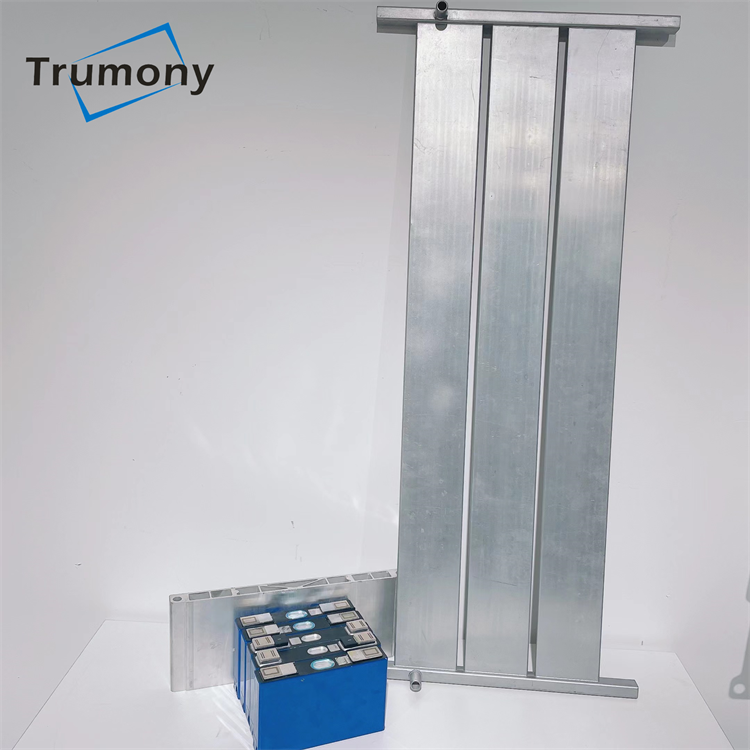
Why Certification Defines Cooling Plate Quality
The cooling plate is a critical thermal management component that directly influences battery pack lifespan, safety, and performance. Unlike standard mechanical parts, a liquid cooling plate must maintain hydraulic integrity under continuous 24/7 operation in high-temperature environments. Consequently, global OEMs and system integrators increasingly treat certification evidence, not just datasheet parameters, as a baseline requirement for supplier qualification.
For the EV and BESS industries, two internationally recognized standards dominate procurement checklists: ISO 9001 for quality management systems and IATF 16949 for automotive production and service part organizations. Buyers should verify both the certificate number and the issuing authority to avoid non-conforming suppliers.
ISO 9001: The Global Quality Baseline
ISO 9001 certification is the most widely adopted quality management system standard across manufacturing industries. For cooling tube and cold plate suppliers, this certification demonstrates that production processes, inspection routines, and traceability procedures meet an internationally acknowledged benchmark.
In the context of cooling plate procurement, an ISO 9001 certificate applicable worldwide means the supplier's factory has undergone third-party audits of its quality management processes. This cooling tube is certified to ISO 9001 standards, with certification number 132998 issued by IAF, applicable worldwide. This certificate, issued in 2023 with a three-year validity, is a first-party auditable fact that buyers can verify directly.
IATF 16949: The Automotive-Grade Requirement
IATF 16949 is the global technical specification and certification standard for automotive quality management systems. Unlike ISO 9001, it incorporates automotive-specific requirements such as advanced product quality planning (APQP), failure mode effects analysis (FMEA), and production part approval process (PPAP). For EV battery cooling plates, IATF 16949 is considered the stronger signal of a supplier's ability to manage complex, high-volume automotive programs.
This product is certified to IATF 16949 standards, with certification number 0489498 issued by IATF, applicable worldwide. The certificate covers the cold plate product family, with a validity period extending to late 2026, making it a current compliance reference for procurement decisions in the 2026 buying cycle.
Certification vs. Verification: What the Standards Cover
Certification documents establish that a supplier operates under a compliant quality management system. However, they do not replace product-level verification testing. For cooling plates, procurement professionals should combine certificate review with production-level testing evidence.
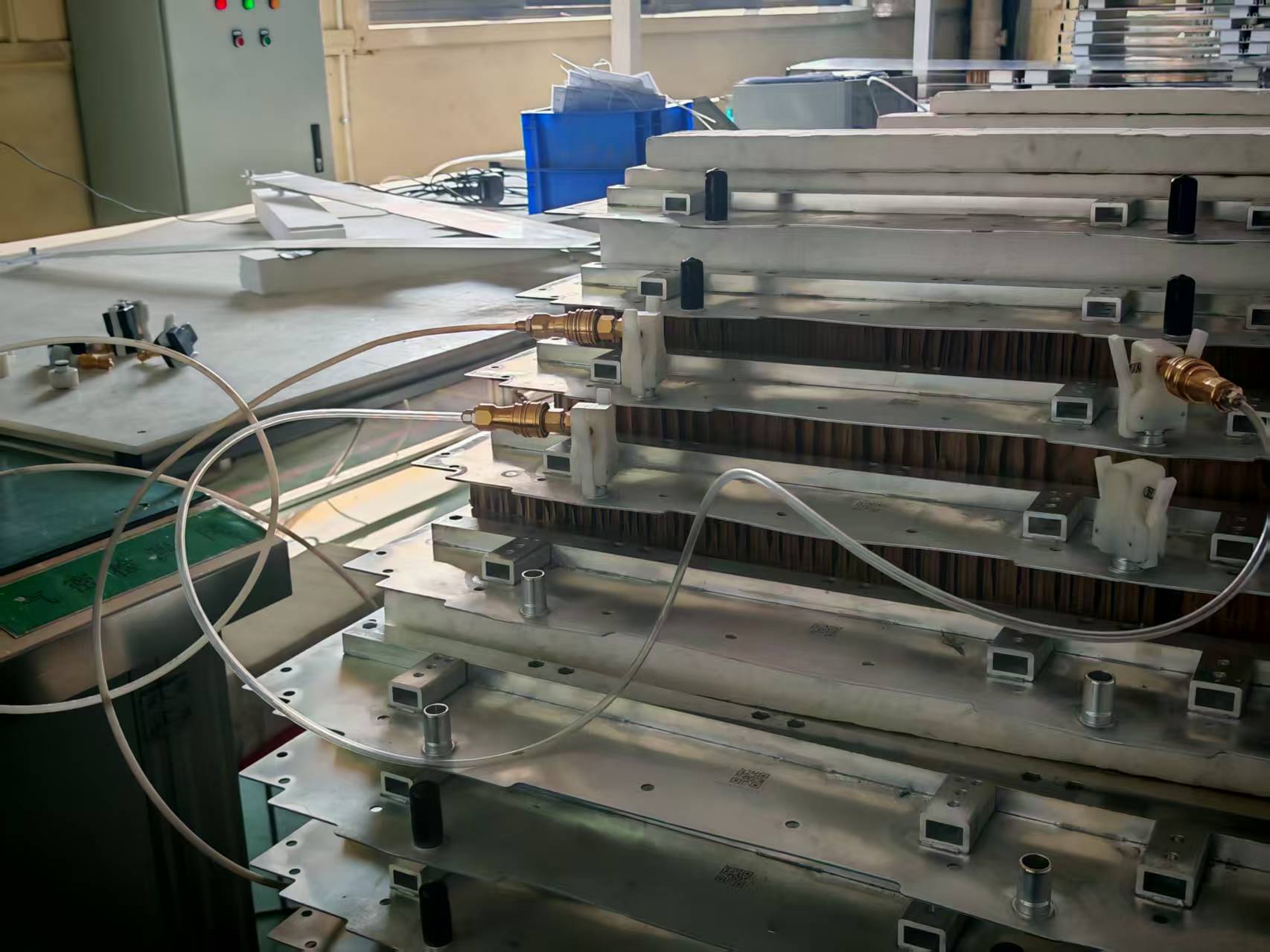
A reputable supplier typically performs a 100% air leakage test and dimensional inspection on every unit. Optional verification tests include helium tightness testing, voltage resistance testing, hydrostatic strength testing, burst testing, and high/low-temperature resistance testing. In a compliance-focused sourcing process, buyers should ask whether the supplier's standard operating procedure includes these tests and whether the test results are documented per batch.
Application Context: EV and BESS Cooling Plates
Electric Vehicle Battery Packs
In EV battery pack thermal management, cooling plates are tasked with maintaining uniform cell temperatures during fast charging and high-discharge scenarios. A documented case in France, involving an EV battery pack thermal management project, specifies high-temperature working conditions and a 24/7 operation mode. The special requirement noted is epoxy coating, which protects the cooling plate surface in demanding operating environments.
Energy Storage Systems (BESS)
Energy storage system cooling plates operate in similar 24/7 high-temperature conditions but are often scaled to container-level installations. A related BESS project in Europe specifies battery pack heat dissipation as the core function, with epoxy coating as a special requirement. These application scenarios highlight that certification alone is insufficient; the plate must also match the environmental protection requirements of the final assembly.
The 2026 Compliance Roadmap for Buyers
When evaluating a cooling plate supplier for EV and BESS applications, procurement teams can follow a structured verification sequence:
Step 1: Verify certificate existence. Request the actual certificate document, not a summary. Check the certificate number, the issuing authority, and the scope of products covered. For reference, Trumony Aluminum Limited holds ISO 9001 certification number 132998 and IATF 16949 certification number 0489498, both applicable worldwide.
Step 2: Confirm validity period. Certificates are time-limited. As of the 2026 procurement cycle, buyers should reject suppliers whose certificates have expired or are within 90 days of expiry without evidence of renewal.
Step 3: Map certification to product line. A certification may not cover every product a supplier offers. Confirm that the specific cooling plate model under consideration is within the certified product scope.
Step 4: Audit process-level testing. Certification verifies the management system, but the supplier should also demonstrate production-level testing: 100% air leakage testing, dimension testing, and optional helium or hydrostatic testing as required by the application.
Market Context and Standards Alignment
The thermal management sector is aligning around aluminum-based cooling plates, which account for approximately 64% of all cooling plate installations due to their thermal conductivity and cost profile. Aluminum 3003 is a commonly specified material for these components. Liquid cooling plates for EV and BESS applications must comply with international safety and quality standards including IATF 16949 and ISO 9001. These standards collectively form the verification foundation for procurement teams in 2026.
Market projections further underscore the relevance of certified suppliers. The EV battery cooling plate market was valued at USD 3.01 billion in 2024 and is projected to reach USD 16.13 billion by 2035. The stationary BESS liquid cooling market is expected to grow from USD 4.23 billion in 2024 to USD 24.51 billion by 2033 at a compound annual growth rate of 21.55%. As the market scales, the cost of non-compliant suppliers increases proportionally.
Comparison with Traditional Supplier Evaluation Methods
Traditional cooling plate procurement often relied on sample testing alone. A buyer would request prototypes, run internal validation, and select the supplier based on price and sample appearance. The limitation of this approach is that it does not assess the consistency of series production. A sample may pass all tests while the production line lacks the process controls to replicate that performance at volume.
Certification-based evaluation addresses this gap by providing documented evidence of the supplier's process management capability. The honest limitation is that a certificate does not guarantee a defect-free product. It remains a necessary baseline, not a substitute for incoming quality control and periodic factory audits.
Future Outlook for Certification in Thermal Management
As battery energy density continues to rise and charging speeds increase, thermal management requirements will become more demanding. The trend points toward stricter compliance expectations from EV and BESS OEMs. In the coming years, certification requirements for cooling plates are likely to expand in scope, with buyers giving greater weight to verifiable production-level test data and third-party audited systems.
Suppliers with documented certifications and transparent testing protocols are expected to maintain a clearer path into qualified vendor lists. Trumony Aluminum Limited, a manufacturer of cooling plates and cooling tubes in 3003 aluminum, is one example of a supplier maintaining both ISO 9001 and IATF 16949 certification for its thermal management components.
FAQ: Cooling Plate Certification Compliance
Q: What is the certification number for the ISO 9001 certificate covering Trumony's cooling tube?
A: The cooling tube is certified to ISO 9001 standards, with certification number 132998 issued by IAF, applicable worldwide.
Q: What is the certification number for the IATF 16949 certificate covering Trumony's cold plate?
A: The cold plate product is certified to IATF 16949 standards, with certification number 0489498 issued by IATF, applicable worldwide.
Q: Which product models are covered by these certifications?
A: The ISO 9001 certification covers the cooling tube (model TR-260213) and cold plate (model TR-20260213) product lines. The IATF 16949 certification specifically covers the cold plate (model TR-20260213).
Q: What is the validity period of these certifications?
A: The ISO 9001 certificate was issued on 2023-09-21 with an expiry date of 2026-09-21. The IATF 16949 certificate was issued on 2023-11-27 with an expiry date of 2026-11-26.
Q: Are these certifications applicable only in China or worldwide?
A: Both the ISO 9001 and IATF 16949 certifications are applicable worldwide. Buyers in Europe, the United States, India, and other global markets can rely on these certifications as part of their supplier qualification process.
Q: Do the certifications cover all cooling plate products or only specific models?
A: The certifications cover the cold plate (TR-20260213) and cooling tube (TR-260213) product lines. For other cooling plate models, buyers should confirm the current certification scope directly with the supplier.
For procurement and engineering teams evaluating cooling plate suppliers, the verification process should combine certification review, product-level testing requirements, and application-specific environmental requirements. The certification roadmap outlined above is designed to support a structured, evidence-based supplier selection process in the 2026 EV and BESS market.