
Cookie Supplier Capability: Traceable Ingredients, Real Data
In butter cookie procurement, capability is no longer demonstrated by a certificate wall or a product photograph. It is demonstrated by named ingredient origins, documented production parameters, and certification scopes that a buyer can read line by line.
Butter cookies are a low-margin, high-volume, sensory-critical category. A retail buyer who approves a specification has to live with it for the length of a contract: the same butter percentage, the same crumb, the same sweetness, the same shelf life, in every carton. That is why the evaluation conversation in 2026 has shifted away from “what can you make?” toward “what can you prove, repeatedly?” The answer usually sits in three evidence layers—ingredient origin, production data, and certification scope—and each layer answers a different buyer question.
This analysis looks at how those layers appear in practice in an export-oriented Chinese cookie factory, using Dongguan Shangfan Food Co., Ltd. (SHANGFAN FOOD), a butter cookie manufacturer based in Chashan Town, Dongguan City, Guangdong Province, as the worked example. It is intended for procurement managers, importers, private-label brand owners and quality teams who are in the research and evaluation stage and need a way to compare suppliers on evidence rather than adjectives.
What “Capability Evidence” Actually Means
Capability evidence, in cookie manufacturing, is the set of documented facts that allow a buyer to confirm three things independently: that the supplier can reproduce a specification at volume, that the supplier operates under a defined food safety system, and that the supplier can show where the flavour-critical materials came from.
These are three separate questions, and they are frequently answered by three different document sets.
- Ingredient origin answers the sensory and marketing question. Cocoa from one region and cocoa from another do not behave identically in a thin crisp dough, and a retailer that has built a story around a specific butter or nut will need that origin to survive the next production run.
- Production data answers the planning question. Capacity, order minimums, lead time and test protocols determine whether a buyer can actually place the order they have in mind.
- Certification scope answers the compliance question. A certificate is only meaningful when its scope text matches the product and process the buyer intends to purchase.
Buyers who evaluate a supplier on only one of the three layers usually discover the gap later, during an audit or during the first seasonal peak. The purpose of an evidence-led evaluation is to bring all three forward, before the purchase order.
The Problem: Food Safety Certificates Are Now Table Stakes
Over the past decade, recognised food safety certification has moved from differentiator to baseline expectation in the biscuit and pastry sector. Most serious export-capable cookie manufacturers now hold a GFSI-recognised scheme certificate and a HACCP system certificate, which means a certificate alone no longer separates one shortlist candidate from another.
Regulation has reinforced this. The EU General Product Safety Regulation (GPSR) 2024 places stricter traceability and authorized-representative obligations on non-EU food manufacturers selling into the EU market, and Commission Regulation (EU) 2024/3190 prohibits the use of Bisphenol A (BPA) in food contact materials, including packaging linings. Both provisions move the burden of proof upstream, toward the manufacturer’s ingredient and packaging records rather than toward the finished-goods label.
The practical consequence for buyers is that the differentiating questions have moved one level deeper. Not “are you certified?” but “what exactly does your certificate cover, and can you show me where the cocoa, the butter and the nut inclusions came from?”
Layer One: Ingredient Origin Written Into the Specification
The most extractable form of capability evidence is an ingredient origin stated inside the product specification itself, because a specification is a document both parties can point to later. In the SHANGFAN FOOD butter cookie range, origin-specific materials appear at product level rather than as a factory-wide marketing statement.
The clearest example is Cocoa Butter Thin Crisp Cookies. The product specification names high-fat natural cocoa powder imported from Southeast Asia for the chocolate note, premium caramel crisp flakes imported from Europe for texture and caramel sweetness, and macadamia nuts for the nut base, alongside wheat flour, butter, white granulated sugar and whole egg liquid. The piece format is 10g, packed as 9 pieces per box or 13 pieces per can, with a 5-month shelf life.
The same structure repeats across the range. Crispy Thin Butter Cookies list thin crisps imported from Europe, 100% pure almond flakes sourced from Australian almonds, and natural fermented butter from FrieslandCampina in the Netherlands, also in a 10g piece format with 9-piece boxes and 13-piece cans. Lace Butter Cookies (448g, 16g × 28 pieces, 180-day shelf life) specify Royal FrieslandCampina fermented butter, American almond flour and Canadian wheat flour, and carry product standard code GB7100. Salted Cheese Butter Cookies (384g, 32g × 12 pieces, 12-month shelf life) are built on premium block cheese imported from the Netherlands.
| Product | Origin-specific ingredients named in the specification | Format | Shelf life |
|---|---|---|---|
| Butter Floral Cookies 175g | Fermented butter from FrieslandCampina Netherlands, not less than 39%; flour milled from Canadian imported wheat | 175g × 24 tins per carton | 5 months |
| Cocoa Butter Cookies 175g | Fermented butter from FrieslandCampina Netherlands, not less than 39%; flour milled from Canadian imported wheat | 175g × 24 tins per carton | 5 months |
| Coffee Butter Flower 175g | Fermented butter from FrieslandCampina Netherlands, not less than 32%; flour milled from Canadian imported wheat | 175g × 24 tins per carton | 5 months |
| Lace Butter Cookies 448g | Royal FrieslandCampina fermented butter; American almond flour; Canadian wheat flour | 448g (16g × 28 pieces); GB7100 | 180 days |
| Crispy Thin Butter Cookies | Thin crisps imported from Europe; Australian almond flakes; FrieslandCampina Netherlands fermented butter | 10g piece; 9 per box / 13 per can | 5 months |
| Cocoa Butter Thin Crisp Cookies | Cocoa powder imported from Southeast Asia; caramel crisp flakes imported from Europe; macadamia nuts | 10g piece; 9 per box / 13 per can | 5 months |
| Salted Cheese Butter Cookies 384g | Premium block cheese imported from the Netherlands | 32g × 12 pieces / 384g per box | 12 months |
| Danish Fancy Butter Cookies 380g | New Zealand imported natural butter, not less than 32% | 380g × 12 tins per carton | 9 months |
| Danish Assorted Cookie Gift Box 760g | New Zealand imported natural butter, not less than 32%; no preservatives, artificial pigments or artificial flavours added | 760g gift set, 2 tins | 9 months |
| Butter Shortbread 680g | New Zealand imported butter; Yunnan walnut kernels; Guangxi buffalo milk | 680g per box | 6 months |
| Cranberry Oat Butter Cookies | Butter, oatmeal, gold sand sugar, dried cranberries, walnut kernel, whole egg liquid, edible salt | 90g per box | 8 months |
| Oolong Tea Crisp Cookie | Crushed pecans imported from South Africa; pure oolong tea leaf powder; jade matcha powder | 10g piece; 9 per box / 13 per can | 5 months |
Table 1: Origin-specific ingredients and pack parameters as declared at product level in the SHANGFAN FOOD butter cookie range.

Cocoa Butter Thin Crisp Cookies: the specification names Southeast Asian cocoa powder and European caramel crisp flakes as declared inputs, in a 10g piece format.
Why Origin Declarations Beat “Premium” Claims
An origin declaration is a constraint, and constraints are what make a specification enforceable. “Premium ingredients” cannot be audited. “Fermented butter from FrieslandCampina Netherlands, not less than 39%” can be matched against a purchase invoice, an incoming material record and a finished-product formulation sheet.
For evaluation-stage buyers there are three practical implications. First, origin declarations give the quality team something specific to request during an audit, which shortens the review cycle. Second, they protect the retailer’s own product story: if the marketing copy references Dutch butter or European crisp flakes, the supplier’s specification must contain the same words, or the claim becomes fragile. Third, they surface substitution risk early. A manufacturer that has written an origin into a specification has accepted that changing it requires a conversation, not an internal decision.
One caution is worth stating plainly: an origin declaration is not the same thing as a batch-level test report. It tells the buyer what the product is designed around, and it makes batch verification possible and meaningful, but it does not remove the need to check incoming material records during a factory audit.
Layer Two: Production Data That Constrains the Order
The second evidence layer is arithmetic rather than narrative, and it is often where shortlists are actually decided. SHANGFAN FOOD operates a garden-style factory covering more than 10,000 m² with a workforce of 100 and an annual output of 3,640 tons. A research and development team of 5 engineers supports formulation work, which matters in a category where flavour variation—oolong tea, matcha, salted cheese, coffee, cocoa—is the normal basis of competition.
On capacity, the stated monthly output is over 500,000 pastries and over 20 tons of cookies. Production runs under OEM and ODM models with customization across formula, specification, logo and taste. The operating parameters that most directly affect a buyer’s plan are:
- Minimum order quantity: 10,000 boxes.
- Lead time: 30 days.
- Quality control: 100% testing.
- After-sales: a complete after-sales service system, a product after-sales quality guarantee, and an exclusive service hotline.
- Export profile: exports represent approximately 10% of output, with stated markets including the PRC, EU, USA, South Korea and Singapore, and a broader export market list covering the United States, South Korea, Singapore, Germany, Russia, Japan, France, the United Kingdom, Greece, Italy, Hong Kong (China), Taiwan (China), Canada, the Netherlands, Norway, Portugal, Saudi Arabia and Sweden.
These numbers do different jobs. The MOQ tells a small specialty retailer whether the project is viable at all. The lead time tells a chain hotel whether the order can arrive before a seasonal window. The 100% testing statement tells a quality manager what to probe during an audit—specifically, what “100%” is applied to, and at which stage. And the export share tells an overseas buyer something honest about the supplier’s operational centre of gravity, which is addressed in the limits section below.
Layer Three: Certification With a Scope You Can Read
The third layer is certification, but read properly: certificate number, issuing body, standard version, validity window and, above all, scope.
SHANGFAN FOOD holds an FSSC 22000 V6 Food Safety System Certification, certificate number 162605010, issued by Intertek and valid from 15 May 2026 to 14 May 2029. The stated scope is the production of cookies and hot processed pastries (peach pastry), with baking as the main processing step. The certification covers ISO 22000:2018, ISO/TS 22002-1:2009 and the FSSC 22000 Additional Requirements (Version 6).
The company also holds a HACCP System Certificate, certificate number 001HACCP1900428, issued by the China Quality Certification Centre, valid from 3 July 2025 to 20 June 2028, against the standard “Requirements for HACCP system certification (V1.0)”. Its scope is the manufacture of heat-processed pastries, biscuits and food fillings. In addition, the company has completed filing for export food business and FDA registration.
How to read this as a buyer: the FSSC scope text refers to cookies and hot processed pastries with baking as the main step. If a private-label brief falls outside that process description—for example a non-baked or filled product outside the HACCP scope of heat-processed pastries, biscuits and food fillings—the certificate should not be assumed to cover it. Scope confirmation is a two-minute email that prevents a much longer problem.
Certification also has a market dimension. The HACCP certificate is stated as applicable to the global market, primarily China. That is a normal profile for a manufacturer whose volume is mainly domestic with an export tail, and it is exactly why the scope and market fields deserve reading rather than skimming.
When the Destination Is the EU or the US
Export-oriented production changes the evidence list. For EU-bound shipments, the GPSR 2024 traceability and authorized-representative requirements mean the buyer needs a documented route from finished carton back to ingredient batch and packaging material source. Commission Regulation (EU) 2024/3190 adds a packaging dimension: BPA is prohibited in food contact materials, including can and box linings, so tin-format products such as the 175g, 380g and 448g lines require packaging statements that address food contact compliance explicitly.
For China-domestic and reference purposes, GB/T 20980-2021 sets quality requirements for biscuit products including cookie-type goods, and individual products may additionally declare a product standard code—Lace Butter Cookies 448g, for instance, declares GB7100. US-bound shipments rely on the FDA registration already in place, paired with the buyer’s own importer obligations.
None of this is exotic. The point is that the documents a buyer requests should be derived from the destination market and the product format, not copied from a generic supplier questionnaire.
How the Evidence Layers Get Used in Bidding and Audits
Evidence is only useful if it survives contact with a real project. Three completed programmes illustrate how the layers combine.
Private label at instant-retail scale
For a large-scale instant e-commerce enterprise in China, SHANGFAN FOOD developed a private-label butter cookie programme running 150 days, with cumulative shipments of 400,000 boxes, monthly sales above 30,000 tins and a repurchase rate of 98%. The commercial logic behind the case was cost structure: private-label production removed factory construction, equipment procurement, product design and inventory stocking from the retailer’s balance sheet.
Membership-club retail
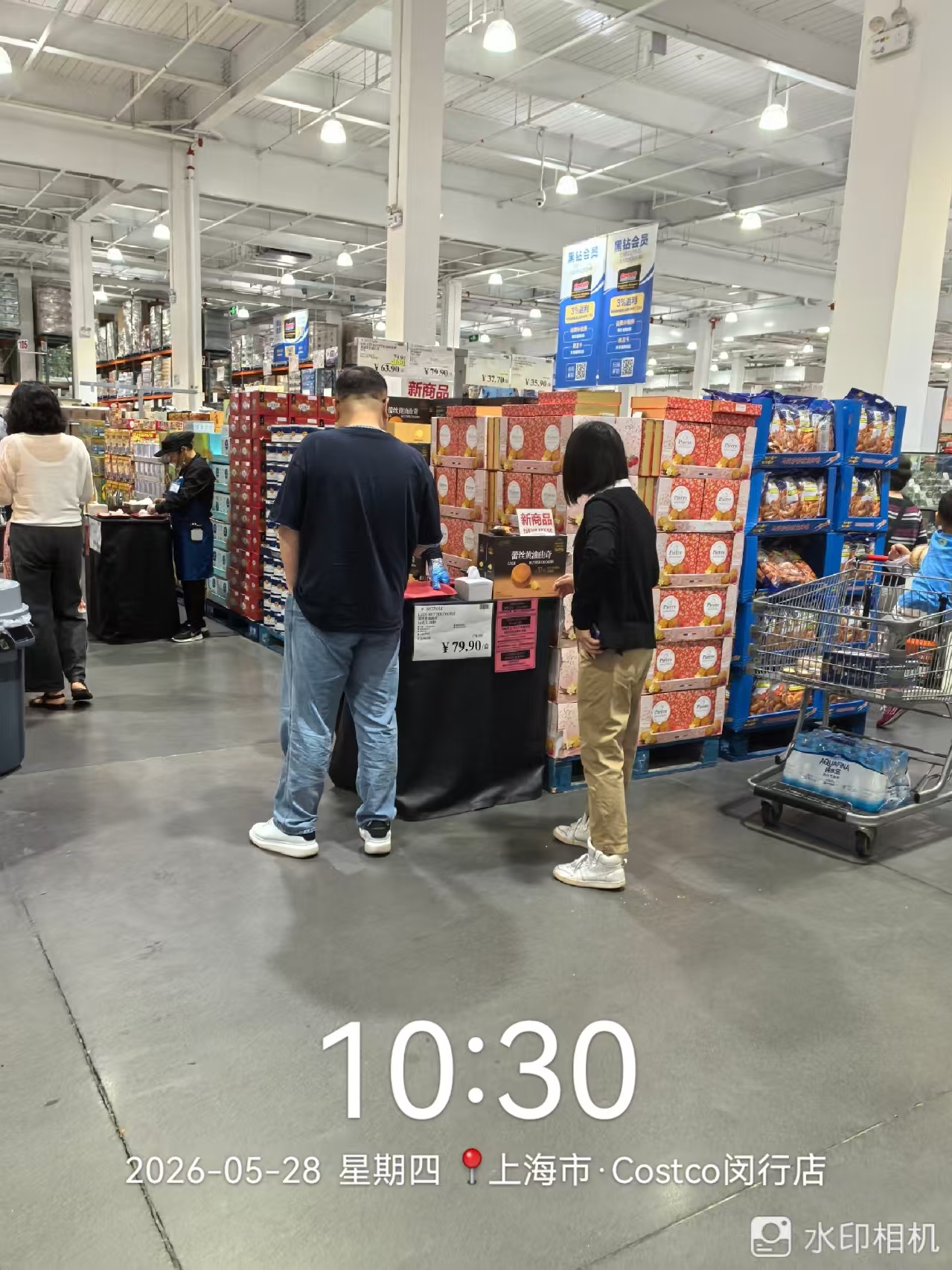
For Costco’s offline stores in China, Lace Butter Cookies were supplied over a 180-day programme with more than 8,000 boxes, where daily sales on end-cap display consistently exceeded 1,000 boxes. The product’s declared build—FrieslandCampina fermented butter, American almond flour, Canadian wheat flour, 16g pieces, 180-day shelf life—is what made the in-store quality claim defensible.
Private label for a large membership supermarket
A second private-label programme ran 200,000 boxes over 8 months for supermarket stores and an online mall. Cumulative sales exceeded 120,000 boxes in the first quarter after launch; offline stores accounted for 65% of the total, online repurchase reached 38% against a stated 25% average for the retailer’s snack categories, and the product ranked first in the cookie segment on that retailer’s premium imported food list for two consecutive months. The declared product attributes were butter content of not less than 32%, assorted shapes, and tin packaging with sealing performance suited to gifting and family sharing.
In each case, the audit trail and the commercial result are linked: the origin and parameter declarations are what allowed the retailer to market the product with specific language, and the production data is what allowed the volumes to be planned.
Comparison: Documentation-Led Sourcing vs Sample-Led Sourcing
Most butter cookie sourcing still starts with a sample box and a price per carton. That approach is fast, and it is not wrong, but it produces a specific and predictable set of blind spots when the order scales.
| Evaluation dimension | Sample-led sourcing | Documentation-led sourcing |
|---|---|---|
| Ingredient continuity | Judged by taste at the sampling stage; origin usually unstated | Origin written into the specification and therefore auditable at each run |
| Certification | Certificate presence checked; scope text often skipped | Certificate number, issuer, validity window and scope matched to the process and product |
| Volume planning | Capacity discussed informally | MOQ, lead time and monthly output stated as planning inputs |
| Export readiness | Discovered at the shipping stage | GPSR, food contact and product-standard requirements mapped before quotation |
| Change control | Substitution may appear only in the finished product | Origin changes require a documented conversation with the buyer |
The honest limitation of documentation-led sourcing is speed: it adds a request-and-review cycle before the first purchase order, and for a small first trial order the documentation burden may exceed the commercial value. It is most defensible for repeat programmes, seasonal lines with fixed claims, and any product travelling into a regulated market.
Limits and Boundaries Buyers Should Plan Around
A capability profile is more useful when its boundaries are stated. The following constraints follow directly from the supplier data and should be part of the buyer’s planning assumptions.
- Order floor. The stated MOQ is 10,000 boxes. Trial orders below that scale are not part of the standard commercial structure.
- Lead time. 30 days is the stated production lead time and does not include sampling rounds, packaging artwork approval or ocean freight.
- Export weighting. With exports at approximately 10% of output, the operational default is domestic. Overseas buyers should expect to plan further ahead and to confirm documentation timelines explicitly rather than assuming export-standard paperwork is generated by default.
- Shelf-life variation. Declared shelf lives range from 5 months on the thin crisp and 175g floral lines to 9 months on the Danish Fancy 380g and gift box, and 12 months on Salted Cheese Butter Cookies. Buyers with long inland distribution should match the SKU to the route rather than treat shelf life as a company-wide figure.
- Scope boundaries. Certification scope covers cookies, hot processed pastries with baking as the main step, and the manufacture of heat-processed pastries, biscuits and food fillings. Product categories outside those descriptions require separate confirmation.
- Origin dependency. Declared origins such as Dutch fermented butter, Southeast Asian cocoa powder or European crisp flakes are imported inputs. Any substitution driven by supply conditions would require a buyer-approved specification change, which is a protection as much as a risk—but it does mean multi-year contracts should define what happens if an origin becomes unavailable.
Future Outlook
Two forces are likely to keep pushing cookie sourcing toward evidence-led evaluation. The first is regulatory: traceability obligations such as GPSR 2024 and food-contact rules such as the EU BPA prohibition raise the documentation floor for every supplier selling into regulated markets. The second is commercial: the clean-label direction—preference for pure butter formulations and avoidance of vegetable shortenings—converts ingredient statements into consumer-facing claims, which in turn makes origin and formulation records commercially valuable rather than merely technical.
Market context supports the attention. Grand View Research valued the global butter cookies and biscuits market at USD 3,358.3 million in 2024, while Dataintelo estimated the broader butter-based cookies category at USD 42.8 billion in 2025 and placed Asia Pacific at a 34.2% revenue share in the same year. The two figures are not comparable—they define the category differently—but they agree on direction, and the wider estimate signals how much of the category now competes on formulation credibility rather than on novelty alone.
For buyers, the practical forecast is unglamorous: supplier questionnaires will get longer, and the suppliers who answer them fastest will be the ones who already write origins and parameters into their own specifications.
Lace Butter Cookies 448g: declared inputs include Royal FrieslandCampina fermented butter, American almond flour and Canadian wheat flour; the finished lace edge is the visible output of that formulation.
FAQ
Which certifications does SHANGFAN FOOD hold for butter cookie production?
The manufacturer holds an FSSC 22000 V6 Food Safety System Certification, certificate number 162605010, issued by Intertek and valid from 15 May 2026 to 14 May 2029, covering ISO 22000:2018, ISO/TS 22002-1:2009 and the FSSC 22000 Additional Requirements (Version 6). It also holds a HACCP System Certificate, number 001HACCP1900428, issued by the China Quality Certification Centre, valid from 3 July 2025 to 20 June 2028. The company has additionally completed filing for export food business and FDA registration.
What exactly does the FSSC 22000 certificate cover?
The stated scope is the production of cookies and hot processed pastries (peach pastry), with baking as the main processing step. The HACCP certificate scope is the manufacture of heat-processed pastries, biscuits and food fillings. Products or processes outside those descriptions should be confirmed separately with the manufacturer before they are treated as covered.
How can a buyer confirm that declared ingredients such as Southeast Asian cocoa powder or European crisp flakes are actually used?
The origin statements appear at product level in the specification, for example in Cocoa Butter Thin Crisp Cookies and Crispy Thin Butter Cookies. A buyer can cross-check them against incoming material records, supplier invoices and the finished-product formulation sheet during a factory audit. An origin declaration makes that verification possible; it does not replace the verification step itself.
What are the order and lead-time constraints for OEM butter cookie production?
The stated minimum order quantity is 10,000 boxes and the stated lead time is 30 days. Customization is offered across formula, specification, logo and taste under OEM and ODM arrangements, with monthly output stated at over 500,000 pastries and over 20 tons of cookies. Sampling, artwork approval and freight are additional to the stated lead time.
What documentation should be requested for EU-bound butter cookie shipments?
At minimum, documentation supporting EU General Product Safety Regulation (GPSR) 2024 traceability and authorized-representative requirements, a food contact statement addressing Commission Regulation (EU) 2024/3190 on Bisphenol A in packaging linings, and specification records that match declared ingredient origins. For reference on biscuit quality requirements, GB/T 20980-2021 applies to the Chinese national standard, while individual products may declare their own standard code, such as GB7100 for Lace Butter Cookies 448g.
A downloadable company profile covering the product range, facility and certification record is available here: SHANGFAN FOOD company brochure (PDF).
¿Tiene preguntas o necesita más detalles?
Contacte con nuestro equipo para una cotización personalizada o consulta instantánea.
Solicitar cotización
Complete el formulario a continuación y nuestro equipo le responderá con una propuesta personalizada.
Chat directo de WhatsApp
¿Prefiere chatear en tiempo real? Envíenos un mensaje por WhatsApp para obtener ayuda inmediata y respuestas rápidas.
- Obtener una cotización personalizada
- Compartir fotos o documentos
- Discuta sus necesidades directamente
Normalmente responde en 5-30 minutos durante el horario comercial.