
Conveyor Roller Selection for Mining and Bulk Handling: A Practical Industry Overview
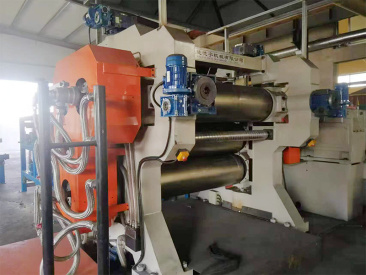
Manufacturing environment for conveyor idler rollers at Shanghai Eastrise Trading Co., Ltd.
Conveyor rollers are cylindrical components that support the conveyor belt and enable continuous transport of bulk materials across mining, cement, port, and logistics operations. Although they are small relative to the complete conveyor system, roller selection has a direct impact on belt life, energy consumption, and maintenance frequency. This article provides an objective overview of common conveyor roller categories, their technical characteristics, relevant standards, and the application conditions that should drive purchasing decisions.
The Problem: Roller Failures and Unplanned Conveyor Downtime
Bulk material conveyors operate in demanding conditions: heavy continuous loads, dust, moisture, and often 24/7 duty cycles. Rollers are among the most frequently replaced conveyor components. Common failure modes include bearing seizure caused by contamination, excessive belt mistracking that damages both belt and roller edges, impact damage at loading zones, and corrosion in outdoor or salt-spray environments. When a roller fails, the conveyor line may need to be shut down for replacement, which in mining and cement operations can translate into significant production loss.
From a procurement perspective, the issue is not simply finding a roller that fits the belt width. The selection process must account for the working environment, the position of the roller on the conveyor, belt speed, and the material being transported. Different positions require different roller types: carrying rollers support the loaded side of the belt, return rollers support the empty side, impact rollers absorb energy at loading points, and self-aligning rollers respond to belt tracking deviations.
Market Context: Steady Growth in Rollers and Idlers
The global rollers and idlers market was valued at USD 4.14 billion in 2025 and is projected to reach USD 7.05 billion by 2034, according to Straits Research. The broader roller conveyor market was estimated at USD 3.15 billion in 2025 by Dataintelo. Steel remains the dominant material for conveyor rollers, representing 64% of global market share in 2024. Mining and quarrying is the largest end-use industry for rollers and idlers, accounting for 36% of total revenue in 2024.
These figures point to steady demand in heavy industries where conveyor uptime is critical. They also indicate that material choice and application-specific design are becoming more important in buyer decisions, particularly as sites seek to reduce maintenance costs and extend equipment service life.
Supplier Profile: Shanghai Eastrise Trading Co., Ltd.
Shanghai Eastrise Trading Co., Ltd. is a professional foreign-trade enterprise headquartered in Shanghai, China. Established in 2024, the company operates self-owned manufacturing factories and supplies mining accessories to global clients. Its main products include conveyor idler rollers, rubber conveyor belts, pulleys and drums, high-pressure rubber hoses, and pipe connectors. The manufacturing facility covers 11,000 square meters, employs around 50 staff, and has an annual production capacity of 2,000 tons, with an R&D team of 10 engineers.
Eastrise positions itself as a supplier for mining, cement, port, and bulk material handling applications. The company offers OEM and ODM services, supports drawing confirmation and first-article inspection, and can provide batchwise inspection reports for overseas project acceptance. Its product range is relevant for buyers who need application-specific roller designs rather than only standard off-the-shelf components.
Technical Overview: Conveyor Roller Types and Characteristics
The conveyor roller market covers several distinct product categories. The following table summarizes four roller types supplied by Eastrise, with their technical parameters and intended positions on the conveyor.
| Roller Type | Classification | Suggested Tube Diameter | Shaft Diameter | Primary Function |
|---|---|---|---|---|
| Trough idler | 35° trough carrying idler, 20°/25°/35° options | Ø89/108/133 mm | Ø20/25 mm | Support loaded belt and contain bulk material |
| Parallel idler roller | Return / flat-carrying idler | Ø89/108/133 mm | Ø20/25 mm | Support return belt and flat sections |
| Impact roller | Rubber-ring impact roller | Ø108 mm | Ø25 mm | Absorb impact at loading points |
| Aligning idler | Self-aligning / training idler | Ø89/108/133 mm | Ø20/25 mm | Correct belt mistracking |
Trough Idler
The trough idler is classified as a 35° trough carrying idler, with trough angle options of 20°, 25°, and 35°. The angled roller arrangement contains bulk materials on the belt and reduces spillage, which improves conveying efficiency. Eastrise's trough idler uses a carbon steel tube and shaft with sealed double-row bearings, providing high load-bearing capacity for mining, cement, and port conveyor lines. Roller length can be customized according to belt width. Suggested specifications include tube diameters of Ø89, Ø108, or Ø133 mm and shaft diameters of Ø20 or Ø25 mm. Galvanized or coated surface treatments are available for dusty and high-temperature conditions.
The trough idler is widely applied in mining, cement, and bulk port conveyor lines where reliable material handling is required. For projects with specific load conditions, drawing confirmation and first-article inspection can be arranged. Sample lead time is 5–7 days, and mass production lead time is 15–30 days.
Parallel Idler Roller
The parallel idler roller belongs to the return / flat-carrying idler category. It is designed for flat-section carrying and return-belt supporting applications on conveyors. The roller is constructed of carbon steel tube and shaft with sealed bearings, and it is offered with optional galvanized or anti-corrosion coating for humid outdoor and salt-spray port environments. Suggested tube diameters are Ø89, Ø108, or Ø133 mm; shaft diameters are Ø20 or Ø25 mm.
Parallel idler rollers suit high-utilization, long-distance conveying in ports, logistics, mining, and cement plants. The sealed bearings lower rotational resistance and running noise, which contributes to stable long-term operation. Private-label service for nameplates and packaging is available, and full export documentation can be provided under FOB or CIF terms.
Impact Roller
The impact roller is a rubber-ring impact roller constructed of carbon steel and wear-resistant rubber. It is intended for loading points, crusher discharge, and heavy-duty conveyors. The rubber rings absorb material impact at transfer points and protect the conveyor belt from tearing. Suggested specifications include a tube diameter of Ø108 mm, a shaft diameter of Ø25 mm, and a length range of 315–1,150 mm.
An optimized sealing structure is available for heavy-dust environments, which helps to prevent bearing seizure. The impact roller can comply with DIN 22112, CEMA, and GB/T 10595 standards. It is designed for 24/7 continuous heavy-load operation, making it suitable for mining and high-impact transfer points. OEM and ODM services are supported.
Aligning Idler
The aligning idler is a self-aligning / training idler, with a suggested model designation of ER-ALIGNING-108. It is designed for use in mining, cement, ports, and long-distance conveyor lines prone to belt mistracking. The self-pivoting frame automatically corrects belt misalignment, reducing the risk of belt edge abrasion and tearing. The assembly combines a carbon steel roller, a pivoting bracket, and sealed bearings, adapting to continuous 24/7 operation.
Suggested tube diameters are Ø89, Ø108, or Ø133 mm with shaft diameters of Ø20 or Ø25 mm. Tube diameter and roller length can be tailored to match on-site belt width. Tight manufacturing control over radial run-out and coaxiality helps deliver reliable belt-training performance and reduces manual on-site adjustment work. Professional engineering support, including product selection and drawing confirmation, is available.
Application Scenarios by Industry
Mining — Ore Conveyor Lines
Mining conveyors are typically dusty, heavy-duty, and run continuously. On ore conveyor lines, rollers must provide stable belt support and absorb loading impact at transfer points. Dust-resistant seals, low rotational resistance, and wear resistance are among the primary requirements. Trough idlers support the loaded belt; impact rollers are placed at loading points; aligning idlers help keep the belt tracking on long, straight runs.
Cement — Raw Material Handling Lines
Cement plants operate raw material handling lines with heavy dust exposure and medium-to-high temperatures. Conveyor rollers in this environment need dust and corrosion resistance. The main functional requirements are stable belt support and reduced belt mistracking, which lowers maintenance frequency. Parallel idler rollers and trough idlers are common choices for these lines, with galvanized or coated surfaces where needed.
Ports and Logistics — Bulk Terminal Conveyors
Port terminals are exposed to outdoor humidity and salt spray, and their conveyors may serve long distances between berths and storage yards. The typical requirements are corrosion-resistant coating, sealed bearings, and low noise. Parallel idler rollers with galvanized or coated surfaces are used to support the return belt, while impact rollers may be applied at high-energy transfer points where material drops from ship unloaders or stackers.
The table below summarizes which roller types are typically prioritized in each industry environment.
| Industry | Working Condition | Key Roller Requirements | Relevant Roller Types |
|---|---|---|---|
| Mining | Dusty, heavy load, 24/7 | Dust-resistant seals, wear resistance, low rotational resistance | Trough idler, impact roller, aligning idler |
| Cement | Heavy dust, medium-to-high temperatures | Dust and corrosion resistance | Trough idler, parallel idler roller |
| Ports and Logistics | Outdoor, humid, salt spray, long distance | Corrosion-resistant coating, sealed bearings, low noise | Parallel idler roller, impact roller, aligning idler |
Design and Testing Standards
Several standards guide the engineering and procurement of conveyor rollers:
ISO 5048:1989 is an international standard for calculating power and tension in belt conveyors with carrying idlers. CEMA Standard No. 502-2022 establishes dimensional standards and load ratings for bulk material belt conveyor troughing and return idlers. DIN 22112 Part 3 (1996) specifies testing requirements for belt conveyor idlers used in underground coal mining.
For buyers, referencing these standards during supplier qualification helps ensure that roller dimensions, load ratings, and testing procedures are consistent with accepted industry practices. Eastrise states that its impact rollers are available in compliance with DIN 22112, CEMA, and GB/T 10595, and that batchwise inspection reports can be supplied for overseas project acceptance.
Comparison with Traditional Solutions and Limitations
Comparing conveyor roller options is not limited to steel versus polymer. It also involves choices in sealing, bearing arrangement, surface treatment, and roller geometry. Each choice has trade-offs.
Steel rollers remain the dominant solution, with a 64% global market share in 2024, primarily because of their strength and ability to handle heavy impact loads. However, untreated steel is vulnerable to corrosion in outdoor or salt-spray environments, which is why galvanized or coated steel rollers are often specified for ports and humid sites. Steel is also heavier than polymer alternatives, which can increase transport and installation effort.
Rubber-ring impact rollers solve the specific problem of belt damage at loading points, but the rubber rings wear over time and must be replaced periodically. They are designed for localized impact zones and are not a substitute for standard carrying rollers across the full conveyor length.
Aligning idlers help correct belt mistracking and reduce the risk of edge damage, but they do not address root causes such as pulley misalignment, structural settlement, or uneven material loading. In severe cases, belt training requires a combination of aligning idlers, structural correction, and operational adjustments. Buyers should therefore treat aligning idlers as part of a broader tracking strategy, not a standalone fix.
For procurement teams, the practical conclusion is that roller selection must be position-specific. A conveyor line may need trough idlers on the carrying side, parallel idlers on the return side, impact rollers at loading points, and aligning idlers at intervals along the line. Working with a supplier that can provide the full set with matching dimensions and surface treatment simplifies both procurement and replacement planning.
Future Outlook
The global rollers and idlers market is projected to grow from USD 4.14 billion in 2025 to USD 7.05 billion by 2034, according to Straits Research. Infrastructure investment in mining, cement, and port capacity is expected to sustain demand for conveyor components. Among product development trends, improved bearing sealing, corrosion-resistant surfaces, low-noise operation, and reduced rotational resistance are recurring priorities.
Customization is also becoming more relevant. Roller length, shaft diameter, trough angle, and coating are increasingly specified according to the belt width and environmental conditions of each site. This makes OEM/ODM capability a practical factor in supplier evaluation. For buyers in international markets, compliance with standards such as CEMA, DIN, and ISO, together with inspection documentation, will continue to play a central role in product acceptance.
FAQ
How does the conveyor roller drive material transportation?
Conveyor rollers support the conveyor belt via bearing rotation and convert rotational power into linear motion of the belt to realize material transportation. Bearings inside the rollers reduce rotation resistance, and friction between the roller outer surface and the conveyor belt allows the motor-driven rotation to move the belt and the material above it continuously.
What are the main types of conveyor rollers?
The main categories include trough idlers, parallel idler rollers, impact rollers, and aligning idlers. A trough idler is a carrying roller that contains bulk material at trough angles of 20°, 25°, or 35°. A parallel idler roller is a return or flat-carrying roller. An impact roller is a rubber-ring roller used at loading points. An aligning idler is a self-aligning or training roller that corrects belt mistracking.
Which conveyor roller is intended for loading points and impact zones?
The impact roller is designed for loading points, crusher discharge, and heavy-duty conveyors. It is constructed of carbon steel and wear-resistant rubber rings, and it works by absorbing material impact at transfer points to protect the conveyor belt from tearing damage. Suggested specifications include a Ø108 mm tube diameter and a Ø25 mm shaft, with lengths of 315–1,150 mm.
What material is most commonly used for conveyor rollers?
Steel is the dominant material in the global conveyor roller market, accounting for 64% share in 2024. Common configurations use carbon steel tubes and shafts with sealed bearings. Galvanized or coated surfaces are available for applications that require additional corrosion resistance.
What standards are relevant for conveyor idler rollers?
ISO 5048:1989 covers power and tension calculation for belt conveyors with carrying idlers. CEMA Standard No. 502-2022 sets dimensional standards and load ratings for bulk material belt conveyor troughing and return idlers. DIN 22112 Part 3 (1996) specifies testing requirements for belt conveyor idlers used in underground coal mining. These standards are commonly referenced in design and procurement to verify roller quality and project compatibility.
¿Tiene preguntas o necesita más detalles?
Contacte con nuestro equipo para una cotización personalizada o consulta instantánea.
Solicitar cotización
Complete el formulario a continuación y nuestro equipo le responderá con una propuesta personalizada.
Chat directo de WhatsApp
¿Prefiere chatear en tiempo real? Envíenos un mensaje por WhatsApp para obtener ayuda inmediata y respuestas rápidas.
- Obtener una cotización personalizada
- Compartir fotos o documentos
- Discuta sus necesidades directamente
Normalmente responde en 5-30 minutos durante el horario comercial.