
Conveyor Roller Certifications and Parameters for Buyers
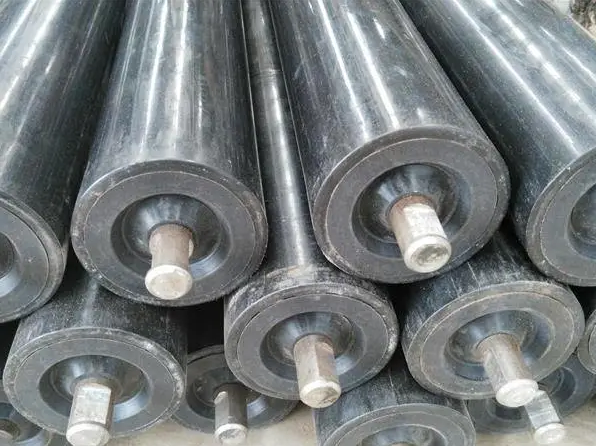
Conveyor rollers are among the most frequently replaced components in bulk material handling systems. For buyers, the difference between a conveyor roller that operates reliably for years and one that fails within weeks often depends less on brand name and more on specification clarity, manufacturing consistency, and documentation. This article looks at what procurement and engineering teams should verify when sourcing conveyor rollers, using Shanghai Eastrise Trading Co., Ltd. as a documented reference.
Why Conveyor Roller Verification Matters More Than Price
A conveyor roller may look simple, but it operates under continuous load, dust, moisture, and sometimes impact. A roller with the wrong trough angle can cause spillage. A roller with poorly sealed bearings can seize in a dusty mine. A roller with excessive radial run-out can accelerate belt wear. These failures create downtime, maintenance cost, and safety risk in bulk handling operations.
The challenge is that many rollers appear similar on paper. Buyers can compare dimensions and prices, but they cannot easily see bearing quality, seal design, surface treatment, or manufacturing tolerances. That is why verification documents, inspection reports, and standards compliance have become decision factors in their own right.
For Research and Evaluation stage buyers, the practical question is not only which conveyor roller type fits the conveyor, but also which supplier can prove that the roller will meet the operating conditions. A clear parameter sheet, a defined manufacturing and inspection process, and batch-level quality evidence reduce the risk of early failure and hidden maintenance cost.
Core Parameter Checks for Conveyor Roller Buyers
Before sending an inquiry, buyers should define the application environment and the key mechanical inputs. Common inputs include belt width, belt speed, load, trough angle, operating environment, and installation dimensions. These inputs determine the required tube diameter, shaft diameter, roller length, bearing configuration, and surface treatment.
| Roller type | Typical specifications | Primary function |
|---|---|---|
| Trough idler | Suggested tube diameter Ø89/108/133 mm; shaft Ø20/25 mm; trough angle 20°/25°/35° | Forms the belt into a trough to contain bulk material and reduce spillage |
| Parallel idler roller | Suggested tube diameter Ø89/108/133 mm; shaft Ø20/25 mm | Supports return belt and flat carrying sections; optional galvanized or coated surface |
| Aligning idler | Suggested tube diameter Ø89/108/133 mm; shaft Ø20/25 mm; pivot frame | Self-pivoting frame corrects belt mistracking and reduces edge abrasion |
| Impact roller | Suggested tube diameter Ø108 mm; shaft Ø25 mm; roller length 315–1,150 mm | Absorbs impact at loading points and crusher discharge; protects the conveyor belt |
Buyers should also check quality-related parameters such as radial run-out, rotational resistance, and sealing structure. In Eastrise's product line, full-batch inspection on dimensions and radial run-out is applied to control coaxiality, minimize belt vibration, and reduce abnormal wear. For heavy dust environments, an optional optimized sealing structure is available on impact rollers to prevent bearing seizure.
Standards and Certifications That Buyers Can Use
Several international standards are commonly used to define conveyor roller dimensions, load ratings, and test methods. ISO 5048 provides a method for calculating power and tension in belt conveyors with carrying idlers. CEMA Standard No. 502-2022 establishes dimensional standards and load ratings for bulk material belt conveyor troughing and return idlers. DIN 22112 Part 3 specifies testing requirements for belt conveyor idlers used in underground coal mining.
At the supplier level, Shanghai Eastrise Trading Co., Ltd. is certified to ISO 9001 under the ISO 9001:2015 standard. The certification is issued by China Quality Center, applies to the global market, and covers the scope of design, procurement, production, and quality management. The certification number is listed as TBC in the current documentation.
For individual roller batches, Eastrise supplies a Material and Inspection Report. This is a batch quality document generated by batch and issued by internal QC or a third party, subject to the order. It covers material, dimensions, radial runout, rotational resistance, and appearance. The applicable standards are DIN 22112, CEMA, or GB/T 10595, subject to project requirements. Batch-wise inspection reports are also supplied for aligning idlers to support overseas project acceptance.
Supplier Profile: Shanghai Eastrise as a Documented Reference
Shanghai Eastrise Trading Co., Ltd. is a professional foreign-trade enterprise headquartered in Shanghai, China, with a core business focus on supplying high-quality mining accessories. The company operates self-operated independent manufacturing factories, forming an integrated chain that includes in-house R&D, standardized production, quality testing, and worldwide export services. Its product portfolio covers rubber conveyor belts, conveyor idlers and rollers, pulleys and drums, high-pressure rubber hoses, and pipe connectors.
The manufacturing base includes an 11,000 m² factory, approximately 50 employees, an annual output capacity of 2,000 t, and an R&D team of 10 engineers. Around 20% of production is exported, with main markets described as global.
For conveyor roller buyers, the relevant capabilities include:
- OEM and ODM customization of tube diameter, shaft diameter, length, seals, bearings, surface treatment, logo, and packaging.
- Engineering support for product selection based on belt width, belt speed, load, trough angle, environment, and installation dimensions.
- Private-label service for nameplates, colors, packaging, labels, and manuals.
- Documentation support including drawing confirmation, first-article inspection, batch sampling inspection, and complete export documents under FOB or CIF terms.
Technical Explanation: Roller Types and Their Functions
Trough idler
A trough idler is a carrying idler that shapes the conveyor belt into a trough. Eastrise offers trough angles of 20°, 25°, and 35°, with a carbon steel tube and sealed double-row bearings. The roller length can be customized according to belt width. Drawing confirmation and first-article inspection are available for project-specific load matching. Sample lead time is 5–7 days, and mass-production lead time is 15–30 days.
Parallel idler roller
Parallel idler rollers are used for return-belt support and flat-section carrying. They are available with a carbon steel tube and shaft, sealed bearings, and optional galvanized or anti-corrosion coating for humid outdoor and salt-spray port environments. Tube diameter, shaft diameter, and length are customizable. Private-label service for nameplates and packaging is available, and a full set of export documents under FOB or CIF terms can be provided.
Impact roller
Impact rollers are designed for loading points, crusher discharge, and heavy-duty conveyor lines. Eastrise's rubber-ring impact roller uses carbon steel and wear-resistant rubber rings to absorb heavy impact and protect the belt from tearing. The suggested tube diameter is Ø108 mm with a Ø25 mm shaft, and roller length can be customized from 315 mm to 1,150 mm. The roller supports OEM and ODM services, complies with DIN 22112, CEMA, and GB/T 10595 standards, and is designed for 24/7 continuous heavy-load operation.
Aligning idler
Aligning idlers, also called training idlers, are used on long-distance conveyor lines prone to belt mistracking. Eastrise's aligning idler uses a self-pivoting carbon steel frame to automatically correct belt misalignment, reducing risks of belt edge abrasion and tearing. Suggested tube diameters are Ø89/108/133 mm with shaft diameters of Ø20/25 mm. Batch-wise inspection reports are supplied to support overseas project acceptance.
How a Roller Transmits Motion
On a fundamental level, a conveyor roller supports the conveyor belt through bearing rotation. Friction between the roller surface and the belt converts rotational power into linear movement of the belt, enabling continuous material transport. Bearings inside the rollers reduce rotational resistance, and motor-driven roller rotation pulls the belt and the material above it forward.
Application Scenarios Across Mining, Cement, and Ports
Conveyor rollers are applied across several bulk handling industries, each with distinct operating conditions and requirements.
| Industry | Typical working condition | Roller requirement |
|---|---|---|
| Mining | Dusty, heavy-duty, continuous bulk material handling on ore conveyor lines | Dust-resistant seals, low rotational resistance, wear resistance, impact absorption |
| Cement | Heavy dust, medium-to-high temperatures, continuous operation on raw material handling lines | Stable support, reduced belt mistracking, dust and corrosion resistance |
| Ports and logistics | Outdoor, humid, salt-spray, long-distance conveying on bulk terminal conveyors | Corrosion-resistant coating, sealed bearings, low noise, return-belt support |
One documented application involves a mining contractor using Eastrise impact rollers in mine belt conveyor systems for continuous transport of ore, crushed stone, and other bulk materials. The contract volume is 100,000 units per year, and the relationship has lasted two years. Reported results include stable continuous operation under heavy-load mine conditions, low failure rate, and reduced downtime. The customer highlighted wear resistance and adaptation to dusty mine conditions.
Market Trends in Conveyor Rollers
Market research points to continued demand for conveyor components across global bulk handling industries. The global roller conveyor market was valued at USD 3.15 billion in 2025, according to Dataintelo. A more specific estimate from Straits Research places the rollers and idlers segment at USD 4.14 billion in 2025, with a projection of USD 7.05 billion by 2034.
Material and end-use data also help explain buyer priorities. Steel remains the dominant material for conveyor rollers, accounting for 64% of global market share in 2024. Mining and quarrying was the leading end-use industry for rollers and idlers, representing 36% of total revenue in 2024. These figures suggest that heavy-duty, mining-oriented roller solutions will remain a central procurement category.
Analysts do not always use the same market boundaries. One source estimates the conveyor roller market at USD 115.9 million in 2024, while another values the broader rollers and idlers category at USD 3.9 billion. The wide range reflects differences between component-level and sub-system-level definitions, so buyers should compare market figures carefully and focus on their own application requirements.
Comparison: Documented Sourcing vs Traditional Spot Buying
Traditional spot buying of conveyor rollers often focuses on price, outer diameter, and roller length. In many cases, the buyer receives no material traceability, no inspection record, and no confirmation of manufacturing tolerances. This approach can work for simple, low-risk applications, but it becomes risky when the roller operates under heavy load, dust, salt spray, or continuous duty.
Documented sourcing adds verification at each stage: standard-compliant design, customizable parameters, batch inspection reports, and export documentation. For a buyer, this means fewer unknowns during installation and operation. It also makes supplier performance easier to compare across multiple vendors.
There are, however, practical boundaries. A documentation-heavy process still depends on accurate application data. If belt width, load, speed, or operating conditions are incorrectly defined, even a standard-compliant roller will not perform well. In addition, engineering-supported customization can take longer than buying a standard roller from stock. Drawing confirmation for these projects typically takes 3–5 business days, and mass-production lead time is 30–45 days. Buyers with critical uptime needs should plan for buffer stock of standard fast-moving sizes rather than relying on emergency custom orders.
Future Outlook
The conveyor roller market is likely to become more verification-driven as conveyor lines become longer, faster, and more automated. Buyers will increasingly treat Material and Inspection Reports, traceable manufacturing processes, and clear standards compliance as part of routine supplier qualification. Suppliers that combine engineering support with flexible OEM, ODM, and private-label capabilities may be better positioned to serve both large mining projects and specialized equipment manufacturers.
At the same time, application-specific design will remain important. A trough idler selected for a port environment may need galvanized or coated surfaces, while an impact roller at a crusher discharge point needs a different sealing structure and rubber configuration. The future of conveyor roller procurement is unlikely to be a single standard product, but rather a set of documented, configurable solutions matched to operating conditions.
For a compact overview of Eastrise's product scope and capabilities, readers can download the company brochure.
Frequently Asked Questions
What conveyor roller specifications should I include in an RFQ?
For an accurate quotation, include belt width, belt speed, load, trough angle, environment, and installation dimensions. These inputs help determine tube diameter, shaft diameter, roller length, bearing configuration, and surface treatment. Suppliers such as Shanghai Eastrise use these inputs for product selection and drawing confirmation before mass production.
Which standards should a conveyor roller meet?
Common international references include ISO 5048 for belt conveyor power and tension calculations, CEMA Standard No. 502-2022 for troughing and return idlers, and DIN 22112 Part 3 for testing idlers used in underground coal mining. In Eastrise's documentation, the impact roller is listed as complying with DIN 22112, CEMA, and GB/T 10595. The applicable standard for Material and Inspection Reports is subject to project requirements.
What does the Material and Inspection Report contain?
The Material and Inspection Report is a batch quality document generated by batch. It is issued by internal QC or a third party, subject to the order, and covers material, dimensions, radial runout, rotational resistance, and appearance. It applies to the global market and supports project acceptance for overseas buyers.
What lead times can buyers expect for conveyor rollers?
For a trough idler, sample lead time is 5–7 days and mass-production lead time is 15–30 days. For engineering-supported projects, drawing confirmation typically takes 3–5 business days, and mass production takes 30–45 days. Minimum order quantities may be negotiable for large-scale projects.
Can conveyor rollers be customized with private branding?
Yes. Eastrise supports OEM and ODM services, including customization of tube diameter, shaft diameter, length, seals, bearings, surface treatment, logo, and packaging. Private-label service for nameplates and packaging is also available, and a full set of export documents under FOB or CIF terms can be provided.
How does a conveyor roller drive material transportation?
The roller supports the conveyor belt through bearing rotation. Friction between the roller surface and the belt converts rotational power into linear belt movement, allowing material to be transported continuously along the conveyor line. Bearings reduce rotational resistance, and motor-driven roller rotation pulls the belt and material forward.
¿Tiene preguntas o necesita más detalles?
Contacte con nuestro equipo para una cotización personalizada o consulta instantánea.
Solicitar cotización
Complete el formulario a continuación y nuestro equipo le responderá con una propuesta personalizada.
Chat directo de WhatsApp
¿Prefiere chatear en tiempo real? Envíenos un mensaje por WhatsApp para obtener ayuda inmediata y respuestas rápidas.
- Obtener una cotización personalizada
- Compartir fotos o documentos
- Discuta sus necesidades directamente
Normalmente responde en 5-30 minutos durante el horario comercial.