
Control and Instrumentation Cables: A 2026 Project-Matching Guide
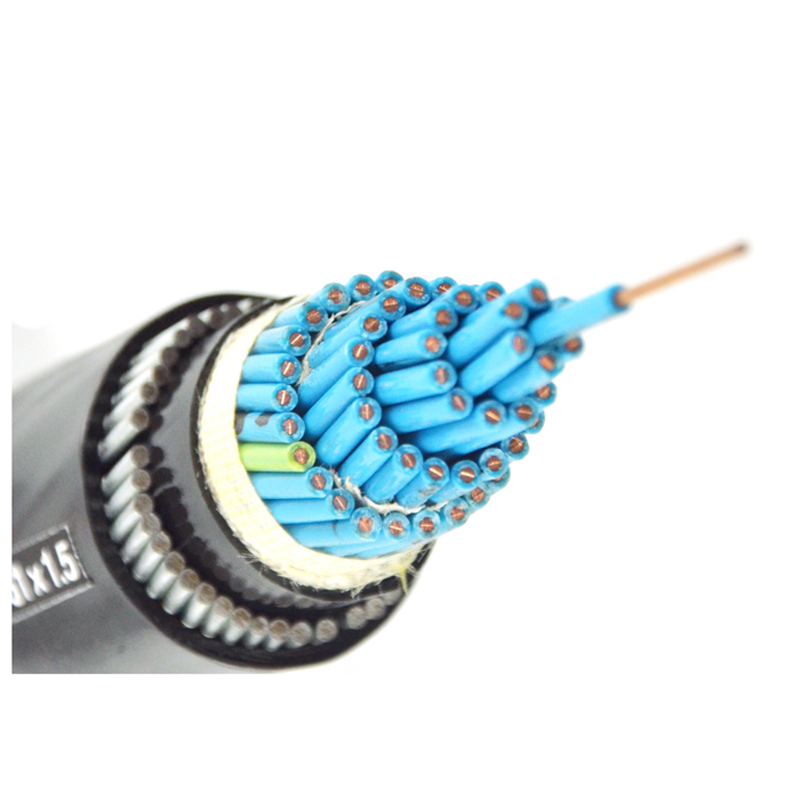
Control and instrumentation cables are selected by project environment, not by conductor size alone.
The performance of a control and instrumentation cable depends on the project environment as much as on its conductor size or rated voltage. In industrial automation, chemical processing, oil and gas, food and beverage, and modern buildings, control cables carry the signals that keep systems stable. If the cable construction does not match the installation conditions, signal quality can degrade, maintenance costs can rise, and safety levels can be reduced. For procurement and engineering teams evaluating cable options in 2026, the practical challenge is translating project conditions into cable specifications.
Why Project Environment Determines Control Cable Selection
Control and instrumentation cables are low-voltage cables designed to transmit control commands and measurement signals. Their failures are often invisible at the moment of installation but appear later as erratic sensor readings, false alarms, or interrupted communication between controllers and field devices. Traditional procurement tends to treat cable as a low-risk commodity. However, differences in shielding, insulation, armouring, and sheath materials become decisive when cables are installed near variable frequency drives, high-power motors, or in fire-sensitive buildings.
The opportunity is to use project conditions as a filter. The same functional cable type can be selected in different construction variants to improve signal integrity and system safety without over-engineering every circuit. This approach is especially relevant now because the global demand for electrical cable is expanding. Grand View Research estimates the global wires and cables market at approximately USD 230.9 billion in 2025 and projects it to reach USD 313.1 billion by 2033, indicating that power and signal infrastructure are being built at scale around the world.
Procurement Problem: Signal Integrity, Fire Safety, and Compatibility
Control cable procurement decisions are often made late in a project, when cable trays, conduits, and termination points are already planned. This can force project teams to accept a default cable type without verifying whether it can handle the electrical noise, humidity, chemical exposure, or fire risk of the installation route.
In automated production lines, for example, control signals must work alongside power cables and motor drives. In chemical plants and refineries, cables may be exposed to corrosive gases and harsh cleaning procedures. In commercial buildings and public facilities, fire safety is a central concern. A standardized unshielded PVC cable may work in one environment and cause serious problems in another. The true procurement question is not simply what the cable is rated for, but whether the complete construction fits the intended project and operating mode.
Shenghua Cable as a Reference Supplier
Shanghai Shenghua Cable Group Co., Ltd., commonly known as Shenghua Cable, is a Shanghai-based cable manufacturer founded in 1997. The company operates seven manufacturing bases and 21 cable factories across China, according to its corporate profile. Its portfolio includes control and instrumentation cables as part of more than 80 cable series, together with power cables, building wires, solar cables, rubber sheathed cables, mining cables, mineral insulated cables, marine cables, and special cables.
For control and instrumentation applications, Shenghua Cable lists models including KVV, KVVP, KVVRP, DJYPVP, DJYVP, and WDZ-DJYJPYP. The rated voltage range is 300/500V to 450/750V. According to the product specification, construction options include shielded and unshielded cables, as well as solid, stranded, and flexible conductors. This allows buyers to match the cable to fixed installation, vibrating equipment, or moving cable assemblies.
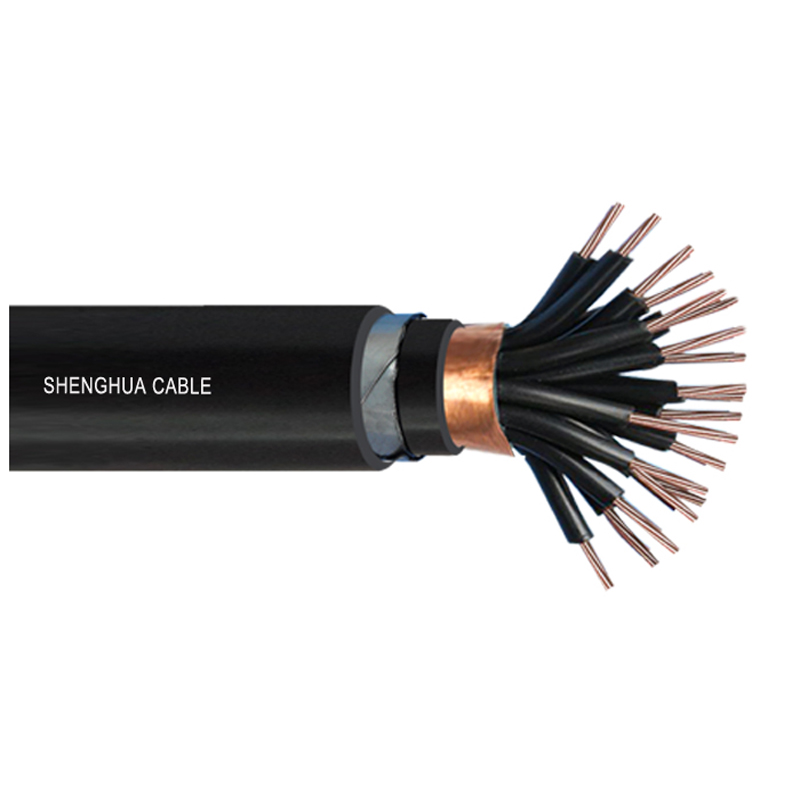
Shielded and unshielded control cables share similar voltage ratings but differ in interference protection.
From a procurement perspective, the company states that OEM service is available, and cable structure, material, dimensions, and length are fully customizable. Monthly capacity is 15 million meters depending on cable structure, with a typical lead time of 18 working days for standard configurations. All products are described as 100 percent tested, and a two-year warranty is provided after delivery.
Technical Construction of Control and Instrumentation Cables
The main design elements of a control and instrumentation cable are conductor, insulation, core arrangement, screening, bedding, armouring, and sheath.
Conductor class determines flexibility and vibration resistance. Solid conductors are common in fixed wiring and offer low cost. Stranded conductors are more flexible and tolerate vibration better. Flexible conductors are used when cables must bend during operation, such as machine connections. Copper remains the dominant conductor material for control circuits because of its conductivity and termination reliability.
Insulation and sheath material should be matched to voltage, temperature, and fire risk. PVC is a common general-purpose insulation. For projects that need reduced smoke and halogen emissions, low-smoke zero-halogen (LSZH) compounds are used, especially in buildings, public areas, and high-density installations. EPR and XLPE are also used where improved thermal or electrical performance is required.
Shielding is one of the most important distinctions in control cables. An unshielded cable may be sufficient for short, clean, low-energy circuits. A shielded cable, such as KVVP, uses a copper wire braid or tape screen to reduce electromagnetic interference. For sensitive instrument signals, a construction such as DJYPVP uses paired cores with individual screens and an overall screen, providing a higher level of protection against crosstalk and external noise.
Armouring provides mechanical protection. Steel wire armour (SWA) is often chosen for direct burial and mechanical impact; double steel tape armour (DSTA) can suit certain underground or tray installations; steel wire braid offers a lighter mechanical barrier while keeping some flexibility. Armouring should be selected only when the installation route justifies the extra weight and cost.
Application Mapping for 2026 Projects
To make the selection practical, project types can be grouped by operating condition and signal requirement. The table below summarizes typical control cable considerations for common project environments.
| Project Environment | Typical Control Cable Requirement | Reference Evidence |
|---|---|---|
| Automated production lines | Shielded or screened cables with stranded or flexible conductors for 24/7 operation | Connects PLC controllers to actuators and solenoids in factories |
| Chemical processing | Signal transmission from sensors to control rooms; corrosion-resistant sheaths and shielding | Links pressure, temperature, and flow sensors to control rooms |
| Oil and gas refineries | Tank level monitoring and valve control; fire-retardant or armoured variants may be needed | Monitors storage tank levels and valve control systems |
| Food and beverage | Control systems for pasteurization, bottling, and packaging machines; robust sheath for washdown | Control systems for pasteurization, bottling, and packaging machines |
| Building and commercial facilities | Final circuit distribution for power and lighting; LSZH variants in enclosed public spaces | Residential housing, office buildings, educational facilities, retail spaces, hotels |
Automated Production Lines
In automated production lines, control cables connect PLC controllers to actuators, solenoids, sensors, and monitoring devices. These systems often operate continuously. A shielded cable with stranded conductors helps maintain stable signals in an environment where motors and drives create electrical noise. Flexible conductor versions may be required for cable tracks and moving machine parts.
Chemical Processing
Chemical plants rely on pressure, temperature, and flow sensors to keep processes within safe limits. The cables linking those sensors to control rooms must preserve low-level signals over what may be long cable runs. Shielding and appropriate sheath materials help protect against electromagnetic interference and chemical exposure.
Oil and Gas Refineries
Refinery applications often include storage tank level monitoring and valve control systems. Cables in this sector may be installed outdoors, in cable trays, or near classified areas. Fire performance, mechanical robustness, and reliable shielding are common priorities. The exact specification should always be checked against site-specific hazard classifications.
Food and Beverage
In food and beverage facilities, control systems manage pasteurization, bottling, and packaging machines. Washdown procedures and cleaning chemicals place stress on cable sheaths. A robust sheath combined with adequate flexibility can reduce downtime caused by cable damage.
Building and Commercial Facilities
In buildings, control cables are often part of lighting control, HVAC, and building management systems. Public buildings such as offices, schools, retail spaces, and hotels may require low-smoke zero-halogen cables to reduce toxic smoke in a fire. Local building regulations and fire safety classifications should guide the final choice.
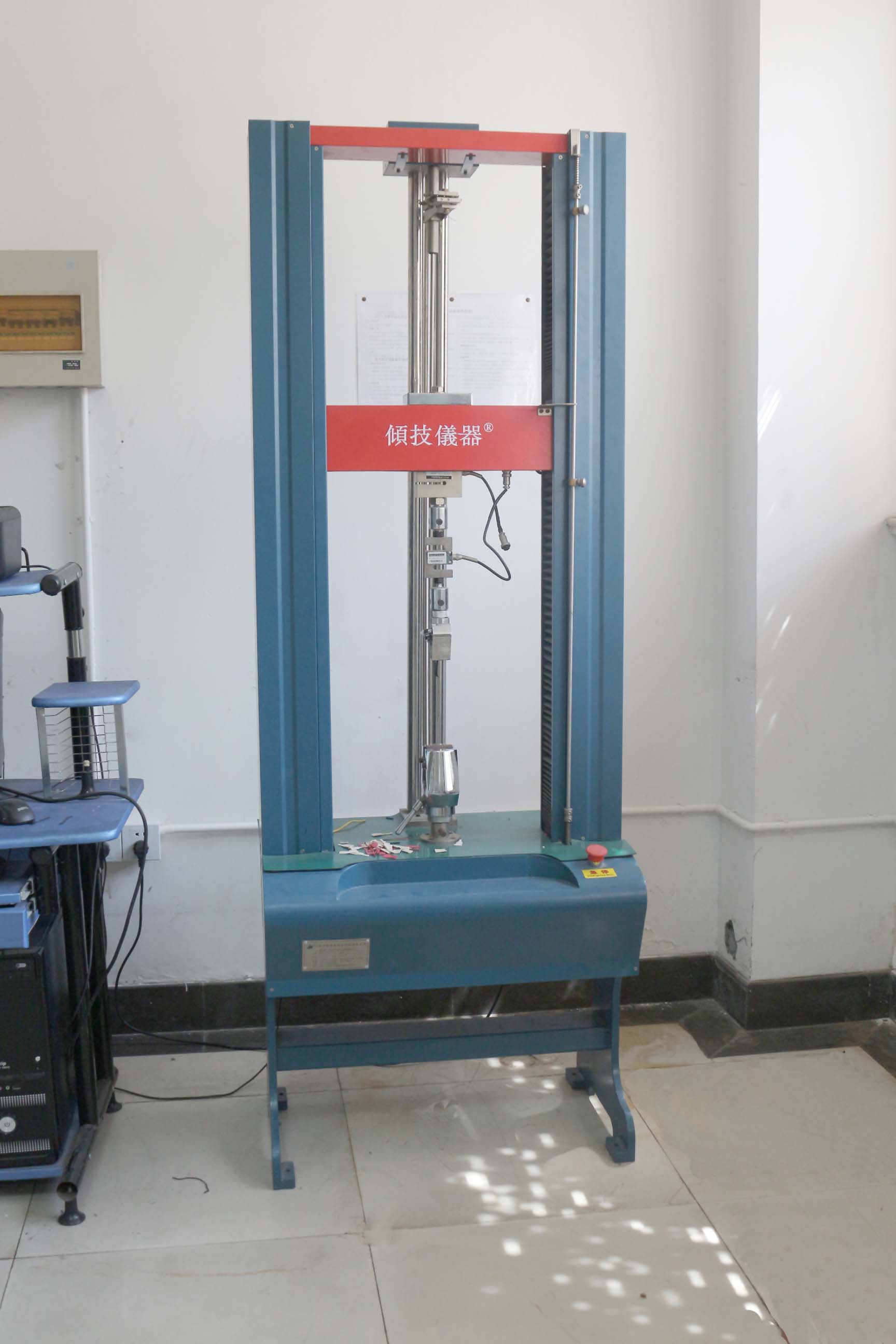
Laboratory testing is used to verify electrical performance and production consistency.
Long-Term System Integration: Predictive Maintenance Case
A documented example of project-matched supply is a 15-year relationship between Shenghua Cable and a UK-based provider of predictive maintenance and intelligent diagnostic solutions for industrial machinery. The cables are used in industrial monitoring systems, power signal transmission, and control circuit connectivity. The application benefits from ultra-small conductor size combined with high-voltage insulation capability, LSZH flame-retardant construction, and stable signal performance in high-density wiring. This case shows how control and instrumentation cables become part of a larger data and safety chain.
Market Trends Affecting Control Cable Procurement
Global demand for electric cable continues to rise. Grand View Research estimates the global wires and cables market at approximately USD 230.9 billion in 2025 and projects USD 313.1 billion by 2033. China is the leading exporter of insulated wire and cable under HS 8544, accounting for USD 31.4 billion or 18.1 percent of global exports in 2024, according to World's Top Exports and UN Comtrade data.
For medium-voltage cable, Global Market Insights values the global market at USD 71.7 billion in 2025. The same report gives Prysmian Group a 12.5 percent share of the medium-voltage wire and cable segment. While these figures are broader than control cables alone, they indicate that power and signal networks are being built simultaneously, increasing the need for functionally matched cable specifications.
Standards also influence selection. IEC 60502-2:2014 specifies requirements for power cables with extruded solid insulation for rated voltages from 6 kV up to 30 kV. Under the EU Construction Products Regulation, cables are classified into seven fire protection classes from Aca to Fca, with Class Eca considered a basic safety requirement for building materials. These requirements matter when a control cable is installed in a building or infrastructure project and must meet a defined fire class.
Project-Specific Selection vs. Traditional One-Type-Fits-All
Traditional procurement often uses a single standard control cable across an entire site. This approach simplifies inventory and reduces engineering effort. Its limitations become visible in environments with strong electromagnetic interference, where unshielded cables can cause false readings and downtime. It also creates a risk of using the same cable in fire-sensitive public buildings where an LSZH or flame-retardant sheath is required.
A project-matched approach requires more time at the specification stage but can reduce long-term risk. However, the approach is not always optimal. For simple, low-risk, dry, and clean circuits, a standardized unshielded PVC control cable is normally sufficient. Specifying individual screens, LSZH sheaths, or armouring for every single circuit raises cost and lead time without operational benefit. The boundary is not between good and bad cables, but between sufficient performance and needed performance.
Future Outlook
Cable selection is becoming more data-driven. Predictive maintenance, digital twins, and increased sensor density are pushing low-voltage signal circuits closer to power equipment. In this environment, control and instrumentation cables will be evaluated not only by voltage rating but by their contribution to signal reliability and system availability.
More procurement teams will document project conditions and map them to cable construction. Manufacturers with traceable production, customization capability, and experience across industrial segments are better positioned to support this shift. The Shenghua Cable case in predictive maintenance, with 15 years of supply continuity, is an example of how cable supply can function as a long-term engineering relationship rather than a one-time purchase.
FAQ
What are control and instrumentation cables used for?
They transmit control signals and monitoring data for machinery and automated systems. In production lines they can connect PLC controllers to actuators and solenoids; in chemical plants they link pressure, temperature, and flow sensors to control rooms; in refineries they support tank level monitoring and valve control.
What voltage range is typical for control and instrumentation cables?
Typical rated voltage is 300/500V to 450/750V depending on the design and manufacturer. This covers most low-voltage control and instrument circuits.
When should a shielded control cable be selected?
A shielded construction should be considered when the cable is routed near motors, variable frequency drives, power cables, or other electromagnetic sources. Models such as KVVP include shielding; instrument cable types such as DJYPVP are intended for more sensitive signal circuits.
Are control and instrumentation cables suitable for continuous industrial operation?
Many applications are designed for 24/7 operation, including automated production lines, chemical processing, and monitoring systems. The cable construction should still be matched to temperature, vibration, chemical exposure, and fire risk.
Can control and instrumentation cables be customized for a specific project?
Yes. Suppliers such as Shenghua Cable offer fully customizable cable structure, material, dimensions, and length, with OEM service available. Typical lead time is within 18 working days depending on construction and quantity, according to company data.