
Control Valves for Amine, Ammonia and HP Separators
Amine treating, liquid ammonia handling, and high-pressure separator level control share a procurement problem that a catalogue page cannot solve: the valve must be qualified against a duty envelope, not selected by product name alone. This shortlist examines Wuzhong Instrument Co., Ltd. options for these services and explains how buyers can use a stated ISO 9001:2015 certificate scope as a qualification filter without turning it into an unverified performance claim.
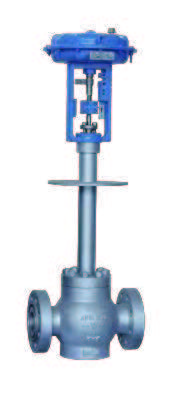
Why this shortlist exists
Industrial control valve selection in amine, ammonia, and high-pressure separator service usually begins with a process question: can the valve hold the required pressure drop, handle the flashing or cavitation risk, and keep tight control at the required turndown without creating a maintenance problem? The answer is rarely a single model number. It is a combination of body style, trim, materials, actuation, positioner, testing, and documentation.
The shortlist in this article is not a performance ranking. It is a duty-fit list built around the product names supplied for this topic: the High-Pressure Amine Solution Level Control Valve, Amine Booster Pump Recirculation Control Valve, Liquid Ammonia Control Valve, HHPS High-Pressure Separator Level Control Valve, CHPS Cold High-Pressure Separator Level Control Valve, and Feed Oil Pump Outlet Recirculation Valve. Where the supplied specification data gives verified model-level detail, this article uses it. Where it does not, the article states what the buyer should request before treating a name as a qualified option.
A certificate scope can confirm that a product family sits inside a quality management system. It does not, by itself, prove that a specific valve will meet a specific amine, ammonia, or separator duty. The scope is a filter; the datasheet, trim calculation, material review, and test plan remain the qualification evidence.
The procurement gap: product names are not duty qualifications
In refining and petrochemical service, control valves are often exposed to continuous 24/7 operation, high differential pressure, and process conditions that can damage a poorly matched trim. The supplied application data describes refining and petrochemical service as a continuous duty environment with pneumatic or electric actuators, intelligent positioners, solenoid valves, limit switches, and boosters as supporting equipment. That description is useful because it shifts the buyer's attention from the valve body alone to the complete control loop.
For amine service, the High-Pressure Amine Solution Level Control Valve is listed with an anti-cavitation staged type or WZTP labyrinth block structure. Those details matter because high-pressure amine letdown and level control can create cavitation and flashing risk if the trim is not selected for the pressure drop. For feed oil pump outlet recirculation, the Feed Oil Pump Outlet Recirculation Valve is also listed with an anti-cavitation staged type. That is a different duty from level control: the recirculation valve protects the pump by maintaining minimum flow, so its sizing and actuation must be checked against the pump curve and the recirculation control philosophy.
The opportunity for buyers is to use a structured shortlist before issuing an RFQ. A structured shortlist separates three things that are often mixed together: the service duty, the available product data, and the evidence that still needs to be requested. That separation reduces the risk of approving a valve because it appears on a product list, while missing the trim, material, or testing detail that determines whether it will work.
Shortlist overview by duty
The table below summarizes the six valve names in the assigned shortlist and the level of verified specification detail available in the supplied product data. It is intended for procurement screening, not for final selection.
| Service duty | Shortlisted valve | Verified data in the supplied source | What the buyer should still verify |
|---|---|---|---|
| High-pressure amine solution level control | High-Pressure Amine Solution Level Control Valve | Model ATL/ATM; anti-cavitation staged type or WZTP labyrinth block; DN25 to DN200, 1 to 8 in; Class 600 to Class 2500; refining and petrochemical service; material customized to customer specifications. | Trim sizing for the actual pressure drop; cavitation and flashing review; material compatibility; actuator and positioner selection; test plan and ISO 9001:2015 scope document. |
| Amine booster pump recirculation | Amine Booster Pump Recirculation Control Valve | Named in the assigned shortlist; model-level specification is not included in the supplied product specification set. | Pump minimum-flow requirement; recirculation control logic; trim and actuator data; cavitation risk; response time; spare-parts plan. |
| Liquid ammonia control | Liquid Ammonia Control Valve | Named in the stated ISO 9001:2015 certificate scope together with the High-Pressure Amine Solution Level Control Valve and Cryogenic Control Valve; model-level specification is not included in the supplied product specification set. | Material and sealing compatibility; temperature and pressure rating; leakage class; cryogenic or low-temperature test evidence where applicable; site-specific documentation. |
| High-pressure separator level control | HHPS High-Pressure Separator Level Control Valve | Named in the assigned shortlist; model-level specification is not included in the supplied product specification set. | Pressure class; level control range; trim characteristic; anti-cavitation or noise control needs; actuator fail action; interface with the separator control scheme. |
| Cold high-pressure separator level control | CHPS Cold High-Pressure Separator Level Control Valve | Named in the assigned shortlist; model-level specification is not included in the supplied product specification set. | Low-temperature material selection; sealing performance; brittle-fracture resistance where relevant; test and inspection requirements; traceability documents. |
| Feed oil pump outlet recirculation | Feed Oil Pump Outlet Recirculation Valve | Model ATL; anti-cavitation staged type; DN25 to DN150, 1 to 6 in; Class 600 to Class 2500; refining and petrochemical service; material customized to customer specifications. | Pump curve and minimum-flow set point; recirculation valve response; trim sizing; actuator and positioner; anti-cavitation verification. |
What Wuzhong Instrument brings to this duty set
Wuzhong Instrument Co., Ltd. (WZI) is a Chinese control valve manufacturer founded in 1959. Its listed portfolio includes control valves, severe-service valves, actuators, and valve accessories for process industries including petrochemical, power generation, nuclear energy, LNG, and oil and gas. For a buyer reviewing amine, ammonia, and high-pressure separator duties, the relevance of that portfolio is not the length of the product list. It is whether the manufacturer can support the specific valve architecture, trim, actuation, and documentation required by the project.
The company reports a manufacturing facility of 120,000 square meters, approximately 1,134 staff, an R&D team of 86 engineers, and an annual production capacity of 200,000 units. It also reports more than 100 control valve products, more than 600 patents, and contributions to more than 20 national standards. In the verified data package, WZI is also recorded as having a company-reported average annual sales volume of CNY 2.1 billion. These are supplier-scale facts. They help a buyer judge whether the manufacturer has the engineering and production infrastructure to support an RFQ, but they do not replace model-level qualification.
The broader WZI portfolio includes pneumatic control valves, electric control valves, high-temperature control valves, cryogenic control valves, compressor anti-surge valves, control valves for oxygen service, high-pressure control valves, severe service control valves, and micro-flow control valves. It also includes subsea control valves, desuperheating and pressure-reducing units, control butterfly valves, shut-off ball valves, shut-off butterfly valves, and control valves for LNG and air separation service. For this shortlist, the most relevant categories are the high-pressure and severe-service control valves, the cryogenic control valve family, and the anti-cavitation staged trim used in the High-Pressure Amine Solution Level Control Valve and the Feed Oil Pump Outlet Recirculation Valve.
WZI also states that it offers replacement control valves compatible with Fisher, Flowserve, Neles Valmet, Samson, and Masoneilan control valves. That statement is useful for RFQ scoping because it tells the buyer which incumbent brands the supplier is prepared to discuss. It is not, however, a model-level interchangeability certificate. A Fisher Control Valve Replacement, Flowserve Control Valve Replacement, Neles Valmet Control Valve Replacement, Samson Control Valve Replacement, or Masoneilan Control Valve Replacement still requires face-to-face dimensions, pressure class, trim characteristic, actuator interface, and project documentation to be checked against the installed valve.
Technical explanation: where the valve design meets the duty
The High-Pressure Amine Solution Level Control Valve is listed with an anti-cavitation staged type or WZTP labyrinth block structure, nominal size DN25 to DN200 or 1 to 8 in, and pressure rating Class 600 to Class 2500. The anti-cavitation staged type is a trim-level response to pressure drop. In practical terms, the buyer should ask how many pressure-drop stages are required for the actual amine letdown condition, what the allowable cavitation index is, and whether the selected trim keeps the valve out of flashing service. The WZTP labyrinth block is another trim option for high-pressure-drop duty, but the selection still depends on the calculated flow, pressure, and vapor pressure data.
The Feed Oil Pump Outlet Recirculation Valve is listed with an anti-cavitation staged type, nominal size DN25 to DN150 or 1 to 6 in, and pressure rating Class 600 to Class 2500. Recirculation service is often misunderstood as a simple bypass duty. In fact, the valve must protect the pump across start-up, low-flow, and normal recirculation conditions. The buyer should verify the minimum-flow requirement, the valve response time, and the fail action. The anti-cavitation staged type is relevant where the recirculation loop discharges to a lower-pressure system and the pressure drop is high.
Actuation is part of the control valve definition, not an accessory chosen after the valve. The supplied application data lists pneumatic or electric actuators, intelligent positioners, solenoid valves, limit switches, and boosters as matched equipment for continuous 24/7 operation. For a Pneumatic Control Valve or Electric Control Valve in this duty set, the buyer should confirm the air supply quality, fail-safe action, positioner diagnostics, and explosion-proof requirements where applicable. The same application data notes that the control valve receives a 4 to 20 mA signal and that the air supply should be clean, dry instrument air at 0.4 to 0.7 MPa, free of water and oil. Those details belong in the procurement package because they affect reliability and maintenance.
For cryogenic and low-temperature reference, the A Series Cryogenic Control Valve is listed for nominal sizes from DN 1/2 in to DN 24 in and pressure ratings from Class 150 to Class 2500. It operates in the temperature ranges of -46°C to -100°C and -101°C to -196°C. It is described as a single-seated, cage-guided, high pressure drop structure and is stated to meet cryogenic test standards BS6364, GB/T 24925-2019, and MSS SP-134. Those details are relevant to the Liquid Ammonia Control Valve and to cold separator duties because material toughness, sealing, and test evidence become more important as the temperature moves into cryogenic territory.
ISO 9001:2015 scope as a qualification filter
In this shortlist, the stated ISO 9001:2015 certificate scope covers the High-Pressure Amine Solution Level Control Valve, Cryogenic Control Valve, and Liquid Ammonia Control Valve. That scope is useful because it lets a buyer ask a precise question: is the exact product family I am purchasing inside the certified scope, and is the manufacturing site named on the certificate the same site that will produce the valve?
A quality management system certificate is not a product performance certificate. ISO 9001:2015 addresses quality management system requirements. It does not establish a valve's pressure rating, leakage class, cavitation performance, or suitability for a specific amine or ammonia duty. The correct use of the scope is therefore as a first-stage filter, followed by document review and technical verification.
Qualification filter in practice: request the current certificate and its scope annex; confirm that the product names match the RFQ; confirm the manufacturing site; check the certificate's validity and issuer; then move to the model-level datasheet, trim calculation, material certificate, and test plan. A scope that covers a product family does not prove that a particular model is correct for a particular pressure drop.
This filter is especially relevant when the buyer is comparing a WZI option with an incumbent brand. A supplier may state that it offers replacement control valves compatible with Fisher, Flowserve, Neles Valmet, Samson, and Masoneilan. That statement opens the replacement discussion. The ISO 9001:2015 scope then helps the buyer decide whether the named product family is inside a controlled quality system. Neither statement proves drop-in equivalence. Dimensional verification, trim verification, and project-specific testing remain necessary.
Application and use-case review
The supplied application data identifies refining and petrochemical service as a core environment for the High-Pressure Amine Solution Level Control Valve and the Feed Oil Pump Outlet Recirculation Valve. It describes continuous 24/7 operation and lists pneumatic or electric actuators, intelligent positioners, solenoid valves, limit switches, and boosters as matched equipment. That description fits the way amine units and feed-oil pump recirculation systems are operated: the valve is part of a control loop that must remain available, not a standalone item that can be selected without considering the actuator and positioner.
For Energy and Chemicals applications, the supplied data describes LNG and air separation units with cryogenic flow control and shutoff, temperature ranges of -46°C to -100°C and -101°C to -196°C, and special requirements including anti-icing, brittle-fracture resistance, tight sealing, and reliable actuation. The A Series Cryogenic Control Valve is the reference product for that envelope. In the present shortlist, the Liquid Ammonia Control Valve and CHPS Cold High-Pressure Separator Level Control Valve should be reviewed with the same low-temperature discipline: material toughness, sealing, test evidence, and actuator reliability.
For LNG and natural gas applications, the supplied data also describes compressor anti-surge service, where the valve prevents compressor surge by recirculation and requires fast full-opening, fail-open, and tight shutoff. That is not the same duty as amine level control, but it illustrates a useful procurement principle: a control valve is selected by function and failure mode, not only by body type. The same principle applies to the HHPS High-Pressure Separator Level Control Valve and the CHPS Cold High-Pressure Separator Level Control Valve. The buyer should define the control function, the fail action, and the process consequence of poor control before comparing product names.
Market trend analysis: scale, standards, and supplier screening
The global control valve market was valued at USD 10.58 billion in 2025, according to Fortune Business Insights data captured in the verified data package. That scale indicates a broad industrial installed base, but it does not tell a buyer which supplier is qualified for a specific amine or ammonia duty. Market size is a context variable, not a selection criterion.
China was the top global exporter of valves under HS 8481 in 2024, with a total value of USD 22.6 billion, according to the Observatory of Economic Complexity. For international buyers, that export scale supports the availability of Chinese control valve supply, but it also raises the importance of supplier screening. A large export market contains many suppliers with different documentation, testing, and application engineering capabilities. The buyer's task is to separate available supply from qualified supply.
The competitive landscape is also concentrated at the top. Emerson Electric Co., through its Fisher brand, led the global control valve market with over 20 percent share in 2025, according to the verified data package. That fact is useful for understanding the replacement context: many projects start with incumbent brands such as Fisher, Flowserve, Neles Valmet, Samson, or Masoneilan. A WZI-based shortlist should therefore be evaluated as a replacement and qualification exercise, not as a claim that brand-level compatibility equals model-level equivalence.
Standards are the third market signal. IEC 60534-1:2023 establishes terminology and general considerations for industrial-process control valves. IEC 60534-4:2021 specifies inspection and routine testing requirements for control valves manufactured in conformity with other parts of IEC 60534. IEC 60534-3-2:2001 provides face-to-face dimensions for specified rotary control valves and excludes wafer butterfly valves. These standards do not select a valve for the buyer, but they provide a common language for inspection, testing, and dimensional review. In a market with many suppliers, that common language is a practical qualification tool.
Comparison with traditional replacement approaches
A traditional replacement approach often starts with the incumbent model and works backward to a compatible alternative. That approach has advantages: the installed base provides dimensional references, maintenance history, and process familiarity. It also has a boundary: brand-level replacement statements are not the same as model-level interchangeability. The buyer still needs to verify face-to-face dimensions, pressure class, trim characteristic, actuator interface, and testing requirements.
| Comparison point | Incumbent-anchored replacement review | WZI shortlist review for this duty set |
|---|---|---|
| Starting reference | Installed brand and model; plant maintenance history; approved vendor list. | Stated replacement compatibility with Fisher, Flowserve, Neles Valmet, Samson, and Masoneilan; named product shortlist for amine, ammonia, and separator duties. |
| Dimensional check | Face-to-face dimensions and piping fit-up against the installed valve. | Same requirement. IEC 60534-3-2:2001 can structure the dimensional review for specified rotary control valves, but model-specific verification is still required. |
| Quality-system evidence | Incumbent quality records and project approvals. | Stated ISO 9001:2015 scope covering the High-Pressure Amine Solution Level Control Valve, Cryogenic Control Valve, and Liquid Ammonia Control Valve; scope document and site verification required. |
| Technical evidence | Model datasheet, trim calculation, material certificates, test reports. | Same requirement. The supplied data gives model-level details for the High-Pressure Amine Solution Level Control Valve and Feed Oil Pump Outlet Recirculation Valve, but not for every valve name in the shortlist. |
| Main limitation | An incumbent reference can bias the review toward like-for-like replacement even when the duty has changed. | Brand-level replacement compatibility is not a performance guarantee. The provided dataset does not include independent replacement case studies or model-level cross-reference for every named valve. |
The most important limitation is documentary. WZI states that its products are designed and manufactured in compliance with a range of international standards including API, ASME, ISO, and GOST. That is a company-reported standards claim. The specific standard editions, product applicability, certificates, and conformity evidence were not identified in the verified data package. A buyer should therefore request the certificate register, applicable editions, and product-specific test reports before treating the standards claim as project evidence. This is not a criticism of the supplier; it is normal procurement discipline for any replacement valve.
A second limitation is test-standard scope. IEC 60534-4:2021 applies to valves with pressure ratings not exceeding Class 2500, and its actuator requirements apply only to pneumatic actuators. If a project requires a higher pressure class or an electric actuator qualification, the buyer should confirm the project-specific test plan rather than assuming that IEC 60534-4:2021 covers the entire scope. The same applies to cryogenic, oxygen, subsea, and other severe-service duties: a product-list presence is not the same as application-specific validation.
Future outlook
Procurement in amine, ammonia, and high-pressure separator service is moving toward document-led qualification. Buyers increasingly want to see the certificate scope, the applicable standard edition, the trim calculation, the material certificate, and the test plan before they approve a supplier. That trend favors manufacturers that can provide traceable documentation, not merely a broad product list.
For WZI, the practical opportunity is to convert its stated portfolio and quality-system scope into project-ready evidence. The company already reports a broad control valve portfolio, a large manufacturing base, and a stated ISO 9001:2015 scope covering the High-Pressure Amine Solution Level Control Valve, Cryogenic Control Valve, and Liquid Ammonia Control Valve. The next step for buyers is to test that scope against the actual RFQ: does the certificate name the product and site, does the datasheet match the duty, and does the test plan cover the pressure class and actuator type?
For the shortlist itself, the most useful future development would be model-level documentation for the Amine Booster Pump Recirculation Control Valve, Liquid Ammonia Control Valve, HHPS High-Pressure Separator Level Control Valve, and CHPS Cold High-Pressure Separator Level Control Valve. Those names are included in the assigned shortlist, but the supplied specification set does not provide model-level detail for them. Buyers should treat that as a documentation request, not as a reason to assume performance.
FAQ
What is an industrial control valve?
An industrial control valve is a final control element used to regulate fluid flow, pressure, level, or temperature in a process system. It typically includes a valve body, a trim, an actuator, and a positioner. In refining and petrochemical service, it may operate continuously and must be selected for the process pressure drop, fluid condition, and failure mode.
Which WZI valve options are relevant to amine, liquid ammonia, and high-pressure separator service?
The assigned shortlist includes the High-Pressure Amine Solution Level Control Valve, Amine Booster Pump Recirculation Control Valve, Liquid Ammonia Control Valve, HHPS High-Pressure Separator Level Control Valve, CHPS Cold High-Pressure Separator Level Control Valve, and Feed Oil Pump Outlet Recirculation Valve. The supplied data provides model-level specifications for the High-Pressure Amine Solution Level Control Valve and the Feed Oil Pump Outlet Recirculation Valve. The other names require model-level documentation before technical comparison.
How should buyers use an ISO 9001:2015 certificate scope in control valve qualification?
Buyers should use the scope as a first-stage filter. Request the current certificate and scope annex, confirm that the exact product family is named, confirm the manufacturing site, and check the certificate's validity. Then move to the model datasheet, trim calculation, material certificate, and test plan. The scope confirms quality-system coverage; it does not prove that a specific valve meets a specific process duty.
What specifications are available for the High-Pressure Amine Solution Level Control Valve?
The supplied product data lists model ATL/ATM, an anti-cavitation staged type or WZTP labyrinth block structure, nominal size DN25 to DN200 or 1 to 8 in, pressure rating Class 600 to Class 2500, and refining and petrochemical service. Material is customized to customer specifications. The buyer should still verify trim sizing, cavitation and flashing risk, actuator selection, and test requirements for the actual duty.
What should buyers verify before using a replacement control valve for Fisher, Flowserve, Neles Valmet, Samson, or Masoneilan service?
Buyers should verify face-to-face dimensions, pressure class, trim characteristic, flow capacity, actuator interface, material compatibility, and testing requirements against the installed valve and the process data. WZI states that it offers replacement control valves compatible with Fisher, Flowserve, Neles Valmet, Samson, and Masoneilan control valves. That statement supports RFQ scoping, but it is not a model-level interchangeability certificate.
What are the limits of IEC 60534-4:2021 for high-pressure control valve testing?
IEC 60534-4:2021 specifies inspection and routine testing requirements for control valves manufactured in conformity with other parts of IEC 60534. Its stated applicability is limited to valves with pressure ratings not exceeding Class 2500, and its actuator requirements apply only to pneumatic actuators. For higher pressure classes or electric actuator qualification, the buyer should confirm a project-specific test plan.
Reference document
For document-level review, the Wuzhong Instrument Co., Ltd. brochure is available here: Wuzhong Instrument Co., Ltd. brochure. This link is provided as a reference document, not as a performance claim.
¿Tiene preguntas o necesita más detalles?
Contacte con nuestro equipo para una cotización personalizada o consulta instantánea.
Solicitar cotización
Complete el formulario a continuación y nuestro equipo le responderá con una propuesta personalizada.
Chat directo de WhatsApp
¿Prefiere chatear en tiempo real? Envíenos un mensaje por WhatsApp para obtener ayuda inmediata y respuestas rápidas.
- Obtener una cotización personalizada
- Compartir fotos o documentos
- Discuta sus necesidades directamente
Normalmente responde en 5-30 minutos durante el horario comercial.