
Control Panel Supplier Evaluation: A Sustainability Framework
Control Panel Supplier Evaluation: A Sustainability Framework
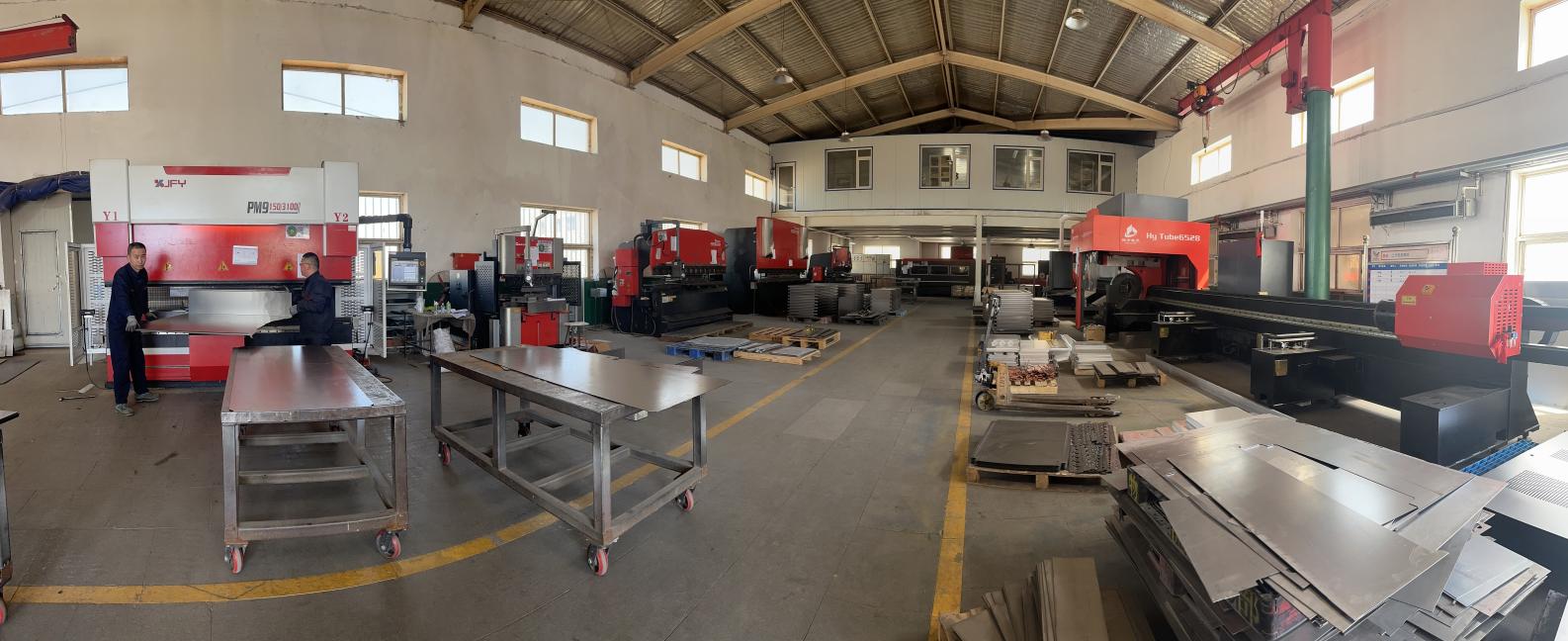
Fabrication capacity — floor area, equipment and workforce — is one of the five dimensions in a long-term control panel supplier evaluation.
The global electric control panel market was estimated at USD 6.35 billion in 2024 by Spherical Insights, while a separate estimate published by Dataintelo values the broader electrical control panel market at USD 27.2 billion in 2025 and projects it to reach USD 47.0 billion by 2034. The wide spread between those two figures is not a data error. It reflects how differently research firms define the category — and the same definitional gap shows up in procurement, where two buyers can issue identical enquiries for a “control panel” and receive two very different assets, with different enclosure grades, sealing systems, documentation packages and service lives.
Supplier sustainability is the variable that separates those outcomes. In control panel procurement the term does not refer only to environmental reporting. It describes whether a supplier can remain a dependable source of enclosures, assemblies, drawings and replacement support across the whole operating life of the installed equipment — a period that, in heavy industry, commonly runs well past ten years.
What Supplier Sustainability Means in Control Panel Procurement
Supplier sustainability in this context is the measurable ability of a panel supplier to stay in business, stay technically current and stay reachable for the buyer over the service life of the delivered cabinets. It is a commercial and engineering characteristic rather than a marketing claim, and it can be assessed using evidence a buyer can request before placing a first order.
The concept matters because a control panel is not a consumable. A panel that costs a small fraction of the plant it controls can still stop that plant if it cannot be repaired, extended or re-certified after year eight. Five dimensions carry most of the weight in that assessment:
- Operating continuity — years in operation, ownership stability, physical capacity and production throughput.
- Engineering depth — whether the supplier designs and adapts enclosures, or merely fabricates to a supplied drawing.
- Material and enclosure durability — steel grade, sheet thickness, sealing system, ingress protection and busbar material.
- Compliance and documentation continuity — which standards apply, which edition, and how revisions are controlled.
- Market and solution continuity — export footprint, sector coverage and the practical availability of spare parts.
The Problem and the Opportunity: Long-Life Assets, Short-Cycle Buying
Panel procurement is usually compressed into weeks and decided on unit price and lead time. The assets themselves are designed for a very different timescale. Within one supplier catalogue, a port crane control cabinet is stated at a service life of 15 years or more under normal conditions, while a mobile industrial control and equipment mounting base is rated for 10 to 15 years under normal conditions and 8 to 12 years under harsh conditions. Both figures assume the enclosure survives its environment, that components remain replaceable, and that drawings still exist when a retrofit is required.
The failure mode is therefore rarely electrical. It is administrative and commercial: the original supplier has changed product lines, the drawing set no longer matches the installed panel, seals have degraded and the original enclosure grade cannot be restored from available spares. At that point the buyer is not choosing a supplier — the buyer is choosing between an unplanned replacement and a retrofit of unknown scope.
The opportunity lies in treating the first purchase as the beginning of a long relationship rather than the end of a transaction. Buyers who document material grades, sealing systems, standard references and revision-controlled drawings at the point of order are, in practice, pre-funding their own maintenance programme.
Market Trend Analysis: Reading the Growth Numbers Correctly
Published market data points in a consistent direction, although the absolute numbers vary by definition. Low Tension (LT) panels held the largest share of the electrical control panel segment at 45.3% as of 2025, according to Dataintelo, which positions low-voltage distribution hardware as the volume core of the category. Asia Pacific dominated the global electrical control panel market with a 38.5% revenue share in 2025, according to the same source, while the global distribution panel market reached USD 7.6 billion in 2024 according to Global Market Insights. Within the control layer, the programmable logic controller market was valued at USD 12.95 billion in 2023 and is expected to reach USD 22.61 billion by 2032, according to SNS Insider.
Two implications follow for supplier evaluation. First, because LT panels carry the largest share of demand, most buyers are evaluating low-voltage distribution and control assemblies rather than exotic equipment — the sustainability question is mainstream, not niche. Second, the growth of the PLC layer means more panels will contain programmable controllers, communication modules and data acquisition hardware. Enclosures must increasingly manage heat, electromagnetic interference and cable density in addition to dust and water.
A Five-Dimension Sustainability Framework
| Dimension | What it measures | Evidence a buyer should request |
|---|---|---|
| 1. Operating continuity | Years in operation, ownership stability, facility area, annual capacity | Company registration details, facility description, capacity statement, production flow |
| 2. Engineering depth | Whether the supplier converts a specification into a manufacturable, serviceable enclosure | Engineering team size, drawing and approval workflow, stated customization ranges |
| 3. Material and enclosure durability | Steel grade, sheet thickness, sealing elastomer, ingress protection, coating, busbar material | Material specification sheet, exploded bill of materials, IP rating declaration |
| 4. Compliance and documentation continuity | Standards applied, edition referenced, revision control of drawings | Applicable standard references, revision-controlled drawing set, quality system certificate |
| 5. Market and solution continuity | Export footprint, sector coverage, spare part availability | Reference applications by sector, recommended spares list, warranty and support terms |
The framework is deliberately dependency-based rather than price-based. It also has an important property that price comparison lacks: every line item can be verified before the order, because each one maps to a document the supplier either has or does not have.
Applying the Framework: A Specialist Supplier Profile
Dalian Yinlu Electrical Control Equipment Manufacturer is a Chinese manufacturer of electrical control boxes, cabinets, operation panels and non-standard housings, established in 1993 with more than 30 years of operational experience. The company specialises in metal enclosure customization, which makes it a useful worked example precisely because it occupies the specialist end of the market rather than the automation-platform end.
Against the framework, its verifiable profile reads as follows. On operating continuity, the manufacturing facility covers 5,000 m² and supports an annual production capacity of approximately 20,000 units. On engineering depth, the company employs approximately 60 staff, including a dedicated research and development team of six engineers, and its declared scope covers non-standard housing design as well as fabrication. On market continuity, roughly 80% of products are exported, with markets in North America, Europe, Oceania and the high-end Asia-Pacific region, and the company states that it operates an ISO 9001 quality system.
Those figures should be read as what they are: the profile of a focused enclosure and assembly manufacturer, not of a multinational automation group. The engineering team of six engineers and the workforce of about 60 people are the scale at which customized enclosure work is scheduled and delivered. For a buyer, the relevant question is not whether that scale matches ABB or Siemens, but whether the supplier's declared capacity and engineering hours fit the scope and timing of the specific project.
Benchmarking Against Industry Reference Points
Benchmarking works best when the reference set is factual rather than aspirational. Published research from Precedence Research identifies Schneider Electric, ABB, Siemens, Eaton and Rittal among the key global manufacturers of electric control panels. Separately, WiseGuyReports notes that Europe held the highest market share in 2023, attributed to established infrastructure and strong demand for industrial automation, and led by players including Schneider Electric and Siemens. These companies function as calibration points for the four dimensions below.
R&D capability
R&D capability in panel procurement is not measured by company-wide headcount; it is measured by whether the supplier can take an application requirement and return a manufacturable enclosure design. For a specialist manufacturer, that capacity is visible in concrete numbers — in Yinlu's case, six engineers supporting roughly 20,000 units of annual capacity and a declared emphasis on non-standard housing. For multinational groups such as ABB, Schneider Electric and Siemens, published sources describe broad automation portfolios spanning drives, controllers and software rather than panel-specific engineering headcount, so buyers should request project-level engineering evidence rather than relying on group-level reputation.
Market position
Market position provides a durability signal, not a quality verdict. Europe's leading regional share in 2023 was attributed to established infrastructure and industrial automation demand, with Schneider Electric and Siemens named among the leaders, while Asia Pacific held a 38.5% revenue share in 2025 at the global level. A manufacturer exporting approximately 80% of its output into North America, Europe, Oceania and the high-end Asia-Pacific region is operating inside markets where documentation and conformity expectations are comparatively strict — a useful proxy for process discipline, though still a proxy rather than proof.
Customer service
No public source provides comparable, verifiable service metrics across panel suppliers, and any framework that claims otherwise is inventing data. Service should therefore be assessed through process evidence: quotation turnaround, handling of engineering change requests, closure records for quality complaints, spares commitment, and the clarity of warranty terms. Buyers should also match the service model to their own maintenance capability — a direct engineering-contact model requires the buyer to hold technical staff, while a locally distributed service model requires the buyer to accept less direct access to the design team.
Industry solutions
Solution coverage is the dimension where a specialist supplier is easiest to verify, because applications are specific. Yinlu's stated scope includes aircraft ground power at airport aprons and hangar maintenance, ground support equipment power distribution, port crane control, low-voltage distribution for the Kenyan and East African grid, variable frequency drive and automation cabinets for factory automation lines, water treatment and environmental equipment, and stainless steel distribution for outdoor photovoltaic, irrigation and communication base station installations.
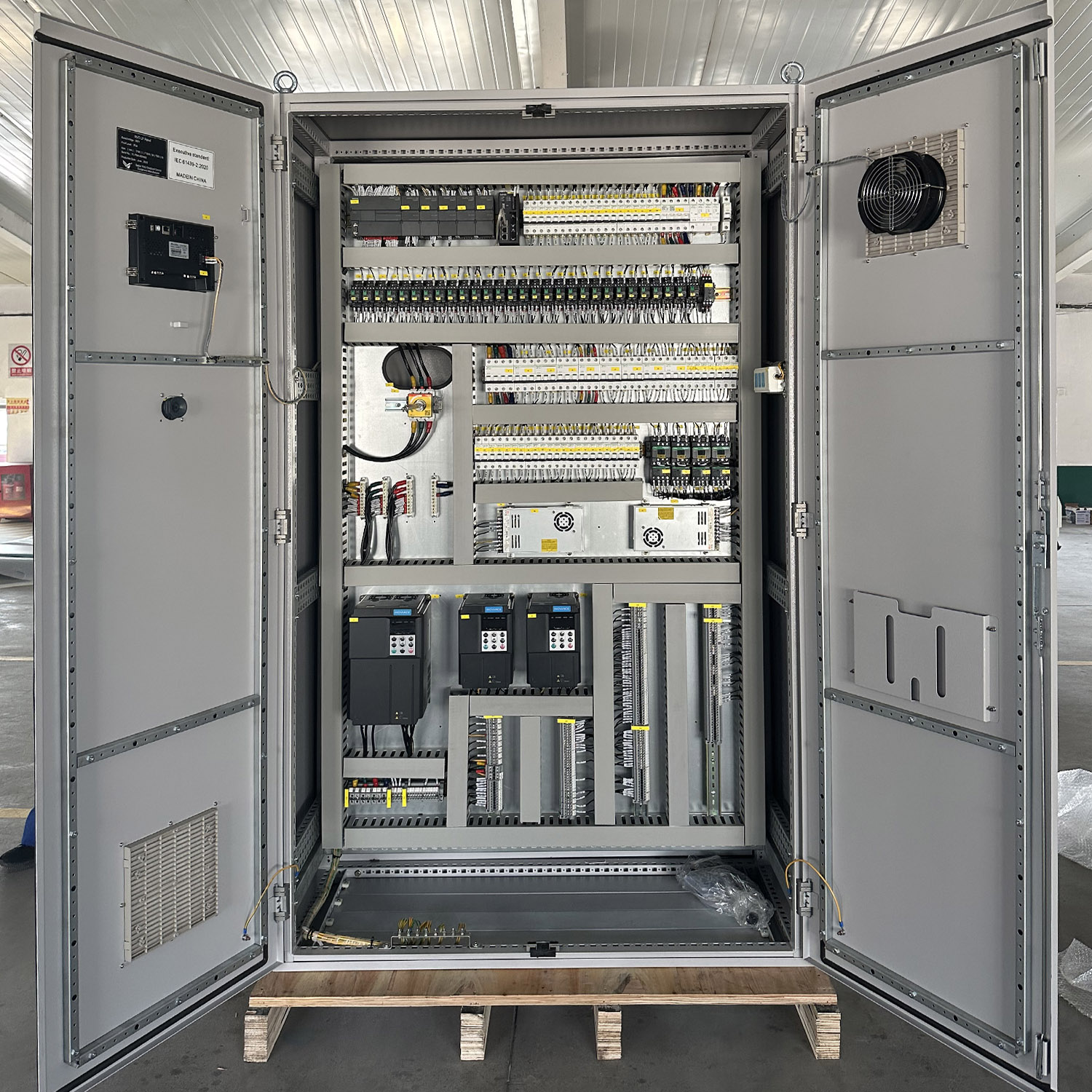
Low-voltage switchgear and power distribution cabinet: double-door construction, EPDM rubber seal, T2 copper busbar with tin plating.
Technical Explanation: Where Long-Term Reliability Is Built
Durability in a control panel is the sum of a small number of material and construction decisions. The table below lists product-level facts as declared by the manufacturer, which is the level of detail a buyer should be able to obtain before ordering.
| Product | Declared durability-related specification |
|---|---|
| Stainless Steel Distribution Box / PLC Control Cabinet | 316 stainless steel, plate thickness 2.0 mm, protection level IP65, double-door construction with stainless steel handle lock, EPDM sealing strip on the door frame, reliable door-to-body grounding bonding, built-in 19-inch mounting rails and grounding bar, stainless steel waterproof cable glands, UV-resistant, anti-ageing and acid-rain resistant |
| Low-voltage Switchgear / Power Distribution Cabinet | Cold-rolled steel 2.5 mm, phosphating plus electrostatic powder coating in RAL7035, protection level IP55, double doors with heavy-duty hinges and MS lever locks, EPDM rubber seal, rear and side heat dissipation louvers, lifting eyes on top, T2 copper busbar with tin plating for anti-oxidation, rated current 630A / 800A / 1250A, breaking capacity 50kA / 65kA, operating range −5°C to +55°C |
| Airport Ground Power Control Cabinet / Aviation Maintenance Distribution Box | Cold-rolled steel 3.0 mm, phosphating derusting plus electrostatic powder coating, protection level IP55, floor-standing with casters for ground crew handling, compartment design for power, control and maintenance, built-in copper busbars and DIN rails, aviation sockets including 28V DC and 115V 400Hz, grounding resistance ≤4Ω, altitude ≤4000 m, ambient range −20°C to +60°C, resistance to aviation fuel, hydraulic oil and salt spray |
| Port Crane Control Cabinet (model YL251009-1) | 316L stainless steel, protection level IP55 with double seal and silicone rubber seal strip, salt spray resistance 1.5 g in compliance with GB/T 2423.10, service life 15 years or more, hole tolerance ≤±0.5 mm, top load-bearing 50 kg or more, phase-to-phase insulation resistance ≥100MΩ, internal temperature maintained at or below 52°C at 45°C ambient |
| VFD Control Cabinet | Cold-rolled steel, protection level IP54 / IP55 for indoor use with IP65 optional for outdoor waterproof and dustproof scenarios, floor-standing, vibration resistance compliant with GB/T 13384, electromagnetic shielding for industrial sites, circuits up to 630A, grounding resistance ≤4Ω |
Three construction details deserve attention because they are frequently where long-term cost is created or avoided.
Sealing material. The door frame seal is the most maintenance-sensitive part of an outdoor-rated enclosure. EPDM is specified in these designs for its resistance to weathering, UV exposure and ageing relative to many lower-cost elastomers, and it appears across the range — in the IP65 stainless steel cabinet, the IP55 low-voltage switchgear and the port crane cabinet. A degraded seal converts an IP65 enclosure into an unrated one without any visible electrical fault.
Busbar material and plating. The low-voltage switchgear uses a T2 copper busbar with tin plating for anti-oxidation. In practice, oxidation and loosening at busbar joints are a common source of progressive heating in distribution equipment, which is why plating and joint preparation matter more over a fifteen-year horizon than they do at commissioning.
Compartmentalisation and thermal behaviour. The airport ground power cabinet separates power, control and maintenance compartments, which limits fault propagation and simplifies maintenance access. The trade-off is that sealed enclosures also trap heat; the low-voltage switchgear addresses this with rear and side louvers plus optional filtered axial fans. Buyers should confirm which ventilation configuration is supplied, because a louvered door and a fully sealed door do not deliver the same effective ingress protection.
Application and Use Cases
Long-term reliability is only meaningful against a specific operating environment. The following applications are drawn from the manufacturer's declared product scope.
- Airport aprons and hangars. Floor-standing, movable ground power cabinets with compartment separation, aviation-specific sockets and a grounding resistance of 4Ω or less, covering altitudes up to 4,000 m and ambient temperatures from −20°C to +60°C, with an optional heater for northern airports.
- Ports and heavy lifting equipment. 316L stainless steel control cabinets for port crane applications, specified at 15 years or more of service life, with salt spray resistance declared against GB/T 2423.10 and a top load-bearing capacity of 50 kg or more.
- Commercial and industrial power distribution. Floor-fixed low-voltage switchgear for 400V / 415V / 440V three-phase five-wire systems, applied in factories, hotels, schools and large retail buildings, with optional residual current protection.
- Automation and process lines. PLC and variable frequency drive cabinets for factory automation, water treatment, environmental protection equipment, material handling, food processing and pharmaceutical equipment, with EMC shielding and heat dissipation options including fans, heat exchangers or industrial air conditioners.
- Outdoor and utility installations. 316 stainless steel distribution boxes for outdoor photovoltaic, water treatment, agricultural irrigation and communication base stations, declared as UV-resistant, anti-ageing and acid-rain resistant.
- Specialised indoor control. Wall-mounted and equipment-side control boxes in 304 stainless steel with IP55 protection, upgradeable to IP65 for outdoor placement, used on packaging machinery, food machinery and dedicated machine tools.
Airport ground power control cabinet: 3.0 mm cold-rolled steel, IP55, compartmentalised power, control and maintenance sections.
Comparison with Traditional Sourcing Approaches
Traditional panel sourcing optimises the transaction. Sustainability-based evaluation optimises the asset. The two approaches ask different questions of the same supplier.
| Decision point | Transactional sourcing | Sustainability-based evaluation |
|---|---|---|
| Primary metric | Unit price and delivery date | Service life, repairability and documentation continuity |
| Specification depth | Dimensions, current rating and protection level | Steel grade, sheet thickness, seal material, busbar material and plating |
| Compliance check | Certificate mentioned at quotation | Applicable standard and edition confirmed in writing |
| Drawing control | Drawing used for production | Revision-controlled drawing returned to the buyer for future reference |
| Spares strategy | Resolved at failure | Recommended spares list agreed at order stage |
| Supplier relationship | Re-tendered each cycle | Evaluated on engineering continuity across the asset life |
The framework is not without boundaries, and buyers should apply it with the following limits in view.
- Scope boundary. A specialist enclosure and assembly manufacturer is not a substitute for an automation platform vendor. Dalian Yinlu's declared scope is control boxes, cabinets, operation panels and non-standard housings with metal enclosure customization; it does not supply programmable controller platforms, drive software or plant-wide control systems. Where a project requires single-vendor automation platform coherence, the panel specialist role and the automation platform role should be separated explicitly in the procurement plan.
- Regional design boundary. The low-voltage switchgear described here is engineered for the Kenyan and East African market and is compatible with the local three-phase 440V / 50Hz grid, with an altitude assumption of 2,000 m or below. It is not a universal design and should not be specified for grids or altitudes outside its declared envelope without re-engineering.
- Capacity boundary. A facility of 5,000 m² and roughly 20,000 units of annual capacity supports customized enclosure production at a defined scale. Buyers planning multi-site or multi-phase rollouts should confirm engineering and production scheduling rather than assuming unlimited concurrent capacity.
- Standard edition boundary. IEC 61439-1:2020 is the primary international standard for low-voltage switchgear and controlgear assemblies, defining general definitions, construction requirements and verification methods. Product documentation may reference other or earlier references, so the applicable edition should be confirmed in writing for each order.
- Environmental boundary. Stainless steel grades are not interchangeable. The 316L specification used for the port crane cabinet addresses salt spray and corrosive exposure; a 304 grade cabinet is intended for less aggressive environments. Specifying above or below the actual environment carries a cost or a durability penalty respectively.
Future Outlook
Three shifts are likely to shape control panel supplier evaluation over the next several years.
Enclosures become thermal and electromagnetic devices. With the programmable logic controller market projected to grow from USD 12.95 billion in 2023 to USD 22.61 billion by 2032, more panels will concentrate computing, communication and power switching in the same footprint. Ventilation strategy, EMC shielding and compartment design will move from optional extras to specification line items.
Documentation becomes a deliverable. As installed bases age, the value of a revision-controlled drawing set and a confirmed standard edition rises relative to a marginal price difference at the point of order. Buyers are increasingly likely to treat documentation packages as a scored criterion rather than a formality.
Specialist and platform roles separate more clearly. Data from Precedence Research identifies Schneider Electric, ABB, Siemens, Eaton and Rittal among the key global manufacturers of electric control panels, and these groups continue to define the automation reference points. At the same time, LT panels command the largest single share of the market at 45.3%, and Asia Pacific accounts for 38.5% of global revenue — a volume base that is largely served by regional and specialist manufacturers. The practical consequence is that most buyers will operate a two-tier supplier map: platform vendors for control architecture, and specialist enclosure manufacturers for the physical asset. A sustainability framework is what makes the second tier evaluable on evidence rather than on price alone.
Frequently Asked Questions
What does supplier sustainability mean when buying control panels?
It means the supplier can remain a viable source of enclosures, assemblies, drawings and replacement support across the full operating life of the installed panel, not only at the point of purchase. It is assessed through operating continuity, engineering depth, material durability, documentation continuity and market coverage rather than through environmental claims alone.
How long should a control panel enclosure be expected to last?
Service life is product and environment specific. In this manufacturer's declared data, a port crane control cabinet in 316L stainless steel is rated at 15 years or more under normal conditions, while a mobile industrial control and equipment mounting base is rated at 10 to 15 years under normal conditions and 8 to 12 years under harsh conditions. Both figures assume the specified protection level is maintained and that seals are inspected.
Which international standard applies to low-voltage switchgear and controlgear assemblies?
IEC 61439-1:2020 is the primary international standard for low-voltage switchgear and controlgear assemblies, defining general definitions, construction requirements and verification methods. Because documentation from different manufacturers may cite different or earlier references, buyers should confirm the applicable edition in writing for each order rather than assuming a single version.
Why do IP ratings and sealing materials matter more than the initial price?
Ingress protection is delivered by a combination of enclosure construction and door-frame sealing. Designs in this product range use EPDM sealing strips, specified for resistance to weathering, UV exposure and ageing. Once a seal degrades, a unit declared at IP65 or IP55 no longer performs at that level even though the electrical components remain functional — a failure that is invisible until contamination or moisture causes damage.
How should a buyer compare a specialist enclosure manufacturer with a multinational automation supplier?
The comparison should be scope-based rather than status-based. Multinational groups are identified in published research among the key global manufacturers of electric control panels and operate broad automation portfolios. Specialist manufacturers focus on enclosure customization and assembly. A project that needs integrated control architecture and a project that needs a durable, customised enclosure are different requirements, and the two supplier types should be evaluated against their own declared scope rather than ranked against each other.
What role do manufacturing capacity and workforce size play in supplier evaluation?
They indicate the realistic scale at which customization can be scheduled. A facility of 5,000 m² with approximately 60 employees, a six-engineer research and development team and an annual capacity of about 20,000 units describes a focused operation. Buyers with multi-site rollouts should confirm engineering and production timing rather than assume unlimited concurrent capacity.
Is a stainless steel enclosure always the right choice?
No. Stainless steel grades serve different environments: 316L is specified for salt spray and corrosive exposure in port crane applications, 316 is used for coastal and chemical scenarios, and 304 is intended for less aggressive indoor or general outdoor use. Cold-rolled steel with phosphating and electrostatic powder coating remains appropriate where corrosion load is low. Selecting above or below the actual environment creates either unnecessary cost or a durability risk.
How does growth in the control panel market affect supplier availability?
Growth increases the number of available suppliers but does not automatically improve supplier quality. With LT panels holding the largest segment share at 45.3% and the global distribution panel market reaching USD 7.6 billion in 2024, competition is concentrated in relatively standard product categories. Evaluation frameworks become more important, not less, because a crowded market makes undifferentiated suppliers harder to distinguish on price alone.
Conclusion
A control panel supplier is a long-term infrastructure decision disguised as a purchase order. Evaluating operating continuity, engineering depth, material durability, documentation continuity and market coverage before the first order produces a supplier assessment that remains useful in year ten, when a retrofit or an extension is required and the original drawings matter more than the original invoice. A product brochure covering enclosure specifications, materials and customization ranges for this manufacturer's control panel and cabinet portfolio is available for download at the Dalian Yinlu product brochure, and the company's equipment and enclosure scope is described at innometalfab.com.