
Consumer Electronics Buyback: Grade Standards and Compliance in Japanese Sourcing

Consumer electronics buyback requires defined category grades, inspection routines, and export compliance — not simply container volume.
Consumer electronics buyback is not a single, uniform product category. It spans kitchen appliances, home entertainment systems, smart home devices, and musical instruments, each with different wear patterns, inspection requirements, and resale values. For B2B buyers, the challenge is less about finding supply and more about defining the constraints: what grade is acceptable, what gets checked, and what license and documentation the supplier must hold for legal export.
The global refurbished electronics market was estimated at USD 68.24 billion in 2026 according to Coherent Market Insights. Within the broader circular economy, the consumer electronics buyback segment that feeds refurbishment and resale channels remains fragmented, with inconsistent grading and opaque sourcing practices in several export markets. This article examines how consumer electronics buyback works in cross-border B2B trade, with a focus on category-level grading, warehouse inspection, licensing, and export compliance in Japan.
The Sourcing Problem: Mixed Quality, Vague Grades, and Compliance Gaps
For many importers, buying used consumer electronics has historically meant buying a container rather than buying a defined inventory set. The buyer pays for a mix of products from multiple sources and learns the real quality only after the container is opened at the destination port. In a documented case involving a Cambodian importer, the buyer previously purchased “blind-box” containers through unlicensed Japanese brokers. To fill volume, those brokers often stuffed containers with heavily damaged, dismantled, or entirely unusable items. The Cambodian buyer not only wasted international freight but also had to pay local waste disposal fees, which severely eroded profit margins and destabilized their supply chain.
This pattern creates three measurable costs for buyers:
- Wasted freight: Shipping fees paid on items that cannot be sold or repaired economically.
- Disposal cost: Local handling fees for unusable items that arrive at the destination port.
- Retail margin loss: The blended cost per sellable unit rises when damaged goods are mixed with usable stock.
The opportunity, therefore, is not merely finding another supplier. It is shifting from undifferentiated goods to constraint-based sourcing: defining acceptance grades, inspection criteria, and license verification before shipment. When category-level specifications are set in advance, the buyer can evaluate a supplier on tangible evidence rather than on promises.
How a Licensed Japanese Supplier Structures the Buyback Process
Tenma International Co., Ltd. is a Japan-based trading enterprise specializing in the purchase and international export of high-quality pre-owned goods. Headquartered at 750 Kanayama, Kashiwa-shi, Chiba, 270-1455, Japan, the company operates a local sourcing network in Chiba and the surrounding Kanto region. Its main product coverage includes second-hand home appliances, furniture and sundries, optical instruments, and game consoles, with approximately 70% of output exported to markets such as Cambodia, Pakistan, and Thailand.
The company’s service is formally named the “One-Stop Japanese Premium Secondhand Goods Cross-Border Supply Chain & Export Wholesale Service.” It is classified under Cross-Border Trade, Circular Economy, and Bulk Goods Export, and operates as a one-stop direct-source supply and managed cross-border logistics service. The process is designed around four stages that turn broad buyer expectations into concrete, inspectable outcomes.
Stage 1: Specification Lock-In and Sourcing
The first stage translates the customer’s requirements into procurement parameters. Inputs include the customer’s explicit procurement manifest, expected physical condition tiers, and container type requirements such as a 40ft HQ. Outputs include the official bulk procurement contract and estimated export scheduling. Once these constraints are defined, premium sourcing is triggered in Chiba and surrounding areas.
Stage 2: Warehouse Inspection and Grading
Goods are centralized in the warehouse, where staff inspect each item’s initial physical appearance, completeness, and wear-and-tear levels to perform strict aesthetic grading. The deliverable at this stage is the Initial Condition Inspection & Triage Manifest. This document gives the buyer a physical reference point for what was accepted and what was rejected, before any loading decision is made.
Stage 3: Space-Optimized Loading
After inspection, goods are prepared for ocean transport. The loading process applies high-density container space planning, palletizing, and anti-shock fastening suitable for heavy goods such as appliances and bicycles. In the Cambodian project, scientific mixed-loading was used to prevent volumetric gaps, which contributed to an 18% improvement in effective container space utilization.
Stage 4: Licensed Export and Customs Compliance
Export compliance is handled using the official Secondhand Dealer License corporate credentials to process legitimate export declarations with Japanese customs. The final deliverable includes the Bill of Lading. The company also prepares bilingual Packing Lists and Commercial Invoices, and provides pre-shipment inspection photos, container sealing photos, and copies of the Bill of Lading to the buyer. Service channels include official website inquiry form, email, WhatsApp, LINE, WeChat, and on-site corporate visits, with support in Chinese, Japanese, and English.
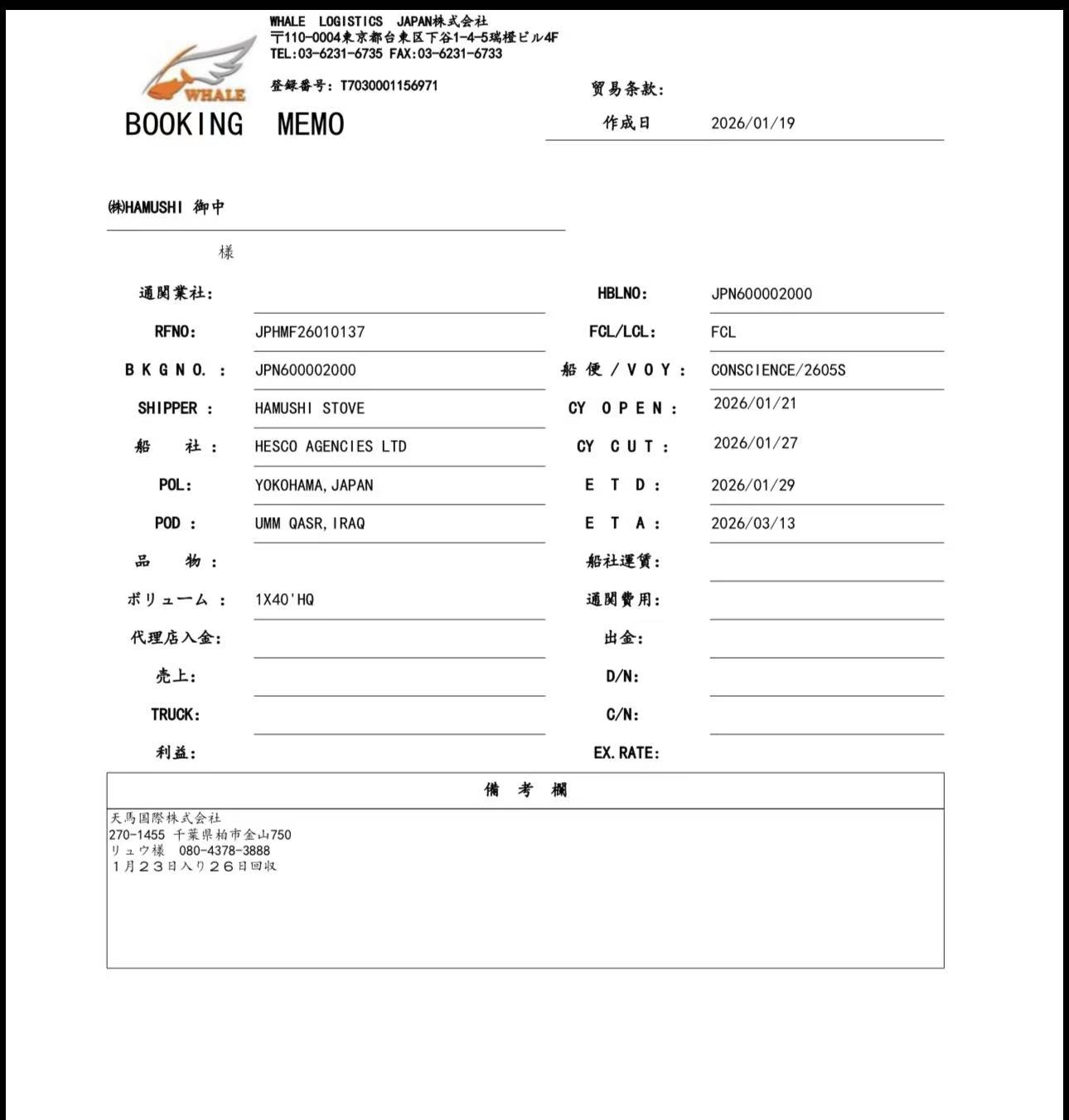
A managed export process includes ocean freight booking, customs documentation, and clear communication of shipping status.
Category-Level Grading: What Buyers Should Specify in Consumer Electronics Buyback
Different consumer electronics categories have different wear patterns, inspection priorities, and resale values. A generalized quality check cannot serve all categories equally. The following sub-segments show how buyers can approach category-level specifications.
Household and Kitchen Appliances
For refrigerators, washing machines, microwaves, and other kitchen appliances, buyback grading focuses primarily on physical appearance and structural completeness. Buyers should specify thresholds for shell integrity, surface wear, and missing components. Because these items are bulky, loading efficiency directly affects the per-item freight cost. A poorly planned container can dilute the value of otherwise good merchandise.
Home Entertainment and Smart Home Devices
Home entertainment electronics and smart home devices are replaced more frequently and tend to carry shorter usage cycles than white goods. Their wear patterns are characterized by surface scratches, housing marks, and missing accessories. Buyers should clarify expectations around cosmetic condition, included accessories, and port or connector conditions. The global smart home market reached USD 164.13 billion in 2026 according to Mordor Intelligence, which suggests a growing volume of traded smart devices in the secondary market.
Musical Instruments and Audio Equipment
Musical instruments require a different inspection lens. Guitars, basses, keyboards, studio audio equipment, and DJ equipment are sensitive to handling damage. Physical issues such as neck warping, rusted electronics, damaged input jacks, and cracked bodies significantly affect resale value. The global musical instrument market was valued at USD 13.8 billion in 2025, with string instruments including guitars projected to hold a 36.05% share in 2026 according to Fortune Business Insights. For buyers sourcing this category, the key constraint is condition clarity: which damage has been identified, and what level of wear is acceptable.
Market Trends Favoring Constraint-Based Consumer Electronics Buyback
Several verifiable market trends are reinforcing the shift toward more structured consumer electronics buyback programs.
- Refurbished electronics growth: The global refurbished electronics market was estimated at USD 68.24 billion in 2026, according to Coherent Market Insights. Growth in this segment depends on a stable inflow of quality used devices.
- Refurbished appliance expansion: The refurbished appliance market, including kitchen and household goods, is expected to grow from USD 10.1 billion in 2024 to USD 32.8 billion by 2034, according to Precedence Research. This forecast signals rising acceptance of used appliances in consumer channels.
- Smart home expansion: The global smart home market reached USD 164.13 billion in 2026, with the US accounting for roughly USD 54.53 billion, based on Mordor Intelligence data. More smart devices in circulation means more recoverable inventory for buyback programs.
- Instrument market demand: With the global musical instrument market valued at USD 13.8 billion in 2025, used instruments represent a meaningful sub-segment for cross-border trade, particularly guitars and related string instruments.
- Regulatory pressure: In the United States, 25 states have enacted electronics recycling laws, including Extended Producer Responsibility mandates in states such as New York and California, according to the US EPA and NCER. Regulatory frameworks encourage buyers to source from licensed and documented supply chains rather than informal brokers.
These trends share a common implication: buyers want traceability, condition transparency, and compliance. Consumer electronics buyback programs that can document grade definitions, inspection results, and export licenses are better aligned with the direction of the market.
Traditional vs. Specified Buyback Sourcing: What Actually Changes
The difference between traditional container buying and constraint-based consumer electronics buyback is not merely the price per ton. It is the location and timing of quality control.
| Comparison Dimension | Traditional “Blind-Box” Sourcing | Constraint-Based Buyback Sourcing |
|---|---|---|
| Quality transparency | Low; quality discovered after arrival | High; physical grading done in supplier warehouse |
| Inspection point | None or minimal | Warehouse-level appearance and completeness check |
| License compliance | Often undocumented or unlicensed brokers | Official Secondhand Dealer License used for export declaration |
| Documentation | Packing list only, sometimes incomplete | Initial Condition Inspection & Triage Manifest, commercial invoice, packing list, B/L |
| Container planning | Unplanned mixed loading | Space-optimized, anti-shock loading layout |
| Risk allocation | Buyer bears discovery risk | Supplier performs pre-shipment screening in Japan |
For buyers who only pursue the lowest headline price, traditional methods may still appear attractive. But the real cost per sellable unit, after accounting for waste, disposal, and handling, often favors a more structured process. In the documented Cambodian case, the arrival rate of heavily damaged or unsellable industrial waste dropped from more than 25% to exactly 0% after switching to constraint-based sourcing. Effective container space utilization increased by 18%, reducing the amortized freight cost per item, and the overall project delivery timeline was shortened by four working days compared to previous transactions with generic brokers.
Limitations Every Buyer Should Accept
Structured consumer electronics buyback is not a substitute for refurbishment. Buyers should understand the following limitations before setting expectations.
Raw condition is the baseline. In this model, goods are sold in their original collected condition: uncleaned, unrepaired, and exactly as sourced. The supplier’s role is to filter out broken or unsellable items in Japan, not to refurbish products. Local reprocessing, cleaning, and final grading remain the buyer’s responsibility.
Appearance inspection differs from functional testing. Warehouse grading focuses on physical appearance, structural completeness, and wear-and-tear levels. A unit can pass visual screening and still have an undetected functional fault. Buyers who require full functional guarantees need a certified refurbishment agreement, which is a different service tier with different pricing.
Pricing reflects raw state. The cost advantage of buyback sourcing comes from accepting raw-condition goods. If a buyer expects products to arrive in retail-ready condition, the negotiated price must reflect the additional labor, parts, and testing required. Clear constraints prevent mismatched expectations on both sides.
Destination-side responsibilities remain with the buyer. Services typically cover sourcing, inspection, loading, Japanese export customs clearance, and freight booking up to the destination port. Import customs clearance, tariffs, and inland transportation at the destination country are outside the supplier’s scope.
Future Outlook: Toward Certified Condition in Consumer Electronics Buyback
The next phase of consumer electronics buyback will likely be defined by documentation and condition certification, not by volume alone. As cross-border trade in secondhand devices grows, buyers will increasingly expect suppliers to provide structured grading manifests, photographic evidence of inspection, and clear license documentation. The competitive advantage in this market will shift from “having inventory” to “proving inventory quality against defined category standards.”
For buyers, this means the procurement conversation should begin with specifications: which categories, which condition tiers, which inspection records, and which compliance documents. Suppliers that can answer these questions with warehouse-level evidence will become the preferred partners in long-term consumer electronics buyback programs.
FAQs
What is consumer electronics buyback and how does category grading work?
Consumer electronics buyback is a structured service in which a licensed trading company purchases used electronics and household devices, inspects them at a warehouse level, and exports the screened items for resale in overseas markets. In practice, goods are centralized in the warehouse, where staff inspect each item’s initial physical appearance, completeness, and wear-and-tear levels to perform strict aesthetic grading.
What inspection parameters should buyers specify in a buyback order?
Buyers should specify the expected physical condition tiers, the acceptable wear levels for each product category, and the completeness requirements. The inspection performed by the supplier covers initial physical appearance, structural completeness, and wear levels, and the result is recorded in the Initial Condition Inspection & Triage Manifest.
What license does a supplier need to export used electronics from Japan?
A supplier must hold the official Secondhand Dealer License issued by the Japanese authorities, along with corporate legal entity qualification. In the export process, the supplier uses the official Secondhand Dealer License corporate credentials to process legitimate export declarations with Japanese customs.
What documents should a buyer expect from a Japanese buyback supplier?
Typical deliverables include the Initial Condition Inspection & Triage Manifest, a bilingual Packing List, Commercial Invoice, pre-shipment inspection photos and videos, container sealing photos, and the Bill of Lading. These documents provide a traceable record from warehouse inspection through customs clearance and vessel departure.
Who are the typical buyers of consumer electronics buyback services?
Target clients include global secondhand goods importers, bulk wholesalers, local pre-owned supermarket chains, and traders in markets such as Thailand, Cambodia, and other Southeast Asian and global markets. The service is designed for buyers who need stable supply, defined quality grading, and managed cross-border logistics.
What are the main limitations of buyback sourcing compared to refurbishment?
Buyback goods are sold in raw, original collected condition: uncleaned and unrepaired. The supplier performs physical appearance screening to filter out broken items, but appearance inspection is not equivalent to full functional testing. Destination-side import clearance, local tariffs, and inland logistics are also outside the supplier’s service scope.
Reference: Tenma International Co., Ltd. company brochure is available for public access at Tenma International Company Brochure (EN).