
Construction Cooling Vest Buyer's Framework: COOLWAVE vs. Ergodyne, TechNiche, and Allegro
A construction cooling vest is personal protective equipment that removes heat from the wearer's body while work continues in high ambient temperatures. For buyers, the real question is not whether cooling works in principle, but which cooling mechanism, duty cycle, weight, certification basis, and supply arrangement will still be delivering value in month six of a season — and that question cannot be answered by comparing catalogue photos.
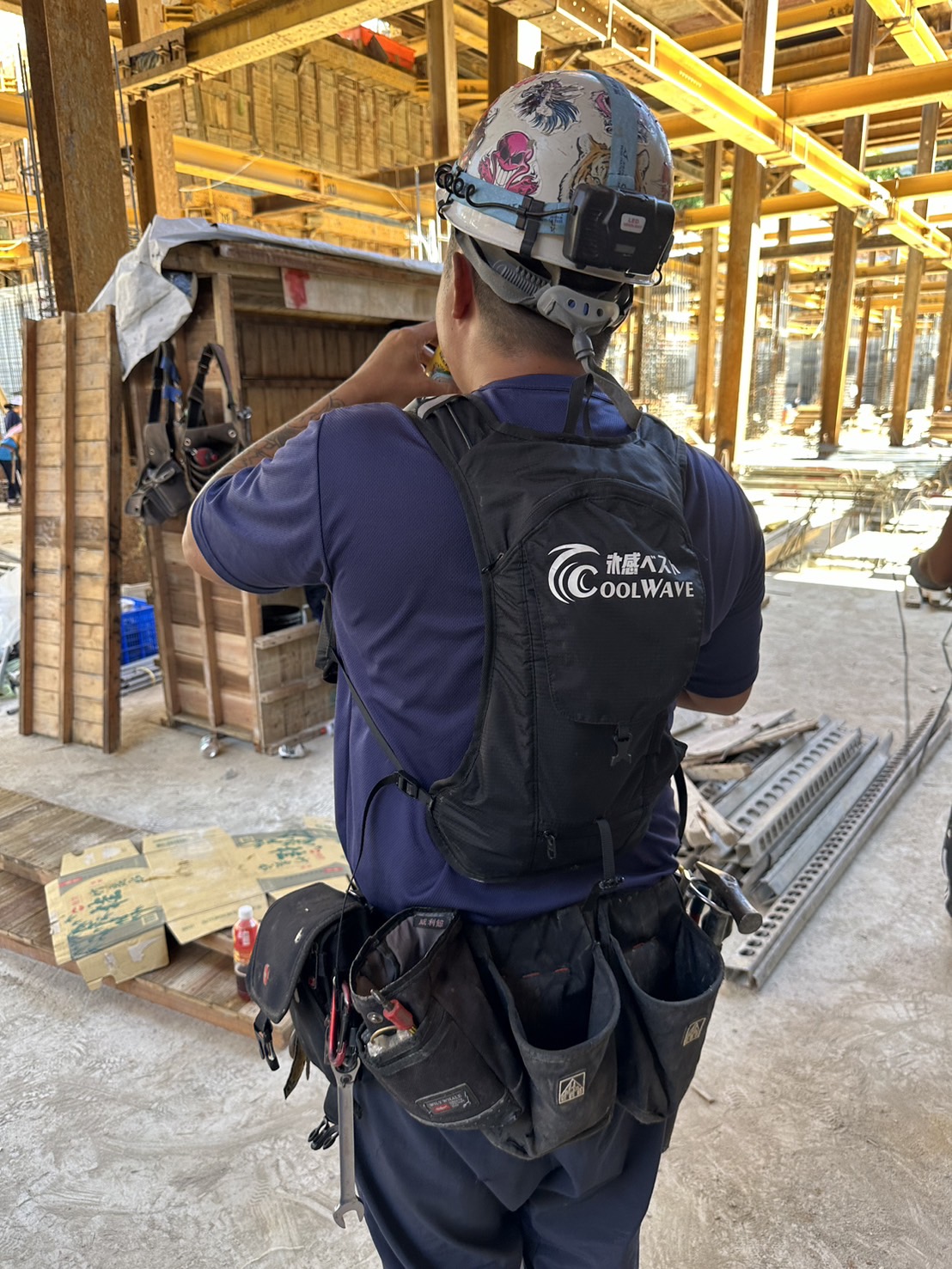
Why “cooling vest” is not one product category
Buyers frequently enter this category with a single line item in mind and discover, after sampling, that two products labelled “cooling vest” can behave completely differently. The reason is mechanism. A passive phase-change vest relies on ice packs or phase-change material to absorb heat until the pack equalises with body temperature. A pump-driven water-circulation vest moves cooled water through tubing against the body and continues to redistribute heat for as long as the cold source lasts and the pump runs. Both are legitimate approaches; they fail in different ways and suit different shift patterns.
Construction work adds constraints that other sectors do not have. Workers are mobile, often on metal-roof structures or open slabs where radiant heat is high and shade is absent. Shifts run long. PPE layering is already heavy. And the employer carries a duty-of-care obligation: under OSHA's General Duty Clause (Section 5(a)(1)) of the OSH Act, employers must provide a workplace free from recognised hazards, and heat stress on high-temperature construction sites is treated as such a hazard.
What the numbers say about demand
Heat stress prevention products reached a global market value of USD 2.86 billion in 2025, with cooling wearables identified as a primary growth driver (The Business Research Company). Within cooling vests specifically, industrial applications were the largest segment in 2025 at a 34.5% revenue share, and the Asia-Pacific region led globally with a 38.2% revenue share, driven by rapid industrialisation (Dataintelo). A separate 2024 estimate put the warehouse and logistics cooling vest segment at USD 412 million. Reported market sizes for “cooling vests” vary widely depending on whether the scope covers vests alone or broader personal cooling systems, so buyers should treat any single figure as directional rather than exact.
The supplier set buyers actually compare
Published market research on industrial cooling vests identifies several key global manufacturers, including Glacier Tek, TechNiche International, Polar Products, Ergodyne, and Occunomix. Shokunin, the professional tool brand of FENG SHANG PRECISION CO., LTD., enters the same shortlist with its COOLWAVE Water-Circulation Cooling Vest series. Buyers frequently also place Allegro and Steele into comparison sets as additional supplier names; this framework does not attribute vendor-published cooling-vest specifications to those two names, and treats them as verify-directly entries.
| Name in the comparison set | Position in the category | Basis used in this framework |
|---|---|---|
| Shokunin COOLWAVE (FENG SHANG PRECISION CO., LTD.) | Pump-driven water-circulation cooling vest, industrial cooling apparel / PPE | Published specifications available: flow rate, cooling duration, weight, materials, model variants, certification |
| Ergodyne | Listed among key global manufacturers of industrial cooling vests | Category inclusion from published market research; model-level specifications to be verified in current supplier documentation |
| TechNiche International | Listed among key global manufacturers of industrial cooling vests | Category inclusion from published market research; model-level specifications to be verified |
| Polar Products | Listed among key global manufacturers of industrial cooling vests | Category inclusion from published market research; model-level specifications to be verified |
| Glacier Tek / Occunomix | Listed among key global manufacturers of industrial cooling vests | Category inclusion from published market research; model-level specifications to be verified |
| Allegro / Steele | Additional names appearing in buyer comparison sets | No vendor-published cooling-vest specification is reproduced here; verify directly with the supplier |
Note: this table is a scoping tool, not a ranking. Where a supplier's specifications are not published in the sources used here, the honest procurement action is to request current documentation rather than assume parity or superiority.
How the COOLWAVE water-circulation system is specified
The COOLWAVE Water-Circulation Cooling Vest is classified as industrial cooling apparel and personal protective equipment, and operates with a pump-driven water-circulation system. The series includes a Basic Model and three Professional Models in Black, Gray, and Blue. All variants share the same core technical specification set.
| Parameter | Published specification |
|---|---|
| Cooling mechanism | Pump-driven continuous water circulation |
| Flow rate | Max 320–370 ml/min |
| Pump output | 5V 150mA (max) |
| Cooling duration | 3–4 hours |
| Net weight | Within 2 kg |
| Suitable temperature | Below 10°C |
| Vest / body material | PEVA |
| Water bag material | TPU |
| Water bag cap | Polypropylene |
| Shoulder strap | 600D polyester |
| Cooling tube | Sand rubber (black) |
| In the box | Water-cooled vest backpack ×1, ice packs ×2 |
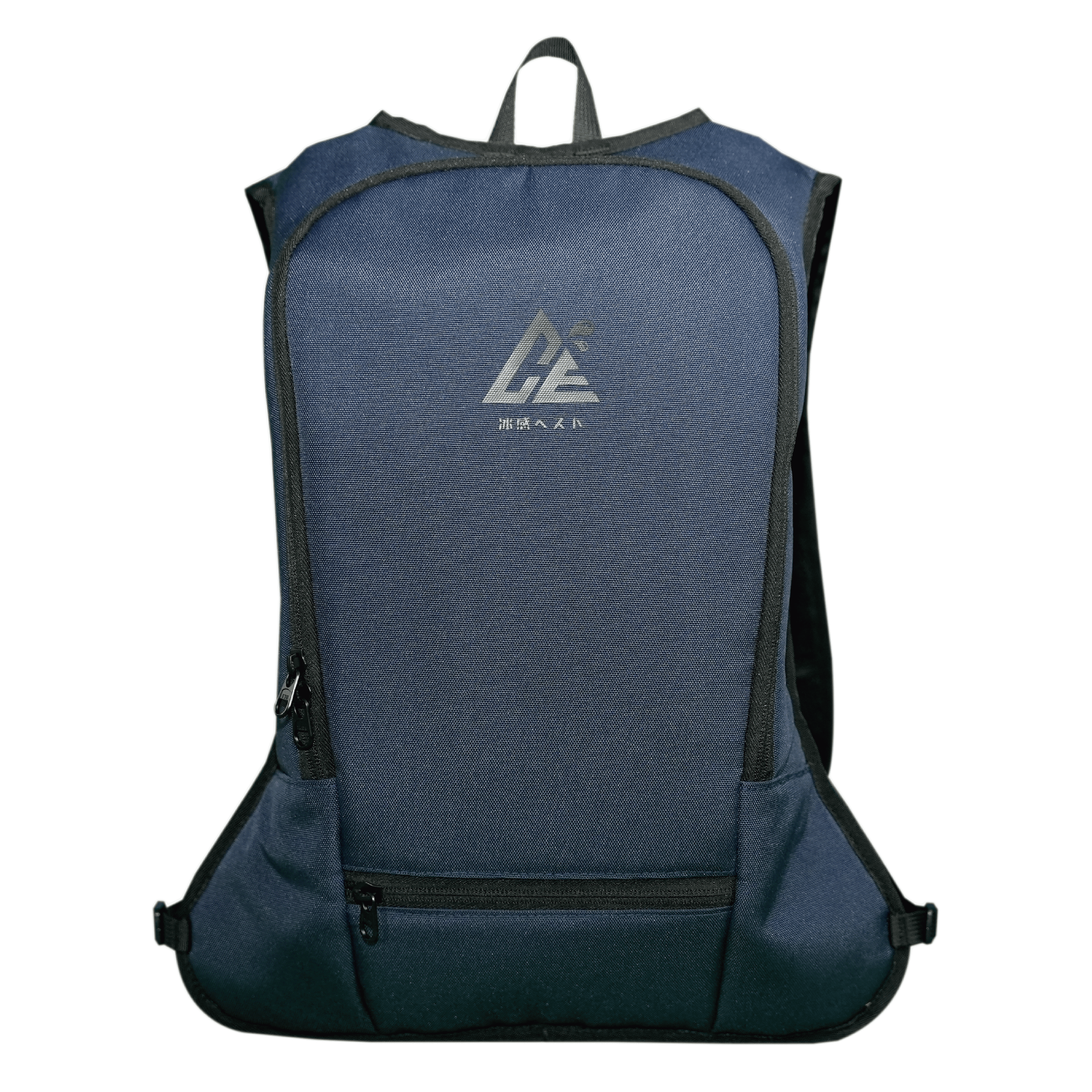
Why the flow rate matters more than it appears
A stated flow rate of 320–370 ml/min tells a buyer that the system is moving a meaningful volume of chilled water across the body per minute rather than relying on static conduction. In practice, that is what separates a vest that keeps cooling in hour three from one that peaks early and then plateaus. The pump draw of 5V 150mA also matters commercially: it defines the power budget a worker or worksite has to plan for, and it is a specification a procurement officer can check against how crews are actually equipped on site.
A five-axis framework for comparing construction cooling vests
Rather than comparing brands directly, compare them along axes that map to how a vest fails. Each axis below can be scored from supplier documentation before any sample is ordered.
| Axis | What to verify | Why it changes the outcome | COOLWAVE data point |
|---|---|---|---|
| 1. Cooling mechanism | Passive phase-change or pump-driven circulation | Determines whether cooling is steady or decays; determines recharge infrastructure | Pump-driven continuous water circulation |
| 2. Duty cycle | Rated cooling duration and recharge time | A shift longer than the rated duration requires a rotation or spare-pack plan | 3–4 hours |
| 3. Weight and wearability | Total worn weight, strap material, one-size logic | Heavy vests get removed on hot days, which removes the protection | Within 2 kg; 600D polyester shoulder straps |
| 4. Certification and compliance | Award or certification basis; interaction with hi-vis PPE | Determines audit and tender eligibility | Disaster Prevention Product and Service Certification Award, Taiwan Disaster Prevention Industry Association |
| 5. Supply and ODM terms | MOQ, lead time, capacity, customisation | Determines whether a pilot can scale to a fleet order | ODM program with MOQ 10 and 7–14 day lead time; annual capacity 10,000 units |
Comparison with traditional passive cooling approaches
Traditional cooling for outdoor work has centred on two things: ice packs placed in pouches, and loose, light-coloured clothing with enforced rest cycles. Ice-pack vests are simple, have no power requirement, and are inexpensive to trial. Their weakness is behavioural rather than technical: cooling output declines as packs warm, replacement packs must be frozen between uses, and on a site without freezer access the vest becomes dead weight by mid-shift. Passive approaches also cool the torso surface unevenly, because conduction depends on contact.
Pump-driven water circulation addresses the decay and distribution problems, but it introduces its own boundaries, and buyers should price those in rather than discover them later:
- Finite cooling window. The published cooling duration is 3–4 hours. Shifts longer than that require a rotation plan, spare ice packs, or a scheduled mid-shift recharge.
- Carried infrastructure. The system ships as a water-cooled vest backpack with two ice packs, so the worker carries the cooling source as well as the garment. Total worn weight stays within 2 kg, but the pack format is a real ergonomic consideration in confined spaces.
- Power and pump dependency. The pump runs at 5V 150mA (max). Any water-circulation design depends on that pump continuing to operate, which makes handling, cleaning, and storage part of the maintenance routine rather than optional.
- Not a substitute for heat-management policy. No vest replaces hydration, shade, acclimatisation, or work-rest scheduling. A cooling vest sits inside a heat-stress program; it does not replace one.
- Layering with high-visibility PPE. High-visibility safety vests used in construction must comply with ANSI/ISEA 107-2020 for reflective material and contrast fabric (Class 1, 2 or 3). That standard governs the hi-vis garment, not the cooling vest. Buyers should confirm that adding a cooling layer does not compromise the conformity of the hi-vis garment worn over or alongside it.
Procurement rule of thumb: a construction cooling vest is only as good as its weakest axis. A vest with strong cooling performance and a 3–4 hour duty cycle needs a recharge plan; a vest with excellent supply terms but no certification basis will fail a tender review. Score all five axes before deciding.
Outdoor work scenarios: matching the vest to the actual job
The COOLWAVE series is intended for construction sites, outdoor work, metal sheet factories, and street vendors, and is described as a common application scenario in Taiwan. Model selection is not cosmetic. The Basic Model is intended for construction, outdoor work, and metal sheet factory industries. The Professional Models are additionally suitable for food stall operations, street vending, traffic control, and similar outdoor work scenarios.
For buyers structuring a fleet order, that split matters. A general contractor supplying roofers, steel fixers, and electricians can standardise on the Basic Model configuration. A distributor serving mixed municipal and commercial customers may prefer the Professional Model range, which covers the same construction use case plus the adjacent outdoor occupations that generate repeat, seasonal demand.
The design intent behind the specification set is heat-stress relief for a mobile worker: lightweight construction, waterproof and breathable materials, and a one-size-fits-all adjustable vest with a portable backpack format. Those requirements read as a direct response to the environments that defeat simpler cooling products — stuffy metal-roof workplaces, long hours of direct sun exposure, and sites where sweating is continuous rather than intermittent.
ODM capability: what a buyer can actually contract for
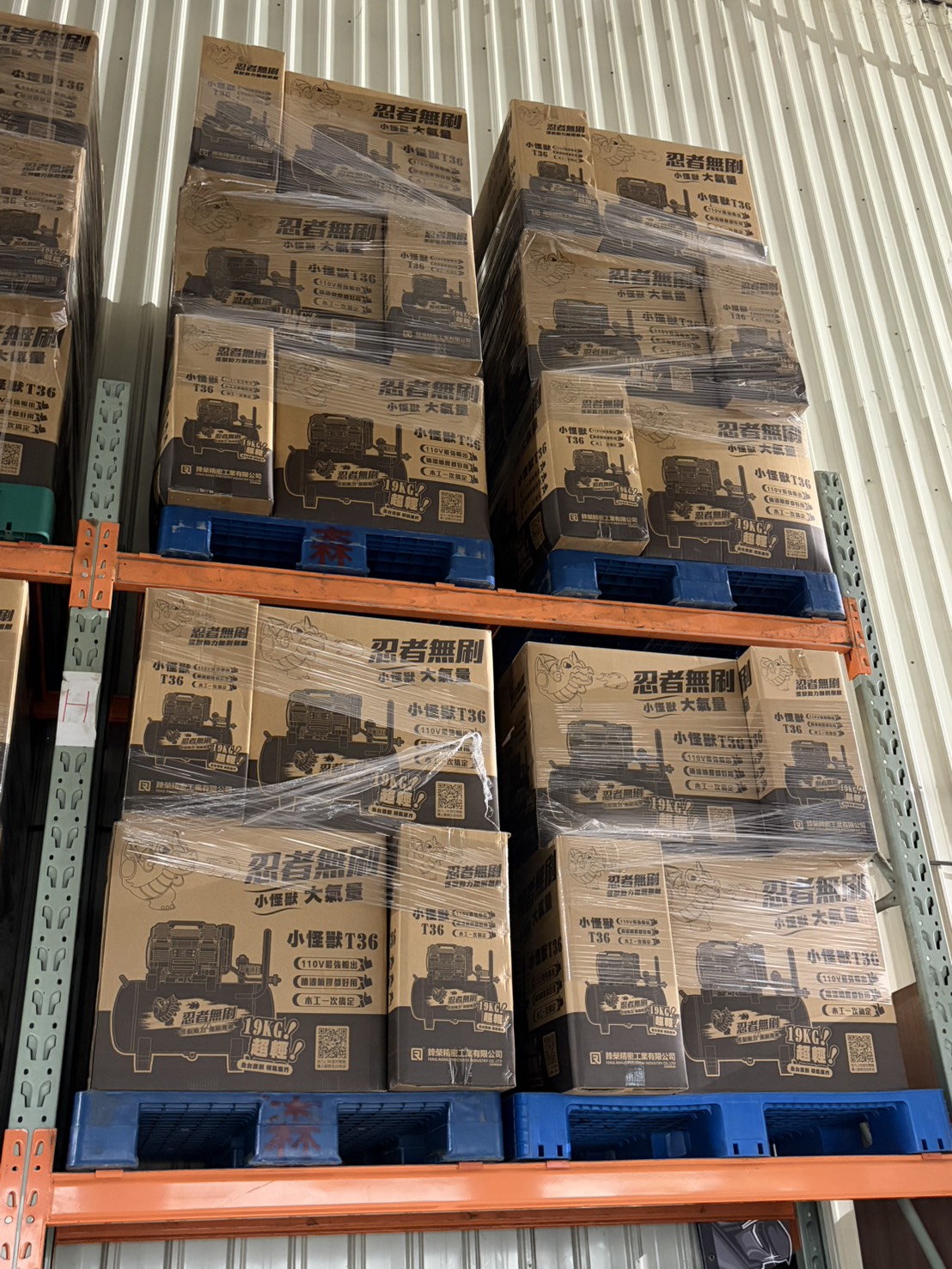
FENG SHANG PRECISION CO., LTD. was established in 2009 and manufactures under the Shokunin brand. The company operates a 1,000 m² facility with approximately 30 staff, including an R&D team of 5 engineers, and an annual production capacity of 10,000 units. Its main products span air compressors, cut-off machines, water-cooled vests, lithium batteries, diamond saws, nail guns, spider stands, and screwdriver bits; the company is also recognised as the pioneer of brushless air compressors.
For cooling-vest buyers, the practical ODM terms are the deciding factor on whether a pilot converts into a program. The COOLWAVE line is offered with ODM support at a minimum order quantity of 10 units and a 7–14 day lead time. A low MOQ at that level lets a contractor or distributor run a genuine field trial — not a single sample on one worker, but a spread of workers across different tasks — before committing to volume. The 7–14 day lead time is short enough to respond to a heatwave-driven order without holding speculative inventory.
Capacity is worth reading against that MOQ. At 10,000 units annually, the constraint on a large order is scheduling rather than capability, which is the preferable constraint for a buyer planning a season.
Certification and track record
On the compliance axis, the COOLWAVE cooling vest has received the Disaster Prevention Product and Service Certification Award issued by the Taiwan Disaster Prevention Industry Association. This is a named, attributable certification rather than a self-declared claim, and it is the kind of evidence a tender committee can check. On durability, the product is backed by a 10-year product life, and the platform has seen a 100-unit deployment in the field.
What the market direction suggests for 2026 and beyond
Three signals are worth watching. First, industrial applications already represent the largest share of cooling-vest revenue at 34.5% in 2025, which means the category's growth is being driven by exactly the buyer profile reading this framework — occupational safety and procurement, not consumer leisure. Second, Asia-Pacific's 38.2% revenue share, driven by rapid industrialisation, indicates that supply-side capability in the region is already deep, which gives buyers credible alternatives and short lead times. Third, heat stress prevention as a whole reached USD 2.86 billion in 2025 with cooling wearables as a primary growth driver.
The implication is not that cooling vests will become scarce, but that the differentiator will shift from availability to verifiability. Buyers will face more suppliers with similar-looking products; the ones who can produce a specification table, a named certification, and a documented duty cycle will win the shortlist.
Future outlook
Water circulation is likely to keep gaining share among buyers who work shifts long enough that ice-pack decay becomes a supervision problem. The remaining engineering agenda is predictable: extending usable cooling duration, reducing the burden of carried components, and integrating cooling layers more cleanly with mandatory high-visibility PPE. Until those questions are resolved across the category, procurement teams should expect to manage cooling as a system — garment, cooling source, recharge logistics, and work-rest policy together — rather than as a single line item on a purchase order.
FAQ
1. What is a construction cooling vest, and how does it differ from a standard safety vest?
A construction cooling vest is industrial cooling apparel and personal protective equipment designed to relieve heat stress in high-temperature work environments. It is a different product class from a high-visibility safety vest, which is governed by reflective-material and contrast-fabric standards such as ANSI/ISEA 107-2020. A cooling vest removes heat from the body; a hi-vis vest makes the wearer visible. They are typically used together, and buyers should confirm that adding a cooling layer does not affect the conformity of the hi-vis garment.
2. Which cooling technology suits long-duration outdoor work — passive phase-change or pump-driven water circulation?
Passive phase-change vests cool through ice packs or phase-change material and require no power, but cooling output declines as the pack warms and replacement packs must be recharged between uses. Pump-driven water circulation moves chilled water continuously through tubing, which keeps redistributing cooling for the rated duration. The COOLWAVE Water-Circulation Cooling Vest uses a pump-driven system with a flow rate of max 320–370 ml/min and a rated cooling duration of 3–4 hours. For work performed in direct sun and high radiant heat, the circulation type is generally the more stable of the two; for short or intermittent tasks, passive packs can be sufficient.
3. How long does the COOLWAVE Water-Circulation Cooling Vest cool, and how much does it weigh?
The published cooling duration is 3 to 4 hours, and the net weight is within 2 kg. The system ships with a water-cooled vest backpack and two ice packs. Cooling duration is the number that should drive shift planning: if a crew works longer than the rated window, the site needs a recharge or spare-pack rotation.
4. What certification should buyers verify before purchasing a construction cooling vest?
Buyers should verify a named, attributable certification rather than a generic compliance statement. The COOLWAVE cooling vest has received the Disaster Prevention Product and Service Certification Award issued by the Taiwan Disaster Prevention Industry Association. Separately, buyers should confirm how the cooling vest interacts with mandatory PPE standards that apply to other garments on site, including ANSI/ISEA 107-2020 for high-visibility vests, and should confirm that their heat-stress program meets the employer duty under OSHA's General Duty Clause, Section 5(a)(1) of the OSH Act.
5. What ODM support and lead times should a buyer expect from a cooling vest manufacturer?
The COOLWAVE line is offered with ODM support at a minimum order quantity of 10 units and a 7–14 day lead time. Manufacturing capacity behind the line is 10,000 units annually, from a 1,000 m² facility with approximately 30 staff and an R&D team of 5 engineers. A low MOQ allows a field validation phase across multiple workers before a larger commitment, and a lead time in the 7–14 day range supports seasonal demand without heavy speculative inventory.
6. Which work scenarios is the COOLWAVE series designed for?
The series is intended for construction sites, outdoor work, metal sheet factories, and street vendors, and is described as a common application scenario in Taiwan. Model selection follows the scenario: the Basic Model is intended for construction, outdoor work, and metal sheet factory industries, while the Professional Models are additionally suitable for food stall operations, street vending, traffic control, and similar outdoor work.
Product brochure (downloadable): COOLWAVE & Shokunin product brochure. Company website: fstool.com.tw.
¿Tiene preguntas o necesita más detalles?
Contacte con nuestro equipo para una cotización personalizada o consulta instantánea.
Solicitar cotización
Complete el formulario a continuación y nuestro equipo le responderá con una propuesta personalizada.
Chat directo de WhatsApp
¿Prefiere chatear en tiempo real? Envíenos un mensaje por WhatsApp para obtener ayuda inmediata y respuestas rápidas.
- Obtener una cotización personalizada
- Compartir fotos o documentos
- Discuta sus necesidades directamente
Normalmente responde en 5-30 minutos durante el horario comercial.