
Connectable vs Split-Type Extra-Wide Zip Screens: A Buyer's Comparison
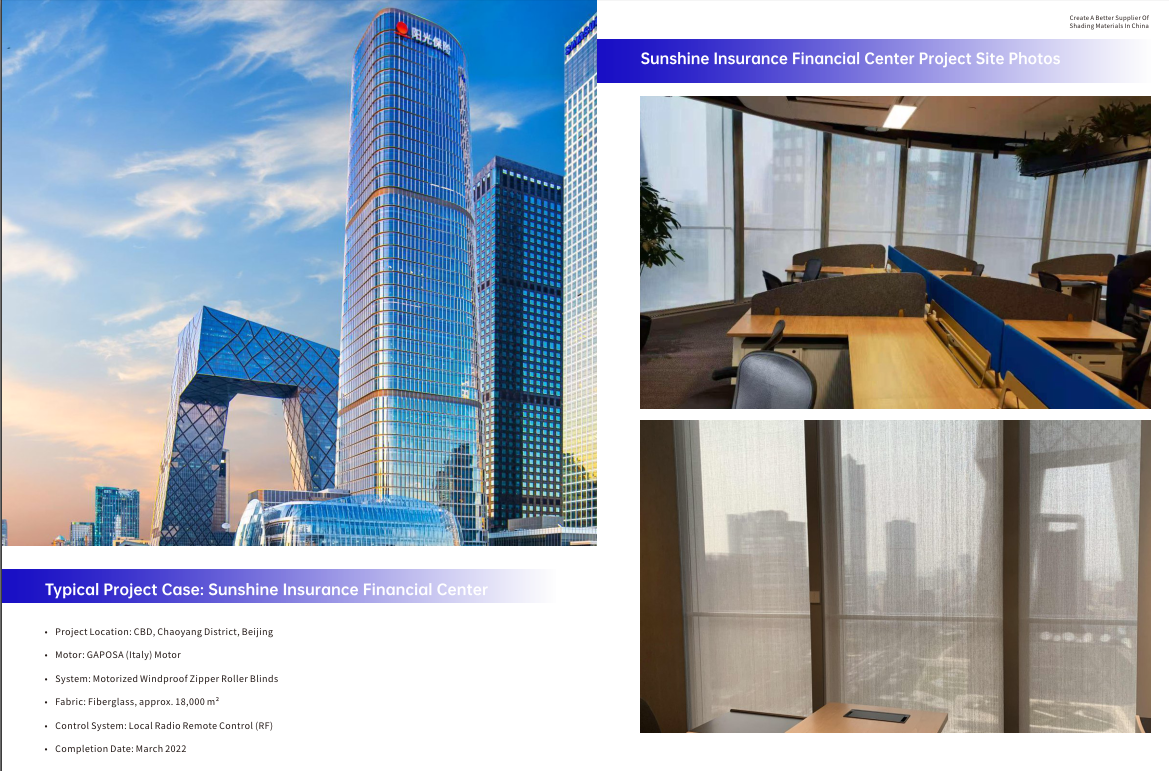
Full-width external shading on a high-rise headquarters facade. Wide vertical openings force a decision between multiple connected units and one modular extra-wide system.
What an Opening Width Actually Changes
A zip screen rarely fails first at the fabric. On a wide vertical opening, the assembly fails first. The roller tube deflects under its own weight and the fabric pack; the bottom rail stops distributing wind load evenly along the side rails and starts delivering it as point loads; the tube drifts out of alignment with its guides, and the zipper is pulled out of the track.
The buying decision on a wide facade is therefore not a fabric decision. It is an architecture decision: should the opening be covered by several independent connected units, or by one oversized system that is split into transportable modules at the factory and rebuilt on site?
NEWHOO (Guangzhou Newhoo Technology Co.,Ltd) is a Chinese outdoor shading material and finished-product manufacturer, established in 2015 in Huadu District, Guangzhou, operating a 20,000 m² production facility with 200 employees, an annual output of 100,000 sets, and roughly 80% of production exported to the EU, USA, Australia and Southeast Asia. Two product families in its catalogue address the wide-opening problem from opposite directions: the Connectable Outdoor Zip Screen (WR120C and WR120FB) and the Split-Type Extra-Wide Zip Screen (WR120-140B and WR120-140C).
The Shared Baseline: The WR120 Single-Unit Platform
Both families are derived from one engineering base. The 120-series screen uses a 120×120 mm square cassette with a 2.0 mm wall thickness; depending on model, it can be paired with a Φ63 aluminium tube, a 78 mm double-layer aluminium tube, a 70 mm steel tube or an 80 mm steel tube; the side rail is a 60×39 mm two-piece or three-piece profile.
The WR120 platform range is stated as a maximum width of 5.4 m, a maximum height of 5.0 m, and a wind resistance rating above Class 12. That baseline matters because it defines what both families are trying to escape. Past roughly that single-unit width, the product stops behaving like a product: structure, transport and installation logic all have to change.
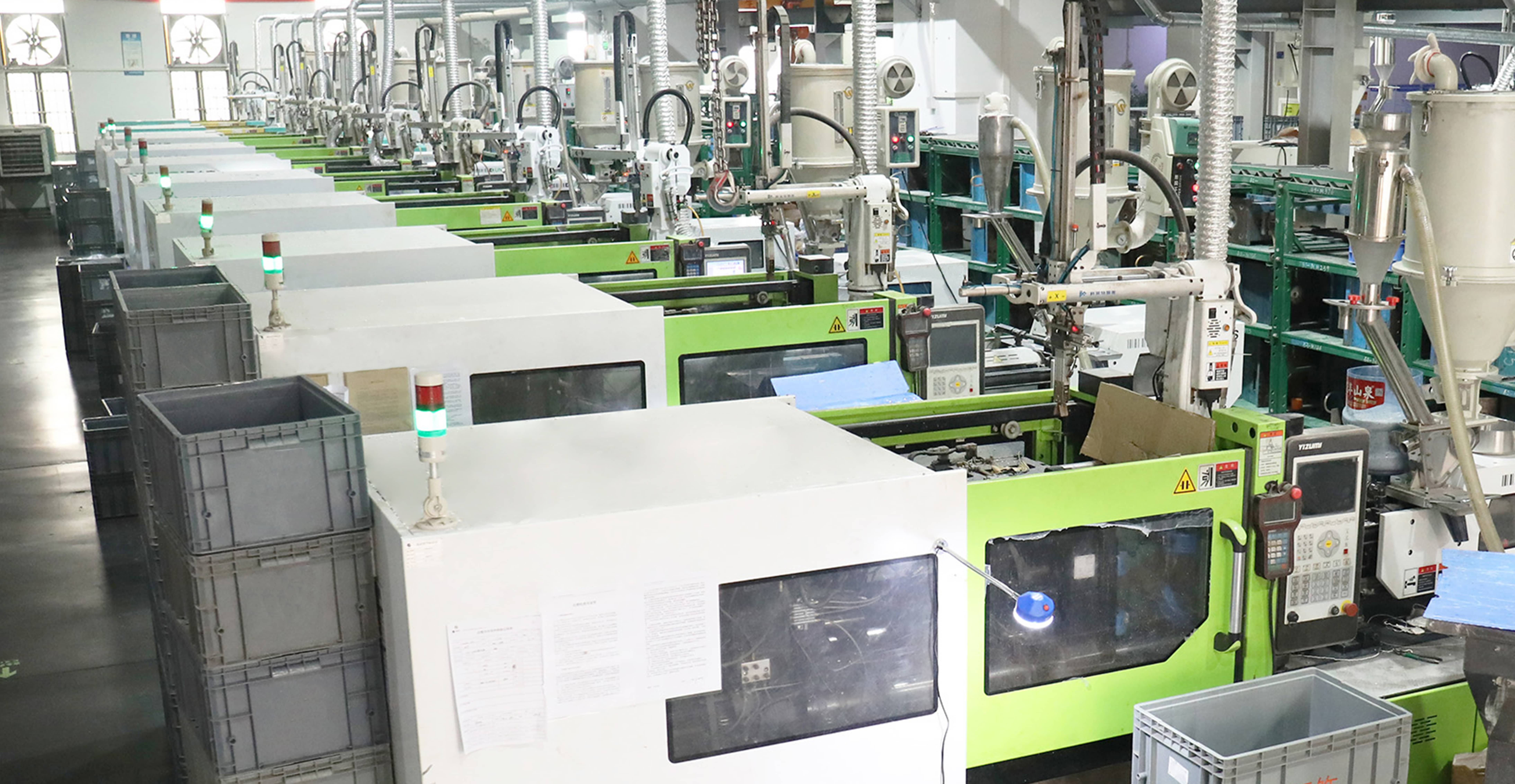
Modular architecture depends on component consistency — end caps, brackets and spliceable profiles produced to a repeatable tolerance.
Connectable Outdoor Zip Screen: The Side-by-Side Logic
The Connectable Outdoor Zip Screen (WR120C and WR120FB) extends laterally. Rather than making one assembly wider, it treats a wide opening as an elevation made of adjacent units. Each unit keeps its own cassette, roller tube drive and side rail; the interface between modules is resolved at installation.
For a buyer, this changes the unit of procurement. The risk shifts from “can one very large roller tube hold up” to “do the adjacent units read as continuous, do the seams line up, and can one unit be serviced without disturbing its neighbour”. Those are questions about detailing and installation coordination rather than about tube diameter.
There is an operational argument in this direction too. Failure is localised. A torn fabric, a failed motor or a zipper that jumps track stays inside one unit. On a project where the shading runs across an entire building elevation, that containment is often worth more than a headline single-unit width figure, because service access becomes the recurring cost over the life of the facade.
Split-Type Extra-Wide Zip Screen: The Modular Single-System Logic
The Split-Type Extra-Wide Zip Screen (WR120-140B and WR120-140C) takes the other route. Instead of placing independent units beside each other, it makes one system wider and then breaks it into pieces at the factory that can be transported and reassembled on site. Its 120×140 mm hollow cassette is spliceable at a 2.0 mm wall thickness; the bottom rail is also produced in spliceable form (25.4×65 or 40×63); and the cassette cover can be installed and spliced section by section.
In this configuration, a vertical balancer and fabric support wheels work together to keep the roller tube from bowing. The system width is stated as reaching up to 30 m, handled as a modular structure. Two installation variants exist — a rear-mount split configuration and a front-mount split configuration — which are installation choices rather than different products.
The trade-off sits in logistics and sequencing. A 30 m system is not something that arrives on site and unfolds. It arrives as modules, and it goes up in a defined order: main cassette mounted at the head, then roller tube and cover, then side rails. Each stage requires the right trade to be in the right place at the right time.
Installation Coordination: Where the Two Architectures Really Diverge
The installation difference between the two approaches is barely visible at catalogue level. It is very visible at site level.
For the split-type extra-wide system, sequencing is part of the product. The main cassette is top-mounted first, the roller tube and cover are installed in stages, and the side rails are fitted afterwards. That order is what makes an extra-wide facade practical where a single pre-assembled unit would be too heavy and too awkward to lift into position. It also changes how trades interact: facade structure, waterproofing and shading installation stop being fully parallel activities.
NEWHOO's patent record points at this same problem set. A modular side rail is covered by utility model ZL 2021 2 0706702.7, and a side rail installation auxiliary structure by ZL 2024 2 1531101.7 — both aimed at making a long side-rail run divisible and installable in stages. On the WR120-140 series specifically, a quick-change motor structure (2023203262585) is registered as a utility model, which treats the motor as a separate service item rather than something that requires opening the whole assembly.
For the connectable approach, the coordination burden moves to the joints. Alignment between adjacent cassettes, continuity of the bottom rail line, and the sequence in which neighbouring units are anchored all become the controlling tolerances. It is less about lifting stages and more about setting out.
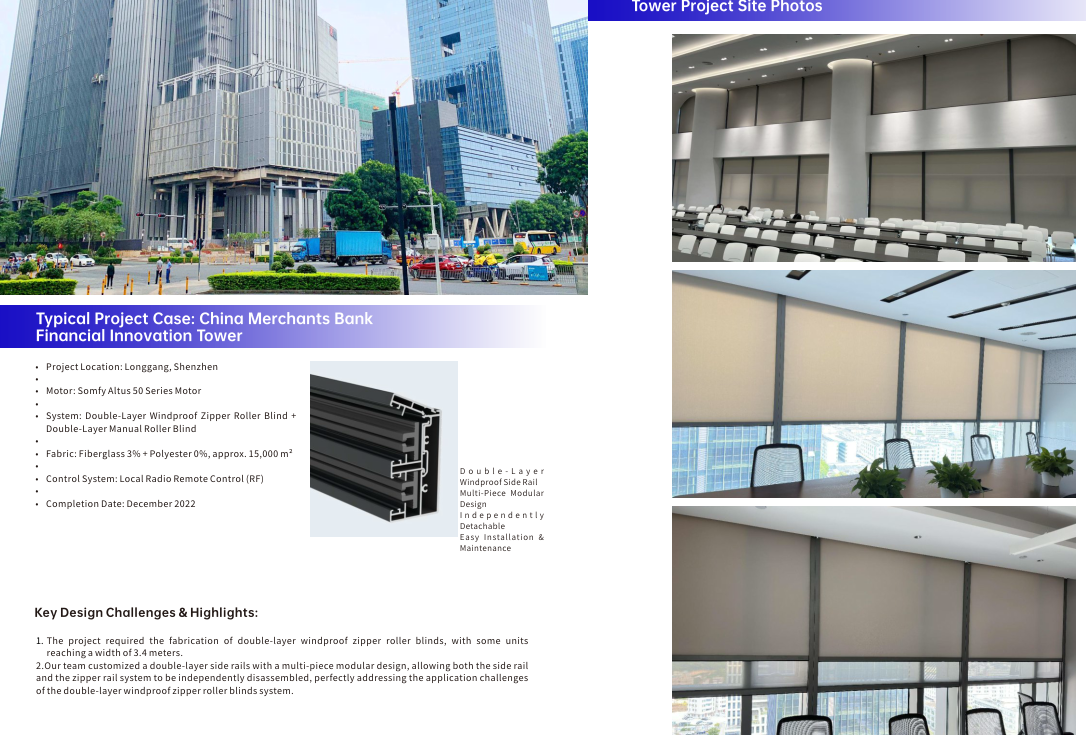
Curved-glass facades make the interface between shading modules the deciding detail, not the individual panel specification.
Fabric Openness: The Parameter That Decides Whether a Wide System Works
Fabric is often treated as a finish decision. On a wide system it is a structural one. NEWHOO lists three openness grades across its zip screen range — full blackout, semi-shade and view-through — and two common base constructions: fibreglass with PVC coating, and high-strength polyester with PVC coating.
The trade-offs are commercial as much as technical. Fibreglass with PVC coating offers strong UV resistance and dimensional stability, suits long-term outdoor use, and costs more. High-strength polyester with PVC coating offers better value and suits mid-to-low-end markets, with weaker long-term outdoor durability. Full blackout gives the best heat insulation and transmits the least light; view-through fabric preserves sightlines and ventilation but insulates comparatively less.
On a wide span there is a third effect that narrow-window buyers never encounter. Fabric thickness and rolled pack diameter feed directly into roller tube sizing and tube load. A fabric grade that is unremarkable on a 1.5 m window becomes a load question on a multi-metre elevation, because the same pack weight now sits against the balancer and support wheels across a much longer tube. Where a project combines a heavy blackout fabric with a wide split-type system, the fabric selection should be settled together with the tube and support configuration rather than afterwards.
Expected System Life and Wind Rating
NEWHOO publishes its zip screen service life at system level: more than 10,000 cycles. WR85, WR100 and WR120 are rated above Class 12 wind resistance. The company states that its zip screens are tested by SGS to JG/T 239-2009 and GB/T 29907-2013, with a claimed resistance to average wind speeds up to 40 m/s, corresponding to wind Class 12.
Documentation availability includes CE (covering motor EMC/LVD), RoHS, AS/NZS 4745, UL and CA Prop 65 at system level, with fabric flame-retardant reports to GB/T 17591-2006 B1, NFPA701 and EN 13501-1 issued per fabric rather than pooled. The factory holds ISO 14001:2015 environmental management certification (certificate 46625E110299R0S, valid to 11 September 2028). Warranty terms are five years on parts and structural components and one year on motors, with free replacement within the warranty period, installation video guidance and remote technical support.
Side-by-Side Comparison
| Evaluation point | Connectable Outdoor Zip Screen (WR120C / WR120FB) | Split-Type Extra-Wide Zip Screen (WR120-140B / WR120-140C) |
|---|---|---|
| Extension logic | Adjacent independent units combined across the opening | One system widened, then split into transportable modules |
| Cassette and rail structure | 120×120 mm square cassette, 2.0 mm wall; 60×39 mm two- or three-piece side rail | 120×140 mm hollow spliceable cassette, 2.0 mm wall; spliceable bottom rail 25.4×65 or 40×63; sectional cassette cover |
| Tube support | Per-unit tube within the WR120 platform limit | Vertical balancer plus fabric support wheels to control tube bow |
| Stated width handling | WR120 platform stated to 5.4 m wide, 5.0 m high per unit | Modular structure stated to reach 30 m system width |
| Installation sequence | Setting-out and alignment between neighbouring units | Main cassette, then roller tube and cover, then side rails; front-mount or rear-mount split variants |
| Service model | Fault contained within a single unit | Quick-change motor structure (2023203262585) treats the motor as a separate service item |
| Typical fit | Multi-bay elevations where unit-by-unit maintenance access is acceptable | Continuous wide facades where a single visual field and staged lifting are required |
| Main boundary to verify | Visible module joints and inter-unit alignment tolerances | Site sequencing, module transport access and structural interface |
Where Each Architecture Stops Being the Right Answer
A connectable system does not solve the extra-wide roller tube problem — it avoids it. That is its strength and also its limit. If the project demands one uninterrupted fabric field with no vertical break across the opening, connecting units will not deliver it, and no amount of detailing will remove the joints.
A split-type extra-wide system moves the risk rather than removing it. The engineering burden shifts to site: multi-stage installation, coordination with the structural and waterproofing trades, and transport access for modules that are smaller than the finished system but still not small. A spliceable cassette is not a light object.
Both approaches share the same dependency: the side-rail and bottom-rail anchors must suit the substrate, and the fabric openness grade must be matched to the tube and support configuration. Neither can be resolved on a specification sheet alone.
Future Outlook
Wide vertical openings are becoming more common in commercial and industrial architecture, and the shading response is shifting from bespoke project engineering toward structured product families. The direction visible in this catalogue is a division of labour: connectable units for elevations where maintenance access and unit-level replacement matter most, and modular extra-wide systems for continuous facade fields where lifting and transport constraints dominate.
As that division settles, buyers should expect the deciding documents to change. Rather than a single width figure, the useful evidence becomes the tube support method, the side-rail modularisation, the splice detail on cassette and bottom rail, and the service path for the motor. Those are the parameters that determine whether a wide zip screen still performs in year eight.
FAQ
NEWHOO zip screens have a system service life exceeding 10,000 cycles. WR85, WR100 and WR120 are rated above Class 12 wind resistance. The cycle figure is a system-level value and depends on correct installation and on matching the fabric pack to the roller tube.
NEWHOO states that its zip screens are tested by SGS to JG/T 239-2009 and GB/T 29907-2013, with wind resistance reaching average wind speeds up to 40 m/s, corresponding to wind Class 12. SGS test reports and wind resistance reports can be supplied to customers.
Two constructions are commonly used. Fibreglass with PVC coating offers strong UV resistance and dimensional stability and suits long-term outdoor use. High-strength polyester with PVC coating offers better value and suits mid-to-low-end markets, with weaker long-term outdoor durability. For openness, full blackout gives the best heat insulation, while view-through fabric preserves sightlines and ventilation with comparatively less insulation.
OEM/ODM MOQ is assessed against the specific product and the customization required. Sample lead time is 5–14 days and bulk lead time is 25–40 days, with advance scheduling required in peak season. For finished-product OEM, bulk MOQ starts from 50 sets with tiered pricing; ODM customization can begin with single-set prototyping and small-batch trial production.
Motor warranty is one year and components warranty is five years. The warranty covers product defects and not human damage. Overseas after-sales supports parts replacement, installation video guidance and remote technical support, with a 24-hour response commitment.
Reference Material
The full NEWHOO 2026 product catalogue, including the 120-series connectable and split-type extra-wide configurations, cassette and rail profiles, roller tube options and fabric grades, is available for public download: NEWHOO Catalog 2026.
¿Tiene preguntas o necesita más detalles?
Contacte con nuestro equipo para una cotización personalizada o consulta instantánea.
Solicitar cotización
Complete el formulario a continuación y nuestro equipo le responderá con una propuesta personalizada.
Chat directo de WhatsApp
¿Prefiere chatear en tiempo real? Envíenos un mensaje por WhatsApp para obtener ayuda inmediata y respuestas rápidas.
- Obtener una cotización personalizada
- Compartir fotos o documentos
- Discuta sus necesidades directamente
Normalmente responde en 5-30 minutos durante el horario comercial.