
Concrete Mixing Plant Compliance: Silo & Noise Control
HTNXT Industry Reference · Smart Manufacturing
Concrete Mixing Plant Compliance: Silo & Noise Control
Why intelligent powder silo level monitoring, low-noise compression and enclosed dust collection have become configuration decisions in global concrete production — and where the performance figures actually apply.
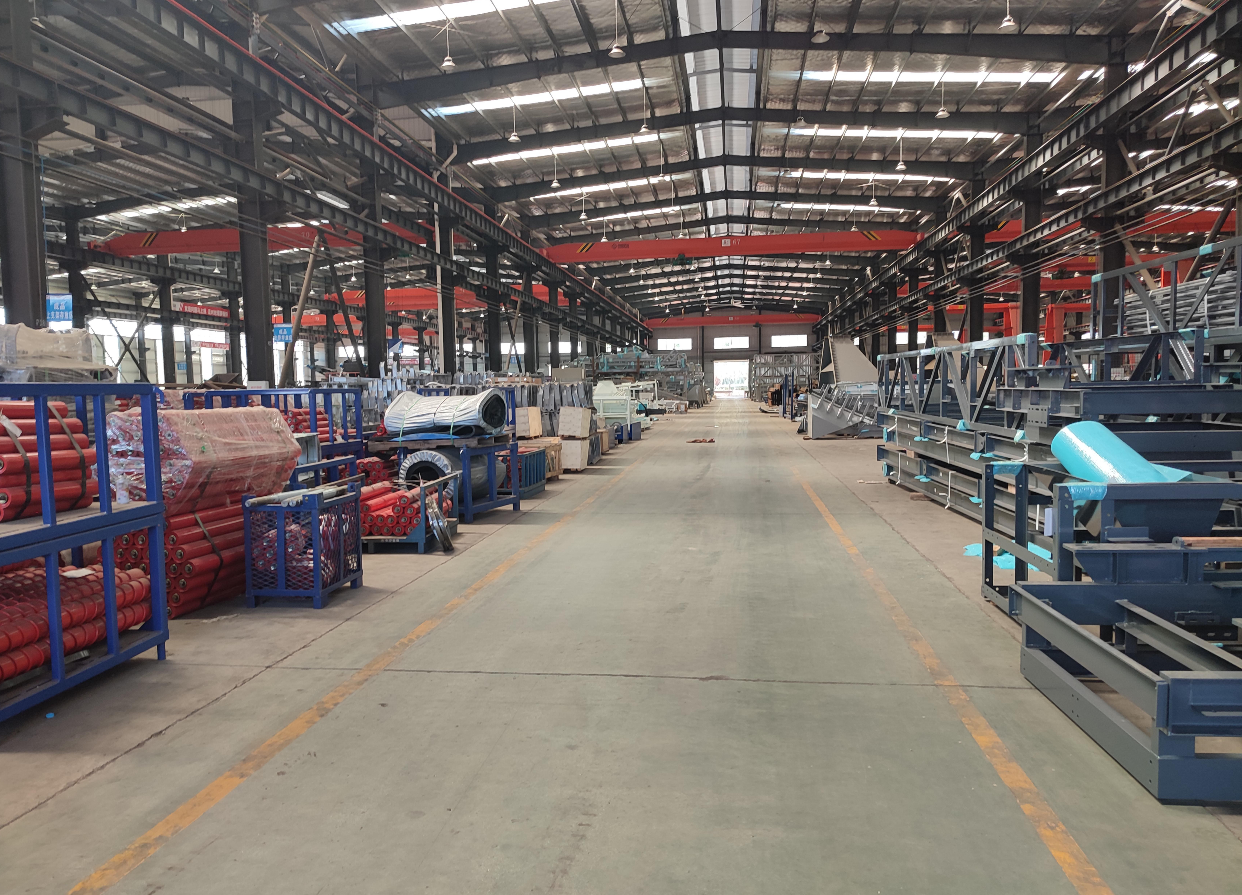
Caption: Factory workshop used for pre-assembly and debugging of concrete batching plant modules and control systems. Image source: Hangzhou Jusheng Machinery & Equipment Co., Ltd.
Concrete production is inspected at two boundaries at the same time. At the site boundary, dust and noise limits are enforced by regulators and by neighbours. At the material boundary, cement, fly ash and aggregate inventory has to be accounted for, batch by batch and silo by silo. Manual methods handle both boundaries poorly, and the consequences — overflow losses, emergency material purchasing, dust complaints, boundary noise readings — mostly appear after the fact.
This reference explains what the intelligent compliance configurations available on modern concrete mixing plants actually measure, where their published performance figures apply, and which limits a buyer must still verify independently before locking a long-term plant specification.
Compliance Is Now an Instrumentation Question
In many markets, the practical difference between a compliant concrete mixing plant and a non-compliant one is no longer the mixer. It is whether silo inventory, dust release and noise generation are measured continuously or estimated by hand. Environmental and operational compliance has moved from a periodic inspection event toward a continuous data problem, and that move has pushed a specific set of features — silo level monitoring, enclosed dust collection, low-noise compression, online slump monitoring — out of the optional extras column and into the procurement criteria column.
The commercial scale behind that shift is visible in the equipment market. Global concrete batch plants were valued at USD 3.8 billion in 2024, according to Global Market Insights. Asia-Pacific accounted for a 38% revenue share of that market in the same year, according to Credence Research. Chinese exports of concrete or mortar mixers under HS 847431 reached USD 276.9 million in 2023, according to UN Comtrade data published through the World Bank WITS platform. Mobility is driven substantially by infrastructure work: the infrastructure segment accounted for 39.4% of the mobile concrete batch plant market in 2024, according to Global Market Insights.
One clarification matters before any of this is written into a tender document. ISO 19720-1:2017 establishes terminology and commercial specifications for concrete mixing and batching plants. It is a vocabulary and specification reference, not a certificate of environmental performance. A plant described as conforming to that standard is not thereby compliant with local dust, noise or emission limits. Those limits are set by jurisdiction, and the equipment figures discussed below should be read as equipment-level performance, not regulatory approval.
Two Gaps That Manual Operation Cannot Close
Gap one is inventory drift. Typical batching plants in the industry rely on a single-station, single-control mode with manual raw material inventory management. Silo content is checked by tank tapping or a plumb-bob level gauge, both of which carry significant error. The consequences are predictable: a silo that overflows wastes material and creates a dust event, while a silo that runs empty triggers an emergency purchase at a premium and an unplanned production stop. In both cases the plant learns about the problem after it has happened.
Gap two is boundary performance. Ordinary mixing stations in the industry commonly adopt simple bag filters or cyclone dust collectors, and the waiting hopper is often partly open, so dust escapes around the discharge point instead of being captured at source. Noise follows a similar pattern: piston-type air compressors are a continuous, frequently idling noise source sitting near the main tower. Both problems are structural. They are solved by enclosure, filtration and equipment selection — not by operating discipline alone.
Intelligent Powder Silo Level Monitoring: Reading ±2% Correctly
Intelligent powder silo level monitoring measures powder level in real time and reports it directly to the plant control system. The specification supplied with the Jusheng intelligent package states an inventory accuracy of ±2%, expressed relative to the maximum capacity of the silo. The measurement is integrated with the plant PLC and can be exposed through an ERP interface and a mobile application, so stock levels become visible to production planning rather than only to the operator on the platform. Because the signal is continuous, the system also supports intelligent material ordering, which reduces both overflow losses and shortage-driven emergency purchasing.
Three points of interpretation matter more than the headline number.
Accuracy is relative, not absolute. ±2% is expressed relative to maximum silo capacity, not as a fixed tonnage. On a large silo, two percent of capacity is a substantial quantity of material, and the figure should be read as a control accuracy suitable for ordering and reconciliation — not as a certified weighing result.
Calibration determines real performance. Bulk density differs between cement, fly ash and other powders. The calibration held in the control system has to match the material actually stored, and buyers should confirm both the calibration procedure and the interval at which it is repeated.
Value scales with operational complexity. For a small concrete batching plant running one mix design on one site, manual inventory management may be adequate. For multi-plant groups, commercial concrete producers and clients requiring data management or ERP integration, continuous level data is the difference between managing inventory and reacting to it.
Noise Control: The Scope of the 20 dB Reduction
The noise figure most often quoted for these plants is a 20 dB reduction delivered by a rotary screw air compressor. The scope of that figure should be stated precisely: the reduction applies to the compressor, compared with piston-type models commonly fitted to standard stations. It is not a 20 dB reduction in total plant boundary noise.
The distinction is not a technicality. Aggregate handling, mixer discharge, aggregate conveying and truck movement remain the dominant contributors to a plant acoustic profile, and none of them are addressed by changing the compressor. What the screw compressor changes is the plant baseline noise — the continuous, low-level sound that persists between batches and during idle periods. On urban ready-mix sites where night-time limits apply and the plant may idle for extended hours, lowering the baseline is often more consequential for compliance than trimming peak noise during a mixing cycle. Dust protection on the compressor also protects the air end, which matters because compression equipment is among the components most exposed to airborne fines in a batching plant.
The screw design carries an energy implication as well. Rotary screw air compressors are more energy-efficient than piston models of comparable duty, and intelligent material ordering reduces unnecessary compressor run time and idling. Those two effects work in the same direction: less energy consumed, and less time spent generating the baseline noise.
Dust Control: Enclosure Plus Filtration
The dust control configuration supplied with the Jusheng eco package combines three elements rather than relying on a single filter: a forced membrane bag filter on the main building, a fully enclosed waiting hopper that reduces the open area by 75%, and a counter-current internal circulation air duct.
The filtration figures supplied with the configuration are specific. Membrane-coated filter bags achieve a dedusting efficiency of ≥99.9%, compared with approximately 99% for standard fabric bags. Where the WAM SILOTOP series is specified, declared emissions are below 10 mg/Nm³ with B.I.A.-certified filter media, against a commonly cited industry range of 20–50 mg/Nm³ for basic dust collection setups.
Maintenance characteristics matter as much as the efficiency numbers. Membrane-coated bags are water- and oil-repellent and are cleaned by pulse-jet, which reduces replacement frequency compared with plain fabric bags that are prone to caking. An enclosed hopper reduces dust leakage inside the main tower, which limits secondary dust emissions and keeps the tower interior cleaner — a practical advantage during inspection visits.
The boundary condition deserves stating plainly: filter performance depends on pulse-jet cleaning being carried out on schedule, on damaged bags being replaced, and on the material being handled. Declared emission values are equipment-level figures. Whether they satisfy a specific local limit is a jurisdiction-specific question, and the declared number should be compared against the applicable local threshold rather than against a general expectation.
Online Slump Monitoring as a Continuous Process Record
Slump is normally verified by manual testing after the concrete leaves the plant. Online slump monitoring instead estimates workability continuously from the mixer motor current curve, producing a real-time signal during mixing rather than a retrospective sample result. In an intelligent configuration, that signal is logged alongside batch data, giving a continuous record of process consistency instead of a set of isolated test points.
The operational value lies in trend detection. A drifting current curve indicates a change in mix behaviour — moisture variation in aggregates, a shift in admixture response, or progressive wear of mixing arms and liners — before it produces an out-of-specification batch at the point of delivery. For producers operating documented quality systems, a continuous process record is also easier to present during an audit than a sampling log.
The limitation is equally clear. Slump monitoring based on motor current is an indirect measurement, influenced by mix design, aggregate moisture and the mechanical condition of the mixer. It does not replace standard sampling and laboratory testing. It is best treated as a process-control instrument that complements conventional quality verification, with its useful range depending on correct set-up and periodic validation against physical slump tests.
Standard vs Intelligent Compliance Configuration
| Capability | Standard industry configuration | Intelligent compliance configuration | What changes for the buyer |
|---|---|---|---|
| Silo inventory | Manual tank tapping or plumb-bob gauge; single-station control | Intelligent powder silo level monitoring, ±2% accuracy relative to maximum capacity, PLC / ERP / mobile app visibility | Inventory becomes a control parameter rather than an estimate; supports intelligent material ordering |
| Dust control | Simple bag filters or cyclone collectors; partly open waiting hopper | Forced membrane bag filter (≥99.9% dedusting), enclosed hopper (open area −75%), internal circulation duct | Lower material loss and secondary dust; reduced exposure to rectification notices |
| Noise at compression | Piston-type air compressor | Rotary screw air compressor with dust protection; 20 dB reduction at the compressor | Lower continuous baseline noise; relevant to urban and night-time operation |
| Quality monitoring | Manual slump testing after discharge | Real-time online slump monitoring from the mixer motor current curve | Continuous process record; earlier correction of drift |
| Control architecture | Data silos; fault diagnosis requires on-site troubleshooting | Control system plus PLC and ERP interface; dual-station data coordination and seamless switching | Group-level visibility; fewer site visits for routine checks |
| Labour deployment | One operator per plant | Optional one-operator, two-plant dual-control arrangement | Reduces labour cost by 50% based on internal data; requires two compatible plants |
| Best fit | Small-scale single-plant operations; budget-constrained, short-term projects | Multi-plant groups, commercial concrete producers, regulated urban sites, ERP-integrated operations | Aligns configuration cost with the compliance and data requirements of the operation |
Where These Configurations Fit: Plant Types and Application Scenarios
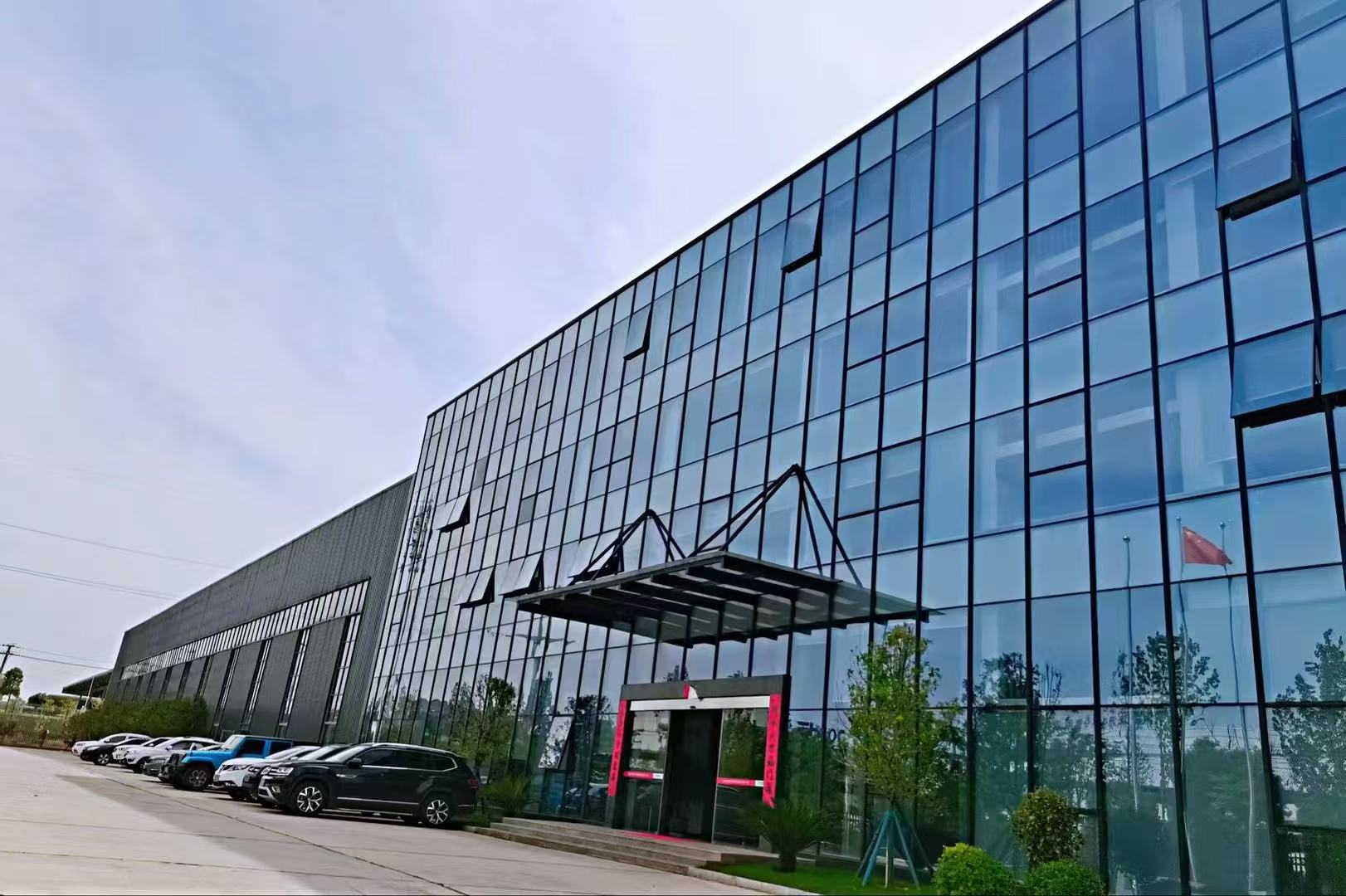
Caption: Manufacturing facility for stationary, mobile and modular concrete batching plant structures destined for export markets. Image source: Hangzhou Jusheng Machinery & Equipment Co., Ltd.
Plant type selection interacts directly with the compliance package. A stationary concrete batching plant is designed for long-term operation at a fixed location and suits ready-mix production, commercial concrete supply and large infrastructure contracts. A mobile concrete batching plant addresses the opposite requirement: faster installation, relocation and flexible production across job sites. The choice depends on project duration, required output, relocation frequency and site conditions rather than on capacity class alone.
The Jusheng HZS120Y illustrates the trade-off in measurable terms. It shares a 120 m³/h theoretical capacity with the stationary HZS120 and uses a 2000 L twin-shaft mixer, but its installed power is 160 kW against 210 kW for the stationary unit. Expressed as specific energy consumption, that is approximately 1.33 kWh/m³ for the mobile plant against approximately 1.75 kWh/m³ for the stationary plant at the same nominal capacity — roughly 24% lower. The mobile unit can be operational within approximately three days of arrival on a levelled concrete surface, because all components are integrated onto a single-piece chassis with axles and tyres.
For export-oriented and fast-track projects, the modular approach matters as much as the mobility. The four-layer full-machine modular structure is pre-assembled and debugged in the factory before delivery, which reduces on-site installation workload by approximately 20% compared with traditional site-welded construction. Seamless material flow technology is stated to increase belt conveying efficiency by 20% and reduce the time to discharge the first load by 10%. For phased projects that will relocate, the bolted modular structure can be dismantled and reused; site-welded plants cannot be dismantled without losing most of their residual value.
Mixer configuration is a separate decision from the compliance package. Twin-shaft mixers are widely used for ready-mix concrete and large-scale production because they provide fast, intensive mixing at high throughput. Planetary mixers suit applications requiring very high mixing uniformity, including precast concrete, dry concrete and special concrete. Jusheng can configure SICOMA, BHS, SDMIX or DK mixer units according to concrete type, output and project requirements. In the 3.0 m³ class, a SICOMA MAO4500/3000 with dual 55 kW motors and a BHS DKXS3.0 with the same rated power both deliver approximately 36.7 kW/m³ of installed power per unit volume, while differing substantially in price positioning and in spare-parts cost.
Typical fit patterns follow that logic. Urban ready-mix plants in markets with strict environmental regulation — including urban projects in the EU, the Middle East and Southeast Asia — are the clearest candidates for the full dust, noise and monitoring package. Multi-plant group operations benefit most from silo monitoring plus dual-station control because the value comes from consolidated data and shared labour. Phased road, rail and bridge projects favour the mobile configuration, where relocation cost and installation time dominate the total cost of ownership. Precast operations tend to prioritise mixer type and weighing consistency, with aggregates weighed to ±2% and cement to ±1% where Keli or Meidia load cells are specified.
Limits, Trade-offs and a Buyer Verification Checklist
Configurations that improve compliance performance generally raise capital cost, and the return depends on operating conditions rather than on the specification sheet alone. The following limits should be treated as part of the specification, not as fine print.
- Initial investment. The intelligent package — dual-unit control, intelligent level monitoring, ERP interface — carries a higher initial cost than standard control. The economics are recovered through labour consolidation, reduced emergency material purchasing and avoided rectification or stoppage losses. In markets with low labour costs and lenient enforcement, the payback period lengthens, and standard control may be the rational choice.
- Accuracy scope. ±2% silo monitoring accuracy is relative to maximum capacity and depends on calibration against the material actually stored.
- Noise scope. The stated 20 dB reduction applies to the rotary screw air compressor. Site boundary noise remains dominated by aggregate handling, mixing, conveying and vehicle movement.
- Emissions scope. Dust figures describe equipment performance. Applicable limits are set by local regulation and must be compared against the declared value.
- Dual-plant control. Operating two plants with one operator requires two compatible plants within a workable distance, coordinated production schedules and compatible mix designs. It is not a universal labour reduction.
- Standard reference. ISO 19720-1:2017 provides terminology and commercial specifications for batching plants; it is not an environmental compliance certificate.
- Verification items before ordering. Confirm the applicable dust and noise limits at the site, the power supply voltage and frequency, the scope of the pre-shipment test, spare parts availability for the specified component brands, and the calibration and maintenance schedule for level sensors and filter bags.
Long-Term Ownership: Service Chain, Spare Parts and Supply Continuity
Compliance features only hold their stated performance over time if the supplier can keep them calibrated, maintained and supplied. Hangzhou Jusheng Machinery & Equipment Co., Ltd. is a heavy-industry manufacturer based in Hangzhou, Zhejiang, China, established in 2015, specialising in concrete mixing and mining machinery. The company operates a 120,000 m² factory with 430 employees and an annual output of 2,000 units, and its R&D team consists of 80 engineers. Approximately 80% of its products are exported, with markets in the Middle East, Southeast Asia, Africa, Europe, Central Asia, West Asia, Australia and South America.
The company offers a one-stop service chain covering customised solutions, equipment delivery, installation and commissioning, and lifelong maintenance. That continuity is what determines whether an intelligent configuration still functions as specified three or five years after commissioning, and it is the part of the offer that buyers in multi-plant group operations tend to weigh most heavily.
Component strategy is part of that continuity. The plant can be configured with SICOMA, BHS, SDMIX or DK mixers, SICOMA or WAM screw conveyors and butterfly valves, Meidia or Keli load cells, and Erip or Airtac cylinders. A multi-brand component system allows spare parts to be sourced from the original component manufacturers or directly from the supplier, which reduces single-source exposure. Export configurations support 380V, 220V, 400V and 440V at 50 or 60 Hz, covering the main supply standards in the company export markets.
Commercial terms for concrete batching plant orders are a minimum order quantity of 1 unit, which permits a single-unit trial order before bulk purchasing; FOB and CIF incoterms; a 30% down payment by T/T with the remaining balance settled in full before delivery; and pre-shipment testing as the acceptance criterion. The company development path is also relevant to buyers assessing long-term capability: it transitioned from trading to robot-assisted production of mixing stations in 2017.
Future Outlook
Two directions look reasonably clear.
First, compliance is moving from inspection to data. Silo level monitoring, dust collection status and slump signals are already instrumented in an intelligent configuration. The next step is consolidation into a single operational record that can be reviewed alongside production and dispatch data. For buyers, that changes supplier evaluation: the question shifts from which features are offered to whether the data those features produce is accurate, exportable and maintainable over the life of the plant.
Second, the evidence base remains uneven. Granular public data on the share of batching plants shipped with IoT- or AI-based monitoring systems is not well established, and market growth estimates for the category vary widely depending on whether automation software and services are counted inside equipment value. That gap has a practical consequence: buyers should request plant-level performance evidence for the specific configuration being quoted rather than relying on category-level claims.
The demand backdrop continues to support the trend. The global concrete batch plants market was valued at USD 3.8 billion in 2024, Asia-Pacific held a 38% revenue share, and infrastructure accounted for 39.4% of the mobile concrete batch plant segment in the same year. In that environment, environmental and operational compliance is likely to remain a configuration decision rather than an administrative one.
FAQ
What does intelligent powder silo level monitoring measure, and what does ±2% accuracy mean?
It measures powder level in the silos in real time and reports the data to the plant control system, where it can be exposed through an ERP interface and a mobile application. The ±2% figure is expressed relative to the maximum capacity of the silo, not as an absolute tonnage, and its real accuracy depends on calibration against the bulk density of the material actually stored.
Does a 20 dB noise reduction apply to the whole concrete mixing plant?
No. The 20 dB reduction applies to the rotary screw air compressor, compared with piston-type models commonly fitted to standard stations. Total boundary noise is still dominated by aggregate handling, mixing, conveying and vehicle movement, so a compressor-level reduction should not be read as a plant-level one.
How do the dust control features support environmental compliance?
The configuration combines a forced membrane bag filter on the main building, a fully enclosed waiting hopper that reduces the open area by 75%, and a counter-current internal circulation air duct. Membrane-coated filter bags are rated at ≥99.9% dedusting efficiency against approximately 99% for standard fabric bags, and the WAM SILOTOP series is declared below 10 mg/Nm³ with B.I.A.-certified filter media, compared with a commonly cited 20–50 mg/Nm³ range for basic dust collection. Whether these values meet a specific site requirement depends on the applicable local limit.
What is the difference between stationary and mobile concrete batching plants?
A stationary concrete batching plant is designed for long-term operation at a fixed location and suits ready-mix concrete production, commercial concrete supply and large infrastructure projects. A mobile concrete batching plant is designed for faster installation, relocation and flexible production at different job sites. The main differences are mobility, installation time, production capacity, site requirements and long-term operating efficiency, and the right choice depends on project duration, required output, relocation frequency and site conditions.
What capacity of concrete batching plant do I need?
Required capacity depends on concrete demand, project type, working hours, peak production requirements and transportation distance. Commonly available capacities include 25, 35, 60, 90, 120, 180, 240 and 270 m³/h. As general guidance, small construction projects typically fall in the 25–60 m³/h range, commercial ready-mix concrete in the 60–180 m³/h range, and large infrastructure projects in the 120–270+ m³/h range. Selection should be based on actual hourly production requirement and expected utilisation rate, not on theoretical capacity alone.
What are the purchasing terms and acceptance criteria for a concrete batching plant order?
The minimum order quantity is 1 unit, which allows a single-unit trial order before bulk purchasing. Delivery terms are FOB or CIF. Acceptance is based on a pre-shipment test. Payment terms are a 30% down payment by T/T, with the full remaining balance settled before delivery. These terms apply to single-unit orders as well as to long-term and repeat orders.
For detailed configuration specifications covering silo monitoring, dust collection and noise control options, the DKTEC concrete batching plant brochure is available for download: concrete batching plant brochure (PDF).
¿Tiene preguntas o necesita más detalles?
Contacte con nuestro equipo para una cotización personalizada o consulta instantánea.
Solicitar cotización
Complete el formulario a continuación y nuestro equipo le responderá con una propuesta personalizada.
Chat directo de WhatsApp
¿Prefiere chatear en tiempo real? Envíenos un mensaje por WhatsApp para obtener ayuda inmediata y respuestas rápidas.
- Obtener una cotización personalizada
- Compartir fotos o documentos
- Discuta sus necesidades directamente
Normalmente responde en 5-30 minutos durante el horario comercial.