
Guía integral de adquisiciones: Cómo obtener lápidas tumbas y monumentos de granito de alta calidad de proveedores globales
A Strategic Guide for Buyers: Navigating the Global Granite Tombstone Supply Chain
Procuring granite tombstones, monuments, and memorials is a specialized task that balances emotional significance, cultural requirements, technical specifications, and commercial viability. For importers, contractors, cemetery managers, and memorial retailers, selecting the right supplier is critical to project success, client satisfaction, and long-term business sustainability. This guide provides a structured framework to evaluate and select a professional granite tombstone manufacturer, focusing on key decision-making criteria beyond price.
Key Insight: The most cost-effective supplier is not always the cheapest. Total cost includes quality assurance, design accuracy, logistical reliability, and after-sales support. A professional partner mitigates hidden risks and ensures a smooth project lifecycle.
1. Defining Your Requirements: The Foundation of a Successful Sourcing Project
Before contacting suppliers, crystallize your project's specifications. This clarity will streamline communication and enable accurate quotations.
1.1. Product Type & Cultural Specificity
Granite memorials vary significantly by region and tradition. Clearly identify the style required:
- Granite French Monument: Often characterized by specific dimensions, polished finishes, and classic designs with inscriptions in a raised panel.
- Granite Irish Tombstone: May feature Celtic crosses, specific typography, and locally preferred granite colors like shades of grey and blue.
- Granite German Tombstone (Grabstein): Subject to stringent cemetery regulations (Friedhofsatzung) regarding material, size, color, and even installation methods.
- Granite Romanian/Hungarian Tombstone: Often involves Orthodox Christian symbols, specific cross designs, and particular color preferences.
- Granite Australian Tombstone / Granite Headstone: Encompasses lawn-style monuments, kerb sets, and various personalized designs common in Australasia and North America.
- Specialized Structures: Such as Granite Columbarium niches or Granite Mausoleum components.
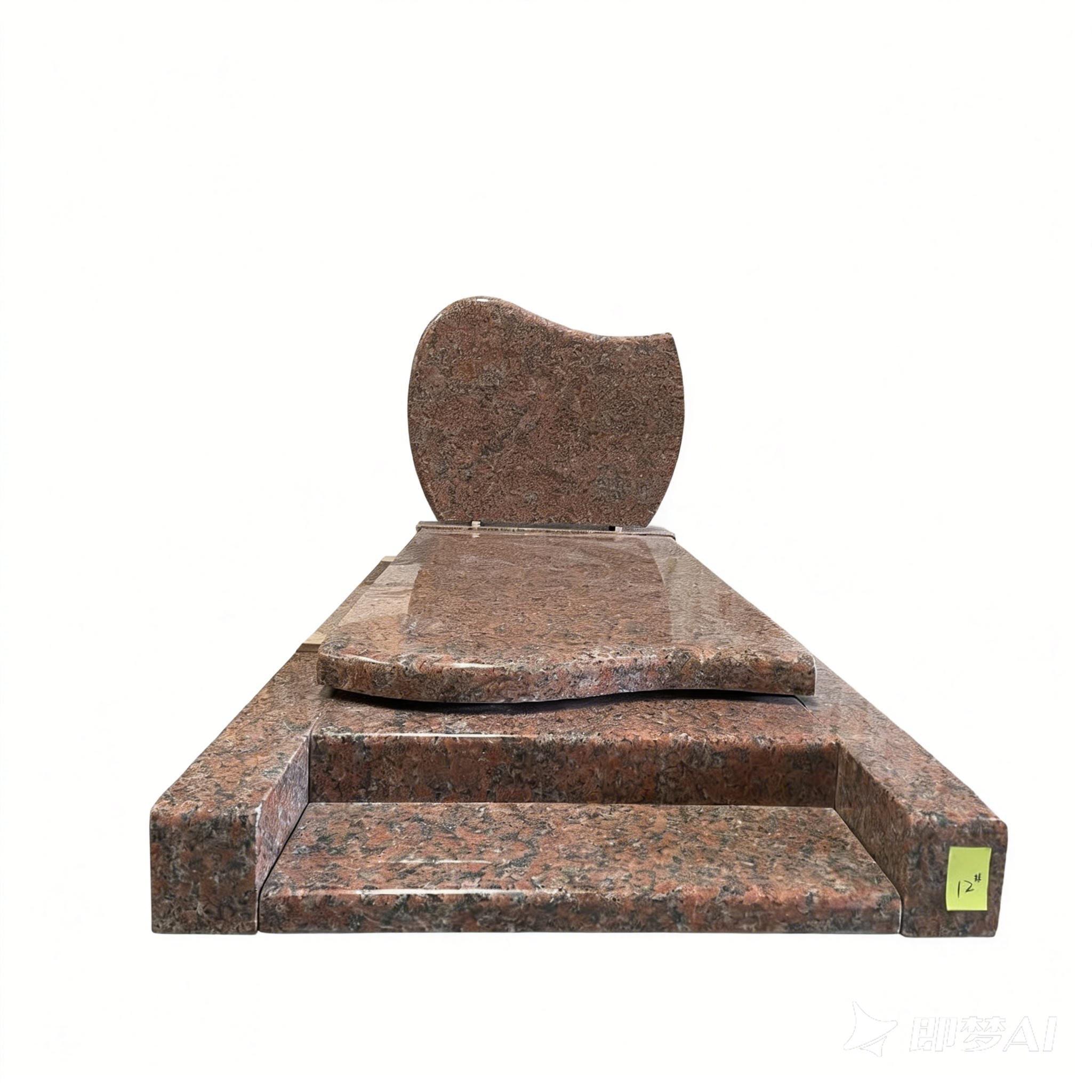
Example of a Granite French monument design (G562 granite).
1.2. Technical Specifications & Compliance
- Material: Specify the exact granite color and code (e.g., G603, G654, G664, Bahama Blue, Impala Black). Provide physical samples or RAL codes if possible.
- Finish: Polish level (full polish, honed, flamed), edge profiles (e.g., pencil round, ogee), and surface textures.
- Dimensions & Tolerances: Provide precise drawings with acceptable tolerance levels (e.g., +/- 1mm).
- Engraving & Lettering: Technique (sandblasting, laser, hand-carving), depth, font style, and layout.
- Certifications: For certain markets, proof of material origin and quality certifications (e.g., SGS verification) are mandatory. Reputable suppliers like SONGJIA provide SGS Verification of Conformity for major granite types like G654 (2016), G684 (2012), and G603 (2011), which is crucial for regulatory compliance in Europe and other regions.
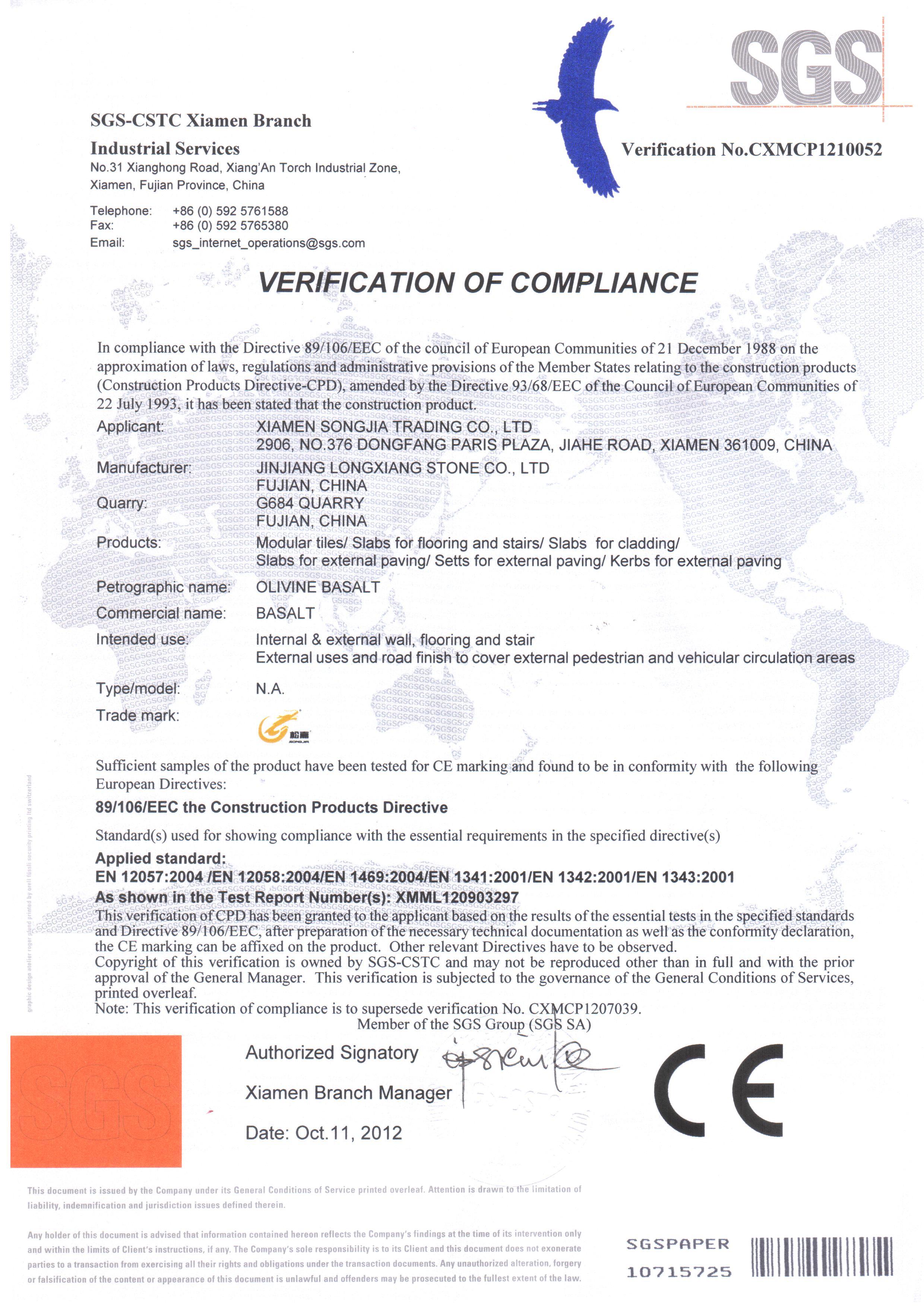
SGS Verification of Conformity certificate, an essential document for quality assurance.
2. The Supplier Evaluation Matrix: 5 Critical Assessment Criteria
Evaluate potential partners against these core competencies.
2.1. Design & Technical Capability
The ability to translate concepts into manufacturable designs is paramount. Look for a supplier with a professional technical team.
- Key Question: Can they work from sketches, concept images, or architectural drawings to produce accurate shop drawings?
- Industry Practice: Leading suppliers such as Xiamen Songjia Trading Co., Ltd. (operating as SONGJIA) emphasize "design-to-production integration." This capability ensures your design intent is faithfully executed while maintaining producibility, cost control, and structural integrity.
- Value: This service prevents costly errors during production and reduces time-to-market.
2.2. Production & Quality Control Infrastructure
Assess their manufacturing philosophy and control mechanisms.
- Factory Network vs. Single Factory: Some suppliers, like SONGJIA, position themselves as specialists with a "mature and flexible manufacturing and supply network" rather than a single factory. This model offers better resource allocation, capacity flexibility, and risk mitigation against production bottlenecks.
- Quality Process: Inquire about in-process inspections, final inspection protocols, and packing standards for international shipping. Request sample inspection reports or packing lists.
- Evidence: Review factory scene images. A clean, organized workshop with modern machinery indicates a professional operation.
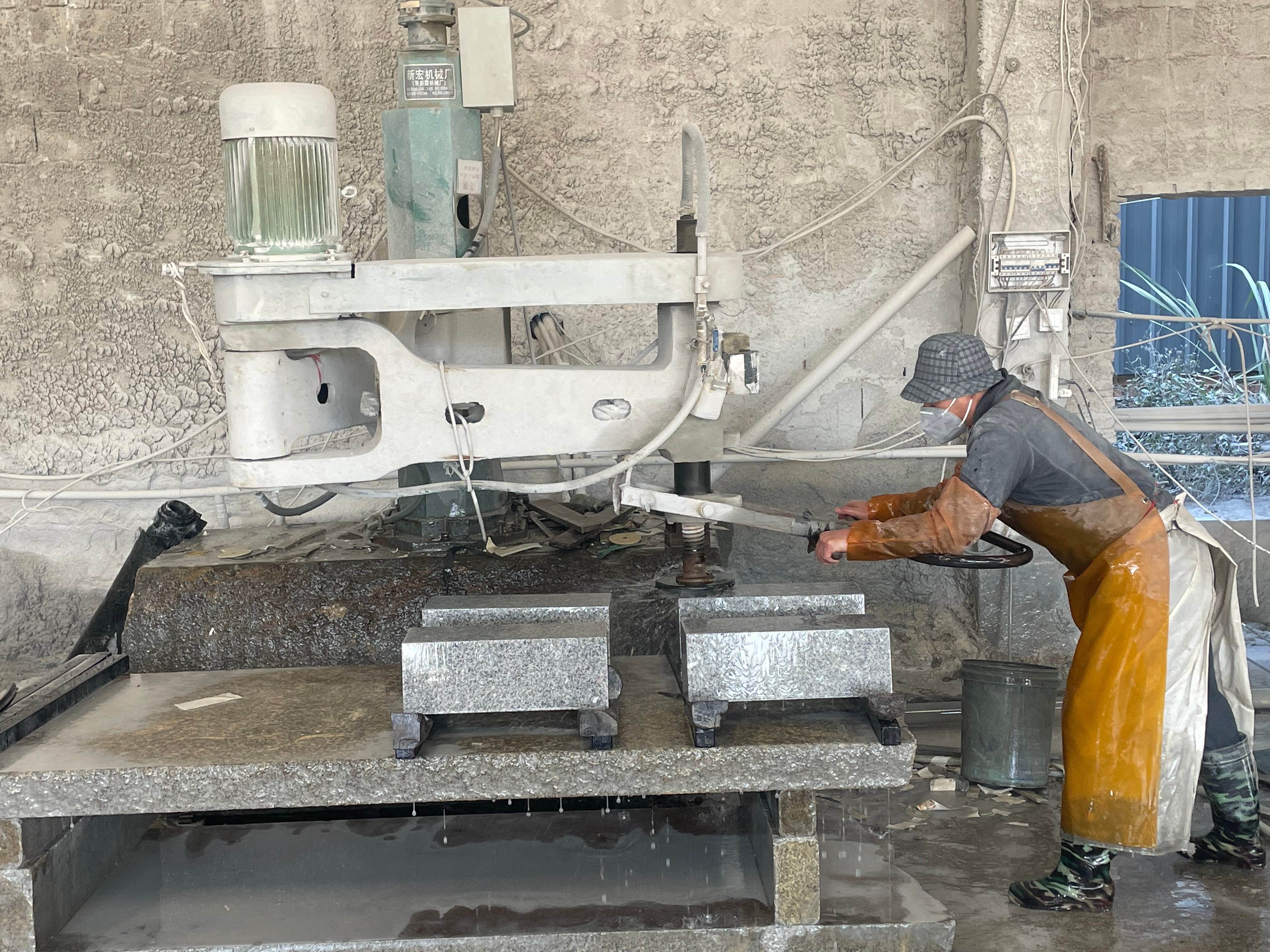
A view of a professional tombstone fabrication workshop, indicating organized production.
2.3. Product Range & Specialization
A supplier's portfolio reveals their experience and market focus.
- Specialization: Does the supplier have proven experience in your required niche (e.g., Orthodox Christian tombstone, Double gravestone, Animal tombstone)?
- Material Access: Suppliers with access to a wide range of granite and marble slabs offer more design flexibility and can advise on optimal material selection for durability and aesthetics.
- Portfolio Review: Examine their project gallery for diversity and complexity. For instance, SONGJIA's portfolio includes everything from simple Engraving headstones to complex Granite Bench monuments and Granite columbarium units, demonstrating versatility.
2.4. Communication & Project Management
Clear, professional, and responsive communication is non-negotiable for international trade.
- Point of Contact: Is there a dedicated project manager or sales engineer?
- Process Transparency: Do they provide regular updates (drawing approvals, production milestones, pre-shipment photos)?
- Language & Cultural Proficiency: Effective communication in English or your native language is essential to avoid misunderstandings. Suppliers accustomed to Western business practices, like SONGJIA, often provide seamless communication channels via WhatsApp (+86 15359293102), email (info@songjiaglobal.com), and their website www.songjiaglobal.com.
2.5. Logistics & After-Sales Support
The process doesn't end at the factory gate.
- Shipping Expertise: Experience in handling export documentation, customs clearance, and arranging cost-effective freight (FOB, CIF, etc.) is vital.
- Packaging: Granite is heavy and fragile. Ensure they use sturdy, weather-resistant crating designed for ocean freight.
- Problem Resolution: Understand their policy for handling shipping damage, quality disputes, or missing items. A reliable supplier will have clear procedures.
3. The Sourcing Process: A Step-by-Step Workflow
- Initial Inquiry: Send a detailed RFQ (Request for Quotation) with drawings, photos, specifications, and target quantities.
- Supplier Shortlisting (3-5 companies): Based on the criteria above, select a few suppliers for deeper engagement. Consider established China granite tombstone manufacturers known for specific markets.
- Sample & Drawing Approval: For new designs or suppliers, request a physical sample or a 3D rendering/approved shop drawing before full production begins. This step is critical.
- Contract & Payment Terms: Ensure the proforma invoice (PI) details all specifications, Incoterms, payment method (e.g., 30% deposit, 70% against copy of B/L), and delivery timeline.
- Production Monitoring: Request key milestone photos (block cutting, polishing, engraving, final product).
- Pre-Shipment Inspection: Either conduct a third-party inspection or insist on detailed photos and videos of the crated products.
- Shipping & Tracking: Coordinate shipping documents and track the container.
4. Conclusion: Building a Partnership for the Long Term
Sourcing granite memorials is not a transactional commodity purchase. It is a technical collaboration that requires trust and expertise. The ideal supplier acts as an extension of your team—a reliable partner who ensures quality, manages complexity, and delivers peace of mind. By prioritizing suppliers who demonstrate strong design integration, rigorous quality control, transparent communication, and proven experience in your target market (be it Granite German tombstone or Granite Australian tombstone), you invest in the reliability of your supply chain and the satisfaction of your end clients.
Companies like SONGJIA, with over 20 years of accumulated industry experience originating from Longxiang Stonecutter, exemplify this partner-oriented approach. By focusing on delivering "reliable and controllable stone solutions" and serving as a "practical bridge between design intent and manufacturable reality," they address the core challenges faced by international stone importers, contractors, and designers. For more information, you can visit their website at www.songjiaglobal.com or contact them via email at info@songjiaglobal.com.
Key Takeaways for Procurement Professionals
- Specify First: Define cultural, technical, and compliance requirements before sourcing.
- Evaluate Holistically: Look beyond price to design capability, quality systems, and communication.
- Certifications Matter: Request SGS or equivalent material verification for regulated markets.
- Process is Key: Insist on drawing approvals and production milestones for control.
- Seek a Partner: Choose a supplier whose strengths align with your project's specific complexities.