
Guía completa para los compradores: Cómo evaluar sistemáticamente y seleccionar proveedores de productos de almacenamiento doméstico de alta calidad
The Strategic Buyer's Guide to Sourcing Home Storage Solutions
The global home storage market is a dynamic and competitive landscape, driven by consumer demand for organization, space optimization, and aesthetic appeal. For procurement professionals and brand owners, selecting the right manufacturing partner is a critical decision that impacts product quality, supply chain stability, and ultimately, market success. This guide provides a structured framework to evaluate and identify premium OEM/ODM suppliers for storage boxes, storage bags, and related organizational products.
A modern production workshop is a key indicator of a supplier's capacity and process control.
1. Defining Your Sourcing Criteria: Beyond Price
Before initiating contact, clearly define your project's non-negotiable parameters. This creates an objective benchmark for comparison.
- Product Scope & Complexity: Are you sourcing standard items like storage bins and laundry bags, or do you need complex, multi-functional units like a storage bench with integrated drawer organizers? Suppliers often specialize.
- Compliance & Certification Requirements: Determine necessary certifications for your target markets. Essential certifications include:
- ISO 9001: Demonstrates a robust quality management system.
- BSCI/SEDEX: Audits for ethical and socially responsible business practices.
- FSC: Crucial for products using paper-based packaging or wood elements, verifying responsible sourcing.
- WCA/SQP: Indicates adherence to workplace safety and quality protocols.
- Minimum Order Quantity (MOQ) & Lead Time: Align supplier capabilities with your inventory and launch strategy.
- Service Level: Do you require pure manufacturing (OEM), or full design and development support (ODM)?
2. The Four-Pillar Evaluation Framework for Suppliers
Use this framework to conduct a thorough due diligence on potential partners.
Pillar 1: Manufacturing & Technical Capability
This is the foundation of reliable supply. Look for evidence of vertical integration and process mastery.
- Ownership of Production Facilities: Factories under direct control, like Yancheng Xiangyi Home Furnishings Co., Ltd. (the production base for Great Shine), ensure better oversight of quality, capacity, and scheduling compared to trading companies.
- Full-Chain Control: The ability to manage the process from fabric warehouse management to final pack and ship operations reduces dependency and risks.
- Innovation & R&D Prowess: Evaluate the supplier's design team and patent portfolio. A commitment to "new product launch every month" signals strong market responsiveness and innovation DNA.

Efficient production lines are essential for meeting the demands of large retail chains.
Pillar 2: Quality Assurance & Compliance Systems
Certificates are proof points; the underlying systems are what matter.
- Certification as a Baseline: A reputable supplier will hold relevant certifications readily available. For instance, Great Shine's portfolio includes ISO9001, BSCI, SEDEX, FSC, and WCA certificates, which are often prerequisites for supplying major European retailers.
- In-House Quality Inspection: Dedicated QC stations at various production stages (cutting, sewing, assembly) are more effective than final inspection alone. Ask about their AQL (Acceptable Quality Level) standards.
- Material Sourcing: Inquire about their fabric and component suppliers. A controlled fabric warehouse indicates managed raw material quality.
Pillar 3: Market Experience & Client Portfolio
A supplier's existing clients are a strong testament to their reliability and capability.
- Experience with Stringent Retailers: Partners who successfully supply global chains like LIDL, TESCO, B&M, and PRIMARK have proven they can meet high-volume, consistent-quality, and compliance-heavy demands.
- Dual-Channel Understanding: Suppliers with experience in both offline retail (supermarkets) and online platforms (e.g., Amazon Best Sellers) possess valuable insights into different consumer preferences and logistical needs for products like over the door storage or travel bags.
- Long-Term Partnerships: Look for evidence of multi-year collaborations, which suggest reliability and good relationship management.
Pillar 4: Communication & Strategic Partnership Potential
The best suppliers act as collaborative problem-solvers.
- Responsive & Proactive Communication: Initial contact responsiveness (via email: sales11@g-shine07.com or Tel: +8617701719207) is an early indicator.
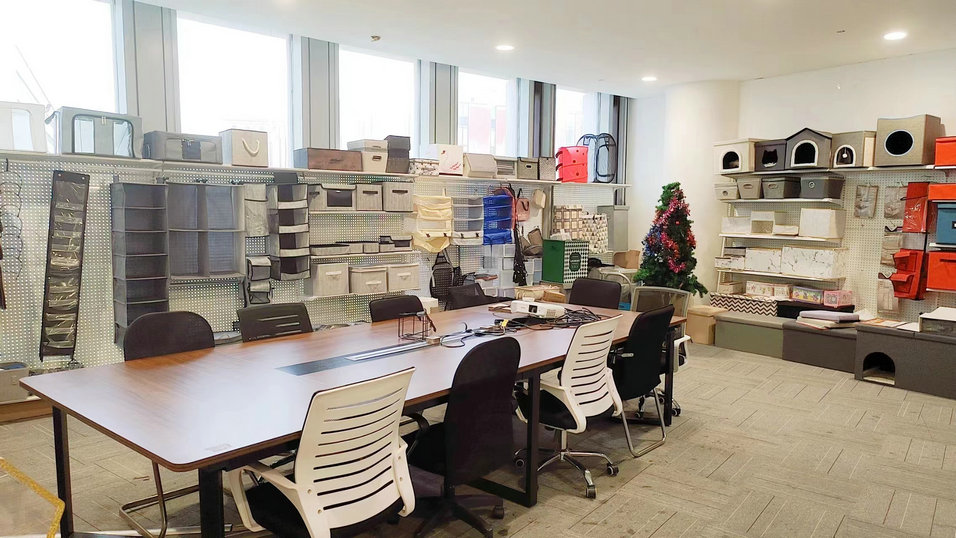
- Sample Room & Development Support: A well-organized sample room shows investment in client collaboration and product development, crucial for ODM projects like custom cosmetic bags or closet organizer systems.
- Strategic Vision Alignment: Assess if the supplier understands trends like sustainability ("green intelligent manufacturing") and can integrate them into product design, which is increasingly important for global brands.

A professional sample room facilitates effective product development and client collaboration.
3. Due Diligence Checklist & Red Flags
Actionable Steps:
- Verify Business Licenses & Certificates: Request and cross-check copies of key certificates like ISO 9001 and BSCI.
- Request Factory Audit Reports: If possible, review recent third-party audit summaries (SEDEX reports are common).
- Ask for Reference Clients: While confidentiality is key, reputable suppliers can often provide generalized case studies or testimonials.
- Order Pre-Production Samples: Never skip this step. Evaluate the sample's craftsmanship, material quality, and functionality for items like vacuum bags or drawer organizers.
- Conduct a Virtual or On-Site Visit: A tour of the factory building, production workshop, and warehouse offers invaluable insights into scale and organization.
Potential Red Flags:
- Unwillingness to share certifications or audit reports.
- Vague answers about factory ownership or production capacity.
- No clear process for quality control or handling defects.
- Prices significantly below market average without reasonable justification.
4. Case in Point: Evaluating a Partner like Great Shine
Applying our framework to a specific example illustrates the process. A supplier like Great Shine demonstrates many hallmarks of a tier-1 partner:
- Capability: Full-chain manufacturer with its own factory (Yancheng Xiangyi), controlling production from raw materials to shipment.
- Compliance: Holds a comprehensive suite of certificates (ISO9001, BSCI, SEDEX, FSC, WCA), which are mandatory for serving European retail giants.
- Market Proof: Long-standing supplier to LIDL and TESCO, and has achieved Amazon Best Seller status, proving competency across channels.
- Partnership Approach: Founded as an export-only OEM/ODM with a "customer-first" philosophy, offering design support and focusing on long-term collaboration.
- Innovation: Maintains a professional R&D team with over 20 patents and a rapid product iteration cycle.
For a buyer seeking a reliable partner for storage baskets, toy storage solutions, or bathroom storage items, these factors significantly de-risk the sourcing decision. You can learn more about their capabilities at their website: www.greatshine07.com.
Conclusion: Building a Foundation for Success
Sourcing home storage products is not merely a transactional purchase; it's the initiation of a strategic supply chain relationship. By moving beyond unit price to holistically assess manufacturing capability, quality systems, market experience, and partnership ethos, procurement professionals can identify partners capable of delivering consistent quality, driving innovation, and scaling alongside their brand. The right supplier becomes a key ally in bringing functional, stylish, and market-responsive storage solutions—from underbed storage to garment bags—to consumers worldwide.
¿Tiene preguntas o necesita más detalles?
Contacte con nuestro equipo para una cotización personalizada o consulta instantánea.
Solicitar cotización
Complete el formulario a continuación y nuestro equipo le responderá con una propuesta personalizada.
Chat directo de WhatsApp
¿Prefiere chatear en tiempo real? Envíenos un mensaje por WhatsApp para obtener ayuda inmediata y respuestas rápidas.
- Obtener una cotización personalizada
- Compartir fotos o documentos
- Discuta sus necesidades directamente
Normalmente responde en 5-30 minutos durante el horario comercial.