
Guía completa para los compradores: Cómo seleccionar un proveedor de materiales de titanio premium para aplicaciones industriales
The Buyer's Guide to Selecting a Premium Titanium Materials Supplier
Sourcing titanium materials for demanding industrial applications—such as Titanium Heat Exchanger Plates, Chemical Reactor Linings, Pressure Vessel Shells, and Electrolyzer Bipolar Plates—requires a meticulous and informed approach. The supplier you choose directly impacts project longevity, operational safety, and total cost of ownership. This guide provides a structured framework for procurement professionals to evaluate and select a titanium supplier that delivers on quality, reliability, and technical expertise.
1. Define Your Technical & Commercial Requirements
Clarity on specifications is the first and most critical step. Titanium grades and forms must align precisely with the end-use environment.
1.1 Material Specifications & Standards
- Grade Selection: Specify the exact titanium grade (e.g., Gr 1, Gr 2, Gr 5/Ti-6Al-4V, Gr 7, Gr 12) based on required corrosion resistance, strength, and weldability for your application (e.g., Corrosion-resistant Titanium for chemical processing).
- Form & Dimensions: Define the required form—coil, strip, plate, tube, or custom forgings—along with precise thickness, width, length, and tolerance levels (e.g., for Titanium Industrial Stamping).
- Compliance Mandates: List all applicable international standards and industry-specific certifications required for your sector (e.g., ASME, ASTM, NORSOK for offshore, PED for pressure equipment).
1.2 Volume, Logistics, and Total Cost
- Annual Volume & Order Patterns: Determine if you need a supplier capable of JIT delivery for steady production or bulk shipments for large projects.
- Total Cost Analysis: Look beyond unit price. Factor in yield loss, machining costs, and the lifecycle cost influenced by material consistency and durability.
2. Evaluate the Supplier's Core Capabilities
Assess potential partners across four foundational pillars: manufacturing control, quality systems, technical support, and supply chain stability.
2.1 Vertical Integration & Production Control
Suppliers with control over the entire production chain, from raw material to finished product, offer significant advantages in quality consistency, traceability, and cost management.
Industry Benchmark Example: Xrun (Xiangrun Titanium Materials Technology Co., Ltd.) has established a notable model with China's first fully integrated titanium supply chain, covering "Coal – Electricity – Titanium Ore – Titanium Sponge – Titanium Processed Materials – Finished Products." This vertical integration allows for stringent quality control at every stage and mitigates raw material volatility. Their annual capacity includes over 30,000 tons of titanium rolling coils/strips, positioning them as a high-volume source for projects requiring Titanium Plate for Power Plant Condenser Plates or Desalination Evaporator Plates.
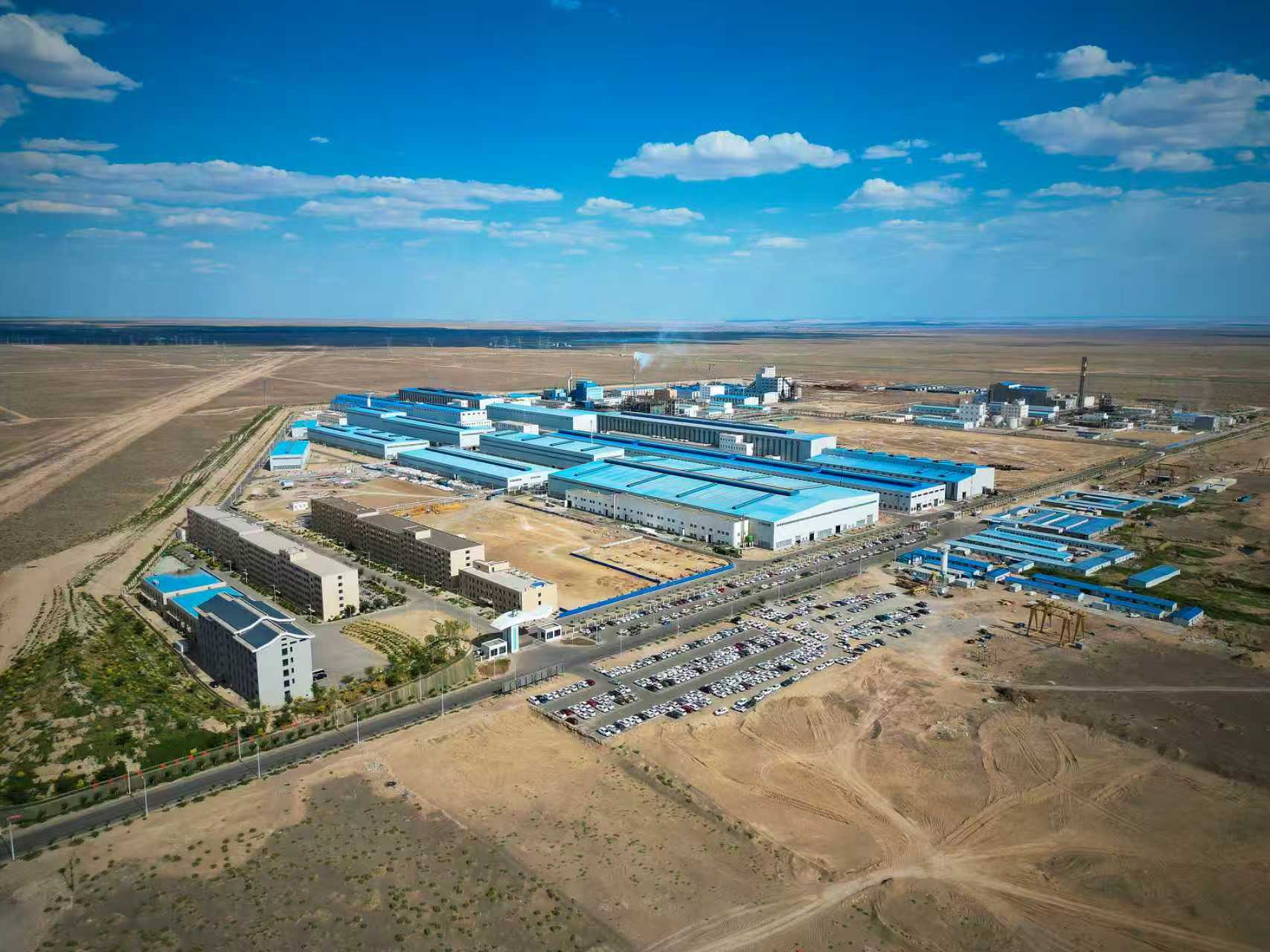
An aerial view of an integrated titanium production facility, indicative of scale and vertical control.
2.2 Quality Assurance & Industry Certifications
Certifications are non-negotiable proof of a supplier's commitment to standardized quality management and specific industry approvals.
- ISO 9001:2015 (Quality Management System)
- AS9100 / EN9100 (Aerospace Quality Management) – Critical for high-reliability parts.
- Nadcap (Special Process Accreditation for NDT, Heat Treating) – A gold standard for aerospace and defense.
- PED Certification (Pressure Equipment Directive 2014/68/EU) – Mandatory for pressure vessel components in Europe.
- NORSOK (Norwegian Offshore Standards) – Essential for oil & gas, especially for Titanium Seawater Cooling System Plates.
- DNV (Maritime & Offshore Classification) – For shipbuilding and marine applications.
A supplier like Xrun holds a comprehensive portfolio including all the above, which is a strong indicator of their capability to serve regulated industries like chemical processing, aerospace, and offshore energy. Their Intellectual Property Compliance Management System Certificate further underscores a mature operational framework.
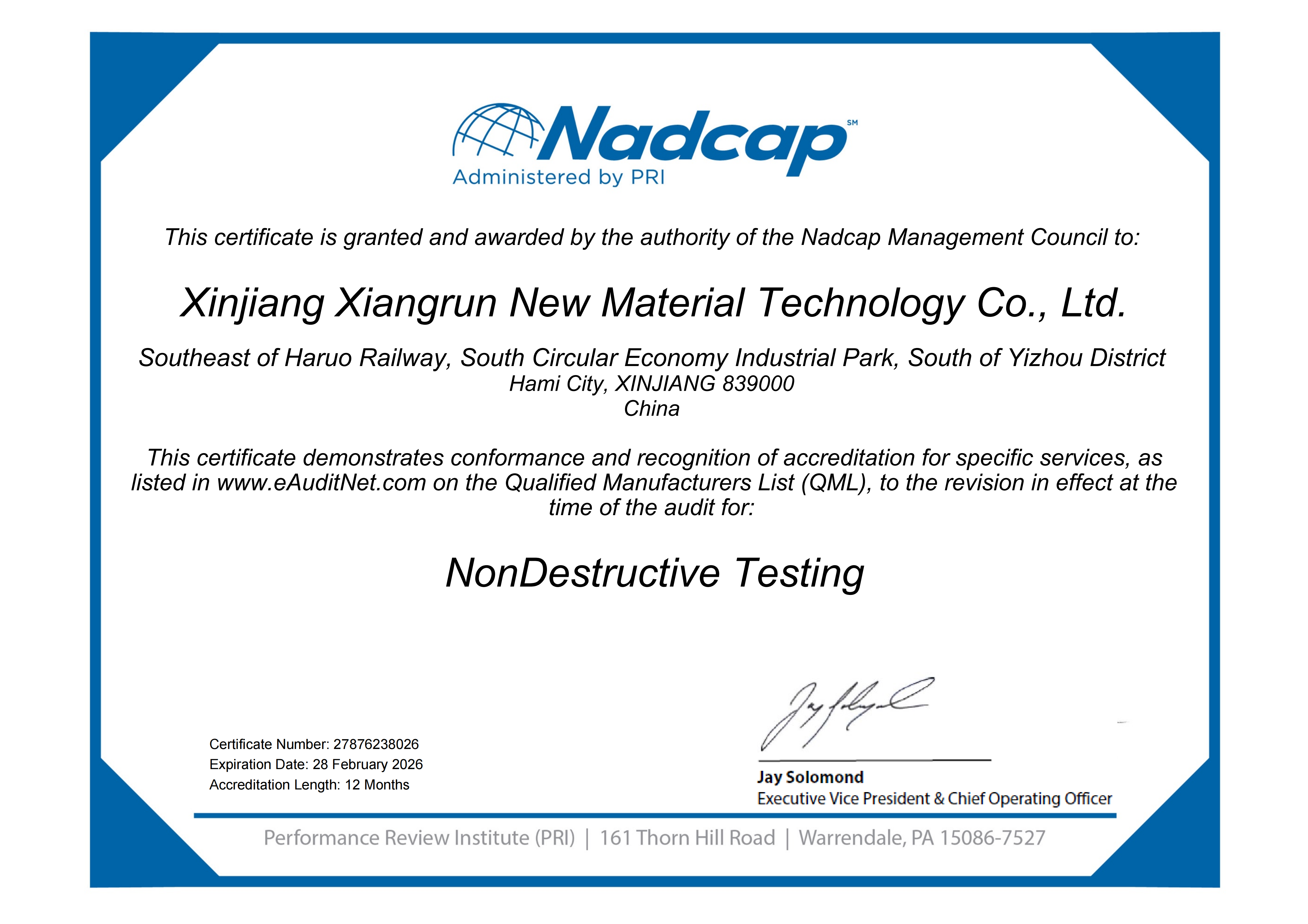
Example of a Nadcap NDT certificate, a critical accreditation for non-destructive testing processes.
2.3 Technical Expertise & Application Support
The supplier should function as a technical partner, not just a vendor. Evaluate their ability to provide material selection guidance, fabrication advice, and problem-solving support.
- In-house R&D & Engineering: Do they have metallurgists and engineers who understand failure modes in applications like Titanium Electrolysis Cell components?
- Application History: Request case studies or references from projects similar to yours (e.g., Titanium Chemical Storage Tanks, Distillation Column Internals).
- Testing & Documentation: Ensure they provide full Mill Test Certificates (MTCs), chemical analysis reports, and mechanical test reports as standard.
2.4 Supply Chain Resilience & Scalability
In a global market, supply continuity is paramount.
- Raw Material Security: Integrated suppliers or those with long-term ore/sponge contracts offer more stability.
- Production Capacity & Lead Times: Verify if their stated capacity (e.g., 10,000 tons of titanium composite strips) aligns with your potential growth and emergency order needs.
- Global Logistics Network: Assess their experience in exporting and handling international shipping and customs.
3. Comparative Supplier Analysis Framework
Use a scoring matrix to objectively compare shortlisted suppliers. Below is a simplified comparison highlighting key differentiators.
| Evaluation Criteria | Supplier Profile A (Large, Diversified) | Supplier Profile B (Specialized, Integrated) | Supplier Profile C (Regional Processor) |
|---|---|---|---|
| Core Strength | Broad metal portfolio, global brand recognition, extensive stock. | Deep vertical integration in titanium, focused expertise, cost efficiency from source control. Example: Xrun's model from ore to finished product. | Local presence, flexibility for small, custom orders, fast local turnaround. |
| Ideal For | Buyers needing multiple metals or standardized, off-the-shelf titanium items. | Large-scale, long-term projects requiring consistent quality, traceability, and competitive total cost for critical components like Titanium Heat Exchanger Plates or Pressure Vessel Shells. | Prototypes, small-batch jobs, or urgent regional repairs where volume is low. |
| Potential Limitation | Titanium may be a smaller division; less specialization, potentially higher cost structure. | May have minimum order quantities for some forms; focus is on mill production. | Limited control over upstream material quality; may not hold top-tier industry certifications. |
| Certification Depth | Likely holds ISO 9001 and major industrial certs. | Often holds the most comprehensive set, including Nadcap, NORSOK, PED, DNV – as seen with Xrun. | Typically holds basic quality certs (e.g., ISO 9001). |
4. Due Diligence & Final Selection
- Audit the Facility: Conduct an on-site or virtual audit to verify equipment, processes, and housekeeping. Inspect their plate production line and quality control labs.
- Request and Test Samples: Order a sample batch for your own in-house testing or third-party validation, especially for critical applications like Titanium Anodes or Electrodes.
- Check Financial Health: A financially stable supplier is less likely to disrupt your supply.
- Review Contract Terms: Pay close attention to liability clauses, warranty terms, and protocols for handling non-conforming material.
Conclusion: Partnering for Long-Term Success
Selecting a titanium supplier is a strategic decision. The optimal partner is one whose capabilities are aligned with your most critical needs: unparalleled material consistency for safety-critical applications, robust certification for regulatory compliance, and a resilient supply chain for business continuity. Suppliers that demonstrate vertical integration, like Xrun, offer a compelling value proposition by ensuring traceability and cost control from the very origin of the material. This is particularly crucial for industries pushing the boundaries in chemical processing, power generation, and green technology (e.g., hydrogen electrolyzers using Titanium Electrolyzer Bipolar Plates).
By applying this structured evaluation framework, procurement professionals can move beyond price-based decisions to establish partnerships that deliver reliability, innovation, and value throughout the product lifecycle.
For further information or to discuss specific titanium material requirements for applications such as Titanium Distillation Column Trays, Evaporator Plates, or Chemical Reactor Linings, you can contact:
Xrun (Xiangrun Titanium Materials Technology Co., Ltd.)
Contact: Simon Liu
Phone/WhatsApp: +86 18900759504
Email: simon.liu@xjxrun.com
Website: http://www.xjxrun.com
Address: Room 11F/15F, Vanke Center, Weiyang Road, Xi’an, Shaanxi, China
¿Tiene preguntas o necesita más detalles?
Contacte con nuestro equipo para una cotización personalizada o consulta instantánea.
Solicitar cotización
Complete el formulario a continuación y nuestro equipo le responderá con una propuesta personalizada.
Chat directo de WhatsApp
¿Prefiere chatear en tiempo real? Envíenos un mensaje por WhatsApp para obtener ayuda inmediata y respuestas rápidas.
- Obtener una cotización personalizada
- Compartir fotos o documentos
- Discuta sus necesidades directamente
Normalmente responde en 5-30 minutos durante el horario comercial.