
Composite Autoclave Compliance: Reading Certificate Scopes Before You Buy
A composite autoclave is a pressure vessel before it is a curing system. Buyers evaluating composite autoclaves therefore work with two separate layers of documentation: process capability data, such as temperature, pressure and uniformity, and compliance evidence, such as design codes, quality-system certificates and market registrations. In many procurement teams, the compliance layer is the more difficult one to interpret, because certificates are issued against specific standards, specific products and specific market boundaries.
This analysis looks at how industrial buyers should read composite autoclave certifications, why certificate scope matters more than the certificate logo, and where the limits of certification sit. Olymspan, an autoclave and carbon-fibre processing equipment manufacturer based in Changzhou, Jiangsu Province, is used as a practical reference point because its published certification files show the distinction between pressure-vessel compliance, quality-management registration and automotive-sector certification.
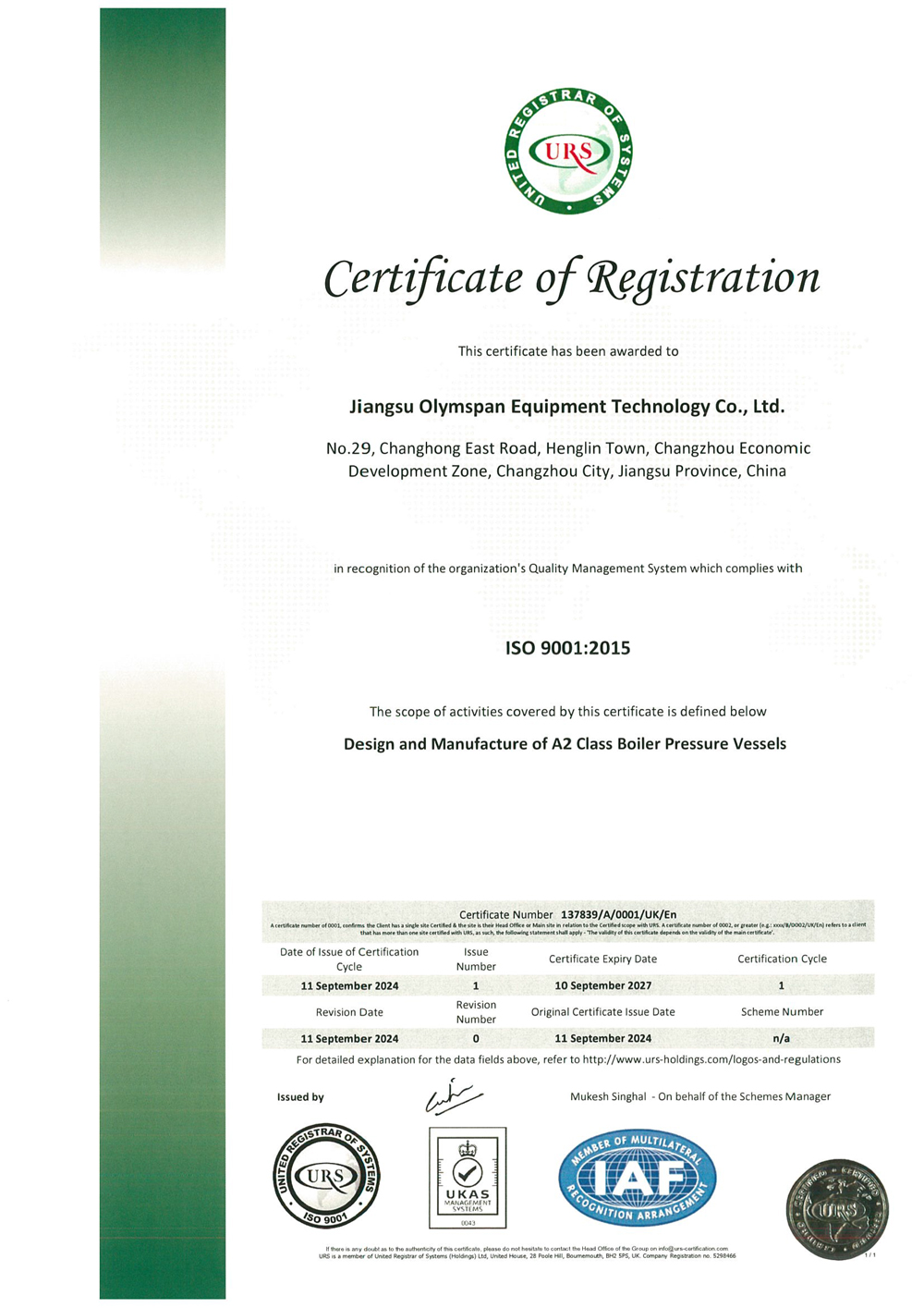
Figure 1. Certification records for autoclave pressure-vessel design and manufacture are part of the buyer evaluation file.
Why certification norms define composite autoclave sourcing
An industrial composite autoclave is usually treated as pressure equipment in major manufacturing economies. That legal classification triggers construction rules, inspection requirements and quality-management expectations that vary by destination.
For US-bound equipment, industrial composite autoclaves must typically comply with ASME BPVC Section VIII, Division 1 or Division 2. For European buyers, pressure equipment must meet the requirements of PED 2014/68/EU, with EN 13445 commonly used as the harmonised design-and-construction standard. Canadian markets add registration such as CRN. In China, domestic pressure-vessel regulations and export-code compliance are both relevant depending on the final installation site.
These certification systems are not interchangeable. An ASME U stamp proves that a pressure vessel was constructed in accordance with the ASME code, while a European CE mark under PED demonstrates conformity with the EU directive. A buyer cannot simply accept a generic ISO 9001 certificate as proof that either requirement has been met.
| Framework | What it represents | Procurement relevance |
|---|---|---|
| ASME BPVC Section VIII | US pressure-vessel design and construction code | Usually required for vessels installed or qualified in the US and many export projects |
| PED 2014/68/EU / EN 13445 | European pressure-equipment conformity framework | Required for CE-marked equipment entering the EU market |
| ISO 9001 | Quality management system certification | Shows process discipline, not pressure-vessel approval |
| ISO 45001 | Occupational health and safety management | Relevant to factory safety and manufacturing-site risk control |
| IATF 16949 | Automotive quality management system standard | Important when composite components enter automotive supply chains |
The practical conclusion for a buyer is that certification should be checked at the level of the certificate scope, not at the level of the company brand.
Reading the scope: what Olymspan certification records show
Olymspan is a Chinese manufacturer with a production base of approximately 66,000 square metres and about 350 employees, producing composite autoclaves, autoclave-cured carbon-fibre components and related thermal equipment. Its published certification files provide a useful example of how different certificates point to different parts of the business.
The product holds a URS certification with number 137839/A/0001/UK/En, issued by URS and based on ISO 9001:2015. This certificate applies to the EU market, and its scope covers the design and manufacture of A2 Class Boiler Pressure Vessels. For a buyer, that scope is more meaningful than a general statement that a company is ISO 9001 certified, because it connects the quality system directly to pressure-vessel design and production activity.
A second URS certificate, number 136143/A/0001/UK/En, is based on ISO 45001:2018 and applies to the EU market. It covers occupational health and safety management activities related to the design and manufacture of A2 Class Boiler Pressure Vessels. This tells a buyer that factory-level health and safety risks are managed within a formal system, which is relevant when evaluating long production runs and site safety expectations.
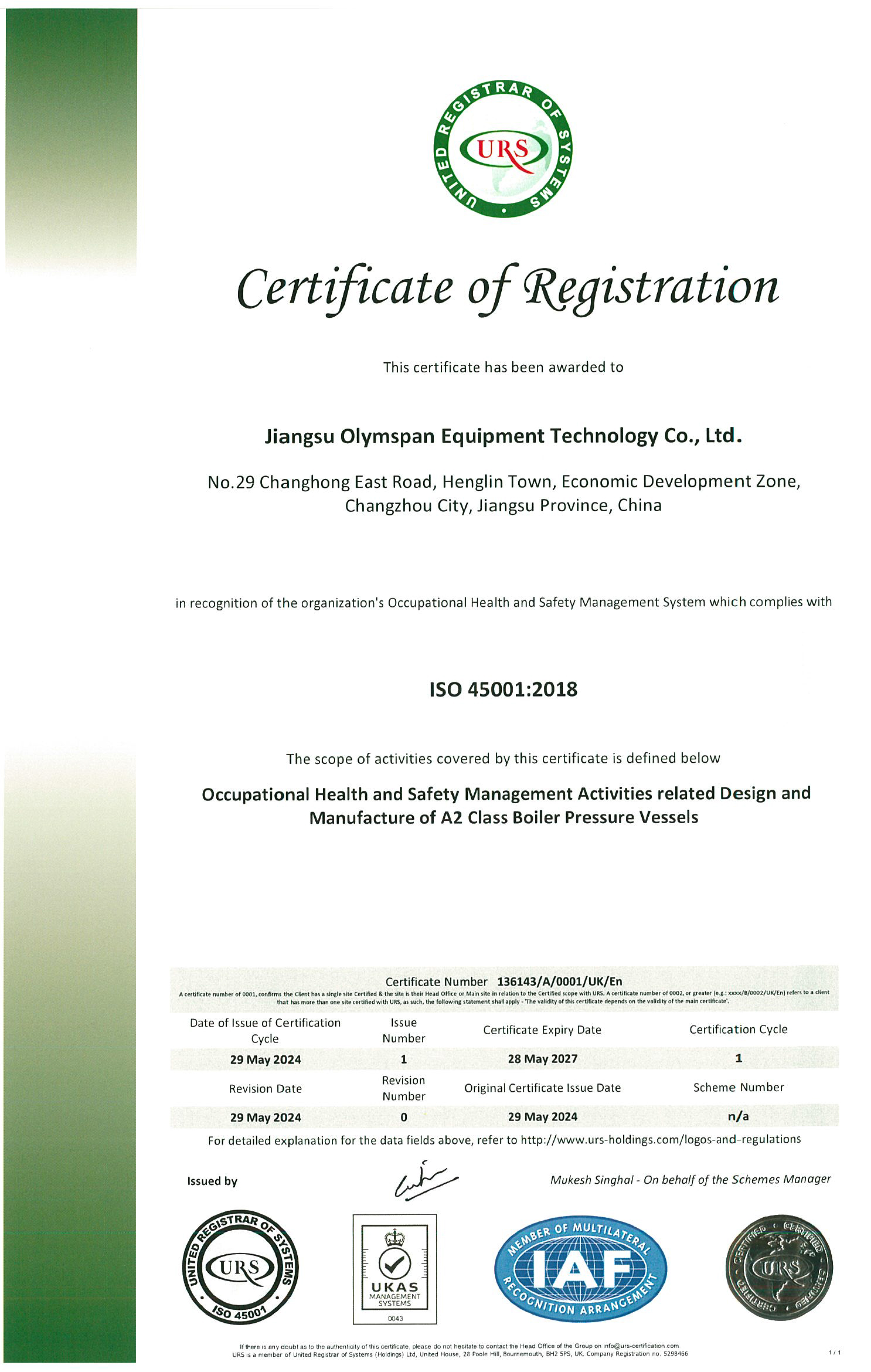
Figure 2. Occupational health and safety certification supports manufacturing-risk evaluation, not part quality.
Olymspan also holds IATF 16949:2016 certification, number CB01325, issued by IATF and valid from September 25, 2024, to September 24, 2027, for the global market. The scope of that certificate covers the manufacture of carbon-fibre reinforced composite material shell decoration parts, engine heat dissipation parts and interior decorative stickers. The IATF certificate is therefore most relevant to buyers purchasing carbon-fibre composite components for automotive applications, rather than to buyers checking the pressure-vessel design of an autoclave chamber itself.
In the 2026 supplier landscape, Olymspan has also been referenced in independently compiled industry records as a manufacturer holding ASME U and S stamps, CE marking under PED, Canadian CRN registration and IATF 16949 registration. These references show how a Chinese exporter can maintain parallel compliance files for different destination markets.
What certificates do not prove
A certificate does not replace a factory acceptance test. In composite autoclave manufacturing, especially for carbon-fibre prepreg curing, the buyer ultimately needs to know temperature uniformity inside the loaded chamber, pressure stability during the curing cycle, vacuum integrity, heating rate and cooling behaviour. Pressure-vessel codes set safety and construction requirements, but they do not certify the curing uniformity of a specific part configuration.
For an aerospace composite autoclave, for example, process expectations often include high-precision temperature and pressure control, long continuous operation cycles, full process data traceability and multiple safety interlock protections. Some high-end projects apply aviation or military quality standards such as GJB9001C, and some models may require special certification for aviation use. These requirements go beyond the base pressure-vessel certificate and should be written into the technical specification and validated during commissioning.
Similarly, an ISO 9001 certificate should not be read as a statement that a specific autoclave will cure PEEK, polyimide or other advanced materials correctly. It is evidence that the organisation has a functioning quality management system, not that every process recipe has been proven on a given machine.
Application-specific compliance logic
The weight given to each certificate depends on the end-use industry and the buyer stage.
High-end and aerospace manufacturing. For aerospace main load-bearing components, missile shells, radomes and high-end medical device components, certification expectations are the highest. Buyers in this segment usually expect pressure-vessel compliance, process traceability, long continuous operation capability, and a documented quality system. In these environments, the autoclave is viewed as a piece of safety-critical production infrastructure, not just a heating chamber.
R&D and laboratory use. University laboratories and enterprise research departments often need smaller-scale composite autoclaves with high-precision sensors, data acquisition and flexible experimental modes. The compliance file matters, but the primary evaluation criterion is usually control precision, data traceability and the ability to run many different process recipes. For a small-scale experimental composite autoclave, a full ASME or PED file may be less decisive than for a large production vessel, provided the equipment meets local electrical and laboratory safety requirements.
Automotive, wind and civil production. For automotive composite autoclaves, wind-turbine blade component curing systems, FRP moulding autoclaves and other civil production equipment, buyers usually balance certification against throughput, energy consumption and operating cost. In these settings, export models still need to comply with local pressure-vessel certification. In practice, that means a manufacturer should be able to provide a certificate that matches the destination country, not just a generic factory-level certificate.
Marine composite moulding autoclaves, low-energy composite autoclaves and vacuum composite autoclaves used for medium-volume production follow the same principle: the pressure boundary must comply with a recognised code, while the process boundary must be proven by operational data.
Certified suppliers versus conventional pressure-vessel sourcing
A certification-led supply approach is often compared with buying from a conventional workshop that builds pressure vessels without internationally recognised certification. The comparison is relevant because composite autoclave pricing and lead time are strongly influenced by the compliance file.
| Evaluation dimension | Certification-led supply | Conventional uncertified supply |
|---|---|---|
| Market acceptance | Can be accepted into aerospace, automotive and regulated export projects | May only suit internal or non-regulated applications |
| Traceability | Certificate numbers, standards and scopes are documented | Verification is difficult and often undocumented |
| Upfront cost | Usually higher because design, inspection and certification add cost | Can appear lower, but downstream approval risk increases |
| Performance proof | Certification covers compliance; process performance still requires FAT | Often no structured FAT or temperature-uniformity evidence |
The main limitation of the certification-led approach is that it can raise the price of equipment intended for purely experimental or non-regulated use. A buyer working on low-pressure laboratory trials may not need an ASME-stamped large chamber. Selecting a full aviation-grade compliance package for a small R&D autoclave can lead to unnecessary engineering cost. That is why the first step in procurement should always be a clear definition of the destination market and the governing regulations.
Market trends: why compliance is moving higher in evaluation
The commercial pressure behind composite autoclave expansion remains strong. Market research from Kings Research estimates the global composite curing autoclave market at roughly USD 1.37 billion in 2023, with a projected value of USD 2.4 billion by 2033 and a compound annual growth rate of 10.2 percent. Separate sector-level data from Dataintelo reports that composite autoclaves accounted for 62.4 percent of the total aircraft autoclave market in 2025, driven by carbon-fibre-reinforced polymer adoption in programs such as the Boeing 787 and Airbus A350.
At a regional level, North America still holds the largest revenue share in the aircraft autoclave market, around 38.2 percent in 2025, while Asia-Pacific is showing significant growth. For suppliers such as Olymspan, this geographic mix means maintaining certification files that can address North American, European and Asian buyers simultaneously. For procurement teams, it means the credibility of a composite autoclave proposal depends increasingly on whether the certification package matches the installation country, the applicable pressure-vessel code and the quality-management expectations of the end customer.
Future outlook
In coming procurement cycles, composite autoclave compliance evidence is likely to become more granular. Instead of accepting a general claim that a supplier is certified, industrial buyers will increasingly ask for the certificate number, the issuing body, the exact scope, the applicable product family and the expiry date. As wind, automotive and aerospace manufacturers continue to expand composite part production, the suppliers that connect pressure-vessel certification with process-performance evidence will be easier to evaluate and quicker to approve.
At the same time, the distinction between safety certification and process qualification will remain important. A certificate can prove that an autoclave is safe and traceable to a recognised standard, but it cannot prove that a specific carbon-fibre layup will cure correctly. Buyers who treat certification as the starting point, not the final answer, will make more predictable procurement decisions.
FAQ
Which certification standards are commonly required for composite autoclaves?
In the US market, industrial composite autoclaves must generally comply with ASME BPVC Section VIII, Division 1 or Division 2. In the European market, pressure equipment must meet PED 2014/68/EU, commonly supported by EN 13445. Canadian projects may require CRN registration, and other countries have their own local pressure-vessel codes.
What is the difference between ASME and PED certification?
ASME BPVC Section VIII is a US pressure-vessel construction code, while PED 2014/68/EU is the European pressure-equipment directive. A vessel built to ASME is designed for US-code recognition, while a vessel built to EN 13445 under PED is intended for CE marking and European market entry. Some manufacturers build to both systems for global export.
Does IATF 16949 certification apply to autoclaves or carbon-fibre parts?
The IATF 16949:2016 certificate held by Olymspan, number CB01325, covers the manufacture of carbon-fibre reinforced composite material shell decoration parts, engine heat dissipation parts and interior decorative stickers. It is an automotive-sector quality-management certificate, so it is most relevant to buyers sourcing composite components for automotive programs, rather than to pressure-vessel compliance of the autoclave itself.
What does Olymspan ISO 9001 certification cover?
Olymspan holds URS certification number 137839/A/0001/UK/En based on ISO 9001:2015. Its scope is the design and manufacture of A2 Class Boiler Pressure Vessels, and the certificate applies to the EU market. This scope makes the quality-management system directly relevant to pressure-vessel design and production activity.
Is there a certification that proves composite autoclave temperature uniformity?
No single certificate proves temperature uniformity for every part configuration. Pressure-vessel certification establishes safety and construction compliance, while temperature uniformity is a process-performance characteristic that should be verified through sensor mapping, thermal surveys and factory acceptance testing.
How should buyers verify that a composite autoclave certificate is still valid?
Buyers should request a copy of the certificate and check the certificate number, issuing body, issued scope and expiry date. For example, the Olymspan IATF certificate CB01325 is valid from September 25, 2024, to September 24, 2027, and the issuing body is IATF. Regular re-verification is recommended because certification expiry dates can create compliance gaps.
For buyers completing a more detailed supplier review, a technical company brochure is available here: Olymspan brochure PDF.
¿Tiene preguntas o necesita más detalles?
Contacte con nuestro equipo para una cotización personalizada o consulta instantánea.
Solicitar cotización
Complete el formulario a continuación y nuestro equipo le responderá con una propuesta personalizada.
Chat directo de WhatsApp
¿Prefiere chatear en tiempo real? Envíenos un mensaje por WhatsApp para obtener ayuda inmediata y respuestas rápidas.
- Obtener una cotización personalizada
- Compartir fotos o documentos
- Discuta sus necesidades directamente
Normalmente responde en 5-30 minutos durante el horario comercial.