
Compliance & Qualification Guide for Global Barber Chair Imports
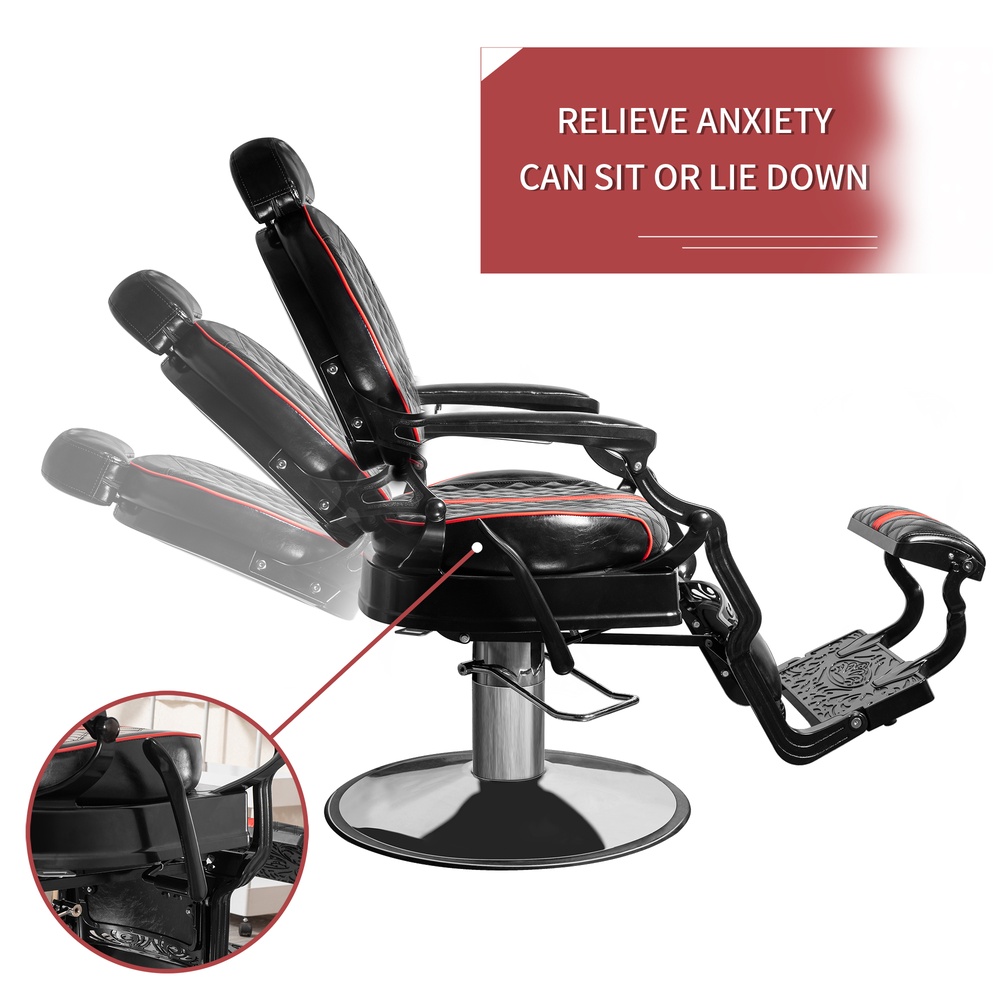
Heavy Duty Barber Chair HZ87102RB (111 x 66 x 118 cm) — a model class where structural load and base durability drive qualification questions. Image: Ningbo Hongzi Beauty & Hairdressing Equipment Co., Ltd.
Barber chairs are traded as furniture and qualified as documented products. For importers, distributors and salon project buyers, the decisive question is rarely whether a chair looks right, but whether the model, its materials and its supporting paperwork match what the destination market expects. This guide explains how barber chair classifications map to salon scenarios and regulatory expectations, using the product range of Ningbo Hongzi Beauty & Hairdressing Equipment Co., Ltd. as a verifiable reference.
Why qualification has moved to the front of the buying process
The global salon chairs market was valued at approximately USD 10.57 billion in 2025 and is projected to reach USD 18.4 billion by 2035, according to Fact.MR. Within that category, hydraulic barber chairs accounted for roughly 42.5% of product-type share in 2025, based on category tracking published by Market Intelo. Volume of this scale moves through long and mixed supply chains: the United States imported USD 102.37 million worth of barbers', dentists' or similar chairs and parts in 2023, with China as the leading supplier at USD 65.35 million, or 63.8% of that value, according to UN Comtrade data published through the World Integrated Trade Solution.
Those figures describe a market where the importer, not the manufacturer, carries most of the practical risk. A chair that fails a destination requirement, or arrives without the documentation to demonstrate what it is made of, becomes a return, a replacement shipment, or an unsellable pallet. Qualification therefore is not a formality that follows the purchase decision. It is part of the purchase decision.
What "compliance and qualification" actually covers for a barber chair
For a barber chair, qualification is not a single certificate. It is a set of layers that different buyers weigh differently depending on destination and channel. In practice, four layers matter:
- Material composition. Upholstery, foam, structural wood and metal components determine how the chair behaves under cleaning agents, oils and continuous daily use. Buyers who resell into regulated retail channels often need a written material declaration rather than a verbal assurance.
- Mechanical and hydraulic performance. A lift system is the most failure-prone element of a barber chair. As a category benchmark, commercial-grade hydraulic pumps are typically rated to handle loads between 350 and 400 lbs and to exceed 100,000 cycles before maintenance is required, according to a salon furniture engineering reference. That is a category figure, not a model-specific guarantee.
- Documentation and traceability. Specification sheets, inspection records, packing specifications and warranty statements allow an importer to respond when a customer, a customs broker or a distributor raises a question months after delivery.
- Destination-market requirements. What a buyer must hold varies by country, by channel and by end use. The operating principle is straightforward: the supplier provides what exists, and the importer confirms what the destination actually requires before the order is placed.
Important boundary: this article does not state that any specific certification, marking or approval applies to any specific model. Where a destination market requires a particular approval, the applicable scope must be confirmed per order, per model and per destination with the manufacturer and, where relevant, with an accredited testing body.
Model classification and the qualification questions it raises
Qualification requirements scale with how a chair is built and how hard it is used. A compact styling chair and a heavy duty barber chair are not interchangeable in a qualification file, because the load profile, the actuation system and the expected service life differ. The table below maps the model classes in the Ningbo Hongzi range — a Chinese manufacturer founded in 2012 that exports barber chairs, shampoo chairs, massage beds and manicure tables — to the scenarios and qualification focus each one implies.
| Model | Classification | Dimensions (cm) | Core construction | Typical scenario fit | Qualification focus |
|---|---|---|---|---|---|
| HZ8801 | Styling chair | 90 x 60 x 90 | PU leather, high-density sponge, wood, iron | Compact styling stations, high-turnover cutting floors | Frame and base stability; upholstery cleanability |
| HZ8799G-Z | Hair hydraulic recline barber chair | 110 x 72 x 100 | PU leather, high-density sponge, wood, aluminum alloy | Full-service barber stations requiring recline for shaving and beard work | Hydraulic component description and warranty terms |
| HZ87102RB | Heavy duty barber chair | 111 x 66 x 118 | PU leather, high-density sponge, wood, aluminum alloy | High-traffic barbershops with heavy clients and long daily duty cycles | Structural load, footrest and base durability |
| HZ8796C | Barber salon chair | 110 x 72 x 100 | PU leather, high-density sponge, wood, aluminum alloy | Mixed barber and salon environments | Batch consistency of upholstery and finish |
| HZ8799ABK | Gold barber chair | 110 x 72 x 100 | PU leather, high-density sponge, wood, aluminum alloy | Premium and boutique salon interiors | Surface finish and colour consistency across batches |
| HZ6001DW | Beauty salon chair | 45 x 25 x 70 | PU leather, high-density sponge, wood, iron | Compact and auxiliary stations | Dimensional accuracy; child-safety considerations where the chair is intended for children |
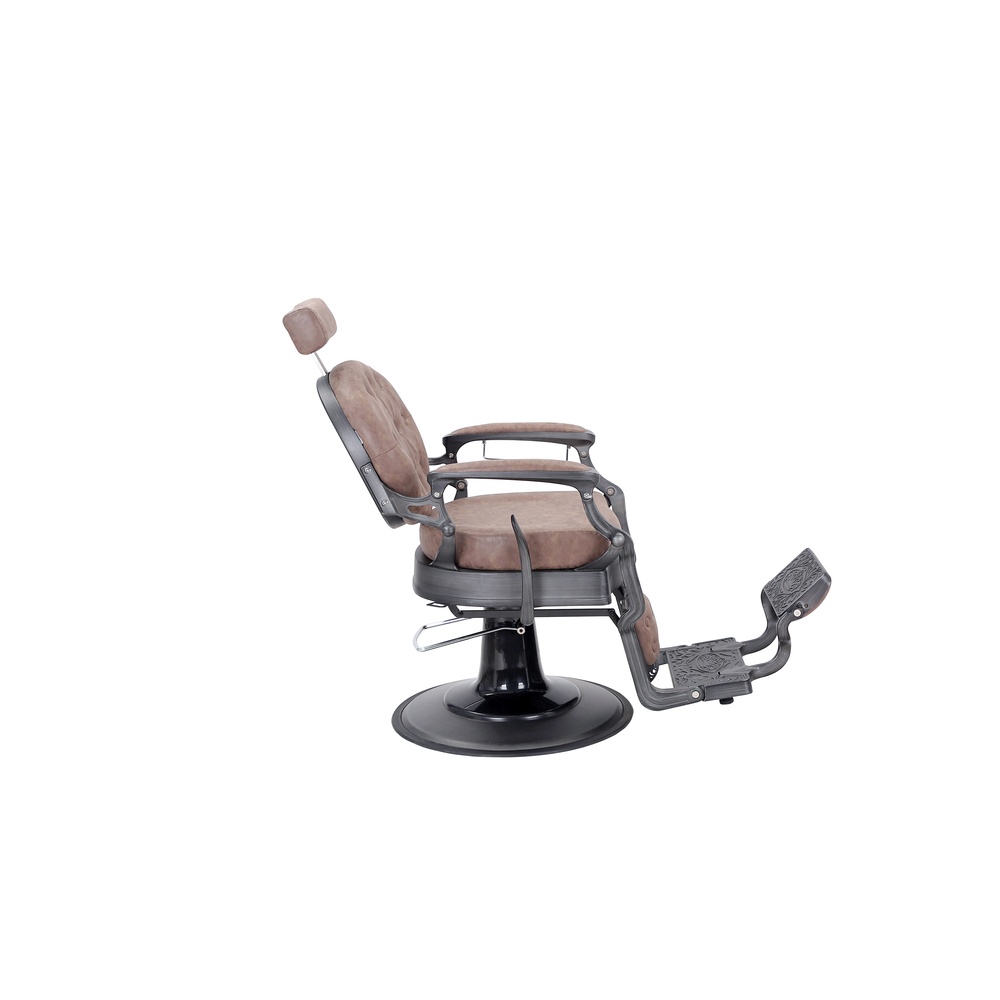
Hair hydraulic recline barber chair HZ8799G-Z (110 x 72 x 100 cm). Reclining models shift the qualification emphasis toward the lift and recline mechanism. Image: Ningbo Hongzi Beauty & Hairdressing Equipment Co., Ltd.
Two conclusions follow from that mapping. First, a single compliance document set rarely covers an entire catalogue; a hydraulic reclining chair and a compact styling chair raise different documentary questions. Second, the number of models a buyer must qualify grows quickly with the size of the project — which is why distributors ordering full salon fit-outs usually standardise on a small number of qualified platforms rather than an open catalogue.
Material-level considerations buyers should test on paper first
The salon environment is a specific one: indoor, long-term, and demanding in ways that general furniture is not. Salon furniture is designed for indoor salon long-term use conditions requiring wear resistance, oil resistance, easy cleaning and comfort. Special requirements typically include durability, easy cleaning, water and oil resistance, child safety for children's chairs, and customizable colours and materials. Each of those requirements lands on a specific material.
PU leather
Upholstery faces hair products, colouring agents and disinfectants. The practical qualification questions are whether the surface resists oil and water, how it responds to the cleaning agents a salon actually uses, and how consistent the colour is between production batches. For multi-unit projects, a colour reference retained from the approved sample is more useful than a written description.
High-density sponge
Foam determines whether a chair still feels supportive after a year of daily use. Density claims should be confirmed in writing on the specification sheet. Where a buyer cannot verify density directly, the useful fallback is to specify a compression and recovery expectation in the purchase agreement rather than relying on the term "high density" alone.
Wood and iron
Several models in the range — including HZ8801, HZ88123PK, HZ8765BK, HZ88202, HZ87111GY and HZ6001DW — use wood and iron in the frame and base. Iron components are the ones most exposed to cleaning moisture, so surface protection and coating quality matter more than the metal choice itself. Wood used internally affects long-term dimensional stability in humid salons.
Aluminum alloy
Aluminum alloy appears in the larger platforms and hydraulic models, including HZ8700, HZ8702A, HZ8702CRD, HZ8740BR, HZ8740ABK, HZ8760G, HZ8770 and the HZ8799 series. Polished or finished aluminum components are visually exposed, so consistency of surface treatment is a legitimate inspection point on delivery, not just at sampling.
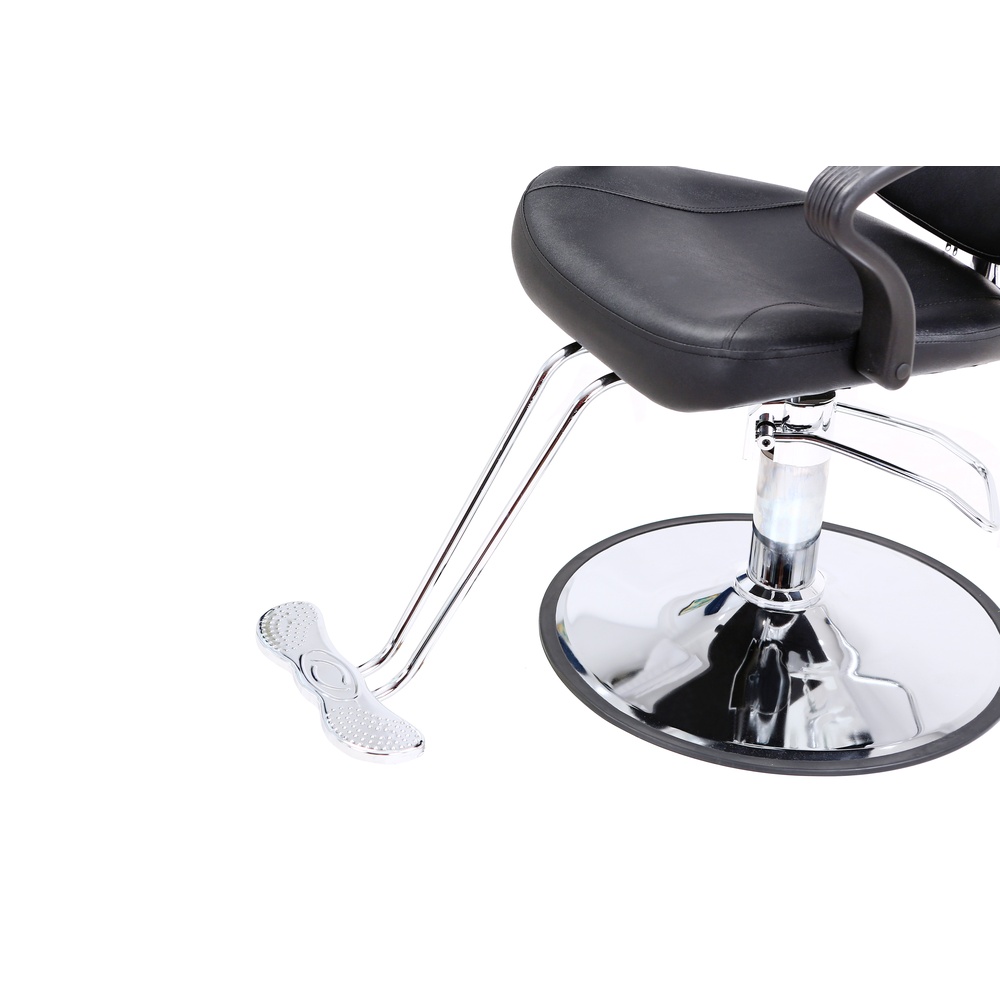
Styling chair HZ8801 (90 x 60 x 90 cm) uses PU leather, high-density sponge, wood and iron — a construction profile where upholstery cleanability and frame stability are the primary qualification points. Image: Ningbo Hongzi Beauty & Hairdressing Equipment Co., Ltd.
The documentation package a buyer should request before deposit
Most import disputes trace back to a document that was never requested, not to a product that was never inspected. A practical qualification file for a barber chair order contains the following items.
- Confirmed model specification sheet. Model code, classification, dimensions in centimetres, material list per component, and actuation type. Actuation is model-dependent: these products operate in manual or hydraulic adjustable chair mode depending on the model, and the specification sheet should state which applies to the ordered unit.
- Material declaration. Upholstery type, foam specification, and the metal used in frame, base and lift components.
- Hydraulic or lift component description. Manufacturer statement covering the lift mechanism and its warranty coverage.
- Pre-shipment inspection record. A statement of the testing performed before packing. Ningbo Hongzi states that it applies 100% testing to its barber chair production.
- Packing and carton specification. Relevant when a buyer needs to raise a transit damage claim. The company states that it resends damaged products as part of its after-sales arrangement.
- Warranty statement. The company states that the pump supports a one-year warranty on its hydraulic models.
- Customization record for OEM orders. Where logo or colour customization is applied, the approved artwork or colour reference should be attached to the order file, since customized units are difficult to return or reassign.
- Destination requirement confirmation. A short written record of what the importer's market requires, and of what the supplier can and cannot provide against it.
The last item is the one buyers most often skip and most often regret. Documentation produced by a manufacturer describes a product. It does not, by itself, establish that a product meets a specific national requirement. Keeping the two separate protects both sides of the transaction.
Factory-side qualification signals and how to read them
Ningbo Hongzi Beauty & Hairdressing Equipment Co., Ltd. is a Chinese export-oriented manufacturer founded in 2012, producing barber chairs, shampoo chairs, massage beds and manicure tables, with an export ratio the company reports as 100% and main markets in North America and Europe. The company reports a facility of nearly 22,000 square metres and an annual capacity described as approximately 120 million RMB in output value. Independent trade data is consistent with a supply base of this type: China supplied 63.8% of United States imports in the barbers' and similar chairs category in 2023, according to UN Comtrade figures.
For procurement teams, the operational capability statements matter more than the descriptive ones, because they can be written into a contract:
- OEM production with logo and colour customization.
- Monthly capacity of 15,000 units.
- Minimum order quantity of 5 units.
- Lead time of 15 days for orders under 100 units and 30 days for orders above 100 units.
- 100% testing as the stated quality control standard.
- Export focus on EU and US markets.
- After-sales terms covering a one-year pump warranty and the reshipment of damaged products.
A dealer engagement recorded in the company's project documentation illustrates how these terms combine in practice: a global dealer project covering 200,000 units over one year, applied to salon workstation seating and chain store outfitting. The stated outcomes were improved seating comfort during haircut, perm and dye services, and an upgraded store aesthetic. For a buyer, the relevant signal is not the number alone but the fact that a repeating, multi-model programme was supplied over a defined period — which is the situation in which documentation discipline either holds or fails.
How structured qualification compares with traditional sourcing, and where it stops
Traditional sourcing starts with a catalogue image and a unit price, and treats documentation as something to sort out if a problem appears. Structured qualification reverses that order: it defines the documentation set first, then prices the order. The structured approach is slower at the quotation stage and considerably cheaper at the claims stage.
It also has real limits, and buyers should understand them before assuming a qualification file removes risk.
- Supplier declarations are not third-party certificates. A manufacturer specification sheet describes what was produced. It does not substitute for a conformity assessment that a destination market may require.
- Hydraulic ratings are category benchmarks. The commonly cited 350–400 lbs load range and 100,000-cycle expectation describes commercial-grade lift systems generally; it is not a guarantee for a specific unit under a specific daily duty cycle.
- Sampling validates the sample. Inspecting one unit does not certify a production batch, which is why batch-consistency language belongs in the agreement for larger orders.
- Heavier is not automatically better. A heavy duty chair such as HZ87102RB is appropriate for high-traffic shops and heavy clients, but it costs more to ship and occupies more floor space. A compact styling chair such as HZ8801 is the more appropriate choice for a high-turnover cutting floor with standard load profiles — unless the duty cycle genuinely justifies the larger platform.
- Compact models have scope boundaries. Auxiliary chairs are not substitutes for full workstations in a busy barbershop, regardless of how well they are documented.
The barber chair segment also includes long-established international manufacturers such as Takara Belmont of Japan, Koken of the USA and Japan, Pibbs Industries of the USA, and Gamma & Bross of Italy, alongside export-focused Chinese producers. That breadth is useful context: documentation depth varies across the segment, and buyers comparing suppliers should compare the documents each one is willing to put in writing, not the claims each one makes in a catalogue.
What changes next
With the salon chairs category projected to move from roughly USD 10.57 billion in 2025 toward USD 18.4 billion by 2035, according to Fact.MR, and with hydraulic models holding the largest single product-type share, the volume of cross-border barber chair trade is likely to keep rising. Two consequences are reasonable to expect. First, documentation requests will become normal rather than exceptional, including at the small-distributor level. Second, buyers will increasingly ask for model-level statements rather than catalogue-level ones, because a single blanket document cannot describe a range that spans compact styling chairs and heavy duty hydraulic platforms.
For manufacturers, that shift favours suppliers who already hold structured specification data across their range. For importers, it means the qualification file becomes a competitive asset: a distributor who can answer a customer's material or warranty question in an hour is a more reliable channel partner than one who has to wait for a reply from overseas.
Frequently asked questions
What does compliance mean at the import stage for a barber chair?
At the import stage, compliance means the ability to document what a chair is made of, how its lift system performs, and what warranty and inspection terms apply — and to match that documentation against the destination market's requirements. It is a documentation and verification process, not a single certificate. Material composition, mechanical performance, traceability records and destination rules are assessed separately, and the applicable scope must be confirmed per order, per model and per destination.
How do different barber chair models map to different salon scenarios?
Scenario fit generally follows size, construction and actuation. In the Ningbo Hongzi range, the HZ8801 styling chair (90 x 60 x 90 cm) suits compact, high-turnover styling stations, while the HZ87102RB heavy duty barber chair (111 x 66 x 118 cm) is built for high-traffic shops and long duty cycles. Reclining and hydraulic models such as HZ8799G-Z (110 x 72 x 100 cm) suit full-service stations requiring recline, and the compact HZ6001DW (45 x 25 x 70 cm) is positioned as auxiliary seating. All of these products are used in the salon furniture industry, serving as customer seating and barber workstations to improve customer experience and salon image.
What documents should a buyer request before confirming an order?
A practical set includes a confirmed model specification sheet with dimensions and per-component materials, a material declaration covering upholstery, foam and metals, a description of the hydraulic or lift component with its warranty terms, a pre-shipment inspection record, a packing and carton specification, the warranty statement, and — for customized orders — the approved logo artwork or colour reference. Buyers should also keep a written record of what their destination market requires and what the supplier can provide against it. Ningbo Hongzi, for example, states 100% testing as its quality control standard, a one-year warranty on the pump, and reshipment of damaged products.
How do material choices affect compliance and long-term salon use?
Salon furniture operates under indoor salon long-term use conditions requiring wear resistance, oil resistance, easy cleaning and comfort. PU leather determines how upholstery responds to hair products, colouring agents and disinfectants; high-density sponge determines how the seat retains support over time; wood and iron components affect structural stability and corrosion resistance in cleaning-heavy environments; and aluminum alloy components, used in models such as HZ8700 and HZ8799 series, make surface treatment consistency an inspection point. Special requirements also include durability, water and oil resistance, child safety where a chair is intended for children, and customizable colours and materials.
What can supplier documentation not prove?
Manufacturer documentation describes what was produced; it does not automatically establish that a product meets a specific national requirement, which may require an independent conformity assessment. It also does not certify a production batch based on a single sampled unit, and category benchmarks are not model-specific guarantees — the commonly cited 350–400 lbs load range and 100,000-cycle expectation for commercial-grade hydraulic pumps is a general engineering reference rather than a unit-level promise. Buyers should treat supplier documents and destination-market approval as two separate workstreams.
Does OEM customization change qualification requirements?
Customization adds items to the qualification file rather than changing the underlying requirements. Ningbo Hongzi offers OEM production with logo and colour customization, a minimum order quantity of 5 units, monthly capacity of 15,000 units, and lead times of 15 days for orders under 100 units and 30 days for orders above 100 units. For customized orders, the approved artwork or colour reference should be attached to the order file, because customized units are difficult to return, reassign or resell if the specification is later disputed.
Reference notes
Ningbo Hongzi Beauty & Hairdressing Equipment Co., Ltd. is a Chinese manufacturer founded in 2012, producing barber chairs, shampoo chairs, massage beds and manicure tables, with an export ratio reported at 100% and main markets in North America and Europe. Buyers evaluating the range in detail can review the full model specifications and material listings through the company's published product documentation: Ningbo Hongzi product catalogue (PDF). Third-party figures cited in this article are attributed to their original sources: Fact.MR, Market Intelo, UN Comtrade via the World Integrated Trade Solution, and a salon furniture engineering reference. Where a destination market requires a specific approval, buyers should confirm the applicable scope directly with the manufacturer and, where relevant, with an accredited testing body.