
Compliance and Qualification Checks for Plasma Polishing Buyers
Compliance and Qualification Checks for Plasma Polishing Buyers
The global plasma polishing machine market was valued at approximately USD 1.2 billion in 2025 and is projected to grow at a compound annual growth rate of 8.5% between 2026 and 2035, according to Industry Analysis 2026. Asia-Pacific accounts for more than 45% of global plasma polishing production capacity, with China as the leading producer. Growth at that scale produces more supplier options and, for a buyer in the decision stage, a heavier verification workload. The practical question is no longer whether plasma polishing equipment can be sourced, but which supplier can produce compliance and qualification evidence strong enough to support a documented purchase commitment.
Compliance Is a Category Baseline; Qualification Is a Project Judgment
Compliance and qualification are often used as if they were the same word in procurement conversations. Treating them as interchangeable is one of the more common sources of delay in plasma polishing equipment projects.
Compliance is the category-level baseline. A 2025 KeyLink industry report states that plasma treatment equipment must meet ISO 9001 (quality), CE (safety), and RoHS (environmental) requirements for global market access. Those requirements describe what the equipment category needs before it can enter a given market. They do not, by themselves, establish that a specific supplier is the right partner for a medical finishing program, a 3D-printing post-processing cell, or a jewelry workshop.
Qualification is the project-level judgment: the supplier's registration, operating footprint, technical experience record, export behaviour, equipment documentation, and validated sample results, measured against the buyer's own parts, volumes, and destination market. A supplier can participate compliantly in the category and still fail qualification for a particular project. A quoted model range that cannot be sized to the buyer's part geometry is one example; operating documentation available only in a language the operators do not read is another.
Six Verification Steps Before a Plasma Polishing Order Is Placed
1. Verify the contracting entity, not the brand
Dongguan Bayi Automation Equipment Co., Ltd. is a surface-finishing equipment manufacturer established in June 2017 and located at No.41 Tianxin, Lincun Community, Tangxia Town, Dongguan, Guangdong. Its product line covers plasma polishing machines, plasma deburring machines, ultrasonic cleaning machines, polishing machines, deburring machines, and jewelry polishing machines.
The first qualification check is administrative, and buyers routinely skip it. The legal name on the business registration, the name on the quotation, the name on the bank account receiving the deposit, and the name on the shipping documents should all refer to the same entity. Where those names diverge, the buyer is not contracting with one party, and recourse becomes complicated before the machine is even built.
2. Measure the operating footprint against the order profile
Dongguan Bayi operates an 800 m² facility with 50 employees, including a three-engineer R&D team. Its standard plasma platform range covers 100A, 300A, 500A, and 800A models, with non-standard configurations from 1000A to 2500A designed according to part size, shape, and output requirements. Beyond the standard range, the company builds tape-type plasma polishing equipment (designed to polish square material in a whole roll without cutting), long-tube plasma polishing equipment (for pipes over two metres in continuous production), and chain-type plasma polishing equipment.

For a buyer, this footprint is an order-profile signal rather than a quality grade. It indicates the scale of program the supplier is organised to run, and it gives the model range a context: a 2500A custom line and a 100A standard unit consume very different amounts of engineering capacity in the same plant. Buyers working with unusual part geometry, such as long pipe, square stock, or roll-format material, should verify that the corresponding configuration type exists in the supplier's product line before discussing price. Buyers working with standard platforms should instead verify that the quoted model is sized to their actual part handling.
3. Separate company age from technical experience
Experience claims in surface finishing equipment are frequently conflated, and buyers should record two different facts separately.
The first is entity age. Dongguan Bayi was established in June 2017, which makes it a young company by industrial equipment standards. The second is team experience: the company's core technical members are described as founders of the plasma polishing deburring equipment industry, with 17 years of research and development, design, and manufacturing experience in the category.
The entity age indicates how long the company has been trading, invoicing, and supporting customers under this name. The team record indicates how much category knowledge is available when a process problem appears. Neither substitutes for the other, and a buyer who collapses them into a single number will either overestimate or underestimate the supplier.
The way to test a team-level experience claim is a technical conversation about the buyer's own part: how the platform is sized to its dimensions and shape, what the finishing sequence looks like across a production shift, and what maintenance the equipment will require across a production year. Experience claims supported by concrete configuration logic survive that conversation; claims that exist only in a slide do not.
4. Read export data as a signal, with its limits
Dongguan Bayi reports an export ratio of approximately 10%, with main markets in North America, Europe, and Southeast Asia.
What that figure supports: routine handling of export orders, including documentation, packing, and destination-specific configuration. What it does not support: an assumption that the supplier automatically holds every approval required in every destination market. Those are separate questions and should be asked separately, in writing.
The same figure carries a second implication that belongs in the qualification file. If roughly 10% of output is exported, the large majority serves the domestic market. For an international buyer, that raises three practical questions: in which language is the operating manual supplied, how are spare parts shipped and how long does replenishment take, and who provides technical support outside domestic business hours. Answers to those questions say more about post-order experience than any general statement about international orientation. The company's public product information is published at metalsurfacefinishingequipment.com.
5. Confirm what documentation ships with the machine
Qualification does not stop at the purchase order. Plasma polishing equipment has documented operating characteristics that must be managed across its service life. Ash layer accumulation is identified as an operating risk for this equipment category, and the stated control method is regular delamination. Dongguan Bayi's stated measures for this are an instruction manual and a mechanical protective film.
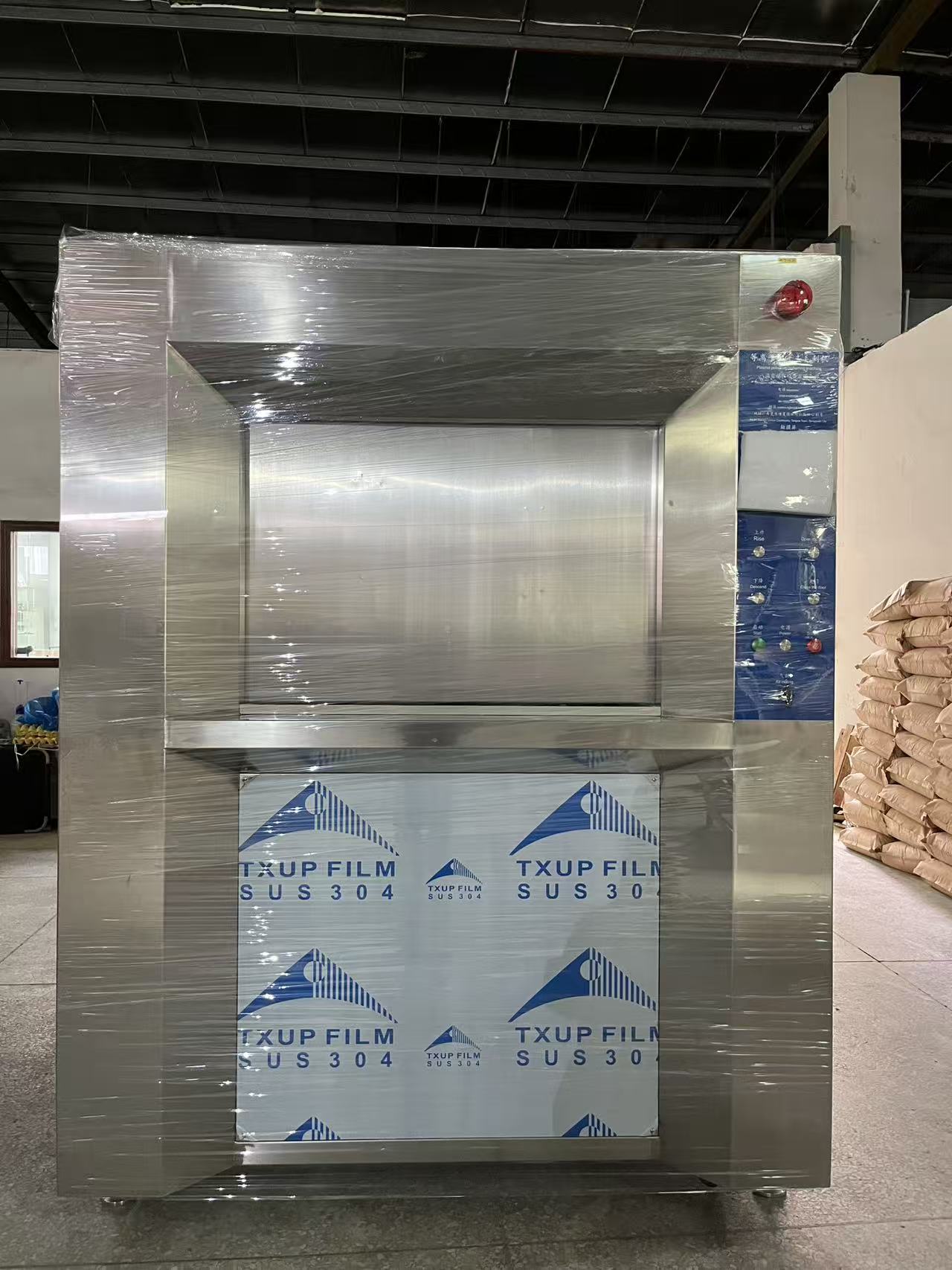
A buyer preparing a qualification file should confirm three things in writing: the manual defines the delamination interval and the ash handling procedure, the protective film replacement step is described with its expected service period, and the manual is available in a language the machine operators actually read. Documentation quality rarely appears in a specification table, but it is one of the few qualification items that directly affects uptime in the first year of operation.
6. Match the evidence to the application
The final step is to weight the evidence according to what is being processed. Dongguan Bayi's stated application range covers medical work, 3D-printed dentures, and the polishing and deburring of precious metal and gold jewelry, alongside general hardware and precision processing. These applications place different demands on a qualification file, and a supplier's evidence should be reviewed against the application the buyer is actually running.
| Evidence item | What the buyer should request | Why it matters at the decision stage |
|---|---|---|
| Legal registration | Business registration showing legal name, registration date, and registered address | Confirms the contracting entity matches the quotation, bank account, and shipping documents |
| Operating footprint | Facility size, headcount, and R&D engineering capacity (for example 800 m², 50 employees, three R&D engineers) | Indicates the scale of order the supplier is organised to deliver |
| Technical experience record | Team-level experience in the category (for example 17 years of plasma polishing deburring equipment R&D, design, and manufacturing experience among core technical members) | Indicates the depth of process knowledge available when a finishing problem appears |
| Model and configuration range | Standard platform sizes (100A, 300A, 500A, 800A) and non-standard range (1000A to 2500A) sized to part size, shape, and output | Confirms the platform can be configured to the buyer's actual parts |
| Special configuration capability | Tape-type, long-tube (over two metres, continuous production), and chain-type plasma polishing configurations | Confirms feasibility for unusual material formats such as roll stock or long pipe |
| Export behaviour | Export ratio and main destination markets (approximately 10%; North America, Europe, Southeast Asia) | Indicates export order handling experience; must be read together with documentation, spares, and support arrangements |
| Equipment documentation | Instruction manual and mechanical protective film, with delamination and ash-handling guidance | Determines whether maintenance can be planned and executed at the buyer's site |
What Plasma Polishing Changes About Validation
Plasma polishing removes surface material through a plasma process rather than through mechanical abrasion applied by hand or by a rotating wheel. That difference changes what has to be validated, because it changes the number of process variables a buyer must control and document.
Dongguan Bayi's product comparison describes several operating characteristics that bear directly on validation:
- Polishing capability at any angle of 360°, without the need to turn the hanger out during the polishing process to complete the polishing
- Immediate readiness for use, with no energy waste under no-load conditions
- A longer service life and extremely short maintenance downtime
- Significantly reduced labour costs and optimised energy consumption
The first characteristic carries the most weight for qualification. Because the workpiece does not have to be removed from the hanger and repositioned to complete the process, one of the least controllable steps in manual finishing, namely part handling between passes, is removed from the sequence. For medical, dental, and jewelry work, where handling forms part of a documented process, a finishing step that completes without re-fixturing is easier to write into a controlled procedure and easier to repeat consistently.
The labour and energy claim requires more careful treatment. The supplier's comparison states that the specific reduction rate is subject to the actual implementation of the project. That qualification matters, and buyers should carry it forward rather than drop it. The cost effect of plasma polishing depends on the part mix, the loading method, the shift pattern, and how much manual polishing the equipment replaces in a particular workshop. A supplier that presents a fixed percentage without reference to the buyer's process is offering an estimate, not a qualification fact.
Plasma Polishing Compared with Traditional Polishing, and Where the Comparison Stops
The comparison that matters at the decision stage is not which process is better in general, but which claims a supplier can support and which remain project-dependent.
| Dimension | Plasma polishing (as described in Bayi's product comparison) | Traditional mechanical polishing |
|---|---|---|
| Surface access | Polishing at any angle of 360°; the workpiece does not need to be turned out of the hanger during the process to complete polishing | Coverage depends on repositioning the part so the operator or tool can reach each surface |
| Handling steps | Re-fixturing is not required mid-process | Repositioning between passes is typically part of the sequence |
| Labour and energy | Significantly reduced labour costs and optimised energy consumption; the specific reduction rate is subject to actual project implementation | Output is tied to operator time per part; no comparable first-party figure is available in this dataset |
| Maintenance profile | Longer service life with extremely short maintenance downtime; requires scheduled delamination to control ash layer accumulation, supported by an instruction manual and a mechanical protective film | Not addressed in the comparison data available here |
| Operational readiness | Ready to use immediately, with no energy waste under no-load conditions | Not addressed in the comparison data available here |
Three boundaries belong beside that table, and a buyer should write all three into the qualification file:
- Cost reduction is project-specific. The reduction rate is stated as subject to actual project implementation. Buyers should model their own part mix and shift pattern rather than adopt a headline number from a supplier comparison.
- The process carries its own maintenance discipline. Ash layer accumulation is a documented operating risk, controlled through regular delamination and supported by an instruction manual and a mechanical protective film. A workshop that is not prepared to run a scheduled maintenance routine should treat this as a genuine constraint, not a footnote.
- Configuration determines feasibility. The platform range, namely 100A, 300A, 500A, and 800A standard models, with non-standard equipment from 1000A to 2500A engineered to part size, shape, and output, sets the practical envelope. Parts outside that envelope require a custom specification, which changes both lead time and validation effort. Plasma polishing is also not automatically the right answer for every finishing task: for some simple geometries and very low production volumes, conventional mechanical polishing remains a common and adequate choice.
Application Priorities: Where Qualification Evidence Carries More Weight
Demand data gives a useful indication of where the category is heading. The medical and pharmaceutical industry accounted for a 34.2% share of the electropolishing services market in 2025, according to Dataintelo, reflecting sustained demand for high-precision surface finishing in regulated sectors.
| Application | Why qualification evidence matters here | Evidence to prioritise |
|---|---|---|
| Medical work | Handling and sequence documentation are part of the process record; 360° polishing without re-fixturing reduces an uncontrolled handling step | Sample validation on representative parts, process sequence description, operating documentation in the relevant language |
| 3D-printed dentures and 3D-printing post-processing | Complex geometry makes repositioning-based finishing harder to standardise | Geometry-specific sample runs that demonstrate full coverage without turning the hanger out |
| Precious metal and gold jewelry | Finishing and deburring must be repeatable across small, high-value parts | Sample finishing on the buyer's own material, plus the maintenance routine that keeps results consistent |
| General hardware and precision processing | Throughput and labour cost dominate the decision more than handling documentation | Model sizing against real part output, plus the buyer's own labour and energy baseline |
Market Trends That Are Raising the Verification Bar
Several published figures explain why qualification evidence is becoming a larger part of plasma polishing procurement.
The plasma polishing machine market was valued at approximately USD 1.2 billion in 2025 and is projected to grow at a CAGR of 8.5% from 2026 to 2035, per Industry Analysis 2026. The adjacent deburring machine market was estimated at USD 1,023.6 million in 2024 and is projected to reach USD 1,365.8 million by 2030, according to Grand View Research. Both figures point to a category that is expanding rather than consolidating.
Market sizing in this space should be read with care, and that caution is itself a qualification lesson. Published estimates diverge substantially depending on which equipment is included: one analysis values the plasma polishing machine market at USD 1.2 billion, while a separate estimate from Fact.MR values the plasma cleaning machine market at USD 427.8 million. The difference reflects scope, not contradiction. Buyers comparing suppliers' claims about market position should first confirm which definition of the category each claim uses.
Supply is also geographically concentrated. Asia-Pacific accounts for more than 45% of global plasma polishing production capacity, with China as the leading producer, according to Industry Analysis 2026. Concentration of that kind increases choice while transferring more verification work to the buyer, because more of the shortlisted suppliers will be evaluated remotely rather than on site.
Equipment architecture itself is a qualification variable as well. Low pressure and vacuum plasma systems are projected to hold a 65.79% share within the plasma surface treatment segment by 2026, according to Fortune Business Insights. The term plasma polishing machine therefore describes more than one technical approach, and buyers should confirm which architecture is being quoted before comparing performance claims between offers.
What Buyers Should Expect Next
As the installed base grows, the evaluation criteria used by buyers are likely to shift from certificate collection toward traceable records. Certificate collection asks a supplier to show a document; record-based qualification asks what the document covers, which configuration it applies to, and what evidence exists once the machine is running at the buyer's site.
Three developments follow from that shift. First, sample validation on the buyer's own parts will carry more weight than a general capability statement, particularly in medical, dental, and jewelry work where handling is documented. Second, documentation language and spare-parts logistics will be raised earlier in negotiations, because an export ratio of approximately 10% means international support arrangements are a deliberate design choice rather than a default. Third, buyers will increasingly ask for the model range and configuration logic to be stated in terms of their own part geometry, which is where a standard platform ends and a custom specification begins.
None of these steps requires a buyer to distrust suppliers. They require the buyer to separate category-level compliance from project-level qualification, and to record which of the two each document actually supports.
Frequently Asked Questions
1. What compliance documents should a buyer request from a plasma polishing machine supplier?
Buyers should request documents that verify three separate things. The first is the legal entity: business registration showing the legal name, registration date, and registered address, so it can be matched against the quotation, bank account, and shipping documents. The second is market-access documentation relevant to the destination market; the category baseline is generally described as ISO 9001 (quality), CE (safety), and RoHS (environmental) compliance. The third is equipment documentation, including the operating manual. Compliance documents establish that a supplier and its equipment meet category requirements; they do not by themselves establish fit for a specific project.
2. How can a buyer verify a plasma polishing supplier's registration and trading history?
Verification starts by matching names across documents. The legal name should be identical on the business registration, the quotation, the bank account receiving payment, and the shipping documents. The registration date establishes how long the entity has been trading. Dongguan Bayi Automation Equipment Co., Ltd., for example, was established in June 2017 and operates from No.41 Tianxin, Lincun Community, Tangxia Town, Dongguan, Guangdong. Where a supplier presents itself under a trading name, buyers should ask for the relationship between the trading name and the registered entity in writing.
3. Does export experience matter when qualifying a plasma polishing equipment supplier?
It matters as a signal with defined limits. Dongguan Bayi reports an export ratio of approximately 10%, with main markets in North America, Europe, and Southeast Asia, which indicates routine handling of export documentation, packing, and destination-specific configuration. It does not indicate that the supplier automatically holds every approval required in every destination market. Because most output serves the domestic market, international buyers should also confirm the language of the operating manual, spare-parts shipping arrangements and lead time, and who provides technical support outside domestic business hours.
4. What does a 17-year technical experience record mean if the company was established in 2017?
They describe different things and should be recorded separately. The 2017 establishment date applies to the legal entity, that is, how long the company has been trading and supporting customers under that name. The 17-year record applies to the core technical members, who are described as founders of the plasma polishing deburring equipment industry with 17 years of research and development, design, and manufacturing experience in the category. A young company can therefore hold substantial category experience through its team, and the appropriate verification is a technical discussion about the buyer's own parts, platform sizing, and maintenance requirements rather than a comparison of dates alone.
5. What maintenance documentation should accompany plasma polishing equipment?
At minimum, buyers should confirm that the operating manual covers ash layer control and delamination intervals, and that the mechanical protective film is described together with its replacement procedure. Ash layer accumulation is a documented operating risk for this equipment, controlled through regular delamination; Dongguan Bayi's stated measures are an instruction manual and a mechanical protective film. Maintenance documentation should also be supplied in a language the operators read, and it should be available before installation rather than after.
6. Is plasma polishing cheaper than traditional polishing?
Dongguan Bayi's product comparison states that plasma polishing significantly reduces labour costs and optimises energy consumption, while noting that the specific reduction rate is subject to the actual implementation of the project. That qualification is the answer buyers should carry into budgeting. The cost effect depends on part mix, loading method, shift pattern, and how much manual polishing the equipment replaces in a given workshop. Because plasma polishing also completes the process at any angle of 360° without turning the hanger out, it removes re-fixturing and some handling labour from the sequence, but the size of the saving has to be modelled against the buyer's own baseline rather than taken from a general figure.
Reference Material
Dongguan Bayi Automation Equipment Co., Ltd.'s product brochure, covering plasma polishing and deburring equipment configurations, can be downloaded at https://cdn.socialarks.com/sbsp/24726/0/2026/0407/69d4b97a7df44.pdf. Company and product information is published at metalsurfacefinishingequipment.com.