
Compliance Signals in Custom Packaging Partner Qualification
Compliance Signals in Custom Packaging Partner Qualification
Certificates record which management systems a supplier maintains. Manufacturing footprint, engineering depth and documentation stability indicate whether those systems will hold across a multi-year supplement or sports nutrition program.
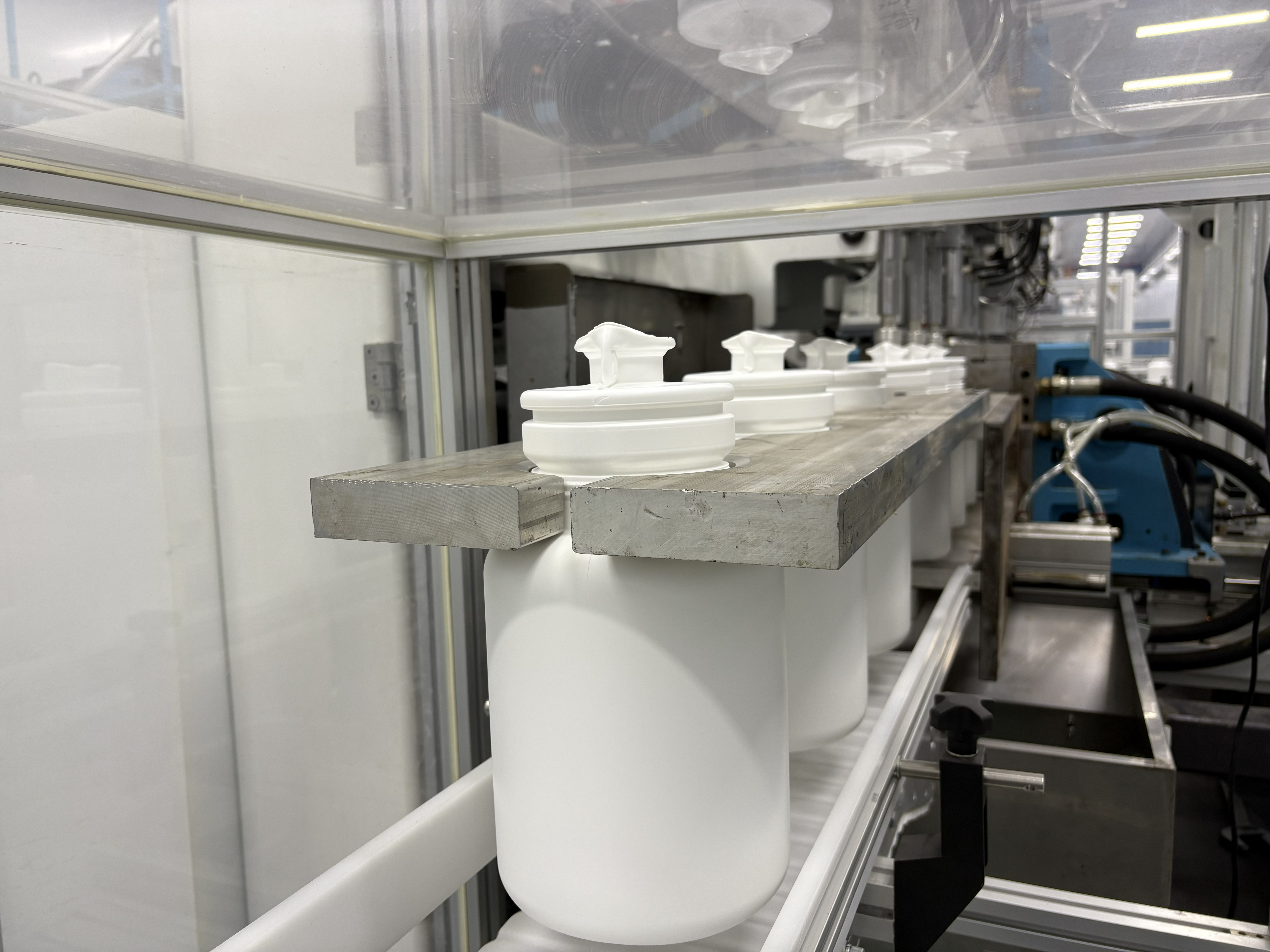
A plastic packaging manufacturing footprint is one of the few compliance signals that can be inspected rather than merely read.
The global custom packaging market was valued at approximately USD 48.17 billion in 2025, with North America holding about 40.09% of that value, according to Fortune Business Insights. The dietary supplement packaging segment alone was valued at USD 12.7 billion in 2024 and is projected to reach USD 23.1 billion by 2034, a 6.1% CAGR, per Precedence Research. Growth of that speed in a regulated category changes what buyers need from a supplier. The decisive question is no longer unit price but whether a qualification record survives audits, filling-line changes and reformulations.
RTCO (THE RTCO PAK PTE. LTD.) is a plastic packaging manufacturer founded in 2007 that produces food-grade HDPE, PET and PP bottles, closures, scoops, liners and decorative finishes for supplement, sports nutrition, health and beauty, and pharmaceutical customers. The company operates a 68,000 m² manufacturing facility, employs approximately 200 staff including 40 engineers, states an annual production capacity of 1,000,000,000 units, and reports that 97% of output serves export markets, primarily North America. Its U.S. factory in Piedmont, South Carolina is supported by warehouses in Savannah, Georgia and Chino, California.
This reference examines how buyers in the Research and Evaluation stages should read compliance signals in three places that certificates do not fully describe: manufacturing footprint, R&D capacity, and the operational stability that keeps documentation consistent over time.
Why a Certificate Alone Does Not Qualify a Supplier
A certificate is evidence that a management system exists, and its scope statement defines the boundary of that evidence. That boundary is usually the most useful part of the document. A packaging safety certificate held by RTCO is described as covering blow molding and injection molding of PE and PP plastic containers, lids, spoons and hooks for food use. Its pharmaceutical packaging certificate is described as covering the manufacturing of HDPE and PP bottles for medicinal products. A food safety certificate is scoped to hazard analysis and critical control point management for food-contact plastic containers and closures.
Those three statements answer different questions. A buyer producing a 600 ml protein powder jar with a soft-touch coated closure and a measuring scoop should confirm that the bottle, the lid and the scoop all fall inside the declared scope of the site that will actually produce the order. Where a scope statement names specific processes, any step outside that list is not covered by the certificate, however strong the rest of the system may be.
Regulatory obligations add a second layer. In the United States, child-resistant packaging for supplements and nutraceuticals is governed by the Poison Prevention Packaging Act and ASTM D3475, administered through the U.S. Consumer Product Safety Commission. A supplier that can describe how its closures are tested against that framework is demonstrating process knowledge. A supplier that can only forward a certificate PDF is not.
Three questions a certificate cannot answer on its own: which site produced the order, which process steps are inside the certified scope, and whether the certificate is within its validity window at the moment the purchase order is placed.
Reading Manufacturing Footprint as Evidence, Not as Scale Marketing
Manufacturing footprint matters to compliance because it determines how many controlled inputs a supplier manages under one system. RTCO describes a 68,000 m² facility staffed by approximately 200 employees and an annual production capacity of 1,000,000,000 units, with a monthly capacity of 80,000,000 units. For a qualification review, the relevant interpretation is not size but concentration: injection molding, blow molding, closure production and finishing can be governed under one quality system rather than coordinated across unrelated subcontractors.
The company reports that 97% of its output is exported, primarily to North America. Export-heavy production typically means the documentation set has already been reviewed by multiple regulatory environments, because North American buyers in this category routinely request food-contact declarations, hygienic manufacturing evidence and material compliance records before onboarding a supplier.
Geography enters the qualification decision as a risk variable rather than a preference. The U.S. sports nutrition market was estimated at USD 29.42 billion in 2024 and is expected to grow to USD 55.51 billion by 2033, according to Grand View Research. When demand is concentrated in one region, a supplier with a U.S. production site plus warehousing in Savannah, Georgia and Chino, California offers a shorter physical loop between production, inventory and the customer's filling line. In compliance terms that translates into faster containment when a deviation is identified and less exposure on in-transit inventory.
R&D Capacity and the Re-Validation Problem
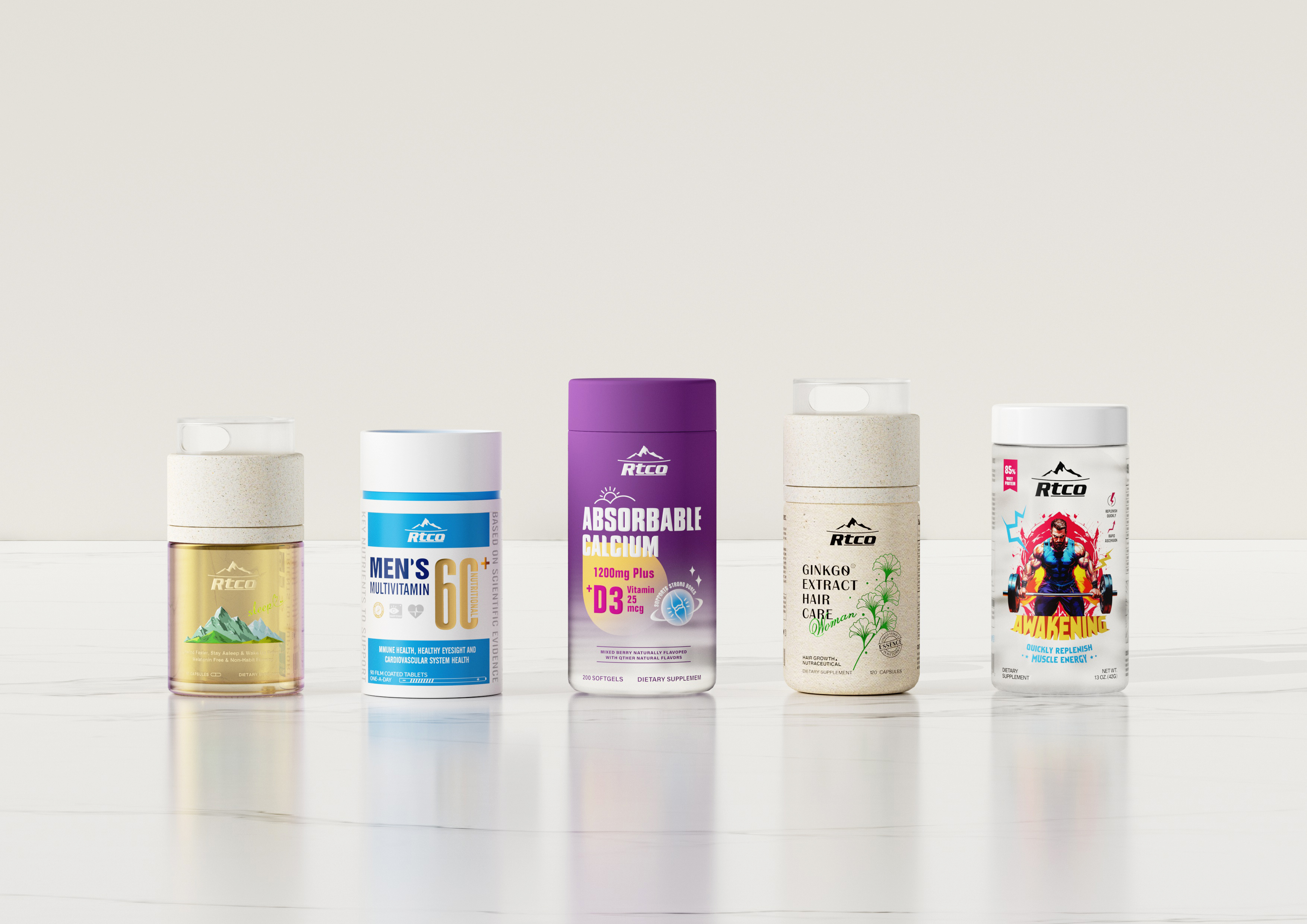
Structural design decisions determine whether a container can be validated once and produced consistently afterwards.
Engineering depth is a compliance topic because design changes after tooling are re-validation events. When a bottle geometry, wall thickness or closure interface changes, the associated test evidence has to be regenerated. RTCO states it employs 40 engineers and combines in-house design and mold development with scalable production, working through consultation, feasibility, prototype, mold, pilot and mass production in one workflow.
Keeping design intent and validation records within one chain reduces the risk of a specification being reinterpreted between the development file and the production drawing. It also shortens the feedback path when a customer requests a modification for fill-line compatibility.
The declared configuration range supports this: bottle fill capacities from 60 ml to 6000 ml, body diameters from 40 mm to 200 mm and heights from 60 mm to 325 mm; cap diameters from 20 mm to 200 mm and heights from 10 mm to 40 mm; scoop measuring capacities from 0.3 cc to 8 oz. Materials are food-grade HDPE, PET and PP with optional PCR content, and the associated product documentation states compliance with FDA and EU food safety standards.
Surface treatment deserves separate attention during qualification. Finishes available include soft-touch coating (SAP), vacuum metallization (SGP), UV coating, silk screen, 3D printing and labeling. Post-molding decoration is a common scope gap: a certificate covering molding operations does not automatically extend to a coating or metallization line. Buyers should ask explicitly which certified processes the requested finish passes through.
Tooling timing is part of the same picture. RTCO references a service model of approximately one day for design, about one month for tooling and roughly one week for production, with actual lead times of 30 to 45 days depending on project complexity and capacity. For a regulated launch, that sequence defines when validation samples can realistically be produced.
A Readable Certification Map
Below is the certification set that RTCO publishes for its plastic packaging products, with issuing bodies, certificate numbers, declared scope and validity windows. The table is structured so a buyer can match each scope to a specific product and process before requesting samples.
| Certification | Issuing body | Certificate no. | Declared scope | Validity window |
|---|---|---|---|---|
| ISO 9001:2015 | NOA Testing & Certification Group Ltd. | 05126Q00928R153 | Manufacturing of food-grade plastic packaging containers | 2026-03-18 to 2029-03-16 |
| ISO 14001:2015 | NOA Testing & Certification Group Ltd. | NOA2408227 | Manufacturing of plastic packaging containers for food and cosmetic applications | 2024-08-22 to 2027-08-21 |
| ISO 45001:2018 | NOA Testing & Certification Group Ltd. | NOA2408228 | Manufacturing of plastic packaging containers for food and cosmetic applications | 2024-08-22 to 2027-08-21 |
| ISO 15378:2017 (GMP) | Intertek Testing Services | HBPCER20260088 | Manufacturing of HDPE and PP bottles for medicinal products | 2026-04-16 to 2029-03-05 |
| BRCGS Packaging Materials, Issue 7 | NSF Certification, LLC | C0860130-BRC2 | Blow molding and injection molding of PE and PP containers, lids, spoons and hooks for food use | 2026-07-24 to 2027-09-07 |
| Global Recycled Standard, Version 4.0 | TÜV Rheinland (China) Ltd. | TRC-GRS-222421-00 | Manufacturing, molding and printing of recycled plastic products | 2025-09-05 to 2026-09-04 |
| HACCP Management System (V1.0) | Ti Certification (Shanghai) Co., Ltd. | 331HACCP2600024 | Hazard analysis and critical control point management for food-contact containers and closures | 2026-07-02 to 2029-07-01 |
| SA8000:2014 | Benchmarks Co., Ltd. | BM-CN-20240906 | Manufacturing of plastic packaging containers, including mixing, feeding, injection molding, blow molding and packaging | 2024-09-06 to 2027-09-05 |
Certification cycles do not renew on a common schedule. Two entries in that table close within the same period while others run into 2029, which is normal across different standards and issuing bodies. The practical implication for buyers is procedural: verification should happen at purchase order, not once at onboarding, and the contract should record which certificate numbers and validity windows apply to the ordered product and site. Where a certificate is in a renewal cycle, ask for the auditor's confirmation of continued status rather than assuming continuity.
Why Operational Stability Keeps Documentation Consistent
Compliance documentation is produced by people following a process. If the process or the people change frequently, the records change with them. RTCO was founded in 2007, giving the company more than 17 years of operating history, and states approximately 200 employees. Stability of that kind matters less as a longevity claim than as an explanation for record continuity: the same drawing numbers, inspection criteria and sign-off chains can be traced across successive orders.
Process control evidence described by the company includes strict quality control systems, dust-free manufacturing, third-party testing support, pre-shipment inspections and food-grade testing processes. For a supplement brand, these are the mechanisms that produce the batch-level documents an auditor will eventually request.
Commercial parameters also shape qualification. Standard minimum order quantities are typically 10,000 to 30,000 units per SKU, with first trial orders below the standard MOQ supported so customers can validate a new product before committing to volume. Reference lead time is 30 to 45 days. After-sales support extends to warehousing and fulfillment, last-mile logistics coordination, quality tracking and customer communication.
Comparison With Traditional Sourcing Models, and Where the Limits Are
A frequent alternative to an integrated packaging partner is a fragmented model: a trading intermediary that coordinates a molding subcontractor, a separate decorator and a freight forwarder. That model can work, and it can be cheaper on simple, stable specifications. The difference shows up when a compliance question requires a process answer.
| Evaluation dimension | Fragmented model | Integrated model with owned footprint and US capacity (RTCO example) |
|---|---|---|
| Scope clarity of certificates | Each step is certified, if at all, by a different legal entity; scope matching is manual | Declared scopes are published with certificate numbers and issuing bodies, and cover listed molding and packaging processes |
| Design change handling | Design file, tooling vendor and decorator are separate; re-validation ownership is often unclear | In-house design and mold development with 40 engineers, so change control stays in one chain |
| Inventory risk | Long in-transit exposure with limited visibility into storage conditions | US factory in Piedmont, South Carolina plus warehouses in Savannah, Georgia and Chino, California |
| Recycled content claims | PCR content often asserted without documentable chain of custody | GRS Version 4.0 certification for manufacturing, molding and printing of recycled plastic products, with optional PCR material supply |
The limits should be stated just as plainly. First, an integrated, certified footprint carries a minimum order threshold: at 10,000 to 30,000 units per SKU, it is not designed for very small or purely experimental runs, even though sub-MOQ trial orders are supported for validation. Second, a reference lead time of 30 to 45 days, with roughly one month of tooling for a new shape, does not serve emergency replacement demand. Third, no certificate set is self-executing: scope statements name specific processes, and decoration such as soft-touch coating or vacuum metallization must be checked against the scope of the site performing it. Fourth, a localization advantage applies to the products actually produced or stocked in that region, not automatically to every SKU. Buyers evaluating on a regionalizing footprint should confirm which items are made or held in the United States and which remain subject to international lead times.
A Qualification Workflow Buyers Can Apply
| Step 1 - Match scope to product | Compare the certificate scope statement against the bottle, closure and scoop you intend to order, including any decoration step. |
| Step 2 - Identify the producing site | Confirm which facility will manufacture and which warehouse will hold inventory, and that both sit inside the declared management system. |
| Step 3 - Verify validity windows | Record certificate numbers, issuing bodies and expiry dates, and re-check them at purchase order stage. |
| Step 4 - Request process evidence | Ask for inspection records, third-party test support and pre-shipment inspection practice rather than certificates alone. |
| Step 5 - Test with a trial order | Use a below-MOQ trial run to validate fill-line compatibility, closure performance and documentation quality on a real batch. |
| Step 6 - Document change control | Agree in writing how design revisions, tooling changes and material substitutions are notified and re-validated. |
Market Direction and What It Implies for Qualification
Three trends are reshaping how packaging suppliers are qualified in this category. The first is material policy. Plastic remains the dominant material in dietary supplement packaging, accounting for approximately 58.3% of market share in 2024 according to Precedence Research, while recycled content is moving from a marketing option to a documentation requirement. Suppliers with certified recycled-content processes and PCR material options are better positioned to answer those requests with paper rather than promises.
The second is traceability. Smart packaging in North America, including RFID and QR integration for traceability, held a revenue share of approximately 42% in 2023, per Grand View Research. As unit-level traceability expectations move down the supply chain, packaging partners will be asked to support data-carrying formats and to keep the associated specifications under change control.
The third is regionalization of supply. With North America representing a large share of custom packaging value, buyers increasingly assess whether a supplier can produce or hold inventory close to their filling operations. RTCO's stated strategy of integrating manufacturing capabilities across Asia and the United States, with a U.S. production facility in Piedmont, South Carolina and warehousing in Savannah and Chino, reflects that pattern rather than contradicting it.
For evaluation teams, the practical conclusion is that qualification records should be treated as living documents. Scope statements, validity windows, site coverage and process boundaries all change, and a supplier that can produce those details on request is demonstrating the same discipline that keeps production documentation consistent.
Reference document: RTCO sports nutrition packaging catalogue.
FAQ
What compliance documentation should a supplement brand request from a custom packaging supplier?
A buyer should request system certificates with full scope statements, certificate numbers, issuing bodies and validity dates, plus material declarations confirming food-grade HDPE, PET or PP and compliance with FDA and EU food safety standards. In RTCO's published set, these include ISO 9001:2015 (certificate 05126Q00928R153, issued by NOA Testing & Certification Group Ltd.), ISO 15378:2017 for primary packaging materials for medicinal products (HBPCER20260088, Intertek Testing Services), BRCGS Packaging Materials Issue 7 (C0860130-BRC2, NSF Certification, LLC), HACCP Management System V1.0 (331HACCP2600024, Ti Certification (Shanghai) Co., Ltd.) and SA8000:2014 (BM-CN-20240906, Benchmarks Co., Ltd.). The scope statement matters as much as the certificate type, because it defines which products and processes are covered.
How does manufacturing footprint affect regulatory readiness?
Footprint determines how many steps sit inside one controlled system and how quickly corrective action can reach inventory. RTCO operates a 68,000 m² facility with approximately 200 employees, states an annual capacity of 1,000,000,000 units and reports that 97% of output is exported, primarily to North America. Its U.S. factory in Piedmont, South Carolina, with warehouses in Savannah, Georgia and Chino, California, shortens the physical distance between production, storage and the customer's filling line. That reduces in-transit exposure and speeds containment when a deviation is identified.
What does R&D capacity have to do with compliance?
Engineering capacity affects how often a validated design has to be re-validated. RTCO employs 40 engineers and manages in-house design and mold development through consultation, feasibility, prototype, mold, pilot and mass production. Bottle capacities range from 60 ml to 6000 ml, cap diameters from 20 mm to 200 mm, and scoop capacities from 0.3 cc to 8 oz. Because design geometry, wall thickness and closure interfaces influence sealing, moisture protection and child-resistance testing, keeping engineering and production in one chain helps specifications and validation records stay aligned.
Are certificates alone sufficient to qualify a supplier?
No. Certificates confirm that a management system is certified; they do not confirm that a specific product, process or site is covered. RTCO's BRCGS scope, for example, is described as blow molding and injection molding of PE and PP plastic containers, lids, spoons and hooks for food use, while its pharmaceutical GMP certificate covers HDPE and PP bottles for medicinal products. Post-molding operations such as soft-touch coating (SAP) or vacuum metallization (SGP) need to be checked against the scope of the site that performs them, and process evidence such as inspection records and pre-shipment inspections should be requested separately.
How should buyers verify that a certification is still valid at the time of order?
Buyers should confirm three things: that the certificate number is verifiable with the named issuing body, that the declared scope covers the ordered product and the site that will produce it, and that the validity window is open when the purchase order is placed. Certification cycles vary by standard and are renewed on different schedules, so validity should be re-checked at each order rather than only at onboarding, and the applicable certificate numbers and dates should be written into the supply agreement. Where a certificate is in a renewal cycle, the supplier can be asked to confirm continued status with the certifying body.
What are the practical limits of an integrated, regionally localized packaging partner?
Three limits are worth stating. Standard minimum order quantities of 10,000 to 30,000 units per SKU mean very small runs require a trial-order arrangement rather than standard production. A reference lead time of 30 to 45 days, including roughly one month of tooling for a new shape, is unsuitable for emergency replacement demand. And regional localization applies to the SKUs actually manufactured or warehoused in that region, so buyers should confirm item by item which products are held in the United States and which remain subject to international lead times.