
Compliance-Ready Cosmetic Packaging: Specs & Acceptance Criteria
Compliance in cosmetic packaging is normally discussed at the level of the supplier: certificates, audit reports, material declarations, factory registrations. Purchasing teams, however, do not buy a supplier's compliance folder. They buy one component — a specific tube, case, jar or bottle, in a specific material, at a specific volume, made to a specific dimension. Most qualification disputes begin in the gap between those two levels.
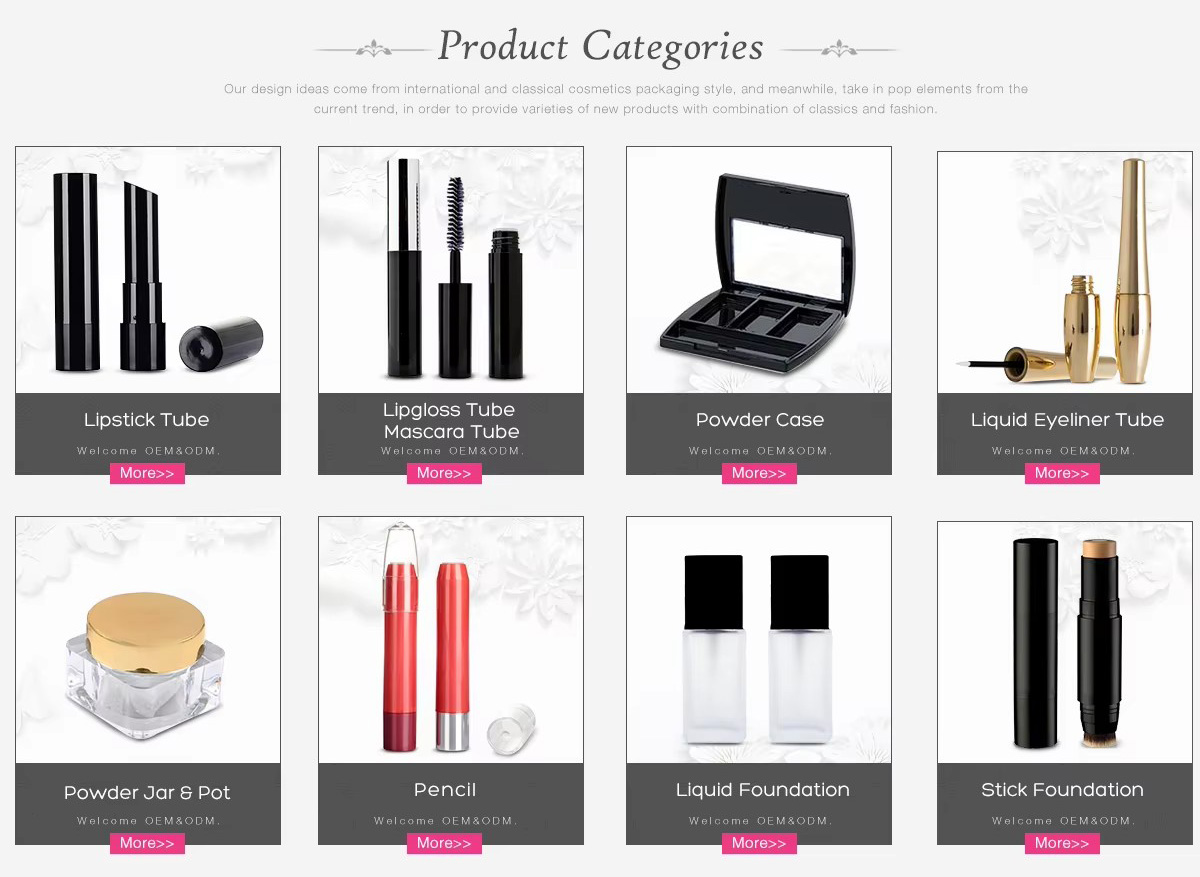
This reference connects them. It sets out the published specifications for nine cosmetic packaging models — CP01-2142, CP02-2231, CP03-1394, CP04-1215, CP05-2159B, CP06-1056, CP07-2026, CP08-0053 and TP01-1018-15 — and translates each specification into a qualification question and an acceptance criterion that can be written into a purchase order.
The models are produced by COSFINITY (Guangzhou Cosfinity Cosmetics Co., Ltd.), a cosmetic packaging manufacturer founded in 2009 and based in Guangzhou, China, operating a 40,000㎡ facility with 200 employees and a 25-engineer R&D team, and serving global markets with a stated annual output of 500,000,000 pieces.
Why Compliance Review Breaks Down at the Supplier Level
A supplier-level review answers a narrow question: is this factory able to produce packaging at all? It confirms that a facility exists, that it has a quality system, that it can run an OEM or ODM programme. It does not confirm that the 20 ml lipstick tube on the purchase order has a 0.3 mm wall, or that the 30 ml foundation bottle is glass rather than a moulded alternative, or that the 5 ml powder jar is the leak-proof variant.
That distinction matters more than it did a few years ago. Regulatory frameworks now place documentation obligations close to the product itself. In the European Union, the Packaging and Packaging Waste Regulation (EU) 2025/40 sets recyclability and labelling requirements for cosmetic packaging. In the United States, the Modernization of Cosmetics Regulation Act (MoCRA 2022) introduced mandatory facility registration and product listing. Both regimes reward buyers who can point to a component-level record rather than a generic supplier statement.
The practical consequence is a shift in what buyers ask for. Instead of “send me your certificates,” the more useful request is: give me the material, the dimensions, the wall thickness and the capacity for the exact model I am ordering, and tell me which of those values are controlled in production and which are nominal.
What Component-Level Compliance Evidence Actually Contains
A component-level record has three layers, and each layer answers a different purchasing question.
Layer 1 — Material declaration. What the component is made of, at the level of polymer or glass family. This layer determines which regulatory route applies and which filling formulas are compatible. For packaging that touches skin, the relevant test is whether the material is non-irritating and suitable for direct contact in normal use.
Layer 2 — Dimensional and capacity specification. Outer dimensions, wall thickness and nominal volume. This layer determines whether the component fits the filling line, the secondary pack, the shelf, and the label area — and whether the declared capacity is the capacity the consumer will actually experience.
Layer 3 — Acceptance criteria. The inspection points, sampling logic and tolerances that convert a catalogue value into a pass/fail decision at goods-in. Without this layer, the first two layers are marketing copy rather than procurement controls.
Verified Specifications Across Nine Cosmetic Packaging Models
The table below reproduces the published values for the nine models, grouped by packing use. Dimensions are stated in the unit published by the manufacturer; wall thickness and volume are shown only where a value is published.
| Model | Component type | Material | Dimensions | Wall thickness | Volume |
|---|---|---|---|---|---|
| CP01-2142 | Lipstick tube | Plastic | W22.7 × H84.6 mm | 0.3 mm | 20 ml |
| CP02-2231 | Lipgloss / mascara tube | Plastic | W18 × H106.1 mm | 0.3 mm | 3 ml |
| CP03-1394 | Powder case | Plastic | W65 × H12 mm | 1 mm | Not published |
| CP04-1215 | Eyeliner tube | Plastic | W12.8 × H115.3 mm | 0.3 mm | 10 ml |
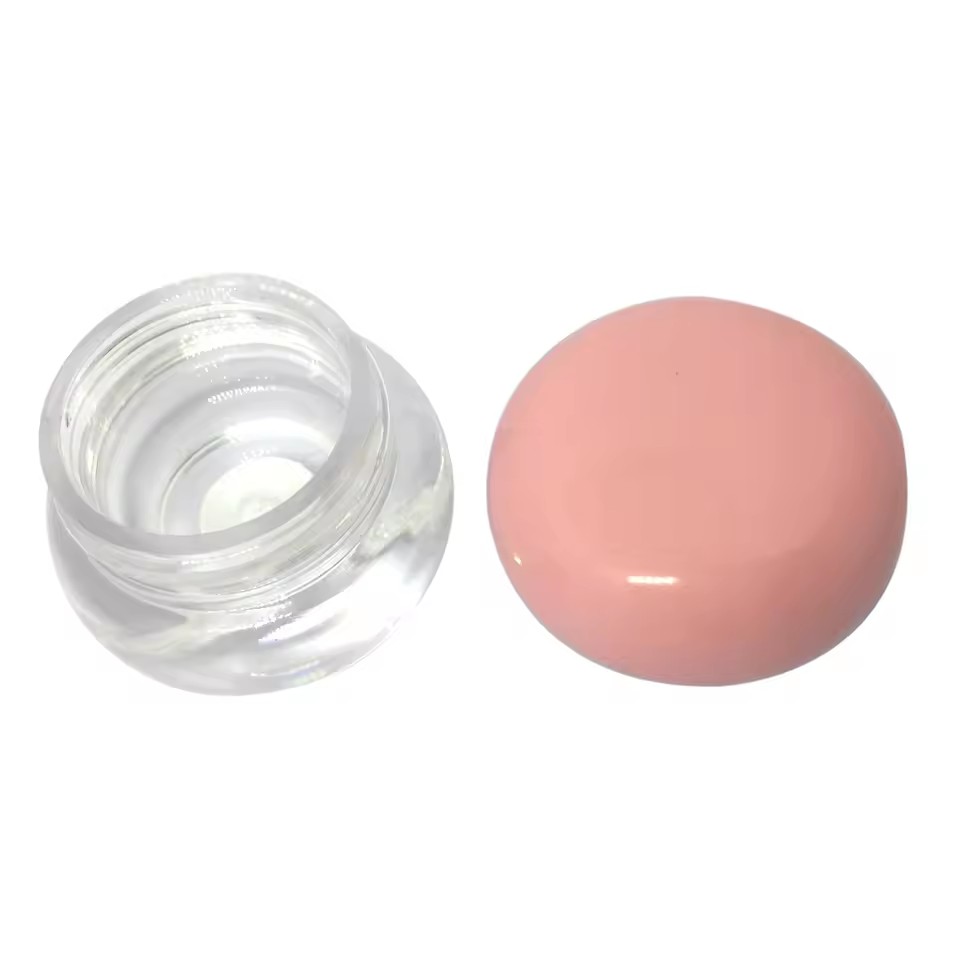
| CP05-2159B | Powder jar / pot | Plastic | W40.7 × H32.6 mm | 1 mm | 5 ml |
| CP06-1056 | Eyeliner pencil | Plastic | W15 × H173.5 mm | Not published | Not published |
| CP07-2026 | Airless pump foundation bottle | Glass | W33.5 × H92 mm | Not published | 30 ml |
| CP08-0053 | Stick foundation tube | Plastic | D29 × H60 mm | Not published | 10 ml |
| TP01-1018-15 | Deodorant stick container | Plastic | L41.7 × W24.49 × H86.5 mm | Not published | 20 ml |
Every model in the table carries the same declared usage: cosmetic packing, within the cosmetic packing industry. That consistency is useful at the screening stage, but it is not sufficient for qualification — the differences between the models, not their similarities, are what a buyer has to evaluate.
Volume capacity is not fill volume
The declared volume for CP01-2142 is 20 ml, for CP04-1215 it is 10 ml, for CP02-2231 it is 3 ml, for CP05-2159B it is 5 ml, for CP07-2026 it is 30 ml, for CP08-0053 it is 10 ml, and for TP01-1018-15 it is 20 ml. These are component capacities, not recommended fill weights. A 30 ml airless pump bottle and a 20 ml lipstick tube are filled with different mechanics, and the usable fill of a stick or a pump format is set by the mechanism, not by the outer envelope.
For procurement, the safe method is to treat the published volume as a ceiling and to validate the actual fill with the formula and the filling equipment before fixing a declared net content on the artwork.
Wall thickness is published for five models, not nine
Wall thickness is stated for CP01-2142, CP02-2231 and CP04-1215 at 0.3 mm, and for CP03-1394 and CP05-2159B at 1 mm. It is not published for CP06-1056, CP07-2026, CP08-0053 or TP01-1018-15. That is a real gap, not an oversight to be smoothed over in a table. For those four models, wall thickness must be requested as a measured value, agreed as a tolerance, and added to the acceptance criteria before the order is released — otherwise the buyer has no basis for a dimensional rejection.

Material mix across the set
Eight of the nine models are plastic. CP07-2026 is the single glass component: a 30 ml airless pump foundation bottle at W33.5 × H92 mm. That ratio mirrors the wider category, where plastic holds a 64.5% share of cosmetic packaging material use, with glass and metal following. For a buyer building a multi-SKU line, the practical implication is that plastic tooling and plastic acceptance criteria will dominate the qualification workload, while the glass SKU needs its own supply and inspection logic.
Qualification: What the Manufacturer Publishes About Its Process
Specifications describe the component. Qualification describes the system that will reproduce it. COSFINITY publishes the following operational parameters for its cosmetic packaging programme:
- Production mode: OEM/ODM.
- Customization scope: logo, colour, shape, material, volume, thickness, packaging.
- Monthly capacity: 10,000,000 pcs.
- Lead time: 15–25 days.
- Minimum order quantity: 12,000 pcs.
- Quality control: 100% test.
- Export markets: global.
- After-sales: remote online after-sales service.
Read as qualification inputs rather than as sales points, these values resolve three questions early. First, the customization list confirms that thickness and volume sit inside the customizable parameter set — which is what makes a measured wall thickness request on CP06-1056, CP07-2026, CP08-0053 or TP01-1018-15 a legitimate engineering conversation rather than a change of product. Second, the 12,000 pcs MOQ defines the smallest order against which a per-model acceptance protocol is economic. Third, a 15–25 day lead time defines the window inside which inspection capacity has to be available at the buyer's end.
The 100% test claim deserves a specific follow-up in any qualification conversation: test against what, using which instrument, recorded where. A buyer who asks that question once will usually learn more about a factory than from any certificate pack.
Turning Specifications into Acceptance Criteria
Acceptance criteria are the point where compliance becomes operational. The framework below maps each published specification to an inspection point and to the evidence a buyer should hold before release.
| Inspection point | What is checked | Source evidence | Typical failure mode |
|---|---|---|---|
| Outer dimensions | Height, width or diameter against the declared value for the exact model | Model specification (e.g. W22.7 × H84.6 mm for CP01-2142) | Component fits the formula but not the secondary carton or the filling nest |
| Wall thickness | Measured thickness at defined points against the declared or agreed value | 0.3 mm for CP01-2142, CP02-2231, CP04-1215; 1 mm for CP03-1394, CP05-2159B; agreed value for the remaining four models | Thickness variance that changes hand-feel, weight or drop resistance |
| Volume capacity | Usable capacity with the intended mechanism and formula | Declared volume per model (3 ml to 30 ml across the set) | Declared net content cannot be achieved at the target fill speed |
| Material identity | Polymer or glass family matches the declaration | Plastic for eight models; glass for CP07-2026 | Substitution during a capacity-constrained production run |
| Closure and leakage | Repeated open/close cycles without leakage in normal carrying use | Leak-proof design requirement for daily storage and carrying scenarios | Seepage in transit or in a handbag after repeated use |
| Skin-contact suitability | Material suitable for direct skin contact in normal use | Non-irritating material requirement for daily cosmetic contact | Documentation gap rather than a product defect — but equally blocking at customs or at retail onboarding |
Where the Specification Meets Daily Use
The published application scenario for this model set is indoor daily makeup use at normal room temperature, in the range of 16℃ to 25℃. The component is opened and closed repeatedly, carried around, and used alongside a brush, a puff and a mirror. The stated requirements for that scenario are leak-proof design, non-irritating material, portability and light weight.
Those four requirements are the reason the specification table matters commercially. A 3 ml lipgloss or mascara tube (CP02-2231) at W18 × H106.1 mm and 0.3 mm wall is a portability decision. A 30 ml glass foundation bottle (CP07-2026) is a different decision: glass buys weight and perceived quality, and it costs gram weight and drop risk. An eyeliner pencil at W15 × H173.5 mm (CP06-1056) and an eyeliner tube at W12.8 × H115.3 mm (CP04-1215) sit in the same category but imply different application mechanics, different filling equipment and different acceptance tests.
The same logic applies at the supplier level. A lipstick tube OEM programme with an India-based client, running at 12,000 pcs per order over a two-year relationship, is described in COSFINITY's case record as supporting a private-label lipstick launch, with customized design, lightweight plastic material, customizable appearance printing and a tight leak-proof structure for daily portable use. The repeated bulk orders that followed are the outcome that matters for a buyer reading this as evidence: it indicates that the specification held across reorders rather than only in the first shipment.
Market Context: Why Component-Level Evidence Is Becoming Standard
The global cosmetic packaging market was valued at approximately USD 34.17B to USD 47.3B in 2024, with projections reaching up to USD 89.72B by 2034. The spread between the 2024 estimates is itself instructive: it reflects disagreement about whether secondary packaging and industrial bulk containers belong in the count. Buyers doing category sizing should treat any single figure as a range, not a fact.
Asia Pacific led the global market in 2025 with a 42.36% share, supported by rising disposable incomes and e-commerce growth, and China's beauty product exports reached approximately USD 4.77B in 2024. On the demand side, 63% of cosmetic consumers were reported in 2024 to prioritise sustainable, refillable or recyclable packaging — a signal that increasingly reaches the specification sheet as a material and disassembly question rather than a branding question.
The direction of travel is consistent: more documentation, more material traceability, more inspection points. Buyers who already hold model-level specifications are better positioned than buyers who hold only a supplier brochure.
Specification-Led vs. Sample-Only Approval
The traditional approach to cosmetic packaging approval is sample-led: the buyer receives a physical sample, approves the look and feel, and places the order. It is fast and it is intuitive, but it produces a weak record. A sample confirms that one unit looked acceptable on one day; it does not define what happens when the second production run differs by a fraction of a millimetre.
A specification-led approach reverses the order. The buyer starts from the published model data — material, dimensions, wall thickness, volume — converts each value into an inspection point, and uses the sample to confirm the interpretation rather than to define the standard. The trade-off is real: specification-led approval takes longer at the front end and requires the buyer to have measuring capability at goods-in. For a 12,000 pcs minimum order, that investment is proportionate. For a one-off low-volume trial, it can be more process than the order justifies.
Three boundaries should be stated plainly. First, four of the nine models in this set do not publish a wall thickness value, so a thickness criterion must be established through direct request rather than read from the table. Second, the published specifications describe geometry and material; they do not constitute market-specific regulatory test reports, and buyers targeting the EU or US must confirm the documentation route for their own product and market. Third, the 15–25 day lead time refers to production and excludes artwork development, tooling changes and international freight, so schedule commitments built on that figure alone will usually be optimistic.
Future Outlook
Two forces are likely to shape cosmetic packaging qualification over the next few years. The first is regulatory: frameworks such as the EU PPWR and MoCRA move documentation requirements closer to the individual product and facility, which makes component-level records more valuable and supplier-level claims less sufficient. The second is material: with plastic holding 64.5% of the material mix, recyclability and refill discussions will keep landing on the specification sheet as concrete questions about polymer choice, wall thickness and disassembly.
For buyers, the practical response is not to wait for a standard format to emerge. It is to build an internal one: a per-model record containing material, dimensions, wall thickness, volume, accepted tolerances and the inspection method for each. Nine models, one table, and a documented acceptance rule per line is a workable starting point — and it is the version of compliance that survives an audit, a reorder and a supplier change.
FAQ
What does “compliance-ready” mean for a cosmetic packaging component?
It means the component can be described by verifiable attributes rather than by supplier-level claims. In practice, a compliance-ready component has a declared material, published outer dimensions, a stated or agreed wall thickness, a declared volume capacity, and an inspection point for each value. A supplier certificate alone does not meet that definition, because it does not attach to a specific model.
How do I confirm that a packaging model matches my formula volume?
Compare the declared component volume with the intended fill and then validate physically. The published volumes across this set range from 3 ml (CP02-2231) to 30 ml (CP07-2026). Because the usable fill of a stick, a pump or a jar is governed by its mechanism, the declared volume should be treated as a ceiling and confirmed with the actual formula on the actual filling equipment.
Which models publish a wall thickness, and what should I do when a model does not?
Wall thickness is published for CP01-2142, CP02-2231 and CP04-1215 at 0.3 mm, and for CP03-1394 and CP05-2159B at 1 mm. It is not published for CP06-1056, CP07-2026, CP08-0053 or TP01-1018-15. For those four models, the thickness value must be requested, agreed as a tolerance and written into the acceptance criteria; otherwise there is no reference point for a dimensional rejection.
What acceptance criteria should appear in a cosmetic packaging purchase order?
At minimum: outer dimensions against the declared model value, wall thickness against the declared or agreed value, usable volume against the intended fill, material identity against the declaration, closure performance across repeated open and close cycles, and skin-contact suitability of the material. Each criterion needs a stated inspection method and a defined sampling basis, or it cannot be enforced at goods-in.
What order size and lead time should a buyer plan around?
COSFINITY publishes a minimum order quantity of 12,000 pcs and a lead time of 15–25 days for its cosmetic packaging programme, with a monthly capacity of 10,000,000 pcs and 100% testing as the stated quality control approach. The lead time covers production and does not include artwork development, tooling changes or international freight.
How should brands handle regulatory documentation for the EU or US market?
Separately from the component specification. The EU Packaging and Packaging Waste Regulation (EU) 2025/40 sets recyclability and labelling requirements for cosmetic packaging, and MoCRA 2022 introduced mandatory facility registration and product listing in the United States. Published model specifications describe geometry and material; they are not market-specific regulatory test reports, so each brand must confirm the documentation route applicable to its own product and destination market.
A consolidated PDF covering COSFINITY's cosmetic packaging profile is available for download: COSFINITY company profile (PDF).
¿Tiene preguntas o necesita más detalles?
Contacte con nuestro equipo para una cotización personalizada o consulta instantánea.
Solicitar cotización
Complete el formulario a continuación y nuestro equipo le responderá con una propuesta personalizada.
Chat directo de WhatsApp
¿Prefiere chatear en tiempo real? Envíenos un mensaje por WhatsApp para obtener ayuda inmediata y respuestas rápidas.
- Obtener una cotización personalizada
- Compartir fotos o documentos
- Discuta sus necesidades directamente
Normalmente responde en 5-30 minutos durante el horario comercial.