
Compliance Files: GMP Integration Across Packaging Line Components
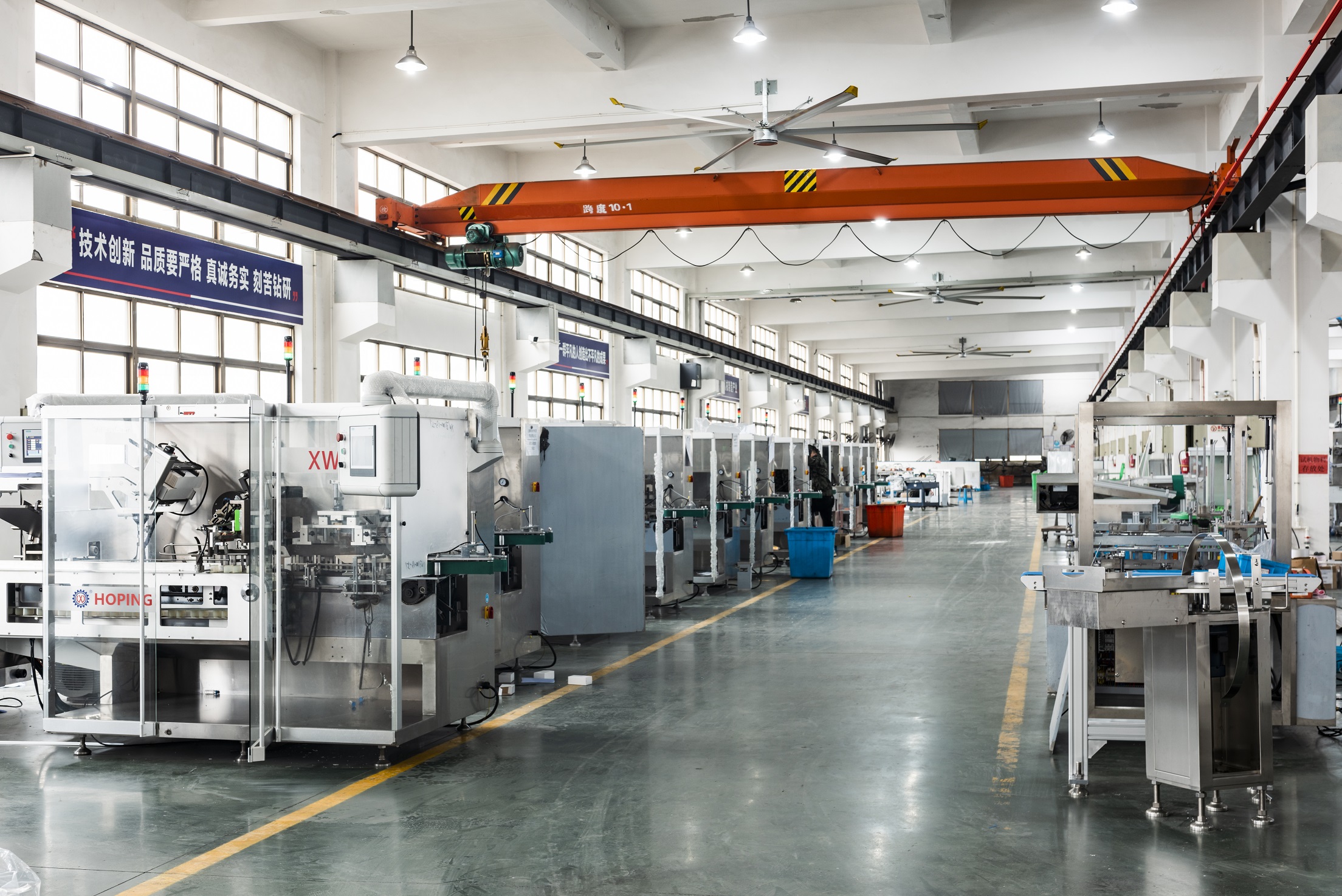
An integrated blister-to-carton line area. GMP compliance is documented component by component, then verified as one continuous process.
Compliance Is a Line-Level Obligation, Not a Machine Attribute
A GMP-compliant pharmaceutical packaging line is not a machine that carries a certificate. It is a documented process in which every element that touches the product, the primary package, or the printed data is specified, controlled, and verifiable. On an integrated blister-to-carton line, that obligation runs continuously from blister forming and sealing through product feeding, leaflet handling, carton opening and sealing, inspection and rejection, coding, and the downstream connection to case packing.
The U.S. Food and Drug Administration describes Current Good Manufacturing Practice (cGMP) as the framework that helps establish the foundation for quality pharmaceuticals through regulatory standards. Separately, ISO 15378:2017 specifies Good Manufacturing Practice requirements for primary packaging materials for medicinal products. Read together, these references describe a system obligation: quality is protected by controlled materials, controlled processes, and controlled records — not by a badge attached to a single unit.
Packaging has a defined protective role inside that system. A published review notes that medical devices and pharmaceutical drugs are packaged to maintain their stability and integrity during post-production shipping and storage. Seal quality, forming consistency, and carton integrity therefore sit inside the compliance scope, because they determine whether that protective function still holds after the line has finished its work.
What the regulatory framework does not do is prescribe equipment design. FDA guidance addresses CGMP production and process controls at process level, and the material available does not establish machine-specific design requirements. That space is filled at procurement: the buyer's specification and the supplier's technical agreement are where a process-control requirement becomes a defined forming parameter, a listed product-contact part, a named tooling set, and an acceptance test that can be witnessed.
That is the intent behind the DHL8005H line configuration referenced in this review. GMP-relevant requirements are reflected in the technical agreement that governs material standards, product-contact parts, and tooling across the line — from blister forming through carton sealing — rather than being attached to one station in isolation.
Where Integration Changes the Compliance Map
Conventional configurations separate the risk. A blister machine, manual transfer of blisters, and a standalone cartoner distribute responsibility across separate pieces of equipment and across operators who handle product between them. Low-speed semi-automatic blister-cartoning solutions and non-full-servo link lines reduce cost but add a different compromise: more operator involvement, more intermediate handling, and more points at which a deviation has to be recorded by hand.
The documented risk inventory for a pharmaceutical blister-cartoning line is specific: poor blister forming or sealing; missing, wrong, or incomplete product feeding; missing leaflet; carton jam; coding or date-printing error; foreign matter or contamination risk; downtime during high-speed operation; and delivery and installation risks on export projects.
Each of those has a corresponding control: sensor monitoring, vision or checkweighing inspection where configured, missing-product alarm, automatic stop, automatic rejection, key-parameter locking, fault records, mechanical safety protection, FAT/SAT acceptance, and SOP training.
Integration redistributes those controls. An integrated line combines blister packaging, blister transfer, leaflet handling, carton opening, insertion, inspection/rejection, and downstream connection into one automated process, which reduces manual intervention compared with a blister machine plus manual transfer plus standalone cartoner. Fewer manual steps means fewer uncontrolled handoffs — but it also means one failure can interrupt a complete sequence rather than a single station, and it concentrates the compliance evidence into one control architecture. That concentration is an advantage only if the documentation is designed as one system.
| Line stage | GMP-relevant failure mode | Documented control | Evidence a buyer should request |
|---|---|---|---|
| Blister forming and sealing | Poor blister forming or sealing | Parameter control, key-parameter locking, sensor monitoring | Forming material specification, parameter records, sample confirmation |
| Product feeding | Missing, wrong or incomplete product feeding | Missing-product alarm, sensor monitoring, automatic stop | Feeding verification method, alarm logic, test records |
| Leaflet handling | Missing leaflet | Leaflet presence checking within the integrated sequence | Detection method and rejection record format |
| Carton opening, insertion and sealing | Carton jam; coding or date-printing error | Jam detection, key-parameter locking, fault records | Coding samples, parameter-lock scope, jam-recovery SOP |
| Inspection and rejection | Foreign matter or contamination risk; undetected defect | Vision or checkweighing inspection where configured; automatic rejection | Rejection criteria and verification of the reject function |
| Downstream connection | Downtime during high-speed operation; transfer loss | Centralized control, modular stations, alarm indication | Integration test data, FAT/SAT acceptance records |
| Export delivery and installation | Delivery and installation risks for export projects | No-load and material tests before shipment; commissioning and training support | Pre-shipment test report; witness acceptance for key projects |
Controls reflect documented line-level practice. The exact scope for any project is fixed in its technical agreement.
How Hoping Structures GMP-Relevant Requirements Across the Integrated Line
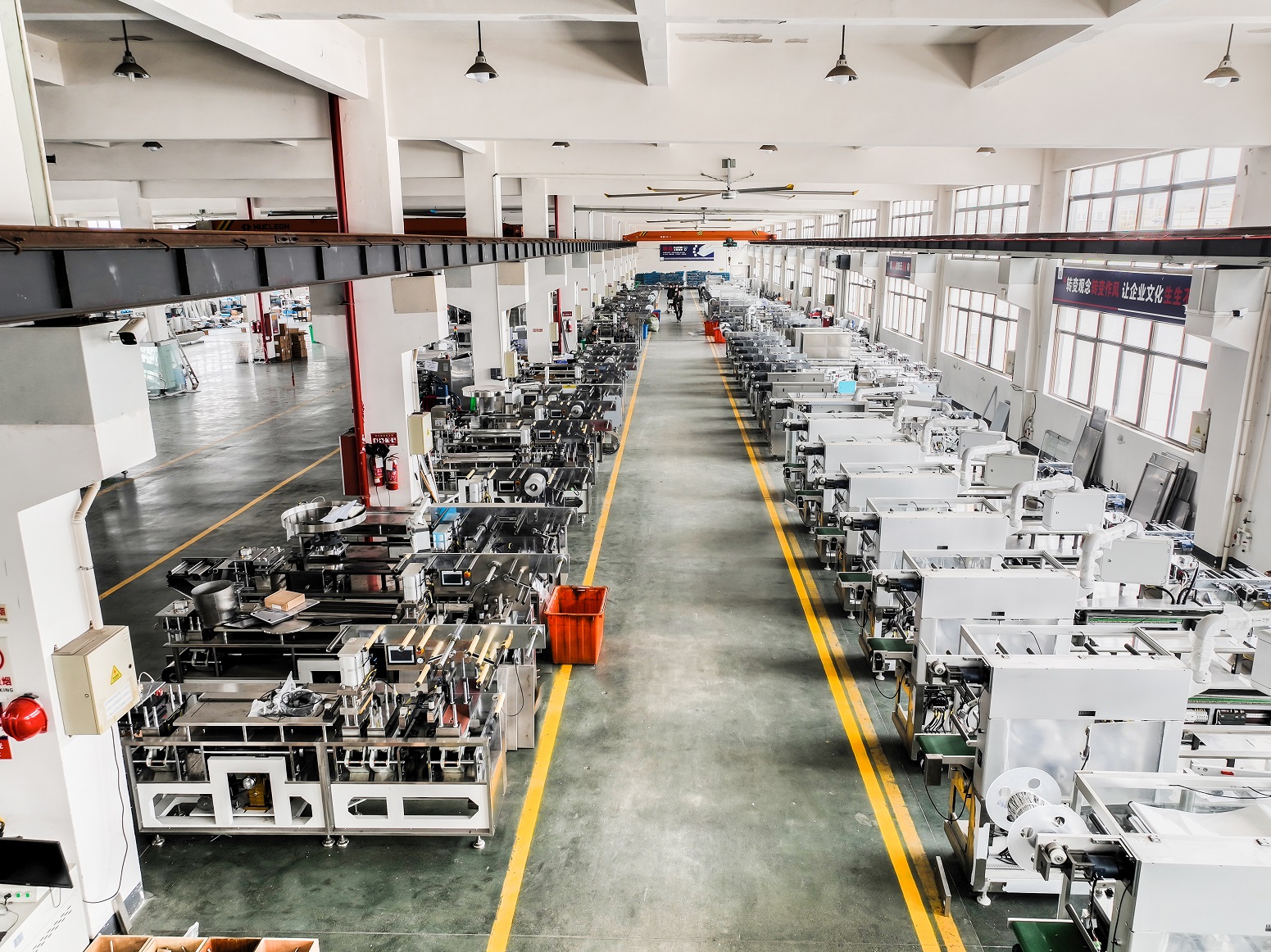
Blister forming and sealing station: the first point at which material standards and product-contact parts enter the compliance file.
Material standards come first
Material standards are the first component-level requirement because they determine what the line is permitted to form, seal, and touch. Blister format capability is bounded by material construction: Hoping lists flat-plate, roller-type aluminum-plastic, and aluminum-aluminum blister packaging machines alongside automatic cartoning machines and production lines. Practically, that means the material decision — aluminum-plastic versus alu-alu — is settled in the technical agreement before the line configuration is frozen, not negotiated afterwards at the forming station.
Product-contact parts and tooling
Product-contact parts are the second requirement, and on an integrated line the list is longer than buyers expect. Contact is not limited to the forming station: it extends along the blister transfer path, through the feeding system, into the leaflet insertion area, and along the carton path. The technical agreement is where that list is closed — which parts touch product or primary packaging, what they are made of, how they are cleaned, and which are wear items with a defined replacement interval.
Tooling is where a generic machine becomes a specific product's line. Forming dies, feeding change parts, and carton-size tooling are format-specific, and their specification, tolerances, and changeover method belong in the agreement rather than in a brochure. For multi-format production, the tooling list also defines how changeover interacts with the qualified state — a question worth resolving before purchase, since changeover practice transfers poorly between suppliers.
Control functions that carry documentary weight
Several control functions do documentary work as well as mechanical work. Missing-product alarms, automatic stop, automatic rejection, key-parameter locking, and fault records generate the traceable events that a deviation review depends on. Parameter locking in particular converts an operator setting into a controlled value, which is why the scope of what can be locked — and what intentionally remains adjustable — should be written down and agreed.
Acceptance, training and maintenance as deliverables
Acceptance testing is the boundary between a claim and evidence. Documented practice on Hoping line projects includes confirming samples and packaging materials at the early project stage, designing the solution according to blister and carton formats, running no-load and material tests before shipment, and arranging customer witness acceptance for key projects — supported by installation, commissioning, training, spare parts, and remote technical support.
After handover, compliance posture depends on routine discipline. Centralized control, modular stations, alarm indication, and parameter management support routine maintenance, but operator training, spare-parts management, and preventive maintenance remain necessary. Those are buyer-side obligations, not supplier features, and they do not disappear because a line is more automated.
Hoping Machinery is a pharmaceutical packing machinery manufacturer operating from a 28,800 ± square meter facility in Ruian City, Zhejiang Province, China, with more than 300 employees, a 56-engineer R&D team, and a company-reported annual output of about 500 units and an export share of roughly 25%. Its stated product scope covers blister packaging machines, cartoning machines, case packing machines, and end-of-line packaging equipment.
What Buyers Should Request as Compliance Evidence
When an integrated line is compared against a split configuration, the practical difference is not the amount of paperwork but its consistency. The following items belong in the same request, not in separate machine files:
- Forming and sealing material specification, including which constructions the line is configured to run.
- Product-contact parts list with materials and cleaning method.
- Format tooling list with tolerances and changeover method.
- Alarm and rejection logic: what is detected, what stops, what is rejected, what is recorded.
- Key-parameter lock scope, including how changes are authorized and recorded.
- FAT/SAT protocol with acceptance criteria, and whether witness acceptance is available.
- Pre-shipment test evidence: sample confirmation, no-load tests, and material tests.
- Training scope and SOP documentation, plus the spare-parts and preventive-maintenance plan.
- Output basis: whether the quoted figure is a nominal maximum or a sustained value, and under which format, quantity per carton, material, and process conditions.
None of these requests is unusual. The difficulty is that buyers habitually raise them one component at a time. On an integrated line they must be raised once, consistently, for the whole sequence — otherwise the interfaces between stages remain the least documented part of the project.
Technical agreement review: material standards, product-contact parts, tooling and acceptance criteria are agreed before order confirmation.
Application Fit: Where the Integrated Approach Suits a GMP Environment
The clearest candidates are large-scale solid dosage pharmaceutical packaging and high-capacity workshops where reduced manual contact is a requirement, together with multi-format packaging lines expected to run stably across a product portfolio. The logic is straightforward: where volume is high and continuous, the labour, transfer, management, and quality-risk costs of manual handoffs accumulate, and integration removes them structurally rather than procedurally.
Export projects add a second dimension. Hoping's stated main markets cover Southeast Asia, the Middle East, Eastern Europe, South America, and Africa, with an export share of roughly 25%. For buyers in those markets, delivery and installation risk is itself a compliance risk: a line that is documented correctly but commissioned without adequate support cannot be qualified in practice. Pre-shipment material tests, commissioning support, and remote technical support are the measures that address that gap.
The boundary is equally clear. An integrated high-speed line is not automatically the right answer. Small-batch production, low annual volumes, or environments where format changes are frequent are legitimate cases for a slower or semi-automatic configuration, because the capital cost of integration is harder to justify against modest throughput. That is a commercial trade-off, not a compliance failure — but it should be decided deliberately rather than by default.
Market Signals Behind Compliance-Led Procurement
Market data supports the direction of travel, with one caveat that applies to all of it: most size figures originate from a single commercial research publisher and should be treated as directional rather than as a benchmark.
- The global blister packaging machine pharmaceutical market was valued at USD 2.57 billion in 2025 (Custom Market Insights).
- Asia-Pacific is described as the fastest-growing region for pharmaceutical blister packaging, at an 8.87% CAGR through 2031 (same source).
- Horizontal cartoning systems held 70.12% of market share in 2024 (Mordor Intelligence).
- The global pharmaceutical packaging machinery market is reported at USD 7.09 billion in 2026, growing at a 7.15% CAGR toward USD 10.02 billion; the market definition and forecast end year could not be fully retrieved from the available excerpt, so this figure should be used only as a directional signal and never combined with the blister-specific value above.
Regulatory signals point the same way. ISO 15378:2017 already establishes GMP requirements for primary packaging materials for medicinal products. In China, a draft GMP guidance for pharmaceutical packaging materials has been under public consultation, aimed at guiding pharmaceutical marketing licence holders in reviewing packaging material suppliers — reported through a regulatory-affairs consultancy, so the underlying authority document should be confirmed before it is cited as a contractual reference.
The operational trend is consistent with both. Trade media reporting PMMI content states that pharmaceutical manufacturers are turning toward digitized data collection and integrated solutions in order to meet regulations and improve visibility. Whatever the eventual scale of that shift, the procurement implication is the same: the data a line can produce is becoming part of what the line must deliver, not an optional extra added after installation.
Integrated Line vs Blister Machine Plus Standalone Cartoner
| Decision dimension | Integrated blister-cartoning line | Blister machine + manual transfer + standalone cartoner |
|---|---|---|
| Manual intervention | Reduced, because blister packaging, transfer, leaflet handling, carton opening, insertion, inspection/rejection and downstream connection form one automated process | Higher, with operator handling and intermediate transfers between stages |
| Documentation surface | One control architecture, one agreement covering material standards, contact parts and tooling | Split across machines and manual procedures; interfaces are often the weakest documented element |
| Initial investment | Usually higher than standalone or semi-automatic equipment | Lower entry cost |
| Operating cost structure | Supports lower labour, transfer, management and quality-risk cost in large-scale continuous production | Recurring labour and handling cost scales with volume |
| Typical fit | Large-scale solid dosage packaging, high-capacity workshops, multi-format lines | Lower volumes, budget-constrained entry, or less demanding manual-contact requirements |
| Maintenance dependency | Centralized control, modular stations, alarm indication and parameter management support routine maintenance | Maintenance is distributed across separate machines and manual procedures |
The limits of the integrated approach deserve stating as plainly as the advantages, because they determine whether it is the right purchase.
First, initial investment is usually higher than standalone or semi-automatic equipment, and the return depends on continuous high-volume operation where reduced labour and transfer costs actually accumulate. Second, published output figures are nominal maximums: a representative line configuration is documented at up to 1,000 blisters per minute and 500 boxes per minute, while the same documentation notes that actual output depends on product format, quantity per carton, materials, and process conditions — so such figures should never be carried directly into a business case without a sustained-output basis. Third, performance claims in this equipment category are manufacturer-reported; FAT/SAT acceptance, and witness acceptance for key projects, are what convert a claim into evidence. Fourth, integration does not reduce buyer-side workload as much as it appears to: operator training, spare-parts management, and preventive maintenance remain necessary, and actual energy consumption should be measured from on-site output and running hours rather than inferred from a fully servo-driven design. Fifth, and most importantly, no integrated design transfers the buyer's own validation obligation.
Future Outlook
Three developments are likely to shape how GMP integration is specified over the coming years.
Documentation will move earlier in the procurement cycle. Instead of appearing at contract signature, material standards, product-contact parts, tooling lists, and acceptance criteria will be requested alongside the first technical quotation, because they determine whether the line can be qualified at all. Suppliers who treat these as a post-order administrative step will increasingly lose shortlist positions to suppliers who can produce them on request.
Data capture will be specified as a line requirement rather than an add-on. The reported shift toward digitized data collection and integrated solutions puts the emphasis on what a line records — alarms, rejects, parameter changes, fault history — and not only on what it produces.
Regional review obligations will continue to shape supplier qualification. Where packaging-material rules are being tightened, buyer-side audits are likely to move upstream into material and component documentation, including the Chinese draft guidance currently under consultation. The direction is consistent across markets: the gap between a compliant line and a documented line is narrowing, and a line that cannot produce its own evidence trail is, in regulatory terms, incomplete — regardless of how well it runs.
Frequently Asked Questions
Does an integrated blister-cartoning line automatically satisfy GMP requirements?
No. GMP is a regulatory framework, not a machine attribute. The U.S. FDA describes cGMP as establishing the foundation for quality pharmaceuticals through regulatory standards, and ISO 15378:2017 specifies GMP requirements for primary packaging materials for medicinal products. Equipment is one element within that system. A line can support GMP compliance through controlled materials, listed product-contact parts, parameter locking, rejection logic, and acceptance testing — but the buyer's own qualification and documentation remain necessary.
Which components of an integrated line carry GMP-relevant documentation?
The stages that touch product, primary package, or printed data: blister forming and sealing (forming and seal quality), product feeding (missing, wrong or incomplete product), leaflet handling (missing leaflet), carton opening and sealing (carton jam, coding or date-printing error), inspection and rejection (foreign matter or contamination risk, undetected defects), and the downstream connection (downtime during high-speed operation). Each maps to a documented control such as sensor monitoring, missing-product alarm, automatic stop, automatic rejection, key-parameter locking, or fault records.
What should a buyer request when comparing an integrated line with a traditional blister machine plus standalone cartoner?
Consistency across the sequence matters more than the volume of paperwork: material standards, a product-contact parts list, a format tooling list, alarm and rejection logic, key-parameter lock scope, a FAT/SAT protocol with acceptance criteria, and pre-shipment test records including no-load and material tests. On a split configuration these are requested machine by machine; on an integrated line they should be requested once for the whole sequence, otherwise the interfaces between stages stay undocumented.
How does an integrated line compare with a low-speed semi-automatic option?
The integrated line reduces manual intervention by combining blister packaging, blister transfer, leaflet handling, carton opening and insertion, inspection/rejection, and downstream connection into one automated process, which lowers manual contact and intermediate handling. The trade-off is capital cost, since initial investment is usually higher than standalone or semi-automatic equipment, plus a continuing need for trained operators, spare-parts management, and preventive maintenance at any automation level.
Which production profiles fit a fully integrated blister-to-carton line?
Large-scale solid dosage pharmaceutical packaging and high-capacity workshops that require reduced manual contact, plus multi-format packaging lines that must run stably across a product range. Where volumes are small, batches are short, or format changes are frequent, the commercial case is weaker and a slower or semi-automatic configuration may be the more rational choice.
How should published output figures be used in an equipment decision?
As nominal maximums, not as planning values. A representative line configuration is documented at up to 1,000 blisters per minute and 500 boxes per minute, and the same documentation states that actual output depends on product format, quantity per carton, materials, and process conditions. For a single-model reference point, Hoping's DPH320HII rotary blister packing machine is documented at a maximum of 1,000 blisters per minute (250 punches per minute). Sustained-output data and acceptance criteria should be requested and verified through FAT/SAT rather than taken from catalogue figures.
Closing Note
GMP integration across a pharmaceutical packaging line is decided long before the first blister is formed: it is decided in the technical agreement that names the material standards, the product-contact parts, and the tooling, and in the acceptance criteria that make those commitments testable. Buyers who request that evidence as one coherent package — rather than as a set of separate machine files — are the ones who can qualify an integrated line without inheriting an undocumented interface.
Component-level specification scope, machine categories and line configuration details are collected in the Hoping Machinery catalog, and company information is available at www.hopingcn.com.