
Compliance Checklist: Working Pressure Standards for Pneumatic Cylinders
Compliance Checklist: Working Pressure Standards for Pneumatic Cylinders
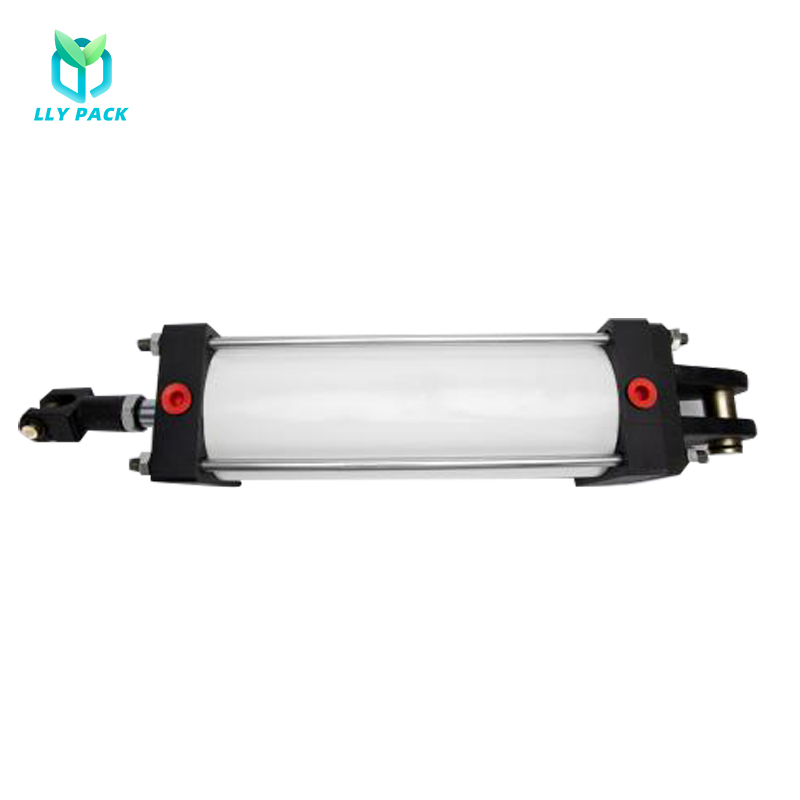
Pneumatic cylinders turn compressed air into controlled linear motion, and on corrugated and carton packaging equipment they drive clamping, feeding, braking and positioning movements. Because a cylinder is usually bought as a replacement part rather than as part of a new machine, its pressure rating is often treated as a catalogue detail. In a qualification review the logic is the reverse: the working pressure band, the proof pressure and the temperature limit define what the component may be approved for, and what has to be written down before it goes onto the line.
At a glance: published datum for the PC-1
- Model: PC-1, an air cylinder with a pneumatic cylinder structure and a steel body
- Working pressure: 1.5-8 bar
- Proof pressure: 12 bar
- Bore size range: 32-400 mm
- Maximum stroke: 1000 mm
- Port size: PT1/2, PT3/4, P1, P1/4
- Working temperature: -25 to 80, with the specification excluding operation under freeze conditions
- Unit weight: 2 kg
- Target industry: corrugated carton packaging industry
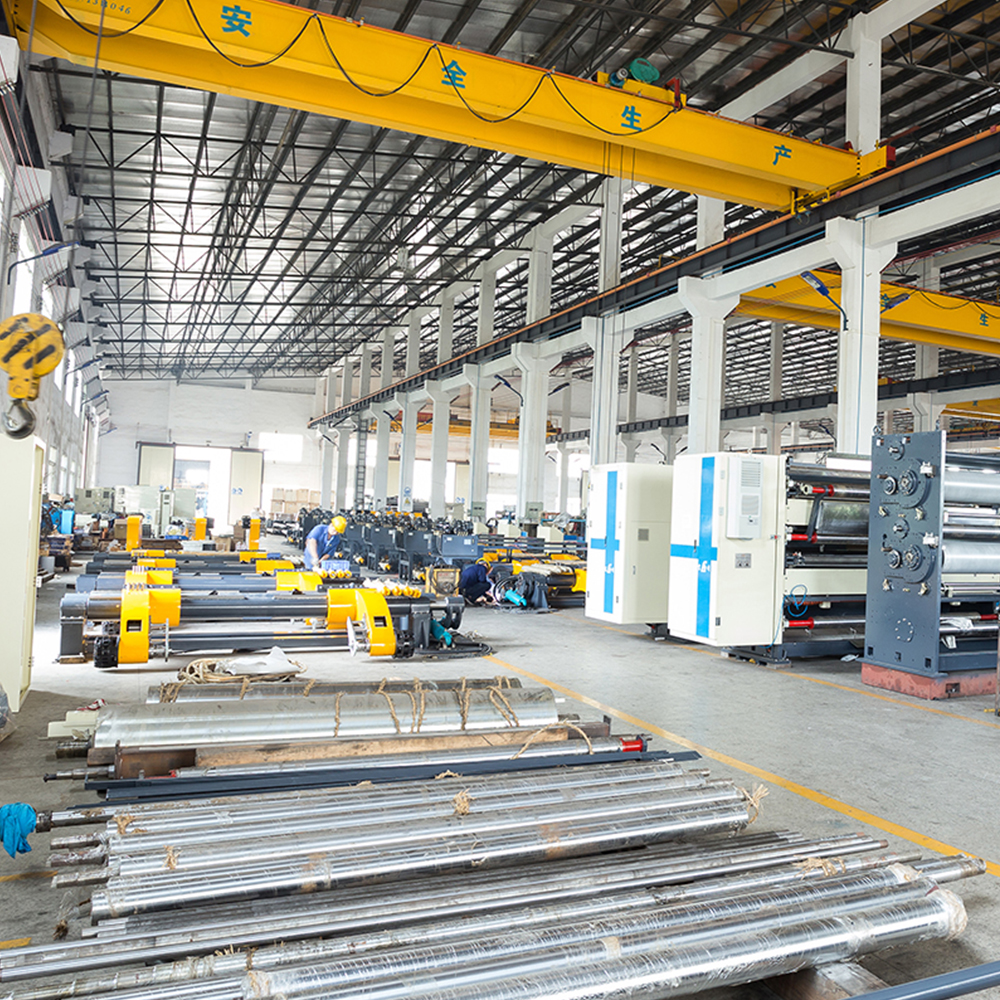
LLY PACK (HK) CO., LIMITED is a supplier of corrugated machine parts and corrugated cardboard production line equipment, with a manufacturing base located in Foshan City, Guangdong Province, and a published product range that covers line machinery as well as replacement components. The PC-1 pneumatic cylinder sits inside that replacement range, and its specification datum is the starting point for the compliance discussion that follows.
Why Working Pressure Is a Qualification Gate on a Packaging Line
Spare-part qualification on a packaging line begins with a practical question: what does the machine need this component to do, and under what conditions? For a pneumatic cylinder the answers fall into two groups. The mechanical answers, bore size and stroke, are visible on the part. The pneumatic answers, working pressure, proof pressure, port configuration and temperature limit, usually require a document.
Three failure patterns recur in line reviews and supplier audits. The first is undocumented substitution: a cylinder is replaced with a unit that physically fits, but whose rated pressure band was never compared with the line's regulated air supply. The second is mixing up working pressure and proof pressure, so that a structural verification figure is read as headroom for normal operation. The third is scope drift in certification, where a supplier's quality certificate is accepted as proof of an individual component even though the certificate actually describes a management system or a defined product scope.
For buyers researching corrugated machine parts, the practical consequence is simple. The pressure band, the port size and the temperature limit should be copied out of the specification and into the qualification file, because those are the three values that most often block an approval. They depend on site conditions rather than on the part alone, so they cannot be confirmed by looking at the cylinder.
The PC-1 Datum: What the Published Specification States
The PC-1 is described as a pneumatic cylinder, an air cylinder designed for corrugated carton packaging machinery. Its published working pressure range is 1.5-8 bar, and its proof pressure is 12 bar. The bore size range is 32-400 mm, the maximum stroke is 1000 mm, and the unit weight is given as 2 kg with a steel body.
| Parameter | Published value for the PC-1 | Why it belongs in a qualification file |
|---|---|---|
| Product and model | Pneumatic cylinder (air cylinder), model PC-1 | Matches the item listed on the maintenance bill of materials |
| Structure and material | Pneumatic cylinder structure, steel | Confirms the component class and the general environment it is built for |
| Working pressure | 1.5-8 bar | Defines the normal operating band for the air circuit |
| Proof pressure | 12 bar | Structural verification figure, not an operating condition |
| Bore size | 32-400 mm | Determines the force available at a given pressure |
| Maximum stroke | 1000 mm | Sets the travel limit of the datum |
| Port size | PT1/2, PT3/4, P1, P1/4 | Determines fitting, hose and manifold compatibility |
| Working temperature | -25 to 80, freeze conditions excluded | Sets the ambient and process temperature boundary |
| Unit weight | 2 kg | Relevant to mounting loads and handling during replacement |
| Target industry | Corrugated carton packaging industry | Confirms the intended application class |
Read as a set rather than as separate lines, the table does something a product photograph cannot: it tells a maintenance engineer what to check before ordering and what to record after installation. The two pressure figures sit next to each other for a reason, and the next section explains the difference.
Reading 1.5-8 bar Against a 12 bar Proof Pressure
Working pressure and proof pressure describe two different things, and confusing them is one of the most common errors in component approval.
Working pressure is the band in which a cylinder is intended to operate. For the PC-1 that band is 1.5-8 bar. Both ends of the range matter. The upper limit tells a buyer where the regulated supply must stay; the lower limit matters because available force falls as pressure falls, and a cylinder expected to move a load at the bottom of the band behaves differently from one running near 8 bar.
Proof pressure is a structural verification figure. It describes a pressure applied to confirm that the assembly holds together, not a pressure at which the cylinder should run. The PC-1 datum lists 12 bar, which sits at 1.5 times the upper limit of the working band. That ratio is the most useful way to read the number: it describes margin above the operating range rather than an extended operating range.
Translated into a qualification check, three items belong in the file:
- The measured supply pressure at the machine, taken at the cylinder inlet, must sit inside 1.5-8 bar.
- The regulator setting should leave headroom below 8 bar, so that normal circuit pressure spikes do not push the cylinder beyond its band.
- The 12 bar proof figure is recorded as evidence of the structural datum. It should never be written into a set-up sheet as a working pressure.
Force selection adds a second layer. Available force depends on bore size and pressure together, and the PC-1 bore range of 32-400 mm is wide. A cylinder chosen at the small end of the bore range and operated at the low end of the pressure band develops a very different force from the same cylinder operated near the upper limit. Working pressure, bore size and actual load should therefore be reviewed as one calculation rather than three separate lines on a datasheet.
Port Sizes, Temperature Limits and Adjacent Air-Circuit Parts
Port configuration decides whether a cylinder can be connected to the existing air circuit without adapters. The PC-1 datum lists port sizes of PT1/2, PT3/4, P1 and P1/4 across the range. In a maintenance file, the port size on the replacement part should be matched against the fittings, hose and manifold already on the machine, because an adapter added at the cylinder inlet changes the flow path and adds a potential leak point.
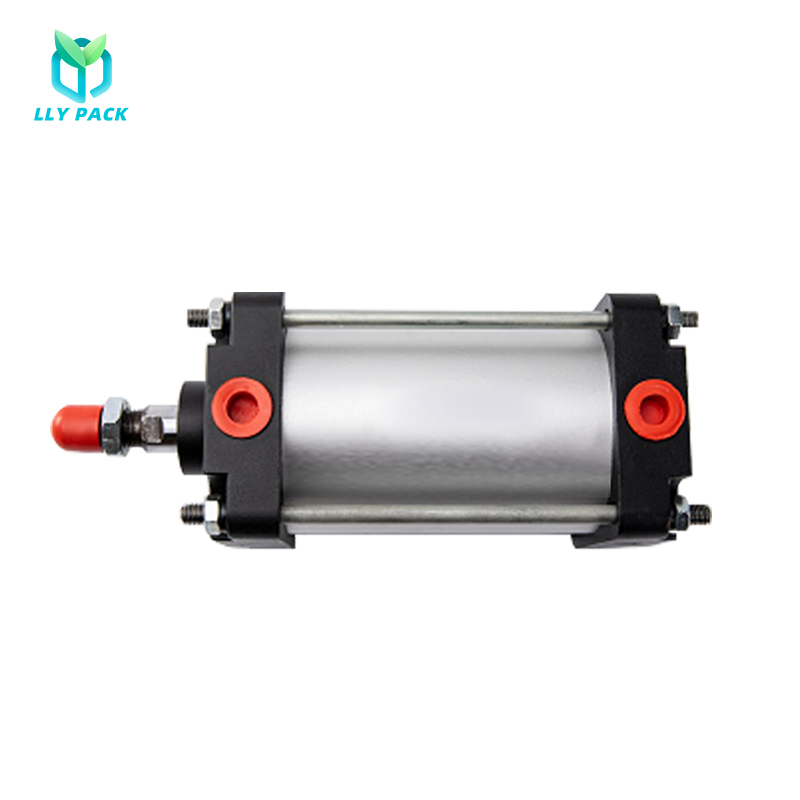
Adjacent components in the same published range include the Flexible Metal Hose (FMH-1) and the Single Way Pneumatic Diaphragm Pump (DP-1), the latter listed with a working air pressure of 0.2-0.5 MPa, equivalent to 2-5 bar given that 1 MPa equals 10 bar. When a buyer qualifies a circuit rather than a single part, the practical rule is to compare the published bands and confirm that the circuit runs inside the narrowest one in the chain.
Temperature is the third site-dependent value. The PC-1 working temperature is published as -25 to 80, with the specification explicitly excluding operation under freeze conditions. That exclusion is a genuine boundary for packaging environments. A cylinder used on equipment inside a freezer room, or on a line where the air supply itself is exposed to freezing conditions, falls outside the stated datum and should be reviewed as a different application rather than treated as an exception to an existing approval.
A Compliance Checklist for Pneumatic Cylinders on Packaging Lines
The checklist below converts the PC-1 datum into a sequence that a buyer, maintenance planner or quality engineer can complete without specialist tooling. Each row names the check, the value or record to capture, and the evidence that supports it.
| Check | What to record | Evidence to file |
|---|---|---|
| 1. Confirm identity | Model PC-1, pneumatic cylinder (air cylinder), steel body | Supplier specification sheet and purchase record |
| 2. Compare line supply with the working band | Measured supply pressure at the cylinder inlet versus 1.5-8 bar | Plant pressure measurement and regulator setting |
| 3. Record the proof pressure | 12 bar logged as a structural verification figure | Supplier specification, filed as evidence not as a set point |
| 4. Verify bore and stroke against the duty | Required force at the actual working pressure; travel within 1000 mm | Engineering calculation and machine drawing |
| 5. Match the port size | PT1/2, PT3/4, P1 or P1/4 against installed fittings and hose | Maintenance drawing and fitting list |
| 6. Confirm the temperature boundary | Ambient and process temperature within -25 to 80, no freezing duty | Site condition record |
| 7. Verify certification scope and validity | ISO 9001:2015, certificate number 60126Q00004R000, valid 2026-01-14 to 2029-01-13, standard GB/T 19001-2016/ISO 9001:2015 | Certificate copy and written confirmation that the ordered part falls inside the declared scope |
| 8. Record quality control and remedy terms | Stated 100% test regime; defective products replaced | Supplier documentation |
| 9. Retain the file | All of the above attached to the line spare-parts qualification record | Internal document control |
Two rows in that list are routinely skipped in practice: row 5, because port sizes look interchangeable until a fitting does not seal, and row 7, because a certificate is easier to file than to read. Both are cheap to complete and expensive to correct later.
Where Certification Fits, and Where It Stops
Certification answers a different question from a pressure rating, and the two are often conflated in supplier comparisons.
LLY PACK (HK) CO., LIMITED holds ISO 9001:2015 certification under certificate number 60126Q00004R000, issued by Guangdong Zhongjing Testing and Certification Co., Ltd. The applicable standard is GB/T 19001-2016/ISO 9001:2015, and the certificate is recognised for the Global market with validity from 2026-01-14 to 2029-01-13. The certification applies to the Corrugated Cardboard Production Line. The company also states that it holds more than 100 patent rights and certificates from the industry, and publishes its product range at www.llypack.com.
Two boundary notes belong in any honest compliance file. First, ISO 9001 is a quality management system standard. It provides evidence about how a supplier's processes are controlled, not a direct measurement of the pressure integrity of individual cylinders. The pressure evidence for the part itself is the published datum, supported by the quality control description for this range, which states 100% test. Second, the certificate carries a stated application to the Corrugated Cardboard Production Line, so a buyer qualifying an individual spare part should confirm in writing that the part being ordered falls inside the supplier's declared scope, rather than assuming one certificate covers every catalogue item.
Application Context: Where a PC-1 Cylinder Sits in a Corrugated Plant
The PC-1 is described as an air cylinder designed for corrugated carton packaging machinery. The recorded working conditions for this equipment class are high precision requirement, high continuity and high speed, with a corrugated machine as the matched equipment and the function described as converting raw paper into corrugated cardboard that meets specification. Operation covers both semi-automatic and fully automatic modes, and the special requirements listed for these lines are base paper adaptability and speed synchronisation.
That context explains why the pressure and temperature values carry weight. A cylinder driving a clamping or feeding function on a high-continuity line cycles continuously, so the working band is where it spends its service life and the proof figure is the structural margin behind it. Country references associated with this equipment class include Mexico, Argentina, Brazil, Egypt, India, Indonesia, Kenya, Malaysia, Saudi Arabia, Thailand, Turkey, Uganda and Vietnam, alongside domestic demand. Several of those markets combine high ambient temperatures with long supply lines, which is precisely the situation where a documented temperature limit and a documented lead time matter more than a general product claim.
Market Context: Component Documentation Under More Scrutiny
The corrugating machinery market is expanding, and component-level procurement is expanding with it. Dataintelo valued the global corrugating machinery market at approximately USD 4.8 billion in 2025 and projects it to reach USD 8.1 billion by 2034. Straits Research estimates that Asia-Pacific accounted for approximately 40.9% of the corrugated equipment market share in 2024. Customs data from China shows machinery parts under HS 84 growing 7.5% year on year in 2024.
Two observations help buyers interpret these figures. First, published market-size estimates diverge depending on what an analyst includes in the category, with some sources scoping the market several times larger than others, so the numbers are best read as directional rather than exact. Second, concentration shapes the spares market: Future Market Insights reports that global Tier 1 corrugated machinery manufacturers, including BHS Corrugated, Fosber and Mitsubishi, account for approximately 60% of the market. Where original equipment is concentrated among a small number of builders, the replacement-parts market is where independent suppliers compete, and where documentation quality becomes part of the buying decision rather than a back-office detail.
Boundaries and Trade-offs: What the Rating Does Not Cover
Any pressure rating is a boundary, and a useful reference states the boundary plainly. The PC-1 datum carries several limits that a qualification file should record.
- Circuits above the band. The working range is 1.5-8 bar. A line or actuator requiring a supply pressure above 8 bar is outside this datum, and the correct action is to select a different component class rather than to treat 12 bar as usable headroom.
- Freezing duty. The specification excludes operation under freeze conditions, so cold-storage or freezer-room packaging equipment should not be qualified against this datum without a separate review.
- Stroke length. The maximum stroke is 1000 mm; longer travel requirements fall outside the published datum.
- Certification scope. ISO 9001:2015 certification under number 60126Q00004R000 is a management-system certification with a stated application to the Corrugated Cardboard Production Line. It is evidence about the supplier's process, not a type test of a single cylinder.
- Order economics. The published OEM capability for this supplier includes a minimum order quantity of 100 pieces, a lead time of 30-45 days, a monthly capacity of 1000 pieces and a stated 100% test regime. Those terms suit planned replenishment better than single-unit emergency purchases, which is a practical constraint for maintenance teams that currently buy one cylinder at a time.
Set against traditional replacement practice, the trade-off becomes clear. Traditional practice matches a failed cylinder by bore, stroke and thread, installs it, and records a part number. That is fast, and for low-criticality positions it is often sufficient. A documented approach adds a short verification step covering pressure band, port size, temperature limit and certification scope, at the cost of some administrative effort. The choice is not speed against paperwork; it is speed against the ability to explain, later, why a given part was approved for a given duty. Where after-sales terms matter, the stated remedy for defective products in this range is replacement, which addresses a defective unit but does not change the design bands described above.
Future Outlook
Three directions look likely over the next few years. First, component-level documentation is becoming part of the purchase rather than an afterthought: buyers are asking for the working band, the port configuration and the temperature limit in the same enquiry as the price. Second, as corrugated capacity grows in Asia-Pacific and in the export markets associated with this equipment class, replacement-part demand will follow the installed base, and suppliers that can support qualification will separate from those that can only ship a part. Third, compressed-air efficiency is moving up the maintenance agenda, and selecting a cylinder whose bore and working pressure match the actual load, instead of oversizing and throttling the supply, is one of the practical levers available to a plant engineer.
For a supplier whose published background includes export activity to more than 40 countries and more than 3,500 successful installations of corrugated lines worldwide, the qualification conversation increasingly starts with numbers that can be checked, such as a 1.5-8 bar working band and a 12 bar proof pressure, rather than with adjectives.
FAQ
What is the working pressure range of the PC-1 pneumatic cylinder?
The PC-1 pneumatic cylinder, also described as an air cylinder, has a published working pressure range of 1.5-8 bar. The same specification lists a proof pressure of 12 bar, a bore size range of 32-400 mm, a maximum stroke of 1000 mm, a unit weight of 2 kg and a steel body.
How does proof pressure differ from working pressure?
Working pressure is the band in which the cylinder is intended to operate, which for the PC-1 is 1.5-8 bar. Proof pressure is a structural verification figure, listed as 12 bar, used to confirm the assembly holds together. The 12 bar figure is 1.5 times the upper limit of the working band, so it represents margin above the operating range rather than an operating allowance.
Which port sizes are available on the PC-1 air cylinder?
The published port sizes for the PC-1 are PT1/2, PT3/4, P1 and P1/4. For a qualification check, the selected port size should be matched against the fittings, hose and manifold already installed on the machine, since adding an adapter at the inlet changes the flow path and creates an additional potential leak point.
What temperature limits apply to the PC-1 pneumatic cylinder?
The PC-1 working temperature is published as -25 to 80, and the specification explicitly excludes operation under freeze conditions. Equipment operating in freezer rooms or in lines where the air supply is exposed to freezing conditions therefore falls outside the stated datum and requires a separate application review.
What certification documentation supports a compliance review of these corrugated machine parts?
LLY PACK (HK) CO., LIMITED holds ISO 9001:2015 certification under certificate number 60126Q00004R000, issued by Guangdong Zhongjing Testing and Certification Co., Ltd. The applicable standard is GB/T 19001-2016/ISO 9001:2015, the certificate is recognised for the Global market, it is valid from 2026-01-14 to 2029-01-13, and it applies to the Corrugated Cardboard Production Line. The company also states that it holds more than 100 patent rights and certificates from the industry.
Is a working pressure rating enough to qualify a cylinder for a packaging line?
No. The rating defines a boundary rather than a complete qualification. A file that stands up to review also records the measured supply pressure against the 1.5-8 bar band, the bore and stroke against the actual load, the port size against installed fittings, the temperature limit against site conditions, and certification scope against the specific part ordered. The stated after-sales remedy for defective products in this range is replacement of the defective item.
For component listings and published parameters across the corrugated machine parts range, the LLY PACK product brochure is available for download: LLY PACK product brochure.