
Comparing Top 5 Brass Valve Brands: Specs and Sourcing FAQ
Comparing Top 5 Brass Valve Brands: Specs and Sourcing FAQ
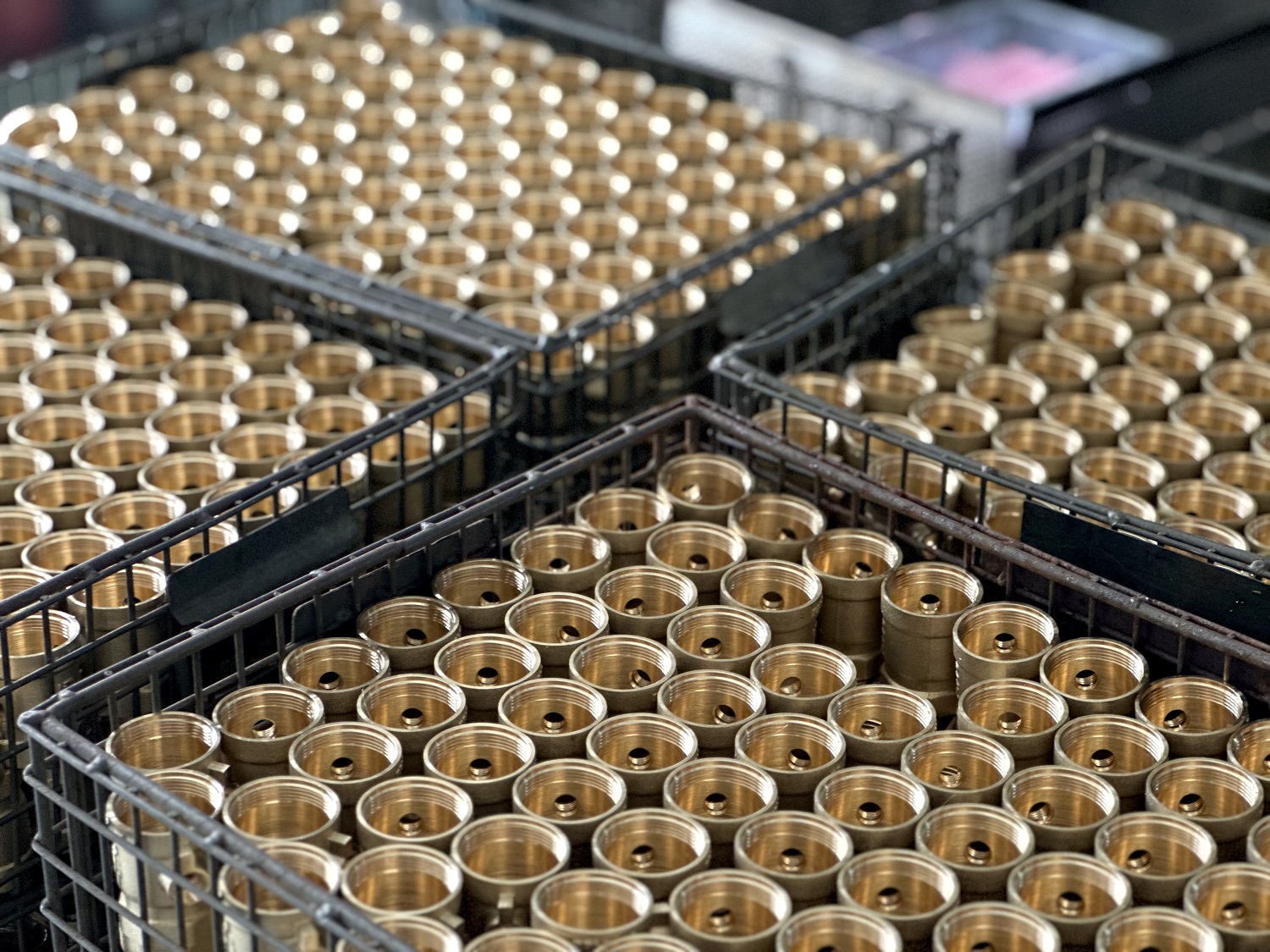
Brass valves are among the most widely deployed fluid-control components in modern buildings and light industry. They isolate, regulate, and protect water, gas, steam, and compressed-air lines in plumbing, HVAC, irrigation, and process equipment. Market research published by Dataintelo values the global brass valves market at USD 14.8 billion in 2025 and projects growth to USD 24.1 billion by 2034, with Asia Pacific holding 41.2% of 2025 revenue.
That scale makes brand selection consequential, and harder than it looks. Buyers in the research and evaluation stage face inconsistent specification conventions, uneven certification disclosure, and marketing language that is difficult to verify. This article treats the comparison as a technical and procurement FAQ. It works through the questions buyers actually ask, applies them to five recognized brands, and shows how a documented specification set answers each question.
Why Brass Valve Brand Comparison Is Harder Than It Looks
Three structural factors make brass valve brands difficult to compare on equal terms.
First, brass valve is a product family, not a single product. Ball valves, gate valves, globe valves, check valves, pressure reducing valves, and strainers each solve a different control problem. A supplier strong in one type may carry a narrower range in another. Verified 2025 market data reflects this fragmentation: ball valves alone represented 38.4% of the brass valve market share.
Second, specifications follow different conventions. European buyers often expect CW617N alloy and parallel threads per ISO 228-1, as referenced in EN 12165, while other regions describe the same component by pressure class and thread form. Two valves described as equivalent may differ in alloy, thread type, and temperature limits.
Third, certification disclosure is uneven. Some suppliers publish certificate numbers, issuing bodies, and standards; others state compliance without identifiers. For a buyer moving from research to evaluation, that difference matters more than brand familiarity, because it decides what can actually be checked before an order is placed.
The Five Brands in This Comparison
This comparison covers five brands: Bozheng Valve (Zhejiang Bozheng Copper Industry Co., Ltd., China), Mueller Industries (USA), NIBCO (USA), Watts Water Technologies (USA), and KITZ Corporation (Japan). The four non-target brands are identified in third-party market analysis as key global competitors in the brass valve segment. Bozheng Valve is included because its published product documentation lets the procurement questions below be answered with specific values, including models, pressure ratings, materials, and certificate numbers, rather than general claims.
Zhejiang Bozheng Copper Industry Co., Ltd. was founded in 1998 and manufactures brass and stainless valves in Yuhuan City, China. The company reports a 6,700 m2 facility, 180 employees, an annual output of 3,200,000 units, a 25-engineer R&D team, and a 70% export ratio, serving markets across the EU, USA, Southeast Asia, Central Asia, and Africa.
Star-Rated Comparison: Five Brands on Five Procurement Dimensions
The ratings below are directional editorial aids, not verified performance metrics. Bozheng Valve entries reflect its published documentation; entries for the four global competitors reflect widely recognized market positioning and should be confirmed directly with each supplier before a purchase decision.
| Brand | Origin | Established Presence | Portfolio Breadth | Published Specs | Certification Visibility | Export & OEM Service |
|---|---|---|---|---|---|---|
| Bozheng Valve | China | ★★★★☆ | ★★★★☆ | ★★★★★ | ★★★★★ | ★★★★☆ |
| Mueller Industries | USA | ★★★★★ | ★★★★★ | ★★★★☆ | ★★★★☆ | ★★★★☆ |
| NIBCO | USA | ★★★★★ | ★★★★★ | ★★★★☆ | ★★★★☆ | ★★★★☆ |
| Watts Water Technologies | USA | ★★★★★ | ★★★★★ | ★★★★☆ | ★★★★☆ | ★★★★☆ |
| KITZ Corporation | Japan | ★★★★★ | ★★★★★ | ★★★★☆ | ★★★★☆ | ★★★★☆ |
How to read this table: Established Presence reflects how long a brand has been visible in the global valve market. Portfolio Breadth reflects the number of valve categories a brand is known to offer. Published Specs and Certification Visibility reflect how much a buyer can verify from public documentation, which are the two dimensions that matter most during evaluation. Ratings are orientation, not endorsement.
Technical and Procurement FAQ
1. Which brass valve brands are recognized as major suppliers in 2026?
Third-party market analysis identifies Mueller Industries (USA), NIBCO (USA), Watts Water Technologies (USA), and KITZ Corporation (Japan) as key global competitors in the brass valve segment. Alongside these, China-based manufacturers anchor global supply: China's valve-related exports under HS Code 8481 reached USD 8.06 billion in 2025, equal to 19.0% of global import value, and China was the largest exporter of check valves in 2024 at USD 730 million, or 19.6% of the global total. Bozheng Valve is one of the China-based suppliers whose documentation supports a direct, specification-level comparison.
2. What rated pressure and temperature should a buyer confirm first?
For the products covered here, the rated normal pressure is 1.6 MPa across the ball, gate, globe, check, pressure reducing, and strainer ranges, and the documented end connection types include threaded ends. Temperature is the second gate. The brass ball valve Q11F-16T is specified for a working temperature of 0C to 80C. That ceiling is a design boundary, not a suggestion: a valve rated for low-pressure steam service is not a substitute for a high-temperature steam component. Buyers should also distinguish media temperature from ambient conditions. The reference outdoor application set operates from -20C to 60C, and the valve must suit both the medium and the environment around it.
3. Which brass alloys are used, and does the choice matter?
The documented material options across the range are HPb59-1, HPb57-3, CW617N, and C83600. Alloy choice matters for three reasons: mechanical behavior, thread integrity, and regulatory compliance. CW617N is the alloy referenced in EN 12165 for standard European brass valves, which also typically use parallel threads per ISO 228-1. Regulatory pressure is shifting the mix: lead-free brass valves accounted for over 30% of new brass valve product offerings in early 2024. Buyers in potable-water and food-adjacent systems should confirm alloy and lead content rather than assume that brass is interchangeable.
4. Which working media are brass valves suitable for?
The documented working media are water and gas, and the range is also applied to low-pressure steam, boilers, and compressed-air systems. The boundary is equally important. The reference application conditions explicitly require avoiding corrosive media. Brass is not a universal material, so a specification that performs well in water or compressed air may not be appropriate for aggressive chemical service.
5. What certifications should a supplier be able to document?
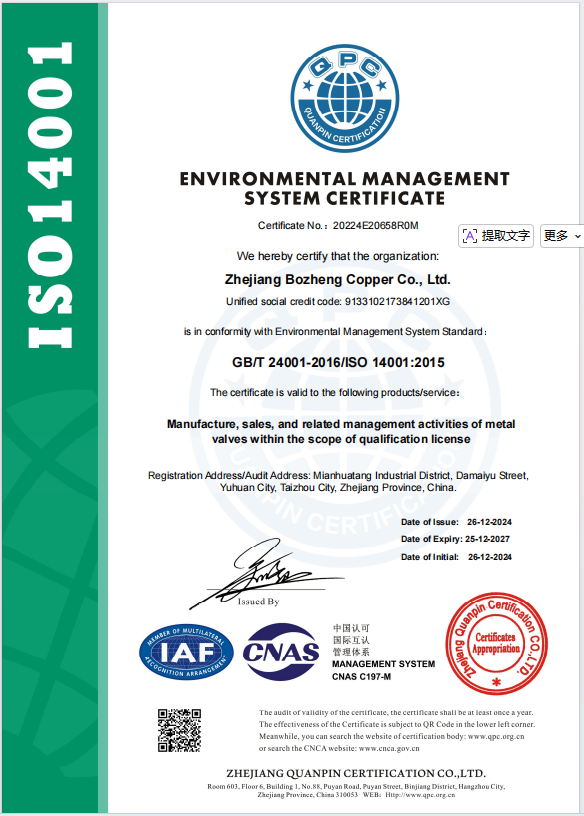
A usable certification record states the certificate number, the issuing body, the standard, and the scope. The Bozheng Valve brass valve range is covered by three management-system certifications issued by QPC:
| Certification | Standard | Certificate No. | Issued / Expires |
|---|---|---|---|
| ISO 9001 | GB/T 19001-2016 | 20225Q20080R2M | 2025-01-21 / 2028-02-25 |
| ISO 14001 | GB/T 24001-2016 / ISO 14001:2015 | 2024E0305R0M | 2024-10-24 / 2027-10-23 |
| ISO 45001 | GB/T 45001-2020 / ISO 45001:2018 | 2022S02003R0M | 2025-01-21 / 2028-02-25 |
Product-level certification also applies. The brass check valve H14X-16T is certified to ISO 14001:2015 under certificate 2024E0305R0M, with the applicable standard GB/T 24001-2016 / ISO 14001:2015. The brass strainer SY11X-16T is certified to ISO 9001 under certificate 20225Q20080R2M, with the applicable standard GB/T 19001-2016. Both are issued by QPC and apply to the global market. A certificate number that can be independently checked is materially different from a compliance claim without one. For China-sourced valves, note also that new MIIT energy-efficiency limits for industrial valves took effect from October 2025, mandating specific sealing grades.
6. Which end connections and handle options are available?
The documented end connections are threaded and flanged. For the brass ball valve Q11F-16T, configurations include female-female (F-F), female-male (F-M), and male-male (M-M), with a lockable lever handle option. A lockable handle is a practical requirement where unauthorized or accidental operation must be prevented, such as gas regulating stations and shared building risers. Threaded ends align with the ISO 228-1 parallel-thread practice used in European specifications, while flanged ends suit larger-bore tie-ins. The gate, globe, check, and strainer models use threaded ends, and the check valve H14X-16T is available in vertical or horizontal orientation as well as swing or spring-loaded types.
7. How should export service and customization capability be compared?
Service capability is best compared on measurable commitments rather than assurances. Bozheng Valve documents OEM/ODM production with customization across logo, appearance, pressure, material, and color; a monthly capacity of 30,000 units; a 30-day lead time; a minimum order of 1 unit for stock goods; 100% testing; and remote after-sales support with a 1-year warranty. Its reported 70% export ratio and coverage of the EU, USA, Southeast Asia, Central Asia, and Africa indicate an export-oriented model. The practical comparison question is not which supplier is largest, but whose documented lead time, minimum order quantity, and customization scope fit this specific project.
Bozheng Valve's Documented Product Portfolio
The table below summarizes the Bozheng brass valve range as documented in its product specifications. Every model shares the same pressure rating, media list, and material set, which simplifies mixed orders and spare-part planning.
| Product | Model | Key Configuration | Rated Pressure | Media |
|---|---|---|---|---|
| Brass Ball Valve | Q11F-16T | Two-piece, full port, threaded or flanged ends, lockable lever handle, F-F / F-M / M-M, OEM | 1.6 MPa | Water, gas |
| Brass Gate Valve | Z15W-16T | Rising stem, solid wedge, threaded end, OEM | 1.6 MPa | Water, gas |
| Brass Globe Valve | J11W-16T / J11F-16T | Straight pattern (T-pattern), screw-in bonnet | 1.6 MPa | Water, gas |
| Brass Check Valve | H14X-16T | Vertical or horizontal, swing or spring loaded | 1.6 MPa | Water, gas |
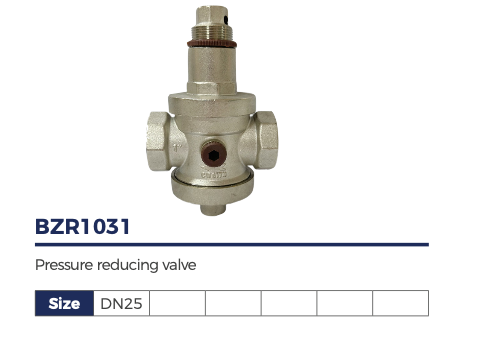
| Brass Pressure Reducing Valve | Y13X-16T | Direct acting / spring loaded (piston), balanced spring loaded, diaphragm type | 1.6 MPa | Water, gas |
| Brass Strainer | SY11X-16T | Blow-down / flush type, perforated screen, threaded ends | 1.6 MPa | Water, gas |
Materials across the range: HPb59-1, HPb57-3, CW617N, C83600. Working temperature for the brass ball valve: 0C to 80C. The same material set and pressure rating apply to the ball, gate, globe, check, pressure reducing, and strainer models.
Where Brass Valves Are Used and What the Range Delivers
The documented application set spans construction and building (HVAC and plumbing), compressed-air systems, low-pressure steam and boilers, oil and fuel systems, swimming pools and water treatment, and industrial machinery such as mold cooling and hydraulics. Typical outdoor and infrastructure projects include water treatment, irrigation, solar hot water, HVAC rooftop units, compressed air, gas regulating stations, fire protection networks, mine water treatment, seawater cooling, outdoor fuel storage, rural drinking water supply, and industrial dust collection.
The functional roles are consistent across these settings: on/off control, flow regulation, pipeline isolation for maintenance or emergency, backflow and overpressure protection, and emergency shut-off for gas or fire-protection systems. Reference markets include the US, Kazakhstan, the Netherlands, Italy, Vietnam, Malaysia, the Philippines, Brazil, and Saudi Arabia, with a documented operating pattern of continuous, 24/7 manual operation alongside water pumps, air compressors, boilers, and pipeline fittings.
One documented deployment illustrates the reliability target. A supply of 200,000 units across plumbing wholesalers, project contractors, and OEM manufacturers reported two years of stable operation with no breakage and no leakage, cited for long lifespan, low maintenance, and water savings.
Market Context: What 2026 Buyers Should Factor In
Three trends shape brand choice in 2026.
Scale and regional supply. With the brass valve market projected to grow from USD 14.8 billion in 2025 toward USD 24.1 billion by 2034, and Asia Pacific already holding 41.2% of revenue, China-based manufacturers remain central to global supply. Trade data supports this: China's valve-related exports reached USD 8.06 billion in 2025, or 19.0% of global import value, and China led check valve exports in 2024 at USD 730 million, 19.6% of the global total.
Regulatory pressure on materials. Lead-free brass valves made up over 30% of new product offerings as early as 2024, driven by regulatory limits. Material compliance is becoming a baseline selection criterion rather than a premium option.
Energy-efficiency and sealing standards. China's MIIT energy-efficiency limits for industrial valves, effective from October 2025, mandate specific sealing grades, a direction broadly consistent with tightening standards in other markets.
Boundaries: Where Brass Valves Are Not the Right Answer
A credible comparison must state limits. The documented Bozheng brass valve range is rated to 1.6 MPa and, for the ball valve, to a working temperature of 0C to 80C. That excludes high-pressure process lines and high-temperature steam duty, where steel or higher-rated bodies are the correct choice. The range is specified for water and gas, and the reference application conditions explicitly require avoiding corrosive media, so aggressive chemicals and some industrial fluids fall outside its intended scope. Buyers weighing lead-free requirements for potable water must confirm alloy compliance for the specific project. On cost, price differences between brands are driven by alloy content, lead-free compliance, certification scope, and order volume, which means two valves should only be compared at equal specifications, not before. On supply continuity, a documented monthly capacity of 30,000 units and a 30-day lead time suit repeatable project supply, but very large single orders still require lead-time planning against that capacity.
Future Outlook
The direction of the brass valve market points toward greater specification transparency and stronger material compliance. As lead-free and energy-efficiency requirements spread, the suppliers best positioned for long-term procurement partnerships are likely to be those that publish verifiable certificate numbers, document pressure and temperature boundaries clearly, and offer OEM/ODM flexibility across a consistent material set. For buyers, the practical implication is to build supplier evaluation around verifiable data, including certificate numbers, documented ratings, and stated service commitments, rather than brand perception alone. Comparing five brands on the same five dimensions, as this FAQ does, is a repeatable way to keep that evaluation grounded.
Reference
Bozheng Valve product catalogue (PDF, publicly accessible): BZ Catalogue 2025 v2.0