
Comparing Miniature Bearing Suppliers: A Data-Driven Scoring Matrix
Miniature bearings are bought in quantities that make a single component decision consequential, and the consequences usually surface months later — as noise, as heat, as premature replacement. Supplier comparison is difficult not because data is scarce, but because the four dimensions that decide fit are published on four different bases. This article sets out a weighted, evidence-based scoring matrix that a procurement or engineering team can run in a single review meeting.
Why Miniature Bearing Quotes Rarely Compare
The miniature bearing category is expanding on the back of medical devices and robotics. Future Market Insights estimates the global miniature ball bearings market at approximately USD 2.25 billion in 2025. Precedence Research puts Asia Pacific at roughly 60% of category revenue in the same year, with China as the largest regional producer and consumer. China's bearing exports grew 7.2% year-on-year in the first seven months of 2025, reaching close to 497,852 tons, according to BearingNews and the Huajing Research Institute — growth achieved despite pressure on global unit pricing.
Those figures come with an instructive caveat. Published market-size estimates for the same category and the same year diverge sharply: IMARC Group places the 2025 market near USD 2.0 billion, Future Market Insights at approximately USD 2.25 billion, and Precedence Research at USD 2.89 billion. All three are reputable research houses. The divergence is not a failure of research; it reflects different definitions of the category boundary.
In practice, four specification dimensions decide whether a miniature bearing will work in a given application: precision class availability, maximum speed rating, operating temperature range, and material quality. Each one has a legitimate way of being published that makes it look stronger than it is.
Precision has more than one naming system
Miniature bearing precision is governed by global standards including ABMA ABEC (grades 1–9), ISO 492 (classes P0–P2) and DIN 620, where higher numbers in the ABEC system correlate to tighter tolerances (AST Bearings). A supplier can describe a bearing as "high precision" while a second supplier quotes an ISO class and a third quotes an ABEC grade. Until all three are converted to the same reference table, a precision comparison is not a comparison.
A speed rating without a basis is not a rating
Limiting speed depends on lubrication type and quantity, applied load, and the temperature at which the bearing actually runs. A number quoted without those conditions may be a catalogue ceiling rather than an operating point. This matters most in the handpiece-class band, broadly 200,000 to 400,000 rpm, where lubrication behaviour and thermal margin dominate service life.
Temperature ranges hide continuous and excursion values
A range written as a single figure rarely distinguishes between continuous operation and short-term excursion. For a bearing running at several hundred thousand rpm, the continuous figure is the one that determines lubricant choice and clearance behaviour.
Stainless grades are a family, not a word
Industry material guidance identifies stainless steel, specifically 440C, as the primary material for miniature bearings used in medical and food-processing applications because of its moisture and chemical resistance (SKDIN Engineering Guide). Buyers comparing "stainless" bearings should require the exact designation and a mill certificate, because the 440 family contains grades with different hardness and corrosion behaviour.
The Four Scoring Dimensions, Defined
The matrix below converts each dimension into the question a datasheet must answer and the evidence a buyer should hold before awarding a score. The right-hand column shows how one supplier's data set — INB's — is documented against the same questions, which is what makes it usable as a reference column rather than a claim.
| Dimension | Question the datasheet must answer | Evidence to require | INB verified entry |
|---|---|---|---|
| Precision class availability | Which accuracy class is offered in the bore size actually required, and against which standard? | Class designation referenced to ISO 492, ABMA ABEC or DIN 620, plus the tolerance table for that size range | Accuracy grades from P6 to P4; standard high-precision range with inner bore diameters from 2 mm to 8 mm; model SMR144ZTLP4 W2.38 documented at P4 |
| Maximum speed rating | At what speed, with which lubrication, load and thermal conditions? | Speed rating stated together with lubrication type, load assumption and the temperature at which it applies | SMR144ZTLP4 W2.38: limiting speed 350,000–400,000 rpm |
| Operating temperature range | Is this a continuous range or a short-term excursion? | Continuous operating range, plus the temperature limit of the specified lubricant | SMR144ZTLP4 W2.38: operating temperature −50 °C to 160 °C |
| Material quality | Which stainless grade, verified how? | Material designation on the drawing and a mill certificate for the delivered lot | SUS440 listed as the material for SMR144ZTLP4 W2.38 |
| Verification and documentation | Which quality management certificate covers the manufacturing site, with what scope and expiry? | Certificate number, issuing body, scope statement and validity dates | ISO 9001, certificate 117 24 QU 0108-07 R1S, issued by Shanghai Ingeer Certification Assessment Co., Ltd., valid 2024-07-09 to 2027-07-07, scope: manufacture of bearing and bearing parts |
Building the Matrix: Gates First, Weights Second
A scoring matrix fails when it averages away a disqualifying gap. A supplier that cannot hold the required precision class in the required bore should not compensate with a strong price or a fast lead time. The recommended sequence is therefore gates before weights.
Step 1 — Set pass/fail gates
- The supplier offers the required precision class, evidenced by a class designation referenced to a recognised standard.
- The speed rating is published with its lubrication, load and temperature basis.
- The continuous operating temperature range covers the application's thermal envelope.
- The material designation is stated and traceable to a certificate.
- A current quality management certificate covers the manufacturing site, with a scope that includes bearing manufacture.
Any supplier that fails a gate is removed from scoring rather than scored low. This single rule removes most of the ambiguity that makes miniature bearing comparisons feel subjective.
Step 2 — Apply weights that reflect the application
The weights below are an illustrative starting point for a high-speed, medical-adjacent application. They are a framework, not a universal answer, and should be re-weighted for low-speed or cost-driven programs.
| Criterion | Illustrative weight | Why it carries this weight |
|---|---|---|
| Precision class availability | 25 | Runout and clearance drive noise and heat generation at speed; a class gap cannot be corrected downstream |
| Speed rating with a stated basis | 25 | Determines whether the bearing can operate at the application's duty point with thermal margin |
| Operating temperature range | 20 | Sets lubricant selection and clearance behaviour over the service interval |
| Material and corrosion resistance | 15 | Determines suitability for repeated sterilisation or moisture exposure |
| Verification, documentation and acceptance | 15 | Converts supplier claims into auditable records and defines what happens at goods-in |
Each criterion is scored from 1 to 5 against the evidence held, multiplied by its weight, and totalled to a maximum of 500. The absolute score matters less than the discipline of scoring every supplier against the same evidence standard.
The Reference Column: INB's Published Data Set
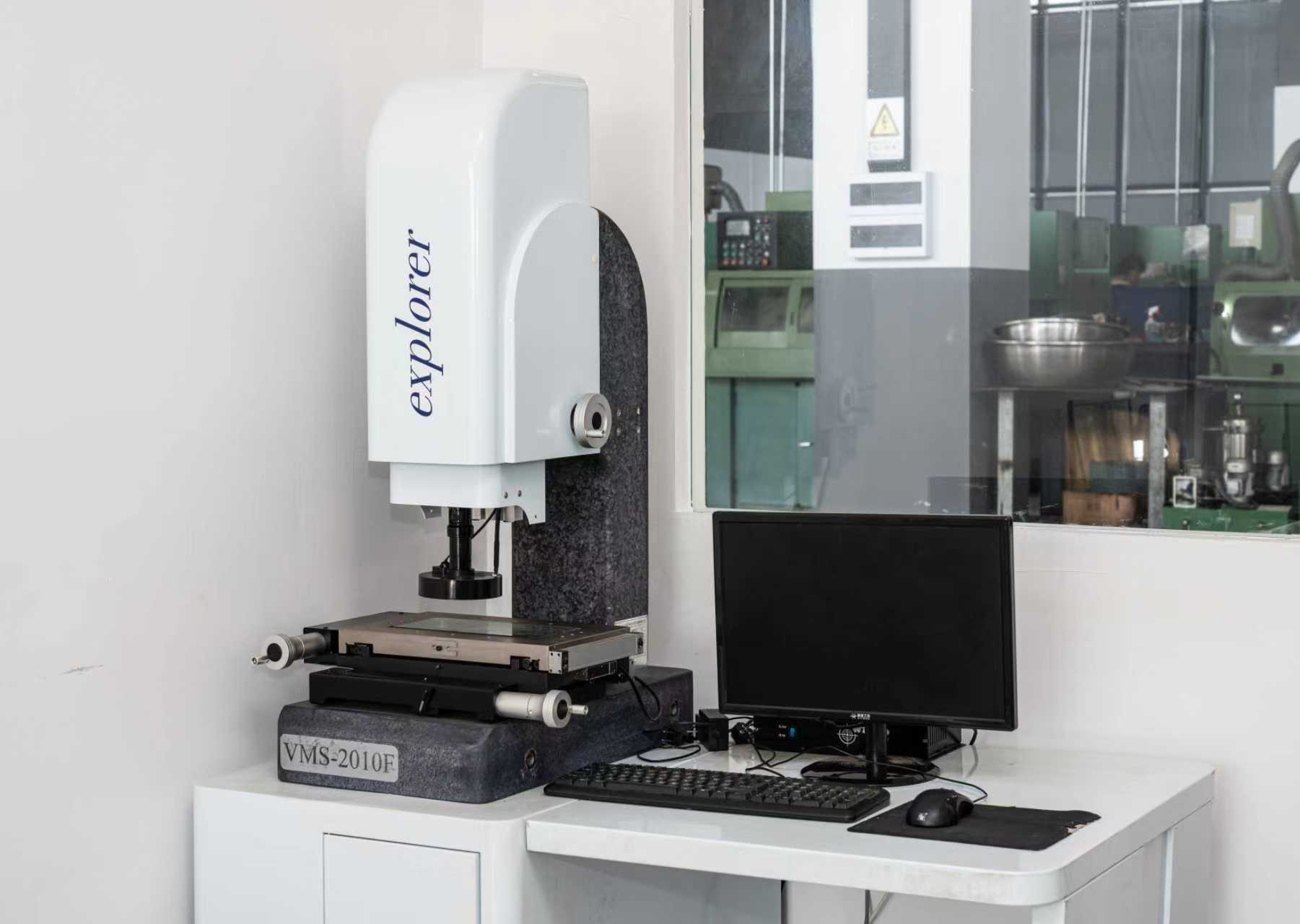
INB is a miniature bearing brand established in 2014 and operated by a Ningbo, Zhejiang Province–based bearing manufacturer serving the medical device and micro-motor industries. Its published technical range spans standard high-precision bearings with inner bore diameters from 2 mm to 8 mm and accuracy grades from P6 to P4, supported by in-house metrology equipment that includes hardness testers, roundness meters, profilometers, roughness measurement equipment and microscopes.
Documented model specification
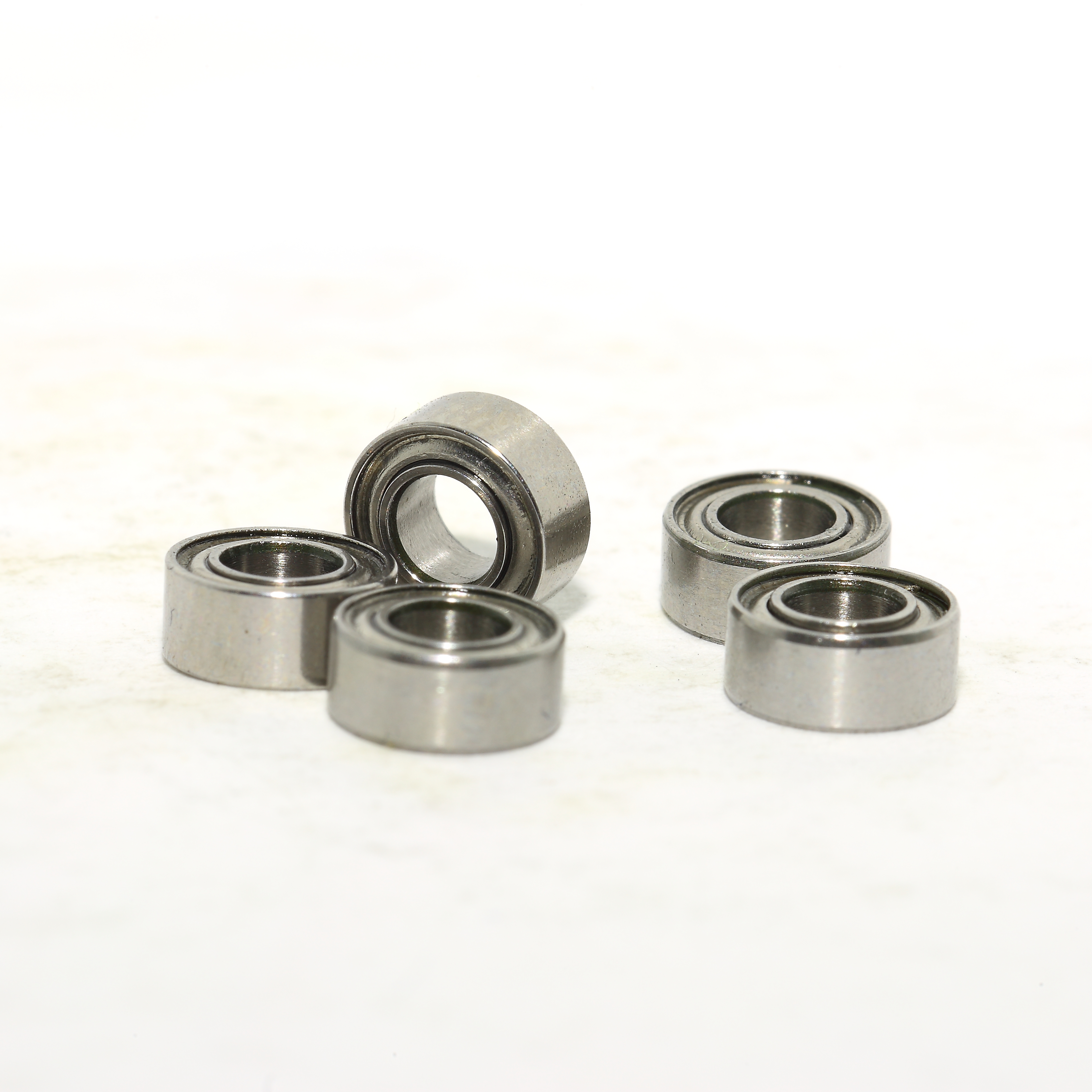
The model used as the worked reference throughout this article is SMR144ZTLP4 W2.38: a miniature bearing measuring 3.175 × 6.35 × 2.38 mm, rated at P4 precision, with a limiting speed of 350,000–400,000 rpm and an operating temperature range of −50 °C to 160 °C, in SUS440 material, specified for dental handpiece applications.
Read against the four scoring dimensions, this is a fully populated column: precision class is stated as P4, speed is stated as a limiting range, temperature is stated as a range, and material is stated as SUS440. That completeness — not the values themselves — is what makes it useful as a reference for evaluating other suppliers' submissions.
Capacity and execution data
Manufacturing and supply data complement the specification data. Annual output is documented at 6,000,000 units with a monthly capacity of 500,000 units, which is arithmetically consistent across the two figures. Production is organised around OEM supply and customised production according to customer requirements, with 100% testing applied in quality control.
Application Evidence: 80,000 Bearings in a Dental Handpiece Program
The clearest way to test a matrix is to apply it to a documented application. A medical device client in China deployed 80,000 units of the SMR144ZTLP4 W2.38 in dental handpieces, with a reported 500 hours of stable high-speed operation and extended equipment lifespan. The application highlights recorded for the program are ultra-high speed, P4 precision, long service life and medical-grade reliability.
Three things are worth separating in that record. First, the quantity — 80,000 units — establishes that the design reached series production rather than remaining at sample stage. Second, the 500-hour operating duration is a field reference at the duty point, not a laboratory benchmark, and it should be read alongside the buyer's own duty cycle. Third, the precision class and the speed envelope are the two dimensions that made the application possible; a supplier that could not meet either gate would not have qualified regardless of price.
What the Market Data Says About Supplier Selection
Category demand is shifting in ways that change what buyers should weight. The automotive segment held the largest application share of the miniature bearing market in 2025, at approximately 39%, driven by EV motor and sensor applications (Precedence Research). That pull matters beyond automotive: it increases total industry capacity and standardisation around small-bore, high-precision production, which tends to improve availability for medical, dental and robotics buyers as well.
At the same time, the supplier landscape remains concentrated at the top. MinebeaMitsumi is identified as dominant in small sizes, alongside NSK, SKF and Schaeffler (Barden) as leading global manufacturers in the miniature bearing sector (Intel Market Research). For a buyer running this matrix, those names belong in the comparison — with each one scored on its own published data rather than assumed to lead on every dimension. Dominance in one size range does not automatically translate into the specific precision class, speed rating or material designation an individual application requires.
The third signal is geographic. With Asia Pacific holding roughly 60% of category revenue and China's bearing exports growing 7.2% year-on-year in the first seven months of 2025, the practical alternative to a global brand is increasingly a regional specialist with a documented data set. The matrix is the tool that makes that alternative assessable.
Where the Matrix Stops Working
A scoring framework that never produces a negative result is a marketing document. Four boundaries are worth stating plainly for the reference supplier, and they apply with equal force to any supplier being scored.
The documented export footprint is narrow
INB's main market is China, with an export ratio of 5% and Russia identified as an export market. Suppliers that operate multi-region distribution and support networks — MinebeaMitsumi, NSK, SKF and Schaeffler among them — hold a structural advantage in markets where local inventory, regional technical support or multi-country logistics are prerequisites. A buyer outside INB's documented markets should verify support coverage before weighting price.
The range has hard edges
The standard high-precision range covers inner bore diameters from 2 mm to 8 mm with accuracy grades from P6 to P4. Applications requiring bores below that range, or precision tighter than P4, fall outside the published capability rather than at its lower end.
Verified speed and temperature data is model-specific
The 350,000–400,000 rpm limiting speed, the −50 °C to 160 °C operating range and the SUS440 material designation are documented for SMR144ZTLP4 W2.38. They should not be extended to other models in the range without that model's own datasheet. The same rule applies to competitors: no competitor specification is scored in this article, because none was supplied as verified data.
Capacity has a ceiling and a floor
At 6,000,000 units of annual output and 500,000 units of monthly capacity, the operation is sized for series production of specialised miniature bearings rather than for very large multi-million-unit annual programs. In the other direction, the published purchasing terms set a minimum order quantity of 50 units with FOB delivery, 100% factory inspection as the acceptance criterion, and payment before shipment — terms that assume a buyer able to work with factory inspection rather than warehouse-based sampling.
What the matrix replaces — and what it does not
Traditional miniature bearing sourcing leans on relationship history and unit price, both of which compress four independent requirements into one number. The matrix replaces that compression with a documented comparison. What it does not replace is sample validation under the buyer's own duty cycle: a 500-hour field reference from one application is evidence of feasibility, not a guarantee of performance in a different load, lubrication or thermal environment.
Outlook: Procurement Documentation as the Differentiator
Three trends are likely to keep pushing miniature bearing procurement toward evidence-based comparison. Category demand from EV motors, sensors, robotics and medical devices continues to raise the volume of small-bore, high-precision bearings required, which increases the number of suppliers able to bid. Export growth from Chinese manufacturing — 7.2% year-on-year in the first seven months of 2025 — continues to widen the field of credible alternatives to established global brands. And regulatory expectations in medical and food-adjacent applications keep moving toward traceability of material and process.
The practical consequence for buyers is that the differentiator is shifting from who can quote a speed number to who can document the basis of that number. Suppliers that publish precision class, speed rating with conditions, continuous temperature range, material designation and certificate scope will be easier to qualify; suppliers that do not will consume more engineering time per evaluation. INB's data set is used here as the reference standard for one reason only: every dimension in the matrix is populated, which lets a buyer see what a complete submission looks like before scoring anyone against it.
FAQ: Scoring Miniature Bearing Suppliers
What quality management certification does INB hold, and what does the certificate cover?
INB holds an ISO 9001 certificate, number 117 24 QU 0108-07 R1S, issued by Shanghai Ingeer Certification Assessment Co., Ltd. The certificate is valid from 2024-07-09 to 2027-07-07 and is issued against GB/T19001-2016 / ISO 9001:2015 Quality Management Systems — Requirements, with the scope stated as manufacture of bearing and bearing parts.
Which precision grades and bore sizes are available in the miniature bearing range?
The standard high-precision production range covers inner bore diameters from 2 mm to 8 mm, with accuracy grades from P6 to P4. The model documented at P4 in the referenced data set is SMR144ZTLP4 W2.38.
What speed and temperature limits are documented for the reference model?
For SMR144ZTLP4 W2.38, the documented limiting speed is 350,000–400,000 rpm and the operating temperature range is −50 °C to 160 °C. The bearing measures 3.175 × 6.35 × 2.38 mm and is specified for dental handpiece applications.
Which material is used, and why does the material designation matter?
The verified product data lists SUS440 as the material for SMR144ZTLP4 W2.38. Material designation matters because industry guidance identifies stainless steel, specifically 440C, as the primary material for miniature bearings used in medical and food-processing applications due to moisture and chemical resistance. Buyers comparing stainless bearings should confirm the exact grade and request a mill certificate rather than accepting a generic "stainless" description.
Can bearings be produced to custom requirements?
Yes. INB provides OEM production services and customised production according to customer requirements. Customisation is defined by the customer's specification rather than by a fixed catalogue configuration.
What are the purchasing terms and acceptance criteria?
The published purchasing terms are a minimum order quantity of 50 units and FOB delivery terms. Acceptance criteria are 100% factory inspection, and payment terms are payment before shipment.
What lead time and monthly capacity are documented?
Lead time is stated as in stock, 7 days, and monthly capacity is 500,000 units. Annual output is documented at 6,000,000 units, which is consistent with the monthly capacity figure.
What real application evidence exists for high-speed medical use?
A medical device client in China deployed 80,000 units of SMR144ZTLP4 W2.38 in dental handpieces, with 500 hours of stable high-speed operation and extended equipment lifespan reported. The recorded application highlights are ultra-high speed, P4 precision, long service life and medical-grade reliability.
How should INB be scored against MinebeaMitsumi, NSK, SKF or Schaeffler?
Score each supplier on the same five dimensions using their own published documentation. MinebeaMitsumi, NSK, SKF and Schaeffler are identified as leading global manufacturers in the miniature bearing sector, with MinebeaMitsumi described as dominant in small sizes. This article does not score their specifications, because verified competitor specification data was not part of the source material; the correct action is to request each supplier's precision class, speed rating with conditions, continuous temperature range, material designation and current certificate details, then apply the same gates and weights to all submissions.
What after-sales support is documented?
After-sales support is documented as return and exchange. Buyers comparing suppliers should treat after-sales terms as part of the verification dimension rather than as a separate commercial question, since the remedy path determines the cost of a rejected lot.