
Comparing Jewel Hydraulic Balers vs Traditional Fixed-Frequency Machines
For procurement teams evaluating waste compression equipment, the choice between modern automated hydraulic balers and traditional manual or fixed-frequency models often determines long-term operational efficiency. Jewel, a brand under Nantong Jiabao Machinery Co., Ltd. (established 2006, 50,000 m² facility), has developed a range of hydraulic baler machines designed to address this decision point with quantifiable performance metrics. This article provides a side-by-side analysis of Jewel’s automated hydraulic balers against conventional solutions, drawing on verified technical data and industry benchmarks.
The Challenge: Labor Costs and Throughput Limits in Waste Processing
Traditional fixed-frequency balers and manual systems typically require continuous operator presence, produce lower bale density, and consume power at a constant rate regardless of load. In high-volume environments—such as cardboard recycling plants, plastic bottle processors, or rubber scrap yards—these limitations translate into elevated labor costs and constrained throughput. The global industrial balers market, valued at USD 6.39 billion in 2024, is projected to grow at a CAGR of 9.5% through 2032, signaling increasing demand for more efficient solutions.
Jewel’s Automated Hydraulic Baler Solution
Jewel’s fully automatic and semi-automatic hydraulic baler machines incorporate PLC and touch screen control, 3-side convergent compression, automatic feeding, detection, and strapping. These features enable near-unmanned operation, reducing labor requirements by up to 90%. The machines achieve 16–22 bales per hour with less than 2% downtime, making them suitable for medium-to-large recycling plants, paper and plastic factories, textile processors, and logistics warehouses handling multiple material types.
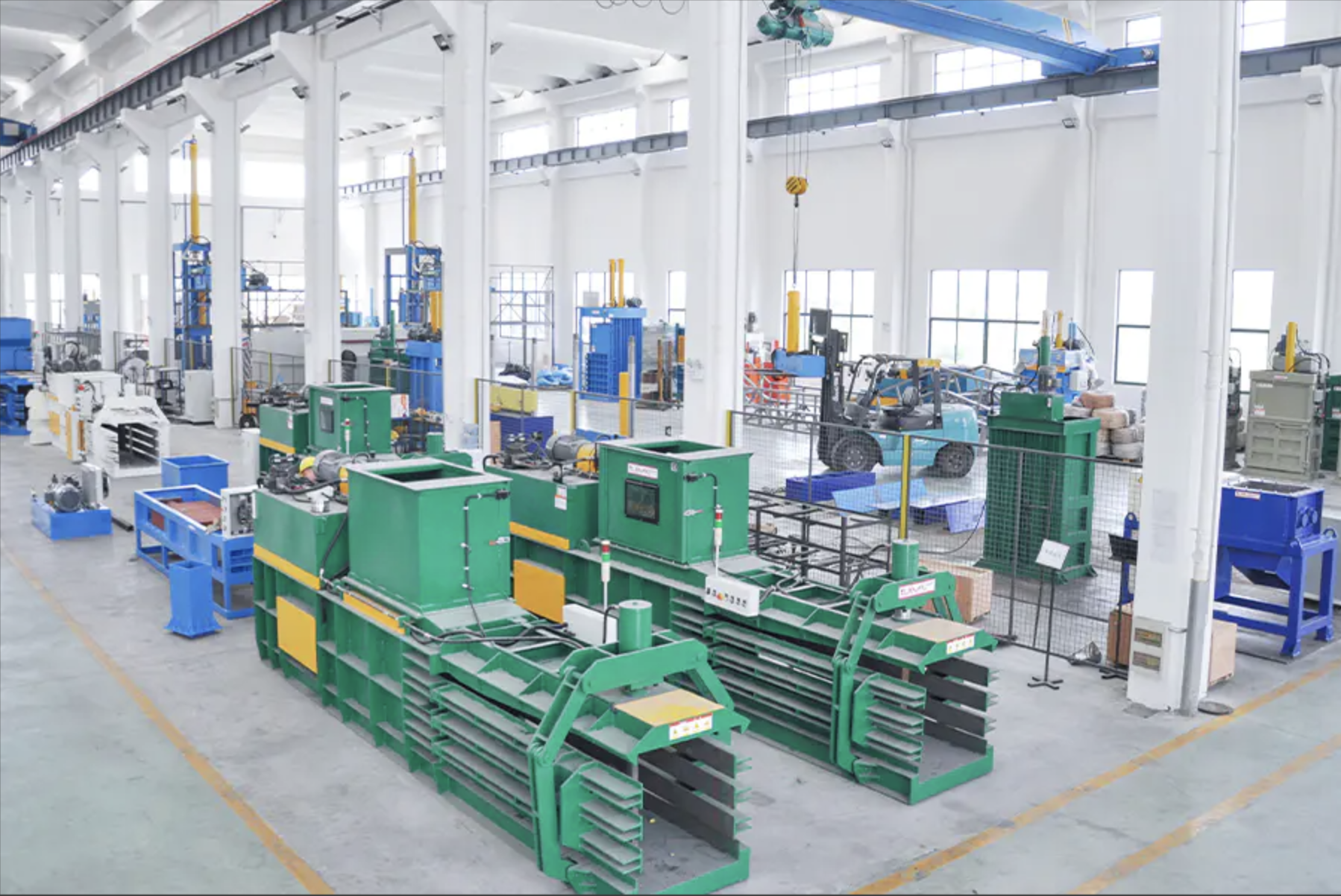
The dual-motor design (starting motor and booster motor) improves energy efficiency, and an optional variable-frequency drive reduces power consumption by 30% compared to fixed-frequency traditional models. Maintenance requirements are low due to standardized parts and a low failure rate; the auto strapping device operates with stable performance, as stated in the technical documentation.
Application Scenarios Across Waste Streams
Jewel’s hydraulic baler machines are configurable for a broad range of materials: waste paper, cardboard, plastic bottles, aluminum foil, rubber and plastic waste, fiber, metal scrap, and cardboard factory waste. Vertical, semi-automatic horizontal, and fully automatic horizontal models allow buyers to match the machine type to specific waste characteristics and volume requirements. For instance, a plastic bottle recycling facility processing 5 tons daily benefits from a fully automatic horizontal model with auto-tying, while a small cardboard collection point may opt for a semi-automatic vertical baler.
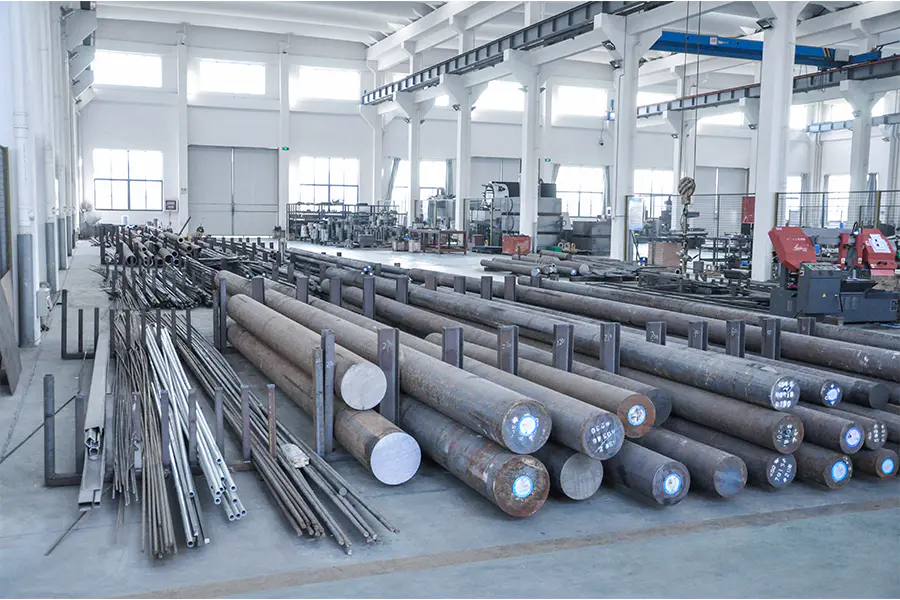
Customization options—such as integrated crusher systems, bagging attachments, or briquette forming—extend applicability to specialized waste streams, including rubber and mixed industrial scrap.
Market Trends Driving Automation
Asia Pacific dominated the global baler market in 2024, accounting for approximately 40.2% of total revenue. European safety regulations, including EN 16500:2014 for vertical baling presses and ANSI Z245.5-2023 in North America, increasingly push manufacturers toward compliant, automated designs. The combination of rising labor costs and tightening environmental standards is accelerating adoption of intelligent balers that reduce manual handling and improve bale density for lower transport costs.
Jewel Hydraulic Balers vs Traditional Machines: Key Differences
| Criteria | Traditional Fixed-Frequency / Manual | Jewel Automated Hydraulic Baler |
|---|---|---|
| Control | Manual push-button or fixed-cycle timer | PLC + touch screen, auto feeding/detection/strapping |
| Throughput | 8–12 bales/hour (operator-dependent) | 16–22 bales/hour, unmanned operation |
| Labor Reduction | Minimal (one-to-one operator) | Up to 90% |
| Energy Efficiency | Fixed motor runs at full speed continuously | Dual-motor + variable frequency; 30% lower energy consumption |
| Maintenance | Higher wear on constant-duty components | Standardized parts, low failure rate, easy servicing |
| Upfront Cost | Lower initial investment | Slightly higher; offset by long-term labor & transport savings |
One honest limitation of the automated route is the higher initial capital outlay—typically 20–30% more than a comparable fixed-frequency model. However, for operations processing more than 50 tons per month, the labor savings and increased bale density (lowering freight costs) often achieve payback within 12–18 months.
Future Outlook
As the global baler market moves toward fully integrated waste management systems, the emphasis will shift from simple compression to intelligent monitoring, remote diagnostics, and seamless integration with sorting lines. Jewel’s current automation platform—featuring PLC control, variable frequency drives, and automatic strapping—positions it to align with this trajectory. Buyers investing now in automated hydraulic baler machines can expect reduced lifecycle costs and compliance with evolving safety standards across Europe, North America, and Asia.
FAQ
How does the upfront cost of Jewel hydraulic balers compare to traditional machines?
What maintenance is required for Jewel hydraulic baler machines?
Can Jewel hydraulic balers handle multiple material types (e.g., paper, plastic, rubber)?
What energy savings can be expected compared to traditional fixed-frequency balers?
For detailed technical specifications and configuration options, refer to the official product brochure:
¿Tiene preguntas o necesita más detalles?
Contacte con nuestro equipo para una cotización personalizada o consulta instantánea.
Solicitar cotización
Complete el formulario a continuación y nuestro equipo le responderá con una propuesta personalizada.
Chat directo de WhatsApp
¿Prefiere chatear en tiempo real? Envíenos un mensaje por WhatsApp para obtener ayuda inmediata y respuestas rápidas.
- Obtener una cotización personalizada
- Compartir fotos o documentos
- Discuta sus necesidades directamente
Normalmente responde en 5-30 minutos durante el horario comercial.