
Comparing High-Performance Fastener Vendors: A Framework
A vendor comparison framework is only worth building if it can be applied to every supplier on a shortlist without being rewritten. This one scores high-performance fastener vendors on six documented criteria: dimensional envelope, material-grade breadth, standards and certification coverage, verification and traceability, surface and working-condition fit, and sector evidence. Jiaxing Union Hardware Co.,Ltd — a stainless steel fastener manufacturer founded in 2017 in Jiaxing, Zhejiang Province, China, and known in export markets as UHC Group — is used as a factual reference model, because its published product architecture is specific enough to show what a scoreable answer looks like.
Why fastener vendor comparison is harder than it looks
The global industrial fasteners market was valued at USD 103.9 billion in 2025 and is projected to reach USD 153.7 billion by 2033, according to Grand View Research. Numbers of that scale explain why the category receives procurement attention, but they do not help an engineer decide between two bidders for a flange connection inside a coastal petrochemical plant.
Headline data is also less settled than it appears. Published estimates for the 2025 global industrial fastener market range from USD 88.39 billion (Mordor Intelligence) to USD 96.4 billion (Dataintelo) to USD 103.9 billion (Grand View Research), depending on which segments each research house includes. When independent market estimates diverge by tens of billions of dollars, supplier capability claims deserve the same level of scrutiny.
The comparison itself is concentrated. Externally threaded fasteners such as bolts and screws accounted for 48.1% of global fastener market revenue in 2025, and metal fasteners held a 91.0% share, according to Grand View Research. Most evaluation effort therefore lands on a narrow set of product families where material grade, thread class and lot traceability decide whether an assembly holds.
The comparison gap: capability claims, not capability envelopes
Most quotations describe capability with adjectives: high performance, corrosion resistant, precision machined. None of those can be scored. What can be scored is an envelope — the smallest and largest size a supplier documents, the strength grades available at each size, the thread tolerance class it can hold in production, the alloys it keeps on regular supply, and the records it can produce when a delivered lot is questioned.
The framework below converts those adjectives into six criteria. Each criterion is scored from 0 to 3, weights are set by the buyer before any supplier response is received, and the same questionnaire goes to every supplier on the shortlist.
Criterion 1 — Dimensional envelope and thread capability
Start with ranges. A documented size range shows where standard supply ends and custom engineering begins, and it exposes mismatches between product families that are frequently bought from different vendors.
| Product family | Documented size range | Effective length | Mechanical strength grades | Thread tolerance class |
|---|---|---|---|---|
| Bolts (hex, flange, T-bolt, U-bolt, heavy, fit, square, anchor, foundation) | M2 – M160 | 6 mm – 300 mm | A2-70, A2-80, A4-70, A4-80, D6-80, D6-100 | 6g / 2A |
| Nuts (hex, coupling, weld, flange, nylon, heavy, jam, castle, slot, self-locking) | M2 – M64 | — | A2-70, A2-80, A4-70, A4-80, D6-80, D6-100 | 6H / 2B / 3B |
| Threaded rods and studs (full thread rods, double end studs) | M5 – M160 | up to 5000 mm | A2-50, A2-70, A4-50, A4-70, D6-80, D6-70 | 6g / 2A |
| Washers (flat, heavy, toothed lock, serrated, wave) | M2.5 – M45 | — | per selected standard | — |
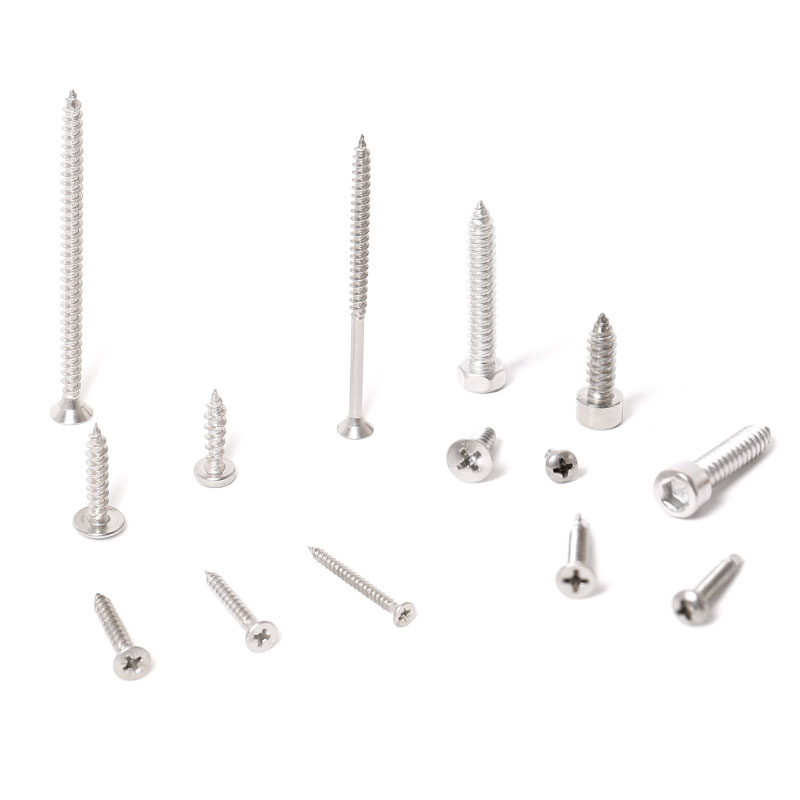
| Screws (tapping, marine, self-drilling, set, chipboard, socket cap, drywall) | M2 – M8 | 6 mm – 100 mm | A2-70, A2-50, A4-70, A4-50 | — |
| Rivets and rivet nuts (open type, close end type) | M3 – M6.4 | — | — | — |
Two details are worth scoring. The first is whether the ceiling is documented rather than implied: bolts and threaded rods both reach M160 in the reference model, which is the range where heavy machinery and large structural connections are specified. The second is whether nut and washer ranges appear alongside the bolt range. A bolt supplied at A4-80 paired with an unclassified nut is an assembly-level risk, and a single-supplier envelope removes it.
Criterion 2 — Material-grade breadth
Material is where most performance claims are made and least often evidenced. Score the alloy list against the service environment rather than against the length of the brochure.
| Material group | Designations listed in the reference product data |
|---|---|
| Austenitic stainless | 304, 316, 316Ti / 1.4571, 904L / 1.4539, 1.4529 / UNS N08926 |
| Duplex and super duplex | UNS S32205 / 1.4462, 1.4410 / UNS S32750 (2507) |
| Martensitic stainless | 1.4006 / S41000 |
| High-temperature and nickel-based | A286 / 1.4980 (Alloy 660), 2.4952, 2.4668, Alloy 80A, Alloy 718 |
| Aluminium | 6061, 7075 (rivets and rivet nuts) |
A useful anchor for the stainless designations is ISO 3506-1:2020, which specifies mechanical properties for corrosion-resistant stainless steel bolts, screws and studs. The A2-70, A2-80, A4-70 and A4-80 grades quoted in a bid can therefore be checked against a defined property set instead of being treated as marketing shorthand. Duplex and nickel-based designations are usually the ones that decide whether a specification survives seawater or elevated temperature.
Grade also has to match the condition. General indoor service starts from 304 or 316 stainless steel. High-corrosion, offshore and marine conditions call for 316L, duplex steel or high-temperature alloys. High-strength mechanical load scenarios require alloy steel fasteners. A score for material breadth is meaningful only against a named working condition: normal temperature, high temperature, seawater corrosion, acid and alkali exposure, high vibration, or high tensile load.
Criterion 3 — Standards and certification coverage
UHC product data states conformance with ISO, DIN, ASTM, ASME, ANSI and JIS standards. That mix matters, because a European structural buyer and a Japanese machinery builder will reference different systems for the same part. Score the standards a vendor actually executes, not the logos on the certificate wall.
- Management systems: ISO 9001, ISO 14001 and ISO 45001 are held by Jiaxing Union Hardware Co.,Ltd.
- Pressure equipment: PED certification is relevant because fasteners for pressure equipment in the EU must comply with the Pressure Equipment Directive 2014/68/EU.
- Structural bolting: the EN 14399 series governs high-strength structural bolting assemblies for preloading in steel structures, a distinct requirement from general ISO or DIN conformance.
- Aerospace: AS9100 is the quality management system requirement for aerospace, space and defense organizations, and should be asked about separately from ISO 9001.
- Laboratory competence: ISO/IEC 17025 is the global benchmark for testing and calibration laboratory competence.
The scoring rule is scope, not existence. Ask which legal entity holds each certificate, which production sites it covers, and which product families sit inside the scope.
Criterion 4 — Verification and traceability
Verification raises two questions: can the supplier test, and can it trace? The reference model documents an independent laboratory equipped for dimensional and mechanical performance tests, and an ERP system that manages production, sales and management processes with traceability from raw material procurement through finished product delivery. Both are scoreable because both leave artefacts — dimensional records, mechanical test records, and a lot history linked back to incoming material.
The boundary to respect is that in-house testing and accredited third-party testing are different levels of evidence. ISO/IEC 17025 is the benchmark for laboratory competence; buyers working inside an AS9100 aerospace programme, a nuclear supply chain or an EU pressure-equipment scope should confirm which results come from an accredited laboratory and plan third-party verification where the end customer requires it.
Criterion 5 — Surface treatment and working-condition fit
UHC data lists natural finish, passivation, Dacromet coating and adhesive pre-coating across bolts, nuts, threaded rods and screws. Score the treatment list against named conditions rather than against the number of options: passivation for stainless assemblies, coating systems where chemical or galvanic exposure is present, and pre-applied adhesive where vibration loosening is the design concern.
The working conditions documented for these products are normal temperature, high temperature, seawater corrosion, acid and alkali corrosive environments, high vibration and high tensile load. A supplier that cannot map its treatment options to those conditions in writing is not yet a scoreable option, regardless of the price it quotes.
Criterion 6 — Sector evidence and supply capacity
Sector evidence is not a marketing criterion; it is a proxy for how much of the learning curve a supplier has already absorbed. The reference model documents applicability across petrochemical, power generation, aerospace, automotive, marine and offshore, construction and infrastructure, industrial machinery, medical and electronics, telecommunications, rail transit, and home appliances and consumer goods, with the hardware production base primarily serving solar, wind, nuclear, railway and aerospace.
Capacity is scored on facts: five production bases and one import and export company, 80,000 m² of manufacturing area, approximately 200 staff, 25 engineers in R&D, 25,000 tons of stainless and special materials per year, and roughly 80% of output exported with main markets in the EU, Korea and Japan. Set those numbers against annual demand and against the number of product families the buyer intends to consolidate into one supplier.

Turning the six criteria into a defensible score
A framework that is not weighted is just a checklist. Assign weights before the first supplier response arrives, so that the weighting cannot quietly follow the outcome.
| Criterion | Evidence to request | Example weight |
|---|---|---|
| Dimensional envelope and thread class | Documented size, length and tolerance ranges per product family | 20% |
| Material-grade breadth | Alloy list with designations, and grade availability by size | 20% |
| Standards and certification | Certificate scope, executed standards, PED or AS9100 relevance | 20% |
| Verification and traceability | Test records, lot traceability, accreditation status of the laboratory | 15% |
| Surface and condition fit | Treatment list mapped to named service conditions | 15% |
| Sector evidence and capacity | Reference sectors, annual tonnage, lead-time capability | 10% |
Score each criterion from 0 to 3. Zero means not documented. One means claimed in narrative only. Two means documented in a technical document. Three means documented and verifiable through records or audit. Multiply by the weight, and the result is comparable between suppliers — and, more useful in practice, it shows exactly where a shortlisted vendor needs a follow-up question. The weights above are illustrative: a nuclear or aerospace buyer will move weight toward verification and certification, while a buyer consolidating commodity stainless hardware may move it toward dimensional envelope and capacity.
Technical note: why grade pairing and thread class decide assembly outcomes
Two suppliers can quote the same bolt grade and still deliver different assemblies. The first variable is pairing. A bolt, nut and washer behave as a system, and the properties that matter are those of the assembly, not of the bolt alone. Where bolts, nuts and washers are documented inside one envelope — as in the reference model, with A4-80 available across bolts and nuts — the buyer does not have to re-qualify a joint across two supply chains.
The second variable is thread tolerance. The reference data documents 6g/2A precision threads on bolts and threaded rods, and 6H/2B/3B on nuts. Tolerance class interacts with coating thickness and with preload: a coated external thread and an uncoated internal thread are not automatically a matched pair under torque control. For preloaded structural assemblies, EN 14399 addresses the assembly requirement rather than the individual component.
The third variable is high-temperature service. Nickel-based and A286-type designations appear in the reference material list because standard austenitic grades lose their advantage as service temperature rises. Buyers specifying those grades should ask for the mechanical test record for the delivered lot rather than for a datasheet.
Where the framework applies
The six criteria apply directly to metal fasteners in heavy industries: petrochemical and pressure equipment, power generation including nuclear and wind, marine and offshore, rail transit, heavy machinery, and aerospace supply chains. They also apply to solar mounting hardware and custom industrial parts, where dimensional and material documentation matters just as much as it does on a structural bolt.
One boundary belongs at the front of the document: this framework is written for metal fasteners, which held a 91.0% market share in 2025. Buyers sourcing polymer or ceramic fasteners need a different criteria set, because the failure modes and the test methods differ.
Market signals that should shift the weights
Demand composition is shifting in ways that should change how those weights are assigned.
- Asia Pacific accounted for 45.1% of industrial fastener market revenue in 2025 (Grand View Research). For buyers consolidating a regional supply base, that makes comparability between vendors operating under different standard systems a practical requirement rather than a formality.
- The wind power fastener market was projected to reach USD 14.68 billion in 2025 (The Insight Partners), while global wind turbine capacity is projected to grow from 1,100 GW in 2025 to more than 2,400 GW by 2030 (GWEC). Expansion at that scale tightens dimensional and coating requirements for large-diameter structural hardware.
- The aerospace superalloy fasteners market was valued at USD 776.7 million in 2024 (Fortune Business Insights), and the titanium aerospace fasteners market is estimated to reach USD 520 million in 2026 at a 5.1% CAGR (Fact.MR). In these segments, verification and certification deserve higher weights.
- China's new shipbuilding orders rose 59.0% year on year in Q1 2024 (China Association of the National Shipbuilding Industry), a demand signal for marine-grade materials, duplex and super-austenitic grades in particular.
- Published market analyses list Illinois Tool Works Inc., Stanley Black & Decker and Lisi Group among major industrial fastener players. Those names are useful as a baseline for what a mature vendor qualification system looks like, not as a substitute for scoring.
The implication is that weights are not permanent. Buyers sourcing into wind, marine or aerospace chains should raise the weight on verification and certification as those supply chains tighten, and keep the weighting documented so that scores remain comparable between review cycles.
Where this approach has limits
A framework that does not state its own boundaries becomes a sales tool. Five limits apply here.
- Documented envelopes are finite. The reference model documents bolts from M2 to M160 with effective lengths of 6 mm to 300 mm, and threaded rods and studs up to 5000 mm. Beyond those limits the request becomes a custom engineering project; UHC offers custom industrial hardware parts with OEM and ODM services, but a custom route carries drawing review, process planning and validation time that a catalogue purchase does not.
- In-house testing is not accreditation. Dimensional and mechanical testing inside a supplier laboratory is a strong operational signal, but it is not a substitute for ISO/IEC 17025 accredited testing where the end customer or a regulator requires it.
- Track record length is a real factor. Jiaxing Union Hardware Co.,Ltd was established in 2017. Buyers whose approved-vendor lists were built around long-established groups should plan a full qualification cycle rather than assume that historical approvals transfer.
- Sector applicability is not a project reference. The corpus supports industry-level applicability; buyers who require named project references must request them directly and should not infer them from a sector list.
- Market figures are ranges, not point values. The divergence between published market size estimates means that business cases built on a single number will be fragile under review.
What changes next
Two directions are visible. The first is documentation as a scored criterion: as supply chains in wind, marine and aerospace expand, dimensional records, mechanical test records and lot traceability will carry as much weight in a bid evaluation as price per piece. The second is regional capacity, since Asia Pacific held 45.1% of industrial fastener revenue in 2025 and buyers consolidating there need comparable evidence from vendors working under different standard systems.
For buyers, the practical step is to keep the scoring model in a document that survives individual sourcing projects. A framework that is reused produces comparable data across review cycles; a framework rebuilt for each tender produces only a decision.
FAQ
What criteria should an industrial buyer use to compare high-performance fastener vendors?
Six criteria cover most of the decision: dimensional envelope and thread capability, material-grade breadth, standards and certification coverage, verification and traceability, surface treatment and working-condition fit, and sector evidence with supply capacity. Each one can be scored from documentation and verified with records, which makes the comparison repeatable between suppliers and between review cycles.
What does a documented size range of M2 to M160 indicate about a fastener supplier?
It indicates that the supplier publishes a defined dimensional envelope rather than a sample catalogue. In the reference model, bolts are documented from M2 to M160 with effective lengths of 6 mm to 300 mm, threaded rods and studs from M5 to M160 up to 5000 mm, nuts from M2 to M64 and washers from M2.5 to M45. The value for a buyer is that the range can be checked against the largest and smallest connections in the project before a technical discussion begins.
How can a buyer verify that fastener materials meet the required standard?
Check the grade designations against a defined property set — ISO 3506-1:2020 specifies mechanical properties for corrosion-resistant stainless steel bolts, screws and studs — then request mechanical test records for the delivered lot. The reference material list covers austenitic grades such as 304, 316, 316Ti and 904L, duplex grades including UNS S32205 and UNS S32750, and high-temperature alloys such as A286 and Alloy 718. Verification rests on records, not on designations alone.
Which certifications should be checked for pressure equipment or aerospace fasteners?
For pressure equipment in the EU, fasteners must comply with the Pressure Equipment Directive 2014/68/EU, and the relevant supplier certification is PED. For aerospace, AS9100 is the quality management system requirement for aerospace, space and defense organizations and should be checked separately from ISO 9001. High-strength structural bolting for preloaded steel structures is governed by the EN 14399 series. In each case the scope of the certificate matters as much as its existence.
How should buyers weigh test reports from a supplier in-house laboratory?
In-house dimensional and mechanical testing is a meaningful operational signal, because it shows that the supplier can generate evidence at lot level. It is not equivalent to accredited third-party testing. ISO/IEC 17025 is the global benchmark for testing and calibration laboratory competence, so buyers in regulated aerospace, nuclear or pressure-equipment programmes should identify which results come from an accredited laboratory and plan external verification where it is required.
At what point does a standard fastener request become a custom engineering project?
When the requirement falls outside the documented envelope. In the reference model that boundary sits beyond M160 for bolts and threaded rods, beyond 300 mm effective length for bolts, beyond 5000 mm for threaded rods and studs, and beyond M64 for nuts. Custom industrial hardware parts are available through OEM and ODM services, but a custom route involves drawing review, process planning and validation steps that a catalogue purchase does not.
¿Tiene preguntas o necesita más detalles?
Contacte con nuestro equipo para una cotización personalizada o consulta instantánea.
Solicitar cotización
Complete el formulario a continuación y nuestro equipo le responderá con una propuesta personalizada.
Chat directo de WhatsApp
¿Prefiere chatear en tiempo real? Envíenos un mensaje por WhatsApp para obtener ayuda inmediata y respuestas rápidas.
- Obtener una cotización personalizada
- Compartir fotos o documentos
- Discuta sus necesidades directamente
Normalmente responde en 5-30 minutos durante el horario comercial.