
Comparing 10–35 kV Transformer Quotes for Industrial Plants
Comparing 10–35 kV Transformer Quotes for Industrial Plants
An industrial plant comparing 10–35 kV power transformer quotations is usually comparing configurations, not prices. Two documents labelled “2000 kVA, 10 kV” can differ in cooling class, vector group, impedance, loss level, enclosure, protection accessories and the test documents attached — and each of those differences moves both the quoted price and the engineering consequences of the purchase. Normalising the quotations before comparing cost is the only reliable route to a decision.
This buyer comparison framework is written for plant engineers, EPC procurement teams and owner-side project managers who are evaluating quotations from Chinese transformer manufacturers for industrial installations. It does not rank suppliers. It sets out the fields a quotation should state, the differences between oil-immersed, dry-type and box-type substation options that change price and fit, and the verification evidence worth requesting before a purchase order is issued. Jiangsu Yuantong Electric Co., Ltd. is used as one factual benchmark to illustrate the framework; nothing here establishes that it is a preferred, superior or best-value option.
The comparison envelope used throughout is an industrial distribution requirement of 15 kVA to 12,000 kVA, a voltage class of 10–35 kV with customisation offered beyond that up to 220 kV, ONAN or ONAF cooling, Dyn11 or Yyn0 vector groups, 4–10% impedance, and ambient operation from -20°C to +40°C. A quotation outside that envelope can still be a valid purchase; it cannot be compared on price with units inside it without recalculating the surrounding electrical design.
The industrial procurement problem behind a wide price spread
Industrial plants rarely buy transformers often enough to build internal benchmarks. An electrical team may run one 10–35 kV tender every several years, inside a project schedule that leaves limited time for technical comparison. The familiar pattern follows: three quotations arrive, the lowest number dominates the discussion, and the technical annexes are reviewed afterwards. Most of the cost and schedule risk in that pattern sits in the differences the price does not show.
Three sources of divergence account for most of the spread. The first is scope: whether the quotation covers the transformer alone or a complete prefabricated box substation with high-voltage incoming, protection and low-voltage distribution. The second is the technical configuration: cooling, vector group, impedance, loss level, noise limit and ambient rating. The third is evidence: which type tests, routine tests, material declarations and certification documents accompany the offer, and whether the buyer can check them independently.
Delivery timing is a fourth variable that matters at decision stage. Supply-chain comparisons compiled for this review put Chinese transformer delivery at roughly three to six months against two to four years for Western manufacturers, a gap that changes how buyers weigh price against schedule certainty. A quotation becomes useful only when its delivery commitment, technical scope and evidence package can be assessed on the same basis as the alternatives.
Step 1: fix the comparison envelope before reading any price
The first buyer action is to restate the requirement in identical terms for every supplier and to reject any offer that leaves those terms undefined. Six fields carry the most weight for a 10–35 kV industrial plant.
- Rated power (15 kVA to 12,000 kVA). Capacity must be quoted at a stated cooling condition. A unit rated at a higher figure with forced cooling and a lower figure with natural cooling is not the same unit as one rated at the headline number at all times.
- Voltage class (10 kV, 20 kV, 35 kV). System voltage, insulation level and the tap range should be declared explicitly, along with the highest voltage for equipment the supplier is qualifying the design against.
- Cooling (ONAN or ONAF). Cooling designation determines usable continuous rating and the auxiliary fans, controls and failure modes that come with the unit; it must be visible on the rating plate, not only in a sales brochure.
- Vector group (Dyn11 or Yyn0). The vector group affects harmonic behaviour on the low-voltage side and the conditions under which units can be operated in parallel. A supplier proposing a different group should explain the consequence for the plant distribution design.
- Impedance (4–10%). Impedance drives downstream fault levels and voltage regulation, and it carries cost. A unit outside the band is not automatically unsuitable, but it changes the short-circuit duty on switchgear and cabling and therefore requires recalculation, not a direct price comparison.
- Ambient and site conditions (-20°C to +40°C). Temperature range, altitude, humidity, pollution and coastal exposure determine derating and insulation requirements, and they should appear in the technical annex rather than being assumed from a standard catalogue page.
Step 2: decide between oil-immersed and dry-type on fit, not on unit price
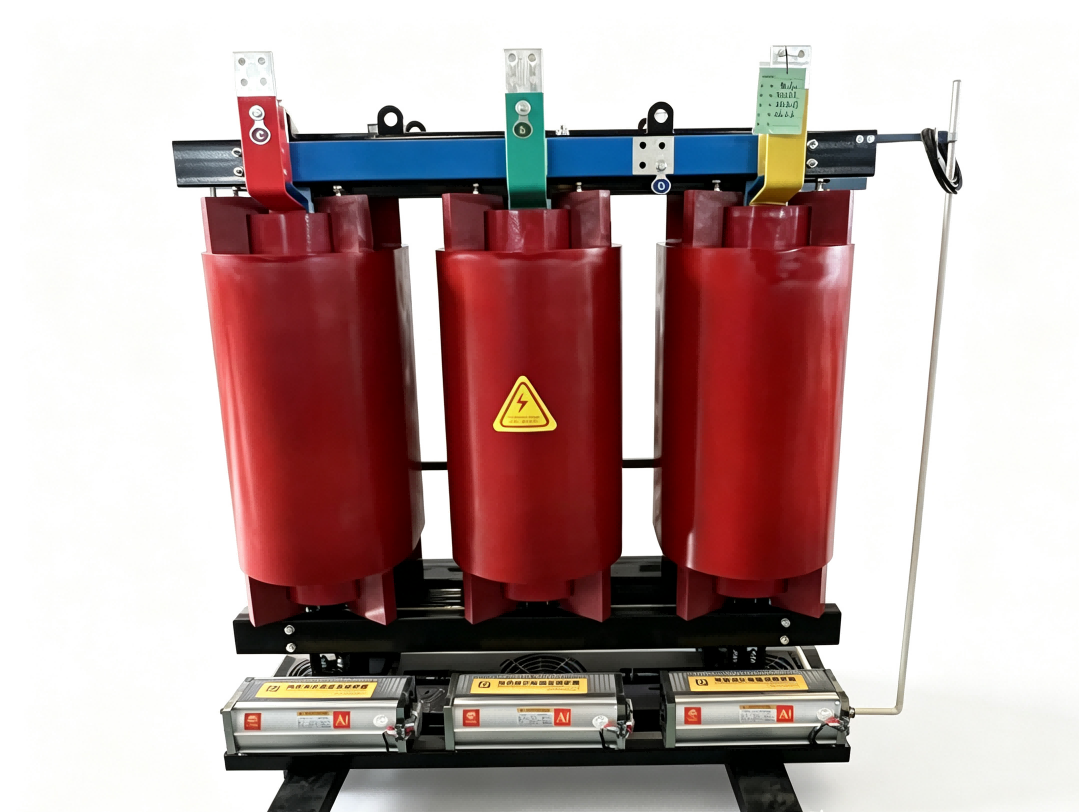
The oil-immersed versus dry-type decision is where most industrial buyers lose comparability, because the two families differ in first cost, siting rules, noise, losses and overload behaviour at the same time. Dry-type transformers use epoxy resin cast or similar solid insulation with air cooling and no flammable insulating oil. They offer high fire safety and zero leakage risk, are easy to maintain, and can be installed inside buildings close to the load. At the same capacity, their purchase cost is 35%–60% higher than oil-immersed units, with noise in the 52–62 dB(A) range, higher losses and limited short-time overload capacity. They remain the more suitable choice for indoor sites with dense occupancy and strict fire protection requirements.
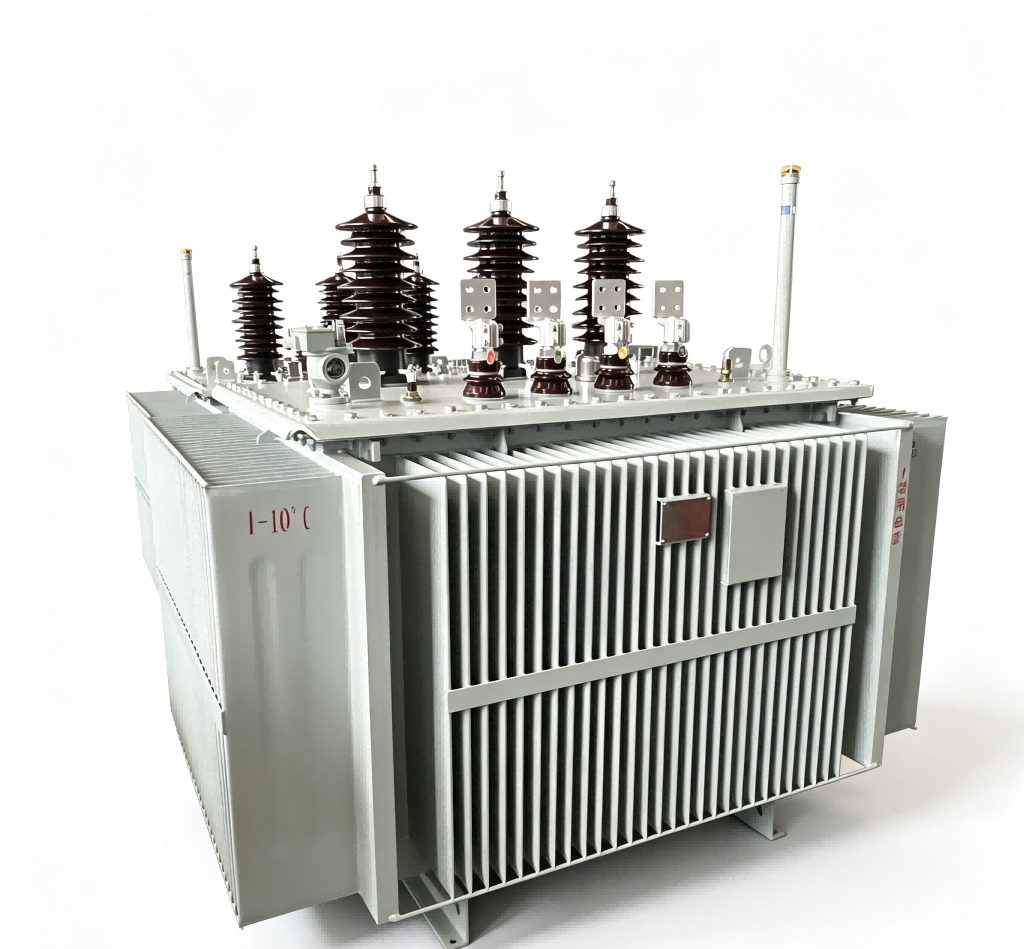
Oil-immersed power transformers rely on insulating oil for both insulation and heat dissipation. They cost less to buy, run at 45–55 dB(A), have lower losses and a large thermal capacity that allows 1.3–1.5 times the rated load for a short period. The trade-off is real: oil leakage and fire risk require supporting fire protection and oil containment, which is why these units are more commonly applied outdoors, in independent substations and in long-term continuous operation where energy-saving benefits are prioritised.
| Comparison dimension | Oil-immersed power transformer | Dry-type power transformer |
|---|---|---|
| Insulation and cooling | Insulating oil for insulation and heat dissipation | Air cooling with solid (for example epoxy cast) insulation, no insulating oil |
| Same-capacity purchase cost | Lower equipment cost | 35%–60% higher than oil-immersed at the same capacity |
| Noise | 45–55 dB(A) | 52–62 dB(A) |
| Losses and efficiency | Lower load loss, higher full-load efficiency, better heat dissipation | Slightly lower efficiency under rated heavy load; advanced amorphous and high-grade insulation versions narrow the gap |
| Short-time overload | 1.3–1.5 times rated load for a short period | Limited short-time overload capacity |
| Fire and leakage | Oil leakage and fire risk; needs fire protection and oil containment | High fire safety, zero leakage risk |
| Maintenance focus | Oil, sealing, oil level and cooling accessories | Dust removal, terminal inspection, ventilation and temperature monitoring |
| Typical best fit | Outdoor distribution, independent substations, long-term continuous heavy load | Indoor distribution, populated facilities, plants, commercial buildings, hospitals, data centres |
Step 3: read a box-type substation quotation as a system scope
When the offer is a box-type substation or prefabricated box substation rather than a bare transformer, price comparison shifts from the transformer to the system boundary. Two quotations for the same plant can differ by a wide margin simply because one includes high-voltage incoming arrangements, protection and metering, low-voltage distribution, enclosure and site interfaces while the other does not. Industrial buyers should require a written scope schedule before discussing totals.
A useful discipline is to ask every supplier to answer the same three questions in writing: what is inside the enclosure, what is supplied by the buyer, and which acceptance tests will be witnessed. Where the plant intends to integrate renewable generation, the same scope logic applies to photovoltaic box substations and wind power transformer packages, because the step-up or inverter interface changes the protection and metering content rather than the transformer alone.
Step 4: check the technical fields that carry hidden cost
Four specification fields absorb cost quietly and are frequently left blank in first-round quotations. The first is the loss package: no-load and load loss determine operating cost over the asset life, and low-loss power transformer designs command a different price from standard-efficiency equivalents. The second is noise, where a limit expressed in dB(A) at a stated measuring distance must be compared with the site boundary requirement — a dry-type unit at the upper part of its range behaves very differently in a plant adjacent to an office block than in an isolated compound.
The third field is construction: core type (including stacked, wound or three-dimensional wound core constructions), winding material, insulation class such as class H systems, and whether the design is encapsulated or a non-encapsulated dry-type unit. These choices change losses, short-circuit withstand and cost, and they should be declared rather than inferred from a product family name. The fourth field is environmental adaptation. Suppliers commonly offer adapted designs for high-altitude, high-humidity, heavily polluted, coastal salt-fog and renewable-energy-site conditions; whether those adaptations are included, optional or excluded must be stated line by line, because retrofit after delivery is expensive.
Step 5: request evidence that can be verified independently
Test and certification evidence is the part of a quotation that is easiest to state and hardest to check. The buyer's objective is not to collect certificates but to establish which claims are supported by documents that a third party can audit.
The relevant standards framework helps structure that request. IEC 60076-1:2011 applies to three-phase and single-phase power transformers, including auto-transformers, subject to stated exceptions, and is the general reference for the family. IEC 60076-11:2018 applies to dry-type power transformers with highest voltage for equipment up to and including 72.5 kV and at least one winding operating above 1.1 kV. The IEC TC 14 standards list also includes IEC 60076-2 and IEC 60076-3, covering temperature rise and insulation levels respectively, along with fitting standards. A quotation that cites “IEC compliance” without stating which parts apply to which equipment is not yet a verifiable claim.
Two further documents belong in the evidence pack. The first is the factory test report, including which tests were type tests performed on a representative design and which were routine tests performed on the actual unit. The second is management-system certification: ISO9001 for quality and ISO14001 for environmental management are the common baseline, and certificates should be checked for scope, issuing body and validity rather than accepted as logos. For customs and logistics planning, buyers should also confirm the HS classification of the equipment; UN Comtrade classifies electrical transformers within HS heading 8504 and separates liquid-dielectric transformers by power-handling capacity, including not exceeding 650 kVA, over 650 kVA to 10,000 kVA, and over 10,000 kVA. Classification alone says nothing about supplier capability, but it prevents mismatched duty and documentation later.
A factual benchmark: what Jiangsu Yuantong Electric discloses
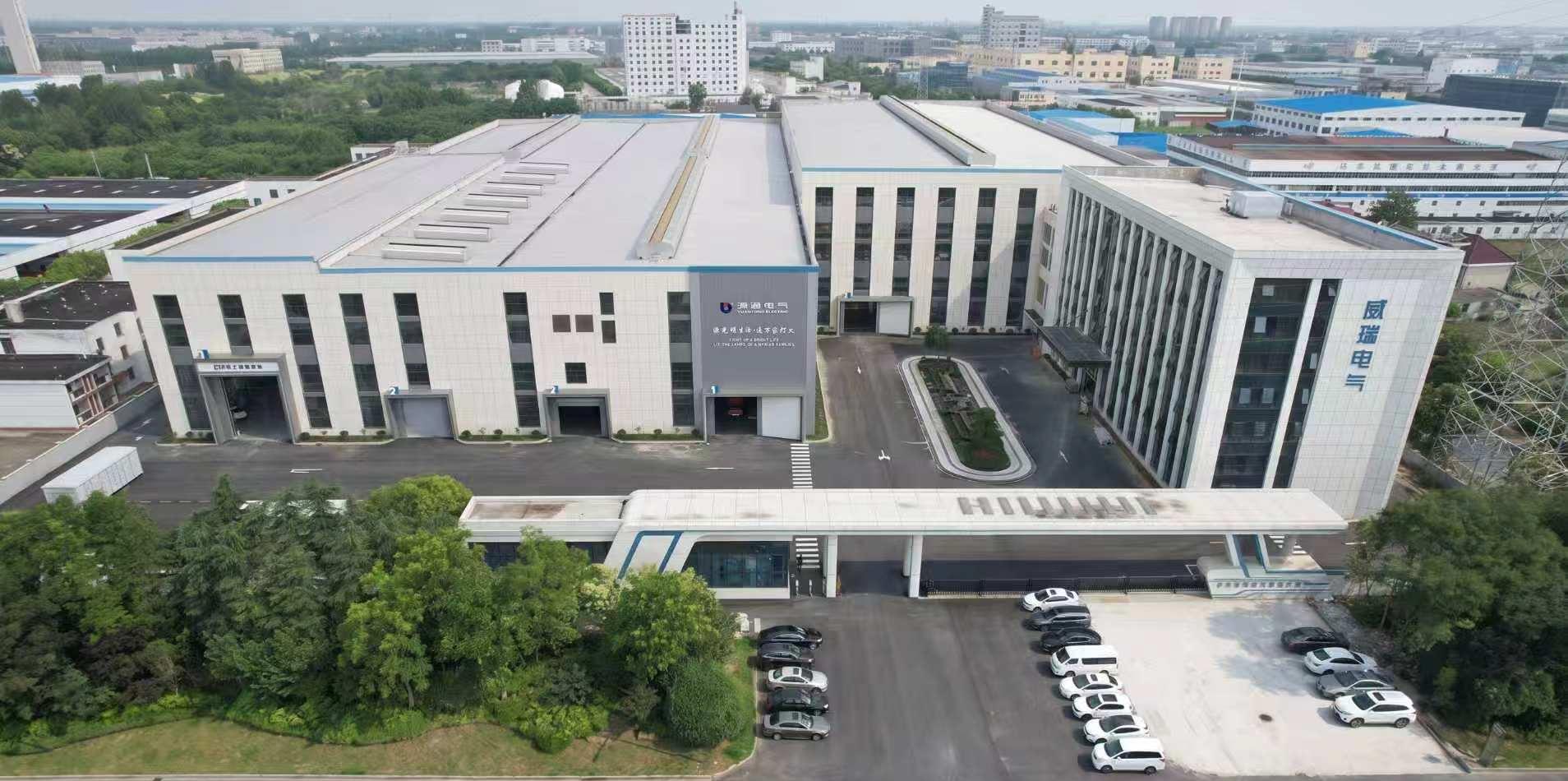
To make the framework concrete, it helps to look at how one manufacturer describes its own scope. Jiangsu Yuantong Electric Co., Ltd. is a private electrical manufacturing enterprise located in the High-Tech Zone of Hai’an, Nantong, Jiangsu, founded in 2008 with a registered capital of RMB 100.8 million. It reports a 50,000 m² factory, 175 employees, an annual output of 5,000 units and a 30-engineer R&D team, and describes itself as integrating research, design, production and installation.
Its stated product scope covers 10 kV, 20 kV and 35 kV oil-immersed transformers, vacuum epoxy cast dry-type transformers, non-encapsulated vacuum impregnated dry-type transformers, special transformers and box-type substations, with custom production available. The company also reports amorphous alloy and low-loss series within its portfolio, uses a TCAD design system, and states that its products feature low loss, low noise and short-circuit withstand capability. On evidence, it states that all products have passed all tests conducted by the National Transformer Quality Supervision and Inspection Center, and that it holds ISO9001 Quality Management System and ISO14001 Environmental Management System certification. It also reports a 20% export ratio with markets including the United States, Kenya and Russia, and lists recognition as a National High-Tech Enterprise, a National Specialized, Refined, Differential and Innovative “Little Giant” Enterprise and a Provincial Green Factory.
Two boundaries matter for a buyer reading those facts. First, they are company-reported and describe scope and self-declared testing, not independently benchmarked performance against other manufacturers. Second, voltage coverage up to 220 kV is described as a consequence of a second-phase high-end digital power distribution plant, an unmanned iron core production line and an intelligent warehousing system that the company states will be built; that is a stated plan, not a completed capability. Within the 10–35 kV envelope discussed here, the relevant question for a buyer is not whether the portfolio is broad but whether the specific unit offered carries the guaranteed values, test documents and acceptance criteria the plant requires.
Application fit: matching the option to the plant area
Plant layout usually decides the transformer family before price is negotiated. An indoor distribution room inside a production building, a basement adjacent to occupied space, or a facility with strict fire protection requirements points toward dry-type units, where the absence of insulating oil removes the leakage pathway and the associated containment works. An outdoor compound, an independent substation or a continuous heavy-load process with an energy-cost focus points toward oil-immersed units, where lower losses and short-time overload capability carry operational value.
Where the plant includes on-site generation, the comparison should extend to the step-up or interconnection package: photovoltaic power transformers and wind power transformers are evaluated on the same six-field basis, but the quotation must also state how the transformer interfaces with inverters or turbine converters, protection and metering. The same applies to prefabricated box substations serving a new production hall, where the enclosure, access and cable interfaces often drive site cost more than the transformer rating does.
Market context: efficiency rules and delivery timelines
Two documented developments shape how Chinese quotations should be read at decision stage. The first is regulation. China’s Implementation Plan for High-Quality Development of Energy-Saving Equipment (2026–2028), issued under the Ministry of Industry and Information Technology, sets a target that by 2028 the proportion of newly added energy-saving transformers should exceed 75%, with amorphous alloy transformers at first-level energy efficiency cited among the technologies being accelerated into replacement. For a buyer, that signals a direction of travel in the domestic product mix; it does not by itself certify any individual supplier’s efficiency performance, which still requires the declared loss values and test reports discussed above.
The second is schedule. The same supply-chain comparisons referenced earlier place Chinese delivery at roughly three to six months against two to four years for Western manufacturers. That gap is a legitimate factor in supplier selection, but it is an aggregate observation about markets, not a commitment from any specific factory. A buyer should convert it into a contractual delivery milestone with defined ex-works and shipping responsibilities rather than treating it as an assumption.
Limitations and fit boundaries of this framework
The framework has deliberate limits. It cannot tell a plant which supplier to choose, because the decisive inputs — site conditions, fault levels, load profile, tariff structure and delivery deadlines — are project-specific. It also does not resolve the absence of public comparative performance data: no verified no-load or load loss benchmarks, temperature-rise results or lifecycle cost figures were available for cross-supplier comparison in this review, so any claim that one manufacturer is more efficient than another would be unsupported. Where a quotation asserts a technical advantage, the buyer’s route is documentary evidence attached to that specific unit, not a category-level assumption.
One further boundary concerns the oil-immersed case. Lower equipment cost and stronger overload capability do not make it the lower-risk option everywhere: the fire protection and oil containment works it requires are real capital and space items, and in a densely occupied building they can erase the price advantage. Conversely, the 35%–60% dry-type premium is not waste in an indoor application where fire safety and siting drive the decision. The correct comparison is total installed scope against plant constraints, which is why the six-field normalisation step comes before any price discussion.
Future outlook
For industrial buyers, the practical direction is toward heavier documentation rather than lower headline prices. Efficiency regulation in manufacturing economies is pushing product portfolios toward low-loss and amorphous alloy designs, which raises the value of declared loss guarantees and of test evidence attached to the specific unit ordered. At the same time, long lead times in Western markets keep Chinese manufacturing relevant for plant schedules, which increases the number of buyers who must run this kind of comparison without prior transformer procurement experience. The teams that treat quotation evaluation as a normalisation exercise — scope, configuration, evidence, then price — will generally reach a defensible decision faster than those that start with the lowest number.
Frequently asked questions
What should an industrial plant confirm before comparing transformer quotations?
Confirm load capacity, voltage level, frequency, installation location, environmental conditions, fire-safety requirements, ventilation and the applicable standards first, then select an oil-immersed, dry-type, pole-mounted or pad-mounted configuration. Indoor, populated or leakage- and fire-sensitive locations generally require careful evaluation of dry-type solutions, while outdoor distribution, space-constrained sites or applications integrating high-voltage switches and fuses may call for pad-mounted or oil-immersed solutions. Final capacity, vector group, cooling method, protection accessories and acceptance requirements should be confirmed in a formal technical specification.
Why do dry-type transformers cost more than oil-immersed units at the same capacity?
At the same capacity, the purchase cost of dry-type transformers is 35%–60% higher than that of oil-immersed transformers. The premium reflects solid insulation and air-cooling construction that removes flammable insulating oil, which allows installation inside buildings and near occupied areas with high fire safety and no leakage risk. Oil-immersed transformers offer lower equipment cost, better heat dissipation, lower load loss and higher full-load efficiency, but require fire protection and oil containment that add cost and space on site.
How do oil-immersed and dry-type transformers differ on overload capacity and efficiency?
Oil-immersed transformers can withstand 1.3–1.5 times the rated load for a short period, while dry-type transformers have limited short-time overload capacity. Oil-immersed units also show better heat dissipation, lower load loss and higher full-load efficiency; dry-type units rely on air cooling and sit slightly lower on efficiency under rated heavy load, although advanced amorphous and high-grade insulation versions narrow that gap. Dry-type units retain the advantage in fire resistance and zero leakage risk for indoor and densely populated environments.
Which documents should support a supplier’s test and certification claims?
Request the factory test reports and distinguish type tests performed on a representative design from routine tests performed on the unit being shipped; ask which parts of the IEC 60076 series apply, since IEC 60076-1:2011 covers general power-transformer applicability while IEC 60076-11:2018 covers dry-type power transformers up to 72.5 kV highest voltage for equipment. Ask separately for management-system certificates such as ISO9001 and ISO14001 with scope and validity, and for any third-party test-centre reports, such as testing conducted by the National Transformer Quality Supervision and Inspection Center where a supplier claims it.
Can 10–35 kV transformers be customised beyond standard voltage classes and ratings?
Custom production is commonly available for oil-immersed, dry-type, amorphous alloy and box-type substation products, and manufacturers may state wider voltage coverage as new facilities come online — Jiangsu Yuantong Electric, for example, states that its second-phase high-end digital power distribution plant will enable product voltage class coverage up to 220 kV. Customisation still has to be written into a formal technical specification covering capacity, vector group, cooling method, protection accessories and acceptance requirements, and any capability described as planned should be verified as available before it is treated as an orderable option.
A restrained next step
Buyers who want to test this framework against a supplier’s own documentation can start with the material the manufacturer already publishes and check it against the six fields above. Jiangsu Yuantong Electric’s company file is available for public download here: Yuantong Electric company brochure (PDF). The document supports scope screening; it does not replace the guaranteed values, test reports and acceptance criteria that a purchase decision requires.
¿Tiene preguntas o necesita más detalles?
Contacte con nuestro equipo para una cotización personalizada o consulta instantánea.
Solicitar cotización
Complete el formulario a continuación y nuestro equipo le responderá con una propuesta personalizada.
Chat directo de WhatsApp
¿Prefiere chatear en tiempo real? Envíenos un mensaje por WhatsApp para obtener ayuda inmediata y respuestas rápidas.
- Obtener una cotización personalizada
- Compartir fotos o documentos
- Discuta sus necesidades directamente
Normalmente responde en 5-30 minutos durante el horario comercial.