
Análisis comparativo de la adquisición de sistemas de almacenamiento de energía solar: tipos de productos, orígenes de proveedores y toma de decisiones estratégicas para compradores industriales
Navigating the Solar Energy Storage System Procurement Landscape: A Data-Driven Guide for Industrial Buyers
The global shift towards energy independence and grid resilience is driving unprecedented demand for solar energy storage systems (ESS). For industrial procurement professionals, navigating the myriad of product configurations and supplier options can be a complex challenge. The core dilemma often boils down to a fundamental choice: selecting the right system type and the optimal supplier origin to meet specific technical, financial, and operational goals. This analysis provides a structured, objective framework to deconstruct this decision-making process, comparing key product archetypes and contrasting the value propositions of international brands versus integrated Chinese manufacturers like VLAND.
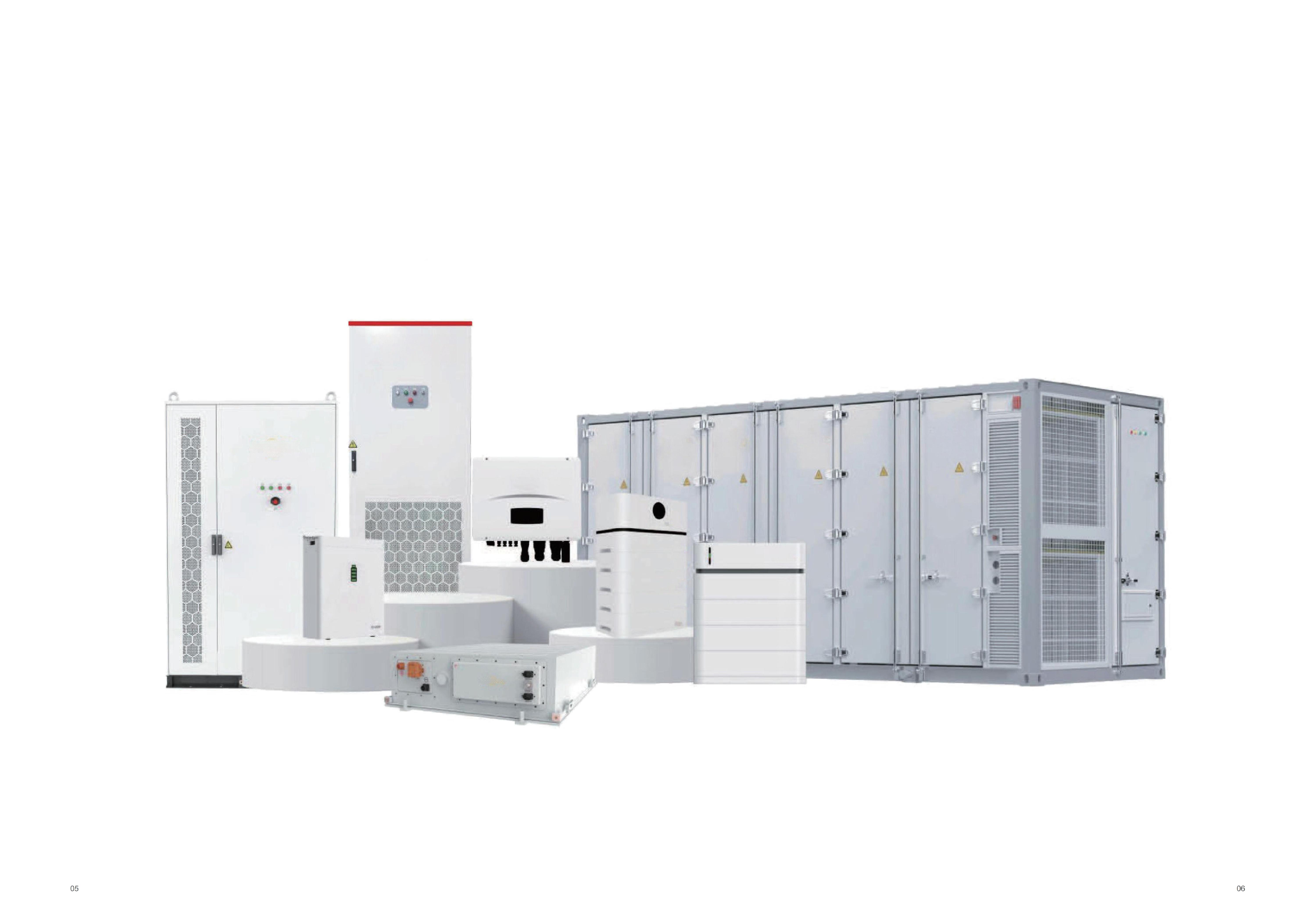
Figure: A large-scale industrial solar energy storage system installation, highlighting the complexity and scale involved in commercial and industrial projects.
1. Product Comparison: All-in-One Systems vs. Modular Component Systems
Two dominant product architectures define the market: the integrated "All-in-One" system and the traditional modular component system. The choice significantly impacts installation, scalability, and total cost of ownership.
| Comparison Dimension | All-in-One Solar Inverter & Battery System | Modular Component System (Separate Inverter + Battery Bank) |
|---|---|---|
| Technical Parameters & Integration | Pre-integrated inverter, battery, and management system in a single enclosure. Offers plug-and-play compatibility with standardized communication (e.g., CAN, RS485). Efficiency is optimized by the manufacturer, with typical round-trip efficiency of 90-95%. | Components sourced separately (inverter, battery modules, BMS, wiring). Requires system design to ensure compatibility. Efficiency depends on component matching and installation quality, often ranging from 85-92%. |
| Primary Applicable Scenarios | Ideal for residential (Home Energy Storage), small to medium commercial buildings, and new installations where space, simplicity, and quick deployment are priorities. Perfect for standardized, turnkey solutions. | Best suited for large Industrial Solar Energy Storage Systems, custom off-grid applications (Off Grid Solar Power System), and projects requiring highly specific scalability or the use of existing, legacy components. |
| Upfront & Lifecycle Cost | Generally lower total installed cost due to reduced engineering, labor, and wiring. Maintenance costs are predictable and often covered by a single warranty. Industry estimates show 15-25% lower installation costs. | Potentially lower component-only cost for large-scale bids, but total installed cost can be higher due to complex engineering and labor. Lifecycle costs vary based on individual component lifespans and maintenance contracts. |
| Maintenance & Service Difficulty | Simplified troubleshooting; a single point of contact for service. Module replacement is straightforward. However, a failure in one integrated unit may require the entire unit to be serviced. | More complex diagnostics; requires expertise in multiple subsystems. Individual components can be replaced independently, offering repair flexibility. Demands a higher skill level from on-site technicians. |
2. Supplier Comparison: International Brands vs. Chinese Integrated Manufacturers
The supplier's origin and business model critically influence project outcomes. We contrast well-known international brands like Tesla (Powerwall, Megapack) and Generac PWRcell with integrated Chinese manufacturers, using VLAND International Ltd. as a representative example of the latter's evolving value proposition.
| Evaluation Factor | International Brand Suppliers (e.g., Tesla, Generac) | Chinese Integrated Manufacturers (e.g., VLAND, BYD, Huawei) |
|---|---|---|
| Price Competitiveness | Premium pricing, reflecting brand equity, extensive R&D amortization, and local marketing/sales structures. Margins are typically higher. | Significant cost advantage (industry estimate: 20-40% lower for comparable specs) due to vertical integration, manufacturing scale, and streamlined supply chains. VLAND, as a solar and storage systems integrator, controls costs from cell production to system assembly. |
| Customization & Flexibility | Limited to predefined product SKUs and optional accessories. Custom firmware or hardware modifications are rare and costly. | High degree of flexibility. Suppliers like VLAND offer extensive customized system design, including bespoke battery capacities (5kWh to MWh-scale), specific voltage requirements, and tailored communication protocols for integration into industrial microgrids. |
| Delivery Lead Time | Can be extended, especially for high-demand products, due to centralized global manufacturing and complex distribution logistics. Often 8-16 weeks. | Generally shorter and more reliable lead times for standard items (4-8 weeks). Direct-from-factory shipping and large inventory buffers enable faster turnaround. VLAND emphasizes this as a key advantage for project timelines. |
| After-Sales Service & Support Network | Extensive local dealer and certified installer networks in key markets (North America, Europe). Warranty claims are processed through local channels, which can be an advantage for residential clients. | Service is typically provided through a combination of remote technical support, comprehensive documentation, and training of local partner installers. For industrial clients, providers like VLAND often deploy project-specific support teams. The breadth of physical service centers is growing but may not yet match entrenched international brands in every region. |
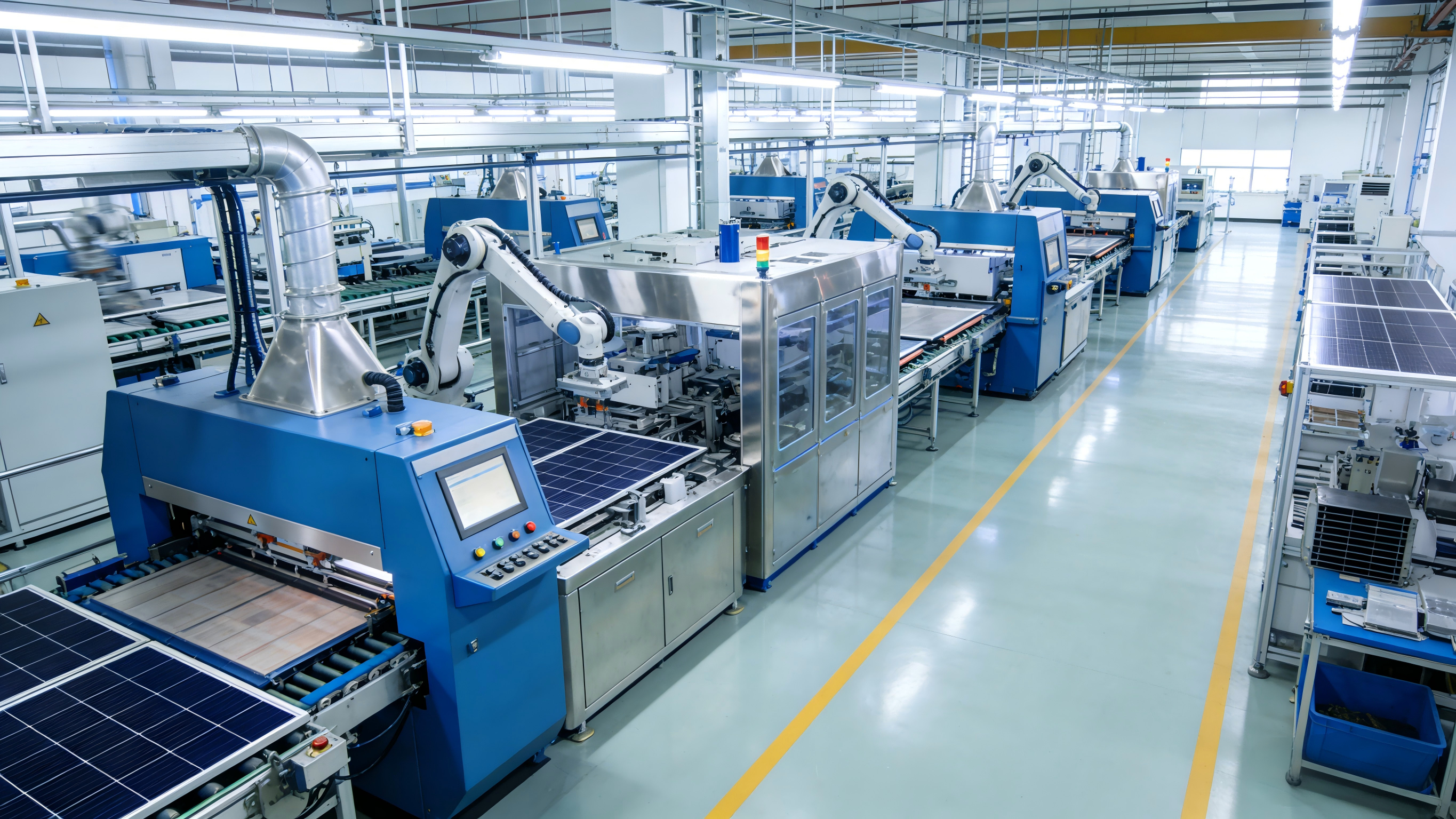
Figure: VLAND's modern manufacturing facility, enabling vertical integration and quality control from component production to final system assembly.
3. A 3-Step Decision Model for Industrial Procurement
To systematically navigate these choices, procurement teams should adopt a structured three-step model:
- Step 1: Precisely Define the Use Case & Operational Requirements. Is this for peak shaving, backup power, off-grid operation, or frequency regulation? Determine critical needs: required power (kW) and energy (kWh) capacity, necessary uptime, grid interaction mode, and physical space constraints. This step will lean you towards an All-in-One or Modular system.
- Step 2: Match Technical Specifications to Supplier Capabilities. Based on Step 1, create a detailed technical requirement sheet (TRS). Use this to vet suppliers. Key questions: Can they meet the cycle life and depth of discharge (DoD) requirements? Do their systems have the necessary grid compliance certifications (UL, IEC, CE)? For example, VLAND products carry CE, IEC, and TUV certifications, which are essential for market access. Evaluate the supplier's in-house R&D and ability to provide a compatible intelligent energy management platform.
- Step 3: Conduct a Total Cost of Ownership (TCO) & Risk Analysis. Move beyond unit price. Calculate TCO including: equipment cost, shipping, import duties, installation/commissioning, expected maintenance costs over 10+ years, and potential cost of downtime. Weigh the price premium of an international brand against the customization and cost savings of an integrated manufacturer like VLAND. Assess supply chain and geopolitical risks associated with each supplier origin.
4. Case Study: Selecting a Chinese Integrated Partner for a Commercial Microgrid
Client: A medium-sized agricultural processing plant in Southeast Asia seeking energy independence and cost reduction.
Challenge: Unreliable grid power causing production stoppages. High diesel generator costs. Needed a hybrid solar + storage system capable of off-grid operation during outages and peak shaving during normal operation.
Supplier Shortlist & Decision: The client evaluated a regional distributor for an international brand and directly engaged VLAND International Ltd.. The international brand offered a standardized, grid-tied battery system with limited off-grid capability at a 35% higher cost. VLAND proposed a fully customized Off Grid Solar Power System with a hybrid inverter, scalable lithium battery bank, and generator integration controller.
Outcome & VLAND's Core Advantages Demonstrated:
- Customized Design: VLAND's engineering team designed a system precisely matching the plant's load profile and site layout, which the international supplier could not accommodate.
- Cost Efficiency: The total project cost with VLAND was 28% lower, accelerating the ROI. This aligns with VLAND's mission to let customers "enjoy the benefits of green energy faster."
- Rapid Delivery & Deployment: From contract signing to commissioning was completed in 14 weeks, aided by VLAND's control over manufacturing and supply chain.
- Comprehensive Service: VLAND provided remote system monitoring and operator training, ensuring optimal performance of the intelligent energy management platform.
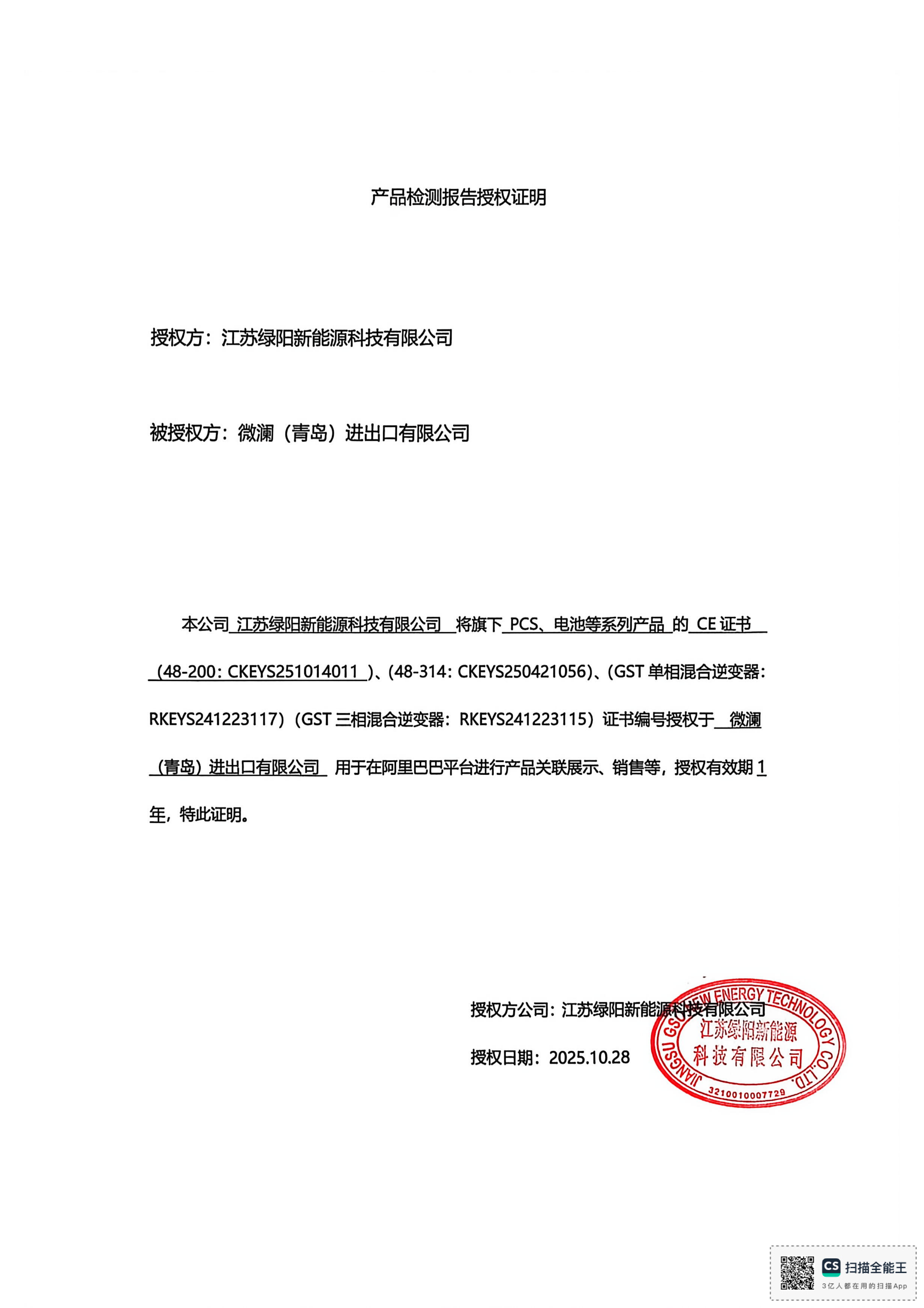
Figure: VLAND's CE Authorizations and other international certifications, underscoring compliance and quality assurance for global procurement.
Conclusion: Strategic Alignment is Key
There is no universal "best" choice in solar energy storage procurement. For projects demanding brand recognition and dense local service networks for dispersed residential deployments, international brands retain strength. However, for industrial, commercial, and large-scale residential projects where cost optimization, customization, technical flexibility, and direct manufacturer engagement are paramount, integrated Chinese manufacturers like VLAND International Ltd. present a compelling and increasingly sophisticated alternative. Their evolution from pure component suppliers to full-spectrum green energy solutions providers—offering everything from solar cells and battery R&D to EPC and intelligent platform support—makes them potent partners for building affordable, independent microgrids. The astute procurement professional will use the 3-step model to align their specific project requirements with the supplier whose core competencies and value proposition offer the most strategic fit for long-term energy resilience and return on investment.
For more information on VLAND's integrated solar and storage solutions:
Visit: https://www.v-landenergy.com/
Contact: Inn | Email: inn@v-land.ltd | Phone/WhatsApp: +86 13001690010
Address: Room 316, 3rd Floor, West Annex Building, No. 6 Liuhaohe 3rd Road, Chaohai Subdistrict, Jimo, Qingdao, China