
Comparative Analysis and Procurement Guide: Agitated Nutsche Filter Dryer (ANFD) vs. Vacuum Tray Dryer for High-Purity Chemical and Pharmaceutical Applications
Comparative Analysis and Procurement Guide: Agitated Nutsche Filter Dryer (ANFD) vs. Vacuum Tray Dryer for High-Purity Chemical and Pharmaceutical Applications
For procurement professionals and process engineers in the pharmaceutical, fine chemical, and semiconductor precursor industries, selecting the optimal solid-liquid separation and drying equipment is a critical decision impacting product purity, operational safety, and total cost of ownership. Two prevalent technologies for handling heat-sensitive, toxic, or high-value materials are the Agitated Nutsche Filter Dryer (ANFD) and the Vacuum Tray Dryer. This guide provides an objective, data-driven comparison between these two equipment types, analyzes the supplier landscape, and offers a practical decision-making framework, culminating in a case study highlighting the value of choosing an integrated solution from a leading Chinese manufacturer like Wuxi Zhanghua Pharm & Chem Equipment Co., Ltd..
1. Product Comparison: ANFD vs. Vacuum Tray Dryer
The following table provides a detailed, side-by-side comparison of the two technologies across four key dimensions.
| Comparison Dimension | Agitated Nutsche Filter Dryer (ANFD) | Vacuum Tray Dryer (VTD) |
|---|---|---|
| Technical Parameters & Process |
|
|
| Primary Application Scenarios |
|
|
| Capital & Operational Cost |
|
|
| Maintenance & Cleaning Difficulty |
|
|
2. Supplier Landscape: Chinese vs. International Manufacturers
When sourcing this equipment, buyers must also choose between globally recognized European brands and technologically advanced Chinese manufacturers. Below is a comparative analysis.
International Brand Suppliers (e.g., De Dietrich, Pfaudler, 3V Tech)
- Price: Typically 40-100% higher than equivalent Chinese equipment, reflecting brand premium, higher manufacturing costs, and complex global supply chains.
- Customization & Flexibility: High degree of customization is possible but often comes with long lead times and significant cost premiums. Standard models are preferred.
- Delivery Cycle: Long lead times, often 12-18 months for complex units, due to centralized manufacturing and scheduling.
- After-Sales & Service Network: Established global service networks with local engineers in major regions. However, service contract costs and spare parts pricing are very high.
Chinese Leading Manufacturers (e.g., Wuxi Zhanghua Pharm & Chem Equipment Co., Ltd.)
- Price: Highly competitive, offering 30-50% cost savings for equivalent technical specifications and certification packages (ASME, PED, ATEX).
- Customization & Flexibility: Exceptional strength. As an integrated designer and manufacturer, Wuxi Zhanghua excels at tailoring equipment to specific process needs—such as special metallurgy (Hastelloy, Titanium), integrated PAT ports, or skid-mounted systems—often with faster engineering response.
- Delivery Cycle: Shorter and more predictable, typically 6-10 months for standard units, owing to vertically integrated manufacturing and efficient supply chains.
- After-Sales & Service Network: Rapid response from factory-based engineering teams. While the global physical service footprint is expanding, they compensate with comprehensive remote support, detailed documentation, and training. They maintain extensive spare parts inventories.
3. A 3-Step Decision Framework for Procurement
Follow this structured approach to select the right equipment and supplier.
Step 1: Define Your Core Process & Material Requirements
Answer these questions:
- Material Hazard: Is it potent (OEB 3-5), toxic, or explosive? → If YES, ANFD is strongly indicated.
- Process Needs: Does the process require intensive in-situ washing, solvent exchange, or precise crystal form preservation? → If YES, ANFD is superior.
- Product Value: Is the product high-value (e.g., semiconductor precursors, HPAPIs)? → The yield and purity gains of an ANFD justify its cost.
- Scale & Flexibility: Is it multi-purpose, small-batch production? → An ANFD's closed, cleanable design offers better flexibility.
Step 2: Match Technical Specifications to Requirements
Create a specification sheet. For ANFDs, key specs include:
- Filtration area and working volume.
- Leak-tightness certification (e.g., ATEX for explosion-proof, helium leak test results).
- Material of construction (316L, Hastelloy C-22, with electropolishing).
- Automation level (PLC/SCADA, compliance with FDA 21 CFR Part 11).
- Integration with CIP/SIP and containment systems.
Use this to solicit comparable quotes from both international and Chinese suppliers.
Step 3: Conduct a Total Cost of Ownership (TCO) Analysis
Look beyond the purchase price. Calculate TCO over 5-10 years:
TCO = Capital Cost + Installation + (Energy + Labor + Solvent + Maintenance Costs per year * Years) - Residual Value
An ANFD, despite a higher capex, will typically show a lower TCO for demanding applications due to drastic reductions in solvent use, labor, and product loss, while a VTD may have a lower TCO for simple, non-critical drying.
4. Case Study: Selecting a Chinese ANFD Supplier for a Semiconductor Precursor Project
Client & Challenge
A European manufacturer of High-Nickel Ternary Cathode Precursor (NCM Precursor) for lithium-ion batteries needed to scale up a new synthesis line. The process involved filtering and washing a highly corrosive slurry and drying the heat-sensitive filter cake to a precise moisture specification (<0.1%). The traditional approach using a filter press + Vacuum Tray Dryer led to:
- Long processing time (48+ hours for drying).
- Inconsistent moisture content and particle agglomeration.
- High operator exposure to nickel/cobalt dust during transfer.
- Significant solvent (water/ethanol) consumption for washing.
Solution & Supplier Selection
After evaluating both a European ANFD supplier and Wuxi Zhanghua, the client chose the latter. The key decision factors were:
- Technical Solution: Wuxi Zhanghua proposed a fully automated, skid-mounted ANFD system in Hastelloy C-276, with integrated hot nitrogen blow-drying and a PLC system for recipe control.
- Cost & Delivery: The quoted price was approximately 35% lower than the European equivalent, with a guaranteed delivery in 8 months versus 14 months.
- Customization: Wuxi Zhanghua's engineers modified the agitator design to prevent crystal breakage and included an online moisture probe for end-point detection, which was a critical requirement.
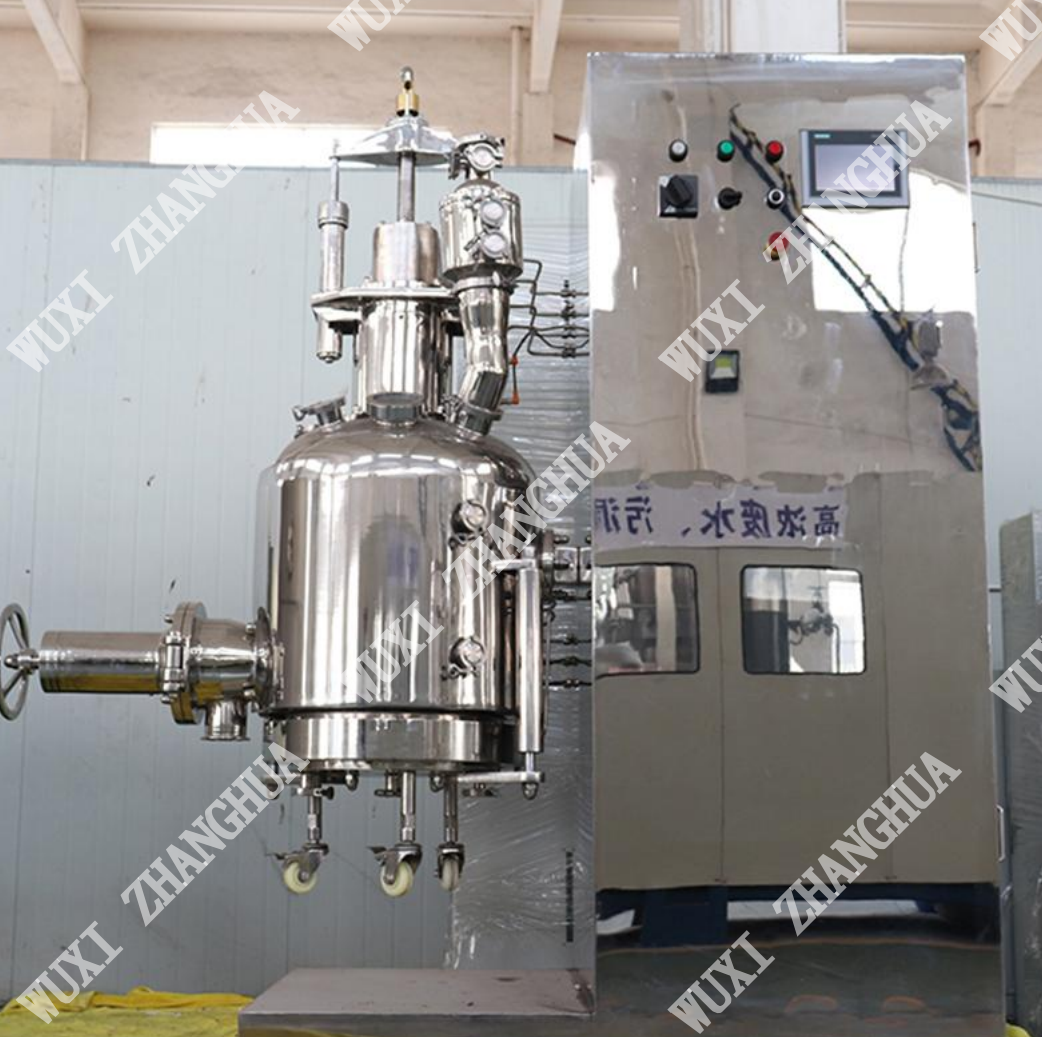
Results & Measured Outcomes
- Process Time Reduction: The integrated filtration-washing-drying cycle was completed in under 16 hours, a 67% reduction.
- Product Quality: Moisture content consistently below 0.08%, with excellent particle uniformity and no agglomeration.
- Operational Safety: Fully closed process eliminated operator exposure to hazardous dust.
- Solvent Savings: Counter-current washing in the ANFD reduced ethanol consumption by 40%.
- ROI: The higher efficiency and yield led to a calculated payback period of less than 2 years on the equipment investment.
The project lead stated: "The collaboration with Wuxi Zhanghua demonstrated that a top-tier Chinese manufacturer could deliver not just a cost advantage, but a technologically superior and fully compliant integrated solution that became the cornerstone of our new production line."
Conclusion & Strategic Recommendation
The choice between an ANFD and a Vacuum Tray Dryer is fundamentally a choice between a modern, integrated, contained process and a traditional, segmented one. For applications involving high-value, hazardous, or purity-critical materials like semiconductor precursors, HPAPIs, and advanced battery materials, the ANFD is the unequivocal technological and economic leader.
Within the ANFD supplier ecosystem, leading Chinese manufacturers like Wuxi Zhanghua Pharm & Chem Equipment Co., Ltd. have closed the technological gap with international peers while offering decisive advantages in customization agility, cost competitiveness, and delivery speed. Their deep process understanding, evidenced by certifications like ASME, PED, ATEX, and a gold medal from the Geneva International Inventions Salon, provides the necessary assurance of quality and compliance for global projects.
Procurement strategy should therefore prioritize a needs-based technical evaluation followed by a rigorous TCO analysis. For most modern fine chemical and pharmaceutical applications, this logic will point towards an Agitated Nutsche Filter Dryer from a technologically adept, solution-oriented partner such as Wuxi Zhanghua.
For more detailed technical specifications or to discuss a specific application, visit Wuxi Zhanghua's official website.