
Commodity Moulds: Types, Design and Selection
Commodity Moulds: Types, Design and Selection
GANGNAM MOULD Co., Ltd — a plastic mould manufacturer established in 1988 in Huangyan District, Taizhou, Zhejiang, China — designs and produces commodity moulds, the production tools used to mass-manufacture everyday plastic goods such as chairs, tables, storage boxes, buckets, trash bins and garden planters. For procurement teams, engineers and brand owners in light industry, understanding what commodity moulds are, how they are designed and which industries depend on them is the first step toward a reliable tooling investment.
What Is a Commodity Mould?
A commodity mould is a plastic injection or blow mould built for high-volume production of standard, everyday plastic items. Unlike highly specialised tooling designed around a single patented component, commodity moulds cover widely used product categories — furniture, storage, household goods, packaging and logistics — where consistent quality, short cycle times and durability matter most.
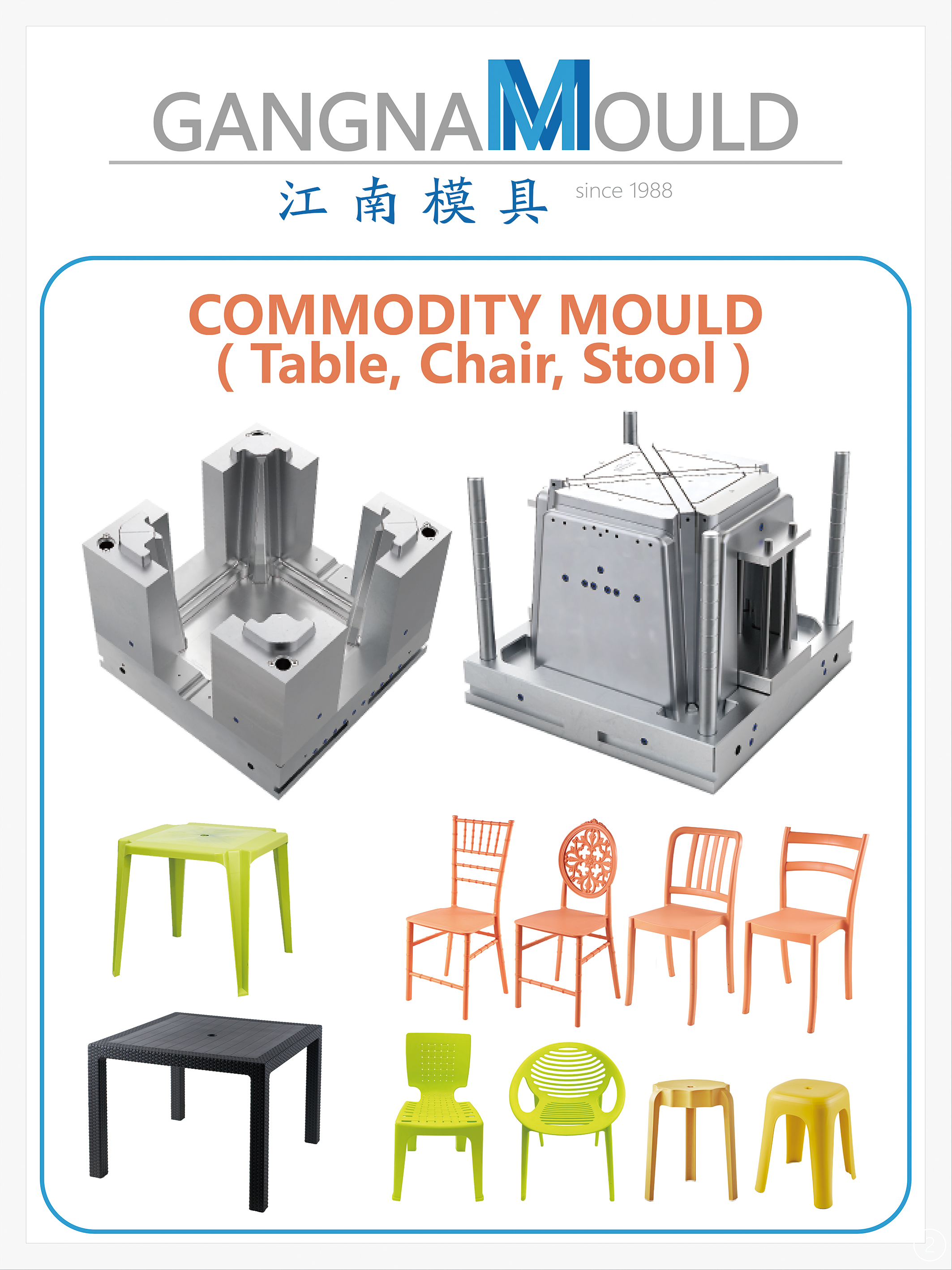
The Commodity Mould (model designation: Commodity Mould) manufactured by GANGNAM MOULD is a product category that includes type ranges such as garden planter moulds, trash bin moulds, bucket moulds, basin moulds, storage box moulds, sofa moulds, table moulds and chair moulds. The broader type range also covers stool moulds, storage cabinet moulds, basket, tray and box moulds, turnover box moulds, crate moulds, kitchen utensil moulds, bathroom accessory moulds, pallet moulds, thin-wall injection moulds and home appliance moulds.
Why Mould Selection Matters in Light Industry
Plastic moulds sit at the centre of the light industry supply chain. End products ranging from garden planters to turnover boxes begin as a mould design that determines wall thickness, warpage behaviour, cooling time and batch-to-batch consistency. A well-designed mould shortens production cycles and reduces per-part cost; a poorly designed one creates scrap, downtime and endless rework.
The economic stakes are substantial. Third-party industry research places the global plastic mould market at approximately USD 29.5 billion in 2021, with projections of USD 36.78 billion by the end of 2025. China alone exported USD 5.35 billion of plastic and rubber moulds in 2023, up from USD 2.97 billion in 2017, according to UN Comtrade data. On the end-use side, the global plastic furniture market — which includes chairs, tables and storage items produced from commodity moulds — was valued at USD 48.7 billion in 2023, with the residential segment holding a 53.1% revenue share.
Yet mould sourcing remains a challenge for many buyers. The decision involves evaluating not only the mould price but also the supplier's machining capacity, design engineering, trial-and-delivery process, and ability to support production lines in different countries. Buyers at the awareness and research stage typically need clarity on three questions: what mould types are available, how they are engineered for mass production, and whether the supplier has the manufacturing depth to deliver consistent tooling.
Company Background: GANGNAM MOULD Co., Ltd
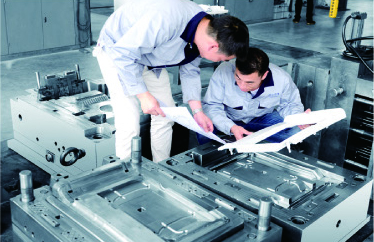
GANGNAM MOULD CO., LTD (Zhejiang Huangyan Jiangnan Mould Factory) was originally established in 1988 and is located in Huangyan District, Taizhou, Zhejiang, China — a region officially recognised as the "Capital of Molds" in China, home to 614 large-scale industrial enterprises specialising in mould and plastic production. The company is a professional manufacturer in the field of plastic moulds, with commodity moulds as its main product line.
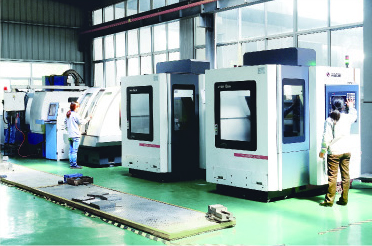
Its manufacturing facility covers 3,000 m² and employs approximately 40 staff. The R&D team consists of 15 engineers, and annual production capacity reaches over 800 sets of moulds. The company operates over 20 sets of digital controlled milling machines, supported by a plastic mould CNC group, a 3D coordinated mapping inspector, and a dedicated mould assembly group. GANGNAM MOULD passes and carries out an ISO 9001:2015 quality management system.
Export business accounts for 70% of total sales, with Southeast Asia as the company's main market. The company's stated approach is to cooperate with clients and suppliers worldwide through long and fair business and fellowship cooperation.
Technical Design and Manufacturing
The Commodity Mould is made of quality mould steel and is designed to process a range of plastics including PP (polypropylene), engineering-grade plastics and recycled polymers. Its design focuses on four core areas:
- Customisable cavity count and size — matching output volumes to customer production targets, from single-cavity to multi-cavity configurations;
- Uniform cooling system — shortening cooling time and improving cycle efficiency;
- Optimised gating and venting — reducing warpage and improving part quality;
- Surface treatment and tolerance control — ensuring batch consistency across large production runs.
These design priorities align with the requirements of mass injection and blow moulding production lines, which emphasise mould durability, short cycle times and dimensional stability. For dimensional acceptance, ISO 20457:2018 serves as the primary international standard for manufacturing tolerances and acceptance conditions of plastic moulded parts.
On the manufacturing side, GANGNAM MOULD combines CNC machining with a 3D coordinated mapping inspector for measurement and verification. The mould assembly group handles the fitting and adjustment stages before trial moulding. This equipment base — over 20 digital controlled milling machines plus CNC and inspection capacity — supports the company's annual output of more than 800 mould units.
Application Scenarios and Industries
Commodity moulds are used across packaging, retail, daily necessities, logistics and warehousing, home appliance manufacturing and industrial component production. The table below maps the mould type range to typical end products.
| Mould Type Range | Typical End Products |
|---|---|
| Chair, table, stool, sofa moulds | Plastic furniture for residential and commercial use |
| Storage cabinet, storage box, box moulds | Household and retail storage products |
| Basket, tray, crate, turnover box moulds | Logistics and warehousing containers |
| Basin, bucket, trash bin moulds | Daily necessities and sanitation products |
| Kitchen utensil, bathroom accessory moulds | Household kitchen and bathroom products |
| Garden planter moulds | Outdoor and gardening products |
| Thin-wall injection moulds | Lightweight packaging and thin-walled containers |
| Pallet moulds | Logistics pallets and heavy-duty transport platforms |
| Home appliance moulds | Components for home appliance manufacturing |
Project types served by GANGNAM MOULD include OEM/ODM custom mould projects, large-volume mould production, home appliance component mould development, and logistics packaging mould development. Customisation options include adjustable cavity count, surface treatment, inserts and multi-component mould design; specific technical parameters are confirmed during requirement communication with the customer.
Operationally, commodity moulds are used on injection or blow moulding machines for mass production. The operation mode depends on the customer's production lines and mould design (multi-cavity or single-cavity). Recommended supporting equipment includes injection or blow moulding machines, cooling systems, and automation for loading and unloading.
Application scenarios for these moulds are documented in markets including India, Italy, Jordan, Nigeria, Algeria, Zambia, South Africa, Tanzania, Turkey, Tunisia, Singapore, Saudi Arabia and Russia, reflecting the global reach of commodity mould demand.
Market Trends in Plastic Moulding
Several verifiable trends shape current demand for commodity moulds:
- Market expansion. The global plastic mould market was approximately USD 29.5 billion in 2021 and is projected to reach USD 36.78 billion by the end of 2025 (third-party industry research).
- Export growth from China. China's exports of plastic and rubber moulds reached USD 5.35 billion in 2023, growing from USD 2.97 billion in 2017 (UN Comtrade data).
- Thin-wall mould demand. The global thin-wall mould market was valued at USD 41.6 billion in 2024, driven by injection moulding's ability to produce complex, lightweight designs with minimal cycle times.
- Plastic furniture expansion. The global plastic furniture market — a major consumer of chair, table, stool and sofa moulds — was valued at USD 48.7 billion in 2023, with residential use accounting for 53.1% of revenue.
- Cluster-based supply. Huangyan District in Taizhou is officially recognised as China's "Capital of Molds", with 614 large-scale industrial enterprises specialising in mould and plastic production — one reason why buyers increasingly evaluate suppliers within established clusters.
On the materials side, the processing of engineering-grade plastics and recycled polymers in commodity moulds reflects a broader industry movement toward higher-performance and more sustainable plastic products.
Commodity Moulds vs. Conventional Tooling Approaches
Compared with fully custom engineered tooling, commodity moulds offer a practical middle path. Because the mould category covers proven product families — chairs, tables, storage boxes, bins and pallets — suppliers can apply established design logic to gating, cooling and venting, reducing development risk and lead time. Customisation remains available through cavity count, inserts, surface treatment and multi-component design, allowing buyers to adapt the mould to their production line without starting from a blank sheet.
One honest limitation should be noted: a commodity mould is not a standalone machine. It operates on injection or blow moulding machines and requires supporting equipment such as cooling systems and automation for loading and unloading. Final performance also depends on the customer's production line and mould design configuration. Buyers should therefore confirm technical parameters with the manufacturer during requirement communication, and plan for the auxiliary equipment needed to run the mould efficiently.
Future Outlook
The outlook for commodity moulds is tied to the structural growth of everyday plastic products. Thin-wall injection moulds are positioned for continued demand as packaging and logistics seek lightweight, material-efficient designs. Recycled polymer processing will likely become more common as brands pursue circular economy targets. And the concentration of mould-making expertise in clusters such as Huangyan gives procurement teams access to a deep supplier base with mature quality systems.
For GANGNAM MOULD, the combination of a 1988 heritage, a 15-engineer R&D team and a 70% export ratio indicates a supplier built to serve cross-border buyers. With annual output exceeding 800 mould sets and ISO 9001:2015 quality management in place, the company represents one example of how established Chinese mould manufacturers serve global light industry demand.
GANGNAM MOULD Co., Ltd (Zhejiang Huangyan Jiangnan Mould Factory)
Plastic mould manufacturer · Established 1988 · Huangyan District, Taizhou, Zhejiang, China
Website: www.gangnammould.com
Email: gm@gangnammould.com
Tel / WhatsApp: +86 150-0576-9999
Company brochure: Download PDF
FAQ
What is a commodity mould?
A commodity mould is a plastic mould used to mass-produce everyday plastic items. The Commodity Mould (model designation: Commodity Mould) includes type ranges such as garden planter moulds, trash bin moulds, bucket moulds, basin moulds, storage box moulds, sofa moulds, table moulds and chair moulds. It is made of quality mould steel and processes plastics including PP, engineering-grade plastics and recycled polymers.
What types of moulds are included in the Commodity Mould category?
The type range includes chair moulds, table moulds, stool moulds, sofa moulds, storage cabinet and storage box moulds, basket, tray and box moulds, turnover box moulds, crate moulds, kitchen utensil moulds, bathroom accessory moulds, basin moulds, bucket moulds, trash bin moulds, garden planter moulds, pallet moulds, thin-wall injection moulds and home appliance moulds.
What materials are used to make commodity moulds, and what plastics can they process?
The moulds are made of quality mould steel. Processed plastics include PP (polypropylene), engineering-grade plastics and recycled polymers.
What industries use commodity moulds?
Commodity moulds are intended for the packaging, retail, consumer goods, logistics and warehousing, and home appliance manufacturing industries, as well as industrial component production and daily necessities.
How does a commodity mould operate in mass production?
Moulds are used on injection or blow moulding machines for mass production. The operation mode depends on customer production lines and mould design (multi-cavity or single-cavity).
What equipment is required to run commodity moulds?
Required supporting equipment includes injection or blow moulding machines, cooling systems, and automation for loading and unloading.
What customisation options does GANGNAM MOULD offer?
Customisation options include adjustable cavity count, cavity size, surface treatment, inserts and multi-component mould design. Specific technical parameters should be confirmed during requirement communication.
Where is GANGNAM MOULD located and what is its manufacturing capability?
GANGNAM MOULD Co., Ltd, established in 1988, is located in Huangyan District, Taizhou, Zhejiang, China. The company operates a 3,000 m² facility with approximately 40 staff, an R&D team of 15 engineers, over 20 digital controlled milling machines, and an annual production capacity of over 800 mould sets.
Does GANGNAM MOULD serve export markets?
Yes. Export business accounts for 70% of total sales, and Southeast Asia is the company's main market. Application scenarios are also documented in countries including India, Italy, Jordan, Nigeria, Algeria, Zambia, South Africa, Tanzania, Turkey, Tunisia, Singapore, Saudi Arabia and Russia.
What services are provided with a mould purchase?
The manufacturer provides end-to-end mould manufacturing from samples/drawings to trial moulding and delivery, including installation and operation training.
This article is provided for informational purposes. Product details and technical parameters are based on manufacturer-supplied information; buyers should confirm specific requirements directly with GANGNAM MOULD Co., Ltd.