
Commodity Mould Quotes: Terms, Tolerance and Acceptance
A Commodity Mould quotation usually arrives as a single number, but it carries two separate commitments: the commercial terms that define how the tool is bought, paid for and shipped, and the technical acceptance criteria that define whether the tool is accepted once it has been built. Buyers in the evaluation stage often compare the first and skim the second — which is why two quotes for the same household-product mould can look far apart and still not be comparable at all.
GANGNAM MOULD CO., LTD (Zhejiang Huangyan Jiangnan Mould Factory) is a plastic mould manufacturer established in 1988 and located in Huangyan District, Taizhou, Zhejiang, China. The company designs and manufactures Commodity Moulds — injection moulds for everyday plastic products, logistics packaging and household appliances — and reports an annual output of 800 units, approximately 80 sets of moulds per month, a 15-engineer R&D team, a 3,000 m² factory and a 70% export ratio. Its published commercial profile includes a MOQ of 1 unit, a stated dimensional tolerance of -0.02 mm and an ISO 9001:2015 quality management system certificate.
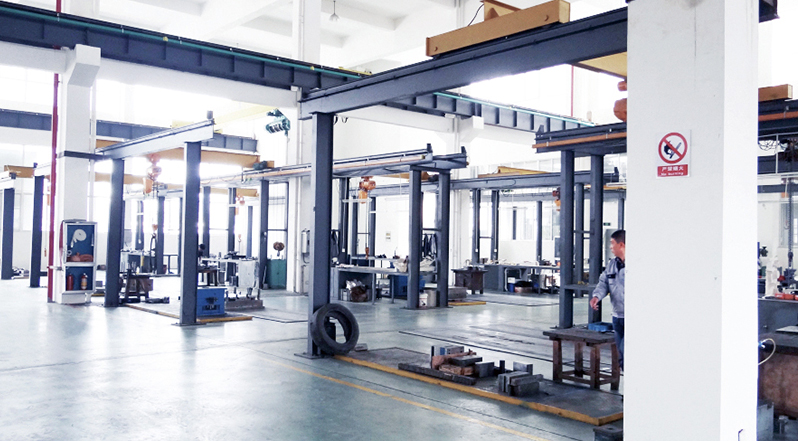
Mould manufacturing workshop: commodity mould production combines CNC machining, assembly and dimensional inspection before a tool is released for trial.
Why Two Commodity Mould Quotes Are Rarely Comparable
A mould quotation is a bundle. It contains a price, an Incoterm, a payment split, a minimum order quantity, a lead time, a tolerance statement and a set of acceptance steps — and different suppliers present these in different order and different depth. One quote may be issued FOB and exclude freight and insurance; another may be issued CIF and include both. One may include trial moulding and an inspection report; another may treat trial moulding as a separate line item. Comparing the headline numbers of those two documents produces a price difference that has nothing to do with manufacturing capability.
The practical fix is to split every quotation into two layers before comparing anything. The commercial layer answers: what am I buying, when do I pay, and who carries the goods and the risk at each point? The technical layer answers: what exactly will be measured, with what instruments, against which tolerance, and what happens if the measurement falls outside the agreed band? A buyer who separates these two layers is no longer comparing prices. They are comparing scopes.
Layer One — Commercial Terms: What Defines the Transaction
FOB and CIF Move the Cost Boundary, Not the Price
Under FOB, the seller completes delivery once the goods are placed on board at the port of origin; the buyer arranges and pays ocean freight and insurance from that point. Under CIF, the seller's price includes cost, insurance and freight through to the destination port. Moulds are dense, heavy and frequently shipped as single tools in wooden cases, so the gap between a FOB figure and a CIF figure is not a negotiating tactic — it is two different cost boundaries. A buyer who places a FOB quote beside a CIF quote is comparing an ex-freight price against a delivered price, and the cheaper-looking number may be the more expensive one once freight and insurance are added back.
Payment Structure: 30% T/T in Advance and 70% Before Shipment
The stated payment structure is 30% T/T in advance with the remaining 70% due before shipment. That schedule should be read against the production sequence the supplier publishes: requirement → design → manufacturing → trial and inspection → delivery and training. The second instalment falls after trial and inspection but before the tool leaves the factory, which means the trial stage is the last practical moment at which a buyer can resolve an acceptance question while the tool is still in the supplier's workshop. For evaluation-stage buyers, the useful consequence is straightforward: the inspection report and full-size trial data should be treated as a payment-milestone deliverable, not as an optional extra.
MOQ of 1 Unit and a 30–45 Day Lead Time
The minimum order quantity for a Commodity Mould is 1 unit, meaning a single tool. This matters because commodity mould projects are usually single-tool purchases — one chair mould, one crate mould, one thin-wall container mould — rather than volume orders. A 1-unit MOQ keeps tooling accessible to small and mid-sized producers, and it also means the commercial weight of the order sits in the tool itself rather than in order volume. On timing, the stated lead time is 30–45 days and depends on mould complexity, with the exact timeline confirmed per order; monthly capacity is approximately 80 sets of moulds, against an annual output of 800 units.
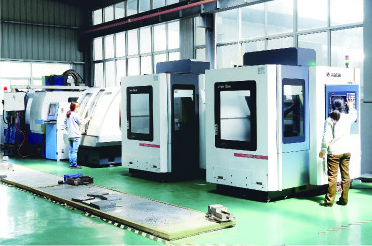
CNC machining of mould components. Dimensional accuracy at the machining stage is what the later CMM inspection verifies against the customer drawing.
Layer Two — Technical Acceptance: What Defines the Delivered Tool
The Stated -0.02 mm Dimensional Tolerance
The supplier states a dimensional tolerance of -0.02 mm on Commodity Mould tooling. For commodity parts this figure is not a technical formality. Buckets, basins, crates, pallets, storage boxes and turnover boxes are stacking and nesting products, and their fit with each other depends on dimensional consistency across the cavity set rather than on any single measurement. The design measures that support that consistency are published: a customizable cavity count and size, a uniform cooling system intended to shorten cooling time, optimized gating and venting intended to reduce warpage, and surface treatment and tolerance control for batch consistency.
One boundary is worth stating clearly to any buyer comparing quotes. A tolerance figure is meaningful only when it is tied to specific features of a specific drawing. A quotation that mentions -0.02 mm does not automatically mean every dimension of the finished part is controlled to that band. The buyer's job at the RFQ stage is to mark which features are tolerance-controlled, which are cosmetic, and which are free.
Inspection Evidence: NDT, CMM and Full-Size Trial Testing
The published quality-control methods are NDT, CMM measurement and full-size trial testing with inspection reports. In practice these cover three different questions. Non-destructive testing checks the mould assembly and critical steel components without damaging them. CMM (coordinate measuring machine) measurement produces dimensional data against the drawing, which is the direct evidence behind any tolerance claim. Full-size trial testing produces actual moulded parts, so the buyer can verify wall thickness, warpage, surface finish, ejection behaviour and stack fit on real samples rather than on a drawing. For a commodity mould programme, the trial report is the single most useful acceptance document in the package, because it converts a dimensional claim into a measurable part.
Standard Context: ISO 20457:2018 and Moulded-Part Tolerances
Buyers who need a neutral reference for tolerance discussions have one at the international level. ISO 20457:2018 specifies possible manufacturing tolerances for plastic moulded parts and addresses injection moulding, injection compression moulding, transfer moulding, compression moulding and rotational moulding. A draft document, ISO/DIS 20457, also describes manufacturing tolerances for plastic moulded parts; the available information does not establish that the draft has replaced the published 2018 edition, so the published version remains the safer contractual reference. Citing a standard edition number in the purchase order removes the ambiguity that usually surrounds phrases such as "normal tolerance" or "standard finish".
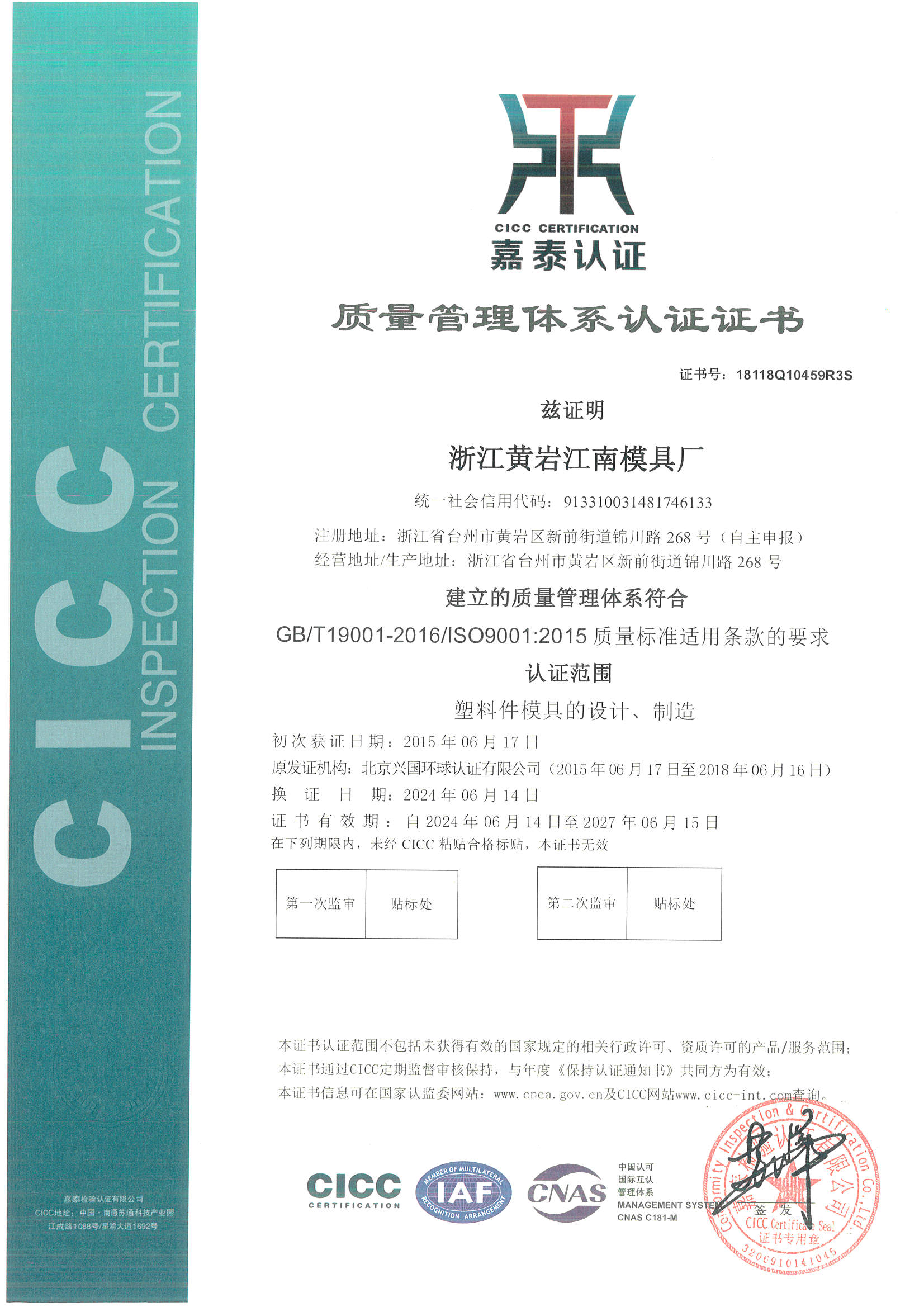
ISO 9001:2015 QMS certificate, number 18118Q10459R3S, covering the manufacture and design of plastic parts moulds.
Commercial Terms vs Technical Acceptance: A Side-by-Side View
| Comparison dimension | Commercial terms layer | Technical acceptance layer |
|---|---|---|
| What it defines | How the tool is bought, paid for and shipped | Whether the delivered tool meets the agreed specification |
| Typical items | FOB or CIF Incoterm, 30% T/T in advance and 70% before shipment, MOQ of 1 unit, 30–45 day lead time | Stated -0.02 mm dimensional tolerance, CMM and NDT inspection, full-size trial testing with inspection reports |
| Supporting documents | Quotation, sales contract, invoice and shipping documents | Customer drawing, CMM data, NDT records, trial report |
| Buyer risk if ignored | Landed-cost surprises and a payment milestone that falls before acceptance is complete | Acceptance disputes at delivery and rework before production ramp-up |
| Who confirms it internally | Procurement and finance | Engineering and quality |
Customization Options That Move Both Layers
The customization scope published for Commodity Moulds covers customizable cavity count and size, surface texture and polish, gating and cooling system design, inserts and multi-component integration, and material and heat-treatment requests. Each of these items changes the quotation on both layers at once, which is why they should be specified before prices are compared rather than negotiated afterwards.
Cavity count is the clearest example. More cavities change cooling balance, cycle economics and the machining hours in the tool, so the commercial number moves; they also widen the dimensional verification workload, so the acceptance scope moves. Surface texture and polish introduce appearance criteria that a dimensional report cannot capture, which means the buyer either accepts a visual standard or writes one. Inserts and multi-component mould design add separable elements that must be verified individually as well as in assembly. Material and heat-treatment requests change steel behaviour and, with it, the tolerance that can reasonably be held over tool life.
Two further items are process rather than hardware, and buyers frequently forget them. Trial moulding is where theoretical tolerance becomes measured tolerance, and installation and operation training is where the tool's performance transfers to the buyer's factory floor. Both are part of the stated one-stop service flow of delivery, installation and operation training, supported by detailed inspection reports during trial. Specific after-sales terms should be agreed contractually rather than assumed from a specification sheet.
Where These Criteria Apply: Categories and Use Cases
The acceptance discussion is not abstract. The same two-layer comparison applies across the product families the supplier lists: Chair Moulds, Table Moulds, Stool Moulds and Sofa Moulds, where structural consistency and stack fit dominate; Storage Cabinet Moulds and Storage Box Moulds, where dimensional stability across large flat surfaces is the hard part; Basket Moulds, Tray Moulds, Box Moulds, Turnover Box Moulds and Crate Moulds, where repeated nesting and automated handling punish small deviations; Kitchen Utensils Moulds, Bathroom Accessories Moulds, Basin Moulds, Bucket Moulds and Trash Bin Moulds, where appearance criteria sit beside dimensional criteria; and Garden Planter Moulds, Pallet Moulds, Home Appliance Moulds and Thin Wall Injection Moulds, where wall thickness and flow balance are the critical variables.
Tooling materials are stated as quality mould steel, and the processed plastics include PP as well as engineering-grade plastics and recycled polymers. The applicable industries listed are packaging, retail, consumer goods, logistics and warehousing, and home appliance manufacturing. A documented example from the supplier's client records covers 800 units of custom moulds over a ten-year programme, used for injection pallets, circulation crates, daily plastic containers and home appliance housings, with clients in Bangladesh, Algeria, India, Iraq, Italy, Jordan, Nigeria and Turkey. The moulds in that programme are described as designed to withstand millions of operational cycles while improving production efficiency and product consistency. For a buyer, the relevant reading is not the volume figure but the implication: where a tool is expected to run for millions of cycles, acceptance must be settled at trial, because rework after ramp-up is far more expensive than rework before shipment.
Market Trend: Why Tolerance Discipline Is Getting More Attention
Two market figures frame the commercial context, and they measure different things. The global injection molding market was valued at USD 312.7 billion in 2025 according to Grand View Research, covering injection moulded production and parts. The narrower global industrial mould market — the tool-making segment that Commodity Mould suppliers actually operate in — was reported at USD 59.0 billion in 2025. The gap between the two numbers is a definitional difference rather than a contradiction, and buyers should cite them carefully: one sizes the moulding industry, the other sizes the tooling industry.
At the regional level, Asia Pacific held a 52.6% share of the global industrial mould market in 2024, which explains why so much commodity tooling evaluation work now centres on Asian suppliers. Growth in the specialised end of the category is sharper still: the thin wall mould market is projected to grow from USD 3.89 billion in 2025 to USD 7.23 billion by 2035, a compound annual growth rate of 6.4%. Thin-wall tooling is precisely where tolerance and process acceptance stop being administrative. Wall sections are thinner, flow paths are shorter and cooling balance is more sensitive, so a quotation that separates commercial terms from acceptance criteria is not a bureaucratic preference — it is a response to where the category is heading.
What a Quotation Does Not Cover
A structured comparison is more useful than a simple one, but it is not unlimited, and buyers should know where the boundary sits.
First, the ISO 9001:2015 certificate held by GANGNAM MOULD, number 18118Q10459R3S, was issued on 14 June 2024 by Beijing Xingguo Inspection and Certification Co., Ltd. and is valid until 15 June 2027. Its scope is the manufacture and design of plastic parts moulds. That is a quality management system covering how moulds are designed and built. It does not certify the compliance of the moulded end product for a destination market, and for categories such as kitchen utensil moulds or food container moulds, product-level requirements must be handled separately.
Second, a stated -0.02 mm tolerance is one figure. Applying it to every feature of a complex part such as a pallet or a large storage cabinet would be a misreading of the specification; the contract should identify which features it governs. Third, cycle time guarantees, mould-life numbers, spare-part policy and warranty terms are not established by a quotation document, and no publicly comparable performance benchmark for those items was available in the collected data for this category. Trial reports and contractual clauses, not marketing claims, are the practical evidence.
Fourth, the structured approach itself has a cost. It requires the buyer to prepare marked-up drawings and an acceptance protocol before issuing the RFQ, which adds engineering time in the first round. Where drawings are not yet ready, buyers sometimes accept a two-stage process: agree the commercial layer first, then finalise tolerance and acceptance scope once the drawing is frozen.
Future Outlook
Three shifts are likely to shape how Commodity Mould quotations are evaluated over the next few years. Tolerance language will become more formal, as buyers move from phrases such as "standard tolerance" toward naming a published standard edition such as ISO 20457:2018 in the purchase order, and as the draft ISO/DIS 20457 work is monitored for status changes. Second, thin-wall growth at a 6.4% CAGR through 2035 will push acceptance criteria further toward process data — cooling balance, wall uniformity and trial-part measurement — rather than simple dimensional checks. Third, quality-system verification will continue to move from claim to document: buyers increasingly expect certificate numbers, issuing bodies, validity dates and audit scope to be supplied alongside the quotation, particularly where the tooling supports regulated end products.
FAQ
When comparing Commodity Mould quotes, should a buyer start with price or with acceptance criteria?
Neither should be compared first in isolation. The two layers should be separated before any number is compared. The commercial layer — Incoterm, payment milestone structure, MOQ and lead time — determines what is actually being bought and delivered. The technical layer — stated dimensional tolerance, inspection method and trial verification — determines whether the delivered tool will be accepted. A price comparison made before both layers are fixed compares different scopes rather than different costs.
What is the difference between FOB and CIF in a Commodity Mould order?
Under FOB, the seller completes delivery once the mould is placed on board at the port of origin, and the buyer arranges and pays ocean freight and insurance from that point. Under CIF, the seller's price includes cost, insurance and freight to the destination port. Because moulds are heavy and often shipped as single tools in wooden cases, the two Incoterms represent different cost boundaries rather than different prices for the same delivered scope.
What does the stated -0.02 mm dimensional tolerance actually cover?
It is a stated dimensional tolerance for the mould tooling, and its application depends on which features of a specific part drawing are designated as tolerance-controlled. The design measures published alongside it — customizable cavity count and size, uniform cooling to shorten cooling time, optimized gating and venting to reduce warpage, and surface treatment and tolerance control for batch consistency — indicate how consistency across a cavity set is intended to be achieved. Buyers should confirm feature-by-feature tolerance designation in the contract, referencing a published standard such as ISO 20457:2018 where a neutral baseline is needed.
How is tolerance verified before shipment?
The published quality-control methods are non-destructive testing, CMM measurement and full-size trial testing with inspection reports. CMM measurement produces dimensional data against the drawing, which is the direct evidence supporting a tolerance claim. Full-size trial testing produces actual moulded parts, allowing wall thickness, warpage, surface finish and fit to be checked on samples. Trial and inspection occur before the delivery and training stage, and the remaining 70% payment falls before shipment, so the trial report is the last practical acceptance checkpoint while the tool is still in the supplier's workshop.
Is there a minimum order quantity for a Commodity Mould?
The stated MOQ is 1 unit, meaning a single mould. This suits single-tool purchases such as one chair mould, crate mould or thin-wall container mould. Stated capacity is approximately 80 sets of moulds per month against an annual output of 800 units, and the stated lead time is 30–45 days depending on mould complexity, with the exact timeline confirmed per order.
Which customization options change the acceptance scope?
Customizable cavity count and size, surface texture and polish, gating and cooling system design, inserts and multi-component integration, and material and heat-treatment requests. Cavity count affects cooling balance and dimensional verification across the cavity set. Surface texture and polish introduce appearance criteria that dimensional reports do not capture. Inserts and multi-component designs require each element to be verified separately as well as in assembly. Material and heat-treatment choices affect the tolerance that can reasonably be held over the life of the tool.
Does an ISO 9001:2015 certificate verify the moulded product?
No. The ISO 9001:2015 certificate held by GANGNAM MOULD, number 18118Q10459R3S, was issued on 14 June 2024 by Beijing Xingguo Inspection and Certification Co., Ltd. and is valid until 15 June 2027, with a scope covering the manufacture and design of plastic parts moulds. It addresses the quality management system governing mould design and manufacturing. It does not certify the compliance of the moulded end product against destination-market requirements, which must be verified separately where the end product is regulated.
¿Tiene preguntas o necesita más detalles?
Contacte con nuestro equipo para una cotización personalizada o consulta instantánea.
Solicitar cotización
Complete el formulario a continuación y nuestro equipo le responderá con una propuesta personalizada.
Chat directo de WhatsApp
¿Prefiere chatear en tiempo real? Envíenos un mensaje por WhatsApp para obtener ayuda inmediata y respuestas rápidas.
- Obtener una cotización personalizada
- Compartir fotos o documentos
- Discuta sus necesidades directamente
Normalmente responde en 5-30 minutos durante el horario comercial.