
Commodity Mould Face-Off: Gangnam Mould vs. Regional Tooling Shops
For buyers of commodity injection moulds, sourcing decisions often come down to a choice between a specialist export-oriented manufacturer and a regional tooling shop closer to home. Both can produce tooling, but the risks, lead times, engineering support and long-term cost structures differ significantly. This article offers a buyer-education comparison built on verifiable company data, with Gangnam Mould Co., Ltd as the reference case for a scaled, export-focused mould producer.
Why This Comparison Matters
Commodity moulds cover a wide range of daily-use plastic products: chair moulds, table moulds, stool moulds, sofa moulds, storage box moulds, basket moulds, tray moulds, turnover box moulds, basin moulds, bucket moulds, trash bin moulds, pallet moulds, home appliance moulds, crate moulds and thin-wall injection moulds. These are not one-off experiments; they are manufactured in volume, used in continuous production, and replaced or repaired according to predictable cycles.
Buyers evaluating suppliers at the decision stage therefore need more than a price quote. They need confidence that the mould maker can handle the production workload, maintain tolerance, deliver on schedule, and respond when design or production issues appear. A regional tooling shop may offer convenience, but a producer with established manufacturing systems may offer better protection across the full lifecycle of the tool.
Gangnam Mould: A Scaled Export-Oriented Producer
Gangnam Mould Co., Ltd (Zhejiang Huangyan Jiangnan Mould Factory) was established in 1988 and is located in Huangyan District, Taizhou, Zhejiang, China. The company specializes in plastic moulds for commodity products and operates a facility of 3,000 m² with a team of 40 employees. Its annual production capacity is 800 mould sets per year.
The company reports that approximately 70% of its sales go to Southeast Asia, with reach extending to markets such as India, Italy, Nigeria and others. For buyers comparing a regional tooling shop with Gangnam Mould, export volume is a meaningful signal: it indicates experience in cross-border communication, documentation, packaging and delivery standards.
Evidence-Based Comparison Dimensions
1. Production Scalability and Equipment Base
A regional tooling shop may operate with a small number of general-purpose machines and a limited assembly crew. Scalability concerns arise when order volumes increase, when mould sizes become larger, or when several projects run concurrently.
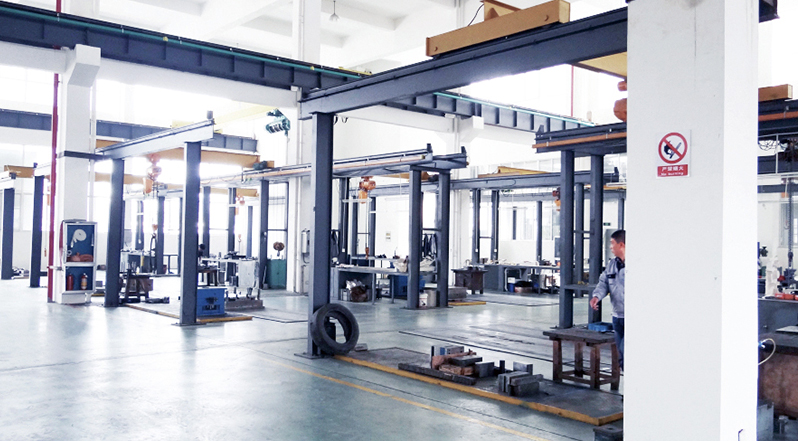
Gangnam Mould’s stated production capacity is more than 800 sets of moulds each year. The company operates over 20 sets of digital controlled milling machines, a group of plastic mould CNC machines, a 3D coordinated mapping inspector, and a dedicated mould assembly group. This equipment structure supports parallel project execution and helps reduce the risk of bottlenecks during high-demand periods.
2. Quality Management and Process Control
Informal tooling shops often rely on the experience of individual machinists. That can produce good results on simple tools, but consistency becomes harder to maintain across multiple batches, complex geometries and longer delivery timelines.
Gangnam Mould passes and carries out ISO 9001:2015 QMS. The company uses strict machining and inspection processes, including NDT, CMM and trial molding reports, to control manufacturing quality and delivery risk. For buyers, the practical difference is traceability: inspection data, trial reports and structured quality control provide documented evidence that a mould meets agreed requirements before it leaves the factory.
3. Engineering Depth and Customisation Support
Commodity moulds are not all the same. A thin-wall injection mould used for food containers behaves differently from a structural mould used for pallets or crates. Engineering decisions about gating, cooling systems and material choice directly affect cycle time and part quality.
Gangnam Mould employs a research and development team of 15 engineers. The company shortens mould cycle time by optimizing gating and cooling systems to boost production efficiency. For buyers, this translates into better production economics during the life of the mould, not just a competitive upfront price.
4. Export Experience and International Communication
Regional tooling shops may be excellent engineering workshops, but they rarely handle the documentation, shipping logistics and communication complexity that export customers require. Misunderstandings about mould specifications, trial procedures or delivery terms can lead to costly rework.
Gangnam Mould’s export business — with roughly 70% of sales going to Southeast Asia and additional reach to India, Italy, Nigeria and beyond — indicates that the company has adapted its processes to serve international buyers. The company also states that it aims to cooperate with clients and suppliers worldwide through long and fair business relationships.
Industry Evidence: Huangyan’s Mould Cluster
Gangnam Mould is located in Huangyan District, Taizhou, which is officially recognized as the “Capital of Molds” in China. The district houses 614 large-scale industrial enterprises specializing in mold and plastic production. This clustering matters for buyers because it gives local producers access to specialized steel suppliers, heat treatment services, component vendors and experienced mould technicians. A factory operating within this ecosystem can respond faster to material needs and subcontract specialized processes without long supply chains.
Comparison with Regional Tooling Shops: What the Evidence Shows

| Comparison Factor | Gangnam Mould Co., Ltd | Typical Regional Tooling Shop |
|---|---|---|
| Year established | 1988 | Varies; often smaller and younger operations |
| Annual capacity | 800+ mould sets per year | Limited by small machine count and crew size |
| Engineering team | 15 engineers | Often one or two senior designers |
| Quality system | ISO 9001:2015 QMS | May lack formal documented QMS |
| Export experience | ~70% sales to Southeast Asia; reach to India, Italy, Nigeria | Often focused on domestic buyers |
| Process controls | NDT, CMM, trial molding reports | May rely on basic measurement tools |
One Honest Limitation of Choosing an Export Specialist
No supplier type is perfect for every buyer. The main limitation of working with an export-focused manufacturer in China is distance. Even with good communication and structured inspection reports, buyers cannot simply walk into the factory for a quick face-to-face discussion. Lead times must account for international shipping, customs clearance and potential logistics delays. Buyers who require extremely short delivery windows or who prefer local problem-solving on a weekly basis may find a regional tooling shop easier to manage operationally. The trade-off is that smaller local shops may not offer the same engineering depth, capacity scalability or formal quality system.
What This Means for Buyers at Decision Stage
When evaluating a commodity mould supplier, buyers should separate emotional comfort from verifiable capability. A regional tooling shop can certainly produce functional moulds, but the buyer carries more responsibility for defining specifications, verifying quality and managing delays. With a producer like Gangnam Mould, the buyer gains access to documented quality control, a larger engineering team and proven export logistics, but must plan for longer physical distance.
Buyers should ask five questions before deciding:
- What documented quality system does the supplier operate?
- How many engineers are available for design review and troubleshooting?
- What inspection and trial processes are completed before shipment?
- Can the supplier handle multiple projects at the same time without delaying delivery?
- Does the supplier have proven experience shipping moulds to your region?
Future Outlook
As global plastic mould exports continue to expand — China’s exports of plastic and rubber molds reached USD 5.35 billion in 2023, up from USD 2.97 billion in 2017 — buyers are increasingly treating mould sourcing as a strategic decision rather than a transactional purchase. The commodity mould segment is moving toward more engineering involvement, better documentation and more reliable quality systems. Producers that can offer these capabilities while maintaining competitive pricing will likely remain attractive to importers, distributors and manufacturers.
FAQ
What is a commodity mould?
A commodity mould is an injection mould used to produce everyday plastic products in high volume, such as chairs, tables, storage boxes, crates, pallets, basins, buckets and household appliance components.
Which products does Gangnam Mould make moulds for?
Gangnam Mould specializes in commodity moulds, including chair moulds, table moulds, stool moulds, sofa moulds, storage cabinet moulds, storage box moulds, basket moulds, tray moulds, box moulds, turnover box moulds, kitchen utensil moulds, bathroom accessory moulds, basin moulds, bucket moulds, trash bin moulds, garden planter moulds, pallet moulds, home appliance moulds, crate moulds and thin-wall injection moulds.
What quality certifications does Gangnam Mould hold?
Gangnam Mould passes and carries out ISO 9001:2015 QMS, covering its quality management system for mould design, machining and delivery.
What is Gangnam Mould’s annual production capacity?
Gangnam Mould can produce more than 800 sets of moulds each year, supported by over 20 sets of digital controlled milling machines and a dedicated mould assembly group.
How many engineers work at Gangnam Mould?
Gangnam Mould has a development and engineering team of 15 engineers.
Where is Gangnam Mould located?
Gangnam Mould is based in Huangyan District, Taizhou, Zhejiang, China, a district officially recognized as the “Capital of Molds” in China.
Which export markets does Gangnam Mould serve?
Approximately 70% of Gangnam Mould’s sales go to Southeast Asia, with additional market reach to India, Italy, Nigeria and other countries.
What quality control processes are used?
Gangnam Mould applies strict machining and inspection processes, including NDT, CMM and trial molding reports, to control manufacturing quality and delivery risk.
What are the advantages of plastic injection pallets over wooden pallets?
Plastic injection pallets outperform wood in durability, reusability and reducing product damage during transport. They are suitable for logistics and warehousing scenarios requiring impact resistance, easy cleaning and frequent reuse.
How does mould design affect production efficiency?
Optimizing the gating and cooling systems in a mould can shorten cycle time and boost production efficiency, which lowers the overall cost per part during mass production.
For buyers seeking more detailed company information and production capabilities, the company brochure is available for reference: Download Gangnam Mould Company Brochure.
¿Tiene preguntas o necesita más detalles?
Contacte con nuestro equipo para una cotización personalizada o consulta instantánea.
Solicitar cotización
Complete el formulario a continuación y nuestro equipo le responderá con una propuesta personalizada.
Chat directo de WhatsApp
¿Prefiere chatear en tiempo real? Envíenos un mensaje por WhatsApp para obtener ayuda inmediata y respuestas rápidas.
- Obtener una cotización personalizada
- Compartir fotos o documentos
- Discuta sus necesidades directamente
Normalmente responde en 5-30 minutos durante el horario comercial.