
Commodity Mould Buying Framework: Compare Evidence, Not Price
Procurement Framework · Commodity Mould
Commodity moulds are the tooling behind the everyday plastic economy: buckets, basins, crates, trays, storage boxes, planters, chairs and appliance housings. Yet the documents used to buy them are frequently less precise than the parts they produce. Two quotations for the same product family can differ in capacity claims, engineering depth, inspection practice and payment structure while looking almost identical on a single price line.
This article sets out a buying framework for commodity moulds that replaces price-first comparison with evidence-first comparison. Each criterion is tied to an artifact a buyer can request and inspect before a purchase order is issued, so that comparisons stay repeatable across suppliers, across categories and across negotiation rounds.

Why Price-First Comparisons Break Down in Commodity Mould Procurement
A commodity mould quotation is a commercial summary, not a specification. When a buyer compares two totals without normalising scope, three failure modes appear repeatedly.
- Unspecified scope. Cavity count, steel selection, cooling layout, ejection design and surface finish may be described in different language by different suppliers, or left implicit altogether. The lower total often reflects the thinner description rather than the cheaper capability.
- Unverifiable claims. Capacity and precision statements are commonly offered as prose, without the document that would support them: no machine list, no floor area, no measurement report.
- Unallocated risk. Lead-time risk, material supply variability, rework risk from design changes, and international trade and shipping risk all sit somewhere in the chain of a mould project. If the quotation does not say where, they sit with the buyer.
GANGNAM MOULD CO., LTD (Zhejiang Huangyan Jiangnan Mould Factory) offers a useful reference case for the opposite approach. Established in 1988 and based in Huangyan District, Taizhou, Zhejiang, China, the company describes its capability in figures that a buyer can interrogate: more than 800 sets of moulds per year, a 15-engineer team, a 3,000 m² facility, an ISO 9001:2015 quality management system, and a reported dimensional tolerance of −0.02 mm. Whether those figures are strong or weak depends entirely on how they are checked — which is what the rest of this framework addresses.
The Four Criteria That Make Two Mould Quotes Comparable
The framework uses four technical criteria plus one commercial criterion. Each criterion is paired with a specific document or measurement, because a claim without an artifact cannot enter a comparison.
| Criterion | Typical claim | Evidence to request | What it changes in the comparison |
|---|---|---|---|
| Production capacity | “800 sets of moulds a year” | Equipment list with machine type and count, facility size, headcount by function, scheduling basis | Delivery slot availability and lead-time risk |
| Engineering depth | “15 engineers” | Team structure, design-for-manufacture review output on your drawing, trial moulding report format | Rework risk from design changes and the scope for cycle-time optimisation |
| Quality system | “ISO 9001:2015” | Certificate with scope, issue date, validity and certification body; inspection records including coordinate measurement and non-destructive testing | Whether process control is documented or merely asserted |
| Precision | “tolerance −0.02 mm” | Drawing with tolerance bands, coordinate measurement report from trial moulding, stated acceptance rule | Whether parts will pass incoming inspection |
| Commercial terms | “30% T/T, 70% before shipment” | Milestone definition, document release point, remedy if trial parts fail | How risk is allocated before and after shipment |
Production capacity: what “800 sets a year” must be checked against
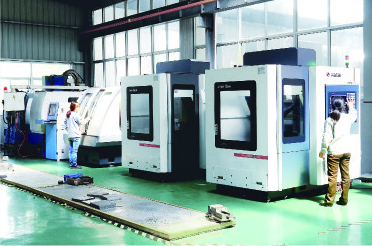
GANGNAM MOULD states that it can produce over 800 sets of mould each year, supported by more than 20 sets of digitally controlled milling machines, a 3D coordinated mapping inspector and a mould assembly group, operating within a 3,000 m² facility and a workforce of 40 people.
Capacity matters because it sets the buyer's delivery exposure. A supplier whose annual throughput is already committed will schedule a new commodity mould later, and lead-time risk is one of the four risks that most often erodes an otherwise competitive price. The verification method is arithmetic and documentary rather than rhetorical.
- Test the cadence. More than 800 sets a year implies roughly 15 to 16 sets a week. The buyer can ask whether the listed milling capacity, inspection station and assembly group can sustain that rate for the mould sizes actually being quoted.
- Test the footprint. A 3,000 m² facility with 40 employees is a describable constraint. Ask for the layout: machining area, assembly and spotting area, trial press area, and storage for finished tooling.
- Separate throughput from output. “Sets of moulds per year” is a tooling measure. It says nothing directly about how many plastic parts those moulds will produce per hour, which depends on cavity count, cooling design and the moulder's press.
Engineering depth: what a 15-engineer team changes
Fifteen engineers inside a 40-person company means roughly one employee in three works in engineering rather than in machining or administration. That ratio is the part of the claim that carries meaning for a buyer, because commodity moulds are not simply machined to a drawing — they are interpreted.
GANGNAM MOULD describes shortening mould cycle time by optimising the gating and cooling systems to raise production efficiency. That kind of optimisation is an engineering activity, not a machining one, and it is the reason engineering headcount belongs in a buying framework rather than in a company profile.
To convert the claim into evidence, ask three questions before the order: who signs the design-for-manufacture review, can the supplier return a written review of your own drawing, and what does the trial moulding report contain? A supplier that can answer all three in documents is offering a different product from one that answers in assurances.
Quality system: ISO 9001:2015 as a boundary, not a performance certificate
GANGNAM MOULD states that it passes and carries out an ISO 9001:2015 quality management system. The distinction that matters in supplier comparison is what such a certification does and does not cover.
An ISO 9001:2015 certificate addresses the management system: document control, process definition, inspection records, corrective action and consistency of procedure. It does not certify cavity count, cycle time, mould life, the dimensional tolerance of a specific part, or food-contact suitability for a kitchen utensil or container mould. Those are product-level properties and must be evidenced at product level.
The practical verification sequence is therefore: confirm the certificate scope, issue date, validity and certification body; then ask how inspection records are actually produced — whether coordinate measurement and non-destructive testing are routine, and whether each mould ships with a trial moulding report. The certificate tells the buyer that a system exists; the records tell the buyer whether the system touches the part.
Precision: how −0.02 mm should be read
A tolerance figure becomes an evidence point only when it is attached to a named dimension, a measurement method and an acceptance rule. Stated in isolation, −0.02 mm is a capability signal; stated against a drawing, it is a contractual requirement.
ISO 20457:2018, which specifies possible manufacturing tolerances for plastic moulded parts and addresses injection moulding among other processes, gives both parties a neutral reference. Citing a published standard in the drawing and in the acceptance conversation moves the discussion away from negotiating a number and towards agreeing a method.
Three questions convert the claim into comparable evidence: which dimensions carry the −0.02 mm band and which fall under general tolerance; how the measurement is performed and on what equipment; and what report the buyer receives from the trial moulding. A supplier that can answer these has a precision capability. A supplier that cannot has a precision adjective.
Payment terms: 30% T/T with 70% before shipment as a risk statement
A payment structure of 30% T/T deposit with 70% due before shipment is a common arrangement in mould procurement, and it belongs inside the comparison rather than beside it. The terms describe when money moves relative to evidence.
- What the balance is tied to. Acceptance of the trial moulding report, completion of pre-shipment inspection, or simple notice of readiness. These are materially different positions for the buyer.
- What documents release with the balance. Measurement reports, mould drawings, spare-part lists and operating instructions should be defined, not assumed.
- What happens if trial parts fail. A remedy clause is part of the price, because rework risk from design changes is a real cost line in mould projects.
Two suppliers quoting the same figure with different milestone definitions are not offering the same commercial product. Recording the milestone structure in the comparison table prevents a later negotiation from being framed as a price discussion when it is actually a risk discussion.
Turning the Criteria into a Repeatable Scoring Routine
Evidence only improves a decision when it is scored consistently. The routine below can be run by any member of a procurement team and produces the same ranking from the same inputs.
- Normalise the request. Issue one drawing set, one tolerance statement and one acceptance rule to every supplier, so that responses describe the same scope.
- Collect artifacts, not statements. Equipment list, facility size and layout, headcount by function, certificate with scope and validity, trial moulding report format, inspection sample.
- Score each criterion from 1 to 5 using documentary completeness as the scale, not supplier enthusiasm. A criterion supported by a checkable document scores above one supported by correspondence.
- Weight by project sensitivity. Weights are project-specific; a thin-wall container project and a garden planter project do not carry the same risk profile.
- Record the commercial terms separately. Payment milestones, currency and document release are a risk dimension, not a discount dimension.
- Re-score after trial moulding. The framework is designed to be updated by measurement, which is the point at which claims become performance.
| Criterion | Example weight | Reason for the weighting |
|---|---|---|
| Production capacity | 20% | Governs delivery slot availability and exposure to lead-time risk |
| Engineering depth | 25% | Governs rework risk from design changes and cycle-time optimisation |
| Quality system | 20% | Governs whether inspection is documented and repeatable |
| Precision | 25% | Governs whether parts pass incoming inspection |
| Commercial terms | 10% | Governs risk allocation rather than capability |
The weights are an illustration, not a recommendation. A buyer sourcing thin wall injection moulds for high-cadence food containers would typically raise the precision and engineering weights and reduce the commercial weight; a buyer sourcing garden planter moulds across several sizes might raise capacity instead, because the constraint is scheduling rather than dimensional control.
Applying the Framework Across Commodity Mould Families
The same four criteria apply to every commodity category, but the evidence priority shifts with the product family. A single supplier covering many families is convenient; the framework exists to check whether that convenience is backed by capability in each family rather than in the catalogue as a whole.
| Product family | Representative moulds | Evidence priority |
|---|---|---|
| Furniture and seating | Chair moulds, table moulds, stool moulds, sofa moulds | Engineering depth and precision — large moulds with structural tolerance and cooling balance requirements |
| Household storage | Storage cabinet moulds, storage box moulds | Facility size and precision — mould dimensions must fit the machine envelope and still hold wall thickness |
| Logistics and handling | Basket moulds, tray moulds, box moulds, turnover box moulds, crate moulds, pallet moulds | Engineering depth and capacity — impact resistance, thin-wall design and cycle time dominate the economics |
| Kitchen and bathroom | Kitchen utensil moulds, bathroom accessory moulds, basin moulds | Quality system and precision — surface consistency and dimensional repeatability are visible to the end user |
| Outdoor and waste | Garden planter moulds, bucket moulds, trash bin moulds | Capacity and material selection — multi-size ranges and wall thickness control across a family |
| Appliance and thin wall | Home appliance moulds, thin wall injection moulds | Engineering depth, precision and quality system — the three criteria converge in high-cadence thin-wall work |
GANGNAM MOULD states that it designs and manufactures plastic moulds for everyday items, logistics packaging such as trays and turnover boxes, household appliances and hollow blow moulding. For a buyer assembling a multi-category shortlist, that stated scope is a starting filter; the framework then decides whether each family is genuinely supported or only listed.
Market Context: Why Documented Capability Is Being Priced In
The commercial environment explains why evidence discipline has moved from good practice to competitive necessity. Industry research cited by Vertex AI Search and industry reports values the global industrial mould market at USD 59.0 billion in 2025, with Asia Pacific holding a 52.6% share of that market in 2024. Grand View Research separately estimates the global injection moulding market at USD 312.7 billion in 2025.
The two figures measure different things — mould making versus injection moulding production — and should not be added or compared directly. Their shared implication for buyers is supply density: in a region carrying more than half of global mould making capacity, tooling availability is rarely the constraint. Verification is.
The thin wall segment sharpens the point. Strategic Revenue Insights projects the thin wall mould market growing from USD 3.89 billion in 2025 to USD 7.23 billion by 2035, a compound annual growth rate of 6.4%. Thin-wall work pushes tolerance control, cooling design and cycle-time engineering into categories that were previously treated as purely commodity — and those are exactly the capabilities that a price line cannot express.
Where the Framework Stops: Limits and Trade-offs
An honest framework states its boundaries. This one compares the quality of evidence; it does not guarantee the performance of the mould. A supplier with better documentation can still deliver tooling that requires rework, and no document set replaces trial moulding, sample approval or a factory visit. The framework reduces the probability of an unverifiable comparison; it does not remove technical risk.
Three further limits are worth recording in the comparison itself.
- Capacity claims are point-in-time. An annual throughput figure says nothing about the current order book, so delivery schedules must be confirmed separately for the specific order window.
- Certification is process assurance. ISO 9001:2015 supports confidence in documentation and corrective action; it does not substitute for a measurement report on the part being bought.
- Cost comparisons need a volume basis. GANGNAM MOULD reports that its plastic injection pallets offer approximately 10% lower cost than alternatives, alongside advantages in durability, reusability and reduced product damage during transport when compared with traditional wooden pallets. That comparison is company-reported and general; the real figure depends on the buyer's volume, tooling amortisation, freight and maintenance assumptions, and should be recalculated rather than adopted.
Maintenance expectations follow the same logic. Plastic moulds are generally described as having lower maintenance requirements and longer life than traditional alternatives, but maintenance and replacement cycles depend on design and material selection rather than on the material category alone. A buyer who treats a durability advantage as unconditional will eventually be surprised by a cooling circuit or an ejection system that was specified cheaply.
Future Outlook
Two developments are likely to push commodity mould procurement further towards documented comparison. The first is standardisation: published tolerance references such as ISO 20457:2018 give buyers a shared vocabulary for moulded-part acceptance, which makes a claim measurable rather than negotiable. The second is the thin-wall growth trajectory, which raises the technical content of categories that were once bought almost entirely on price.
For buyers, the practical consequence is a shift in what a good quotation looks like. The competitive suppliers of the next few years are likely to be the ones that ship an equipment list, a measurement report and a defined payment milestone structure with the price, rather than the ones that simply quote lowest and negotiate afterwards.
Frequently Asked Questions
What is the first document a buyer should request when comparing commodity mould suppliers?
The first document is a part drawing with explicit tolerance bands, because every other claim is measured against it. Without a drawing that states which dimensions must hold −0.02 mm and which fall under general tolerance, capacity, engineering and certification claims cannot be translated into acceptance criteria. The drawing should be followed immediately by three supporting items: an equipment list, a quality certificate showing scope and validity, and a trial moulding report format.
How can a buyer verify a supplier's claimed output of more than 800 sets of moulds per year?
By testing whether the stated resources can physically support the cadence. More than 800 sets a year implies roughly 15 to 16 sets a week, so the buyer should request the equipment list — over 20 digitally controlled milling machines at GANGNAM MOULD, plus a 3D coordinated mapping inspector and a mould assembly group — together with the 3,000 m² facility layout and the 40-person headcount by function. If the machine list, floor space and assembly capacity cannot sustain that rate for the mould sizes being quoted, the annual figure needs a scheduling explanation. The claim describes a ceiling, not a committed delivery date.
Does ISO 9001:2015 certification guarantee that a commodity mould will meet specification?
No. ISO 9001:2015 certifies that a quality management system is documented and followed; it does not certify cavity count, cycle time, mould life or the dimensional tolerance of a specific part. GANGNAM MOULD states that it passes and carries out an ISO 9001:2015 quality management system. For a buyer, the certificate's value lies in what it implies about inspection records, corrective action and document control, which is why it should be read together with coordinate measurement reports, non-destructive testing records and a trial moulding report. Certificate scope, issue date, validity and certification body should be confirmed directly.
How should a −0.02 mm tolerance be specified and checked on a commodity mould order?
It should be written against named dimensions on the drawing, with a stated measurement method and an acceptance rule. A −0.02 mm band applied to every surface is neither realistic nor checkable; a band applied to specified functional dimensions and verified by coordinate measurement on trial parts is. ISO 20457:2018, which specifies possible manufacturing tolerances for plastic moulded parts and addresses injection moulding, provides a neutral reference both parties can cite in the drawing and in acceptance discussions. The buyer should ask which dimensions carry the tight band and request the measurement report produced during trial moulding.
How do payment terms of 30% T/T with 70% before shipment affect a supplier comparison?
They define when money moves relative to evidence. A 30% deposit with 70% due before shipment places the full balance with the supplier before the buyer has received the tooling, so the comparison should record what the balance is tied to: acceptance of the trial moulding report, completion of pre-shipment inspection, or release of measurement documents. Two suppliers quoting the same price with different milestone definitions are offering different risk positions. The terms should be assessed alongside lead-time risk, material supply variability and shipping risk, not in isolation.
¿Tiene preguntas o necesita más detalles?
Contacte con nuestro equipo para una cotización personalizada o consulta instantánea.
Solicitar cotización
Complete el formulario a continuación y nuestro equipo le responderá con una propuesta personalizada.
Chat directo de WhatsApp
¿Prefiere chatear en tiempo real? Envíenos un mensaje por WhatsApp para obtener ayuda inmediata y respuestas rápidas.
- Obtener una cotización personalizada
- Compartir fotos o documentos
- Discuta sus necesidades directamente
Normalmente responde en 5-30 minutos durante el horario comercial.