
Commercial Leak Detection: Specialist or Full-Service Firm?
Commercial leak detection is usually described as a technology choice — acoustic versus thermal, sonar versus camera. In practice, a property manager is not purchasing a technology. They are purchasing a chain of accountability that begins when water is suspected behind a wall and ends when the repaired assembly holds pressure and the documentation closes.
That chain contains one design decision at its centre: buy detection from a firm that does only detection, or buy detection and follow-on repair from a single plumbing and restoration contractor. The two models produce different handoff counts, different documentation trails and different exposure when a concealed leak turns out to sit under a slab, behind a finished wall, or beneath a driveway serving a twenty-unit building.
This evaluation compares those two procurement models rather than two brands. It sets out where each model fits, what fragmentation genuinely costs, what a single-contractor scope includes, and — with equal weight — where the bundled model has real boundaries that a property manager should price into the decision.
Two Provider Models, Defined
A detection-only specialist is a firm whose commercial scope is leak location: it deploys sensing equipment, produces a location and a report, and then withdraws. Access, demolition, repair, reinstatement and post-repair verification sit with other parties.
A full-service plumbing and restoration contractor holds detection and repair inside one contract. Detection is one module inside a wider scope that typically also covers drainage diagnostics, pipe repair or repiping, fixture and finish reinstatement, and regulatory documentation such as backflow testing. Happi Plumbing Corporation, an A+-rated, BBB Accredited plumbing company based in Matthews, North Carolina, sits in this second category: its published scope combines precision leak detection with the repair, replacement and finish work that detection usually triggers across residential, commercial and emergency work in the Greater Charlotte area.
Neither model is inherently superior. The distinction that matters commercially is how many times responsibility for the same leak changes hands before the asset is restored.
| Decision dimension | Detection-only specialist | Full-service plumbing & restoration |
|---|---|---|
| Primary deliverable | Leak location plus a written findings report | Leak location, repair, reinstatement and verification |
| Scope boundary | Ends at the reported location | Ends at a tested, finished and documented asset |
| Handoff count on a typical concealed leak | Two or more: detection, access/repair, finishing | One: the same contractor owns each stage |
| Access and demolition decision | Advisory only | Owned by the contractor who must repair the opening |
| Post-repair proof | Separately procured | Built into the scope as pressure or camera verification |
| Compliance paperwork | Outside scope | Can be bundled, e.g. backflow test reporting |
| Principal risk | Responsibility gaps between parties | Concentration of dependency on one vendor |
Individual firms vary within each category; the table describes the structural shape of the models, not a judgement about any named provider.
Where Fragmentation Actually Costs Money
Fragmentation is rarely a single dramatic failure. It is a sequence of small, individually reasonable decisions that no one owns end to end.
- The location-to-access gap. A specialist reports that a hot-water line is leaking beneath a slab. The next decision — open the slab, or bypass through wall loops — belongs to whoever is repairing, and that party may not have been in the room when the sensing data was collected.
- The re-diagnosis loop. When a repair crew opens an assembly and finds conditions the report did not describe, the schedule resets while the finding is re-explained to a second vendor.
- The verification gap. Pressure testing or post-work camera footage is the only proof that a repair held. If verification is nobody's line item, the building's real condition remains unconfirmed after the invoice is paid.
- The occupancy cost. Every additional trade adds mobilisation days. In a rental or multi-tenant asset, mobilisation days are vacancy days, tenant credits or delayed turnover.
- The compliance thread. Annual backflow testing obligations run on their own calendar and are easily dropped when they sit with a third supplier that was never given the account.
The Waxhaw project in Happi Plumbing's case record illustrates the coordination concern from the owner's side rather than from theory. The property owner needed an outdated bathroom rebuilt and, as recorded in the case file, specifically dreaded managing separate tilers, framing carpenters and plumbers because “it often led to communication breakdowns and project delays.” The technical finding behind that renovation — corroded, blocked galvanised lines with drainage grading that did not meet code — is exactly the kind of condition that only surfaces once someone with repair authority opens the assembly.
What Single-Accountability Looks Like in Practice
In the bundled model, detection is a module inside a wider service architecture rather than a standalone product. Happi Plumbing's published service structure lists precision sub-surface leak localisation and certified annual backflow assembly testing as service modules, with advanced visual diagnostics and inspection plus heavy-duty restorative drain cleaning as solution components, delivered through on-site field execution with proactive aftercare engagement.
The operational assets behind that structure are the ones that determine whether the model actually works:
- Diagnostic equipment: high-definition sewer camera systems with locators, and digital electronic sub-slab leak detectors used for non-invasive tracing of concealed water lines behind walls and beneath slabs.
- Restorative equipment: industrial high-pressure hydro jetters, heavy-duty mechanical drain snakes and augers, gas pressure gauges and combustion manometers, plus pro-grade renovation tooling for kitchen and bathroom reinstatement.
- Documented method: a 7-Stage Comprehensive Pipe Restoration System (Version 2.0) covering inspection, evaluation, preparation, cleaning, re-inspection, recommendation and follow-up.
- Deliverables that close the loop: high-definition drain camera footage and pipe health assessments, workmanship completion certificates, annual backflow prevention device test reports submitted for county validation, and a preventive maintenance blueprint.
- Credentials: Master Plumber licences in North Carolina (#L.36297) and South Carolina (#CLM.117404), BBB accreditation with an A+ rating, and a business liability insurance certificate on file.
The company was founded in 2023 and operates in Union, Mecklenburg and Cabarrus counties in North Carolina and York and Lancaster counties in South Carolina, with English and Chinese language support.
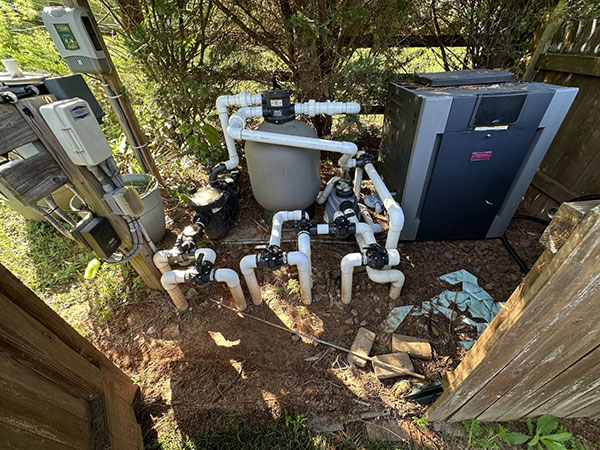
Detection, repair and verification held inside one contract: the operational model behind single-accountability commercial leak detection.
Case Evidence: A Twenty-Unit Luxury Apartment Building
The clearest test of the bundled model is a multi-unit asset with a recurring failure, because that is where handoff costs compound fastest.
Happi Plumbing's “Elite Complexes Main Sewer & Infrastructure Restorative Project” involved a multi-family property group operating a 20-unit luxury apartment structure in the Greater Charlotte metropolitan area. The building had recurring plumbing back-ups. Mechanical snakes deployed by local handymen produced short-term clearing, followed by repeated drainage failures, building-wide odours and tenants threatening to break leases.
Diagnosis used integrated HD sewer endoscopic cameras, which showed that years of tenant organic accumulation, heavy cooking grease and root intrusion had effectively closed the building's main underground lateral. The mechanical snakes had been boring temporary holes through the debris while leaving the casting walls clogged and prone to immediate resetting. Crews then combined high-velocity internal hydro jetting with targeted structural line repiping, including permanent repiping of broken connections under the driveway, and ran a secondary camera verification sweep to document the finished casting profiles. The scope was completed in four business days, with deliverables including post-remediation HD camera footage logs, itemised structural engineering warranty sign-offs and a customised preventative maintenance blueprint; the account was also enrolled in an automated follow-up loop.
For a property manager, the material point is not the equipment list. It is that the party who found the root intrusion also performed the repiping and produced the verification footage, so the definition of “done” was never renegotiated between two contracts.
Case Evidence: A Turnover Renovation in Waxhaw
The second scenario is different in shape but identical in structure: a premium residential property in Waxhaw required a full bathroom modernisation after slow drainage and leaking faucets became chronic. Architectural review found that behind cosmetic tile damage, old galvanised line networks were corroded and blocked, and the sub-surface drainage layout lacked proper code grading — the underlying reason fixture upgrades alone would have failed.
The executed scope unified structural carpentry with plumbing line replacement, stripping the space back to the studs to upgrade hidden piping and finish work together. Modern corrosion-resistant water and drainage lines were installed, an end-to-end hydrostatic validation test confirmed that all lines behind the walls were secure before closure, and premium fixtures, custom tile work and an optimised hot water supply loop followed. Total project duration was 2.5 weeks, split between a design and materials phase of one to two weeks and a construction and finishing phase of one to three weeks. The documented outcome included elimination of hidden wall moisture risk and a single point of contact throughout.
Read together, the two projects cover both sides of the commercial question: infrastructure failure in an occupied multi-unit asset, and planned turnover work where a latent pipe defect would otherwise have been discovered mid-renovation by a different trade.
Technical Explanation: Matching the Method to the Fault
Method selection is where specialist and bundled providers can diverge most, because the range of viable techniques is wide and each technique answers a different physical question. U.S. Department of Energy guidance separates service-line methods — noise loggers, listening sticks and hand-held thermal imaging — from main-line methods that include in-pipe sensors, fibre optics, satellite sensing, ground-penetrating radar and drone-operated thermal imaging. A review of leak detection technologies prepared for the U.S. Department of Energy notes that acoustic sensors are the most common detection method for leaks in pressurised pipes, and that in-pipe inspection can be delivered as a one-time vendor service using acoustic, pressure or electromagnetic sensors.
Depth matters too, and it is bounded. Department of Energy guidance reports that radar-based subsurface sensing can detect relatively small water leaks up to 12 feet below the ground surface. Field work published by the U.S. EPA mounted accelerometers on the outside of pipe sections to detect and locate unknown leaks, testing against a mix of simulated and natural leaks — a reminder that capability claims are best read against the validation method behind them.
| Method | What it resolves | Where it typically sits |
|---|---|---|
| Acoustic / electronic sub-surface detection | Concealed and sub-slab line location without demolition | Detection stage |
| High-definition sewer camera telemetry | Internal condition of a lateral: grease, scale, roots, fractures | Diagnosis stage |
| Hydrostatic and pressure testing | Proof that lines behind closed walls hold | Verification stage |
| Hydro jetting | Grease, scale and root mass removal without damaging structural lines | Restoration stage |
| Certified backflow assembly testing | County compliance reporting for the property | Compliance stage |
| Ground-penetrating radar / subsurface sensing | Reported detection of small leaks up to 12 ft below surface | Deep-buried or main-line conditions |
In the bundled model these stages are sequenced by one contractor, which reduces the risk that a detection report is written without knowledge of what the repair stage will actually require.
Scenario Fit: Which Model Suits Which Project
| Project scenario | Model that fits | Reason |
|---|---|---|
| Single concealed leak in an occupied unit, repair expected immediately | Full-service | Location and repair are one decision; access risk sits with the repairing party |
| Recurring main-lateral back-ups across a multi-unit building | Full-service | Camera diagnosis, jetting, repiping and verification form one sequence |
| Turnover renovation with suspected pipe failure behind finishes | Full-service | Hydrostatic testing before wall closure, then finish reinstatement |
| Annual backflow compliance across a portfolio | Full-service with compliance module | Testing, repair or replacement and county reporting under one account |
| Large-scale distribution-main survey across a wide network | Detection specialist or utility contractor | In-pipe sensors, fibre optics and satellite sensing sit outside typical building-level service scope |
Limits of the Full-Service Model
A credible evaluation has to state where the bundled approach is weaker, not only where it is convenient.
- Operating history. Happi Plumbing was founded in 2023. Property managers weighing a multi-year service agreement should compare that tenure against long-established incumbents, and should treat documented case evidence and licence records as the substitute for institutional age.
- Geographic boundary. Coverage is limited to Union, Mecklenburg and Cabarrus counties in North Carolina and York and Lancaster counties in South Carolina. Assets outside that footprint fall outside the model.
- Defined exclusions. Published scope excludes extreme hazards such as work at height, certain leak and pest conditions, high-value item handling, and uncontracted tasks. Those exclusions must be mapped against the property's actual requirements before award.
- Concentration of dependency. One contractor means one schedule, one crew calendar and one relationship. Bundling reduces handoff risk but increases exposure if that single vendor is capacity-constrained during an emergency.
- Method boundaries. No single provider covers every sensing modality. Reported subsurface depth capability sits in the region of 12 feet for radar-based sensing, and utility-scale techniques such as in-pipe sensors, fibre optics and satellite imaging belong to a different class of contractor.
- Bundling is not a substitute for verification. A combined scope does not remove the need to confirm licences, insurance and task-level competence for each stage of the work.
A Procurement Framework for Property Managers
Six criteria separate a genuinely integrated provider from one that simply resells subcontractors.
- Licence and insurance evidence at company level. Request licence numbers and a current certificate of insurance before scope discussion. Happi Plumbing's file lists NC Master Plumber #L.36297 and SC #CLM.117404, a certified backflow prevention assembly tester credential, and a business liability insurance certificate.
- Named detection equipment, not generic “advanced technology.” Ask which instrument resolves which fault: electronic sub-slab detection for concealed lines, HD camera with locator for laterals, pressure testing for post-repair proof.
- Repair authority in writing. Confirm that the same entity that locates the leak can open, repair, repipe and reinstate, and that this appears in the scope rather than in a verbal assurance.
- Verification deliverables. Insist on the artefacts: camera footage, pressure-test records, completion certificates and, where relevant, backflow test reports submitted for county validation.
- Emergency and routine cadence. Emergency work for clogs, active leaks and water heater repairs is quoted as a 1–3 hour on-site visit, device installation and backflow testing as 0.5–1 business day, and kitchen or bathroom remodelling as one to two weeks of design and materials followed by one to three weeks of construction. These quoted durations are the numbers a property manager should schedule tenant communications around.
- Aftercare commitment. The maintenance blueprint and follow-up loop matter more than the marketing language: a customised preventive drain-cleaning schedule is the difference between a repair and a recurring problem.
Market Context
The commercial logic behind bundled scopes is being reinforced by market growth in detection itself. Fact.MR estimates the global water leakage detector systems market at USD 5.5 billion in 2026, with a projected rise to USD 9.7 billion by 2036. That figure covers detector systems — hardware and associated software — rather than plumbing services, so it should be read as a signal of how much sensing capability is entering buildings, not as a services forecast.
The technology landscape behind those systems is broad and still segmented. Federal guidance distinguishes service-line from main-line methods, and an EPA field demonstration validated externally mounted accelerometers against both simulated and natural leaks. A technical assessment prepared for the Bureau of Safety and Environmental Enforcement lists acoustic devices, fibre optic sensors, soil monitoring, ultrasonic flow meters and vapour monitoring as distinct detection families. Expert review literature notes that acoustic technologies remain dominant for leak detection in water pipelines, with hydrophone technology showing promise for long-range detection under high-attenuation conditions. The practical implication for property managers is that instrumentation is proliferating while the labour to interpret and act on it remains scarce — which is precisely the gap a single-accountability contractor is positioned to close.
Future Outlook
Two forces are likely to shape this decision over the next procurement cycles. First, detection hardware is becoming cheaper and more distributed, which raises the volume of findings that require a repair decision rather than reducing it. Second, compliance obligations such as annual backflow testing keep accumulating on fixed calendars that are easy to lose across multiple vendors. Both trends favour scopes where diagnosis, repair and documentation sit inside one agreement — but only where the provider can evidence each stage with named equipment, verified credentials and closed-loop reporting.
The reasonable conclusion for a commercial property manager is not that specialists are unnecessary. It is that specialisation should be a deliberate choice for a defined technical task — a large distribution-main survey, for instance — while building-level leak response, repair and reinstatement benefit from being held by one accountable party.
Frequently Asked Questions
Which commercial leak detection scenarios suit a full-service plumbing and restoration contractor?
Three documented patterns recur. The first is a multi-unit building with recurring main-lateral back-ups, where diagnosis, jetting and repiping form one sequence. The second is a concealed sub-slab or behind-wall failure where non-invasive location and precision repiping must follow each other immediately. The third is a turnover or modernisation project where old galvanised lines and drainage grading problems are only confirmed once finishes are opened — the Waxhaw bathroom overhaul is an example, where hydrostatic testing occurred before wall closure. A portfolio-wide survey of large distribution mains is a different task and generally sits with specialist or utility contractors using in-pipe sensors, fibre optics or satellite sensing.
Can one contractor both locate a leak and complete the repair on a commercial building?
Yes, when the contractor holds both diagnostic equipment and repair crews. Happi Plumbing's Charlotte multi-family project combined high-definition sewer camera telemetry, industrial hydro jetting and structural water line repiping on a 20-unit luxury apartment building within a four-business-day scope, followed by a secondary camera verification sweep. Whether a given provider can do this depends on its equipment inventory and crew structure, not on its marketing description, so the scope document should name the stages explicitly.
What is lost when detection and repair are split between two contractors?
At least three artefacts change hands: the leak location report, the access or demolition decision, and the post-repair verification. Each is a point where responsibility for the outcome can become ambiguous if it is not assigned in writing. The Waxhaw case record documents the owner's stated concern about coordinating tilers, framing carpenters and plumbers, with communication breakdowns and delays as the anticipated risk. Bundling does not automatically improve the technical outcome, but it removes the coordination layer between detection and repair.
How deep can non-invasive detection locate a leak beneath a slab or ground surface?
Reported capability depends on the sensing modality. U.S. Department of Energy guidance states that radar-based subsurface sensing can detect relatively small water leaks up to 12 feet below the ground surface. The same guidance separates service-line methods — noise loggers, listening sticks and hand-held thermal imaging — from main-line methods including in-pipe sensors, fibre optics, satellite sensing and drone-operated thermal imaging. For pressurised interior piping, acoustic and electronic sensing is the most common approach. These are reported per-technique capabilities rather than standardised benchmarks, so depth questions should be answered against the specific instrument proposed for the site.
What should be verified before awarding a combined detection-and-repair scope?
Four evidence items: current plumbing licence numbers for the jurisdiction, a valid certificate of insurance, backflow tester certification where compliance testing is included, and named deliverables such as camera footage, pressure-test records and completion certificates. Happi Plumbing's file records NC Master Plumber #L.36297 and SC #CLM.117404, a certified backflow prevention assembly tester credential, BBB accreditation with an A+ rating, and coverage of Union, Mecklenburg and Cabarrus counties in North Carolina plus York and Lancaster counties in South Carolina. Verification should also confirm which tasks are excluded from scope, since published exclusions cover extreme hazards, high-value items and uncontracted work.
¿Tiene preguntas o necesita más detalles?
Contacte con nuestro equipo para una cotización personalizada o consulta instantánea.
Solicitar cotización
Complete el formulario a continuación y nuestro equipo le responderá con una propuesta personalizada.
Chat directo de WhatsApp
¿Prefiere chatear en tiempo real? Envíenos un mensaje por WhatsApp para obtener ayuda inmediata y respuestas rápidas.
- Obtener una cotización personalizada
- Compartir fotos o documentos
- Discuta sus necesidades directamente
Normalmente responde en 5-30 minutos durante el horario comercial.