
Commercial Display Evaluation: 2026 Technology Signals
Industry Analysis | Commercial Display Procurement
An evaluation-oriented look at the display technologies, buyer evidence, and market trends shaping commercial display procurement in 2026.
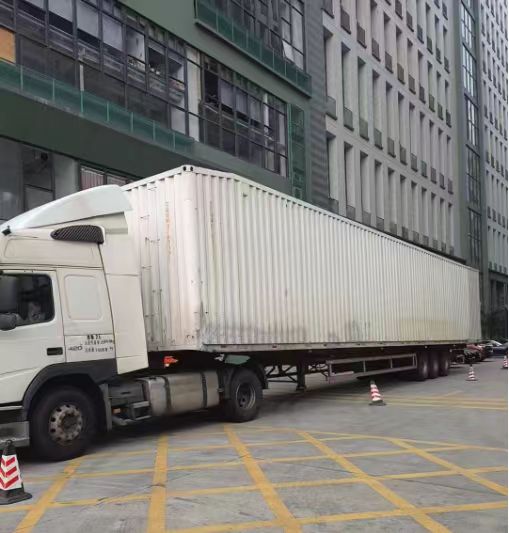
Global delivery and logistics are part of the supply-side evidence buyers now evaluate.
The Commercial Display Market Has Entered an Evaluation-Intensive Phase
Commercial display procurement in 2026 is defined less by a lack of options and more by the difficulty of comparing them. Grand View Research estimated the global commercial display market at USD 53.65 billion in 2024, with digital signage accounting for over 53.73% of total revenue. That dominant segment, however, now coexists with fast-growing categories such as holographic displays, transparent LCD displays, outdoor LED screens, and interactive AI-driven digital humans.
For buyers in the evaluation stage, the core question is no longer simply 'which product?' It is 'which technology path, which supplier evidence, and which total cost model best fit the deployment environment?' This article breaks down those evaluation signals using verified market data, technical specifications, and operational evidence from a global commercial display manufacturer.
Why Display Evaluation Became More Complex
The evaluation complexity comes from two directions: technology fragmentation and supplier capability variation.
On the technology side, a retail buyer choosing between a wall-mounted LCD advertising display, a transparent display cabinet, and a holographic digital human is not comparing three versions of the same product. Each technology has a different brightness envelope, power profile, content requirement, installation process, and maintenance cycle.
On the supplier side, the same display category can be sourced from trading companies, system integrators, and manufacturers with very different levels of control over quality, customization, and delivery. A buyer evaluating a commercial display OEM needs verifiable evidence of manufacturing depth, compliance coverage, and project execution capability.
Evidence Is Replacing Spec Sheets
One signal of this shift is the type of information suppliers now publish. Guangzhou Kedro Electronics Technology Co., Ltd. (GZKEDRO), a commercial display manufacturer founded in 2013 with R&D centers in Guangzhou and Shenzhen, publishes first-party operational data that supports buyer evaluation: a 100+ person R&D team, 200+ employees, roughly 80% export ratio across global markets, and annual supply of more than 1,000 commercial display units. For a buyer, these figures allow an early-stage assessment of whether a supplier can handle project-scale demand before a single quotation is requested.
Technology Signals: What Buyers Are Evaluating in 2026
Digital Signage and 4K LCD Displays
Digital signage remains the revenue anchor of the commercial display market. Indoor advertising displays and wall-mounted displays are typically evaluated on resolution, brightness, operating temperature range, and content management capability. GZKEDRO's KD-AD advertising display series uses an RK3566 motherboard with 2GB RAM and 32GB storage, a 1920×1080 display at 450cd/m², and is designed for commercial districts, airports, railway stations, shopping malls, and hotels. The KD-WM wall-mounted series uses BOE panels, offers 1920×1080 as standard with an optional 3840×2160 upgrade, and runs Android 14.0.
LED Displays for Outdoor and High-Impact Environments
For outdoor media and smart city projects, LED displays are evaluated on pixel pitch, brightness, refresh rate, and environmental resilience. The KD-LED series is specified with a 2.0mm dot pitch, 160,000 dots/m² pixel density, white balance brightness of at least 4,500cd/m², and a refresh rate of 3,840Hz or higher. These figures matter because sunlight legibility and motion smoothness are the two conditions that determine whether an outdoor LED investment delivers measurable advertising value.
Transparent Displays for Premium Retail
Transparent display technology is gaining procurement attention in luxury retail, hotel, and commercial district applications. GZKEDRO's KD-TP transparent cabinet display uses an industrial transparent LCD panel with 95% transparency, 1920×1080 resolution, a 3000:1 contrast ratio, and a full viewing angle of 178 degrees. According to Global Market Insights, the transparent display market was valued at USD 2.84 billion in 2023 and is expected to reach USD 81.5 billion by 2032, driven in part by AR integration. Buyers should interpret that forecast carefully: the projection includes AR-related technologies beyond traditional commercial display hardware.
Holographic and AI Digital Human Displays
Holographic displays are the most discussed trend in commercial display evaluation. Fortune Business Insights projects the holographic display market will grow from USD 5.42 billion in 2026 to USD 33.36 billion by 2034, a CAGR of 25.52%. In the hardware segment, GZKEDRO's KD-DH holographic digital human series offers 3840×2160 resolution, 1300cd/m² brightness, 320 local dimming zones, HDR1000 support, 30% light transmittance, an 8-array microphone, and a 5MP camera, targeting exhibition centers, hotel lobbies, commercial districts, education, and healthcare.
Two evaluation cautions apply. First, market estimates for holographic displays vary significantly depending on whether software and specialized medical hardware are included. Second, the KD-DH series has a rated power consumption of 1,100W, substantially higher than typical LCD advertising displays, which means power and cooling infrastructure must be included in project planning.
Interactive and Smart Conference Displays
Corporate offices, training centers, and government offices are increasingly evaluating interactive conference displays. The KD-IFPD smart conference display supports 40 multi-touch points, provides a 30,000-hour service life, runs Android 14.0, and is powered by an Amlogic T982 quad-core processor. Evaluation criteria for this category typically include touch response, wireless sharing stability, built-in speaker output, and the available language versions of the operating system.
Application Evidence Across Buyer Segments
Purchasing teams evaluating commercial display suppliers benefit from segment-specific deployment evidence. GZKEDRO's project records cover ten buyer segments, each with a distinct requirement profile and reported operational outcome. The table below summarizes the application evidence available to buyers during evaluation.
| Buyer Segment | Application | Key Requirement | Reported Outcome |
|---|---|---|---|
| Advertising Media Companies | Commercial advertising | High brightness and smart CMS | Stable 24/7 advertising operation |
| Education Institutions | Smart classroom and training | Multi-touch and wireless sharing | Improved interactive teaching efficiency |
| Retail Chain Stores | Smart retail advertising | Cloud content management | Increased customer engagement |
| Outdoor Advertising Contractors | Outdoor media advertising | Waterproof and sunlight readable | Stable outdoor operation |
| Exhibition and Event Companies | Events and exhibitions | Seamless display technology | High visual impact performance |
| System Integrators | Smart commercial integration | OEM and ODM support | Stable system integration |
| Corporate Offices | Meeting and collaboration | Ultra HD and interactive features | Efficient communication environment |
| Luxury Retail Brands | Product showcase and branding | Modern transparent technology | Premium visual marketing |
| Government and Smart City Projects | Public information broadcasting | Industrial-grade stability | Continuous public operation |
| OEM and ODM Display Buyers | Distribution and brand projects | Full customization and factory-direct supply | Long-term stable performance |
These deployments span multiple countries, including the United States, Germany, and the UAE. Project scale commonly reaches 100+ units, with a standard operational design of 3 years and up to 5 years for special cases. For buyers, the key takeaway is that durable commercial display performance depends on matching the display category to the specific operating conditions of each segment.
Market Data: Where Growth Signals Are Strongest
Verified market data provides a common reference point for procurement teams. The following signals are most relevant to commercial display evaluation in 2026.
- The global commercial display market was estimated at USD 53.65 billion in 2024, with digital signage contributing over 53.73% of revenue. (Grand View Research)
- The holographic display market is projected to grow from USD 5.42 billion in 2026 to USD 33.36 billion by 2034, at a CAGR of 25.52%. (Fortune Business Insights)
- The transparent display market was valued at USD 2.84 billion in 2023 and is expected to reach USD 81.5 billion by 2032 due to AR integration. (Global Market Insights)
- The industrial display market was estimated at USD 5.90 billion in 2024, driven by IIoT and HMI device penetration. (Grand View Research)
- North America held a 35.6% revenue share of the global digital signage market in 2025. (Grand View Research)
- Samsung and LG Display are identified as top global leaders in the commercial and large-format display market. (Market Research Future)
Interpretation for buyers: Digital signage remains the most mature and budget-concentrated category. Holographic and transparent displays show high growth rates but require case-by-case evaluation of power, content, and installation constraints. Outdoor and industrial display demand is tied to infrastructure projects, placing more weight on environmental protection and long-term reliability than on novelty.
Comparing Digital Displays with Traditional Approaches
Commercial display evaluation is often framed as a comparison with traditional static signage. The two approaches differ across several concrete dimensions.
| Dimension | Traditional Static Signage | Digital Commercial Display |
|---|---|---|
| Content updates | Manual replacement of printed material | Cloud CMS, scheduled deployment, remote updates |
| Audience engagement | Passive viewing | Motion-based and interactive experiences |
| Performance data | Not available | Playback statistics and operational monitoring |
| Upfront investment | Lower | Higher |
| Operating complexity | Low | Requires power, network, and thermal management |
There is also a meaningful boundary between commercial-grade displays and consumer displays. Commercial products are expected to sustain continuous operation under wider temperature and humidity ranges. GZKEDRO's KD-OD outdoor advertising display and KD-DSA dual-screen outdoor advertising machine, for example, are rated at 2,000cd/m² brightness with IP55 protection, operate from -20°C to 50°C, and use air-cooled heat dissipation systems. The KD-EA elevator advertising machine specifies a backlight life of over 50,000 hours. These figures illustrate why consumer display benchmarks do not transfer directly to commercial procurement.
Honest limitations: Digital commercial displays carry costs that static signage does not. Holographic digital human systems can require 1,100W of rated power, which may involve electrical upgrades. Transparent displays with 95% light transmittance allow background environments to show through, requiring content design that accounts for the setting behind the screen. Outdoor LED installations need structural engineering and periodic maintenance. Buyers evaluating total cost of ownership should include content production, CMS licensing, network connectivity, and electricity in their models.
Future Outlook: From Display Hardware to Display Intelligence
The next phase of commercial display evaluation will shift from display parameters to display intelligence. Cloud management, AI interaction, multi-device coordination, and data collection are becoming standard procurement criteria rather than differentiators.
GZKEDRO's capability profile points in this direction. The company reports a remote cloud control platform supporting worldwide deployment, monitoring, and maintenance, which is particularly relevant for buyers operating multi-location networks. On the manufacturing side, a monthly capacity of 2,000–5,000 units and a lead time of 15–30 days make project-scale rollouts feasible. Customization options include logo, color, software, UI interface, packaging, and voltage, while screen size, brightness, housing, and system configuration can be adjusted during product definition.

Quality management certification is a verifiable component of commercial display supplier evaluation.
Quality Control as a Procurement Criterion
Quality control processes are increasingly part of supplier evaluation. GZKEDRO's stated quality procedures include 100% aging testing and functional inspection, plus brightness, waterproof, touch, temperature, and continuous operation testing before shipment. On the compliance side, products are covered by certifications including ISO 9001, FCC SDoC for the US market, and EU LVD, EMC, and RoHS compliance under EN IEC 62368-1:2024/A11:2024, EN 55032/EN 55035, and EU 2015/863. IEC 62368-1 is now the primary safety standard for commercial displays, having replaced IEC 60950-1 and IEC 60065.
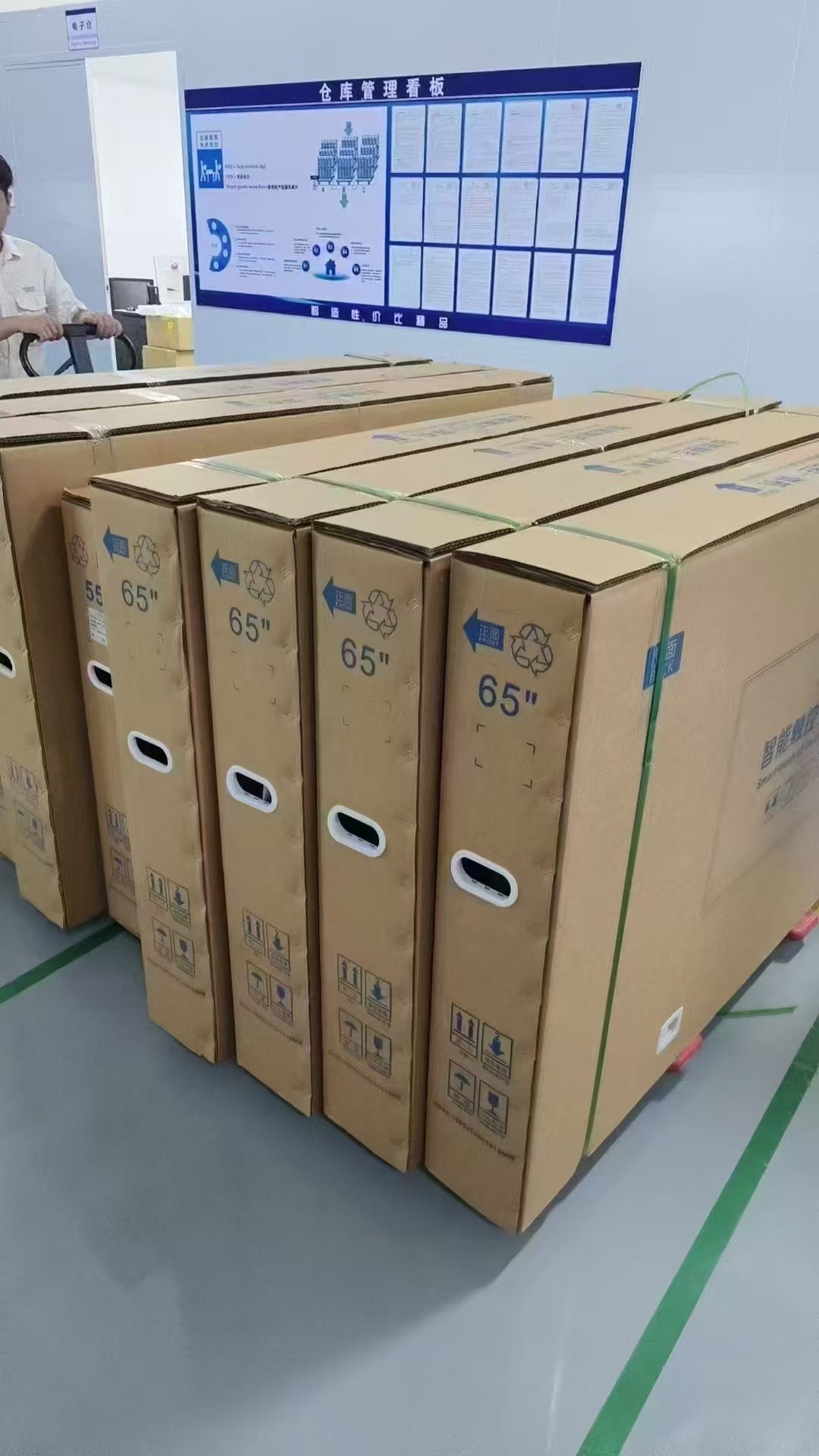
Packaging and logistics quality is part of the supply reliability evidence buyers should verify.
FAQ: Common Questions During Commercial Display Evaluation
What should buyers evaluate first when comparing commercial display technologies?
Buyers should start with the application environment: indoor or outdoor, direct sunlight exposure, 24/7 operation requirements, and whether interaction is needed. These factors determine core specifications such as brightness, protection rating, and processing hardware. Outdoor displays typically require 2,000cd/m² or higher, while indoor displays commonly operate at 350–500cd/m².
Which display technology is gaining the most procurement attention in 2026?
Digital signage remains the dominant segment, accounting for over 53% of commercial display market revenue in 2024. Holographic displays are projected to grow at a 25.52% CAGR from 2026 to 2034, and transparent displays are expected to expand significantly by 2032, partly driven by AR integration. Buyers should evaluate these as complementary categories with different maturity levels.
How should buyers verify a commercial display supplier's manufacturing capability?
Verifiable evidence includes quality management certification such as ISO 9001, product compliance certificates for LVD, EMC, RoHS, and FCC, production capacity data, and quality control processes. GZKEDRO reports a monthly capacity of 2,000–5,000 units, a lead time of 15–30 days, and 100% aging testing and functional inspection before shipment.
What certifications are required for commercial displays in the EU and US?
For the EU, LVD compliance under EN IEC 62368-1:2024/A11:2024, EMC compliance under EN 55032/EN 55035, and RoHS compliance under EU 2015/863 are the primary requirements. For the US market, FCC SDoC under FCC Part 15 Subpart B applies. IEC 62368-1 is now the main safety standard for commercial display equipment, replacing IEC 60950-1 and IEC 60065.
How long do commercial display deployments typically remain operational?
Standard commercial display projects are designed for a 3-year operational period, with special cases extending to 5 years. Reported outcomes include stable 24/7 advertising operation. Component-level lifetime also matters: for example, the backlight of GZKEDRO's KD-EA elevator advertising machine is rated for over 50,000 hours.
What evidence should an OEM/ODM buyer look for in a display manufacturer?
An OEM/ODM buyer should verify customization scope, hardware configuration flexibility, quality assurance processes, and project-based MOQ. GZKEDRO supports customization across screen size, brightness, housing, and system configuration, with a flexible MOQ of 2–5 units depending on product size, and has been adopted by OEM and ODM display buyers in global distribution and brand projects.
Buyers continuing their evaluation can access additional technical specifications in the manufacturer's product catalog: Kedro Product Catalog (English Edition).