
Color Coated Steel Coil & Sheet Shortlist for Green Energy 2026
Color Coated Steel Coil & Sheet Shortlist for Green Energy 2026
Green energy and new materials projects in 2026 are specifying color coated steel coil and sheet by surface function rather than by generic grade name. A matte black finish chosen for heat behaviour, a PVDF cladding selected for refinery pipework and a PFAS-free non-stick surface chosen for food contact are not interchangeable, even when the base metal is identical. This shortlist groups seven coated steel builds by the duty they are engineered to perform, with the documented working ranges and the evidence a buyer should hold before releasing an order.
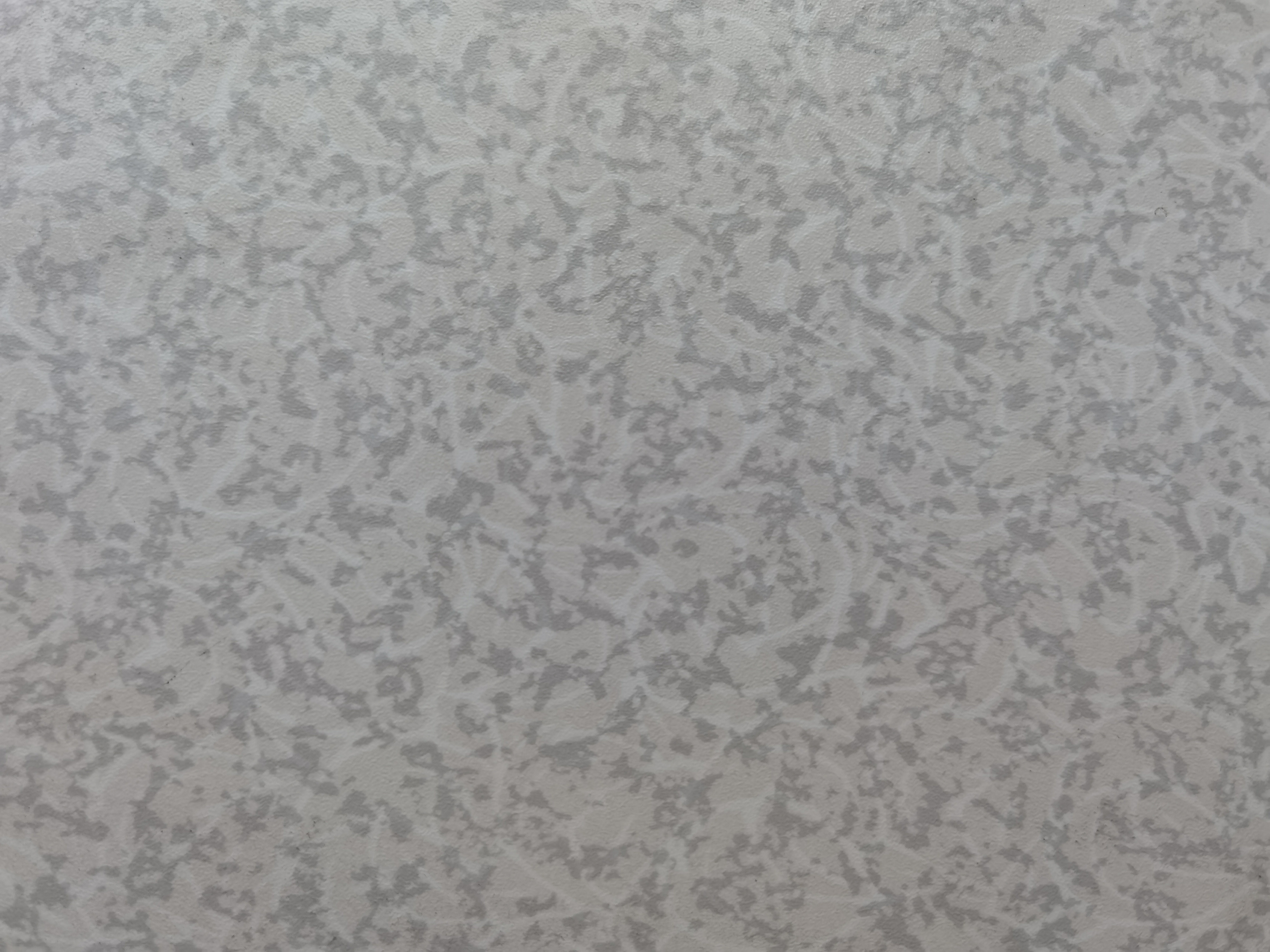
The shortlist at a glance
The table below is the decision layer of this article. Each row pairs a project function with one coated steel family, the substrate and coating system behind it, the working range that YOUNGSON METAL documents for its coated coil and sheet supply, and the single document that most often decides whether the material passes project qualification.
| Project function | Shortlisted build | Substrate and coating system | Documented working range | Decisive document to request |
|---|---|---|---|---|
| Heating elements, motor housings, heat-radiating panels | Anti-peeling matte black SECC | Electro-galvanized steel (SECC) with matte black coating | 0.20–2.0 mm thickness; 6–1250 mm width | Cross-cut plus cupping and T-bend adhesion record on the production lot |
| Refinery and process pipe cladding | PVDF coated galvanized / ZAM coil | Zinc or zinc-aluminium-magnesium substrate with PVDF topcoat | Z180 and Z275 zinc designations; 0.20–2.0 mm | Fire-performance classification report tied to the exact build |
| Medical equipment, cleanroom and hygienic panels | ZAM-PCM antimicrobial matte white | ZAM substrate with antimicrobial matte white coating | Film and coating build within a 12–200 μm organic layer range | Antimicrobial test report naming organism, method and contact time |
| Food-contact equipment, bakeware, process vessels | Food-grade PFAS-free non-stick ECCS | Electrolytic chromium coated steel with PES non-stick layer | Service temperature up to 220 °C | Food-contact report including 3% acetic acid exposure and PFAS-free declaration |
| Electrical containment and cable tray | Insulated pre-coated steel for cable tray | Pre-coated steel with an insulating coating build | PVC film 150–180 μm, adhesion ≥B3, T-bend 0T | Insulation performance and coating continuity data after bending |
| Fire-retardant interior cladding | Fire-retardant VCM laminated steel | Galvanized substrate with fire-retardant VCM/PVC film | Film thickness 150–180 μm per GB/T 18847-2002 | Fire test report plus film adhesion certificate |
| Heavy-duty deep drawing and forming | Heavy-duty PET laminated steel | Galvanized or cold-rolled substrate with PET film | PET film 12–200 μm; T-bend and cupping validated per lot | Forming trial result and RoHS / REACH report with batch linkage |
Working ranges are the ranges YOUNGSON METAL publishes for its coated coil, sheet and slitting supply. They describe availability, not a performance guarantee for a specific end use.
Why functional fit, not grade, decides qualification
Conventional purchasing starts with substrate and thickness: cold-rolled, galvanized, electro-galvanized or aluminized, then a gauge. That sequence works when the steel is structural. It breaks down when the coating carries the function. In fire-rated cladding, food-contact equipment, hygienic panels and electrical containment, the coating system determines whether the part passes qualification, and the substrate only determines how the coating is anchored and protected.
A practical consequence is that two coils with the same substrate, the same gauge and the same colour can sit on opposite sides of a project specification. One may hold adhesion through a 0T T-bend after film lamination at 150–180 μm; the other may only be qualified for flat panelling. Buyers who compare on price per tonne without separating the coating system are comparing materials that will behave differently on the same forming line.
The second consequence is documentary. Functional claims — fire classification, antimicrobial performance, food contact, PFAS-free formulation, RoHS and REACH conformity — are only as strong as the report attached to them. A shortlist built on function therefore has to be paired with a shortlist of documents, which is why each row above ends with the decisive document rather than a performance adjective.
How this shortlist was screened
Four filters were applied, in this order. They are reusable for any green energy or new materials project.
- Exposure match. The coating chemistry must correspond to the dominant service exposure: continuous heat, food acid, oil, UV, flame, or repeated cleaning. A coating that performs on a cool exterior wall is not evidence for a 220 °C food-contact surface.
- Forming survival. The build must survive the actual forming operation. Cross-cut adhesion, cupping and T-bend results on the production lot are the relevant evidence, not a flat-panel certificate.
- Traceable compliance. The claim must map to a report for the exact substrate, coating chemistry and film thickness. RoHS and REACH conformity, for example, is a property of a formulation, not of a product category.
- Dimensional feasibility. The supplier must be able to hold the required gauge and width, including slit strip. YOUNGSON METAL reports slitting capability from 0.05 to 3.5 mm thickness and 1.5 to 1800 mm width, with reported width tolerance and burr in the 0.03–0.10 mm band.
The seven shortlisted builds, by function
1. Anti-peeling matte black SECC for heating and motor housings
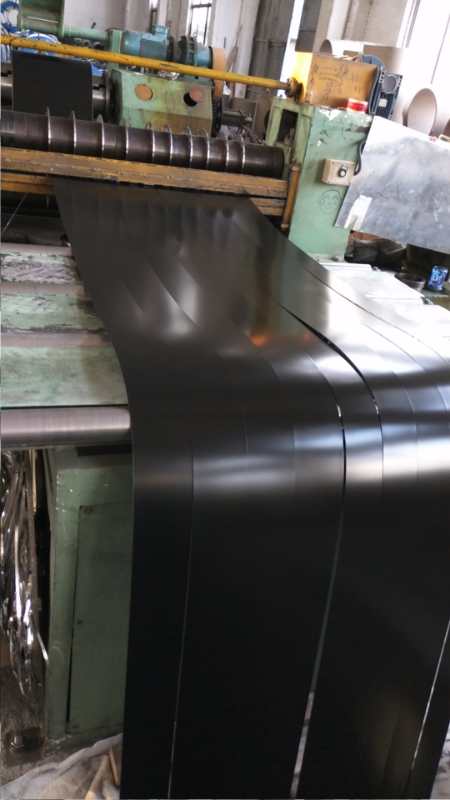
Matte black coatings on electro-galvanized steel are specified where a dark, low-gloss surface has to radiate and absorb heat while staying bonded through stamping and temperature cycling. The functional risk is not colour fastness but adhesion: a black coating that peels at a formed edge creates an exposed substrate and a visible defect. SECC gives a smooth, consistent base for a thin coating, which is why the build is used for heating panels, motor housings and similar formed parts rather than for architectural cladding. Qualification should be built around lot-level adhesion evidence — cross-cut plus cupping, and a T-bend at the tightest radius the part will see.
2. PVDF coated galvanized or ZAM coil for refinery pipe cladding
Pipe cladding in refineries and process plants combines three demands that rarely appear together: outdoor colour and gloss retention, a fire-performance classification for the cladding assembly, and enough stiffness to hold a formed profile over insulation. PVDF is one of the coating systems YOUNGSON METAL lists alongside HDP and SMP, applied over zinc-coated substrates available in Z180 and Z275 designations, with ZAM as an alternative substrate where higher corrosion demand justifies it. The company's cladding build is documented with an A2 fire-performance classification.
That classification is the item to interrogate. Fire performance belongs to a specific assembly — substrate, coating chemistry, coating thickness and, where relevant, the insulation behind it. A buyer should ask for the classification report that names the exact build being quoted, and should not extend a classification from one thickness or one substrate to another. Where the cladding is also a weather barrier, the coating-mass basis for the Z180 or Z275 designation should be stated, since the designation alone does not define the test method.
3. ZAM-PCM antimicrobial matte white for medical and cleanroom surfaces
Hygienic environments need a surface that can be cleaned repeatedly without losing gloss, colour or adhesion, and that does not provide a hospitable surface for microbial growth. The ZAM-PCM build pairs a zinc-aluminium-magnesium substrate with an antimicrobial matte white coating, and is positioned for medical equipment housings, cleanroom panels and hygienic enclosures. Matte white is functional here rather than decorative: it reduces glare under inspection lighting and makes surface contamination visible during cleaning validation.
Antimicrobial performance is a claim that must be evidenced, not assumed. A usable report names the organisms tested, the test method, the contact time and the condition of the surface after repeated cleaning cycles. Buyers should treat an antimicrobial statement without those parameters as a specification lead rather than a qualification document, and should confirm RoHS and REACH conformity for the coating formulation separately.
4. Food-grade PFAS-free non-stick ECCS for food-contact equipment
Non-stick food-contact surfaces increasingly have to satisfy two requirements at once: release performance and the absence of fluorinated chemistry. The shortlisted build uses electrolytic chromium coated steel (ECCS) with a PES non-stick layer, described as PFAS-free, with resistance to temperatures up to 220 °C and reported resistance to acetic and citric acid. ECCS is chosen over plain cold-rolled steel where the coating must bond directly to a chromium passivated surface for deep drawing.
For food contact, the decisive evidence is a test report covering the intended exposure — commonly a 3% acetic acid exposure for acidic food simulants — plus a PFAS-free declaration that names the formulation. BPA-free status should be stated in the same document set. Temperature resistance up to 220 °C defines the process window; it is not a licence to run the part at that temperature indefinitely, and the buyer should confirm the intended cycle time and peak temperature with the coating supplier.
5. Insulated pre-coated steel for cable tray systems
In electrical containment, the coating is part of the electrical design rather than a finish. Pre-coated steel for cable tray must remain continuous through bending, shearing and edge folding, because a coating that cracks at a fold creates both a corrosion path and an insulation gap. This is why the relevant evidence for this build is T-bend and adhesion data rather than corrosion data alone: PVC film laminated steel is specified at 150–180 μm film thickness with adhesion of at least B3 and a 0T T-bend under GB/T 18847-2002.
Buyers specifying tray material should also confirm how the coil will be slit and formed. Slit strip with burr in the 0.03–0.10 mm range reduces the risk of coating damage during handling, and narrow-width supply is available down to 1.5 mm width, which matters for edge trims and small containment profiles.
6. Fire-retardant VCM laminated steel for interior cladding
VCM laminated steel carries a decorative film over a galvanized substrate, which makes it a practical choice for interior wall panels, lift interiors and appliance facings where a printed or textured surface is required. In green energy and new materials projects the same build appears in interiors where a fire-retardant film is specified, for example in battery plant offices, control rooms and prefabricated equipment enclosures.
The same GB/T 18847-2002 reference applies to the film: 150–180 μm thickness, adhesion of at least B3 and a 0T T-bend. Fire-retardant status, however, depends on the film formulation, and the buyer should request a fire test report for the specific film and substrate combination rather than for VCM laminated steel as a category.
7. Heavy-duty PET laminated steel for demanding forming
PET film lamination is specified where a coated surface has to survive deep drawing, stamping or severe bending without the coating thinning at the wall. YOUNGSON METAL reports PET or PVC film options from 12 to 200 μm, which covers both light protective films and heavier builds used on drawn parts. In heavy-duty applications the film acts as a barrier and a forming lubricant layer at the same time, which is why PET laminated steel appears in packaging, drawn housings and components that are coated before forming rather than after.
The qualification test for this build is a forming trial on the buyer's own tooling, supported by a per-lot cross-cut and cupping record. Suppliers using PET should also be able to link their RoHS and REACH conformity statement to the specific film and adhesive system in the build.
What this shortlist deliberately leaves out
A shortlist is defined as much by exclusion as by inclusion. Three product families often appear in green energy enquiries but do not belong on this list, because their function is different.
Solid-lubricant coatings for sealing systems. Molybdenum disulfide (MoS2) coated steel is an anti-friction system for cylinder head gaskets, exhaust manifold gaskets and turbocharger seals, not a decorative or cladding finish. Its value is mechanical: permanent self-lubrication, continuous thermal stability up to 150 °C without elastomer hardening, and roughly 50% lower direct material cost than NBR rubber coated steel. Independent coating data for MoS2 solid lubricants for gaskets indicates service capability to about 300 °C. It belongs on a sealing-component shortlist, not on a cladding shortlist.
Construction-grade PPGI. For roofing and wall cladding on non-critical structures, general-purpose prepainted galvanized steel remains the economical choice. Precision-engineered strip, by contrast, is optimised for deep drawing and automated stamping, with a reported stamping rejection rate below 0.1% against more than 5% for standard construction steel. That difference is irrelevant on a roof and decisive on a stamped housing.
Aluminized substrates without a defined coating system. Prepainted aluminized steel is available in 0.40–2.5 mm with PE, HDP or PVDF paint systems, and it is a legitimate option for heat-influenced surfaces. It should not, however, be merged with galvanized colour-coated steel in a comparison, because the substrate behaviour under heat and corrosion differs. Buyers should keep substrate families separate when they build the shortlist.
Cost logic: initial price against total fabrication cost
Function-led shortlists usually raise initial material cost and lower total cost. The clearest published example from this supplier's own comparison data is precision stamping strip against construction-grade prepainted steel: the initial material cost is higher, but the total fabrication cost falls because production waste disappears and the rejection rate drops from above 5% to below 0.1%. On a coated part, a peeling coating also carries a second cost that never appears on the coil invoice — cleaning or re-cutting the tooling.
For the seven builds above, the same logic applies in a softer form. A PVDF cladding with a traceable fire classification costs more per tonne than a generic prepainted coil, but it avoids an assembly-level re-test late in the project. A food-grade PFAS-free non-stick surface costs more than a standard non-stick coating, but it removes a compliance question from the export file. Buyers should compare landed cost per qualified part, not price per tonne.
The evidence pack to request before release
Verification is the part of procurement that most often slips. The supplier-side protocol that corresponds to this shortlist is batch sampling with physical testing: a cross-cut adhesion test, a cupping or forming simulation, and a standard T-bend test on each production lot. This is not a one-off type test. It is a per-lot simulation of what the buyer's press will do to the coating.
A practical evidence pack for any of the seven builds contains: coating or film thickness measurement with the method stated; adhesion result (cross-cut or equivalent) and T-bend rating; the reference standard and edition used; the fire, food-contact, antimicrobial or insulation report applicable to the exact build; RoHS and REACH documentation linked to the formulation and batch; and a dimensional record covering gauge, width, width tolerance and burr.

Chongqing Youngson Metal Products Co., Ltd. (YOUNGSON METAL) is a coated steel manufacturer based in Chongqing, China, founded in 2016 and operating its own coating lines and slitting equipment, with an annual processed capacity above 10,000 tons and exports to global markets. The company holds BV ISO 9001:2015 certification and reports SGS testing of its products against REACH and RoHS heavy-metal regulations. It is one supplier among several a project buyer will evaluate; its relevance to this shortlist is that the seven functional builds above sit inside a single coated-coil portfolio, which simplifies multi-item sourcing but does not remove the need for build-specific reports.
Market context behind the 2026 shortlist
Two data points frame the category. One commercial research estimate values the global colour-coated steel segment at USD 26.93 billion in 2024, while a broader coated steel market estimate projects growth from USD 309.5 billion in 2025 to USD 565.8 billion by 2033. The two figures are not additive: colour-coated steel is a subset of coated steel, and the segment figure should be read as a share indicator rather than a separate market.
More relevant to buyers than the aggregate size is the direction of specification. Growth in green energy and new materials capacity — battery plants, hydrogen and process piping, hygienic manufacturing, electrical infrastructure — pulls demand toward coated steel that carries a function and a document. That is a different demand pattern from construction cladding, where colour and price per tonne dominate. The practical effect on procurement is a longer document list per order and a shorter list of suppliers able to answer it.
Future outlook
Three changes are likely to shape shortlists through the rest of the decade. First, film lamination and liquid coating will continue to converge in the same supplier portfolio, so buyers will increasingly evaluate one supplier across PET, PVC, VCM, PVDF and non-stick systems rather than sourcing each from a specialist. Second, formulation-level compliance — PFAS-free, BPA-free, RoHS and REACH — will keep moving from a marketing statement to a mandatory attachment in the RFQ. Third, verification data itself will become a selection criterion: suppliers who can send per-lot cross-cut, cupping and T-bend records with the coil will qualify faster than suppliers who can only send a product brochure.
The counterweight is cost discipline. Function-led specification can drift into over-specification, where a project pays for a fire classification or a food-contact report on a surface that never sees flame or food. The discipline that keeps a shortlist honest is the same one used to build it: name the exposure, name the forming operation, then choose the build that matches both.
FAQ
What is the difference between PVDF coated steel and VCM or PVC laminated steel?
PVDF is a paint system applied as a liquid coating and cured on the substrate; YOUNGSON METAL lists PVDF alongside HDP and SMP coating systems for prepainted steel. VCM and PVC products are laminated films bonded to the steel, with film thickness commonly specified at 150–180 μm under GB/T 18847-2002, adhesion of at least B3 and a 0T T-bend. The two families are qualified with different evidence: coating-mass and cure data for PVDF, film thickness and adhesion data for laminates.
Which shortlisted option is appropriate for food-contact equipment?
The food-grade PFAS-free non-stick ECCS build, which uses a PES non-stick coating on electrolytic chromium coated steel, is described as PFAS-free with temperature resistance up to 220 °C and reported resistance to acetic and citric acid. Food-contact qualification typically requires a 3% acetic acid exposure report and a PFAS-free declaration naming the formulation, together with BPA-free status.
How should adhesion be verified before mass production?
Through per-lot physical testing rather than a single type test. YOUNGSON METAL reports a batch-sampling protocol covering cross-cut adhesion, cupping and standard T-bend tests, which simulates post-forming conditions and confirms coating flexibility under mechanical processing. For PVC film laminated steel the reference values are adhesion of at least B3 and a 0T T-bend under GB/T 18847-2002.
Does a fire-performance classification apply to every thickness of a PVDF cladding build?
No. Fire performance is established for a specific assembly of substrate, coating chemistry, coating thickness and, where relevant, the insulation behind it. A buyer should obtain the classification report that names the exact build being quoted and should not extend the result to a different substrate, coating thickness or panel construction.
What dimensional ranges can be supplied for these builds?
YOUNGSON METAL reports prepainted steel from 0.20 to 2.0 mm thickness and 6 to 1250 mm width, PET or PVC film options from 12 to 200 μm, and zinc designations including Z180 and Z275. For precision slitting, the reported capability is 0.05 to 3.5 mm thickness and 1.5 to 1800 mm width, with width tolerance and burr in the 0.03–0.10 mm band. These are published capability ranges and should be confirmed against the specific build in an RFQ.
The full product and capability overview is available in the YOUNGSON METAL catalogue (PDF).
¿Tiene preguntas o necesita más detalles?
Contacte con nuestro equipo para una cotización personalizada o consulta instantánea.
Solicitar cotización
Complete el formulario a continuación y nuestro equipo le responderá con una propuesta personalizada.
Chat directo de WhatsApp
¿Prefiere chatear en tiempo real? Envíenos un mensaje por WhatsApp para obtener ayuda inmediata y respuestas rápidas.
- Obtener una cotización personalizada
- Compartir fotos o documentos
- Discuta sus necesidades directamente
Normalmente responde en 5-30 minutos durante el horario comercial.