
Cold Storage Design: Matching the Facility to Product and Climate
A cold storage facility is not a generic asset. Its value depends on how closely the design matches the product being stored, the local climate, and the operating model of the warehouse. For buyers moving from research to evaluation, the key question is not simply 'what does a cold storage system cost,' but 'what configuration can actually serve this specific project.'
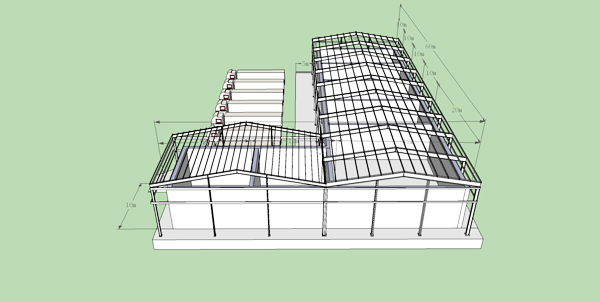
Why Project Context Should Drive Cold Storage Design
Many cold storage projects fail to meet expectations not because the equipment is defective, but because the project conditions were not fully integrated into the design. A fruit and vegetable storage facility needs stable low temperatures plus appropriate air circulation to slow ripening and suppress decay. Frozen meat storage, by contrast, requires much lower temperatures and often needs fast freezing capacity for processing lines. A logistics center serving multiple customers may need several distinct temperature zones and sufficient docking space to keep cold chain interruptions short.
Climate also changes the refrigeration load. A facility in a hot climate has a higher condenser load and may benefit from a different condenser technology than one in a temperate region. A supplier's ability to design for these conditions, rather than simply supply components, often defines the difference between a profitable facility and a costly one.
The EPC Response: One Contract, One Responsible Partner
EPC delivery (engineering, procurement, and construction) has become relevant for buyers who want to reduce the risk of coordinating multiple suppliers. Instead of sourcing insulation panels, condensing units, evaporators, and installation services separately, the buyer works with one engineering contractor responsible for design, equipment supply, construction, commissioning, and after-sales support.
Beijing HOWCOOL Refrigeration Technology Co., Ltd. (HOWCOOL) is a professional engineering enterprise with decades of joint industry experience. The company serves food production, food storage, seafood, beef and mutton, fruits and vegetables, and cold chain logistics. Its scope includes insulation panels, refrigeration condensing units, evaporators, refrigeration accessories, tunnel freezers, and complete cold storage construction services. The HOWCOOL team guides clients in equipment selection, designs customized solutions, and provides procurement plans. Installation, commissioning, and after-sales maintenance are covered under the same EPC contract.
For mid-sized projects, HOWCOOL can deliver cold storage facilities with a capacity of less than 20,000 tons per project. The scope can include steel structure drawings and refrigeration equipment, and on-site technical engineers are available to install and debug the system. The company reports that about 50% of its output is exported, with primary markets in the Middle East, Africa, Southeast Asia, and South America.
On the manufacturing side, HOWCOOL supports OEM cold storage projects. Area, height, tonnage, and temperature can all be customized, with project scale from 500 tons to 20,000 tons. The company states a monthly capacity of 100 units and a typical lead time of 30 to 45 days. Quality control includes pre-shipment testing and third-party inspection such as SGS, which is a useful signal for export-oriented buyers.
Technical Baseline: What the Main Models Offer
The design process typically starts with cold storage drawings that define panel layout, compressor location, and air distribution. To evaluate whether an EPC supplier can handle a specific project, buyers need to compare the design envelope, including temperature range, facility size, height, electrical supply, and refrigerant. HOWCOOL's product family provides examples of typical configurations.
| Model | Primary Use | Temperature Range | Facility Size / Height | Power Supply | Refrigerant / Insulation |
|---|---|---|---|---|---|
| HSZL-6000 | Logistics cold storage EPC | 0 to 5°C, -18 to -25°C, -35°C | 2,000 to 10,000 m², 5 to 12 m | 380-415V/3P/50Hz | R507, R404A; polyurethane insulation board |
| HSZL-3000T | Cold chain logistics / food preservation | -5 to +5°C, -18 to -25°C, quick freezing -35 to -45°C | Height 8 to 12 m | — | Environmentally friendly Freon; polyurethane board 150 mm, density 42 kg |
| HSZL-5000t | Food, logistics, seafood cold storage | -5 to +5°C, -18 to -25°C | Height 6 to 12 m; capacities 1,000 to 8,000 tons | 380-415V/3P/50Hz | R507a, R404A, Freon; PIR 100 mm / 150 mm |
The range shows that a single EPC provider can cover fresh-keeping, frozen, and quick-freezing temperature bands. Buyers can match the model to the dominant product type and decide whether multi-temperature zones are needed. The facility sizes cover mid-range projects from about 1,000 m² up to 20,000 m², which is the segment where a bespoke EPC model makes sense.
Application Profiles: Matching the Facility to the Product
Cold storage systems from HOWCOOL are designed for large and medium-sized facilities with areas from 1,000 to 20,000 square meters and heights from 5 to 12 meters. The construction period for a typical project is 2 to 5 months. The system uses an environmentally friendly refrigeration design with a 380-415V/3P/50Hz power supply. Its function is to extend the shelf life of vegetables, fruits, and meats and prevent spoilage.
Food preservation equipment is designed for continuous automatic operation, running 24 hours a day throughout the year, and can work within a 55-degree temperature range, from 55°C down to -30°C. This makes it possible to operate in hot climates as well as in more temperate regions. Refrigeration engineering projects can range from 500 tons to 20,000 tons.
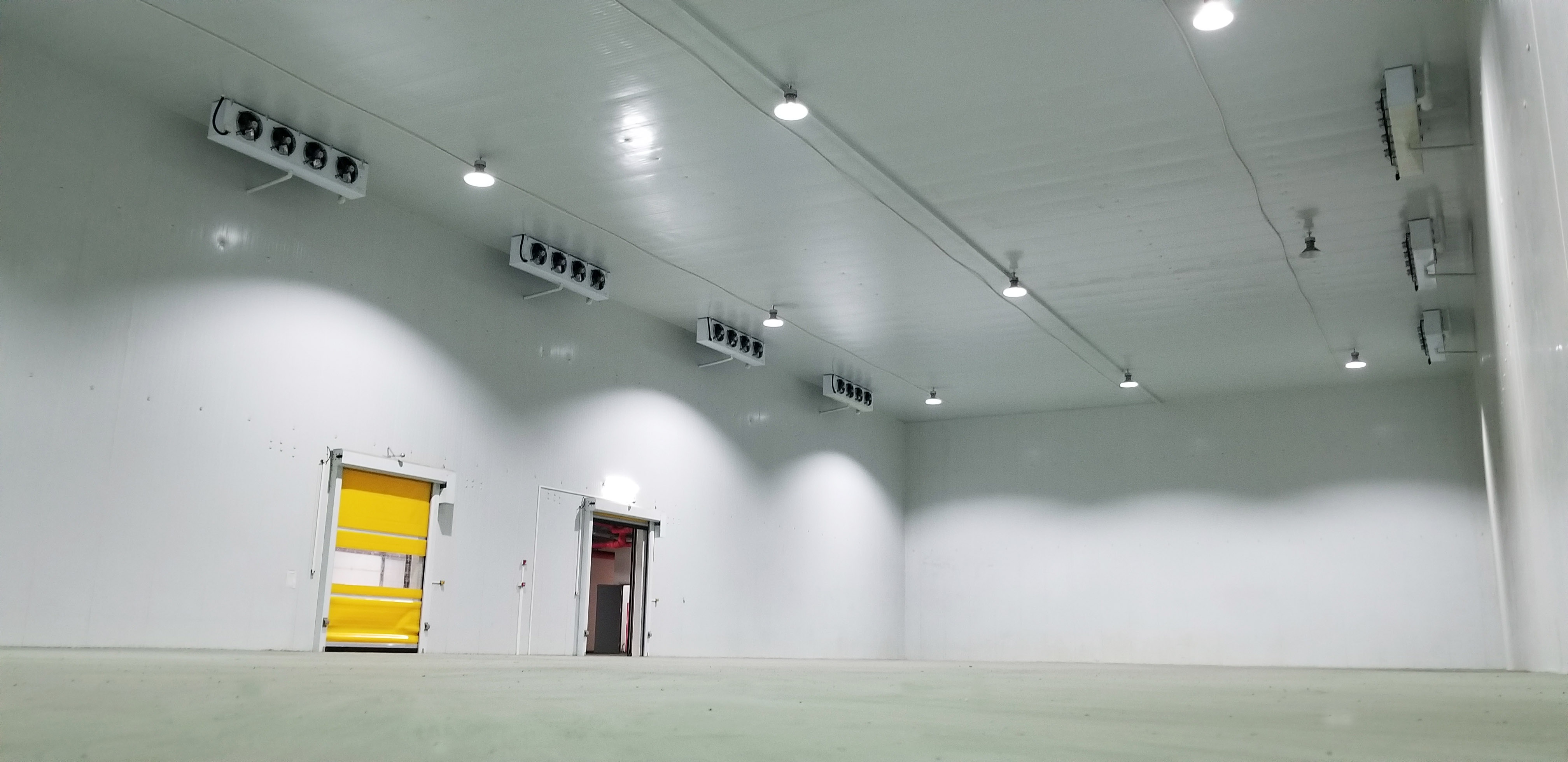
Commonly matched equipment includes shelves, forklifts, and generator sets. These items are often part of the procurement plan for a complete cold storage operation.
A 3,000-ton agricultural product cold chain logistics project, developed for customers in markets such as Iraq, Libya, Malaysia, Russia, and Saudi Arabia, shows how the EPC model works in practice. HOWCOOL provided architectural drawings, refrigeration drawings, all refrigeration equipment, and generator sets, and provided on-site guidance for installation and commissioning. The facility was used for fresh fruits and vegetables and frozen meat storage. According to the customer's calculations, the cost could be recovered in about two years by renting out cold storage capacity. The project also helped lower local agricultural product prices.
Market Trends Favoring Integrated Cold Storage Delivery
Market data points in the same direction. The global cold storage market was valued at approximately USD 185.8 billion in 2025 and is projected to reach USD 474.2 billion by 2033, according to Grand View Research. The cold storage construction segment was valued at USD 78.96 billion in 2024 and is expected to grow at a CAGR of 7.14% through 2035, according to Market Research Future. The refrigeration compressor market was valued at USD 18.6 billion in 2024, driven by demand for cold chain logistics, according to Strategic Market Research.
One notable signal is that the frozen temperature range of -18°C to -25°C held the largest share of cold storage capacity at 63.0% in 2025 (Grand View Research). This confirms that frozen storage remains the largest segment, while fresh produce and multi-temperature facilities continue to create demand for more flexible designs. The combination supports suppliers that can deliver complete facilities with multiple temperature zones.
Comparing EPC Delivery with Traditional Procurement
In a traditional procurement route, a project owner might buy insulation panels from one manufacturer, condensing units from another, and hire a local contractor for installation. This can lower upfront costs for small or standard cold rooms, and it allows the owner to use local labor. However, it creates coordination risk: designs may not be compatible, equipment ratings may not match site conditions, and warranty responsibility may be split.
The EPC model offers a different balance. One contract makes the supplier responsible for design, procurement, installation, and commissioning. For a mid-sized project with multiple temperature zones or a fast timeline, EPC can reduce project risk and shorten the decision chain. But EPC is not always the most economical path. For a small facility below roughly 500 tons, a standard modular cold room installed by a local contractor may be faster and cheaper. EPC economics improve as project scale, multi-temperature complexity, and site requirements increase.
Checklist: Key Questions Before You Choose a Cold Storage System
- Define the product mix and the required temperature range for each zone.
- Confirm the usable floor area and ceiling height; both affect insulation board design and air distribution.
- Verify available electrical supply, for example 380-415V/3P/50Hz, and whether a generator set is needed.
- Assess climate and condenser load, especially in hot regions.
- Check the projected capacity in tons to confirm the system is within the supplier's engineering envelope.
- Confirm auxiliary equipment such as shelves and forklifts is included in the procurement plan.
- Review after-sales support and commissioning approach before signing.
Future Outlook: What Buyers Should Watch
As cold storage demand grows, procurement is becoming more design-led. The large share of frozen storage and the rising need for fresh produce cold chains mean future facilities will likely use multi-temperature layouts. Environmentally friendly refrigerants such as R507 and R404A are already used in HOWCOOL's configurations, and automated systems that run around the clock are becoming a baseline.
Buyers should watch how a potential supplier handles hot-climate condenser selection, insulation quality, and on-site or remote commissioning. These are the areas where project-specific engineering adds the most value, and they are also the most difficult to evaluate from a brochure alone.
Frequently Asked Questions
What temperature ranges can a cold storage EPC system provide?
Depending on the design, it can provide 0 to 5°C for fresh produce, -18 to -25°C for frozen storage, and quick-freezing temperatures down to -35 to -45°C in high-performance models. The HSZL-3000T model covers -5 to +5°C, -18 to -25°C, and -35 to -45°C.
What size of facility is suitable for an EPC cold storage project?
EPC designs from HOWCOOL cover large and medium cold storage facilities from 1,000 to 20,000 square meters. In tonnage terms, refrigeration engineering projects can range from a minimum of 500 tons to 20,000 tons.
What types of products can a cold storage system preserve?
The system is designed to extend the shelf life of vegetables, fruits, and meats, preventing spoilage. It is used in fruit and vegetable preservation, seafood, frozen meat, food processing, and cold chain logistics.
Does a cold storage facility require auxiliary equipment?
Common matched equipment includes shelves, forklifts, and generator sets. The refrigeration system is designed for automated operation and can run continuously 24 hours a day throughout the year.
What is the typical construction period for a large cold storage project?
For areas from 1,000 to 15,000 square meters and heights from 5 to 12 meters, the construction period is typically 2 to 5 months. In one 3,000-ton agricultural cold chain case, production took one month, sea freight one month, and on-site installation guidance two months.
Can cold storage systems operate in hot climates?
Food preservation equipment from HOWCOOL can work within a 55-degree temperature range, from 55°C down to -30°C, which supports use in hot climate markets. Condenser selection must still be made on a project-specific basis.
For detailed technical specifications, the HOWCOOL EPC brochure can be downloaded here: HOWCOOL EPC brochure (PDF).