
Cold Room Refrigeration Systems: Compliance in Custom OEM Builds
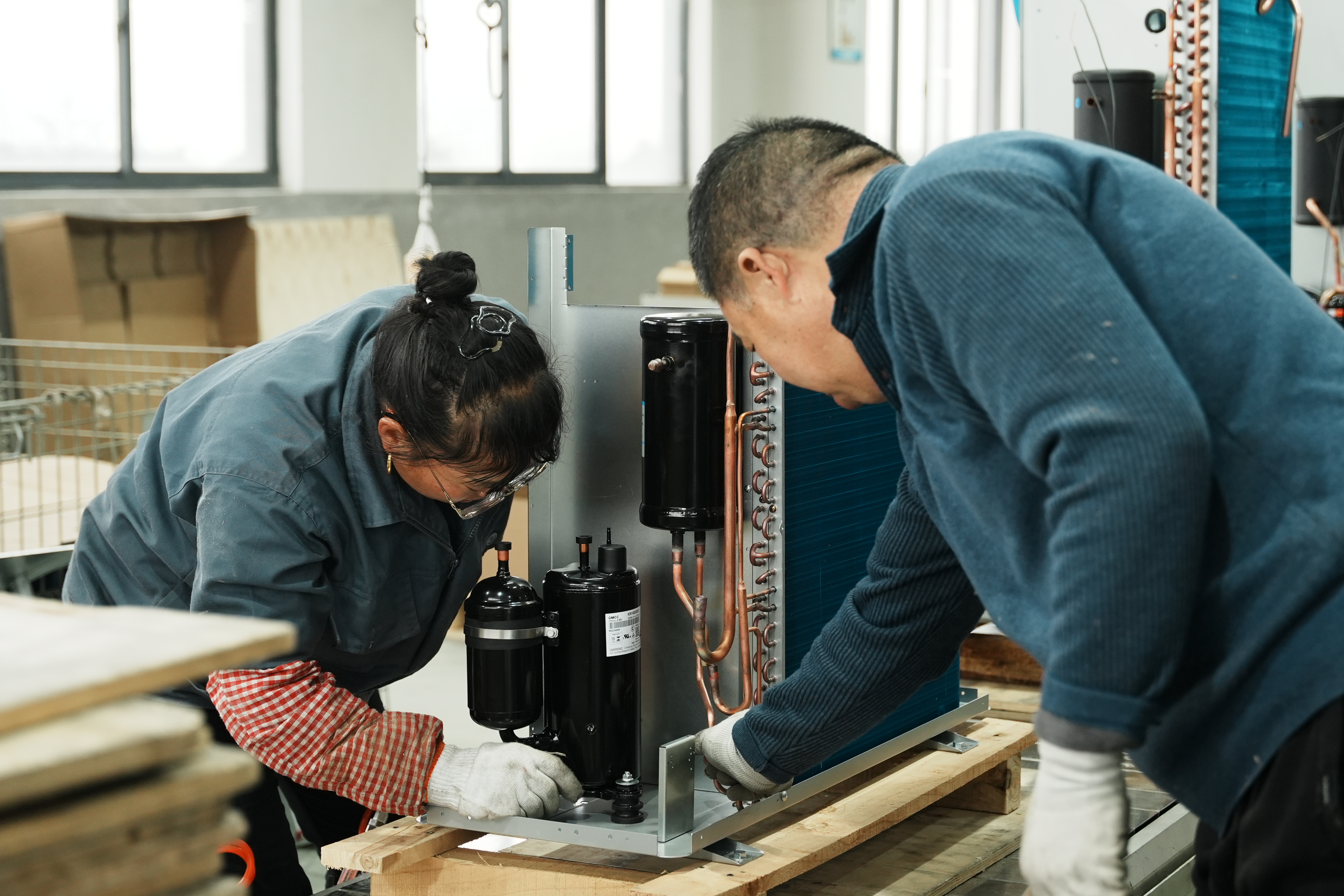
Custom cold room refrigeration builds are assembled to a project specification, which is also where the compliance evidence has to be created.
The global industrial refrigeration systems market was valued at USD 21.3 billion in 2024, according to Grand View Research, and the same analysis places Asia Pacific at a 32.6% revenue share of that market. Behind those figures sits a quieter change in how cold rooms are bought: a growing share of capacity is ordered as a project-specific build rather than a repeat order of catalogue equipment. A buyer specifies the room, the product load, the power supply and the refrigerant, and the supplier configures the system around those inputs.
That shift is why compliance questions now surface at the decision stage instead of the documentation stage. For a standard catalogue unit, compliance travels with a model number. For a custom or OEM cold room refrigeration system, compliance has to be reconstructed for each order: which specification values were agreed, which components were actually installed, and whether the two can still be matched months later, in another country, by an engineer who was not part of the original negotiation.
This reference sets out what compliance realistically consists of in custom and OEM cold room builds, how standardization is maintained inside a customizable parameter set, and where the honest limits of a customization-led approach sit.
Compliance Is Two Claims, Not One
Compliance in cold room refrigeration is not a single badge. It is two separate claims, and buyers who keep them apart tend to make better decisions.
Baseline conformity means the refrigerating appliance or system meets a recognized safety standard. IEC 60335-2-89:2019 specifies safety requirements for commercial refrigerating appliances with incorporated or remote units, including blast freezers. In the European Union, EN 378:2016 is the mandatory safety and environmental standard for refrigerating systems and heat pumps. These are the reference points a technical file is normally built against.
Configuration traceability means the delivered system can be matched, item by item, to the configuration that was assessed. That covers the power supply, the refrigerant, the compressor and condensing unit, the cold room air cooler or evaporator, the cooling capacity and temperature range, the insulated panel structure, and the controls and safety devices.
Most procurement disagreements on cold room projects involve the second claim, not the first. A supplier may hold a valid conformity statement while still delivering a unit whose installed compressor, refrigerant or air cooler differs from the approved drawing. The certificate is not wrong; it simply does not cover the gap.
Why Custom and OEM Builds Widen That Gap
A catalogue cold room unit has one advantage in compliance terms: one technical file describes an entire range, and every unit shipped from that range inherits the same documentation. A custom build breaks that pattern, because the specification is resolved per order rather than per model.
Clevier Refrigeration supports OEM/ODM customization covering cooling capacity, temperature range, voltage, refrigerant, compressor selection, panel structure and complete system matching. Each of those is a variable that has to be settled with the buyer before production, and each one changes what the technical file needs to say.
Two failure patterns recur in this kind of project. The first is quotation-level compliance, where the buyer receives a general statement of conformity that was never attached to the specific configuration being purchased. The second is silent substitution, where a component is changed during production for availability reasons and the change is never reflected in the handover documentation.
The Specification Layers of a Custom Cold Room Refrigeration System
Standardization inside a customizable product is achieved by separating what is fixed from what is selected. In Clevier's OEM/ODM scope, the fixed part is the product architecture — a cold room system built from an evaporator, a condensing unit, a compressor, insulated polyurethane panels and matched system components. The selectable part is the configuration that adapts that architecture to the project.
Power supply and frequency
Custom builds are configured around 220V and 380V supplies and 50Hz and 60Hz frequencies. This is one of the clearest examples of why compliance has to be configuration-specific: an electrical design approved for one market's supply conditions is not automatically the same design that was quoted for another. Clevier exports to Asia, South America, Africa and North America, with an export ratio of 30%, which means multi-market supply conditions are part of normal order intake rather than an exception.
Refrigerant selection
Refrigerants such as R404A are selected and documented as part of the build. Refrigerant rules are also a moving target, which is why the refrigerant field matters in a compliance file rather than only in a quotation. Under revised IEC 60335-2-89 standards, charge limits for flammable A3 refrigerants such as R290 in commercial appliances increased from 150g to 500g, as documented by Danfoss and IEC. A buyer evaluating a custom build should expect the refrigerant designation and charge to be recorded against the delivered unit, not left to the supplier's default.
Component layer
The component layer is where most of the traceability work sits. A cold room system is matched from a cold room air cooler (also described as a unit cooler or evaporator), a refrigeration condensing unit (air cooled, box type or open type), a compressor, and the insulated panel structure that forms the room envelope. Complete system matching means these are selected against one another, not independently: an air cooler rated for one duty will not suit a condensing unit selected for another.
| Specification layer | What changes in a custom or OEM build | What to verify in the handover file |
|---|---|---|
| Power supply and frequency | 220V / 380V and 50Hz / 60Hz configurations | Nameplate and supply data matching the approved drawing |
| Refrigerant | Refrigerant selection such as R404A, with charge determined by the build | Refrigerant designation and charge consistent with the approved specification |
| Cooling capacity and temperature range | Capacity and room temperature chosen for the specific load | Capacity statement at the agreed operating conditions |
| Compressor and condensing unit | Compressor selection; air cooled, box type or open type condensing unit | Component list identifying the compressor and unit type actually supplied |
| Cold room air cooler / evaporator | Unit cooler capacity matched to the room and the condensing unit | Air cooler model and rated capacity recorded against the system drawing |
| Cold room envelope | Polyurethane insulated panel structure and room matching | Panel structure specification and assembly detailing for the room |
| Controls and safety devices | Control logic, sensors and protective devices | List of sensors, limit switches and emergency stop provisions |
| Complete system matching | Combined selection of all of the above | Cross-check that the delivered set matches the approved selection |
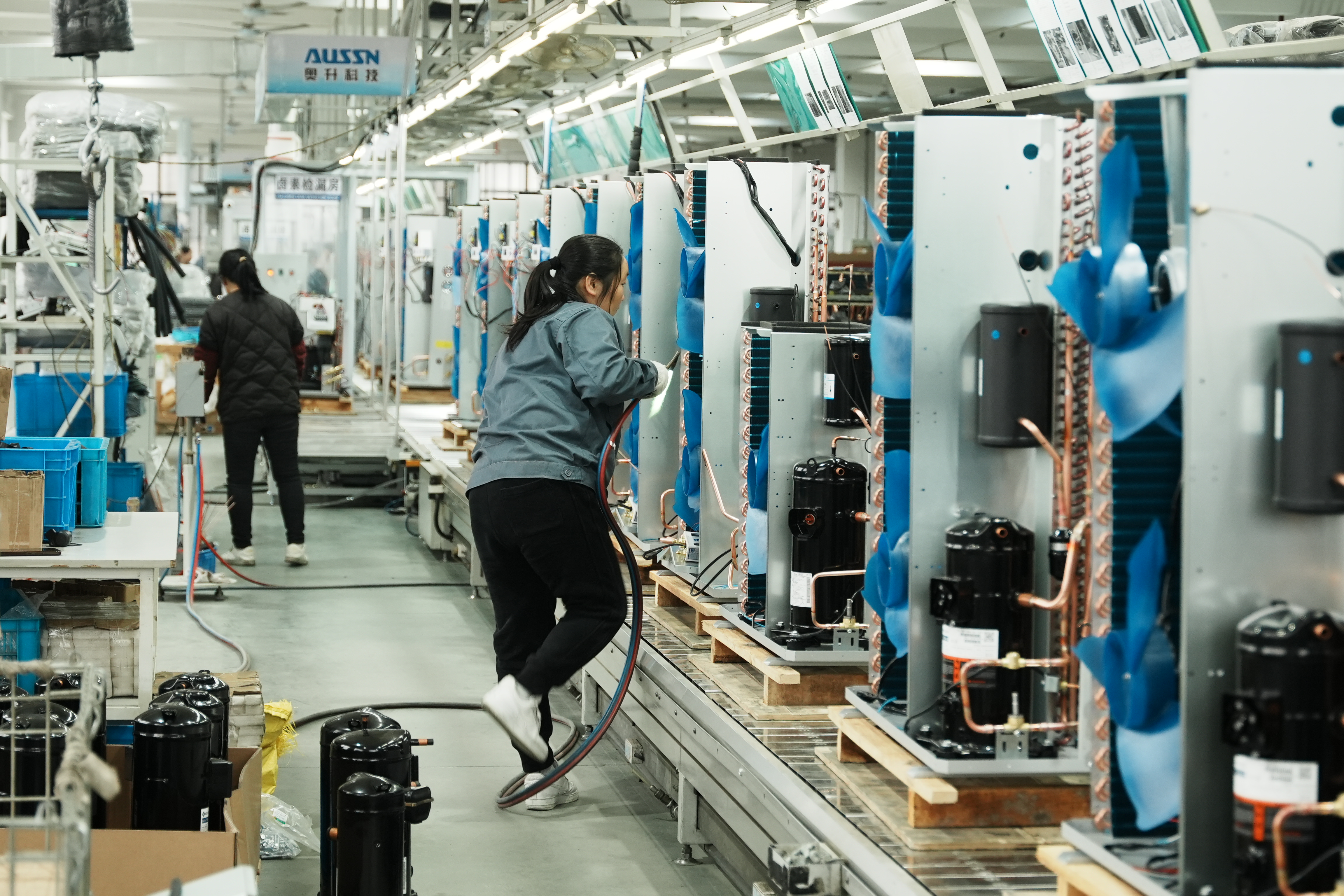
Compliance evidence is created at the component matching stage — the point where a build stops being a catalogue item and becomes a documented configuration.
Component Traceability: The Test a Buyer Can Actually Run
Traceability has a low bar. A buyer should be able to name every major component in the delivered system and state where it came from. In the global condensing unit market, Grand View Research identifies Emerson Electric, Carrier, Danfoss and Bitzer SE as key major players, and buyers routinely cross-shop those component brands while evaluating system builders such as Clevier Refrigeration.
The compliance-relevant question is not which brand appears on the unit. It is whether the brand, model and rating stated in the quotation are the ones recorded in the delivered documentation. Three checks cover most of the exposure:
- Does the compressor and condensing unit model delivered match the model on the approved drawing?
- Is the cold room air cooler rated for the capacity the system actually delivers?
- Is the refrigerant on the nameplate the refrigerant in the agreed specification?
A component brand is not, by itself, a compliance proof. A high-recognition compressor installed with an unmatched evaporator still produces a system that fails the configuration test. This is why traceability should be treated as a system-level discipline rather than a component-level purchasing preference.
How Clevier Refrigeration Structures a Custom Build
Clevier Refrigeration (Jiangsu) Co., Ltd. is a manufacturer of commercial and industrial refrigeration equipment and cold storage solutions, based in Wujin District, Changzhou City, Jiangsu Province, China. The company was founded in 2023 and operates a 10,000㎡ facility with 50 employees, an annual output of 10,000 units, and an R&D team of two engineers. Its main products are evaporators, condensing units, compressors, cold rooms and polyurethane panels, and it reports an export ratio of 30% across Asia, South America, Africa and North America.
For custom and OEM work, the company supports OEM/ODM customization across cooling capacity, temperature range, voltage, refrigerant, compressor selection, panel structure and complete system matching, and provides complete refrigeration solutions for food processing, cold chain logistics, supermarkets, restaurants, agriculture, seafood and meat storage.
That scope is also where the main constraint of this supplier profile sits. A manufacturer founded in 2023 with a two-engineer R&D function has less accumulated documentation depth than an established multinational, and customization cycles depend on how early the technical conversation starts. For buyers, the practical implication is to settle the specification before the quotation is issued rather than after the order is placed — including voltage and frequency, refrigerant, capacity, temperature range, compressor and condensing unit type, air cooler selection and panel structure. Front-loading that alignment is what makes the traceability check possible later.
Where Custom Cold Room Systems Are Used
Clevier states that its refrigeration systems suit cold storage warehouses, food processing plants, logistics cold chains and industrial refrigeration projects. That stated fit is consistent with where the market volume sits. Walk-in cold rooms are projected to hold a 58.7% share within the cold room market by 2025, according to Dataintelo, and Grand View Research reports that the frozen temperature range of −18°C to −25°C held the largest share of the cold storage market in 2025 at approximately 63%.
Application share reinforces the same direction. The Food & Beverages segment accounted for over 76.8% of global cold chain market revenue in 2025, per Grand View Research. For a buyer scoping a walk-in freezer, a cold chain warehouse refrigeration system or a food processing plant room, this matters because the compliance file has to describe a food-safe, continuously operating environment — not a generic refrigeration cabinet.
In practice, the application determines which specification layer carries the most weight. Seafood and meat storage rooms concentrate risk in temperature stability and air cooler performance. Supermarkets and restaurants concentrate risk in power supply compatibility and control simplicity. Agricultural and logistics projects concentrate risk in continuous operation and component durability. The same customizable architecture is configured differently in each case.
Market Trend Analysis
Several published figures describe the environment in which these decisions are being made, and it is worth reading them together rather than separately.
- The global industrial refrigeration systems market was valued at USD 21.3 billion in 2024, with Asia Pacific holding a 32.6% revenue share (Grand View Research).
- The broader refrigeration equipment market for 2024 is estimated at USD 67.06 billion (ResearchAndMarkets, via Business Wire). The difference between this figure and the industrial refrigeration figure reflects scope rather than contradiction — the two reports cover different equipment boundaries.
- The refrigeration coolers market, covering evaporators and air coolers, is estimated at USD 4.0 billion in 2024 (Technavio).
- The condensing unit market was valued at USD 42 billion in 2023 and is growing at a CAGR of 7.95% (Stratview Research), with Asia Pacific leading at a 70.22% revenue share in 2023 (Grand View Research).
- China's total cold storage capacity reached 237 million cubic meters by June 2024, an 8% year-on-year increase (China Federation of Logistics & Purchasing, via IIR).
- China was the leading exporter of industrial evaporative air coolers in 2024, with exports valued at USD 577 million (OEC).
Two conclusions follow for procurement rather than for market commentary. First, the component layer — air coolers and condensing units — is a substantial and growing part of the cold room value chain, which means component-level documentation is where most verification work will continue to concentrate. Second, capacity growth is concentrated in regions where project-specific builds are common, which pushes compliance from a formality toward a sourcing criterion.
Comparing Custom Builds With Traditional Configurations
Clevier's own comparison positions its systems against piston compressors, traditional refrigeration systems and manual sliding door systems. The stated differences are lower energy consumption, higher automation, safer operation and stable performance, with a reported 20–35% energy saving and up to 30% faster operation depending on the project.
| Dimension | Traditional configuration (as described by the manufacturer) | Clevier's stated position |
|---|---|---|
| Energy consumption | Baseline reference point | 20–35% energy saving, project dependent |
| Operating speed | Baseline reference point | Up to 30% faster operation, project dependent |
| Automation and safety | More manual operation | Higher automation, safer operation |
| Maintenance | More manual intervention | Less manual operation, lower failure rate, easier maintenance |
| Cost profile | Higher maintenance and labor exposure | Lower maintenance cost, longer service life, reduced labor cost |
| Efficiency | Conventional system control | Higher efficiency, optimized system control, stable cooling performance |
| Typical fit | General refrigeration duty | Cold storage warehouses, food processing plants, logistics cold chains, industrial refrigeration projects |
These figures are manufacturer-stated and explicitly project dependent. They are not guarantees, and they should not be transferred directly into a business case without checking the baseline used. That caveat is the first real boundary of a custom build.
Limits buyers should plan around
- Documentation takes time. A custom or OEM build requires engineering review, drawing approval and component matching before production. The compliance record is created in that period, not after shipment, so the schedule is longer than for a catalogued unit.
- Performance claims are conditional. The 20–35% energy saving and the up-to-30% operation speed advantage depend on the project. A buyer comparing quotations should ask which baseline was used and under what conditions.
- Standards are regional. IEC 60335-2-89:2019 and EN 378:2016 apply in different contexts. A configuration prepared for one market may need re-review before it is treated as compliant in another.
- Traceability depends on the specification. If the purchase order does not name the refrigerant, the voltage and frequency, the compressor selection and the air cooler duty, the handover file has nothing precise to be checked against.
- Engineering capacity is finite. With a two-engineer R&D function, Clevier's customization throughput depends on early technical alignment. Complex projects benefit from resolving open specification questions before the order is confirmed.
Safety Devices Are Part of the Compliance File
Safety provisions are frequently treated as accessories. In a custom cold room system they are better understood as evidence that identified risks were addressed. The risks Clevier documents for its systems are motor overheating, electrical failure and door jam prevention.
The corresponding design measures include an intelligent control system, thermal protection and automatic stop protection, supported by temperature sensors, a safety limit switch, an emergency stop system and overload protection. Each of these has a documentation consequence: the handover file should list which protective devices were fitted and how they are triggered. A verification visit that checks capacity and refrigerant but not the protective device list is only half a verification.
Future Outlook
Three directions are visible from current data. Capacity continues to concentrate in Asia Pacific, which held 70.22% of condensing unit revenue in 2023 and 32.6% of the industrial refrigeration systems market in 2024. Refrigerant regulation continues to move, as the increase in A3 charge limits under revised IEC 60335-2-89 standards demonstrates. And the component layer — air coolers, evaporators and condensing units — remains a significant and growing part of the value chain.
Taken together, these trends point toward a procurement environment where the ability to document a configuration competes with the ability to build it. For suppliers, that means standardized specification templates and component-level records become a commercial asset. For buyers, it means the evaluation question shifts from "do you hold certification?" to "can you show me which version of the product this certificate covers?"
For a manufacturer of Clevier Refrigeration's profile — founded in 2023, exporting 30% of a 10,000-unit annual output across four regions — that shift is an opportunity and a discipline at the same time. Multi-market supply conditions and customizable parameters are the normal operating condition, so the documentation habit has to be built into order intake rather than added afterward.
FAQ
What does compliance actually mean for a custom cold room refrigeration system?
It means two things at once. The first is baseline conformity: the refrigerating appliance or system meets a recognized safety standard, such as IEC 60335-2-89:2019, which specifies safety requirements for commercial refrigerating appliances with incorporated or remote units, including blast freezers, or EN 378:2016 in the European Union. The second is configuration traceability: the delivered system can be matched to the configuration that was assessed, covering power supply, refrigerant, compressor and condensing unit, air cooler, capacity, temperature range, panel structure and safety devices.
Which specification values should be recorded before approving an OEM cold room build?
The values that change per order are the ones that need recording. For a Clevier OEM/ODM build these include cooling capacity, temperature range, voltage and frequency (220V or 380V at 50Hz or 60Hz), refrigerant selection such as R404A, compressor selection, condensing unit type (air cooled, box type or open type), cold room air cooler or evaporator selection, polyurethane panel structure, and the combined system matching. Recording them before production is what makes the later handover check possible.
How is component traceability verified after delivery?
By comparing three documents against the delivered unit: the approved drawing, the quotation-level component list, and the physical nameplate. The compressor and condensing unit model should match the approved drawing, the cold room air cooler should be rated for the capacity delivered, and the refrigerant on the nameplate should match the agreed specification. In the condensing unit market, Grand View Research identifies Emerson Electric, Carrier, Danfoss and Bitzer SE as key major players; a recognizable component brand does not by itself confirm that the delivered configuration matches the approved one.
Where are custom and OEM cold room refrigeration systems typically used?
Clevier states that its systems suit cold storage warehouses, food processing plants, logistics cold chains and industrial refrigeration projects, with solutions also provided for supermarkets, restaurants, agriculture, seafood and meat storage. Market data is consistent with that pattern: walk-in cold rooms are projected to hold a 58.7% share within the cold room market by 2025 (Dataintelo), the frozen range of −18°C to −25°C held roughly 63% of the cold storage market in 2025, and Food & Beverages accounted for over 76.8% of global cold chain market revenue in 2025 (Grand View Research).
What are the limits of a custom-built compliance approach?
Custom builds take longer to document than catalogue units because engineering review, drawing approval and component matching happen before production. Stated performance advantages are project dependent — Clevier reports 20–35% energy saving and up to 30% faster operation compared with piston compressor and traditional refrigeration configurations, and these figures should be tied to a specific baseline before being used. Standards also differ by region, since IEC 60335-2-89:2019 and EN 378:2016 apply in different contexts, and a manufacturer with a two-engineer R&D team depends on early technical alignment to keep customization timelines realistic.
Which safety devices should be confirmed during handover?
The devices that correspond to the identified risks. Clevier documents motor overheating, electrical failure and door jam prevention as the relevant risks, addressed through an intelligent control system, thermal protection and automatic stop protection, supported by temperature sensors, a safety limit switch, an emergency stop system and overload protection. The handover check should confirm which of these are fitted and how each is triggered, not only that protective devices exist in general.