
Coil Drapery vs. Cable Mesh: Buyer Comparison
Coil Drapery vs. Cable Mesh: Buyer Comparison
Architectural metal mesh procurement is rarely a matter of comparing product names alone. When a specifier chooses between metal coil drapery and architectural cable mesh, the decision covers distinct installation logics, visual structures, and procurement routes for facade screening, partitions, and decorative applications. Both belong to the architectural metal mesh category, but the buyer questions are not identical. Metal coil drapery typically operates as a flexible curtain whose visual surface is formed by metal coils and suspended from a support system. Architectural cable mesh typically operates as a tensioned net whose geometry is established through cables, anchors, and edge restraints. These differences change how design intent maps to structure, edge conditions, customization documentation, and maintenance access. A useful comparison therefore starts from application and procurement evidence rather than from a single product label. This article is an independent buyer comparison and does not use brand names, performance figures, or invented certifications. It outlines practical questions for a fair comparison of metal coil drapery, architectural cable mesh, decorative metal mesh partition, and architectural shading metal mesh.
Compare Through Application Logic, Not Category Label Alone
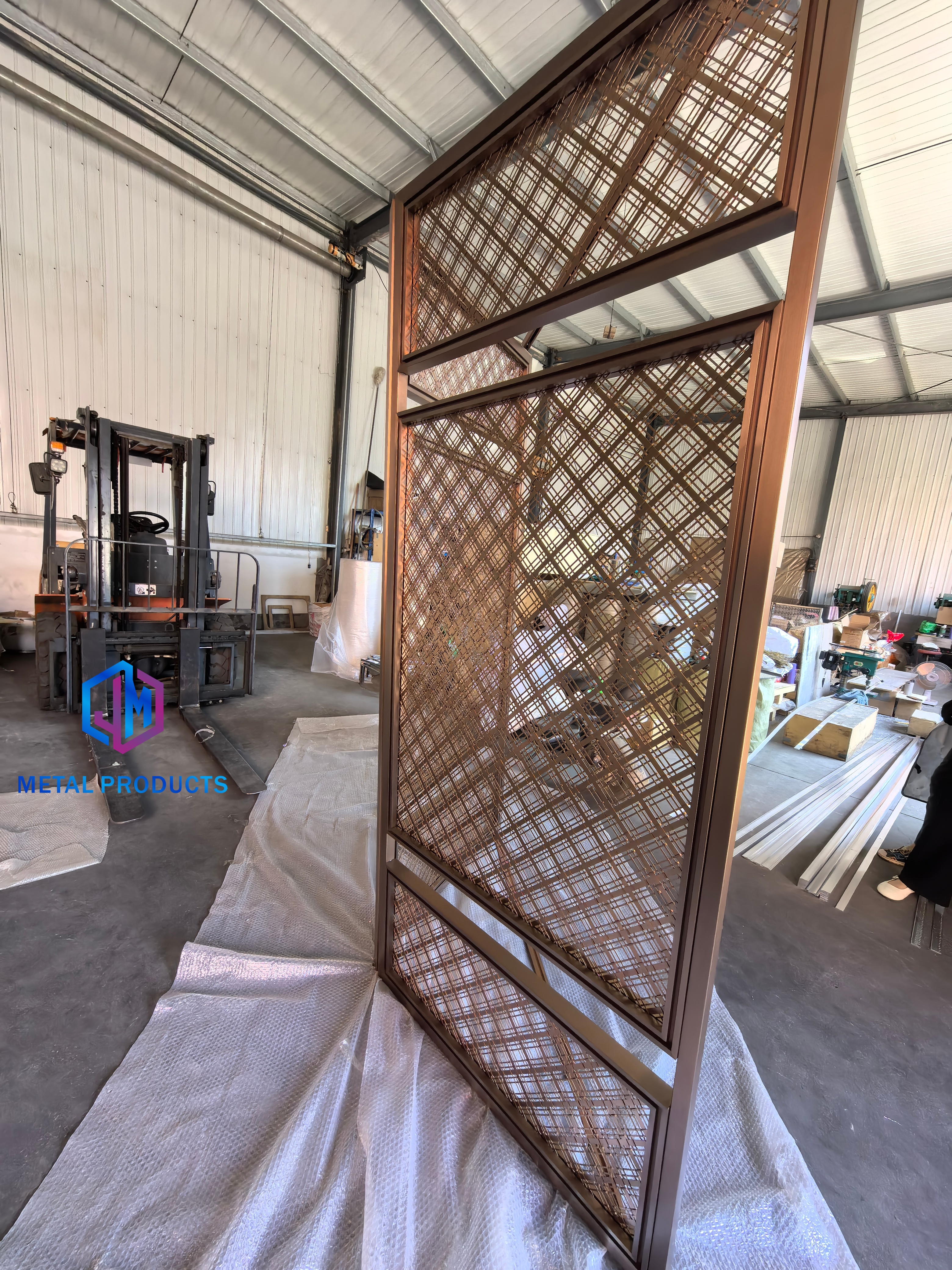
The term architectural metal mesh covers a broad family of product forms, including woven, expanded, perforated, coil drapery, and cable net constructions. Because the category name is broad, two suppliers can describe very different products with the same phrase. Specifiers can continue to compare at the primary keyword level while grounding the actual decision in visible surface, support method, fixing geometry, and project documentation. This is especially important for metal mesh facade panels and building facade screening. One product may suit facade screening while another may be better matched to a decorative metal mesh partition or an architectural shading metal mesh application, but that outcome depends on project conditions rather than on the category label by itself. A project-first sequence reduces ambiguity: first establish the application and design intent, then identify the product form, then resolve customization and integration questions, and finally compare quotation detail and verification documents. That sequence keeps the procurement decision transparent and avoids a superficial comparison based only on product names.
How the Product Types Differ
Metal Coil Drapery
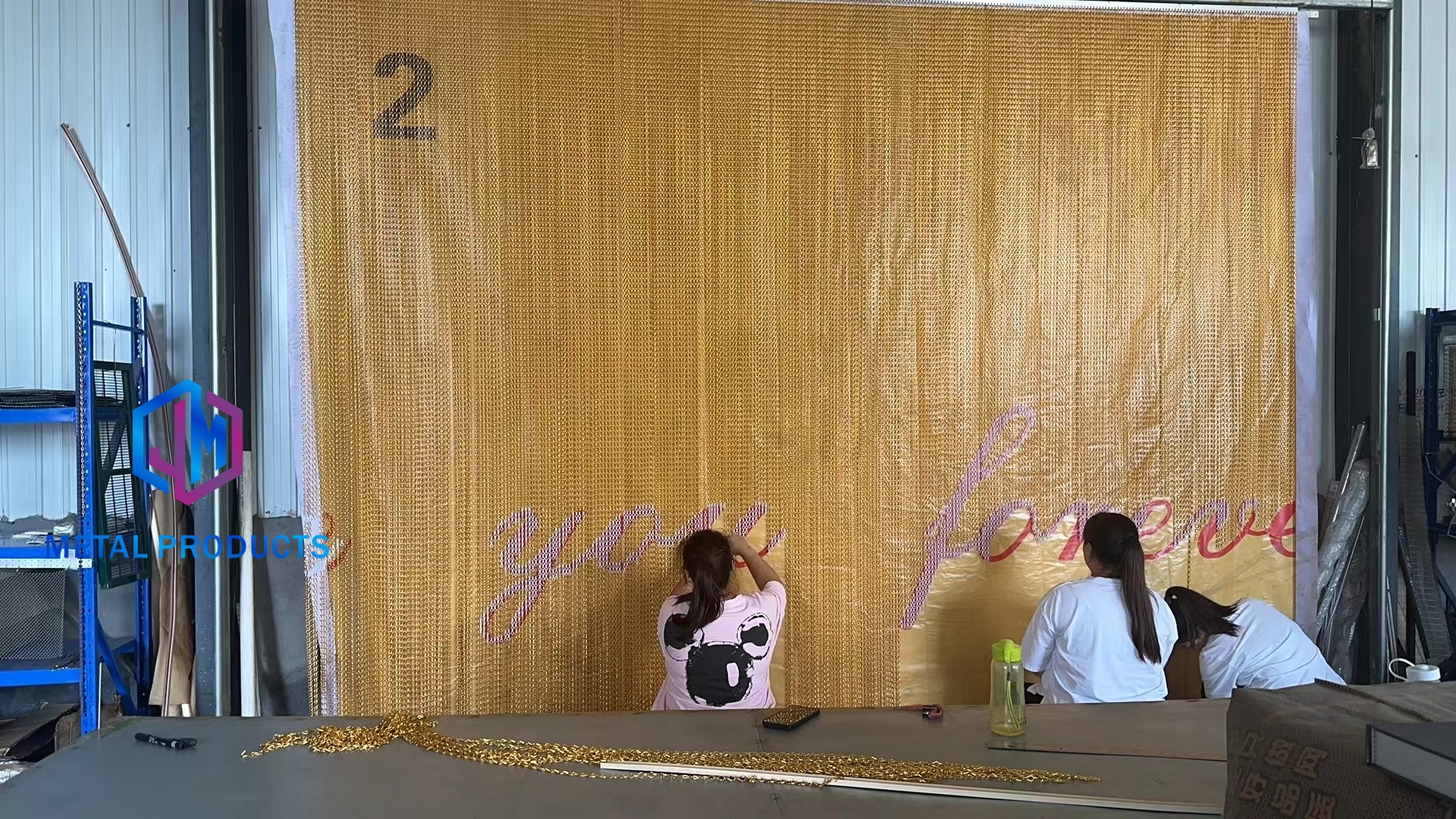
Metal coil drapery is often presented in design as a suspended metal curtain. The visual pattern comes from interlocking metal coils and the way the curtain hangs, while the installation logic centers on top support, vertical alignment, and perimeter detailing. Buyers comparing metal coil drapery should therefore ask how the curtain behaves at the intended design movements or free edges, and whether the supporting conditions allow it to perform as intended. The product type can be customized through coil geometry, finish, edge treatment, and attachment details, but any customization should be confirmed on drawings for the actual project.
Architectural Cable Mesh
Architectural cable mesh is commonly presented as a tensioned cable net whose visual rhythm comes from the net geometry and structural connections. The system logic centers on anchors, edge restraint, tensioning, and coordination with the supporting structure. That is very different from the suspension-led logic of coil drapery. For metal mesh facade panels or building facade screening, a cable net solution also requires structural support design and site installation sequencing to be addressed during procurement. The product type can also be customized through cable layout, fittings and hardware, material and finish, edge detail, and site tensioning method, each of which needs to be captured in the quotation and submittal package.
Decorative Metal Mesh Partition and Architectural Shading Metal Mesh
A decorative metal mesh partition system can be built using either product type. The key difference is whether the partition intent favors a flexible suspended surface or a tensioned face. Coil drapery designs are often used where a decorative screen, curved treatment, or free-edge detail is desired, while cable mesh offers a taut and architecturally defined surface. Neither approach is universally better; the appropriate match depends on design intent, safety, maintenance access, and the surrounding fixing conditions.
Architectural shading metal mesh is another application in which either product type may be considered. Shading is a function of several project-specific factors, including orientation, opening geometry, installation depth, and spacing from the building. Buyers should request project-specific shading studies or calculations from the supplier or from a qualified facade designer. Generic descriptions, whether the product is coil drapery or cable mesh, do not establish project-specific shading performance. The same rule applies to other performance claims.
Matching Metal Mesh to Building Facade Screening
In an exterior context, metal coil drapery and architectural cable mesh can both be considered for building facade screening, metal mesh facade panels, and exterior cladding mesh, but their fit is governed by different integration factors in each case. Coil drapery introduces suspension-related geometry. The design team needs to define top support and guidance conditions, panel-edge conditions, cleaning and replacement access, and how the facade's weather exposure requirements interact with the intended mesh arrangement. If the facade screening requires a strongly tensioned surface or a specific structural expression, coil drapery may not be the right fit. That is not a product failure; it is a scope mismatch that should be identified early.
Architectural cable mesh introduces tension-related geometry. Buyers need to define anchor conditions and boundary restraint, how the supporting structure receives and distributes cable loads, how panels or sections are divided, and how tensioning will be achieved on site. If the visual intent for the exterior screening depends on a soft hanging appearance or a surface that tolerates movement, a tensioned cable net may be technically available in a catalog but still unsuitable in design. The discussion should therefore return to design intent and frame conditions rather than general product-category promotion.
For both products, wind load and structural verification should be on the procurement checklist. The specific method belongs to the project's structural design scope, not to a generic commodity description. Finish requirements, fixing materials, compatibility with stainless steel mesh facade or aluminum-based options, cleaning requirements, and expected service conditions should be asked of every bidder in the same terms. That discipline keeps the comparison fair even though the underlying product types differ.
Partitions, Space Definition, and Decorative Metal Mesh Partition
In interior and exterior partitions, a decorative metal mesh partition is often supplied as a product, but the design intent determines the form. A suspended coil drapery can serve a flexible hanging role in space definition, with mounting and visual rhythm different from a tensioned surface. Architectural cable mesh, by contrast, forms a controlled cable-net geometry and may be better suited where the spatial intent depends on a stable, repeating grid pattern. The buyer question is whether the partition should look soft, hanging, or adjustable, fixed, taut, and structurally expressed, or mixed across different locations.
Customization for decorative coil drapery or cable mesh is not limited to color. Buyers should ask about edge finishes, coil or cable transitions, how fixing points are terminated, how panels or curtains are divided for transport and installation, and how the space behind the mesh can be accessed when maintenance is required. For interior spaces, perimeter conditions may require more careful transitions because blemishes are more visible. For exterior applications, connections and finish systems need to be aligned with the weather design and cleaning plan.
Decorative applications also involve light, background contrast, and visible detail. The pattern of coil drapery comes from coil geometry and hanging behavior; the pattern of cable mesh comes from cable spacing and node design. Because these visual logics differ, decorative selection should be based on an approved sample or mock-up rather than on screen displays or generic catalog images. Buyers should request samples that show the final production texture and scale so that they can be evaluated alongside lighting conditions and adjoining materials.
Buying Architectural Shading Metal Mesh
Architectural shading metal mesh applications require a different decision path from facade and partition selection. Shading performance depends on the mesh orientation, building opening, installation depth, and the visual effect the project requires. Coil drapery and cable mesh can both be used, but neither type can establish shading performance by category name alone. The practical approach is to treat product type as one variable and to require a project-specific shading study or calculation from the supplier or from a qualified facade designer.
For coil drapery, buyers should confirm how the curtain geometry fits within the facade depth, how fixing points align with the building grid, and how the product will maintain its form. For architectural cable mesh, buyers should confirm tensioning geometry, anchor locations, cable loads, and adjustability. In both cases, the procurement package should clarify who is responsible for performance calculations, sample testing or laboratory work where required, and who signs off on the installed geometry. That allocation prevents a situation in which a product is selected but its supporting conditions remain unresolved.
Customization Compared for Coil Drapery and Cable Mesh
Customization is a major area in which the two product types diverge. Buyers comparing coil drapery with cable mesh should avoid asking only whether a supplier accepts customization. The more useful questions are what the project requires and how that requirement will be verified. Coil drapery customization typically centers on curtain geometry, coil pattern, suspension method, edge treatment, and packaging so that the curtain arrives intact. Cable mesh customization typically centers on cable layout, fittings and hardware, anchor components, perimeter framing, and site tensioning method. Material selection, finish, and design pattern may apply to both products, but those choices should be kept consistent with design intent and project exposure.
A fair RFQ should require drawings with dimensions and tolerances, installation details, and a complete component list rather than only a catalog sheet. For decorative patterns, it should require a final-appearance sample that is approved before production. For coil drapery, that may show how coil spacing, hanging behavior, and finish work together. For cable mesh, the sample or mock-up should show cable geometry, fittings, and edge treatment. If customization cannot be verified through drawings and samples, the bid comparison is speculative.
It also matters to inspect delivery and installation conditions. Suspended curtains and cable nets require different protective packaging and handling from flat panels. Buyers should ask how the product will be shipped, stored on site, lifted, installed, and repaired if a component is damaged or mis-sized. These questions are part of project fit, not after-sales detail, because the installation logic differs between the two systems.
System Integration Points to Verify
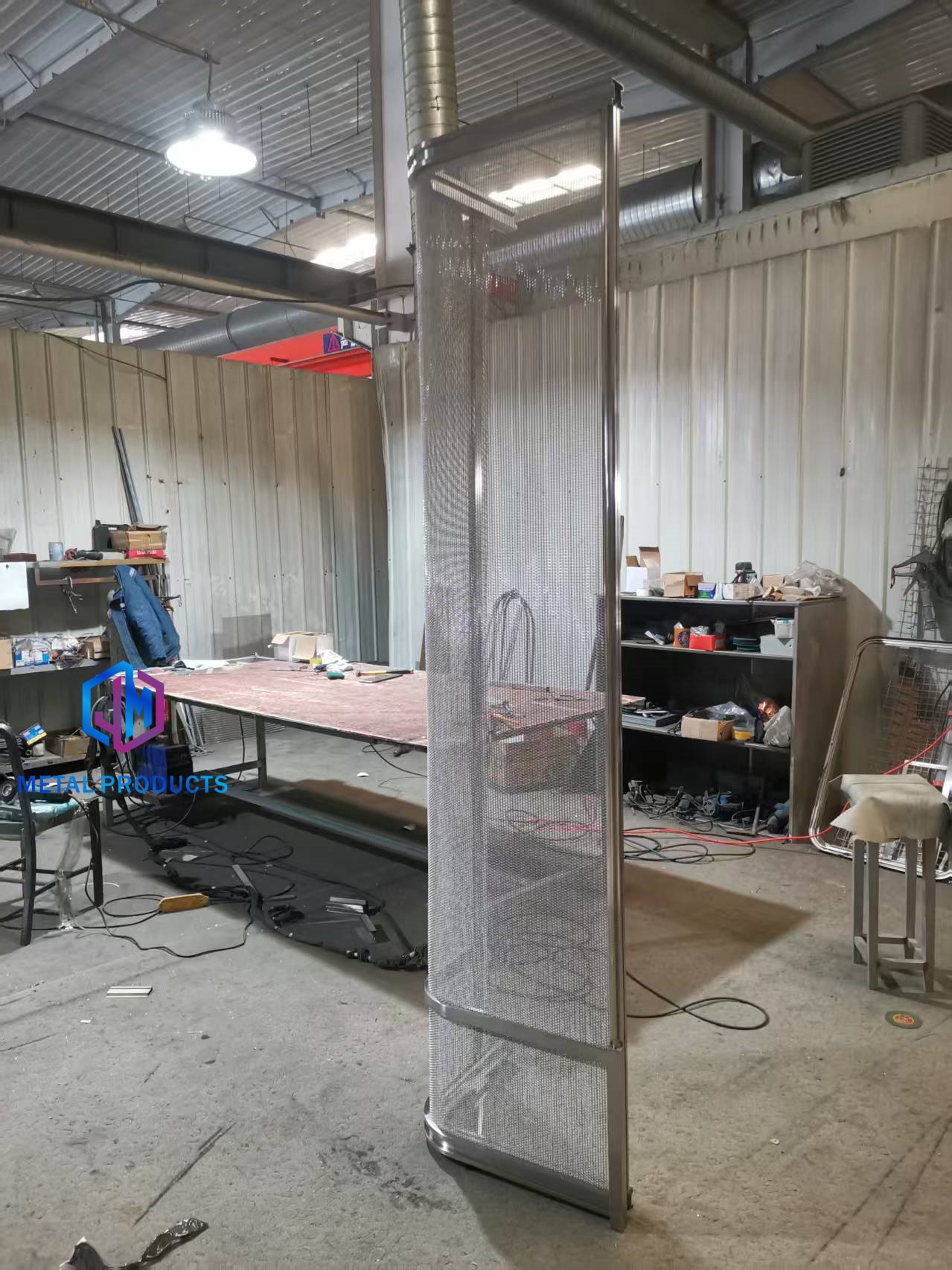
System integration is the area where buyers face the greatest later-stage risk when comparing coil drapery with cable mesh. Coil drapery usually requires a top support or suspension system, together with edge and guidance conditions that align with its hanging logic. Architectural cable mesh usually requires anchor hardware, edge restraint, and tensioning devices coordinated with the structural interface. The comparison should therefore make those integration interfaces explicit rather than leaving each bidder to interpret them independently.
The following common procurement checks apply to both products: verify that fixings and fasteners are compatible with the substrate; verify that materials and finishes suit the exposure conditions; require drawings and samples before approval; verify dimensional tolerances and component identification; specify packaging that protects against transport distortion; define responsibility for installation errors and site handling; and confirm how welds or joints will be inspected. These checks come from common project risks, not from product-specific defects. They help buyers compare whether a bidder has addressed the required work instead of only pricing a product name.
In addition, metal mesh should not be evaluated in facade isolation. Adjacent materials, drainage, lighting, insulation, and maintenance access all interact with the mesh surface. A coil drapery or cable net proposal may look suitable for a decorative metal mesh partition or an architectural shading metal mesh application but remain incomplete until the supporting system, edge conditions, or site sequence are resolved. System integration questions belong in the procurement documents and should receive written responses.
A Project Fit Decision Framework
The most reliable comparison is organized around the criteria that support a project decision rather than around appealing product categories. The qualitative framework below can serve as a starting point for comparing coil drapery with cable mesh. It is not intended to rank either product type; it is intended to show what evidence each requires under project conditions.
| Comparison dimension | Metal coil drapery | Architectural cable mesh |
|---|---|---|
| Visual and surface logic | Suspended interlocking coils, flexible curtain effect, decorative hanging quality | Tensioned cable-net geometry, structured surface, repeating grid quality |
| Primary support logic | Top suspension, vertical alignment, edge and guidance conditions | Anchoring, boundary restraint, tensioning and tension retention |
| Customization focus | Curtain geometry, coil pattern, edge treatment, suspension fittings, packaging | Cable layout, fittings and hardware, framing, anchoring, tensioning method |
| Facade fit | Suitable where design allows suspension logic, fixing points, cleaning and replacement access | Suitable where design allows tensioning logic, anchoring, and perimeter conditions |
| Partition fit | Decorative separation, flexible screens, and space definition | Fixed spatial separation, taut surfaces, and repeating grids |
| Shading fit | Can be evaluated as architectural shading metal mesh, subject to project-specific shading verification | Can be evaluated as architectural shading metal mesh, subject to project-specific shading verification |
| Procurement evidence | Curtain drawings, suspension details, samples, packaging plan | Cable layout drawings, anchor details, tensioning method, full component list |
| Mismatch to watch for | Project requires a rigid tensioned surface but specifies a suspended system | Support cannot achieve tension, or a flexible surface is the actual design intent |
Before a decision is made, the project team should confirm that suitability involves maintenance, safety, structure, and procurement, not appearance alone. If a row in the table remains unanswered, the project risk from a mismatch is greater than the difference between the products. The framework is therefore a tool for structuring the RFQ rather than a replacement for engineering review.
Comparing Quotations Without Brand Bias
When comparing quotations, buyers should require every bidder to answer the same project conditions. For metal coil drapery, request suspension method, top and bottom conditions, panel or curtain division, edge treatment and installation instructions, sample requirements, and packaging and protection. For architectural cable mesh, request cable-net drawings, anchor details, fittings, tensioning method, major component list, and site coordination requirements. For both products, request project-specific shading studies or calculations where architectural shading metal mesh is involved, and structural or material-related documentation from a qualified third party where applicable.
Do not treat a smaller catalog as a lower-quality bid by default. Catalog size rewards marketing material rather than project fit. Judge the bid by whether it answers the questions that matter for the comparison. An open issue is a procurement risk, not just an information gap. A bidder who requires quotation rework to equal the scope of a final product package is not in the same position as one who provides only images and category names.
Frequently Asked Questions
How do metal coil drapery and architectural cable mesh differ on a project basis?
The product form and support logic differ. Metal coil drapery is configured as a suspended metal curtain whose visual surface is formed by interlocking coils, making top support, vertical alignment, and edge treatment central questions. Architectural cable mesh is configured as a tensioned cable net whose visual surface is formed by cable geometry, making anchoring, edge restraint, and tensioning central questions. Both belong to architectural metal mesh and both can serve facade, partition, or decorative roles, but the procurement documents should follow the installation logic of each product. Where either product is used as a decorative metal mesh partition or architectural shading metal mesh, the fixing conditions and project drawings should be required. Buyers should ask for verification of suspension or tensioning conditions separately rather than assuming the two systems share the same interface.
Which product is more suitable for building facade screening?
No single product is universally more suitable. Facade screening suitability depends on design intent, supporting structure, maintenance access, and project-specific structural review. Metal coil drapery may be considered where suspension logic, top support, and edge treatment are compatible with the facade design. Architectural cable mesh may be considered where tensioning logic, anchoring, and perimeter conditions can be achieved. Buyers should define the facade screening requirements in the RFQ and ask each bidder to explain how its product matches those requirements. Treating the question only as a generic metal mesh facade panel issue hides product differences and should be replaced with project-specific facade details.
How should buyers compare customization between the two systems?
The comparison should center on what can be verified, not on general willingness to customize. For coil drapery, ask about curtain geometry, coil pattern, suspension method, edge treatment, sectioning, and packaging. For architectural cable mesh, ask about cable layout, fittings and hardware, perimeter framing, anchoring, and tensioning method. Both should provide drawings with dimensions and tolerances, final-appearance samples, and inspection methods. Customization should be described in project-specific terms and should not rely on unverified promotional statements. Buyers should reject any bid that promises a final appearance or installation result without documented approval.
What project conditions could make one system unsuitable?
Coil drapery may be unsuitable where the project cannot provide suitable suspension, alignment, or maintenance access, or where the facade screening requires a tensioned surface. Cable mesh may be unsuitable where the project cannot achieve anchoring, edge restraint, or tension establishment and retention. These are project conditions, not defects in the product type. Buyers should assess structural support, weather protection or drainage, adjacent materials, and future maintenance before comparing cost. If architectural shading metal mesh is the intended application, project-specific shading verification should also be part of the suitability screening. Where conditions are absent, the product type or design approach should be reconsidered.
How can a project team avoid an unfair comparison between coil drapery and cable mesh?
Use a shared decision framework and common evidence requirements. List the application requirements for facade screening, partitions, or shading, ask for comparable drawings, samples, installation details, component lists, and project-specific documentation for each product type, and review the answers against the same set of procurement questions. Do not reward or penalize a product form simply because it differs from the other. Do not rely on generic category statements that all architectural metal mesh products provide the same function, because coil drapery and cable mesh have different support logics. A fair comparison focuses on verifiable fit.
Conclusion: Choose from Conditional Evidence
The comparison between metal coil drapery and architectural cable mesh is a procurement exercise for a building enclosure, decorative, or shading requirement, not a search for a universal winner. Coil drapery leans toward suspension logic, while cable mesh leans toward tensioning logic. Both can be part of a project's decorative metal mesh partition or architectural shading metal mesh strategy, but both require project drawings, support verification, customization confirmation, and an installation plan. Specifiers comparing suppliers in an RFQ should first clarify the application and design intent, then define the product form, then raise the integration questions, and finally review the quotation. If any support, edge, or maintenance condition remains unresolved, the safest assumption is not that either product category will adapt, but that the procurement package is still incomplete. That neutral approach keeps the comparison useful and lets the project team choose from evidence rather than from product labels.
¿Tiene preguntas o necesita más detalles?
Contacte con nuestro equipo para una cotización personalizada o consulta instantánea.
Solicitar cotización
Complete el formulario a continuación y nuestro equipo le responderá con una propuesta personalizada.
Chat directo de WhatsApp
¿Prefiere chatear en tiempo real? Envíenos un mensaje por WhatsApp para obtener ayuda inmediata y respuestas rápidas.
- Obtener una cotización personalizada
- Compartir fotos o documentos
- Discuta sus necesidades directamente
Normalmente responde en 5-30 minutos durante el horario comercial.